
 Have a question? +971 56 404 0503




Financial News
Al Ansari Exchange on Track to Open 15 New Branches

Al Ansari Financial Services’ PJSC subsidiary, Al Ansari Exchange, the largest outward personal remittance and foreign exchange company in the UAE today announced, after obtaining the necessary approvals, its plan to launch 15 new branches across the UAE before the end of 2023. The physical branch expansion is in line with the Group’s growth strategy to further scale and improve consumer accessibility, aiming to reach a network of approximately 300 branches within the next five years to satisfy the demand for its services in the UAE market.
Al Ansari Exchange has successfully opened five new branches since the commencement of 2023. Additionally, the company has acquired the requisite regulatory approvals for the establishment of 10 additional branches, which are expected to become operational before the conclusion of the second half of this year.
The 15 new branches will cover underserved areas in Abu Dhabi, Dubai, Sharjah and other cities in the Northern Emirates and will take the total number of physical branches to 246.
Rashed A. Al Ansari, Group CEO of Al Ansari Financial Services, explained, “The opening of 15 new branches this year is aligned with our strategic priority of further cementing our market leadership position in our home market. Our plans are bolstered by the encouraging continued strength in the UAE economy, particularly the boom in the tourism and jobs market expansion.
“The strategic decision to open more branches this year is also supported by our data analytics which has given us greater insights into customer trends. The findings reveal that most of our customers prefer the convenience and face-to-face interactions provided in branches. In fact, we have seen greater success in acquiring customers through in-branch visits and converting them to online users for future transactions. This, in turn, supports our target to further boost the number of digital transactions, which has already witnessed tremendous growth in 2023. Ultimately, our goal is to continue unlocking greater value for our shareholders by executing on our growth strategy.” Al Ansari added.
Ali Al Najjar, COO of Al Ansari Exchange, added, “The expansion of our branch network is another significant milestone in our growth journey. These new branches aim to reach a wider network of customers and provide the same exceptional service our customers have become accustomed to. Additionally, we are continuously investing in our digital capabilities to offer seamless online experiences to our customers. By combining our physical presence with robust
digital platforms, we ensure that our customers have convenient access to our financial solutions and enjoy a comprehensive and integrated service offering.”
With a focus on meeting the needs of its customers, Al Ansari Exchange aims to enhance accessibility and offer a diverse range of financial solutions. The addition of new branches not only strengthens the Company’s market share and customer base but also reinforces its commitment to enhancing customer experiences through physical locations and online platforms. These initiatives aim to guarantee that customers receive exceptional services and enjoy a seamless financial journey.
Financial
The UAE’s Net Wealth Reaches $3.6 Trillion in 2025 and is Expected to Approach $6 Trillion by 2030, BCG Report Finds

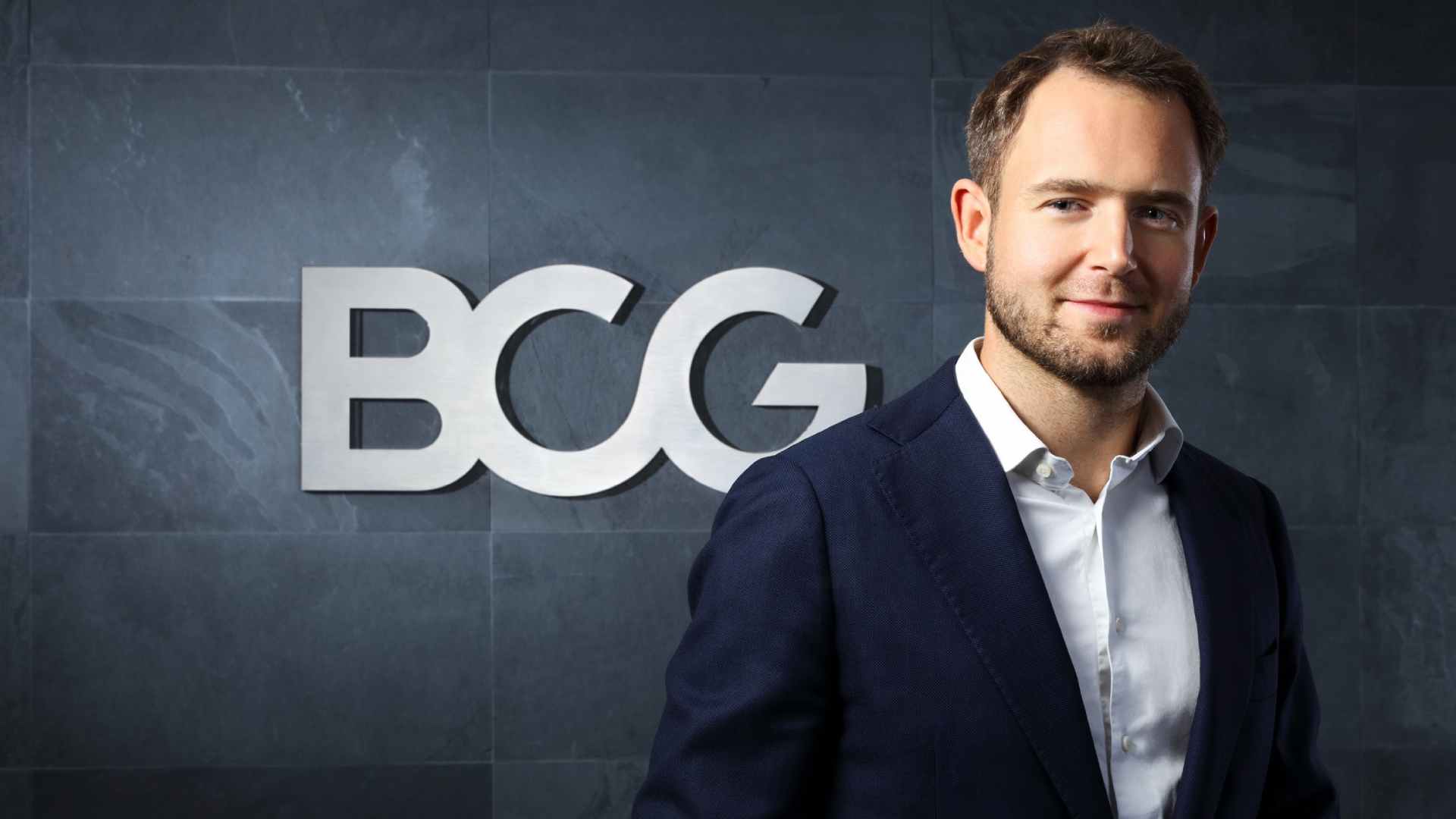
The UAE’s net wealth grew by 12.7% between 2024 and 2025, rising from $3.2 trillion to $3.6 trillion, according to Boston Consulting Group’s (BCG) Global Wealth Report 2026: The Great Reordering. Total Net wealth is forecast to reach $6 trillion by 2030, with a CAGR of 10.6%. This represents an increase of more than $2.3 trillion over the next five years. The projected growth points to the UAE’s long-term wealth creation potential.
Financial wealth, including both investable and non-investable wealth, grew by 12.3% between 2024 and 2025, rising from $1.2 trillion to $1.4 trillion and is set to rise to $2.1 trillion by 2030 at a CAGR of 8.7%. Real assets reached $2.4 trillion in 2025 from $2.2 trillion in 2024, with projected growth to $4.2 trillion by 2030.
The findings show the resilience of the UAE wealth market amid a volatile global environment and heightened geopolitical uncertainty. “The ongoing conflict has introduced short-term volatility across Middle Eastern markets, with investor sentiment shaped by geopolitical uncertainty and oil-price movements,” said Lukasz Rey, Managing Director and Partner at BCG. “However, the region’s wealth development story remains structurally resilient over the five-year projection horizon. While we anticipate slightly lower growth over the next one to two years, a rebound is expected toward the latter part of the decade, supported by sovereign wealth strength, economic diversification agendas, family-business liquidity events, and continued private capital activity. We expect wealth managers to remain cautious in the near term; however, the long-term wealth opportunity in the Middle East remains intact.”
The report identifies a broader reordering underway across the global wealth-management industry, spanning geographic shifts, emerging-market wealth creation, intergenerational succession, and AI-driven operating model transformation.
Shifting Wealth Concentration Across UAE Population Segments
According to the report, the UAE’s financial wealth remains concentrated among high-net-worth individuals, with the composition of wealth expected to evolve by 2030 as more wealth accumulates within the lower high-net-worth segment. There are approximately 500 ultra-high-net-worth (UHNW) individuals, those with more than US$100 million in assets, in 2025, and they are expected to increase to around 800 by 2030, while their share of total financial wealth rises marginally from 26.3% to 26.5%. The upper high-net-worth segment (US$20–100 million) is forecasted to grow from approximately 2.7K to 4.2K individuals, with its share of wealth broadly stable at 7.4% in 2025 to 7.6% in 2030.
In contrast, the lower high-net-worth segment (US$1–20 million), which comprises approximately 200K individuals, is expected to increase its share of financial wealth from 29.3% in 2025 to 31.5% in 2030. The affluent segment (US$0.25–1 million) is expected to expand from approximately 500K to 600K individuals in 2030, while its share of wealth declines from 15.5% to 14.6% as wealth disperses across a larger base. The mass segment (below US$0.25 million) remains the largest by population, growing from roughly 8.6M to 9M individuals, but its share of financial wealth decreases from 21.5% to 19.8%.
The key UAE findings of BCG’s proprietary analysis are:
- Financial wealth reaches $1.4 trillion in 2025, with strong projected growth to $2.1 trillion by 2030 (CAGR: 8.7%)
- Real assets rose to $2.4 trillion in 2025 and are expected to hit $4.2 trillion by 2030 (CAGR: 11.5%)
- Liabilities climbed to $220 billion in 2025 from $210 billion in 2024, with projections indicating $340 billion by 2030 (CAGR: 8.9%)
- Cross-border financial wealth belonging to UAE residents and booked outside the UAE surged by 9.4% between 2024 and 2025 in the UAE, reaching $468.4 billion. It is forecasted to grow to $678.2 billion by 2030 with a CAGR of 7.7%.
- Separately, the UAE continues to strengthen its position as a global wealth booking center, with cross-border wealth belonging to international clients and booked in the country reaching $721 billion in 2025, up 11.1% year-on-year.
- Currency & Deposits, valued at $471.8 billion in 2025, is projected to grow to $778.9 billion by 2030, with a CAGR of 10.5%
- Bonds are expected to reach $27.8 billion by 2030 from $15.9 billion in 2025, with a CAGR of 11.8%
- Equities, valued at $419.4 billion in 2025, are expected to reach $591.9 billion by 2030 at a CAGR of 7.1%
- Life Insurance & Pensions are valued at $26.6 billion in 2025 and projected to grow to $48.4 billion by 2030 (CAGR: 12.7%)
AI Is Reshaping the Economics of Wealth Management
BCG’s report finds that AI is beginning to reshape wealth-management economics and operating models. AI-powered tools are already drafting financial plans, automating compliance documentation, generating portfolio rationales, and predicting client churn. According to BCG analysis, AI-first wealth managers could unlock 25%–30% capacity gains across key workflows while increasing revenue per advisor by 15%–20%. The report argues that the industry is approaching a structural divide between firms redesigning workflows around AI agents and those layering AI tools onto legacy processes.
“The UAE’s wealth pool is set to grow by more than $2 trillion over the next five years, and the constraint on capturing that growth is advisor capacity rather than client demand,” said Mohammad Khan, Managing Director and Partner at BCG. “Firms that are redesigning their workflows around AI agents are creating the headroom to serve a larger client base without diluting the quality of advice. Those layering AI onto legacy processes are paying for the technology without changing their economics, and that gap widens the longer it is left.”
Wealth managers face a choice between adapting incrementally and committing to an AI-first future, with the report identifying the latter as the more sustainable approach. Key priorities include:
- Map value chain exposure: Identify rules-based, templatized processes most vulnerable to automation. Distinguish truly bespoke, relationship-dependent work from structured, repeatable tasks to guide investment decisions.
- Attack high-cost workflows: Scale AI now in financial planning, portfolio management, and compliance, automated drafting, AI-generated rationales, knowledge assistants.
- Rebuild the advisor experience around AI: Integrate next-best-action prompts, retention alerts, automated documentation, and personalized outreach into a unified system.
- Encode institutional knowledge into agents: Pair top practitioners with engineers to build and refine AI agents. Embed advisor judgment into today’s agents, without centralized ownership and outcome-based evaluation, differentiation erodes.
- Prepare the tech stack for agents. Introduce a decoupled data layer separating operational systems from data consumption, delivering real-time, API-accessible data while maintaining deterministic control through transaction systems and rules engines.
Financial
UAE Ranks First Globally in Citizen Satisfaction with Government Digital Services at 89%, BCG Survey Finds

The UAE ranks first globally in citizen satisfaction with government digital services, with 89% of respondents rating them highly, according to Boston Consulting Group’s (BCG) sixth annual edition of its 2026 Digital Government Citizen Survey Report, which was launched on the first day of AI Everything Abu Dhabi, titled “After a Decade of Digital Gains, AI Is Reshaping Citizens’ Expectations in the GCC[SM1] [GU2] .” The finding underscores the strength of the UAE’s digital government experience and provides a strong foundation for the next phase of AI-enabled public services.
The survey, conducted across 44 countries, also highlights the depth of the UAE’s digital engagement, with the country ranking first globally in government digital service usage at 53%. More than three-quarters (76%) of UAE respondents say their latest online government transaction delivered a better experience than their typical private-sector interaction, reinforcing the strength of the country’s digital government ecosystem.
This strong digital foundation is increasingly extending into AI adoption, where 82% of UAE respondents reported using AI weekly. High levels of usage are accompanied by relatively positive attitudes toward AI in government, with 53% of UAE respondents believing its benefits outweigh the risks, compared with 49% across the GCC and 36% globally. At the same time, greater exposure to AI is bringing a broader set of considerations into focus for citizens. While GCC citizens remain more optimistic about AI in government than their global peers, overall optimism has declined by 21% since 2024.
This evolution points toward a more hybrid model of service delivery. GCC citizens increasingly favor AI for simpler services while retaining human involvement for more complex interactions, which assures a shift that reflects greater awareness of both the opportunities and considerations associated with AI. At the same time, only around 4% of GCC respondents prefer human-only services with no AI support, compared with almost one in ten globally.
“The UAE’s strong digital government experience reflects years of investment in making public services more accessible, seamless, and responsive to citizens’ needs,” said Rami Mourtada, Partner & Director, Digital Transformation, BCG. “As AI becomes more embedded in public services, governments have an opportunity to build on this foundation with more AI-enabled experiences and process re-engineering to continue focusing on quality and convenience. This next phase will be about deploying AI where it creates clear value, while maintaining human expertise for more complex citizen needs.”
GCC Citizens Embrace the Next Generation of AI-Enabled Services
The BCG report also reveals strong appetite among GCC citizens for the next generation of AI-enabled government services. The region is the most AI-receptive globally, with 79% of citizens open to AI-centered government interactions, compared with 66% globally. Notably, three of the four most strongly supported AI applications in government are agentic use cases, signaling a healthy launchpad for governments to explore services that can move beyond providing information to supporting or completing actions on citizens’ behalf.
This openness is already evident across practical applications: 82% are comfortable with AI providing 24/7 access to information and services; 81% with AI supporting government customer-service agents; 79% with AI detecting fraud and automatically following up; and 78% with AI identifying services citizens qualify for and taking action on their behalf. [SM3] [GU4] Yet citizens are not calling for AI alone. Preference for “AI for simple services, people for complex ones” has risen nine percentage points to 50% over the past two years, reinforcing a hybrid model that combines AI-enabled speed and availability with human judgment for more complex or higher-stakes interactions.
This opportunity builds on a strong track record in digital government service quality. In 2026, the GCC remained the only surveyed region where a majority of citizens rated government digital services above those of the private sector, at 72%. However, private-sector experiences are gaining ground: the net share of GCC respondents rating government services above private-sector services declined from 75% in 2024 to 69% in 2026. The shift creates both a learning opportunity and an impetus for governments to continue innovating as citizen expectations evolve.
As governments move toward more advanced AI-enabled services, citizen AI literacy will be equally important. GCC respondents with expert-level AI proficiency are around four times more likely than those without AI experience to believe that the benefits of AI in government outweigh the risks. At the same time, greater familiarity with AI is sharpening citizens’ expectations around how it is deployed. Job loss (33%) and accuracy (28%) now rank as the leading concerns, underscoring the importance of pairing AI literacy with safeguards that are visible and relevant to citizens.
“The GCC has a strong opportunity to translate its digital leadership into the next generation of AI-enabled government services,” said Dr. Lars Littig, Managing Director & Senior Partner, BCG. “As citizens become more familiar with AI, building literacy and trust will be critical to sustained adoption. The opportunity is to move forward with AI in ways that reflect how citizens want to engage, expanding automation and agentic capabilities where they create value, while retaining human judgment and embedding responsible safeguards where they matter most.”
Six Priorities for the Next Generation of Digital Government
To build on the region’s digital progress and maximize the potential of AI in government services, BCG’s report outlines six priorities for GCC governments:
- Rethink core services with AI, redesigning them end to end rather than layering AI onto existing processes.
- Learn from private-sector innovation as digital experiences improve and citizen expectations evolve.
- Embed responsible AI through governance, testing, and safeguards that strengthen citizen trust.
- Build the hybrid model citizens want, using AI for simpler interactions while retaining human expertise for complex or high-stakes needs.
- Expand agentic AI services beyond information toward services that can support complete journeys and act on citizens’ behalf.
- Advance AI literacy to build citizen understanding, confidence, and informed adoption.
Together, these priorities can help GCC governments build on a decade of digital progress and translate citizens’ openness to AI into the next generation of public services. By combining strong digital foundations with responsible AI adoption and continued access to human expertise, the region is well positioned to deliver services that are more proactive, personalized, and responsive to citizens’ evolving needs — while sustaining the trust that will be critical to long-term adoption
To access the full BCG Digital Government Citizen Survey2026, visit the link here.

Businesses buying or selling companies in the UAE are finding that the transaction itself, rather than their existing operations, brings them within the global minimum tax. That is the central finding of the latest ‘Deals Decoded’ publication from Dhruva, a Ryan LLC affiliate, on how the rules influence what a business is worth, how a deal is structured and when it should complete.
The global minimum tax, known internationally as Pillar Two, was agreed by more than 140 countries and jurisdictions through the Organisation for Economic Co-operation and Development. It requires the largest international groups to pay at least 15% tax on profits earned in every country where they operate, with any shortfall, known as a top-up tax, becoming payable. The UAE adopted it through Cabinet Decision No. 142 of 2024, effective for financial years beginning on or after 1 January 2025, and collects the shortfall on UAE profits locally rather than ceding it abroad.
The rules apply only to groups with worldwide revenue of at least EUR 750 million, approximately USD 860 million, in two of the previous four years. Many UAE businesses have concluded this places them safely outside. Dhruva identifies four points at which a transaction changes that assessment.
The first is scale. When two groups combine, their revenues are assessed together. A buyer with EUR 500 million of revenue acquiring a business with EUR 300 million enters the regime on completion, though neither neared the threshold alone.
“The threshold test is where most boards are caught out,” said Nimish Goel, Leader, Middle East Dhruva, A Ryan LLC Affiliate. “Two mid-sized businesses, each outside the regime, combine and find themselves inside it from day one. This is routinely delegated to the finance function when it belongs with those setting the price. Established at screening stage, the analysis costs little. Discovered after signing, it is hard to reverse.”
The second is timing. The tax is calculated annually on a country-wide basis and does not divide when ownership transfers, so a business being sold stays within the seller’s figures until legal completion, whenever the buyer assumes commercial risk. Completing on the first day of a financial year removes the problem.
The third is visibility. A group’s UAE companies are assessed together rather than individually, so a target cannot be evaluated in isolation.
“A business has no tax position of its own while it remains inside a seller’s group,” said Bhakti Thakker, Partner, Mergers and Acquisitions and International Tax at Dhruva, A Ryan LLC Affiliate. “The rate is an average across every company the seller holds in that country, so the buyer is pricing something it cannot fully see. Companies in the same country may also be required to settle one another’s liability, which a warranty does not address. The contract needs a defined section on who prepares the calculation, who bears the cost, and how it settles once figures are final.”
The fourth is the acquisition premium. Where a buyer pays more than the accounting value of a business, part of that cost is ordinarily written off over time, reducing taxable profit. The global minimum tax rules largely disregard those write-offs, leaving taxable profit higher than expected.
Two further developments narrow the margin. The allowance groups receive for genuine operations in a country, based on employment costs and physical assets, reduces annually by design, from 9.6% and 7.6% respectively in 2025 to 9.4% and 7.4% in 2026, and 5% each by 2033. A transitional simplification sparing some groups the full calculation ends for financial years beginning on or after 1 January 2027.
Ownership structure is decisive for sovereign wealth funds and private equity investors. Government bodies fall outside the rules, but that status does not extend to the companies they hold, and where investments sit beneath a holding company that is not a government body, the whole group is in scope.
Dhruva recommends four steps ahead of any transaction. Buyers should test the combined revenue threshold when a target is first identified, not during contract negotiation, and model the tax as a cash cost in financial projections, allowing for the reducing allowance. Sellers should prepare tax records for inspection in advance, since a position that cannot be evidenced invites a price reduction. Both should review insurance cover, which frequently excludes a risk already identified during due diligence. “Businesses that address this early are negotiating from a position of information. Those that do not are negotiating on assumption,” concluded Bhakti.

noon Beauty Fest Debuts at Dubai Festival City Mall

Venuetech in association with Sennheiser to host hands-on workshop on conferencing solutions at their Al Quoz Training Center

The UAE’s Net Wealth Reaches $3.6 Trillion in 2025 and is Expected to Approach $6 Trillion by 2030, BCG Report Finds



-

 Trending12 months ago
OPPO A6 Pro 5G Review: Reliable Daily Driver
-

 Tech News2 years ago
Denodo Bolsters Executive Team by Hiring Christophe Culine as its Chief Revenue Officer
-
 VAR1 year ago
Microsoft Launches New Surface Copilot+ PCs for Business
-

 Automotive2 years ago
AGMC Launches the RIDDARA RD6 High Performance Fully Electric 4×4 Pickup
-
Tech Interviews3 years ago
Navigating the Cybersecurity Landscape in Hybrid Work Environments
-

 Hospitality2 years ago
Gulfood 2025 30th Edition Kicks Off Today, Setting New Benchmarks in F&B Growth and Innovation
-

 Tech News1 year ago
Nothing Launches flagship Nothing Phone (3) and Headphone (1) in theme with the Iconic Museum of the Future in Dubai
-

 VAR2 years ago
Samsung Galaxy Z Fold6 vs Google Pixel 9 Pro Fold: Clash Of The Folding Phenoms