
 Have a question? +971 56 404 0503




Tech News
e& UAE showcases the world’s first Wi-Fi 8 prototype, targeting ultra-high speeds using the new mmWave frequency band


e& UAE is pioneering the future of wireless technology and high-speed connectivity with the world’s first Wi-Fi 8 prototype, showcased at GITEX GLOBAL.
The Wi-Fi 8 prototype aims to deliver data rates of up to 100 Gbps, making it ideal for high-bandwidth applications such as 4K and 8K video streaming, and low-latency applications such as virtual and augmented reality.
Marwan Bin Shakar, Senior Vice President, Access Network Development, e& UAE, said: “The Wi-Fi 8 prototype at GITEX represents a leap forward in connectivity, offering ultra-fast speeds that unlock a world of possibilities. This prototype demonstrates our commitment to providing exceptional value to our customers and driving meaningful change in the digital era. We are dedicated to deliver innovative solutions that empower our clients and foster the adoption of advanced technologies throughout the UAE and beyond.”
Wi-Fi 8 is set to revolutionise the realm of wireless technology, outperforming its forerunners in numerous ways. Among its anticipated advancements is a remarkable increase in data transmission rates. Built on the achievements of earlier versions, Wi-Fi 8 aims to provide ultra-high throughput, advanced modulation techniques, and expanded spectrum usage. The new mm Wave frequency band enhances Wi-Fi 8 by providing access to a larger spectrum of frequencies, facilitating increased bandwidth, and enabling data transfer speeds of up to 100 Gbps.
To ensure the security of enhanced connectivity, Wi-Fi 8 will incorporate cutting-edge protective measures, including next-generation encryption standards, quantum-resistant security, and enhanced authentication methods.
As a major milestone in wireless communications, Wi-Fi 8 delivers speeds, robust security measures, and cutting-edge features. This Wi-Fi technology is projected to be available by 2030, potentially reshaping the digital landscape.
Spotlight
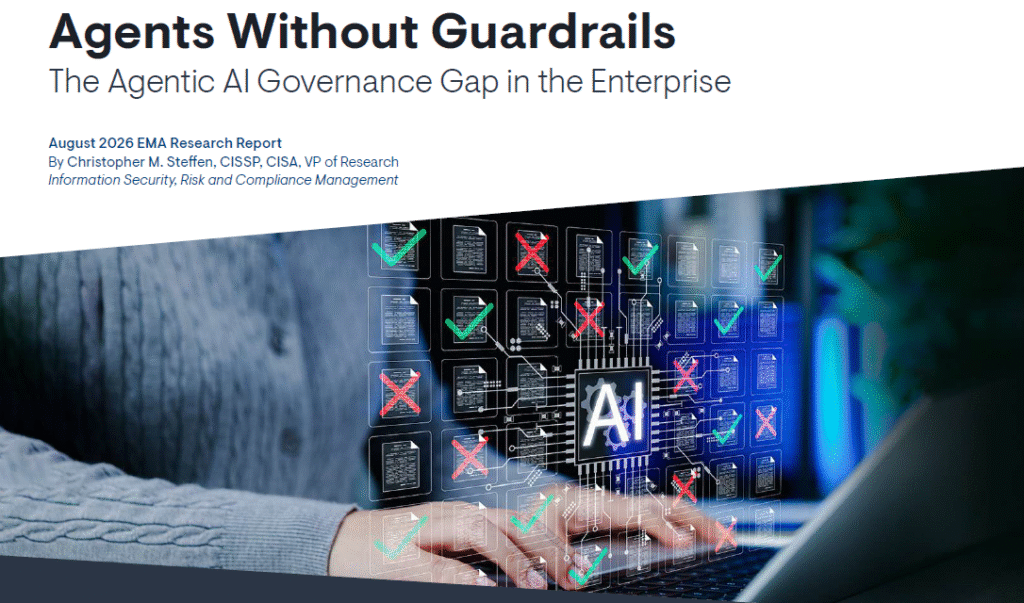
New Cequence & EMA Research: 94% of Enterprises Trust Their AI Agents Aren’t Over-Provisioned. Only 33% Actually Enforce It.

Nearly every enterprise believes its AI agents are properly scoped. Only a third have actually made sure of it.
Today, new research from Cequence Security, the leader in application, API, and agentic AI protection, and Enterprise Management Associates (EMA) found that 94% of enterprise IT and security leaders are confident their AI agents do not have more access than they need, yet only 33% actually provision agents with least-privilege access. The remaining two-thirds run on broad standing permissions that are reviewed periodically, rarely reviewed, or never reviewed at all.
That gap between confidence and practice is already showing up in production, not a theoretical risk, but as incidents enterprises are living with right now. Among the organizations surveyed:
- 65% have experienced an AI agent take an action outside its intended scope, including 29% with measurable business impact, including data exposure, financial loss, operational disruption, or reputational damage. Another 36% caught a near-miss before it caused damage.
- Only 32% can detect and contain an out-of-scope agent action within minutes through automated means; 55% need hours and manual steps to respond.
- In approximately 4% of organizations surveyed, the first sign of trouble came from a customer or outside partner, not an internal system.
The findings point to one clear story. Governance has not kept pace with the speed of agentic AI deployment, and that gap is showing up at every stage of the agent lifecycle, from how agents are provisioned, to how their actions are authorized, to how they are decommissioned once a pilot ends. Other key findings from the report include:
Enterprises Have Moved Past the Pilot Stage
The scale of deployment makes the gap more urgent. 46% of organizations report they are already scaling agentic AI across multiple departments and production workflows, and 79% are running generative and agentic AI simultaneously. Further, more than 92% report an increase in AI and bot-driven traffic targeting customer-facing applications and APIs.
Authorization is Checked at the Wrong Time, Or Not At All
That governance gap extends to how access is enforced in the moment an agent acts. Only 34% of organizations evaluate an AI agent’s authorization at the moment it attempts a specific action. The majority rely on periodic policy reviews or standing permissions set once at provisioning and never revisited, meaning an agent’s access can quietly outlive the task it was originally granted for, and keep working long after anyone signed off on it.
Abandoned Pilots Are Leaving Live Credentials Behind
Additionally, there’s an increasing risk in how enterprises manage agents that don’t make it to production. 31% of agentic AI pilots have been paused indefinitely, discontinued, or abandoned. Many were real deployments with real system access and credentials that were never cleaned up. Every abandoned pilot with live credentials is exposure nobody is actively watching.
External Connectivity Carries the Same Risk
14% of organizations allow AI agents to connect to outside tools and data sources via the Model Context Protocol (MCP) without restriction. Among the majority who do limit those connections to an approved list, fewer than half, just 49%, have a dedicated team actively maintaining and auditing that list on a regular basis.
Christopher M. Steffen, CISSP, CISA, VP of Research at EMA, said: “This research shows enterprises have moved well past experimentation with agentic AI right into production, and governance has not kept pace with that shift. The gap isn’t a lack of awareness; most organizations have policies in place and express real confidence in them. The gap is between what’s written down and what’s enforced when an agent takes an action nobody approved. That disconnect shows up most clearly in how organizations authorize agent actions and monitor them once they’re live, and it’s the reason incidents are happening at a rate the industry hasn’t fully reckoned with.”
Shreyans Mehta, Co-founder and CTO at Cequence, said: “The number that jumped out to me is the 92% being confident in their governance frameworks. Confidence like that is a trap; it’s exactly why organizations stop looking for problems, stop investing in monitoring, and let authorization checks lapse until an incident forces the conversation. This is the exact blind spot Cequence is built to close, giving security teams real-time visibility into what AI agents are actually doing and enforcing authorization at the moment an agent acts, not after the fact.”
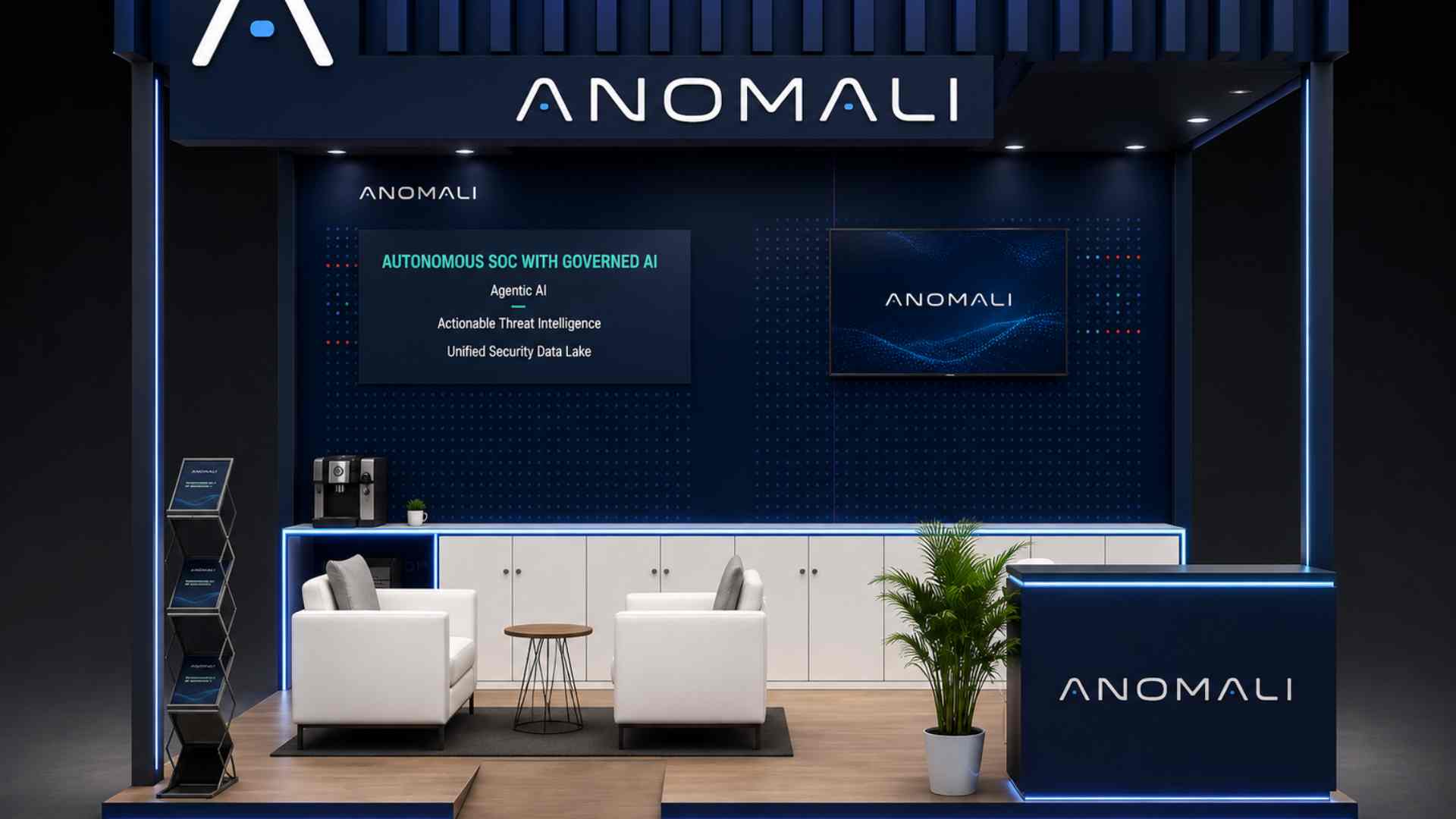
Anomali, the leading global Managed Intelligence and Agentic SOC platform, announced its participation at GISEC Global 2026, taking place through 16-18 September at Dubai Exhibition Centre (DEC), Expo City.
The company’s discussions at GISEC will center on Autonomous SOC with Governed AI, Agentic AI, Actionable Threat Intelligence and Unified Security Data Lake capabilities that are changing the manner in which security teams investigate threats, manage workflows and make decisions.
Samer Jadallah, Vice President, Middle East & Africa at Anomali, will represent the company at GISEC and will focus on the growing impact of AI on both attackers and defenders, emerging shifts in the threat landscape, including the need to counter CEO impersonation attacks as well as key challenges facing modern security teams. He will also highlight AI’s role is helping organizations respond more effectively to evolving threats, Anomali’s commitment to the region and ongoing product innovation and plans to expand adoption of the Anomali platform across global enterprises and government organizations.
A key focus at this year’s event will be the changing nature of cyberattacks. As threat actors promptly adopt AI to scale campaigns and further accelerate attacks, security operations centers (SOC) are under growing pressure to process rising volumes of alerts with limited resources. To help with this, Anomali will demonstrate how AI can support analysts in multiple ways like surfacing higher- value insights, reducing manual effort and enabling quicker, informed responses.
Visitors can find Anomali at Booth E156 and Booth A80.
- Event: GISEC Global 2026
- Booths: E156 and A80
- Location: Dubai Exhibition Centre (DEC), Expo City
- Dates: 16 th to 18 September 2026
- Time: 9:00 am to 5:00 pm GST
Tech News
HONOR BRINGS ITS ALPHA PLAN TO LIFE AT LEAP 2026 WITH THE WORLD’S FIRST ROBOT PHONE AND RENEWED “DARE TO BE” BRAND DIRECTION

HONOR, a global leading AI device ecosystem company, concluded its participation at LEAP 2026, bringing its “ALPHA PLAN: From Vision to Reality” to life through the world’s first Robot Phone, advancements in robotics, cinematic imaging and connected AI experiences. The participation also marked HONOR’s renewed “Dare to Be” brand direction reflecting its continued transformation from a company predominantly known for smartphones into a broader global AI device ecosystem company.
Commenting on the participation, Lei Kunming, CMO HONOR Middle East & Africa said, “LEAP 2026 showed how HONOR’s ALPHA PLAN is moving from vision to reality. From the world’s first Robot Phone and Robotics to our connected ecosystem, we demonstrated how AI can work more naturally around people.” He added “Our ‘Dare to Be’ direction gives that transformation a stronger identity, with Saudi Arabia remaining central to our growth in AI and digital innovation.”
Bringing the HONOR Booth Experience to Life
Visitors explored HONOR’s expanding ecosystem through interactive experiences spanning sports, gaming, smart office, learning and everyday scenarios.
The booth demonstrated how smartphones, PCs, tablets, wearables and other smart devices can work together to deliver more seamlessly, across work, entertainment, sports and health, reflecting the ALPHA PLAN’s ambition to create a more intelligent, connected and human-centric ecosystem around the user.
Introducing the World’s First Robot Phone
At the centre of HONOR’s showcase was the world’s first Robot Phone, a defining proof point of the ALPHA PLAN and a new category combining AI, robotics and cinematic imaging.
Its integrated robotic gimbal can move, track subjects and respond to its surroundings, enabling more intuitive and proactive content creation. LEAP also marked the Robot Phone’s reveal for the Middle East and Africa, making the region the first overseas market to experience the new category.
HONOR also highlighted its collaboration with ARRI, bringing more than 100 years of professional cinema and image science expertise together with HONOR’s AI and robotics capabilities to make cinematic content creation more accessible to everyday users.
Advancing a Future Built on Human and AI Collaboration
Beyond the Robot Phone, HONOR showcased its ambitions in robotics through HONOR Robotics D1, reinforcing its vision of a future shaped not by humans competing against AI, but by humans working with AI to achieve more. The company also explored the future of AI devices and robotics through its LEAP keynote and panel discussions.
Entering a New “Dare to Be” Era
Reflecting this evolution, HONOR’s renewed“Dare to Be” direction reflects its evolution beyond individual devices towards an open AI ecosystem connecting technologies, industries and lifestyles. Supported by innovations including Agentic OS and AiMAGE, HONOR’s journey progresses from an intelligent phone to an intelligent ecosystem and, ultimately, an intelligent world.
Driving Growth Across MEA
HONOR entered LEAP with strong regional momentum. In H1 2026, the company grew by 35% while the Middle East smartphone market declined by 13%, making HONOR the only leading smartphone brand in the region to grow and the second-largest smartphone brand in the Middle East. This followed 73% year-on-year growth in Q1 2026.
Within this regional growth, Saudi Arabia remains a particularly important market for HONOR, supporting the company’s broader ambitions across AI devices and its connected ecosystem.
Strengthening HONOR’s AIoT Presence in Saudi Arabia
As part of this momentum, Saudi Arabia remains a strategic market for HONOR and an important part of the ALPHA PLAN. The Kingdom is now HONOR’s number one tablet market by share, while its AIoT business has grown by more than 500% and HONOR Earbuds Clip has surpassed 100,000 units sold locally.
Building on this strong foundation, HONOR continues to strengthen its presence through retail, after-sales, local partnerships and deeper engagement with the Kingdom’s technology ecosystem.


New Cequence & EMA Research: 94% of Enterprises Trust Their AI Agents Aren’t Over-Provisioned. Only 33% Actually Enforce It.
DO FISCAL STIMULUS MEASURES SUPPORT THE US MARKET GROWTH, AND IS A DEFAULT POSSIBLE?
DO FISCAL STIMULUS MEASURES SUPPORT THE US MARKET GROWTH, AND IS A DEFAULT POSSIBLE?



-
News11 years ago
SENDQUICK (TALARIAX) INTRODUCES SQOOPE – THE BREAKTHROUGH IN MOBILE MESSAGING
-

 Trending11 months ago
OPPO A6 Pro 5G Review: Reliable Daily Driver
-

 Tech News2 years ago
Denodo Bolsters Executive Team by Hiring Christophe Culine as its Chief Revenue Officer
-
 VAR1 year ago
Microsoft Launches New Surface Copilot+ PCs for Business
-

 Automotive2 years ago
AGMC Launches the RIDDARA RD6 High Performance Fully Electric 4×4 Pickup
-
Tech Interviews2 years ago
Navigating the Cybersecurity Landscape in Hybrid Work Environments
-

 Tech News1 year ago
Nothing Launches flagship Nothing Phone (3) and Headphone (1) in theme with the Iconic Museum of the Future in Dubai
-

 VAR2 years ago
Samsung Galaxy Z Fold6 vs Google Pixel 9 Pro Fold: Clash Of The Folding Phenoms