
 Have a question? +971 56 404 0503




Home Feature
From Boom to Brilliance: How ERP is Powering Dubai’s Real Estate Future

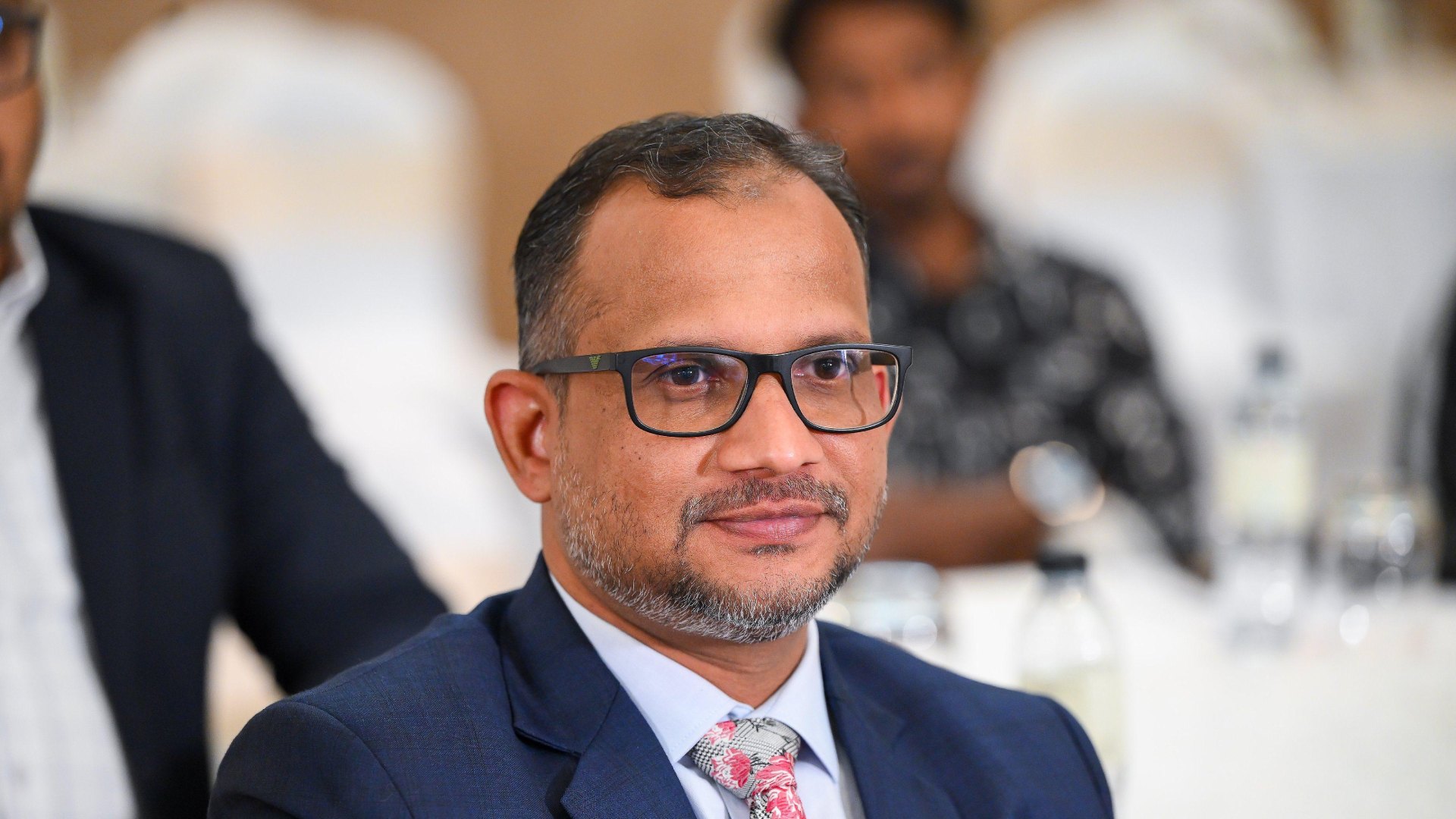
Article is attributed to Mr. Moossa M. Alavi, Founder & CEO of Techbot ERP
Dubai’s skyline isn’t just growing, it’s evolving into a smarter, more connected ecosystem. Behind every tower crane and transaction, technology is quietly building the backbone of the city’s real estate future. It is streamlining everything from tenant screening and property maintenance to market monitoring and online transactions, making it simpler and faster for both buyers and sellers to navigate the real estate market. In the first half of 2025 alone, the city recorded 125,538 property transactions—a 26% year-on-year increase—reaching a staggering AED 431 billion in value.
But beyond these headline numbers lies a deeper shift. As an ERP systems expert working closely with real estate stakeholders, I see a growing recognition that this rapid expansion cannot be managed using fragmented tools or legacy software. The complexity of Dubai’s real estate ecosystem now demands enterprise-grade digital infrastructure, with Property management software in Dubai becoming the operational backbone of the sector.
From Growth to Complexity: The Need for Scalable Systems
The volume of deals and investor activity speaks for itself. Nearly 95,000 investors executed over 118,000 deals, contributing AED 326 billion to the market. Among them, more than 59,000 were first-time buyers, and almost half were UAE residents—showcasing a critical shift from speculative purchases to long-term ownership. Additionally, female investors accounted for over AED 73 billion across 35,000 transactions.
As portfolios expand and buyer profiles diversify, real estate firms in Dubai face growing operational demands—from contract compliance and escrow reporting to financial forecasting and tenant lifecycle management. This is where Real Estate ERP systems come in—not as optional add-ons, but as foundational technology enabling companies to scale while remaining agile and compliant.
The Role of ERP in a Hyper-Dynamic Market
Modern ERP systems built for real estate do more than consolidate accounting or automate leases. They act as the digital nervous system of a property business—integrating finance, sales, leasing, asset management, facilities, legal, and investor relations into a single source of truth.
In Dubai’s fast-moving market, where thousands of units may be launched, sold, and managed within weeks, Real Estate ERP solutions provide:
- End-to-end portfolio visibility, allowing developers to track project performance in real time
- Integrated compliance tools, especially important in managing escrow regulations and RERA requirements
- AI-powered forecasting, helping CFOs and analysts model risk, revenue, and operational costs
- Workflow automation, from document generation to renewal alerts, which drastically reduces errors and manual intervention
Most importantly, these platforms allow executives to move from reactive management to predictive, data-driven decision-making—a vital shift in a landscape as fluid and competitive as Dubai’s, driven in part by real estate automation UAE.
Tokenisation, AI & IoT: Driving ERP Evolution
Dubai’s first digital approach to real estate is also influencing how ERP platforms evolve. The Real Estate Tokenization Project, for example, is introducing blockchain into mainstream property transactions. With property deeds tokenized and traded as digital assets, ERP systems must now integrate with blockchain networks to track fractional ownership, automate KYC/AML checks, and generate compliant audit trails.
Similarly, Real Estate ERP solutions are integrated with IoT-enabled smart buildings and digital twin models. Sensors installed across residential and commercial assets feed real-time data into ERP dashboards—enabling predictive maintenance, energy efficiency tracking, and occupancy monitoring. These integrations reduce operational costs and extend asset longevity, creating a win-win for both asset managers and tenants. This fusion of construction and real estate technology is setting new benchmarks for operational excellence.
Government Policy, Compliance, and the ERP Imperative
Dubai’s real estate surge is closely tied to progressive government policies—from long-term visas and 100% foreign ownership to relaxed freehold regulations. But with opportunity comes accountability.
Real estate companies are now expected to operate with transparency, auditability, and speed. Business operational digital platforms help meet these expectations by embedding compliance into daily operations. Contract workflows can include version control and approval hierarchies. Escrow transactions can be reconciled automatically. Licensing and regulatory deadlines can trigger alerts and renewals.
This is especially crucial for international investors who demand rigorous governance structures. A digitally mature company with an ERP-driven operation inspires more confidence than one relying on spreadsheets and disconnected software.
Operational Gains in a High-Volume Environment
The pace of development in Dubai requires companies to execute flawlessly at scale. With over 73,000 new residential units expected by the end of 2025, managing sales, handovers, payments, and post-sale support manually is not just inefficient—it’s unsustainable.
ERP systems are built to handle this scale. Sales and leasing modules can track real-time availability, link with CRM pipelines, and auto-generate buyer contracts. Financial modules are integrated with payment gateways and banks to ensure seamless transaction processing. Facilities modules manage service requests, track vendor SLAs, and handle asset depreciation.
This holistic integration allows real estate firms to deliver consistently high-quality customer experience, even as they grow rapidly.
From Cost Center to Strategic Asset
ERP systems were always seen as expensive backend tools—useful, but not transformative. That view is changing fast. In 2025, all business management software is a strategic asset that drives profitability, compliance, investor confidence, and competitive advantage.
With real-time dashboards, decision-makers no longer need to wait for monthly or quarterly reports. They can see at a glance, which projects are underperforming, where revenue is leaking, and what operational issues need immediate attention. For CFOs, CIOs, and CEOs alike, this agility is invaluable.
Future-Proofing Real Estate Through ERP
Looking ahead, Dubai’s real estate market is expected to shift from rapid expansion to smart consolidation. Price growth is projected to stabilize at 5–10% in the residential segment, while luxury and tech-enabled properties continue to outperform.
This normalization doesn’t diminish the need for speed—it increases the need for efficiency. Companies must operate leaner, respond faster to market signals, and offer better digital experiences to customers and tenants.
ERP systems, integrated with AI, blockchain, and IoT, will be the cornerstone of this evolution. They will support ESG compliance, facilitate smart contracts, streamline investor reporting, and enable new business models like fractional ownership and subscription-based leasing.
Building the Future with Digital Infrastructure
Dubai has always been a city of bold visions, but its real estate sector is no longer just about architecture and ambition. It’s about operational intelligence, systems integration, and digital scalability.
It is crucial to adopt the right digital backbone that can turn a growing real estate company into a future-ready enterprise. The firms that succeed in this next phase won’t just be the ones with the most units or the tallest towers, they’ll be the ones that manage complexity with clarity, grow sustainably, and deliver consistently through technology.
ERP systems are no longer in the background. They are the foundation of the modern real estate business—and in Dubai, powered by construction and real estate technology and real estate automation UAE, they are driving a transformation as impressive as the skyline itself.

Kirsten Jenna Michaels, Founder & CEO of FEMPOWERMENT, on turning life experiences into purpose and creating space for women to rise.
ABOUT KIRSTEN – THE EXPERIENCES THAT SHAPED KIRSTEN’S APPROACH TO SUPPORTING WOMEN
Kirsten Jenna Michaels didn’t set out to build another networking group. Founder and CEO of FEMPOWERMENT, a women’s empowerment movement established in 2025 and based in Dubai, Michaels developed the platform around an observation she encountered repeatedly throughout her life: talented, ambitious women weren’t short on ability, but on access.
Today, the platform brings together a podcast, monthly seminars, networking events, workshops and certifications, coaching and business support, with its Women’s Business Launchpad and Convention forming part of its wider ecosystem.


HER STORY
For Kirsten Jenna Michaels, the origins of FEMPOWERMENT can be traced back to a question she carried through much of her life: “Why do I have to keep going through this?”
There were periods in her life when she faced circumstances that left her without stability, support or a clear sense of what came next. She describes some of those chapters as experiences that were “designed to break me” — years in which she had to navigate difficult circumstances largely on her own. Looking back, however, Michaels says the deeper impact of surviving difficult experiences was not simply what happened, but what those experiences taught her to expect from life.
“It is not the event. It is what the event teaches you to expect.”
For five years, she describes herself as being effectively removed from society. There was “no circle, no room to walk into, nobody who knew what was happening or who would have said the thing I needed to hear.”
Michaels believes that having a strong group of women around her could have helped her find the confidence to make different choices sooner. Not because they would have rescued her, she says, but because she would have been able to “see what normal looked like and understood that I was allowed to want it.”
What she needed was not simply advice, but an example of another possibility.
“What I needed more than advice was a woman standing on a stage in front of me, telling me I did not have to settle for the life I had been handed.”
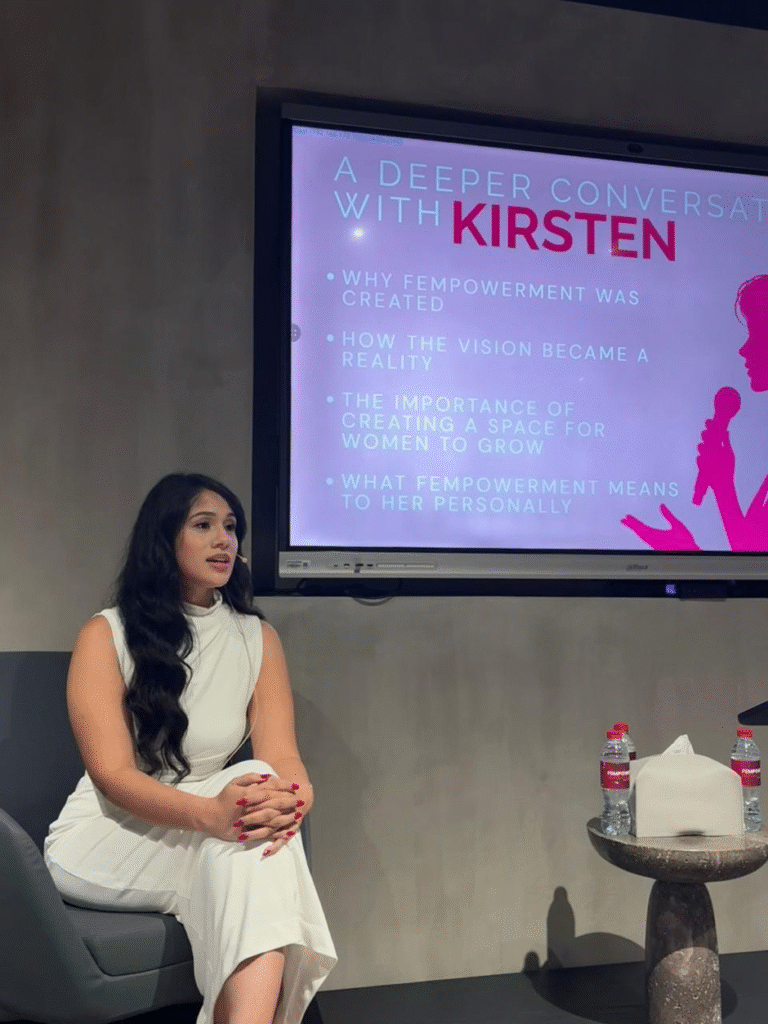
That realisation would later become part of the thinking behind FEMPOWERMENT.
Michaels co-founded FEMPOWERMENT in 2025 with its structures, programmes and mission mapped out, but without funding. The breakthrough came unexpectedly during a job interview.
The man across the table noticed the FEMPOWERMENT logo on Michaels’ notebook, a logo she had designed herself in Canva. He asked what it was. Instead of offering her the role, the investor offered a 50-50 partnership, access to funding and his network.
But for Michaels, the significance went beyond the opportunity itself. It was the experience of having someone believe in the idea before there was proof.
“All it takes is one person to change the trajectory of your entire life.”
That thinking now shapes the platform’s programmes. The Business Launchpad is intended to support women with potential but without the resources to execute on it and is currently listed as “coming soon” by FEMPOWERMENT. Its monthly seminars reflect the woman Michaels once wished she could have seen on stage. Networking events draw from the five years she spent without a support circle, while coaching is designed around the recognition that sometimes what a woman needs is not another curriculum, but “an hour with someone who will tell her the truth.”

ABOUT FEMPOWERMENT
When asked to define FEMPOWERMENT’s core mission, Michaels positions the organisation around creating greater access to opportunities and resources, rather than inspiration alone.
FEMPOWERMENT describes itself as a purpose-driven movement built around community, education and philanthropy, with its work spanning coaching, events, business support, content and networking. Its stated mission is to build a global movement that connects, uplifts and celebrates women of all backgrounds.
Michaels sees FEMPOWERMENT as a platform with ambitions beyond the UAE, built around creating space for women to pursue their potential. As she puts it, “I built FEMPOWERMENT™ for every woman who was told she was too much — you are exactly enough, and this is your space to rise.”
THE FOUNDATIONS AND MOVEMENT BEHIND FEMPOWERMENT
“Empathy, first,” she says. “Knowledge, second,” followed by hope.
For Michaels, these are not abstract principles. They are informed by experience — by understanding what it means to feel unable to leave, what it takes to start again with nothing, and how difficult it can be to believe that circumstances can change until someone who has lived through them shows you that they can.
It is this understanding of what women need, rather than simply what they are told they need, that now shapes the work behind FEMPOWERMENT.
Her focus now is clear: to create opportunities for women, help them build success and, ultimately, find peace — something she considers “by far the harder of the two.” Looking back at the experiences she once believed were meant to break her, Michaels has arrived at an answer to the question she carried for so long.
“Everything that happened to me was meant to break me. It built this instead.” FEMPOWERMENT describes itself as a purpose-driven movement connecting, uplifting and celebrating women of all backgrounds, with the aim of helping women reclaim their voices, build their futures and rise together.
Today, her focus is on creating opportunities for women, helping them build success and helping them find peace — “which, in my experience, is by far the harder of the two.”
THE IMPACT OF BEING SEEN AND HEARD
Beyond the founder, mentor and CEO, the people around Kirsten describe a woman who makes others feel seen, supported and capable of more.
“Kirsten isn’t just a CEO; she has become a very dear friend to me. She came into my life at a time when I really needed someone genuine, caring, and supportive, and I feel incredibly grateful that our paths crossed.
She is one of the hardest-working people I’ve ever met and will always go above and beyond for the people around her, often putting everyone else before herself. Professionally, she constantly pushes me to do better, step outside my comfort zone, and believe in what I’m capable of, while always making sure I know that she has my back. She supports me in every way she can and genuinely wants to see the people around her succeed.
But what makes Kirsten so special to me is that our relationship goes beyond work. She has become someone I can trust, laugh with, learn from, and genuinely call a friend. She has this incredible energy that lights up every room she walks into, and her warmth makes people feel comfortable and valued almost instantly.
I’m so grateful to have Kirsten in my life, both as my boss and, more importantly, as a friend. She has had such a positive impact on me, and I honestly couldn’t ask for a better person to work alongside and have in my corner.”
— Rachel Cawley, head of brand and community
“Working with Kirsten has been such a valuable experience for me. As my boss, she has pushed me to think bigger, be more confident, and take ownership of my work. I genuinely respect her not just for what she has achieved, but for the way she carries herself and the impact she has on the people around her. I’m grateful that I got to work closely with her and that I can take so much from the experience, both professionally and personally.”
— Ayesha Ahmad
“At first, I was honestly a little intimidated by her, but once you get to know Kirsten, you realise just how bubbly, warm, and genuine she really is. She has this incredible way of making everyone around her feel seen, supported, and capable of more than they thought they could be. Having her as my mentor has completely changed the way I look at life, work, and even myself. She has challenged me to step outside my comfort zone, believe in myself, and see possibilities I may not have noticed before. I’m forever grateful to have crossed paths with her and to have someone like Kirsten guiding, inspiring, and believing in me along the way.”
— Ayesha Mustafa
“Honestly, I see Kirsten as someone who has genuinely had a meaningful impact on the person I have become, both personally and professionally.
I’ve always experienced Kirsten as a warm, ambitious, and genuinely kind-hearted person. She has a unique ability to recognise potential in people, sometimes even before they see it in themselves. She challenged me, encouraged me to step outside my comfort zone, and continuously inspired me to grow and become more confident in my abilities.
A significant part of who I am professionally today has been shaped by the opportunities, guidance, and challenges she has given me. Working with her has taught me responsibility, confidence, resilience, and the importance of thinking beyond what feels comfortable and believing in a bigger vision.
What I particularly admire about Kirsten is her passion for what she is building and her commitment to bringing the people around her along on that journey. She sets high standards because she believes in the potential of those she works with, and that has encouraged me to raise my own standards and continuously strive to do better.
I’m genuinely grateful for the experience of working with her. She didn’t simply give me a professional opportunity; she encouraged me to believe in myself, grow into my capabilities, and become a stronger and more confident version of myself.”
— Nilofar Shareef, Operation Manager | FEMPOWERMENT
Home Feature
What Luxury Really Means in 2026 – And Why Exclusivity Is No Longer Defined by Price Alone
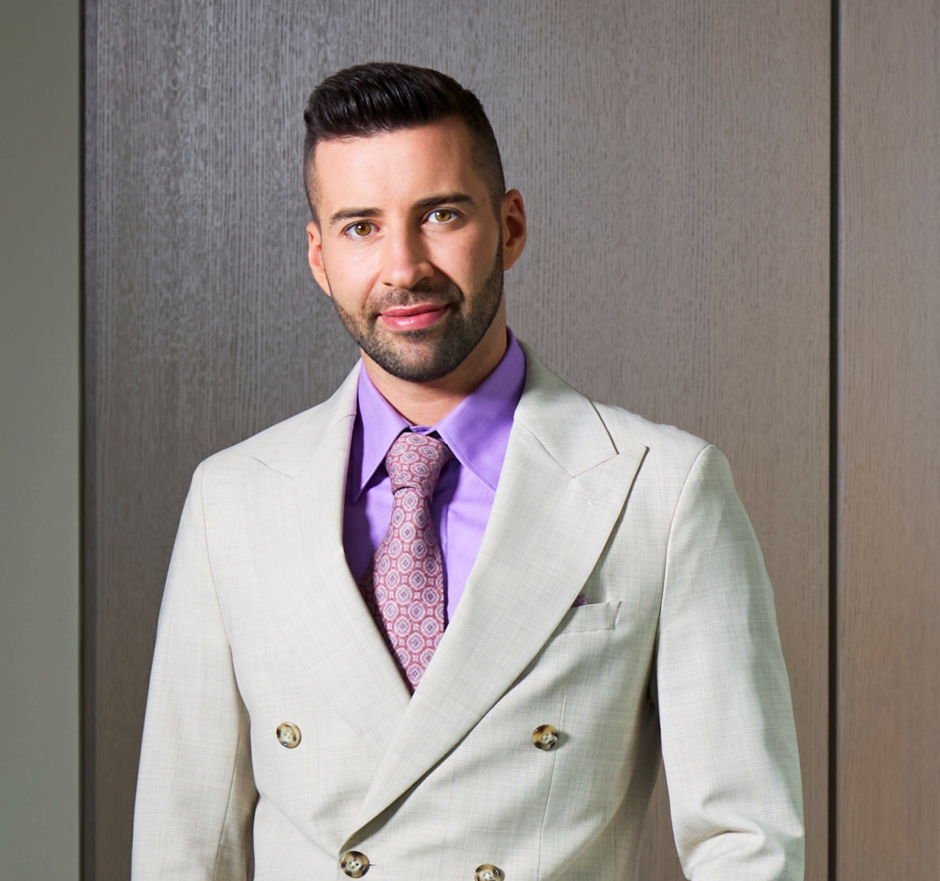
Joshua Oliver – Luxury Advisor & Founder, Joshua Oliver Concierge
For decades, luxury was easy to define. It was the highest price tag, the rarest handbag, the largest home or the most extravagant holiday. Wealth was displayed through possessions, and exclusivity was measured by what something cost.
In 2026, that definition has fundamentally changed.
Working with high-net-worth and ultra-high-net-worth clients around the world, I’ve witnessed a clear shift in purchasing behaviour. The world’s wealthiest individuals are still spending significant amounts of money, but increasingly, price is no longer the deciding factor. Instead, they’re investing in something far more valuable: privacy, time, authenticity, access and individuality.
The new status symbol isn’t simply owning something expensive. It’s owning or experiencing, something that very few people can.
One of the biggest misconceptions about luxury is that it revolves around brands. Heritage houses such as Hermès, Loro Piana and Brunello Cucinelli continue to thrive, but clients are becoming far more selective. They no longer buy products simply because they’re trending on social media or because everyone else is carrying them.
Instead, they’re searching for craftsmanship, personality, collectability and longevity. Luxury is becoming increasingly personal. Clients want pieces that reflect who they are, not what the algorithm tells them to buy. Personal confidence has replaced obvious logos.
This shift extends well beyond fashion.
In travel, clients increasingly prioritise privacy and personalisation over scale. The world’s most famous hotels are no longer necessarily the most desirable. Rather than asking for the hotel everyone else is booking, clients now ask me where they should stay based on their personality, interests and travel style. They would rather discover a remarkable independent property than simply tick off another famous brand.
Technology has accelerated this evolution. Social media has made luxury more accessible than ever before, introducing extraordinary hotels, restaurants and brands to millions of people. While that’s undoubtedly positive, it has also diminished the sense of discovery. When everyone knows where the “best” place is, it inevitably loses some of its exclusivity.
I’ve even made a conscious decision to share fewer ultra-rare Hermès bags and exceptional watches across my own social media channels. Part of what makes these pieces so desirable is their rarity. Constant exposure inevitably erodes that sense of exclusivity. Luxury should still retain an element of mystery.
As a result, affluent consumers are increasingly moving beyond the algorithm. They value trusted recommendations, genuine expertise and personal relationships over viral popularity. They’re looking for people they trust, rather than content with the highest number of views.
This is where the role of a modern concierge has changed dramatically.
Years ago, concierge services were largely transactional. Book a hotel. Reserve a restaurant. Arrange an airport transfer. Today, clients are looking for a trusted advisor, one person who understands their lifestyle, anticipates their preferences and becomes a genuine extension of their daily life.
More importantly, they want someone to save them time.
I often find myself advising clients against the most expensive option. Sometimes the most luxurious hotel isn’t the one charging £5,000 a night, but the boutique property where the General Manager greets guests by name. It isn’t always the beach club with the highest minimum spend, but the quieter one where service is flawless and the atmosphere feels effortlessly relaxed.
Luxury has become less about consumption and far more about discernment.
Perhaps the greatest luxury of all, however, is time.
Time is the one asset that can never be replenished, and affluent individuals increasingly value services that remove friction from their lives. Whether that’s sourcing an impossible-to-find item, planning a seamless itinerary across multiple countries or simply knowing someone trustworthy is handling every detail, convenience has become one of luxury’s most valuable currencies.
Ultimately, luxury in 2026 is becoming more personal than ever before.
It’s no longer about impressing strangers. It’s about improving your own quality of life.
It’s choosing time, privacy, craftsmanship, expertise and individuality.
Price will always have a place within the luxury market, but it is no longer the defining characteristic. The most exclusive things in the world today often cannot simply be purchased. They require trust, expertise, relationships and access.
Perhaps that’s exactly how luxury should be defined: not by what it costs, but by how difficult it is to replicate.
Real estate in the UAE continues to show strong momentum, with recent data from the Dubai Land Department recording AED 4.5 billion in real estate transactions in May 2026. As the market moves into the second half of the year, what sets a development apart is no longer just design or location. Increasingly, it comes down to the digital systems built into a property and how clearly investors can track their assets over time.
According to Amaal, four technology trends are expected to transform how residents live, how developers operate, and how investors engage with property across the UAE in H2 2026.
Real estate tokenisation is widening access to property investment
Property investment models in the UAE are moving toward blockchain-enabled fractional ownership, where high-value real estate is divided into digital units to expand access and improve liquidity. Through tokenisation, investors can participate in luxury and large-scale developments without requiring full asset ownership, creating a more flexible and globally accessible investment structure. This shift is also aligned with the Dubai Land Department’s initiative to digitise up to 7 percent of property transactions, equivalent to approximately $16 billion by 2033. In Dubai, this transition is already being implemented through collaborations such as Amaal’s partnership with IOPn, which is developing tokenised property solutions for residential projects to make investment more accessible to a wider investor base.
Agentic AI is becoming embedded across the property ecosystem
AI in real estate is moving from assistants and chatbots into autonomous systems that execute operational work across leasing, property management, compliance, and investment functions. Realty is structurally complex, with constant coordination between tenants, buyers, brokers, and service providers, making it a strong environment for AI workforce deployment. For instance, in leasing, an ‘AI employee’ qualifies leads, responds to enquiries, schedules viewings, follows up with prospects, and generates contracts. On the investment side, AI systems analyse portfolio performance, forecast rental yields, simulate pricing scenarios, and identify underperforming assets in real time. Industry research, including McKinsey estimates, suggests AI could unlock up to $550 billion in value across the real estate value chain, highlighting the scale of transformation underway.
Digital investor platforms are increasing transparency in off-plan sales
As off-plan developments continue to dominate large segments of the UAE market, developers are placing greater emphasis on financial transparency throughout the ownership journey. Digital investor dashboards are becoming increasingly common across new projects, giving buyers real-time visibility into payment schedules, escrow updates, construction milestones, and ownership documentation. Rather than relying on fragmented communication channels or static instalment schedules, investors increasingly expect a centralised platform where they can monitor project progress and manage multiple investments in one place. This shift is helping strengthen confidence in off-plan purchasing while reducing administrative friction for both developers and buyers.
Real-time air quality monitoring is entering residential buildings
Indoor air quality has become a growing consideration for premium developers as buyer awareness around health and wellness increases. Purification technology has improved significantly, with active systems that break down pollutants at a molecular level rather than simply filtering them, targeting pathogens, allergens, and volatile organic compounds released by interior materials. What is newer is the monitoring layer are sensors embedded in units and common areas that track pollutant levels, humidity and ventilation performance in real time, feeding data into building management systems and resident-facing apps. As lifestyle becomes a bigger part of the buying decision, air quality is a meaningful part of the premium residential offer.


New Cequence & EMA Research: 94% of Enterprises Trust Their AI Agents Aren’t Over-Provisioned. Only 33% Actually Enforce It.
DO FISCAL STIMULUS MEASURES SUPPORT THE US MARKET GROWTH, AND IS A DEFAULT POSSIBLE?
DO FISCAL STIMULUS MEASURES SUPPORT THE US MARKET GROWTH, AND IS A DEFAULT POSSIBLE?



-
News11 years ago
SENDQUICK (TALARIAX) INTRODUCES SQOOPE – THE BREAKTHROUGH IN MOBILE MESSAGING
-

 Trending11 months ago
OPPO A6 Pro 5G Review: Reliable Daily Driver
-

 Tech News2 years ago
Denodo Bolsters Executive Team by Hiring Christophe Culine as its Chief Revenue Officer
-
 VAR1 year ago
Microsoft Launches New Surface Copilot+ PCs for Business
-

 Automotive2 years ago
AGMC Launches the RIDDARA RD6 High Performance Fully Electric 4×4 Pickup
-
Tech Interviews2 years ago
Navigating the Cybersecurity Landscape in Hybrid Work Environments
-

 Tech News1 year ago
Nothing Launches flagship Nothing Phone (3) and Headphone (1) in theme with the Iconic Museum of the Future in Dubai
-

 VAR2 years ago
Samsung Galaxy Z Fold6 vs Google Pixel 9 Pro Fold: Clash Of The Folding Phenoms