
 Have a question? +971 56 404 0503





Home Feature
Can Technology Help Us Feel Less Alone? The promise and limits of digital connection


by Tanya McGuane, Assistant Professor of Psychology, Global College, Heriot-Watt University Dubai
We have never had so many ways to reach each other. A face thousands of miles away can appear on our screen in seconds. Friendships can stretch across continents, strangers can become communities, and somewhere online, someone is awake, talking, sharing, connecting. Being physically alone no longer has to mean being disconnected.
And yet, loneliness remains one of the defining wellbeing challenges of our time. So, can technology actually help us feel less alone? The honest answer: it depends on how we use it.
Perhaps technology is most powerful not when it gives us more people to talk to, but when it helps us find the right people. For someone living with chronic illness, struggling with social anxiety, adjusting to life far from home, or feeling like nobody around them shares their experience, the internet can offer something deeply human: recognition. That moment of realising, “It’s not just me.” Technology can shrink the distance between “no one gets me” and “there are others like me.” A screen is not always a barrier to belonging; sometimes, it is the bridge to it.
The research supports this, with one important caveat. Nowland, Necka and Cacioppo (2018) found that when people use the internet to strengthen existing relationships or build new ones, loneliness can ease. When it is used to withdraw from the social world, loneliness tends to deepen. Technology, in other words, amplifies whatever intention we bring to it.
But not all digital interaction is equal. Sherman, Michikyan and Greenfield (2013) compared how close friends felt after connecting in person, by video, voice and text. Face-to-face conversation created the strongest bond, while text created the weakest. Tone of voice, a facial expression, a pause that says more than words: these are the cues we rely on to feel understood, and much of that richness is lost in a message thread.
How we scroll matters too. Passively watching other people’s highlights has been linked to lower wellbeing (Verduyn et al., 2015). When Hunt and colleagues (2018) asked students to limit social media to around 30 minutes a day, they reported less loneliness and depression within three weeks. Less scrolling, it seems, can leave more room for living.
The rise of artificial intelligence adds another layer to our increasingly digital social world. Technology can now respond to us, remember information and simulate remarkably natural conversation. That may offer companionship and support, particularly during moments of isolation.
But responsiveness is not necessarily relationship.
Human relationships ask something of us. They require compromise, vulnerability, patience, reciprocity and sometimes discomfort. Perhaps those inconvenient parts of relationships are not flaws that technology needs to solve, but part of what makes human connection meaningful.
So, what do we do? We use technology as a bridge, not a destination. Turn the like into a message, the message into a call, and the call into a coffee. Join the online community, then go to the meetup. And every so often, ask yourself: when I close this app, do I feel more connected, or just more occupied?
Technology can open the door. It can introduce us, remind us of the people we love and keep us close across thousands of kilometres. But it cannot walk through the door for us. And perhaps we should not want it to.
There is something beautifully chaotic about human connection. For as long as we have existed, we have been falling in love, falling out of love, finding friendships in unlikely places, missing people, misunderstanding one another, forgiving one another and somehow finding our way back. Entire novels, poems, plays and songs have been written about our endless attempts to understand and be understood by each other. Shakespeare might turn in his grave at the suggestion that we could finally reduce all of that glorious human messiness to an algorithm.
Technology is changing how the story begins. A friendship might start in a comment section. Love might begin with a swipe. A family scattered across continents can still see one another’s faces at the end of a long day. These are extraordinary things, and generations before us could only have imagined them.
But surely this is not where the great human story of connection ends.
Because belonging has never simply been about access to other people. It is built in the showing up: the conversations that run too late, the comfortable silences, the disagreements we repair, the ridiculous private jokes, the hand we reach for without thinking. The small, imperfect moments through which another person slowly becomes part of our life.
A screen can tell us someone is there. Technology can help us find them.
But perhaps the imperfect magic of human connection begins when we remember: the rest of the story is still ours to write.
Home Feature
Risk Outlook 2027: Geopolitics, Extreme Weather and AI Threats Raise the Stakes for Workforce Protection

International SOS today released its 11th annual Risk Outlook, warning that geopolitical tensions, cyber threats, extreme weather, AI-enabled misinformation and workforce health pressures are no longer isolated concerns. They increasingly interact, creating cascading impacts across people, operations and supply chains.
For employers in the UAE, where business depends on global connectivity, a highly mobile workforce and year-round outdoor and extreme-heat operations, the findings reinforce the need to treat workforce protection as a strategic priority rather than an operational requirement.
“The UAE’s strength is its global connectivity, a highly mobile workforce and year-round operations, and as a result, risks rarely manifest one at a time. Geopolitical volatility, extreme weather and pressure on employee wellbeing are converging. Many organisations are already experiencing the impact, with 60% affected by extreme heat in 2026 and stress and mental health ranked as the top challenges. The question for 2027 is not whether these risks will materialise, but whether businesses have the intelligence, planning and on-the-ground support to respond quickly. Employers who treat the safeguarding of their workforce as a strategic priority will be best placed to protect their people and keep their operations running.” said Sebastien Bedu, General Manager, Middle East, International SOS
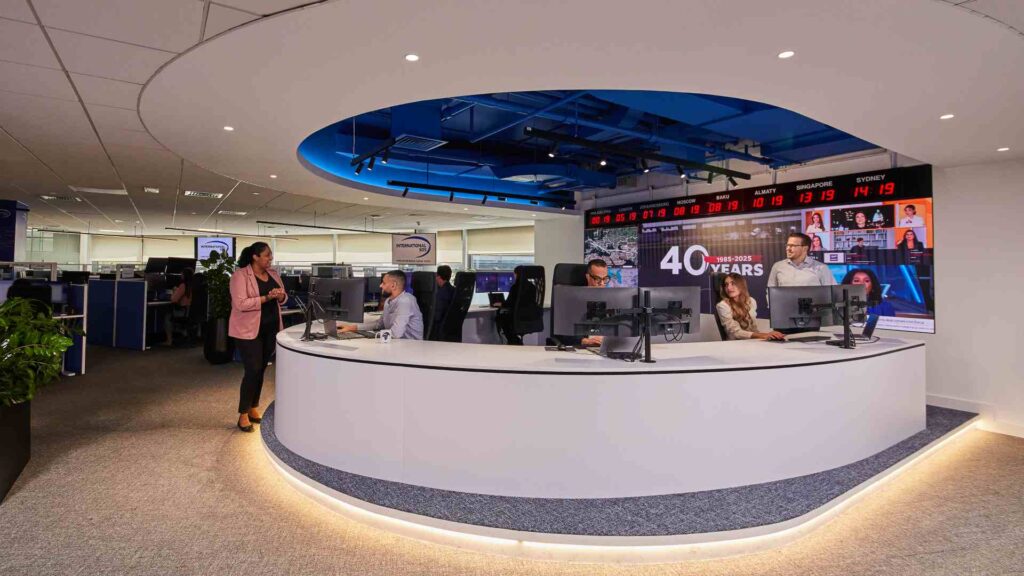
The MENA region is expected to face continued geopolitical volatility in 2027, with US, Israel and Iran relations remaining a key driver of regional instability. While large-scale conflict may be avoided, unresolved tensions are likely to cause recurring disruption and uncertainty. Businesses should prepare for periodic shocks, including military escalation, cyber threats, infrastructure attacks and maritime disruption, which could impact supply chains, transport networks, energy prices and business travel. Organisations operating near critical infrastructure, strategic transport routes and foreign military assets may also face heightened security risks.
Alongside the report, International SOS has also released its updatedRisk Map 2027, a visual assessment of medical and security risks around the world.
The 2027 Risk Outlook in numbers
The report draws on a global poll of risk professionals and business leaders. Key findings include:
- 70% rate stress and mental health as the number one challenge faced in 2026, and expect it to be their biggest challenge in 2027.
- 60% were affected by extreme heat events in 2026, a particularly relevant finding for the Gulf, where high temperatures are part of everyday operations.
- 50% were affected by poor air quality, 40% by wildfires, and 33% by flooding and storms.
- 40% experienced significant disruption from worker health incidents or issues.
- One in three were affected by food-borne outbreaks.
Aviation: turbulence-related medical events on the rise
MedAire’s MedLink data, covering more than 100,000 aviation medical cases from 2024 and
2025, shows a statistically significant 46% year-on-year increase in turbulence-related events. MedAire, an International SOS company, supports aviation operators worldwide through MedLink, providing real-time access to aviation-focused medical expertise during inflight events.
The figures reflect only incidents reported to MedLink, but the growth rate substantially exceeded the rise in overall case activity. With the UAE home to some of the world’s busiest aviation hubs, the trend is relevant for the region’s airlines and travelling workforce.
What the 2027 risk landscape means for UAE organisations
- Geopolitical risk becomes a boardroom priority. Instability is one of the most significant drivers of risk in 2027. Ongoing tensions involving Russia and Ukraine, and conflict dynamics across the Middle East, continue to influence security environments, supply chains and workforce mobility. For organisations operating in and through the UAE, the report stresses the need to assess how developments affect both employee safety and business continuity.
- From forecast to frontline. Severe heat, flooding, air pollution, wildfire smoke and climate-sensitive disease outbreaks are putting new pressure on organisations and their people. Beyond physical safety, they affect productivity, workforce availability, travel and operations, underlining the need for climate-informed Duty of Care strategies, especially for employers with outdoor or heat-exposed workforces.
- From deepfakes to cyberattacks: trust becomes a critical business asset. State-linked cyber actors continue to target organisations and critical infrastructure, while AI-generated misinformation can complicate crisis management, distort risk assessments and undermine trust during emergencies. Organisations need robust governance and verification processes, and stronger resilience against both technical and human vulnerabilities.
- A new wave of activism. Rapidly mobilised protest movements are creating less predictable operating environments globally, with implications for employee safety, business travel and supply chains. For UAE-based organisations with international operations and travelling staff, enhanced intelligence, early warning and contingency planning are essential.
- The workforce resilience challenge. Mental health pressures, fatigue, chronic disease, digital work intensification and changing workforce demographics continue to affect wellbeing and performance. Employers need to design work to support wellbeing, not simply prevent injury.

By Amir H. Greiss, Founder and Chief Executive Officer, SharpMinds Consulting Engineers
When a new building opens, attention naturally falls on what can be seen – whether its the form, the facade, or the quality of the public spaces. Yet the true measure of a building only becomes clear after it has been occupied for a year or two. By then, it has been through a full cycle of seasons and daily use, and its performance can be judged on facts rather than first impressions.
Those facts are practical ones. Are the spaces thermally comfortable throughout the day? Do people move through the building easily at peak times? Are energy and maintenance costs in line with what was forecast? Can equipment be serviced and replaced without disrupting occupants?
The answers are rarely down to a single design decision. They reflect how well the different disciplines involved in a project worked together, and how early they started doing so. Understanding that process explains why some buildings perform well for decades, while others struggle soon after handover.
Vision is the starting point, not the finished product
Every successful building begins with a clear architectural vision. It defines how the building relates to its context, how people will experience it, and what it aims to achieve. But a vision on its own is not a building. It has to withstand the realities of structure, climate, budget, regulation and the way people actually behave.
A useful way to manage this is to distinguish between design intent and design form. The form is the specific solution shown in the drawings. The intent is the outcome that solution is meant to deliver.
Consider a design that features a large, fully glazed atrium. The form is the glass. The underlying intent may be that occupants feel connected to daylight and to one another. If analysis shows the glazing would create an excessive cooling load, a team that understands the intent can deliver it differently, through roof lights, shaded courtyards or a more open circulation core. A team focused only on the form tends either to defend it at any cost or to remove the idea altogether. Clearly stated intent gives a project room to adapt without losing its purpose.
Why integration must begin at concept stage
In a traditional, linear process, the architect develops the design and engineers are brought in afterwards to make it work. The approach appears orderly, but it often produces compromises that nobody deliberately chose.
The symptoms are familiar across the industry. A structural grid conflicts with the parking layout below. Ceiling voids prove too shallow for mechanical services, so finished ceiling heights are reduced. A facade is finalised before its solar exposure has been properly analysed, leaving the cooling system to compensate.
These issues share a common thread where they are inexpensive to resolve at concept stage and costly to resolve on site. The ability to influence a building’s cost and performance is greatest at the start of a project and declines steadily as the design is fixed.
That is why integrated design, in which architects, structural engineers, mechanical, electrical and plumbing engineers and cost consultants work together from the outset, has become best practice. Early collaboration is not a constraint on creativity. Structural engineers can propose systems that free up floor space or create column-free public areas. MEP engineers can recommend orientation and massing adjustments that reduce energy demand without altering the building’s character. When engineering is treated as part of the design process rather than a correction applied afterwards, it strengthens the architectural vision instead of diluting it.
Project planning where vision meets time and cost
Project planning is often viewed as an administrative function covering programmes, procurement and site logistics. In reality, it has a direct influence on design quality, because it determines which elements of the original vision are actually delivered.
Procurement is a clear example. Major equipment such as chillers, lifts and specialist facade systems can have long lead times and varying availability. If they are not identified and ordered early, delays can force late substitutions with whatever is available. Each change may seem minor, but together they can gradually erode the performance and quality the design was intended to achieve.
Realistic budgets and programmes play a similar protective role. When time or budget runs short late in a project, the elements most likely to be cut are often those that gave the building its distinctive value, from material quality to sustainability features.
Effective planning also involves knowing when key decisions need to be fixed. Choices such as the structural system or the location of major plant become very expensive to revisit beyond a certain point, while others can safely remain flexible for longer. Clarity about this sequence reduces late-stage redesign, protects the programme and gives the whole team a more stable basis for coordination. Constructability belongs here too, a design must be buildable on its specific site, with the available workforce and supply chain, and within the realities of the local climate.
Designing for the operational life of a building
A building may take a few years to design and construct, but it will be operated for decades. Over that lifespan, the combined cost of energy, maintenance and periodic upgrades typically far exceeds the original construction cost. Decisions made during design therefore have long-term financial and environmental consequences for owners.
Despite this, facility managers and maintenance teams are rarely involved in early design discussions. Their input can be invaluable. They understand which plant rooms are difficult to access, which control systems are hard to operate and which finishes deteriorate quickly under daily use. Involving them early leads to practical improvements: clear routes for replacing large equipment, metering that supports meaningful energy monitoring, and building controls that can be operated without specialist knowledge.
Occupant experience deserves equal attention. Thermal comfort, natural light, acoustics and intuitive wayfinding directly affect wellbeing and productivity. Post-occupancy evaluation, the structured process of assessing how a building performs once in use, is one of the most reliable ways to verify whether these goals have been met and to inform future projects.
Adaptability is the final consideration. Few buildings are used in exactly the same way for their entire life. Generous floor-to-floor heights, structural capacity for future loads and flexible building services allow a building to accommodate new uses as needs change, extending its useful life and reducing the case for early demolition.
Protecting design intent across the project lifecycle
When buildings underperform, the cause is rarely one poor decision. More often, important information is lost as a project moves between stages from concept to detailed design, from design team to contractor, and from contractor to operator. At each transition, some of the original intent can be diluted or misunderstood.
Digital tools have significantly improved coordination. Building Information Modelling allows clashes between structure and services to be identified virtually rather than on site. However, a model records what has been decided, not why. Technology supports collaboration, but it cannot replace professional judgement or clear communication between disciplines.
Two practices help close this gap. The first is documenting the reasoning behind major design decisions, so that those who inherit the project understand what they are expected to protect. The second is ensuring clear accountability for the performance of the building as a whole, rather than only for individual packages of work. Without it, each party can complete its own scope successfully while the overall outcome still falls short.
Clients also have an important role. Projects tend to be most successful when the client defines at the outset what success means in practical terms, including expected energy performance, operating costs, occupant comfort and flexibility, and keeps those measures in view throughout delivery.
What a successful building ultimately delivers
A successful building is often one that occupants barely notice, because it simply works. Spaces are comfortable and easy to navigate. Maintenance teams can operate and service it efficiently. Running costs align with expectations, and the building can evolve as the needs of its users change.
Achieving that outcome depends less on any single discipline than on the quality of collaboration between them. Architecture provides the vision and the human experience. Engineering ensures the building is safe, efficient and resilient. Project planning makes sure both are delivered within the realities of time, cost and construction.
A design vision is only as strong as the process that carries it into the real world. The drawings are where that process begins, but a building’s performance over the decades that follow is where its success is truly measured.

From scented boyfriend sweaters to cocktails that cross continents, Murali, Co-founder of Jockamo Barnes, is turning Dubai’s cultural quirks and everyday observations into unexpected creative experiences.
In an industry where every brand wants to be culturally relevant, Murali, Co-founder of innovation studio Jockamo Barnes, is challenging the very idea of what that means. “Culture is one of the most abused words today, especially in marketing and advertising. Every agency claims it. Every brand sees it as a shortcut to relevance. But few truly understand what it means to be a part of it.”
For Murali, the answer lies in creating rather than chasing culture. At Jockamo Barnes, that translates into unconventional objects, brands and experiences rooted in human behaviour, often inspired by the contradictions of life in the UAE. ““Every project starts with a tension: two things that shouldn’t necessarily work together, but somehow do. The UAE produces them faster than anywhere I’ve lived,” he explains.
Take Boomerang, a playful inversion of hospitality inspired by a New Orleans cocktail tradition. Instead of visiting bars to be served, Murali travels with a drink to gift bartenders around the world, creating an unexpected connection between cocktail communities across continents.
Then there’s Pre-Worn Boyfriend Sweater, a tongue-in-cheek take on Dubai’s dating culture, built around the observation that “the best part of situationships are the clothes you steal; the worst part is the man.” Created with fragrance studio Oo La Lab Dubai, the scented sweaters capture three familiar dating archetypes: the Entrepreneur, the Gym Rat and the Desert Philosopher. Beyond the humour, the project explores how scent and touch can evoke memories in ways traditional advertising cannot.
A more poignant expression of this thinking is Bitter Meat, created with Aidan Frederick. Described as a love letter to the UAE’s expat experience, the project challenges the familiar narrative of Dubai as a temporary stopover. Its message, “for those who chose here,” speaks to residents who have made the country home by choice. “Reverence without romanticism. We love this place too much to put it on a postcard,” says Murali.
This creative philosophy also shapes the studio’s collaborations. The Away Kit, developed with Super Cellar for the 2026 World Cup, features more than 17 editorial posters pairing nations with culturally inspired cocktails. The insight is distinctly local: Dubai experiences the tournament as a city of away fans, where people passionately support countries they no longer live in.
For Murali, partnerships like these are about shared authorship rather than conventional sponsorship. “Super Cellar started as a client and became a co-author. That’s the model we want: invite a brand into something already in motion instead of shopping them a finished idea.”
Ultimately, Jockamo Barnes is interested in ideas that live beyond the fleeting attention of a campaign. “Advertising asks for attention. People watch it, skim past it. But it’s ignorable and avoidable. Objects earn a place in someone’s life. We’re more interested in the second.”
And perhaps that’s the studio’s most compelling proposition: culture isn’t something brands need to borrow relevance from. It’s something they can meaningfully contribute to.


From Beef Wellington to Backhands: Kandima Maldives Makes February ‘Fab’ with a Month-Long Island Celebration of Sport, Festivity and Romance

Cybersecurity exhibitors at GITEX GLOBAL put AI agents at the top of the risk agenda
When the Phish Drives Itself

OPPO A6 Pro 5G Review: Reliable Daily Driver

Denodo Bolsters Executive Team by Hiring Christophe Culine as its Chief Revenue Officer

Microsoft Launches New Surface Copilot+ PCs for Business

2026 in Review: Is AI Becoming More of a Management Problem Than a Technology Problem?

Inside XPENG Brand Night: AI Mobility Lands Centre Stage in Dubai

Chinese Cars Are Reshaping the GCC Market, but Resale Value Could Be the Next Battleground

-
 Trending1 year ago
OPPO A6 Pro 5G Review: Reliable Daily Driver
-
 Tech News2 years ago
Denodo Bolsters Executive Team by Hiring Christophe Culine as its Chief Revenue Officer
-
VAR2 years ago
Microsoft Launches New Surface Copilot+ PCs for Business
-

 Automotive2 years ago
AGMC Launches the RIDDARA RD6 High Performance Fully Electric 4×4 Pickup
-

 VAR12 months ago
Huawei Nova 14 Pro Review: Where Camera Excellence Meets Ecosystem Evolution
-
Tech Interviews3 years ago
Navigating the Cybersecurity Landscape in Hybrid Work Environments
-

 Hospitality2 years ago
Gulfood 2025 30th Edition Kicks Off Today, Setting New Benchmarks in F&B Growth and Innovation
-
News4 years ago
BenQ ZOWIE : First TN 360Hz DyAc+ Gaming Monitor