
 Have a question? +971 56 404 0503




Technology
Smart Dubai Office and IBM collaborate to build Cognitive Centre

IBM and Smart Dubai Office announced an initiative for the establishment of a Cognitive Centre of Competence in Dubai. The centre will define and deliver Dubai’s Cognitive Roadmap and help accelerate the development of cognitive citizen services across Dubai. The collaboration also aims to equip the next generation of professionals with sought-after skills around analytics, cloud, mobility, cognitive and blockchain technology. This will support a strong human capital innovation ecosystem as part of the Smart Dubai initiative and the government’s 2020 Dubai Blockchain Strategy.
“Our collaboration with IBM underlines our commitment to foster the IT skills needed leveraging cloud, blockchain technology, analytics, mobility technologies and offer cognitive capabilities for our services which will add value to the day to day lives of Dubai citizens and residents, making everyday experiences more safe, seamless, efficient and impactful for all,” said H.E Dr. Aisha Bin Bishr, Director General, Smart Dubai Office.
Through several initiatives with IBM, the Smart Dubai Office will work with Dubai Government entities to help enable existing digital government services become cognitive. In October 2016, Smart Dubai Government Establishment Department of Economic Development launched “Saad”, a cognitive government service powered by IBM Watson. Saad can understand natural language, ingest and comprehend massive amounts of data, learn and reason from its interactions, and provide solutions that will aid users in deciding on correct courses of action.
The collaboration will focus on building the needed skills to enable government entities to develop cognitive applications and benefit from application programming interface (API), analytics and blockchain technologies. The Smart Dubai Office and IBM will also provide university student developers with a full year Bluemix subscription, enabling them to gain hands on experience with cloud services. IBM Bluemix is a cloud based platform that enables organizations and developers to quickly and easily create, deploy, and manage applications on the cloud.
“Our focus with Smart Dubai Office will help accelerate the development of the IT skills and services in the Emirate and enable government entities in Dubai to begin their cognitive journey,” says Amr Refaat, General Manager, IBM Middle East and Pakistan. “Students will also have access to a platform for innovation, resources and technology expertise to help ensure that today’s graduates have the knowledge and workforce skills to help fuel economic growth.”
IBM Watson represents a new era in computing in which systems can interact and understand natural language, generate hypotheses based on evidence, and learn as it goes. As part of this collaboration, Cognit, a joint venture between Mubadala Development Company and IBM, will be engaged to support the development and implementation of Watson based applications and Arabized, Watson capabilities.
“Today’s announcement demonstrates the strength and value in bringing IBM Watson services to Dubai based citizens and further solidifies Cognit as a true partner for government to bring this transformative technology to the UAE. Everyone involved is excited to see how newly developed IT skills, created by allowing first-hand access to IBM Watson, can support prosperity and incubate the talent of tomorrow’s future pioneers,” said Amal Al Jabri, General Manager, Cognit.
Fostering skills in Dubai is a key focus of this collaboration. Students and faculty members from leading universities in Dubai can also enroll in the IBM Skills Academy where IBM will provide a series of training sessions on cognitive, big data, cloud, security, social and analytics. The IBM Skills Academy Program is IBM’s premier training and certification initiative for academia in the Middle East and Africa region.
In January 2017, IBM and the University of Dubai have already started delivering training to universities in the United Arab Emirates, under the theme of “Big Data Developer”. The training is designed to equip university faculty members and students with the skills and knowledge every Big Data expert needs.


Spotlight
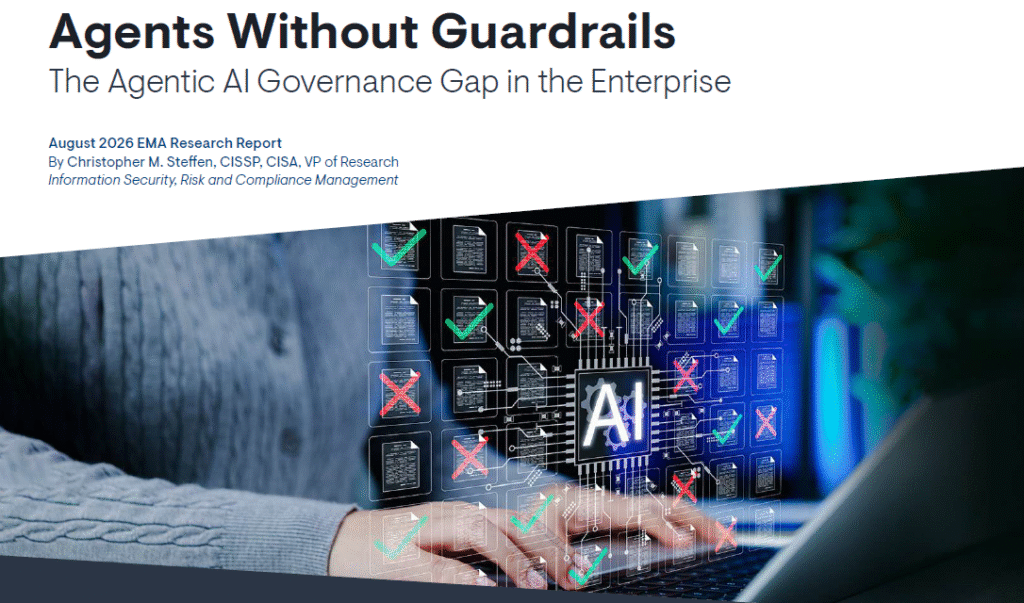
New Cequence & EMA Research: 94% of Enterprises Trust Their AI Agents Aren’t Over-Provisioned. Only 33% Actually Enforce It.


Nearly every enterprise believes its AI agents are properly scoped. Only a third have actually made sure of it.
Today, new research from Cequence Security, the leader in application, API, and agentic AI protection, and Enterprise Management Associates (EMA) found that 94% of enterprise IT and security leaders are confident their AI agents do not have more access than they need, yet only 33% actually provision agents with least-privilege access. The remaining two-thirds run on broad standing permissions that are reviewed periodically, rarely reviewed, or never reviewed at all.
That gap between confidence and practice is already showing up in production, not a theoretical risk, but as incidents enterprises are living with right now. Among the organizations surveyed:
- 65% have experienced an AI agent take an action outside its intended scope, including 29% with measurable business impact, including data exposure, financial loss, operational disruption, or reputational damage. Another 36% caught a near-miss before it caused damage.
- Only 32% can detect and contain an out-of-scope agent action within minutes through automated means; 55% need hours and manual steps to respond.
- In approximately 4% of organizations surveyed, the first sign of trouble came from a customer or outside partner, not an internal system.
The findings point to one clear story. Governance has not kept pace with the speed of agentic AI deployment, and that gap is showing up at every stage of the agent lifecycle, from how agents are provisioned, to how their actions are authorized, to how they are decommissioned once a pilot ends. Other key findings from the report include:
Enterprises Have Moved Past the Pilot Stage
The scale of deployment makes the gap more urgent. 46% of organizations report they are already scaling agentic AI across multiple departments and production workflows, and 79% are running generative and agentic AI simultaneously. Further, more than 92% report an increase in AI and bot-driven traffic targeting customer-facing applications and APIs.
Authorization is Checked at the Wrong Time, Or Not At All
That governance gap extends to how access is enforced in the moment an agent acts. Only 34% of organizations evaluate an AI agent’s authorization at the moment it attempts a specific action. The majority rely on periodic policy reviews or standing permissions set once at provisioning and never revisited, meaning an agent’s access can quietly outlive the task it was originally granted for, and keep working long after anyone signed off on it.
Abandoned Pilots Are Leaving Live Credentials Behind
Additionally, there’s an increasing risk in how enterprises manage agents that don’t make it to production. 31% of agentic AI pilots have been paused indefinitely, discontinued, or abandoned. Many were real deployments with real system access and credentials that were never cleaned up. Every abandoned pilot with live credentials is exposure nobody is actively watching.
External Connectivity Carries the Same Risk
14% of organizations allow AI agents to connect to outside tools and data sources via the Model Context Protocol (MCP) without restriction. Among the majority who do limit those connections to an approved list, fewer than half, just 49%, have a dedicated team actively maintaining and auditing that list on a regular basis.
Christopher M. Steffen, CISSP, CISA, VP of Research at EMA, said: “This research shows enterprises have moved well past experimentation with agentic AI right into production, and governance has not kept pace with that shift. The gap isn’t a lack of awareness; most organizations have policies in place and express real confidence in them. The gap is between what’s written down and what’s enforced when an agent takes an action nobody approved. That disconnect shows up most clearly in how organizations authorize agent actions and monitor them once they’re live, and it’s the reason incidents are happening at a rate the industry hasn’t fully reckoned with.”
Shreyans Mehta, Co-founder and CTO at Cequence, said: “The number that jumped out to me is the 92% being confident in their governance frameworks. Confidence like that is a trap; it’s exactly why organizations stop looking for problems, stop investing in monitoring, and let authorization checks lapse until an incident forces the conversation. This is the exact blind spot Cequence is built to close, giving security teams real-time visibility into what AI agents are actually doing and enforcing authorization at the moment an agent acts, not after the fact.”

Article by Prasanna Rajendran, Vice President – EMEA, Kissflow
Across the Middle East, governments and enterprises are investing heavily in cloud infrastructure to support national digitization agendas, from Vision 2030 in Saudi Arabia to the UAE’s push toward AI-driven government services. Gartner forecasts that IT spending across the Middle East and North Africa will reach $169 billion in 2026, an 8.9 percent increase over 2025, with software spending alone growing 13.9 percent.
Infrastructure as code (IaC) is the practice of defining and provisioning computing infrastructure, including servers, networks, databases, and load balancers, using machine-readable configuration files rather than manual processes or interactive consoles. Rather than logging into a console to click through setup wizards, teams describe their entire infrastructure in version-controlled code that can be reviewed, tested, and deployed like any other software artifact.
For CIOs and IT leaders, this matters because IaC has become the operational standard for any organization running workloads at scale. Grand View Research valued the global IaC market at $1.2 billion in 2025 and projects it to reach $6.1 billion by 2033, a compound annual growth rate of 22.3 percent. That trajectory reflects a clear shift: enterprises are moving from manual, ticket-driven infrastructure management to automated, code-driven provisioning.
What is infrastructure as code?
At its core, IaC means defining resources such as virtual machines, storage volumes, network configurations, security policies, and access controls in declarative or imperative code files. Those files become the authoritative record of what your infrastructure looks like at any moment.
IaC generally follows one of two approaches, depending on whether teams want to define an outcome or prescribe the route to it. Declarative IaC describes the desired end state: you specify what you want, such as three servers, a load balancer, and a database cluster, and the tool works out how to get there. Terraform, AWS CloudFormation, and Azure Bicep all use this method. Imperative IaC instead specifies the exact steps to reach an outcome. You write procedural instructions: create this server, then attach this disk, then configure this network. Ansible and Chef follow that model more closely.
The declarative approach dominates enterprise adoption today because it is easier to maintain and less error-prone. You describe the outcome rather than the procedure, which keeps the code readable even as infrastructure complexity grows.
What separates IaC from traditional infrastructure management is version control. Every change is tracked in Git, reviewed through pull requests, and deployed through automated pipelines. This is the mechanism Gartner points to when it describes IaC as the route to cloud governance and self-service at scale.
Why infrastructure as code matters for enterprise IT
Manual infrastructure management does not scale. When an operations team provisions servers through tickets and console clicks, every environment differs slightly, every deployment carries risk, and every audit turns painful. IaC removes these problems systematically.
Consistency and reproducibility
IaC guarantees that the development, staging, and production environments are consistent. Configuration drift, the slow divergence of environments over time, disappears because every deployment is generated from the same code. When an incident occurs, you can rebuild an environment from scratch in minutes.
Speed and agility
Organizations using IaC provision entire environments in minutes rather than weeks. When business conditions change, whether through a product launch, a capacity spike, or a compliance deadline, IaC lets you respond at the speed of code.
Security and compliance
With IaC, security policies are embedded directly in infrastructure templates. Guardrails apply automatically. Compliance checks run in the CI/CD pipeline before any change reaches production. Security stops being a gate at the end of the process and becomes part of how infrastructure gets built.
Cost efficiency
IaC gives you precise control over resource provisioning. Idle capacity gets identified and decommissioned through code rather than through quarterly manual audits. Cost discipline has grown into a standing function for this reason: 59 percent of the 759 organizations Flexera surveyed for its 2025 State of the Cloud Report now run a dedicated FinOps team, up from 51 percent the year before.
Key infrastructure as code tools for the enterprise
Several tools now anchor enterprise IaC strategy, each suited to a different environment. Terraform and its open-source fork, OpenTofu, remain the dominant choice for cross-cloud work, offering declarative provisioning across multiple clouds using HCL. Organizations standardized on a single cloud often turn to native alternatives instead: AWS CloudFormation for AWS-centric environments, using JSON or YAML, and Azure Bicep for Azure-native deployments. Ansible takes an imperative, YAML-based approach and excels at configuration management and application deployment rather than pure provisioning. Pulumi appeals to developer-led teams by letting them define declarative infrastructure in familiar languages such as Python, TypeScript, or Go.
Common challenges when adopting infrastructure as code
Adopting IaC is not without friction. The most immediate obstacle is usually a skills gap, because IaC asks infrastructure teams to work the way developers do, with version control, code reviews, and CI/CD pipelines. That shift is cultural as much as it is technical, and it requires deliberate investment in training.
State management adds complexity of its own. Declarative tools maintain state files that track current infrastructure, and multi-team environments need remote state backends, locking, and workspace isolation from day one to avoid conflicts.
Legacy system integration is another common obstacle, since not everything can be expressed in code immediately. Most organizations start with new cloud workloads and progressively extend IaC to existing systems through API wrappers.
Governance and drift detection require ongoing discipline. IaC only delivers its full value once it becomes the sole path for infrastructure changes, which makes continuous drift detection and sustained cultural enforcement critical rather than optional.
Where workflow automation fits in an IaC-driven enterprise
Infrastructure as code solves the provisioning problem. Enterprise IT complexity does not stop there. The layer above IaC, covering the processes, approvals, and operational logic that run on top of provisioned infrastructure, is where most organizations still depend on fragmented tools, manual handoffs, and spreadsheet-based tracking. That gap is especially visible across the Middle East, where cloud adoption and ambitious national targets often outpace the operational processes needed to govern them.
Regulatory pressure widens the gap further. Gartner forecasts worldwide sovereign cloud IaaS spending at $80 billion in 2026, a 35.6 percent rise over 2025, with governments as the main buyers. Provisioning infrastructure inside a national boundary is one requirement. Proving that every approval, exception, and access grant on that infrastructure followed a governed path is another, and code alone does not answer it.
This is where workflow automation platforms operate as a digital backbone for enterprise operations. IaC automates the infrastructure layer. A no-code or low-code workflow platform automates the process layer: IT service requests, change management approvals, vendor onboarding, compliance workflows, and the hundreds of cross-functional processes that connect people, systems, and decisions across the enterprise.
For IT leaders across the region pursuing IaC adoption, particularly those operating under strict data residency and regulatory requirements, this kind of platform complements the strategy by giving business teams a way to build and manage operational workflows without adding to the IT backlog. IaC handles your infrastructure. Workflow automation handles everything that runs on it.
See how Kissflow governs the change approvals, access requests, and compliance workflows that sit on top of your cloud infrastructure in a 30-minute demo.

Anomali, the leading global Managed Intelligence and Agentic SOC platform, announced its participation at GISEC Global 2026, taking place through 16-18 September at Dubai Exhibition Centre (DEC), Expo City.
The company’s discussions at GISEC will center on Autonomous SOC with Governed AI, Agentic AI, Actionable Threat Intelligence and Unified Security Data Lake capabilities that are changing the manner in which security teams investigate threats, manage workflows and make decisions.
Samer Jadallah, Vice President, Middle East & Africa at Anomali, will represent the company at GISEC and will focus on the growing impact of AI on both attackers and defenders, emerging shifts in the threat landscape, including the need to counter CEO impersonation attacks as well as key challenges facing modern security teams. He will also highlight AI’s role is helping organizations respond more effectively to evolving threats, Anomali’s commitment to the region and ongoing product innovation and plans to expand adoption of the Anomali platform across global enterprises and government organizations.
A key focus at this year’s event will be the changing nature of cyberattacks. As threat actors promptly adopt AI to scale campaigns and further accelerate attacks, security operations centers (SOC) are under growing pressure to process rising volumes of alerts with limited resources. To help with this, Anomali will demonstrate how AI can support analysts in multiple ways like surfacing higher- value insights, reducing manual effort and enabling quicker, informed responses.
Visitors can find Anomali at Booth E156 and Booth A80.
- Event: GISEC Global 2026
- Booths: E156 and A80
- Location: Dubai Exhibition Centre (DEC), Expo City
- Dates: 16 th to 18 September 2026
- Time: 9:00 am to 5:00 pm GST


New Cequence & EMA Research: 94% of Enterprises Trust Their AI Agents Aren’t Over-Provisioned. Only 33% Actually Enforce It.
DO FISCAL STIMULUS MEASURES SUPPORT THE US MARKET GROWTH, AND IS A DEFAULT POSSIBLE?
DO FISCAL STIMULUS MEASURES SUPPORT THE US MARKET GROWTH, AND IS A DEFAULT POSSIBLE?



-
News11 years ago
SENDQUICK (TALARIAX) INTRODUCES SQOOPE – THE BREAKTHROUGH IN MOBILE MESSAGING
-

 Trending11 months ago
OPPO A6 Pro 5G Review: Reliable Daily Driver
-

 Tech News2 years ago
Denodo Bolsters Executive Team by Hiring Christophe Culine as its Chief Revenue Officer
-
 VAR1 year ago
Microsoft Launches New Surface Copilot+ PCs for Business
-

 Automotive2 years ago
AGMC Launches the RIDDARA RD6 High Performance Fully Electric 4×4 Pickup
-
Tech Interviews2 years ago
Navigating the Cybersecurity Landscape in Hybrid Work Environments
-

 Tech News1 year ago
Nothing Launches flagship Nothing Phone (3) and Headphone (1) in theme with the Iconic Museum of the Future in Dubai
-

 VAR2 years ago
Samsung Galaxy Z Fold6 vs Google Pixel 9 Pro Fold: Clash Of The Folding Phenoms