
 Have a question? +971 56 404 0503




Tech Interviews
Veeam Helps Organizations Tackle Ransomware, Cloud, and Kubernetes Challenges

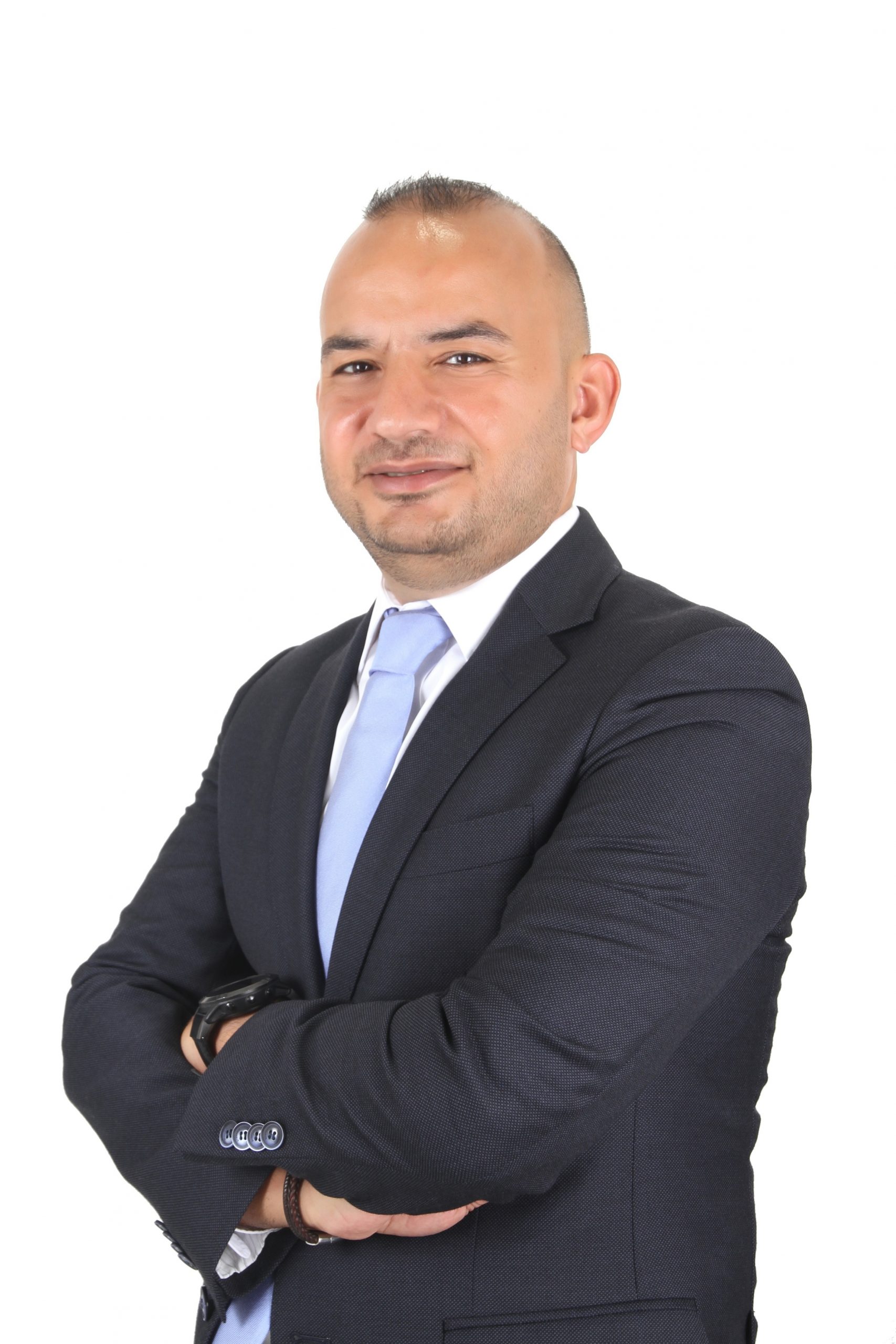
Veeam Software develops backup, disaster recovery, and modern data protection software for virtual, physical, and multi-cloud infrastructures. Mohamad Rizk, Regional Director, Middle East & CIS at Veeam Software talks about its latest products and their competencies.
What products and solutions will you be showcasing at GITEX Global 2022?
Veeam will use the event as a platform to share our company’s vision for the future of data protection and deliver live demonstrations of Veeam’s flagship single platform for cloud, virtual, physical, SaaS, and Kubernetes environments. We will also look to engage and enter into high-level discussions with its ecosystem of channel partners. Over the past year, Veeam has unveiled more than 30 product updates. Trade attendees visiting the Veeam stand at GITEX can expect to learn more about the following innovations among others:
- Veeam Backup & Replication v12 – Released as the most advanced data protection solution for cloud, virtual, physical, SaaS, and Kubernetes workloads, Veeam Backup & Replication v11 has been
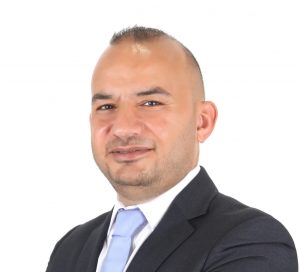
Mohamad Rizk, Regional Director, Middle East & CIS – Veeam
downloaded by more than 850,000 users. The company has continued innovation and expansion of its expansive feature set with v12 by further hardening the capabilities customers need in today’s ever-changing IT ecosystem. The new version expands the ability to reduce business risk through improved data and systems security recoverability at scale
- Veeam Backup for Microsoft 365 v7 – As the Microsoft 365 backup market leader, with over 11M users under paid contract, the new version will include enterprise-grade monitoring and reporting capabilities as a result of integration with Veeam ONE, helping to keep systems and infrastructure running smoothly thanks to built-in intelligence
- Veeam Backup for Salesforce – Following the success of its Microsoft 365 product, the company will provide a demo of Veeam Backup for Salesforce, a much sought-after addition to Veeam’s portfolio. With the ability to back up in the cloud and on-premises, the new offering eliminates the risk of losing Salesforce data and metadata
- Kasten K10 v5.0 – the most complete enterprise data management solution to date purpose-built for Kubernetes. This latest release is focused on delivering a comprehensive risk management strategy, streamlined CI/CD pipelines, and new ecosystem advancement details that optimize and de-risk Kubernetes investments. These advancements all aim to help the expanding Kubernetes community work more efficiently and securely in cloud-native applications
What do you hope to achieve from your participation at the event this year?
Besides networking with customers, partners, and industry peers, we will present our brand and position as a global leader in modern data protection. Veeam’s YoY growth was more than double its nearest named top five competitors in the market. I can attribute much of our success to the relationships we have built and fostered at the event over the years and I expect GITEX 2022 to be no different. We expect to build a strong business pipeline by showcasing our innovations that will help customers drive business efficiency and agility, protect their data no matter where it resides, and ensure that they are well prepared for the next stage of digital transformation.
What will be your theme of participation at GITEX?
The theme of our participation will be around “Helping Organizations tackle Ransomware, Cloud and Kubernetes Challenges with Modern Data Protection.”
Where can trade visitors find you at GITEX?
Veeam will be exhibiting from Hall 7, Booth D-20
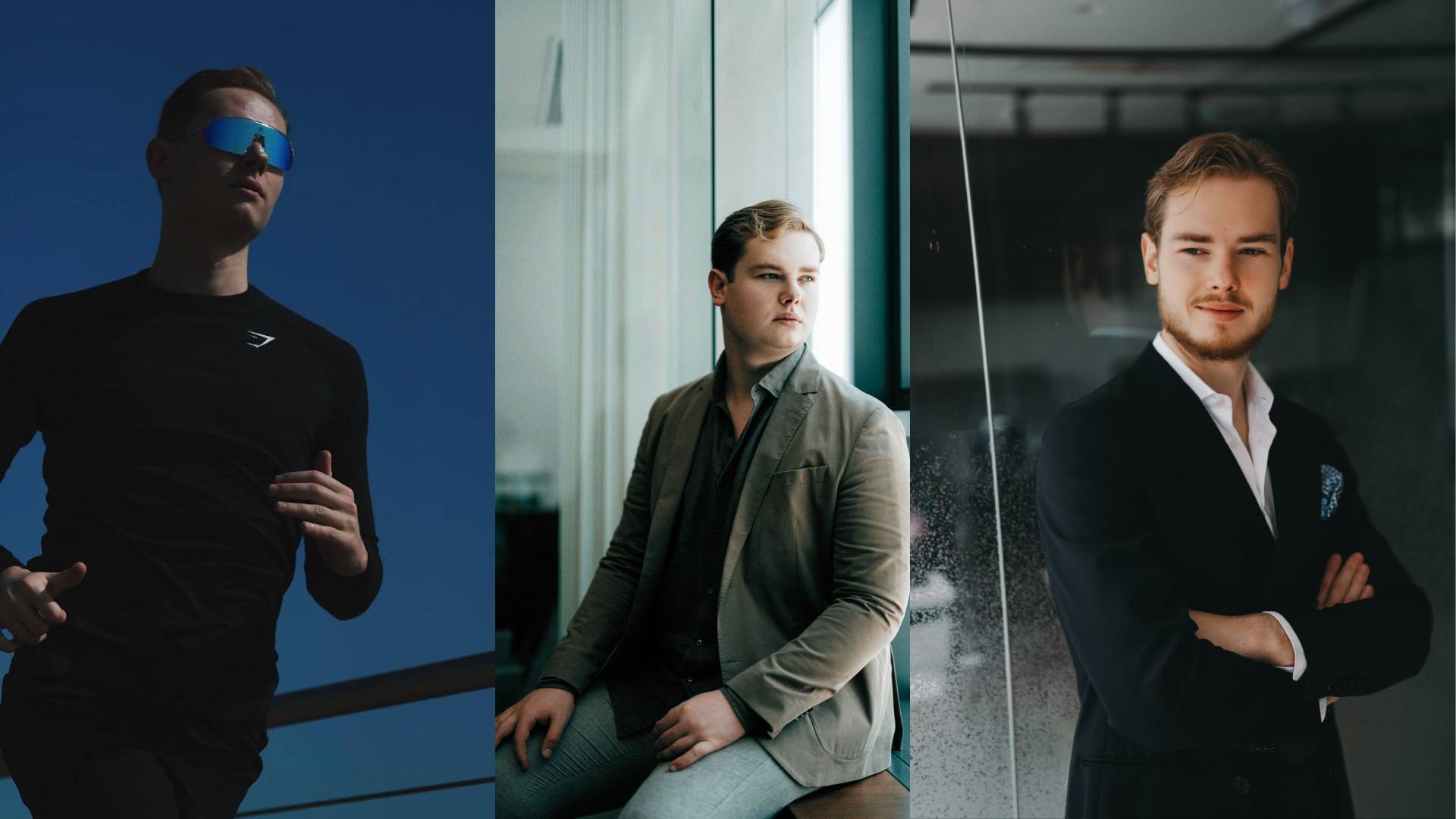
Ilia Sheludiakov’s story begins with a single decision — one that set off a complete transformation, physical, intellectual, and philosophical. He shed over 40 kilograms, trained for and completed marathons, and built businesses from the ground up. But it was in the process of rethinking his relationship with time that he arrived at something bigger: Temporalism, a philosophy built on the belief that time isn’t a pressure to outrun, but a long-term ally to work with.
At its core, Temporalism reframes time as our most valuable resource — one to be used consciously, not spent carelessly. It’s a philosophy rooted in a simple but powerful idea: small, consistent actions, repeated over time, compound into transformations far greater than any burst of intensity could achieve. Whether in health, wealth, or personal growth, Sheludiakov argues that lasting change comes not from perfect decisions made once, but from good decisions made repeatedly, with patience enough to let them compound.
Temporalism speaks to anyone who feels time slipping away too fast, or who senses untapped potential in their own ambitions but struggles to turn intention into consistent action. It’s a call to make peace with time — and to start using it as a partner in building a meaningful life.
Sheludiakov will next present Temporalism at the Sharjah International Book Fair, introducing the philosophy to a wider international audience and connecting with readers from around the world.
What is the core idea behind Temporalism?
Temporalism is about treating time as your most valuable resource and learning to use it consciously. It focuses on making better decisions today with your future self in mind, while building a meaningful life through consistent action.
How does Sheludiakov’s weight loss tie into this philosophy?
My weight loss was one of the experiences that shaped Temporalism. I lost over 40 kilograms, but the biggest lesson wasn’t about weight — it was realizing how much small actions, repeated over time, can completely change your life.
Why does he believe consistency beats intensity?
Intensity can create quick results, but it’s difficult to sustain. Consistency compounds. A small action repeated hundreds of times can ultimately have a much greater impact than a short period of extreme effort.
What role does patience play in building wealth?
Patience is fundamental. In investing and business, I try to think in years rather than weeks. Wealth is rarely created by one perfect decision; it is usually built through good decisions, discipline, and allowing enough time for them to compound.
Who is this book meant for?
It’s for people who feel that time is moving too quickly or that they could be doing more with their lives. Especially those who have ambitions but struggle to turn them into consistent action.
Where will he present the book next?
I will be presenting Temporalism at the Sharjah International Book Fair, where I look forward to introducing the philosophy to a wider international audience and connecting with readers from around the world.
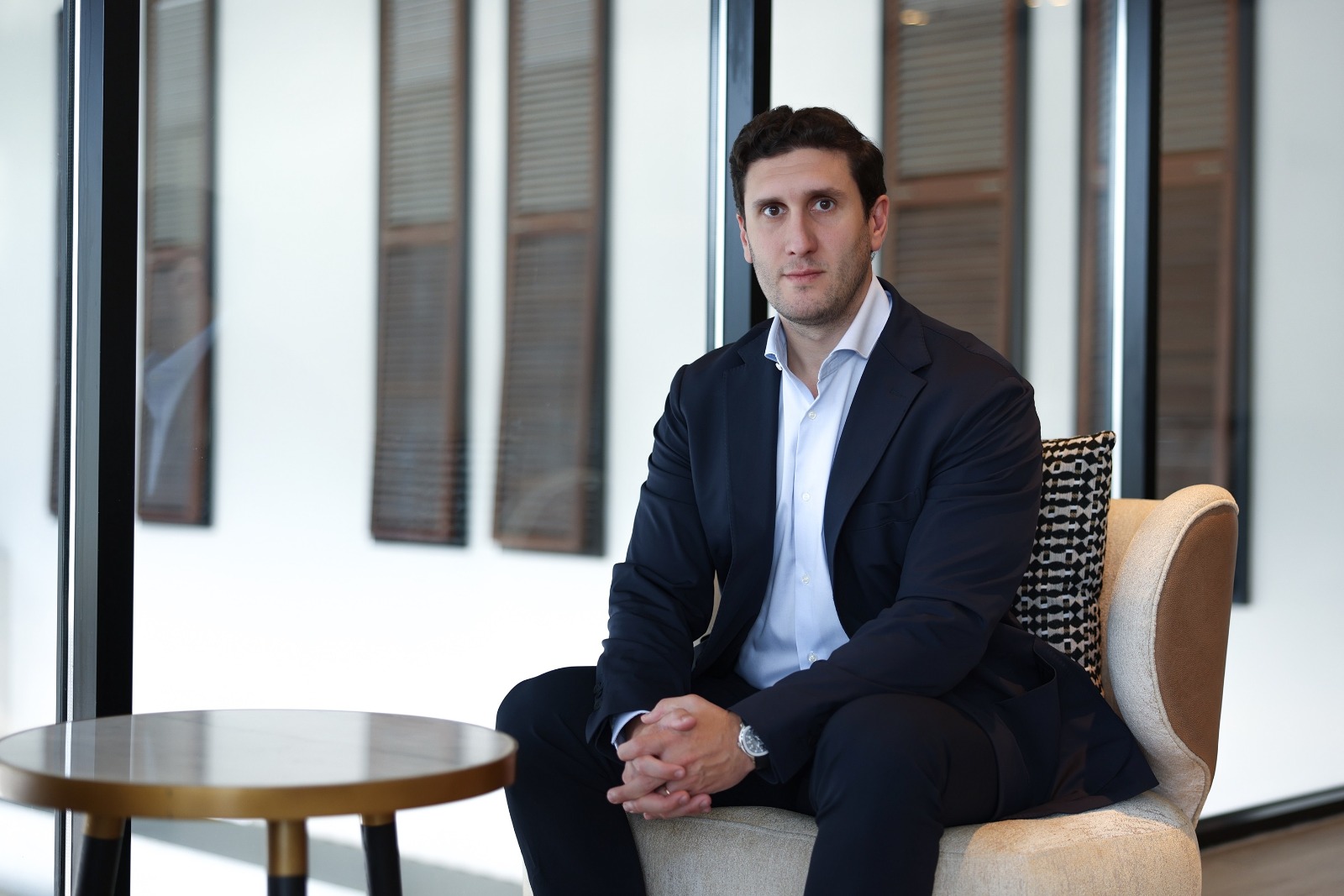
As Saudi Arabia moves AI from experimentation into large-scale deployment, Federico Pienovi, CEO APAC & MENA at Globant, explains why the Kingdom is emerging as a proving ground for agentic AI, AI-native business models and a new generation of connected experiences spanning sports, tourism, financial services and giga-projects.
Saudi Arabia is investing heavily in AI infrastructure and adoption. What is the Kingdom doing differently that could make it a global blueprint for moving AI from experimentation into large-scale business deployment?
What distinguishes Saudi Arabia’s approach is the alignment between national ambition and institutional execution. The Kingdom is embedding AI directly into the infrastructure of its giga-projects, financial institutions, and national sports ecosystems from day one. When you look at projects like Qiddiya, Red Sea Global, Diriyah, and New Murabba, these are greenfield developments where AI-native technology can be architected into the foundation rather than bolted on afterward.
Saudi Arabia is simultaneously transforming multiple sectors, tourism, sports, aviation, entertainment, real estate, and financial services, which creates a unique ecosystem effect. For instance, the world’s first Agent-to-Agent Tourism Corridor, connecting Red Sea Global and AlUla through sovereign AI destination agents, demonstrates how different entities can share AI infrastructure while maintaining data sovereignty. The Kingdom has also created conditions where global technology partners want to establish a deep local presence. Our own experience establishing a regional headquarters in Riyadh as a Center of Excellence for AI, creativity, and digital solutions reflects this pull, serious institutions want serious partners embedded alongside them, working on problems that matter at national scale.
Agentic AI is quickly becoming the next major enterprise conversation. Where are you already seeing organisations move beyond copilots towards AI agents that can independently execute tasks and make operational decisions?
The shift from copilots to autonomous agents is happening fastest where the business case is clearest and the tolerance for transformation is highest. In the Middle East, we’re seeing three sectors lead this transition: tourism and hospitality, financial services, and real estate development.
In tourism, the Agentic Tourism Corridor we’re launching at LEAP represents what we believe is the world’s first live Agent-to-Agent network, sovereign AI destination agents for Red Sea Global and AlUla that can communicate with each other to orchestrate guest journeys across multiple destinations. These are agents that can independently execute booking decisions, coordinate logistics, and personalize experiences based on real-time behavioral data.
Financial services institutions in the region, including banks like FAB, Emirates NBD, and Commercial Bank of Dubai, are deploying agentic AI that goes beyond customer service automation. We’re talking about agents that can independently manage risk assessment workflows, execute compliance checks, detect fraud patterns, and personalize customer journeys without human intervention at each step. Globant Financial Services AI Studio is specifically designed to refactor operations through agentic AI, not just add conversational interfaces.

In real estate, our PropTech ecosystem demonstrates the full agentic potential: AI agents handling lead qualification, property discovery through AR/VR, construction progress tracking via digital twins, and automated booking, payments, and service management. For giga-projects like Diriyah and New Murabba, is operational necessity given the scale and timeline ambitions.
The proof that this model works at global scale came in August 2026 when FIFA selected us to build their continuous, year-round fan experience ecosystem using AI Pods. Initial pilots showed a 20% efficiency increase in throughput generation while maintaining or improving quality. FIFA specifically described their move as embracing an AI-native, consumption-based model, a signal that major global institutions are ready to move past experimentation.
Many companies have spent years on digital transformation, yet AI is now forcing them to rethink entire operating models. What separates an organisation that simply adds AI to existing processes from one that genuinely reinvents the business around AI?
The difference lies in whether an organization treats AI as a feature or as an operating system. Adding AI to existing processes means layering chatbots onto customer service, adding predictive analytics to existing dashboards, or automating discrete tasks within unchanged workflows. Reinventing AI means changing the unit of delivery, the commercial model, and the fundamental process of how work gets done, all at once.
Technology services have moved through three eras. Traditional IT services sold labor, hours and full-time equivalents, delivered through projects, scaled by hiring more people. Digital-native services sold expertise and delivery, agile squads, human-built software with automation layered in. What we call AI-native technology services represents a third era, where the resource is people plus AI agents, delivery is agent-orchestrated, and the commercial model shifts from hours to outcomes, capacity, and tokens.
When FIFA engaged us to build their fan experience ecosystem, they didn’t ask for AI features added to their existing platforms. They embraced an AI-native, consumption-based model where they pay for outcomes rather than hours, where AI agents execute while human experts orchestrate, and where all institutional knowledge generated is secured in a proprietary token vault that FIFA owns. That’s reinvention, the entire relationship between client and technology partner has changed. Organizations that genuinely reinvent share several characteristics: they architect for AI from the beginning rather than retrofit, they measure success in business outcomes rather than technology deployment; they’re willing to change commercial relationships, not just internal processes, and critically, they maintain human expertise in an orchestration role rather than simply automating humans out of the equation. Expert supervision remains essential, anyone can prompt an AI tool, but shipping results to production requires governance, quality validation, and domain knowledge that only human experts can provide.
Saudi Arabia is simultaneously transforming sectors such as tourism, sports, aviation and entertainment through major projects. Which of these sectors do you believe could become the strongest showcase for AI-driven experiences, and what might those experiences look like over the next three to five years?
Sports has the strongest potential to become Saudi Arabia’s defining showcase for AI-driven experiences, and the evidence is already emerging. The Kingdom’s sports transformation, through the Saudi Pro League, preparations for the 2034 FIFA World Cup, and purpose-built sports infrastructure within giga-projects, creates a unique convergence of factors: massive capital investment, greenfield venues, a young and digitally native fan base, and explicit ambition to leapfrog existing global benchmarks.
What makes sports particularly powerful as a showcase is that fan experiences are inherently measurable and emotionally resonant. Through Sportian, we’ve built a single operating system that connects fan identity, behavioral data, content, venue operations, and performance intelligence. This platform already powers LALIGA clubs, the Belgian Pro League, and the U.S. Men’s National Soccer Team under Mauricio Pochettino. The Saudi Pro League represents an opportunity to deploy this at scale in venues designed from the ground up for AI integration.
Over the next three to five years, the experience could look like this: a fan’s journey begins before they leave home, with AI agents curating personalized content, managing ticket purchases, and coordinating travel logistics. In-venue, their identity travels seamlessly across every digital touchpoint, concessions, merchandise, interactive experiences, creating a continuous relationship rather than discrete transactions. Real-time performance data informs on-screen content that adapts to what individual fans care about. Post-match, that relationship continues through personalized content and engagement that keeps fans connected year-round, not just on match days.
Globant has established its regional headquarters in Riyadh and worked across several Vision 2030-linked sectors. After three years in the Middle East, what have you learned about the region that has changed Globant’s strategy, and where do you see the biggest opportunity for the company over the next phase of growth?
What we’ve learned has shaped how we operate here and influenced our global thinking. The first lesson was the speed of ambition. The timeline expectations in Saudi Arabia compress what would be multi-year transformation programs elsewhere into months. This has pushed us to evolve our delivery models, the subscription-based This has pushed us to deploy our most advanced delivery models here from the outset. The subscription-based AI Pods approach, where clients can unlock modular teams of AI agents supervised by human experts from day one, reflects where the entire technology services industry is heading globally. The region’s pace and ambition mean that clients here are among the earliest and most demanding adopters of that model, making the Middle East a natural proving ground for AI-native delivery at scale.
The second lesson was the seriousness of partnership expectations. Our client roster in the region, Qiddiya, Red Sea Global, the Saudi Pro League, represents institutions that aren’t looking for vendors. They’re looking for partners willing to stake their own reputation on joint outcomes. Every flagship client represents an institution betting its own transformation on us.
The third lesson was about talent. The Kingdom’s investment in developing local technology talent aligned with our decision to position Riyadh as a Center of Excellence for AI, creativity, and digital solutions. This isn’t a satellite office supporting work done elsewhere, it’s a hub where innovation happens.
Looking ahead, the biggest opportunity lies in the interconnection between sectors. Saudi Arabia isn’t transforming tourism, sports, entertainment, aviation, and finance as separate initiatives, these are interlocking systems that will increasingly need to share data, coordinate experiences, and operate as a unified ecosystem. The technology partner that can operate across all these sectors, understanding both the vertical depth and horizontal connections, will be positioned to support the Kingdom’s next phase of growth.
Tech Interviews
Connected Cities, Safer Futures: The Critical Role of Communications in Smart Mobility

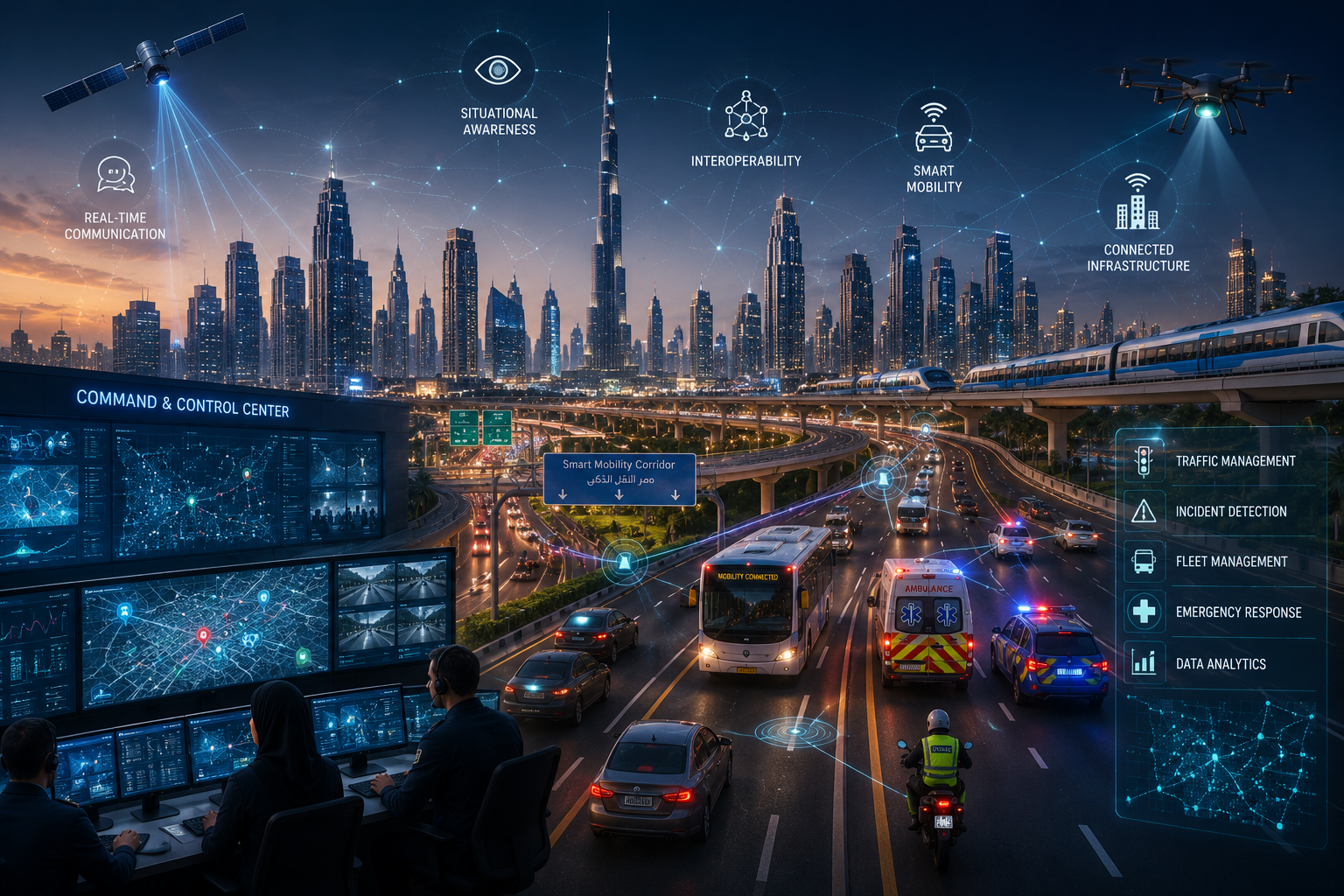
As Middle Eastern cities invest heavily in smart mobility, intelligent transport systems, and connected infrastructure, reliable communication networks are becoming the foundation of urban resilience. In this exclusive interview with Technology Integrator, Thibaut Faivre, Head of MEAI Sales & Programme Delivery for Public Safety and Security at Airbus Defence and Space, discusses the technologies enabling real-time situational awareness, inter-agency collaboration, and mission-critical connectivity across the region’s rapidly evolving mobility ecosystem.
As Middle Eastern cities accelerate smart mobility and connected infrastructure projects, how important is real-time communication and situational awareness becoming for modern transportation and emergency response ecosystems?
As Middle Eastern cities accelerate their journey toward becoming global hubs for smart mobility, the role of communication is undergoing a fundamental shift from a supportive function to the very backbone of urban resilience. For modern transportation and emergency response ecosystems, real-time communication is no longer merely about voice connectivity; it is about the seamless flow of high-capacity data. Traditional narrowband systems, while reliable for voice, cannot accommodate the digital evidence, live video feeds, and precise geolocation data that now sit at the heart of frontline decision-making. In a region defined by rapid urban expansion and high-security profiles, situational awareness means having the ability for command centres to see incidents in real time rather than reacting to them after the fact. This “resilient intelligence” ensures that as infrastructure becomes more connected, the agencies protecting it can operate with a level of clarity that matches the complexity of the environment they serve.
How could technologies such as GINA Software’s Tactical AVL and Unified Command Interface reshape the way emergency services respond to large-scale road incidents, traffic disruptions, and mobility-related crises?
The integration of GINA Software’s specialised modules into our Agnet and TETRA ecosystems represents a significant leap in how emergency services manage large-scale mobility crises. By turning complex data into life-saving action, these modules allow first responders to operate within a unified digital interface. The Tactical AVL tool provides dispatchers with granular visibility of assets and personnel, ensuring that units are deployed with maximum efficiency during major road incidents where every second is vital for clearing traffic and saving lives. Simultaneously, the Smart CAD (IMS) module supports high-level decision-making by consolidating mapping, field data, and reporting into a single interface, removing the cognitive load of managing disparate systems. Perhaps most importantly, the Unified Command Interface facilitates coordination between different agencies and networks. This reduces the communication barriers that often plague large-scale operations, ensuring that police, medics, and transport authorities are all working from a single, synchronised and common operational picture.
With connected vehicles and intelligent transport systems continuing to evolve, do you see public safety communication networks eventually becoming deeply integrated into future smart mobility frameworks?
We are seeing a definitive convergence where public safety communication networks are becoming deeply embedded into the wider smart mobility framework. The transition from legacy narrowband to mission-critical broadband (4G/5G) is the catalyst for this integration. As vehicles and infrastructure become more intelligent, the communication architecture must scale accordingly to support AI-enabled intelligence and automated workflows. For instance, AI can now be used to detect anomalies in real-time video feeds or automate resource allocation, allowing first responders and control centres to act proactively rather than reactively. This digital transformation ensures that public safety tools are not isolated silos but are instead natively integrated into the data-driven workflows of the cities they protect. By leveraging shared data rather than isolated radio channels, future smart mobility frameworks will benefit from a level of inter-agency coordination that was previously impossible.
In high-density urban environments, where every second matters during emergencies, how critical is interoperability between agencies, fleets, transport authorities, and first responders?
In dense urban environments, the speed of response is often dictated by the fluidity of information across different organisations. Interoperability between agencies, transport authorities, and first responders is a strategic priority, particularly within the Gulf Cooperation Council (GCC) region. Airbus is actively supporting this by creating gateways between respective communication systems to facilitate interstate and inter-agency collaboration. Public safety professionals operating in high-stakes environments rely on their tools to work across boundaries without friction. A smooth transition to broadband must ensure that interoperability, tactical management, and scalability are designed into the system from the outset. This allows agencies to communicate across organisations seamlessly and adjust operational priorities in real time as missions evolve. Without this level of technical and operational certainty, the benefits of high-speed data cannot be fully realised in a crisis.
As the automotive and mobility sectors become increasingly software-defined and data-driven, what role will secure communication architectures play in ensuring safer and more resilient transportation networks across the region?
As the automotive and mobility sectors become increasingly software-defined, the role of secure communication architectures is to ensure that the “intelligence” of the network never fails. Resilience in the Middle East is a unique challenge due to vast geography, the regional security threats and the exposure to climate-driven incidents, which means terrestrial networks alone are sometimes insufficient. Airbus addresses this through a layered approach that integrates satellite connectivity with terrestrial broadband. Solutions such as Agnet over Satcom ensure that mission-critical communications remain operational even in remote areas or during major disasters that disable standard infrastructure. Furthermore, for local incident scenes where network coverage might be overloaded or temporarily unavailable, tools like Agnet Direct allow teams to stay connected via off-network direct mode. This hybrid architecture, which combines the mission-critical reliability of TETRA with the high-speed data capabilities of 4G and 5G, creates a robust foundation for the next generation of secure, data-driven transportation networks across the region.


Al Bustan Centre & Residence concludes successful participation at Arabian Travel Market 2026

From 350+ Applications to One Champion: School of Cyber Defense Final Stage at GISEC GLOBAL 2026

Half a billion people live with arthritis: MEAF puts early action at the heart of World Arthritis Day 2026



-
News11 years ago
SENDQUICK (TALARIAX) INTRODUCES SQOOPE – THE BREAKTHROUGH IN MOBILE MESSAGING
-

 Trending11 months ago
OPPO A6 Pro 5G Review: Reliable Daily Driver
-

 Tech News2 years ago
Denodo Bolsters Executive Team by Hiring Christophe Culine as its Chief Revenue Officer
-
 VAR1 year ago
Microsoft Launches New Surface Copilot+ PCs for Business
-

 Automotive2 years ago
AGMC Launches the RIDDARA RD6 High Performance Fully Electric 4×4 Pickup
-
Tech Interviews3 years ago
Navigating the Cybersecurity Landscape in Hybrid Work Environments
-
 Tech News2 years ago
Toshiba Announces MG10-D Series of Enterprise HDDs with Capacities up to 10TB
-

 Tech News1 year ago
Nothing Launches flagship Nothing Phone (3) and Headphone (1) in theme with the Iconic Museum of the Future in Dubai