
 Have a question? +971 56 404 0503




Tech Reports
Shelf Drilling Adopted an FP&A and Integrated Business Planning Solution that is Fast, Flexible, and Familiar

Prior to adopting Jedox, Shelf Drilling rig managers used disconnected MS Excel worksheets for their maintenance forecasts. Maintenance expenditure is one of the main expenses at Shelf Drilling since maintaining all the equipment on the rigs, and keeping them in good shape, is critical to the Company’s operational efficiency. Every rig manager captured their own planning in MS Excel and sent their sheets to the corporate office where they were consolidated. While effective, Shelf Drilling looked to streamline and simplify these processes and selected Jedox as the most effective platform to achieve their aims.
Further, as part of Shelf Drilling’s emissions reduction drive, the Company needed to track the engine hours and fuel consumption across their fleet of rigs. The capture of this data was previously managed using MS Excel which took a substantial amount of time to consolidate each month. In addition, manual data capture in MS Excel was prone to errors as there was no system validation in place. The Company also wanted more “real-time” insights for efficiently tracking and managing the fuel consumption and assisting the rig teams in achieving their sustainability goals.
Solution
Shelf Drilling adopted an FP&A and integrated business planning solution that is fast, flexible, and familiar
Shelf Drilling adopted the Jedox enterprise performance management solution. Its flexibility along with the ability to visualize planning and operational data through dashboards and reports were some of the main reasons they invested in the platform. Another critical factor has been the similarity between Jedox and MS Excel user interface
which made its adoption easy and quick for the end-users.
Shelf Drilling had already adopted JD Edwards ERP and various BI tools, so they could quickly integrate Jedox with their existing technology infrastructure to maintain a consistent, always up-to-date, single source of financial and operational data.
One of the main advantages of the way Jedox is implemented is the ability of all the rigs to collaborate and contribute to planning models through an offline, batched operation. The flexibility that Jedox offers in this regard is of great importance for the usability of offshore drilling rigs. The application is very flexible and customizable and offers visualization options to create pie charts, bar charts, and the like. In addition, Shelf Drilling appreciated the great support of the local Jedox team.
Shelf Drilling also built another solution on the Jedox platform utilizing the in-built approval workflow engine, to manage project authorizations. This solution helps eliminate paper approvals that previously had to be scanned and emailed to the next approver before being uploaded to the ERP system as evidence of project authorization.
Outcome
The shelf Drilling workforce previously involved in data transfer and consolidation can now utilize their time for other important financial and operational activities.
Today the planning process at Shelf Drilling looks a lot different than it used to. There are no more manual data entries in disconnected MS Excel spreadsheets. The data is input by the rig managers and other personnel in the web forms, and this is stored and synchronized in the background in the Jedox platform. Everyone involved at the HQ and in other locations gets close to real-time view. With a very accurate transfer of almost real-time data on fuel consumption from the rigs, they can optimize their engine hours, save fuel, and be more sustainable.
Implementing Jedox has allowed Shelf Drilling to eliminate the manual data transfer and data consolidation process and the resources saved can be deployed to more value-adding tasks. Further, business users can simply assemble the data in the system and the required operational data is immediately available for use in models and reports.
Jedox is being used for different purposes and among different departments, namely for maintenance forecasts, project authorizations, and emissions tracking. Not only does the management team see the consolidated results almost instantly, but the solution also improves data transfer efficiency between various systems in Shelf Drilling.
Shelf Drilling employees throughout the business work with Jedox now. In addition to the rig managers, rig personnel, and the head of departments at HQ, the Company has recently introduced Jedox to the marketing department to digitalize the Revenue Backlog process and is currently rolling out the solution across other departments as well.
Tech Reports
HID’S 2026 STATE OF SECURITY AND IDENTITY REPORT: IDENTITY CONVERGENCE DRIVES NEW FOCUS ON TRUST, PROTECTION AND USER CHOICE

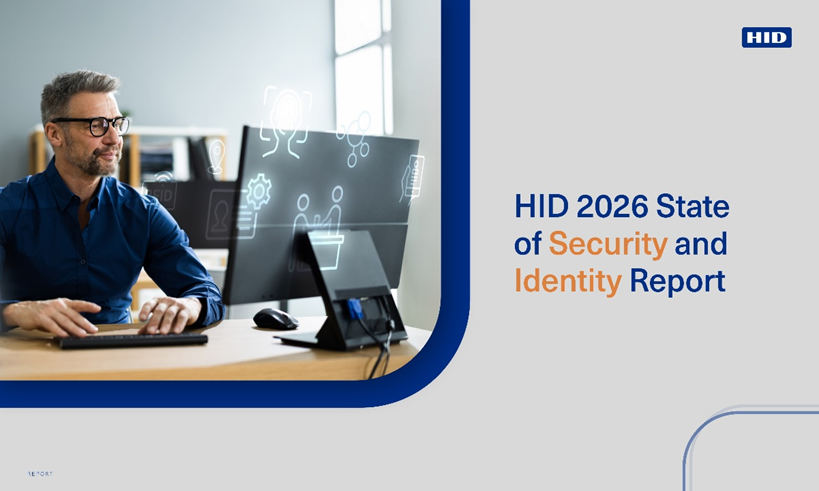
HID, a global leader in trusted identity solutions, has released its 2026 State of Security and Identity Report, revealing how organizations in the region and worldwide are reshaping their approach to identity management. Based on insights from more than 1,500 security and IT professionals, end users and industry partners across regional and global markets, the research shows that security leaders are focused on how to manage identities in ways that build trust, strengthen protection and preserve user choice across increasingly converged physical and digital environments.
“Security leaders are clearly under pressure to modernize access and identity infrastructure, but our research shows they’re equally focused on the governance, protection and transparency that build lasting trust,” said Ramesh Songukrishnasamy, Senior Vice President and Chief Technology Officer at HID. “The organizations succeeding in 2026 are those giving stakeholders meaningful solution choice while maintaining robust security.
Key Findings that Define the Path Forward
- Identity management now dominates strategic planning
(73%) of respondents rank identity management as a top priority, reflecting a shift towards unified identity governance that spans both physical access and digital systems.
- Mobile credentials have reached critical mass
Mobile credentials adoption is now driven by security improvements (50%) rather than convenience (34%), a notable shift as organizations recognize the many advantages of mobile credentials. Meanwhile, hybrid credential environments remain standard, with 84% of end users maintaining physical credentials within their mobile deployment.
- Biometrics are expanding beyond MFA into core access control
Biometric technologies continue to gain traction (45% of users view them as strategic), with fingerprint (71%) and facial recognition (50%) leading adoption. Yet, ethical and privacy concerns more than doubled year-over-year from 31% to 67%.
- Physical and digital identity convergence is accelerating
(75%) of organizations have either deployed (29%) or are actively evaluating (46%) unified identity solutions. While single credentials spanning buildings, networks and applications deliver efficiency and stronger security, budget constraints (51%), complexity (37%), and expertise gaps (34%) remain persistent barriers.
- Investment patterns are shifting towards integrated platforms
Organizations are prioritizing integrated identity and security platforms over standalone point solutions to improve visibility, efficiency, and resilience across increasingly complex environments. Yet, integration complexity persists as a primary barrier (52% for identity systems, 37% for physical-digital convergence).
Ethics and privacy concerns are at an all-time high
Beyond technology trends, the 2026 report highlights ethics and privacy as a defining concern, with 67% of end users expressing ‘high’ or ‘moderate’ concern about ethical and privacy implications. As a result, organizations are strengthening policies and governance to balance protection with individual rights.
Drawing on diverse perspectives across industries, including healthcare, education, government, finance, manufacturing, and critical infrastructure, the survey offers insight into how strategy aligns with execution and where gaps remain.
Tech Reports
Middle East M&A Activity Surges 260% Despite Market Volatility, Driven by Strategic Diversification and Digital Transformation


Middle Eastern mergers and acquisitions (M&A) have demonstrated remarkable resilience and strategic focus, with deal values surging 260% to $53 billion in the first nine months of 2025 compared to the same period last year. This exceptional growth comes despite experiencing its lowest levels since the COVID shock earlier in the year, according to BCG’s annual Global M&A Report 2025 released today. The region’s performance is driven by a select group of experienced dealmakers making disciplined, strategic investments amid continued global market volatility.

Monthly data reveals that Middle East M&A activity over the past three years has consistently exceeded historical averages, recovering strongly from the pandemic dip. BCG’s M&A Sentiment Index, a forward-looking indicator of deal activity, shows increasingly positive sentiment across all sectors, with confidence reaching its highest levels in technology and energy. While Africa, the Middle East, and Central Asia recorded a 6% increase in aggregate deal value, the region continues working to surpass its 10-year average.
“The Middle East’s M&A landscape in 2025 reflects a sophisticated approach to capital deployment, where strategic diversification meets digital ambition,” said Samuele Bellani, Managing Director & Partner at BCG. “We’re witnessing experienced dealmakers making highly disciplined investments that simultaneously strengthen traditional energy capabilities while building new pillars of economic growth in technology and industrial services.”
M&A Energy Sector Consolidation Drives Regional M&A Leadership
Energy transactions remained the cornerstone of Middle Eastern M&A activity throughout 2025, as state-backed entities pursued aggressive domestic consolidation while simultaneously expanding their international footprint through strategic acquisitions. A landmark $13.4 billion acquisition reinforces the UAE’s ambitious international expansion strategy in the chemicals sector, while a $693 million purchase in power generation and utilities exemplified the ongoing consolidation within the sector. These strategic moves underscore sector resilience while supporting the region’s gradual but determined pivot toward renewable energy sources, positioning national champions for the global energy transition.
The industrial sector emerged as a central pillar of the Middle East’s economic diversification strategy, with governments and sovereign wealth funds systematically building capabilities beyond traditional hydrocarbon dependencies. A $925 million acquisition highlights the accelerating consolidation of critical supply chain infrastructure across the region. This transaction reflects a broader, long-term initiative to establish the Middle East as a premier hub for industrial and logistics services, fundamentally reducing dependency on energy revenues while enhancing the region’s global competitiveness across multiple sectors.
Digital Transformation Fuels Technology Sector Emergence
Technology, media, and telecommunications gained unprecedented momentum in 2025, establishing itself as an emerging pillar of regional deal activity and signaling a fundamental shift in investment priorities. A transformative $3.5 billion acquisition, representing one of the largest digital entertainment transactions globally, demonstrates the region’s serious ambitions to become a global leader in gaming and digital entertainment. A $855 million acquisition strategically expanded the Middle East’s telecommunications influence into European markets. These high-profile transactions clearly demonstrate that Middle Eastern acquirers are strategically deploying substantial capital to capture growth opportunities across digital platforms, connectivity infrastructure, and entertainment services, aligning perfectly with broader national digital transformation agendas.
“What we’re seeing is a fundamental transformation in how Middle Eastern investors approach M&A,” said Samuele Bellani, Managing Director & Partner at BCG. “The region’s sovereign wealth funds are not just engines of deal flow—they’re architects of a new economic paradigm that balances traditional energy strengths with cutting-edge technological capabilities and world-class industrial infrastructure.”
As 2025 enters its final months, the Middle East has distinguished itself as one of the world’s most active and strategically focused M&A markets. Sovereign wealth funds continue providing an exceptionally deep pool of liquidity capable of sustaining robust deal flow regardless of global economic cycles or market volatility. Government-led strategies persistently drive consolidation across industrial and technology sectors, creating unprecedented resilience against the region’s historical reliance on hydrocarbon revenues. The combination of steady foreign interest across TMT, financial services, and healthcare sectors demonstrates the region’s unique dual advantage of supporting sustainable growth while accelerating economic diversification initiatives.
The sustained momentum in Middle Eastern M&A activity reflects a mature understanding of global market dynamics, where strategic patience combines with decisive action to create lasting competitive advantages across multiple sectors and geographies.
Tech Reports
BCG report shows Middle East rapidly emerging as a global nexus for scalable AI data centers

Boston Consulting Group (BCG) announced the launch of its new report, “AI Data Centers: An Opportunity in the Middle East”, during the sidelines of MWC Doha 2025, revealing that the Middle East is rapidly positioning the region as a rising global nexus for AI data center investment and innovation. As global demand for AI infrastructure accelerates, with data center power needs projected to grow from 86GW in 2025 to 198GW by 2030, BCG finds that the Middle East has a uniquely competitive advantage in supplying scalable, cost-efficient AI compute capacity.

Middle East: A Critical New Hub of AI Data Center Investment
BCG’s report highlights that the Middle East is not merely participating in the global AI infrastructure race; it is fast emerging as a critical new hub of AI data center development. The region benefits from distinctive structural advantages. Its strategic geography places it within a 2,000-mile radius of over 3 billion people, enabling it to serve Europe, Asia, Africa, and the Global South with non-latency-sensitive AI inferencing at scale.
Thibault Werle, Managing Director & Partner, BCG
Competitive cost structures, including up to 50% lower leasing rates, low power tariffs, and advanced cooling systems adopted by regional operators, significantly reduce the total cost of ownership. Meanwhile, markets such as the UAE and Saudi Arabia continue to accelerate time-to-market for new data centers through fast-track development, dedicated investment teams, and special economic zone clusters such as Masdar City’s Stargate Campus. This momentum is reinforced by the region’s expansive land availability, scalable power ecosystems, and the planned ~720 Tbps Fibre in the Gulf (FIG) submarine cable project.

Harold Haddad, Managing Director & Senior Partner BCG
Thibault Werlé, Managing Director and Partner at Boston Consulting Group (BCG), said: “The Middle East is undergoing a pivotal transformation as it positions itself to become a global hub for AI infrastructure. With strategic investments, progressive digital policies, and ambitious national visions across Qatar, the UAE, and Saudi Arabia, the region is building the foundation for scalable, next-generation AI compute. Qatar’s ongoing initiatives, showcased during MWC Doha, reflect the broader regional commitment to shaping a competitive and globally relevant AI ecosystem that can serve markets across Europe, Asia, Africa, and the Global South.”
Country Momentum Across the Region
The report outlines major national initiatives shaping the Middle East’s AI infrastructure landscape. Saudi Arabia has launched HUMAIN with a targeted 1.9GW AI data center capacity, along with partnerships with NVIDIA, AMD, AWS, DataVolt, and Groq to develop multi-hundred-megawatt AI campuses, including the world’s largest AI compute center. The UAE is advancing a 5GW AI campus in Abu Dhabi under the US-UAE AI Acceleration Partnership and is importing 500,000 GPUs for regional and US partners, supported by Microsoft’s USD $15.2 billion AI and cloud infrastructure investment. Qatar’s strategic investments complement these national efforts and reinforce a GCC-wide push toward establishing a global AI compute corridor.
Qatar Leading Regional Momentum
Qatar is steadily strengthening its position as a competitive player in the global AI and technology race, supported by strategic investments from the Qatar Investment Authority (QIA). These include the establishment of a USD $3 billion global platform with Blue Owl Capital to accelerate international AI and cloud infrastructure expansion, as well as QIA’s participation in Anthropic’s USD $13 billion funding round. These initiatives underscore Qatar’s commitment to advancing its digital capabilities and align closely with the ambitions of the Qatar Digital Vision 2030.
MWC Doha serves as a testament to the country’s growing role in shaping the regional technology landscape, reflecting Qatar’s intent to contribute meaningfully to the Middle East’s emerging AI infrastructure ecosystem.
Reflecting on BCG’s participation at MWC Doha, Harold Haddad, Managing Director and Senior Partner noted: “Qatar’s digital ambition is rapidly taking shape, driven by decisive leadership and a deep commitment to innovation. In line with Qatar National Vision 2030 and Qatar’s Third National Development Strategy, the country is harnessing AI and emerging technologies to cement its role as a competitive force in the global digital economy. Hosting Mobile World Congress Doha reflects this momentum and Qatar’s growing influence as a pivotal hub for technological advancement. At BCG, we are proud to contribute to this journey, partnering across sectors to help build the digital foundations of the future economy.”
Recommendations for Middle Eastern Governments
To fully unlock the region’s potential, BCG recommends that governments create streamlined, unified investment packages that integrate key inputs such as land, power, water, and connectivity within clear, time-bound frameworks. Expanding a diverse ecosystem of business and financing models including hyperscalers, GPU-as-a-Service providers, equity platforms, and bond-backed investments will be critical to enabling flexibility for market entrants. The report also emphasizes the importance of strengthening partnerships across chipset suppliers, research institutions, and component manufacturers to accelerate innovation across the AI data center value chain. Developing and retaining world-class digital and AI talent remains a central requirement for long-term competitiveness, capacity building, and sustained innovation.
As AI continues to reshape economic landscapes, data centers form the critical backbone of global technological leadership. With its strategic geography, favorable economics, and ambitious national digital agendas, the Middle East is uniquely poised to emerge as a global AI data center powerhouse—particularly for regions requiring scalable and cost-efficient AI compute such as the Global South.


Nolte Küchen Secures AED 90 Million in UAE Projects Following Direct Market Entry

Mango Jam Studios and The SMC Group Forge Strategic Partnership to Connect Middle Eastern Brands with Global Music and Entertainment Talent

AL HABTOOR GRAND RESORT, AUTOGRAPH COLLECTION APPOINTS CHRISTOPHE DELABARRE AS HOTEL MANAGER



-

 Trending12 months ago
OPPO A6 Pro 5G Review: Reliable Daily Driver
-

 Tech News2 years ago
Denodo Bolsters Executive Team by Hiring Christophe Culine as its Chief Revenue Officer
-
 VAR2 years ago
Microsoft Launches New Surface Copilot+ PCs for Business
-

 Automotive2 years ago
AGMC Launches the RIDDARA RD6 High Performance Fully Electric 4×4 Pickup
-
Tech Interviews3 years ago
Navigating the Cybersecurity Landscape in Hybrid Work Environments
-

 Hospitality2 years ago
Gulfood 2025 30th Edition Kicks Off Today, Setting New Benchmarks in F&B Growth and Innovation
-

 Tech News1 year ago
Nothing Launches flagship Nothing Phone (3) and Headphone (1) in theme with the Iconic Museum of the Future in Dubai
-

 VAR10 months ago
Huawei Nova 14 Pro Review: Where Camera Excellence Meets Ecosystem Evolution