
 Have a question? +971 56 404 0503




Tech Interviews
Ericsson’s AI-Powered Troubleshooting and Future Technological Innovations

Integrator Media had an exclusive interview with Majda Lahlou Kassi, Vice President and Head of Ericsson West Africa & Morocco.
With your background in technology, sales, strategy, and operations, how do you plan to drive Ericsson’s technological initiatives?
With my background spanning technology, sales, strategy, and operations at Ericsson, my focus is on driving the company’s technological initiatives in West Africa. Having travelled extensively to engage with customers directly, I have always prioritized understanding their needs and enhancing network performance to deliver impactful solutions. Believing in Africa’s immense potential, I am dedicated to driving forward Ericsson’s ‘Africa in Motion’ initiative. Through this initiative, we aim to leverage our best talent and expertise to empower sustainable growth, economic development, and connectivity across Africa. Drawing from experience, we are confident in identifying and seizing opportunities for success while navigating the current challenges. We aim to ensure widespread connectivity through strategic partnerships and innovative technologies like 4G, 5G and mobile financial services, especially in rural areas. By fostering digital literacy, promoting financial inclusion, and collaborating with stakeholders, we strive to empower communities, accelerate Africa’s digitalization efforts, and support its journey towards achieving technological and sustainable development goals.
How does Ericsson plan to support the digital transformation of networks in the region?
At Ericsson, we are committed to supporting the digital transformation of networks through 5G. Our global network platform connects developers to global capabilities, fostering the creation of new applications. With global 5G population coverage projected to increase from 45 percent to around 85 percent in 2029, we believe that 5G should go beyond the capabilities of 4G, and our approach is to make these capabilities accessible for others to integrate into various applications and devices. We also have opened a 5G Core Excellence Center in the Middle East and Africa, showcasing the real-world applications of 5G, including fixed wireless access, cloud gaming, and enterprise offerings. We are dedicated to addressing pressing global issues while also enhancing communication infrastructure’s accessibility and affordability for sustainable economic growth.
To meet Africa’s increasing broadband demands, Fixed Wireless Access (FWA) emerges as a pivotal technology. While 4G FWA is an initial steppingstone, 5G’s potential is increasingly coming to the forefront due to its capability to deliver fiber-like speeds. This advancement complements traditional fixed broadband infrastructure within the region. Notably, several key African markets, including Angola, South Africa, Nigeria, Kenya, Zambia, and Zimbabwe, have already launched 5G FWA services. This shift can be attributed to its cost effectiveness, rapid deployment capabilities and inherent flexibility.
- How does Ericsson align its technologies and solutions to support sustainable activities and goals in Africa?
Ericsson firmly believes that sustainability is at the foundation of our business success. Through ‘Africa in Motion’, we aim for a sustainably developed Africa. Achieving sustainable high-speed connectivity in Africa requires leveraging global collaboration and technological advancements such as 5G, AI, and IoT. These emerging technologies serve as critical means for decarbonization efforts. ICT solutions have the potential to reduce global carbon emissions by up to 15% by 2030.
When it comes to our solutions, the intelligent RAN energy-saving software as well as our triple-band, tri-sector 5G radio technology has shown significant energy reductions. We also promote waste reduction through smart product design and comprehensive take-back services, addressing e-waste.
Last year, Ericsson and Free Senegal signed a Memorandum of Understanding (MoU) to establish a proof-of-concept (PoC) project that provides a digital education ecosystem for schools in Senegal. As part of the PoC, a few schools will be connected with FWA technology, and also provided with laptops, learning content, and teacher training to support the development of the ecosystem. The project will demonstrate how FWA, by utilizing existing mobile radio networks, is an effective solution to connect schools and bridge the educational divide.
Another initiative is our collaboration with Smart Africa Digital Academy to enhance critical digital skills of senior public sector officials. 100 policy makers and regulators across 19 African countries attended virtual workshops in emerging technologies over a three-month period.
Ericsson’s goal is to achieve Net Zero in our own operations (fleet, facilities, business travel and commuting/teleworking) by 2030. We aim to generate value for the future and continue to develop innovative solutions that extend broadband access to over a billion people in Africa, all while addressing sustainability and energy and carbon emission challenges.
The extension of Ericsson Expert Analytics with advanced troubleshooting capabilities is interesting. Can you share more about how machine learning and AI tools will benefit telecom networks in the region?
The extension of Ericsson Expert Analytics, featuring advanced troubleshooting capabilities driven by machine learning (ML) and artificial intelligence (AI) tools, marks a pivotal advancement for telecom networks in the region. This technology takes troubleshooting to the next level by integrating embedded intelligence and built-in domain knowledge, making incident identification and resolution more practically seamless. With ML-based anomaly detection, the system provides actionable insights, resulting in faster and more accurate issue resolution during network events. This enhances the reliability of telecom networks and ensures a proactive approach to addressing challenges in real-time.
The application of AI in network analytics is a transformative force in the regional telecommunications landscape. By leveraging AI’s unique automation capabilities, Ericsson contributes to the ongoing evolution of telecom networks. This includes managing and automating complex network data, predicting patterns and issues, and ultimately boosting network performance.
How does Ericsson plan to stay ahead in terms of technological innovation in the ever-evolving landscape of telecom services?
Our strategy to stay ahead in technological innovation involves a holistic approach focused on expanding our enterprise business, fostering cultural transformation, and fortifying our leadership in mobile networks. Leveraging our proven technology, we’re committed to broadening our portfolio and unlocking new avenues of growth. Public-private partnerships will continue to be instrumental in our sustainability and digital inclusion efforts. Our emphasis on the Global Network Platform (GNP) accelerates the development and availability of network services and APIs, enhancing accessibility for users and fostering collaboration with CSPs, application developers, and enterprises.
Additionally, our dedication to tackling global challenges such as climate change and inequality remains steadfast. The recent establishment of the 5G Core Excellence Center demonstrates our commitment to innovation, collaboration, and the advancement of 5G technology. As we have just concluded a transformative year, Ericsson remains focused on connecting communities, driving innovation, and leading the charge towards a sustainable and digitally inclusive future.


Exclusive interview with Shadi Hatoum, Regional Director MEA at Tealium
The UAE is moving quickly from AI experimentation to deployment. What do you think will determine which organizations actually turn adoption into measurable business value?
The organizations that create measurable value will be those that connect AI to a clearly defined business decision, then give it the right data and operating model to support that decision.
The UAE has already built significant momentum. Boston Consulting Group found that 42% of UAE organizations qualify as AI Leaders, while 37% have reached the scaling stage of AI maturity. The next test is whether that maturity translates into sustained outcomes.
Deploying a model is not the same as changing how a business operates. AI needs trusted, consented, and real-time context around customer identity, behavior, intent, and journey stage. It also needs clear ownership, measurable objectives, and teams that understand how to use the output.
From my perspective, data readiness and organizational adoption will be the two biggest differentiators. The organizations that can put reliable context in front of AI at the moment of decision, and embed the resulting insight into daily workflows, will be best positioned to turn adoption into measurable value.
How much of the current gap between AI ambition and AI impact comes down to fragmented or outdated customer data?
A significant part of the gap comes down to data readiness, although technology alone is not the whole answer. Most organizations do not lack data. Their challenge is that the data is fragmented, difficult to interpret, or unavailable when a decision needs to be made.
Historical data provides useful depth, but AI also needs data in motion. It needs to understand what a customer is doing now, what has changed, what the customer has consented to, and whether the signal belongs to the correct individual or account.
Tealium’s Future of Customer Data research found that 88% of organizations consider real-time data important to achieving business objectives. That is important because an AI system working from yesterday’s profile may produce a technically valid recommendation that is no longer relevant.
The real opportunity is to create a trusted context layer that connects identity, behavior, consent, and intent, then makes that context available to models and decisioning systems while the customer interaction is still taking place.
Does agentic AI create a new governance problem for enterprises, particularly when agents are acting on customer data without constant human intervention?
Agentic AI does not make the principles of governance entirely new, but it raises the stakes and increases the speed at which controls need to operate. When an AI agent can move from recommendation to action, governance can no longer be treated only as a periodic policy or review exercise. It needs to operate within the data flow and decision process itself.
Enterprises need clear controls over which data an agent can access, the purpose for which it can use that data, how identity and consent are verified, which actions it is authorized to take, and when a person must review or approve the outcome.
The key question is not only whether an agent can access a piece of customer data. It is whether the agent should use that data for this customer, for this purpose, at this moment.
That requires trusted data, current consent, auditability, defined action limits, and clear escalation paths. As autonomy increases, accountability needs to become more precise, not less.
Which sectors in the Middle East do you think are furthest ahead in using real-time customer data and AI together effectively?
From my experience across the region, telecommunications and travel, hospitality, and tourism are among the most active and promising sectors because they generate frequent customer signals and have a clear need to respond in the moment.
In a recent discussion with the Chief Commercial Officer of a major telecom operator in the region, we talked about growth as filling a bucket while also stopping the leaks. Acquisition fills the top, but poor service, irrelevant engagement, and unresolved friction allow value to escape through churn. Sustainable growth requires both attracting new customers and protecting the loyal customer base already in the bucket.
This is where AI-supported decisioning can create real value. Trusted, consented, real-time behavioral data can help an operator recognize changes in usage, service issues, digital engagement, and signs of churn. The next best action may be to resolve a problem, recommend a more suitable plan, position a bespoke package at the right time, or avoid making an offer when the customer first needs support.
The objective is not to push more offers. It is to improve relevance and timing. That can support retention, strengthen loyalty, and create opportunities to grow average revenue per user, or ARPU, by responding to what the customer needs in that moment.
Travel, hospitality, and tourism have a similarly strong opportunity. The customer journey moves from inspiration and research to booking, arrival, the in-destination experience, and loyalty. Each stage creates different needs. A traveler facing disruption needs assistance, while a guest already at a destination may value a timely, personalized experience or service.
These sectors show why hyper-personalization at scale depends on trusted, consented behavioral data in motion. The value comes from giving AI initiatives the current context they need to choose the next best action for that specific moment.
At AI Everything Abu Dhabi 2026, what are the biggest changes you are seeing in the conversations enterprises are having compared with a year or two ago?
The biggest change is that enterprises are no longer asking whether they should adopt AI. They are asking how to move it into production, connect it to measurable outcomes, and govern it at scale.
A year or two ago, many conversations centered on experimentation and individual use cases. Today, the questions are more operational. Leaders want to understand how AI will work with their existing data, how agents will receive current customer context, how decisions will be controlled, and how value will be measured beyond a successful pilot.
I am also hearing much more emphasis on adoption. Organizations recognize that a model does not create value by itself. Teams need clear use cases, practical training, shared measures of success, and confidence in the data behind the recommendation.
The conversation has therefore moved from AI capability to AI readiness. That includes the quality of the data foundation, the governance around it, the ability to make decisions in real time, and the people and processes required to turn those decisions into action. For me, that is a sign that the market is becoming more mature and more focused on sustainable business impact.

Exclsuive interview with Fady Richmany, Corporate Vice President and General Manager, Emerging Markets at Commvault
Integrated Media is at GISEC Global Dubai 2026 with Fady Richmany, Corporate Vice President and General Manager, Emerging Markets at Commvault
How is AI changing the attack surface for organizations in the region?
AI is crucial for digital transformation, so we are not debating the importance of AI. I think the UAE is one of the most advanced countries when it comes to adopting technology. The Dubai Government has also announced plans to use agentic AI extensively in the coming years
However, AI comes with a significant amount of data and introduces new types of identities. We are no longer dealing only with human identities but are increasingly dealing with robotic and AI-agent identities that can access data and systems. This creates additional complexity and consequences from an identity and security perspective.
At the same time, AI-powered attacks are another major concern. In the past, a hacker typically needed to be highly technical. Today, with AI, launching sophisticated attacks can become much simpler.
So, AI is important, but it needs to be utilized properly and governed effectively. There needs to be a balance when organizations and large enterprises adopt these technologies.
Why are threat actors increasingly targeting backup and recovery environments?
Backup and recovery are the last line of defence.
When a company is compromised, one of the first things it needs to do is access its backups to recover its data and operations. Hackers understand this. If they want their attacks to be effective, they also need to target the backup environment.
This is where companies like ours, along with many others in the industry, play an important role in making sure that backups remain clean, protected, and safe so organizations can recover when an incident occurs.
How does identity management need to evolve as AI agents and autonomous workloads multiply?
Agentic AI is putting additional pressure on IT because it is creating many robotic identities.
We have also seen attacks where AI has been used with little or no human intervention. This creates an additional security burden, which means these identities need to be properly protected.
Our approach focuses on the recovery side. Organizations need to use the appropriate security technologies available in the market to protect their environments and ensure that the right identities have access to the right resources.
But we also need to address what happens when an identity is compromised. How do you recover the environment? How do you recover the identity infrastructure? That is becoming a very important topic.
What does Cloud Unity offer beyond separate point solutions?
Cloud Unity brings together identity, security, and operational resilience. We combine people and processes and work closely with many of the leading security technology partners in the market.
We integrate information from different technologies and provide identity resiliency to help protect organizations from both sides of the problem.
We also have something called ResOps, or Resiliency Operations. It is a methodology for how organizations should operate. We believe organizations need to educate their people, keep them aware, and make sure everyone understands their role during a crisis. They also need to modernize their processes.
All of this comes together to make sure the environment remains resilient and productive. And this is not a one-time exercise but has been continuously tested – time and again.
How does ResOps help organizations move from reactive security to a more measurable and proactive approach?
In the olden days, we used what we called backup drills. This is particularly common in banking and government, where people would come together every quarter and check whether the backup was working.
But that approach is no longer enough.
Recovering data is not simply about recovering the information. During a cyberattack, you need to recover clean data and ensure that the environment you are restoring is safe. That means organizations need continuous testing. You have to align people, processes, and technology and make testing an ongoing activity.
When a compromise happens, everyone needs to know their role – Who has access? What are the steps that need to be followed? Who is responsible for each action? The ultimate objective is to be able to recover a clean copy of the data and get the organization back into operation as quickly and safely as possible.
What will the new Center of Excellence in Abu Dhabi focus on, and how will it support the UAE’s digital transformation goals?
One of our strategies is to align closely with local authorities, and work together with them. We work very closely with the UAE Cyber Security Council and have developed this initiative together with them.
The purpose of the Center of Excellence is to bring innovation to the region. It will be a center for innovation, with R&D and technology development taking place in the region. It will also be a center for developing local talent. We are partnering with universities and aim to train young Emiratis in areas such as cyber resilience and cyber defense. It will also be a center for awareness.
I would quote what Dr. Mohamed Al Kuwaiti said- the responsibility for cyber defense does not rely on one technology, one individual, or one government. It requires the entire community to work together to fight cyber threats. That is the purpose of the center. It is to bring all these elements together, support the cybersecurity community, and give back to the region. We want to create awareness, talent, and innovation.
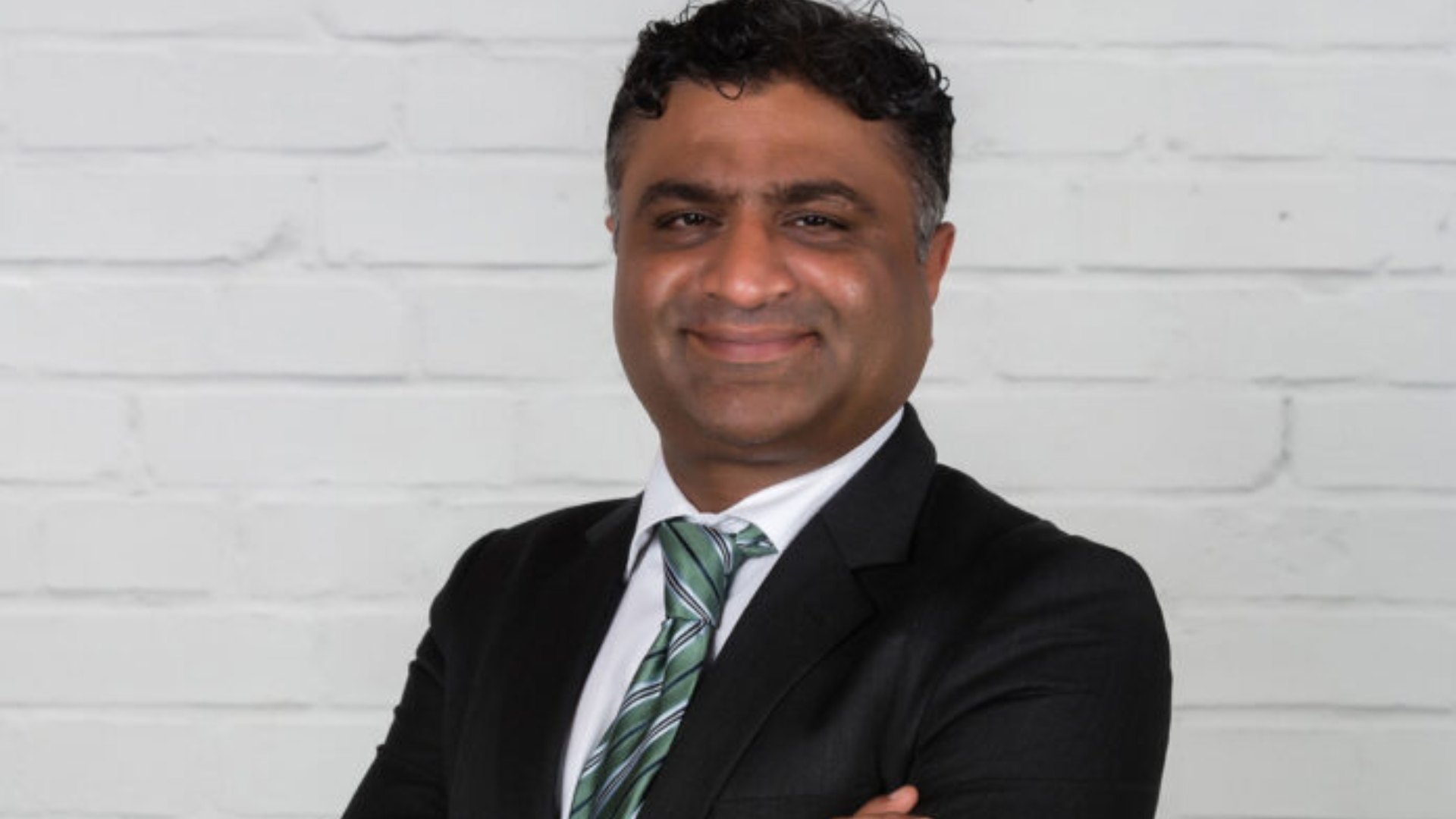
Exclusive interview with Bilal Baig, Vice President, Solutions Engineering, Trend Micro
What is Trend Micro showcasing at GISEC Global 2026, and how does it reflect the shift towards proactive, AI-powered cyber risk management?
We are highlighting our unified cybersecurity platform, Trend Vision One, which is designed as a proactive security platform.
AI has shifted how organisations, governments and agencies respond to threats. It is no longer enough to take a reactive approach. Security needs to become proactive, particularly given the speed at which AI is developing.
We are using AI in two ways. First, we are using AI internally within the platform to identify vulnerabilities. Second, we are using AI to protect our customers.
At GISEC, we are showcasing agentic SIEM, agentic SOAR, XDR capabilities and our full-stack AI security platform. We are also highlighting new developments in AI security, including how AI can help protect against vulnerabilities and zero-day attacks.
How has Trend Micro evolved in both using AI for cybersecurity and securing AI systems themselves?
AI has increased the speed at which organisations can move into production. At the same time, both defenders and attackers now have access to AI. The key question is how organisations manage that risk and how quickly they can protect customers and predict an attack before it becomes a breach.
We created Cybertron, an industry-first cybersecurity LLM, and we also work with frontier AI providers including Anthropic, OpenAI and Microsoft. We use frontier AI to consume vulnerability information, while our customers have access to our broader AI security capabilities.
We are now moving into the agentic AI era, where AI agents can make decisions on behalf of humans. These agents can access systems, emulate human behaviour and perform tasks independently.
For us, agentic AI security comes down to four key areas: visibility, observability, governance and response.
Visibility means understanding what is happening. Observability goes a step further by understanding what an action performed by an AI agent could cause. Governance determines how those agents should be controlled, while response is about deciding what action to take.
What new security and governance challenges arise as agentic AI moves from experimentation to enterprise deployment?
One of the biggest questions is whether an agentic AI system should be treated like a human identity or like software.
A software system needs updates, patches and maintenance. A human has an identity, a job and defined responsibilities. Agentic AI combines elements of both.
Organisations therefore need to give AI agents an identity, establish guardrails around what they can do and ensure that someone within the governance structure is responsible for their actions.
If an agent is given additional responsibilities, organisations need to understand how those permissions are managed and eventually removed when they are no longer required.
In an agentic AI environment, every communication and action needs to be considered within a governance framework. Organisations need to look at every interaction, understand its potential outcome and decide whether an action should be allowed to proceed or stopped.
What does the rise of autonomous or rogue AI agents mean for cybersecurity?
We are entering a world where rogue AI agents can become highly sophisticated systems. This means security cannot focus only on whether the underlying AI model is secure. Organisations also need to examine the actions those models are performing and whether those actions could create a cybersecurity problem.
The attack surface is now changing in terms of both scale and sophistication. Attackers have AI capabilities that can help them launch sophisticated attacks much faster.
This means organisations need AI on the defensive side as well. Security solutions need to match that speed and sophistication while ensuring that governance frameworks prevent malicious outcomes.
How should organisations manage the growing number of vulnerabilities identified by AI?
AI and frontier models can identify vulnerabilities that may not have been visible previously. An organisation that once had to manage 30 or 40 patches could suddenly face thousands.
It is not realistic to address every vulnerability in the same way. Organisations need to prioritise based on the risk and importance of their environment.
They need to identify which vulnerabilities are most important for their particular environment rather than simply looking at a vulnerability’s CVE score.
This is where cyber risk exposure management becomes important. Organisations need to understand the risk, the asset and the identity involved, and then decide which security gaps are most important to close.
How is the UAE’s cyber threat landscape changing as AI adoption and digital transformation accelerate?
The UAE is at the forefront of AI transformation. We are seeing multiple initiatives from the UAE Government, including AI training for government employees, government-focused AI initiatives and the introduction of AI education in schools.
There are already AI systems operating within government, so the digital transformation of AI in the UAE is moving forward rapidly.
Our focus is on helping secure that transformation. As AI systems become more interconnected and increasingly make decisions, the attack surface becomes more complicated.
A layered security approach is therefore important, from the large language model and API access through to the decision-making processes of AI agents, while monitoring for malicious activity.
What should organisations consider around security controls and data sovereignty as they expand their cloud and AI environments?
There is sometimes a misconception that moving to the cloud automatically means an organisation is secure. When cloud computing emerged, we often talked about security as a shared responsibility.
The exposure changes as organisations move from on-premises environments to the cloud and then into AI. The same threat can look very different across these environments.
Organisations need to consider where their assets and identities are located and how they will manage security across these different layers.
For highly sensitive environments, including air-gapped networks and systems involving critical data sovereignty, security may need to remain on-premises. In some national security environments, data cannot be processed outside the country.
Trend Micro has Vision One Sovereign and Private Cloud, which extends our AI cybersecurity unified platform to air-gapped and sovereign environments, with a focus on data sovereignty, localisation and air-gapped deployments.
What role does government-industry collaboration play in strengthening national cybersecurity preparedness and resilience?
Government-industry collaboration is extremely important. Working with organisations such as the Cybersecurity Council, national CERTs and government security services brings together different perspectives.
As governments move towards greater use of AI, industry can help secure that journey while governments provide the regulations and governance frameworks needed to manage these systems.
Without close collaboration, it becomes difficult to create policies that reflect what is actually happening in the private sector.
The objective should be to support innovation without overlooking cybersecurity. Technology is developing extremely quickly, particularly AI, so cybersecurity needs to be considered alongside that innovation.
Government and the private sector need to work together to make sure that while organisations remain at the forefront of technological development, they do not overlook the cybersecurity implications.

noon Beauty Fest Debuts at Dubai Festival City Mall

Venuetech in association with Sennheiser to host hands-on workshop on conferencing solutions at their Al Quoz Training Center

The UAE’s Net Wealth Reaches $3.6 Trillion in 2025 and is Expected to Approach $6 Trillion by 2030, BCG Report Finds



-

 Trending12 months ago
OPPO A6 Pro 5G Review: Reliable Daily Driver
-

 Tech News2 years ago
Denodo Bolsters Executive Team by Hiring Christophe Culine as its Chief Revenue Officer
-
 VAR1 year ago
Microsoft Launches New Surface Copilot+ PCs for Business
-

 Automotive2 years ago
AGMC Launches the RIDDARA RD6 High Performance Fully Electric 4×4 Pickup
-
Tech Interviews3 years ago
Navigating the Cybersecurity Landscape in Hybrid Work Environments
-

 Hospitality2 years ago
Gulfood 2025 30th Edition Kicks Off Today, Setting New Benchmarks in F&B Growth and Innovation
-

 Tech News1 year ago
Nothing Launches flagship Nothing Phone (3) and Headphone (1) in theme with the Iconic Museum of the Future in Dubai
-

 VAR2 years ago
Samsung Galaxy Z Fold6 vs Google Pixel 9 Pro Fold: Clash Of The Folding Phenoms