
 Have a question? +971 56 404 0503




Tech News
Qlik Expands Embedded AI Capabilities for Smarter Decisions and Faster Intelligence


Qlik recently announced an expanded set of capabilities coming soon in its Qlik Cloud Analytics solution — equipping enterprises with tools to detect anomalies, forecast complex trends, prepare data faster, and take immediate action through embedded decision workflows.
While organizations continue to invest heavily in AI and data, most still struggle to turn insight into impact. Dashboards pile up, but real-time execution remains elusive. Only 26% of enterprises have deployed AI at scale, and fewer still have embedded it into operational workflows. The problem isn’t access to static intelligence — it’s the ability to act on it. Dashboards aren’t decision engines, and predictive models alone won’t prevent risk or drive outcomes. What businesses need is intelligence that anticipates, explains, and enables action — without added tools, delays, or friction.
“Enterprises struggle making intelligence accessible and actionable for their business users,” said Brendan Grady, Executive Vice President and General Manager of Qlik’s Analytics Business Unit. “Too many systems deliver insights and answers after the fact. We’re building something different: a platform where AI detects what matters, surfaces it in context, and lets you act — all within the analytics environment itself.”
With these planned launches, Qlik will be introducing a new layer of intelligence across its platform — one that doesn’t just report what’s happening, but anticipates what’s next and enables action in the moment. Discovery agent, multivariate time series forecasting, write table, and table recipe work in concert to solve a singular problem: how to move from fragmented insight to seamless execution, at scale.
These launches, along with the renaming of Qlik AutoML to Qlik Predict and Qlik Application Automation to Qlik Automate, reflect a broader shift toward more intuitive, outcome-driven experiences across the Qlik platform. Each capability targets a critical enterprise bottleneck — from delayed awareness to inaccurate forecasting, data prep bottlenecks to disconnected workflows — delivering a cohesive solution that closes the gap between data and decisions.
- See what others miss before it’s too late — with discovery agent. Executives no longer need to manually track business changes or sift through data. Discovery agent continuously scans performance across applications and datasets, automatically surfacing critical risks and opportunities before they intensify. Insights are delivered through a personalized feed that clarifies what’s happening, why it matters, and suggested next steps.
- Forecast reality, not just trends — with multivariate time series forecasting. Built into Qlik Predict (formerly AutoML), this capability moves beyond single-variable projections to model the full complexity of business conditions. By analyzing relationships across interdependent variables — like pricing, campaign activity, seasonality, and economic signals — it delivers sharper forecasts that reflect real-world dynamics. The result: more confident planning, faster scenario testing, and better decisions.
- Annotate and update data live — with write table. Write table enables users to add context to data records directly in analytics tables, with instant sync across sessions and no reloads required. This capability enhances in-context data review and lays the groundwork for governed writeback into systems like SAP, Salesforce, and Snowflake — part of Qlik’s long-term vision for integrated, action-ready analytics.
- Prep data faster with no code — using table recipe. Table recipe provides a streamlined, spreadsheet-like experience for preparing single-table datasets — no scripting or complex modeling required. Users can clean, convert, and format data with over 60 visual functions, seeing changes in real time. It empowers non-technical users to prep high-quality data quickly, accelerating the path to reliable insights.
“We’ve spent too much time reacting to what already happened — and not enough time getting ahead of what’s next,” said Olga Garagonich, Lead Manager, Data Visualisation, BT Group. “With these new capabilities in Qlik, we’ll be able to catch issues earlier, forecast more accurately, and take action — all without disconnected workflows or delays. That’s a game-changer for how we operate.”
Together, these capabilities transform Qlik from a system of insight into a system of execution — building the foundation for what comes next in enterprise AI: decision-making that’s not just intelligent, but contextual, automated, and embedded at the point of need.
Discovery agent, multivariate time series forecasting, write table, and table recipe will be available for private preview for select customers this year. General availability will begin rolling out in phases starting summer 2025.











Tech News
Datadobi Adds Data Access Governance to StorageMAP, Enabling Enterprises to Answer the Critical Question: “Who Has Access to What?”

Datadobi, a leader in the Data Storage Management Services space, today announced the general availability of Data Access Governance (DAG) within StorageMAP. The new capability gives organizations visibility into who has access to their unstructured data and whether that access aligns with corporate policy. It extends Datadobi’s ability to help enterprises discover, align, and operationalize data across fragmented environments as their intelligence and orchestration layer.
As AI initiatives, cyber threats, and rising data complexity expose the limits of traditional approaches, DAG addresses a critical gap: organizations cannot govern, protect, or extract value from data they cannot see or control. As AI initiatives, cyber threats, and rising data complexity expose the limits of traditional approaches, DAG addresses a critical gap: organizations cannot govern, protect, or extract value from data they cannot see or control.
StorageMAP’s DAG capability gives administrators comprehensive visibility into access permissions across fragmented unstructured data environments. By surfacing who has access to what data, and whether that access aligns with business and security policy. Organizations can detect misaligned permissions, reduce cyber exposure, and enforce governance at scale. This visibility is the essential first stage of the broader DSMS discipline — visibility, understanding, decision, execution — that determines whether organizations can act on their data with confidence.
The introduction of DAG extends StorageMAP’s existing capabilities across data discovery, classification, risk assessment, lifecycle management and AI Data Readiness. Together, these capabilities help organizations to discover what data they have, align it with business value and risk requirements, and operationalize policy-driven action across their environments. The result is unstructured data that supports AI initiatives, strengthens cyber resilience, reduces cost, and drives long-term business value rather than holding it back.
DAG, which was trialed by a number of beta customers, supports a range of enterprise use cases, from protecting sensitive data and reducing breach impact, to maintaining records compliance and managing risk through mergers, acquisitions, and divestitures. Early access customers identified a gap in their understanding of which critical datasets were exposed and who could access them, often relying on manual investigation to respond to audits and security incidents.
With Datadobi’s DAG capabilities, these organizations quickly identify overexposed data and validate access controls to proactively strengthen their security posture. For organizations investing in AI, it provides the governance foundation that trusted, well-governed data requires. And for those subject to data protection regulations (such as GDPR, HIPAA, or PCI DSS), it delivers the visibility needed to demonstrate that access controls are in place, operating as intended, and aligned with business policy.

“Unstructured data is at the center of every major enterprise challenge right now including AI readiness, cyber resilience, cost management, and regulatory compliance,” said Michael Jack, Co-founder and Chief Revenue Officer for Datadobi. “But organizations cannot address any of those challenges with data they cannot see or control. Data Access Governance gives teams the visibility to understand who has access to what, identify where risk exists, and take action to bring their unstructured data under control. It is a foundational step in turning unstructured data from a source of risk and complexity into a driver of business value.”

In a strategic move to advance enterprise digital enablement and support the technological ambitions of Saudi Vision 2030, Cloudera, the only true hybrid platform for data, analytics, and AI, has agreed to a Memorandum of Understanding (MoU) with MuroonI the technology and digital enablement subsidiary of Tawuniya.
The proposed collaboration aims to evaluate opportunities to help organizations across the region modernize their technology capabilities, accelerate digital transformation, and unlock long-term business value. By leveraging Cloudera’s products and services, the engagement will explore how Cloudera’s hybrid data platforms and AI-driven analytics can help to boost Muroon’s expanding IT and digital enablement objectives.
Under the proposed partnership, Muroon and Cloudera will aim to collaborate on delivering secure data exchange and modern cloud architecture. Integrating Cloudera Anywhere Cloud™ principles, the proposed collaboration will explore ways to deliver a consistent cloud experience, enabling organizations to deploy AI and analytics workloads across private data centers and cloud environments with unified governance and security.
The proposed alliance creates complementary roles for both organizations. Muroon will leverage its delivery capabilities, consulting expertise, implementation services, across the Tawuniya ecosystem and the wider region. Cloudera will look to provide technology leadership, platform expertise, solution architecture, and technical enablement.
Ahmad Shakora, General Vice President of META, Cloudera, said:
“Our proposed collaboration with Muroon represents an important milestone in empowering regional organizations with modern hybrid data and AI architectures. Through Cloudera’s ability to bring AI and analytics to data anywhere it resides, combined with Muroon’s deep digital enablement and implementation capabilities, we aim to accelerate innovation, ensure secure data management, and actively contribute to the digital economy goals of Saudi Vision 2030.”
Faisal Bakhsh, Vice President of Business Development and Services Delivery at Muroon, added:
“As the technology arm of Tawuniya Group, Muroon is dedicated to delivering cutting-edge digital solutions that drive operational efficiency and business growth. Exploring this partnership with Cloudera allows us to harness world-class hybrid data and AI platforms to expand our service capabilities, facilitate secure data exchange, and deliver transformative value to our ecosystem and clients across Saudi Arabia.”

In a strategic move to advance enterprise digital enablement and support the technological ambitions of Saudi Vision 2030, Cloudera, the only true hybrid platform for data, analytics, and AI, has agreed to a Memorandum of Understanding (MoU) with MuroonI the technology and digital enablement subsidiary of Tawuniya.
The proposed collaboration aims to evaluate opportunities to help organizations across the region modernize their technology capabilities, accelerate digital transformation, and unlock long-term business value. By leveraging Cloudera’s products and services, the engagement will explore how Cloudera’s hybrid data platforms and AI-driven analytics can help to boost Muroon’s expanding IT and digital enablement objectives.
Under the proposed partnership, Muroon and Cloudera will aim to collaborate on delivering secure data exchange and modern cloud architecture. Integrating Cloudera Anywhere Cloud™ principles, the proposed collaboration will explore ways to deliver a consistent cloud experience, enabling organizations to deploy AI and analytics workloads across private data centers and cloud environments with unified governance and security.
The proposed alliance creates complementary roles for both organizations. Muroon will leverage its delivery capabilities, consulting expertise, implementation services, across the Tawuniya ecosystem and the wider region. Cloudera will look to provide technology leadership, platform expertise, solution architecture, and technical enablement.
Ahmad Shakora, General Vice President of META, Cloudera, said:
“Our proposed collaboration with Muroon represents an important milestone in empowering regional organizations with modern hybrid data and AI architectures. Through Cloudera’s ability to bring AI and analytics to data anywhere it resides, combined with Muroon’s deep digital enablement and implementation capabilities, we aim to accelerate innovation, ensure secure data management, and actively contribute to the digital economy goals of Saudi Vision 2030.”
Faisal Bakhsh, Vice President of Business Development and Services Delivery at Muroon, added:
“As the technology arm of Tawuniya Group, Muroon is dedicated to delivering cutting-edge digital solutions that drive operational efficiency and business growth. Exploring this partnership with Cloudera allows us to harness world-class hybrid data and AI platforms to expand our service capabilities, facilitate secure data exchange, and deliver transformative value to our ecosystem and clients across Saudi Arabia.”

International Coffee Day Gets UAE-Made Twist with Rashtions’ Brazilian Coffee Truffle

Why Curation Matters More Than Ever in Fashion Retail

Keeta Marks First Anniversary in the UAE, Celebrating Nationwide Growth and Local Impact



-
News11 years ago
SENDQUICK (TALARIAX) INTRODUCES SQOOPE – THE BREAKTHROUGH IN MOBILE MESSAGING
-

 Trending11 months ago
OPPO A6 Pro 5G Review: Reliable Daily Driver
-

 Tech News2 years ago
Denodo Bolsters Executive Team by Hiring Christophe Culine as its Chief Revenue Officer
-
 VAR1 year ago
Microsoft Launches New Surface Copilot+ PCs for Business
-

 Automotive2 years ago
AGMC Launches the RIDDARA RD6 High Performance Fully Electric 4×4 Pickup
-
Tech Interviews3 years ago
Navigating the Cybersecurity Landscape in Hybrid Work Environments
-
 Tech News2 years ago
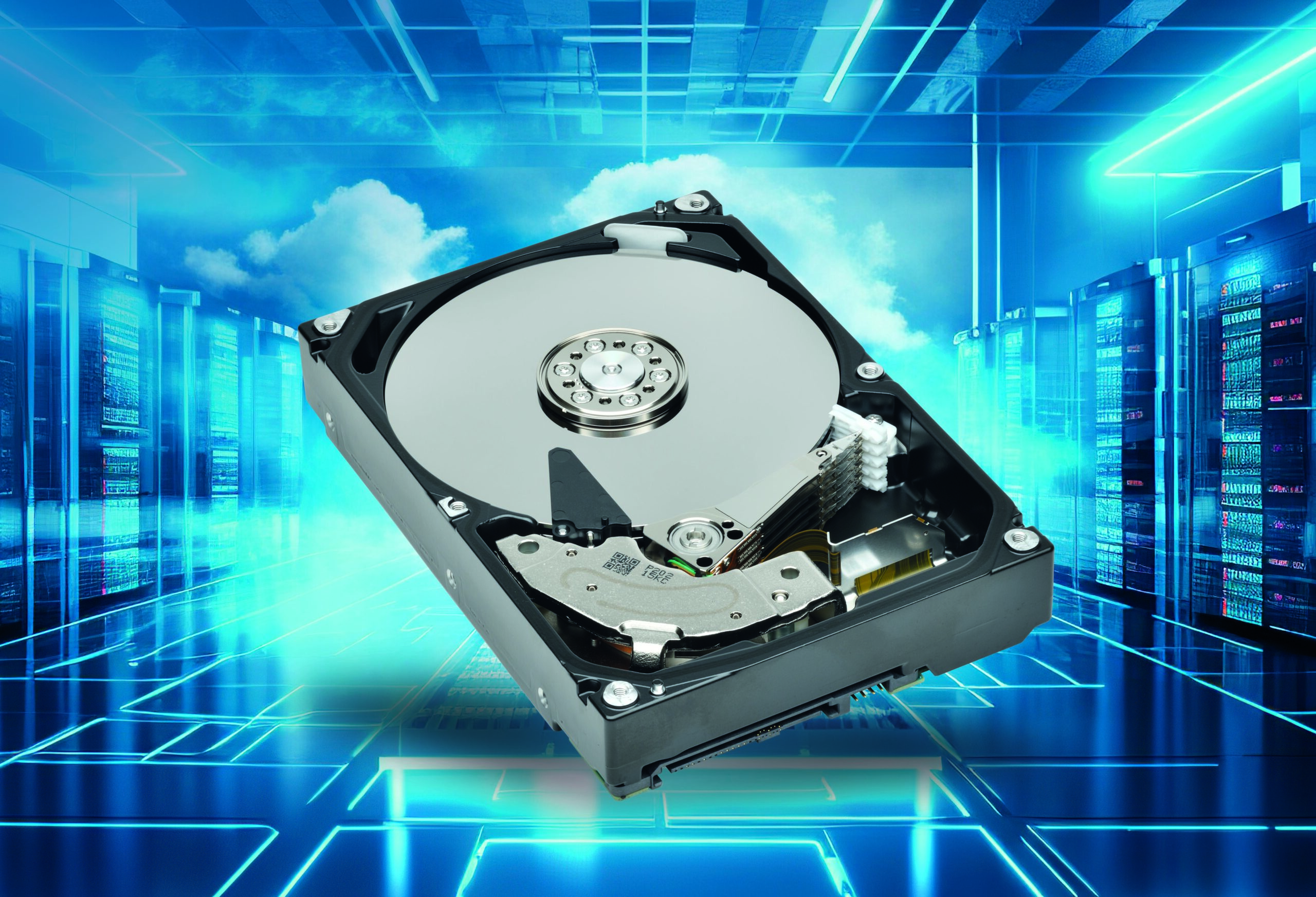
Toshiba Announces MG10-D Series of Enterprise HDDs with Capacities up to 10TB
-

 Tech News1 year ago
Nothing Launches flagship Nothing Phone (3) and Headphone (1) in theme with the Iconic Museum of the Future in Dubai