
 Have a question? +971 56 404 0503





Tech News
FIDO Authentication Downgrade Threat: Proofpoint Uncovers New Risk

Proofpoint threat researchers have uncovered an attack method that lets cybercriminals downgrade FIDO (Fast Identity Online) authentication. This poses risks for both organizations and individuals. While FIDO-based passkeys are among the strongest defenses against phishing and account takeover (ATO), attackers can still exploit accounts that allow alternative, less secure login methods.
Understanding FIDO Authentication
FIDO is an open set of standards developed by the FIDO Alliance to enhance online security and reduce reliance on traditional passwords. By using hardware security keys, biometrics, or PINs, FIDO provides phishing-resistant authentication that protects users from common credential theft. It eliminates the need for conventional passwords, significantly reducing the success rate of typical phishing campaigns.
How Adversary-in-the-Middle Attacks Work
Before FIDO adoption, many credential theft attempts relied on adversary-in-the-middle (AiTM) attacks. In these cases, a victim receives a phishing email with a link to a fake login page. This page is connected to a reverse proxy, which intercepts both the entered credentials and any multi-factor authentication (MFA) tokens, enabling attackers to hijack the session.
With FIDO in place, most phishing attempts using standard tools—known as phishlets—fail to succeed. However, Proofpoint’s findings show that attackers can adapt their methods to downgrade authentication.
The Downgrade Technique
Not all web browsers support passkey (FIDO2) authentication for Microsoft Entra ID. For instance, Safari on Windows does not. Attackers can exploit this gap by spoofing an unsupported browser, forcing users to switch to a weaker login method.
This works best when alternative authentication options remain active—a common setup for account recovery. By triggering the downgrade, attackers can bypass FIDO and access accounts using less secure MFA or even passwords.
Proofpoint’s Findings
Proofpoint researchers developed a specialized phishlet for the Evilginx AiTM attack framework, enabling them to simulate this downgrade process. By forcing a user to log in with a weaker method, attackers could steal credentials, capture session cookies, and execute account takeovers.
Moreover, this vulnerability demonstrates that “phishing-resistant” authentication can still be at risk if fallback methods are left in place without additional safeguards.
Why It Matters for Organizations
Cybersecurity experts warn that as more companies adopt FIDO to defend against phishing, threat actors will likely refine their techniques to include downgrade attacks in their tactics, techniques, and procedures (TTPs). Organizations relying solely on FIDO without tightening fallback methods may be leaving a critical gap in their security posture.
The Road Ahead
While the current threat landscape still focuses heavily on accounts without MFA or with weaker MFA methods, the sophistication of cybercriminals means that even FIDO-protected systems must be continuously reviewed. Proactive security governance, combined with user education and infrastructure hardening, will be key in ensuring authentication methods remain truly phishing-resistant.
Check out our previous post on Vertiv OneCore Launch Accelerates Scalable Data Center








Tech News
NETSCOUT’s Sustainability-by-Design ApproachCombats Surging Data Center Energy Consumption

NETSCOUT SYSTEMS, INC. (NASDAQ: NTCT), a leading provider of network observability, AIOps, cybersecurity, and DDoS attack protection solutions, today announced that its approach to sustainable design is helping its customers achieve a 20% improvement in energy efficiency in their usage of NETSCOUT® products, reducing operating costs and environmental impact. The overall environmental impact could be further reduced depending upon the energy source utilized.
According to recent BloombergNEF research, global data center electricity demand will nearly quadruple by 2035 to 2,354 terawatt-hours, accounting for 7% of the global electricity demand. Forrester blogs note that resource optimization becomes everyone’s business: “Winners will not debate or care whether to label the response ‘sustainability.’ They will be forced to plan AI, energy, water, land, infrastructure, and community impact together, because that is now what resilient growth requires.”
NETSCOUT’s sustainability-by-design approach:
- Prioritizes resource-efficient design at both the component and platform levels.
- Helps organizations mitigate the environmental and financial impacts of rapidly increasing data center and AI energy consumption.
- Enables upgrade of older devices with a single appliance to further optimize power efficiency.
Demonstrated Energy Savings
Performance lab testing of the InfiniStreamNG® 3U appliance measured the M-series platform versus the J-series. The results were reduced power consumption, yielding an estimated 1.3 MWh of annual energy savings per device. When cooling and power distribution losses are considered for the data center, power savings can be even higher. Similar results were observed in a live customer deployment.
“NETSCOUT’s sustainability-by-design architectural approach means that we select for energy efficiency at the platform and component level,” said Jillian James, director of sustainability, NETSCOUT. “We care about our customers’ downstream energy and AI impact, not just our own footprint. Our intention is to help customers make their networks and analytics more resource-efficient and better for the environment.”
Committed to Sustainability
The energy-efficient M-series platform reflects NETSCOUT’s broader corporate commitment to environmental responsibility. NETSCOUT is actively integrating sustainability into its operations and product development cycles to support circular economy principles. These product-level energy reductions are a key component of the company’s ongoing progress toward its science-based greenhouse gas emissions reduction targets for FY30.
By embedding energy efficiency into product design, NETSCOUT helps customers turn infrastructure modernization into lasting business value: lower operational costs, a smaller environmental impact, and greater capacity to support growing digital and AI demands. The M-series platform demonstrates how operational performance and sustainability can advance together, helping organizations make more effective use of power, space, and infrastructure investments. This approach enhances NETSCOUT’s value as resource efficiency becomes an increasingly important driver of technology purchasing decisions.
Tech News
Nemetschek Group Spotlights AI-Powered Solutions for the Middle East’s AEC/O Sector at Big 5 Global 2026
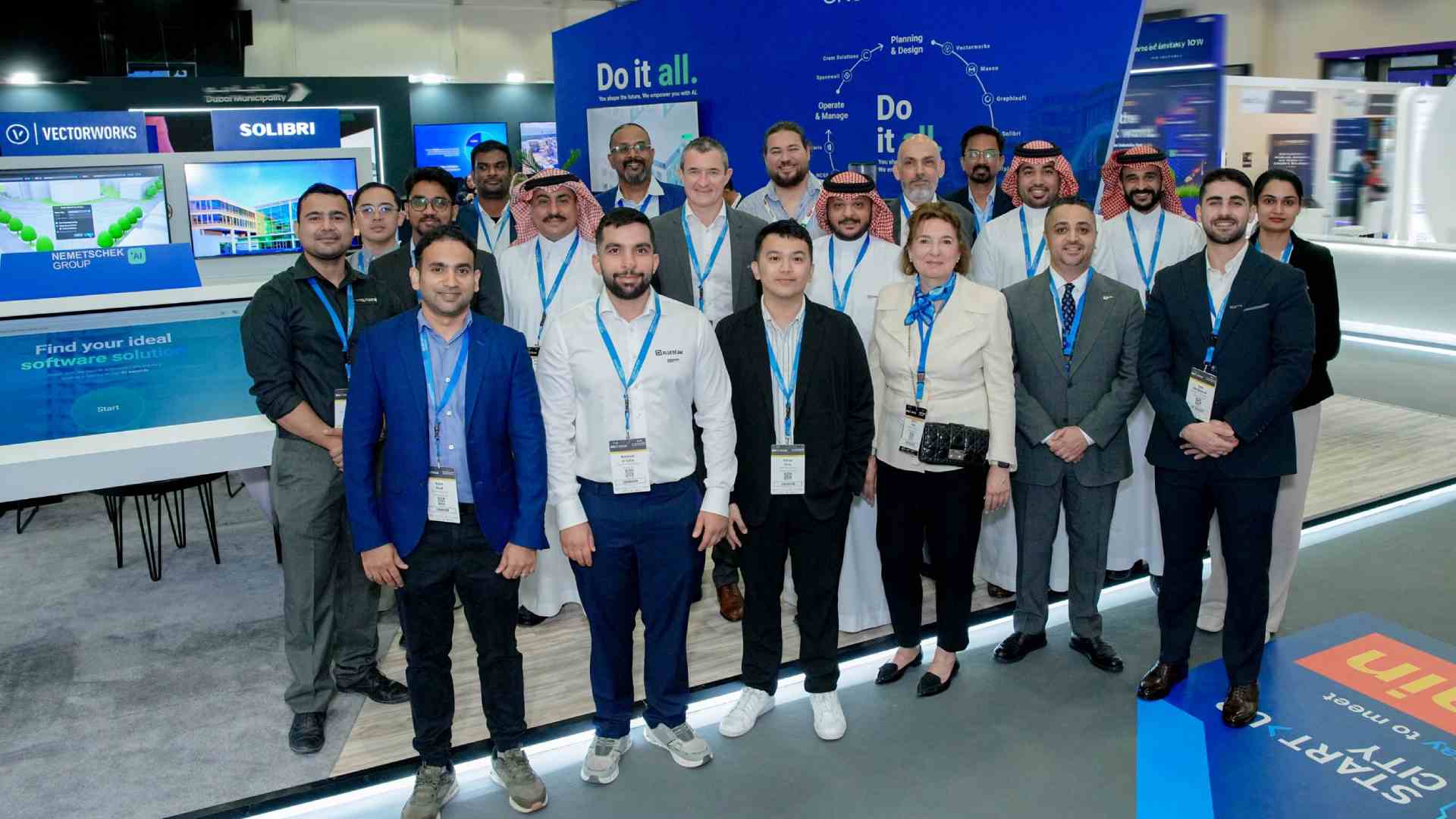
Nemetschek Group, a global leader in Construction AI and one of the world’s leading software providers for the Architecture, Engineering, Construction and Operations (AEC/O) and Media industries, today returned to Big 5 Global 2026 as a Bronze Sponsor to showcase how AI, connected data, and open digital workflows can empower the Middle East’s AEC/O community to design, build and operate more efficiently.
Taking place from 23-26 November 2026 at Dubai World Trade Centre, the 47th edition of Big 5 Global brings together the construction and urban development ecosystem at a time when the region’s active project pipeline is accelerating demand for technology adoption and more efficient project delivery.
At the heart of Nemetschek Group’s participation in this year’s edition is its new family of premium AI-powered offerings: Archicad Max for architecture, Allplan Max for engineering, and Bluebeam Max for construction. Powered by the Nemetschek Intelligence Platform, the Group’s common AI and data foundation, the solutions embed practical AI capabilities into established AEC/O workflows, helping professionals reduce repetitive work, access project information more easily, and improve quality while retaining control over key decisions.
“AI is becoming an increasingly important part of how the AEC/O industry works, creating new opportunities to improve productivity, collaboration, and decision-making”, said Marc Nezet, Group Chief Strategy Officer and Chief Division Officer, Operate & Manage, Nemetschek Group. “With Archicad Max, Allplan Max, and Bluebeam Max, we are accelerating that shift by bringing advanced AI and agentic AI capabilities directly to architects, engineers, and construction professionals. And through the Nemetschek Intelligence Platform, we are moving beyond individual AI features towards connected, intelligent ways of working that allow data and insights to create greater value across the building lifecycle.”
From AI potential to practical value
The showcase comes shortly after Nemetschek was named a Leader in the IDC MarketScape: Worldwide Construction Management Software 2026 Vendor Assessment. The assessment highlighted strengths including the Group’s suite of products supporting the construction lifecycle, cross-team collaboration through Bluebeam and GoCanvas, and its 24% R&D reinvestment rate, with investment focused on improving data flows and using AI to enhance data access, analytics and decision-making.
At Big 5 Global, visitors can explore the connected Nemetschek ecosystem across Planning & Design, Build & Construct, and Operate & Manage, with solutions from ALLPLAN, Graphisoft, Solibri, Vectorworks, dTwin, Bluebeam, GoCanvas, and Spacewell.
“The Middle East is delivering some of the world’s most ambitious built-environment projects, making Big 5 Global an important platform to show what practical digital transformation looks like,” said Eng. Muayad Simbawa, Managing Director, Middle East, Nemetschek Group. “Visitors to our stand can walk through the building lifecycle and see how AI, connected data, and interoperable workflows can help teams work with greater clarity, consistency, and confidence. Our focus is on empowering the region’s AEC/O professionals with technology that supports their expertise and helps them turn digital innovation into tangible project value.”
Bringing industry perspectives to the stage
Beyond the stand, Nemetschek Group executives are contributing to conversations shaping the industry’s future. Marc Nezet will participate in the Global Leaders’ Summit on 23 November in the session titled ‘Decisions that will shape the decade ahead’; while Muayad Simbawa will join the FutureTech Summit on 26 November for the executive panel titled ‘Proof, not pilots: Why transformation stalls and where the value is missed’. And Bjørn Kristian Stangeland, Director of Interoperability and Standards, Nemetschek Group, will discuss ‘Turning Open Standards into Industry Practice’ on 24 November as part of the buildingSMART & Geospatial Talks sessions.
Visitors can meet the Nemetschek Group team and explore its solutions at Big 5 Global 2026 in Hall 4, Booth 4A173, from 23-26 November 2026.

Hytera Communications, a leading global provider of critical communications technologies and solutions, concluded its participation at the World Police Summit (WPS) 2026 in Dubai, where it showcased a range of AI-powered technologies designed to enhance public safety operations, strengthen emergency response capabilities and support the evolving needs of law enforcement agencies.
Bringing together police leaders, security professionals and technology providers from around the world, the summit served as a platform for exploring innovations shaping the future of policing and public safety. Hytera’s participation highlighted the growing role of artificial intelligence and integrated communications in enabling faster decision-making, improving operational coordination and equipping frontline personnel with the tools needed to respond effectively to critical situations.
Commenting on the company’s participation, Stanley Song, Vice President of Hytera, said: “Modern policing demands more than reliable communications. Public safety teams need timely, relevant information they can turn into action. By connecting frontline officers and command centers with operational data, and applying AI where it adds real value, we aim to strengthen situational awareness, improve coordination, and help public safety agencies make faster, better-informed decisions.”
Throughout the exhibition, Hytera demonstrated how AI-powered command and control technologies can support more coordinated responses to complex incidents. Its intelligent command and control solutions featured capabilities for analyzing incident alerts and providing dispatchers with a unified operational view, enabling closer coordination between police, fire and medical response teams during emergencies.
The company also showcased its intelligent enforcement technologies, combining smart body-worn cameras with in-vehicle systems to facilitate real-time video sharing and automated analytics. These solutions are designed to improve operational visibility, enhance transparency and improve efficiency in day-to-day law enforcement activities.
Addressing the challenges of maintaining communications in demanding environments, Hytera presented emergency communications solutions incorporating rapidly deployable portable network nodes and robotic dogs for patrol and search-and-rescue applications. Designed for use in disaster zones and other challenging environments, these technologies help establish tactical communications networks while improving situational awareness and supporting emergency response teams in the field.
A key highlight of Hytera’s participation was the Middle East debut of the DIB-R6 SMART, its next-generation TETRA base station developed to provide greater deployment flexibility and communications resilience. Featuring a lightweight, integrated design suitable for wall or pole mounting, the solution combines low power consumption with autonomous fallback capabilities to help maintain essential communications during network disruptions. Hytera also presented advanced critical communications terminals and Mission-Critical Services (MCS) capabilities designed to support secure and reliable voice and data connectivity for public safety personnel.
Beyond its technology showcase, Hytera highlighted its experience in supporting public safety modernization across the Middle East. In the UAE, the company’s smart body-worn cameras have been adopted by Abu Dhabi Police to support daily patrols and tactical operations. In Iraq, Hytera partnered with the Ministry of Interior to develop the country’s first unified 911 emergency system, consolidating 26 separate emergency numbers into a single centralized platform and reducing response times by 40%.
Hytera’s participation at World Police Summit 2026 reinforced its commitment to advancing intelligent, resilient and integrated communications solutions for public safety agencies. Building on its regional project experience and expanding portfolio of AI-enabled technologies, the company continues to support the modernization of emergency response and law enforcement operations across the Middle East.

NETSCOUT’s Sustainability-by-Design ApproachCombats Surging Data Center Energy Consumption

From Soaring Strings to Bollywood Takeovers: Andre Soueid and DJ Chetas at Ilios Abu Dhabi

Nemetschek Group Spotlights AI-Powered Solutions for the Middle East’s AEC/O Sector at Big 5 Global 2026

OPPO A6 Pro 5G Review: Reliable Daily Driver

Denodo Bolsters Executive Team by Hiring Christophe Culine as its Chief Revenue Officer

Microsoft Launches New Surface Copilot+ PCs for Business

2026 in Review: Is AI Becoming More of a Management Problem Than a Technology Problem?

Inside XPENG Brand Night: AI Mobility Lands Centre Stage in Dubai

Chinese Cars Are Reshaping the GCC Market, but Resale Value Could Be the Next Battleground

-
 Trending1 year ago
OPPO A6 Pro 5G Review: Reliable Daily Driver
-
 Tech News2 years ago
Denodo Bolsters Executive Team by Hiring Christophe Culine as its Chief Revenue Officer
-
VAR2 years ago
Microsoft Launches New Surface Copilot+ PCs for Business
-

 Automotive2 years ago
AGMC Launches the RIDDARA RD6 High Performance Fully Electric 4×4 Pickup
-

 VAR12 months ago
Huawei Nova 14 Pro Review: Where Camera Excellence Meets Ecosystem Evolution
-
Tech Interviews3 years ago
Navigating the Cybersecurity Landscape in Hybrid Work Environments
-

 Hospitality2 years ago
Gulfood 2025 30th Edition Kicks Off Today, Setting New Benchmarks in F&B Growth and Innovation
-
News4 years ago
BenQ ZOWIE : First TN 360Hz DyAc+ Gaming Monitor