Tech Features
WOMEN IN AI AND DATA SCIENCE: WHO IS BUILDING THE ALGORITHMS THAT SHAPE OUR FUTURE?

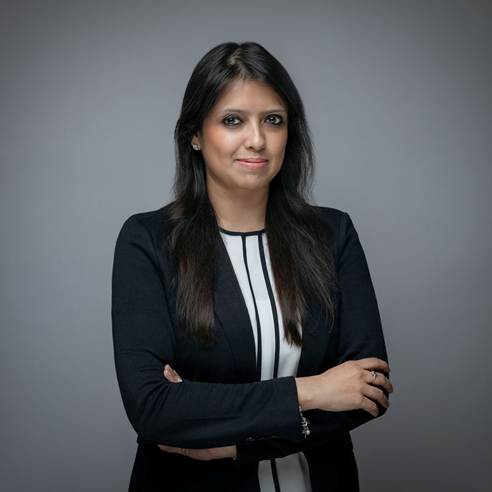
Dr Maheen Hasib, Global Programme Director for BSc Data Sciences, School of Mathematical and Computer Sciences, Heriot-Watt University Dubai

Artificial intelligence (AI) and data science are no longer distant or experimental ideas. They quietly sit behind many of the decisions that shape our everyday lives: how patients are diagnosed, how job applications are filtered, how loans are approved etc. These systems increasingly influence who gets opportunities and who does not. That reality makes one question impossible to ignore: who is building the algorithms that shape our future?
As a Programme Director for the Data Sciences programme at Heriot-Watt University, this question is not just academic for me, it is deeply personal. Every year, I meet capable, curious, and motivated young women who are genuinely interested in data science. Yet many hesitate. Not because they lack ability, but because they are unsure whether they truly belong in the field. Too often, they do not see people (like themselves) reflected in AI research, technical teams, or leadership roles. And that absence matters.
When bias in AI feels uncomfortably familiar
AI systems are often described as objective or neutral, yet they are trained in data shaped by human history, something that is far from neutral. When training data reflects existing gender imbalances, AI systems can replicate and even magnify those patterns. This has led to technologies that perform less accurately for women, fail to capture women’s health needs, or disadvantage women in recruitment and evaluation processes.
For many women, these outcomes feel uncomfortably familiar. They echo everyday experiences of being overlooked, misunderstood, or underrepresented. In most cases, this is not the result of deliberate exclusion. It is the consequence of design choices made without diverse perspectives at the table.
Why representation goes beyond numbers
Representation in AI and data science is often discussed in terms of statistics or diversity targets. But at its core, representation is about perspective. When women are involved in developing AI systems, they help shape how problems are defined, what data are considered relevant, and which risks are taken seriously.
From an academic perspective, diverse teams produce more robust research and better-tested models. From a human perspective, they help ensure that AI systems work for the full range of people they are meant to serve. Inclusion improves both technical quality and social impact, it strengthens the science and the society it serves.
Women and the future of ethical AI
Many women working in AI are already at the forefront of discussions around fairness, transparency, explainability, and responsible data use. These are not peripheral concerns; they are central to building trustworthy AI. Ethical AI requires asking difficult questions: Who might be harmed when a system fails? Whose data is missing? Who is affected by design decisions that seem minor on the surface?
By advocating for human-centered approaches, women in AI are helping shift the field beyond purely performance-driven metrics toward systems that balance innovation with responsibility.
Education, encouragement, and visibility matter
At Heriot-Watt University Dubai, we make a deliberate effort to encourage women to pursue data science, not just as a degree, but as a long-term career. This means creating supportive learning environments, highlighting female role models, and openly discussing the wide range of paths that data science can lead to. Students need to see that success in AI does not follow a single template.
Equally important are spaces where women can connect, share experiences, and feel supported. As an ambassador for Women in Data Science, I have seen how such events play a vital role. They create visibility, build confidence, and remind women that they are not alone. We need more of these initiatives, not as one-off celebrations, but as sustained platforms for mentorship, networking, and growth.
Encouraging women in AI is not about lowering standards or meeting quotas. It is about recognizing that inclusive participation leads to better research, more ethical technologies, and systems that genuinely reflect the societies they shape.
Conclusion
As AI and data science continue to influence our world, we must ask not only what these systems do, but who designs them. Supporting women to study data science, pursue AI careers, and step into leadership roles is essential to building technologies that are fair, responsible, and trustworthy. Through education, visibility, and initiatives, we can help ensure that the future of AI is shaped by many voices.
The future of AI should be one where women do not simply use technology but actively shape it.