
 Have a question? +971 56 404 0503




Tech Features
WOMEN IN AI AND DATA SCIENCE: WHO IS BUILDING THE ALGORITHMS THAT SHAPE OUR FUTURE?


Dr Maheen Hasib, Global Programme Director for BSc Data Sciences, School of Mathematical and Computer Sciences, Heriot-Watt University Dubai
Artificial intelligence (AI) and data science are no longer distant or experimental ideas. They quietly sit behind many of the decisions that shape our everyday lives: how patients are diagnosed, how job applications are filtered, how loans are approved etc. These systems increasingly influence who gets opportunities and who does not. That reality makes one question impossible to ignore: who is building the algorithms that shape our future?
As a Programme Director for the Data Sciences programme at Heriot-Watt University, this question is not just academic for me, it is deeply personal. Every year, I meet capable, curious, and motivated young women who are genuinely interested in data science. Yet many hesitate. Not because they lack ability, but because they are unsure whether they truly belong in the field. Too often, they do not see people (like themselves) reflected in AI research, technical teams, or leadership roles. And that absence matters.
When bias in AI feels uncomfortably familiar
AI systems are often described as objective or neutral, yet they are trained in data shaped by human history, something that is far from neutral. When training data reflects existing gender imbalances, AI systems can replicate and even magnify those patterns. This has led to technologies that perform less accurately for women, fail to capture women’s health needs, or disadvantage women in recruitment and evaluation processes.
For many women, these outcomes feel uncomfortably familiar. They echo everyday experiences of being overlooked, misunderstood, or underrepresented. In most cases, this is not the result of deliberate exclusion. It is the consequence of design choices made without diverse perspectives at the table.
Why representation goes beyond numbers
Representation in AI and data science is often discussed in terms of statistics or diversity targets. But at its core, representation is about perspective. When women are involved in developing AI systems, they help shape how problems are defined, what data are considered relevant, and which risks are taken seriously.
From an academic perspective, diverse teams produce more robust research and better-tested models. From a human perspective, they help ensure that AI systems work for the full range of people they are meant to serve. Inclusion improves both technical quality and social impact, it strengthens the science and the society it serves.
Women and the future of ethical AI
Many women working in AI are already at the forefront of discussions around fairness, transparency, explainability, and responsible data use. These are not peripheral concerns; they are central to building trustworthy AI. Ethical AI requires asking difficult questions: Who might be harmed when a system fails? Whose data is missing? Who is affected by design decisions that seem minor on the surface?
By advocating for human-centered approaches, women in AI are helping shift the field beyond purely performance-driven metrics toward systems that balance innovation with responsibility.
Education, encouragement, and visibility matter
At Heriot-Watt University Dubai, we make a deliberate effort to encourage women to pursue data science, not just as a degree, but as a long-term career. This means creating supportive learning environments, highlighting female role models, and openly discussing the wide range of paths that data science can lead to. Students need to see that success in AI does not follow a single template.
Equally important are spaces where women can connect, share experiences, and feel supported. As an ambassador for Women in Data Science, I have seen how such events play a vital role. They create visibility, build confidence, and remind women that they are not alone. We need more of these initiatives, not as one-off celebrations, but as sustained platforms for mentorship, networking, and growth.
Encouraging women in AI is not about lowering standards or meeting quotas. It is about recognizing that inclusive participation leads to better research, more ethical technologies, and systems that genuinely reflect the societies they shape.
Conclusion
As AI and data science continue to influence our world, we must ask not only what these systems do, but who designs them. Supporting women to study data science, pursue AI careers, and step into leadership roles is essential to building technologies that are fair, responsible, and trustworthy. Through education, visibility, and initiatives, we can help ensure that the future of AI is shaped by many voices.
The future of AI should be one where women do not simply use technology but actively shape it.


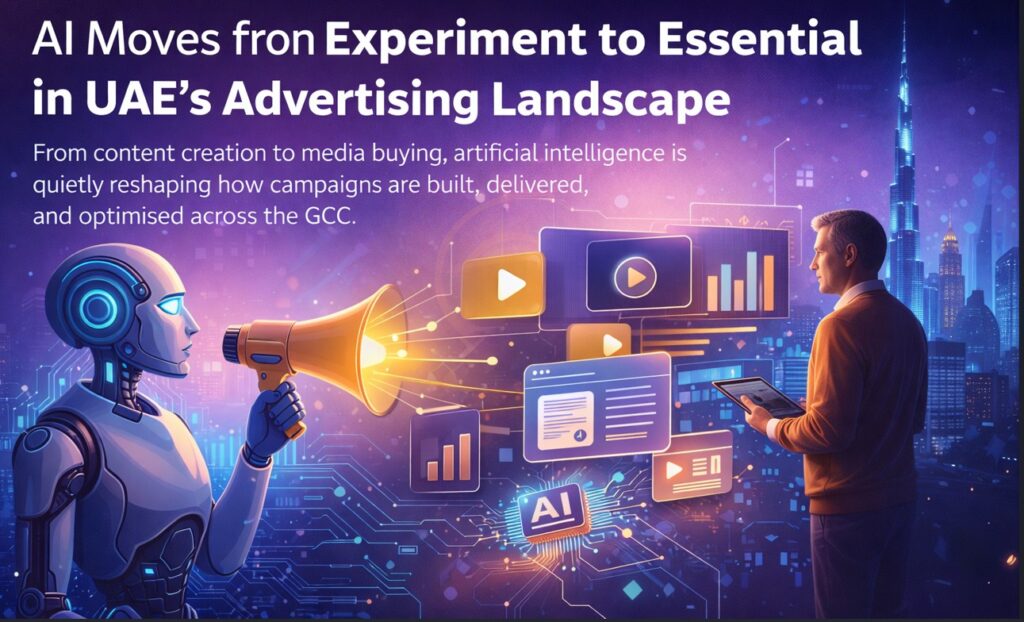
From content creation to media buying, artificial intelligence is quietly reshaping how campaigns are built, delivered, and optimised across the GCC.In the UAE and across the GCC, artificial intelligence has moved well beyond the stage of experimentation. What was once a buzzword discussed in boardrooms is now deeply embedded in the day-to-day execution of advertising. Brands are no longer testing AI—they are relying on it to run campaigns, generate content, and make increasingly precise decisions about audience targeting and timing.
On the creative front, the shift is particularly visible. AI-powered tools are now capable of producing ad copy, visuals, and even short-form video content at a pace that would have been unthinkable just a few years ago. For marketers operating in a market like the UAE—where campaigns often need to speak to audiences in both English and Arabic, while also resonating across a diverse mix of nationalities, this level of speed and adaptability is more than a convenience. It is becoming a necessity.
Behind the scenes, machine learning has also transformed how media buying is approached. Traditional methods that relied heavily on instinct or retrospective performance reports are steadily being replaced by systems that analyse audience behaviour in real time. These platforms continuously optimise campaign performance, adjusting budgets and placements based on how users interact with content.
In the UAE’s PR ecosystem, brands are already leveraging platforms such as Meltwater, Brandwatch, and Sprout Social to better understand media performance, audience sentiment, and the broader buying landscape.
A practical example of this shift can be seen in platforms like Skyscanner, where advertising systems respond dynamically to user intent. Instead of targeting broad demographic groups, campaigns are triggered by actual search behaviour and travel patterns, allowing for more relevant and timely engagement.
AI is also influencing emerging advertising formats. Digital billboards, for instance, are becoming more responsive, using live data inputs to tailor content based on factors such as time of day, location, and audience movement. Similarly, augmented reality experiences are beginning to incorporate behavioural insights, offering more contextual and interactive brand engagements.
Looking ahead, the trajectory appears clear. Advertising is moving towards deeper automation, more intelligent recommendations, and tighter integration between creative tools and analytics platforms. The industry is shifting from a model centred on broadcasting messages to one that focuses on responding to audiences in real time, with context and precision.
In this evolving landscape, AI is no longer just an enabler, it is becoming the foundation on which modern advertising is built.


Banks have long been the GCC’s digital pioneers. In the UAE, Saudi Arabia and Qatar, financial institutions were among the first to embrace mobile banking apps, roll out contactless payments at scale and introduce AI-powered chatbots to handle customer queries in Arabic and English. More often than not, banks set the pace and other sectors followed.
Given this decades-long precedent, you would expect the same pattern to be playing out with artificial intelligence. After all, AI is already embedded in the daily lives of Gulf consumers. Ride-hailing, e-commerce, government, and a plethora of other services across the region have increasingly integrated AI into their systems, to effectively personalise experiences and streamline transactions.
And yet, when we look inside banks themselves, the story is more complicated. According to the latest Riverbed Global Survey, only 40% of organizations in the financial sector consider themselves ready to operationalize AI. Just 12% of AI initiatives are fully deployed enterprise-wide, while 62% remain stuck in pilot or development phases. In a sector known for digital ambition, there is a striking gap between intent and execution.
Stuck in Pilot Purgatory
In most industries, pilots fail because the idea simply does not resonate. Testing reveals a weak product-market fit, limited customer appetite, or unclear commercial value.
That is not what we are seeing in banking AI. Regional banks have successfully piloted AI models that detect fraud in real-time, reduce false positives in anti-money laundering checks, predict liquidity requirements, and power conversational assistants capable of resolving complex service requests. Relationship managers have used AI tools to surface next-best-product recommendations based on behavioral data. And operations teams have leveraged machine learning to optimize payment routing and reduce processing delays.
In controlled environments, these pilots often deliver impressive results. And yet, few ever make it past this stage. The initiative remains confined to a sandbox. Expansion is delayed. Integration becomes “phase two.” Eventually, attention shifts to the next promising experiment. So, if the feature works and the value is clear, what is holding banks back?
AI that Fails to Scale
In my experience working with CIOs across the region, two obstacles repeatedly stand in the way of AI moving from proof of concept to production. The first is operational complexity. Most financial institutions operate in highly fragmented environments. Core banking platforms run alongside decades-old legacy systems, with critical workloads split across on-premise data centers, private clouds, and multiple public cloud providers. Third-party fintech integrations also adds further layers of interdependency.
Deploying AI into this landscape is not as simple as plugging in a model. AI workloads are data-hungry and latency-sensitive. They require reliable pipelines, consistent telemetry, and predictable performance across every layer of the stack. In a hybrid, multi-cloud architecture, even minor configuration mismatches can trigger cascading issues.
The second obstacle is limited visibility. Without a unified view of applications, infrastructure, networks, and user experience, AI-driven services can behave unpredictably. A model may be performing perfectly, but a network bottleneck slows response times. An upstream data source may degrade in quality, subtly skewing outputs, and an infrastructure change in one environment may impact inference speeds elsewhere.
When visibility is fragmented, issues take longer to diagnose and resolve, and Mean Time to resolution increases. Operational risk rises, particularly when customer-facing or revenue-critical services are affected. In a heavily regulated market such as the UAE or Saudi Arabia, that risk has compliance implications as well as reputational ones.
Left unaddressed, this kind of live digital environment leaves very little room for innovation. AI cannot become the transformational force many claim it to be if it is constantly constrained by hidden friction.
Conquering Complexity
Moving AI smoothly from pilot to production requires banks to create as frictionless an operating environment as possible. One of the most effective starting points is unified observability. By consolidating telemetry from applications, infrastructure, networks and end-user devices into a single, real-time view, banks can eliminate blind spots, and decision-makers can gain clarity over performance, dependencies and risk across the entire digital estate.
With this foundation in place, AIOps capabilities can correlate signals, reduce alert noise and automate root cause analysis. Instead of firefighting incidents after customers notice them, IT teams can proactively identify performance degradation and resolve issues before they impact revenue or service continuity.
Standardising on frameworks such as OpenTelemetry can further simplify instrumentation across heterogeneous environments, ensuring consistent data collection and analysis. At the same time, investing in data quality, governance and compliance processes ensures that AI models are trained and operated within regulatory boundaries.
In practical terms, this means rethinking infrastructure as an enabler of AI rather than an afterthought. It may involve accelerating data movement between environments, modernising integration layers or rationalising overlapping monitoring tools. The goal is not perfection, but coherence: a shared, real-time understanding of how systems behave and how AI performs under real-world conditions.
From Optimism to Optimisation
The debate about whether AI belongs in banking is effectively over. Across the Middle East, regulators are publishing AI guidelines, governments are investing heavily in digital transformation, and consumers increasingly expect intelligent, seamless services.
Institutions that continue to treat AI as a series of isolated pilots risk remaining in perpetual experimentation. However, those who address operational complexity head-on will move beyond optimism to optimisation.


By Owais Mohammed, Regional Lead & Sales Director, WD – Middle East, Africa, Turkey & Indian Subcontinent
Today, organizations across the UAE are reassessing how they backup and recover data in increasingly complex environments. Organisations are managing data across cloud platforms, on-premises infrastructure, edge deployments, and increasingly, AI-driven workloads. As these environments scale, data moves across system and is reused for analytics, compliance, and performance optimisation. This increases the complexity of backup and retention requirements. When strategies do not keep pace, gaps become visible.
Where backup strategies are falling short
A common challenge is the alignment between backup design and actual workload distribution. Many backup strategies are built around primary systems. But enterprise data now lives across multiple environments with different access patterns and retention requirements. This creates inconsistencies in backup coverage across cloud services, endpoints, and shared infrastructure.
A common misconception is that platform-level redundancy is sufficient. Cloud and application are designed to provide availability, but they do not replace independent backup layers. When data is modified, deleted, or encrypted within the same environment, recovery depends on whether a separate, unaffected copy exists.
Coverage inconsistencies also become more visible as organizations scale. Backup policies often prioritise transactional systems. Logs, archived records, development environments, and datasets used for analytics or AI workflows may be retained without structured protection. These datasets can become critical during investigations, audits, or system updates.
Recovery planning is where many strategies can break down. Backup processes may be in place, but recovery requirements are not always well defined. This includes defining dependencies, sequencing recovery, and aligning recovery times with business needs.
Why data resilience is now an infrastructure requirement
Enterprise data is now used across a wider range of functions. In analytics and AI-driven environments, data is revisited over time rather than stored and left unused. Historical datasets are essential to maintain performance and consistency. This means reliable backup and access are no longer secondary consideration, but core infrastructure needs.
Compliance expectations are also evolving. Organizations are increasingly need to retain records, demonstrate traceability, and provide access to data in a verifiable format. Backup and retention policies must align with recovery capabilities.
Building a more resilient data strategy
Addressing these gaps requires a structured approach to data resilience.
Infrastructure choices affect how backup strategies can be implemented. These decisions increasingly factor in not only performance and scalability, but also long-term cost efficiency as data environments expand. Many organisations are adopting hybrid models that combine cloud platforms with localised storage systems. This allows different workloads to be supported based on their access patterns and recovery requirements. In scenarios where consistent performance and recovery predictability are required, localized storage can provide additional control.
As environments grow, automation is important in maintaining consistency. Policy-driven automation helps ensure that backup processes are applied consistently, while monitoring tools provide visibility into system performance and potential gaps.
Recovery planning needs to be integrated into these processes. Clear recovery objectives and regular testing are essential for effective backup strategies.
Data prioritization also plays a role in managing scale. Not all data requires the same level of backup. Identifying critical datasets, allows organizations to allocate resources effectively.
Managing cost as data volumes scale
Cost considerations play a central role as data volumes scale. In large environments, power consumption, cooling requirements, and infrastructure footprint all contribute to total cost of ownership (TCO), particularly as data environments scale.
This is where tiered storage architecture becomes critical. High-performance storage is essential for active workloads such as analytics and real-time processing, while high-capacity, cost-efficient storage supports large datasets, backups, and long-term retention. This helps manage growth and scaling efficiently.
Treating all data the same is no longer practical. Infrastructure decisions need to reflect how data is used, how often it is accessed, and how quickly it needs to be recovered.
Backup strategies must align closely with infrastructure design. Data resilience now means ensuring data is accessible and recoverable across systems.
Many organizations are adopting hybrid models that combine cloud platforms with localized storage systems. In data-intensive environments, the ability to recover and reuse data is directly tied to operational continuity, system performance, and the ability to scale infrastructure effectively.

ELEVATE AWARDS AED 50 MILLION CONTRACT FOR MONDRIAN AL MARJAN ISLAND BEACH RESIDENCES
TURNING POST‑TRAVEL DEMAND INTO LASTING HOSPITALITY VALUE
HOW UAE HOSPITALITY IS ADAPTING TO A MORE CAUTIOUS TRAVELER



-
News10 years ago
SENDQUICK (TALARIAX) INTRODUCES SQOOPE – THE BREAKTHROUGH IN MOBILE MESSAGING
-

 Tech News2 years ago
Denodo Bolsters Executive Team by Hiring Christophe Culine as its Chief Revenue Officer
-
 VAR12 months ago
Microsoft Launches New Surface Copilot+ PCs for Business
-

 Trending6 months ago
OPPO A6 Pro 5G Review: Reliable Daily Driver
-

 Tech Interviews2 years ago
Navigating the Cybersecurity Landscape in Hybrid Work Environments
-

 Tech News9 months ago
Nothing Launches flagship Nothing Phone (3) and Headphone (1) in theme with the Iconic Museum of the Future in Dubai
-

 Automotive2 years ago
AGMC Launches the RIDDARA RD6 High Performance Fully Electric 4×4 Pickup
-

 VAR2 years ago
Samsung Galaxy Z Fold6 vs Google Pixel 9 Pro Fold: Clash Of The Folding Phenoms