
 Have a question? +971 56 404 0503




Technology
Your Screen. Your Eyes Only: Galaxy S26’s Privacy Display Keeps Curious Eyes Away Without Blocking Your Experience


Samsung Electronics announced a landmark breakthrough in mobile hardware with the launch of the Galaxy S26 Ultra, featuring the world’s first built-in Privacy Display. While standard privacy solutions have traditionally relied on software or add-on films, Samsung is once again pioneering a new industry category by engineering visual protection directly into the device’s pixel-level architecture
Representing a landmark shift in the mobile industry, the Galaxy S26 Ultra delivers a permanent solution to a universal problem: the need for flexible privacy without compromise. By introducing world-first Privacy Display technology directly into the Galaxy S26 hardware, Samsung is transforming privacy from an optional accessory into an integrated standard of engineered trust.
Privacy When You Need it
In an era of high-density living, where mobile users skip between crowded elevators and public transport networks to busy cafes and gyms, the risk of “visual hacking” is higher than ever. Whether entering a banking PIN, drafting a confidential work email, or viewing private photos, the Galaxy S26 Ultra ensures the user’s content remains their eyes only, all the time.
Samsung’s Privacy Display utilizes a precision ‘Black Matrix’ structure to manage light travel at the pixel level. This hardware-first approach provides comprehensive 4-way protection: covering the left, right, top, and bottom angles. This ensures that your screen remains crystal clear from the front while fading into privacy for onlookers. Critically, because the technology is embedded in the display architecture, this protection stays perfectly in place even when the phone is rotated for horizontal viewing.
The “Techie” Verdict: A Breakthrough for Everyday Use
Tech experts have highlighted how this integrated protection solves real-world challenges:
Privacy For Every Situation
The Galaxy S26 Ultra’s world-first Privacy Display is designed to fit the rhythm of a busy day without adding friction to the user experience:
- Discretion on a Crowded Commute: Whether on a packed Metro, squeezed into a stacked elevator, switching to Maximum Privacy Protection ensures that even in tight quarters, the person next to you sees only a dark screen, while your content remains crystal clear.
- Automatic Security for Banking: You can set the display to activate automatically the moment you open a banking app or reach the lock screen, providing instant peace of mind in busy cafes or public squares. You have control over when and how the Privacy Display kicks in.
- Vibrant Quality for Shared Moments: Unlike add-on gadgets or display films that dull images, this pixel-level protection maintains rich colors and sharp details. It remains active even in landscape mode, allowing you to show a friend a video while keeping side-viewers at bay.
A New Standard for Mobile Security
The Galaxy S26 Ultra is the first device to recognize that mobile security is no longer a luxury, it is a need in every phone. By switching to a hardware-backed foundation of security, the Samsung S26 redefines what it means to be secure. Samsung is once again redefining what technology can be.
Tech Interviews
Trust Is the New Speed – AI, Lexis+ with Protégé and the future of legal work in the Middle East

Exclusive interview with Lara Salem, Head of Content Strategy, MENA, LexisNexis Legal & Professional
How is artificial intelligence changing the way legal professionals research information, analyze cases and prepare legal documents?
In the middle east region, one of the key challenges has always been access to legal information. Finding the right law, the latest amendment or the one judgment that changed everything took hours, sometimes days. That scarcity is ending. What is becoming scarce instead is judgement.
AI is changing legal work at three levels.
Research is moving from searching to asking. Lawyers no longer have to guess the right combination of keywords. They can pose a complex question in plain language and receive an answer linked to the sources behind it. The skill shifts from finding information to interrogating it.
Analysis is moving from single documents to synthesis. Agentic AI can take an assignment, such as comparing how a commercial agency dispute would be treated onshore in the UAE, in the DIFC and in Saudi Arabia, break it into steps, work through each one and present the results for review. Work that once filled a week of associate time can be framed, reviewed and challenged in an afternoon.
Drafting is moving from the blank page to the review. The first draft is no longer the work. The work is knowing whether that draft is right: whether the clause reflects the correct jurisdiction, whether the terminology is accurate, and whether it serves this client’s commercial reality.
In my earlier writing I described this as the rise of the “hybrid lawyer”. What has changed since is the margin for error. We can no longer say we missed a case because it was obscure, or overlooked an amendment because there was no time to look. AI has removed many of those excuses, and in doing so it has raised the standard we are held to.
AI has not made legal judgement less important. It has made it the thing that sets one lawyer apart from another.
LexisNexis recently launched Lexis+ with Protégé in the region. How does the platform help legal professionals work more efficiently, and what makes it different from general-purpose AI tools?
Early in development, our subject-matter experts told us something that became our guiding principle: an AI assistant is only as useful as the content behind its output.
General-purpose AI can tell you what the law says. That is no longer enough. Lawyers need to know how the law is applied: how a court reads a provision, what a regulator expects in practice, what a clause has to look like to stand up in a given forum. That knowledge cannot be scraped from the internet. It has to be built.
We have been building it in this region since 2010. Over those years we have put together a substantial body of Practical Guidance written by regional experts, and it sits in Lexis+ with Protégé alongside UAE federal law and other GCC laws, legislation, regulations, official gazette materials, case decisions and expert commentary. Additionally, UK content is available through the same sign-in. This is what makes the difference in the output. Protégé does not stop at the statute. It brings in the practical layer lawyers rely on every day, and every answer links back to its sources.
The region’s many layers of jurisdiction also needed particular care, especially when we built the agentic drafting. An affidavit in the UAE is not the same as an affidavit in Saudi Arabia. The differences are small, and our experts caught them. A general-purpose tool would miss them. And that is the difference.
For efficiency, the platform supports the whole cycle of legal work. It handles conversational research in plain English. Its agentic workflows break complex assignments such as due diligence, compliance reviews or legal comparisons into structured steps you can review. It drafts contracts, clauses, memos and client correspondence, drawing on a firm’s own precedents where authorised. It also analyses matter documents securely, pulling out key issues, building timelines and comparing materials. Customer data is never used to train public AI models.
What I am proudest of is how it was built. Protégé comes from a marriage between leading regional legal experts, data scientists and software engineers. Practitioners tested it, challenged it and told us where it fell short. That is what localization really means: not translating a product but teaching it how law works here.
And it is not finished. The product evolves every week, and refining its agentic skills is one of the most fascinating parts of the work. Each refinement brings it closer to the needs of our clients and of each jurisdiction we serve.
Globally, Forrester Consulting studies commissioned by LexisNexis project a 344% three-year return on investment for a composite large law firm, and 284% for a composite corporate legal department, using the platform behind Lexis+ with Protégé. We are now validating performance with regional users and will share those results as they become available.
With the growing use of AI in legal work, how can professionals ensure that the information they receive is accurate, reliable and based on trusted legal sources?
My rule is simple: never trust an answer you cannot trace.
AI can produce something that sounds convincing and is entirely wrong, and courts in this region have already had to deal with it. Earlier this year, the ADGM Courts ordered a law firm to pay wasted costs after it filed a defence relying on authorities that did not exist, generated by an AI tool and never checked. The message was clear: the failure to verify belongs to the lawyer, not the machine. The DIFC Courts have also issued guidance requiring practitioners to verify AI-generated content they rely on in proceedings.
Every AI output should face three questions. Where did this come from? Is it current? Is it the right jurisdiction? If the tool cannot answer the first, the other two do not matter.
That is why the choice of tool matters as much as the discipline of the user. Before adopting any legal AI, firms should ask hard questions. What content is the system grounded in? Is that content verified for accuracy and currency? Does every output link to its source? How was it tested, and by whom?
But even the best tool does not replace the lawyer. The lawyer is the ultimate owner of the output, and their judgement is what matters most. A provision can be quoted correctly and still be the wrong answer. It may not be the only law that applies, or the one that best fits the question at hand. Only a lawyer who understands the matter can make that call.
This is why every firm and legal department needs a clear review process for AI output, written into an AI use policy. The policy should set out who reviews what, how sources are checked, when senior sign-off is needed, and how AI use is recorded. Verification should not depend on individual habit. It should be how the firm works.
Grounding and citations reduce risk. They do not remove responsibility. So, treat AI as an assistant, not an authority. Expect speed, not certainty. Read the source and ask whether you would have reached the same conclusion yourself. AI raises the bar. It does not lower it.
What are the biggest challenges law firms in the UAE and wider GCC face when adopting AI, and how can they overcome them?
Adoption is no longer the main hurdle. Trust is. Most lawyers in the region have already tried AI. The question is whether they can rely on it for real client work, and four challenges stand in the way.
Data. Generic models are trained mostly on English-language, common-law material. Arabic legal content is far less structured and digitised. A model that has rarely seen Gulf legislation cannot reason reliably about it.
Language. Arabic is the authoritative legal language across most of the region, yet the same legal concept is not always expressed the same way from one country to the next, and a single diacritical mark can change the meaning of a provision. Legal AI here has to reflect the terminology of each jurisdiction rather than one standardised vocabulary. This was one of the hardest, and most interesting, parts of localising Protégé.
Confidentiality and data sovereignty. GCC clients are rightly protective of their information, and data protection laws such as the UAE and Saudi PDPLs set strict expectations on how personal data is handled and transferred. Many firms hesitate because they cannot answer a simple client question: where does my data go?
Culture. Partnership models, the billable hour and concerns about how juniors will learn all create reasons to wait. Too many firms are stuck in pilots that never scale.
None of these is a reason to stand still. Choose AI built for the region’s law and languages, not adapted as an afterthought. Put governance in place before you scale, not after. Start with defined, high-value use cases such as research, document review and first drafts, where results can be measured. Train every lawyer, not only the enthusiasts. And measure what changes, so the business case rests on evidence rather than excitement.
How can legal professionals use AI responsibly while protecting confidential client information and maintaining professional standards?
Every lawyer begins their career by making a promise: to act with integrity, independence and confidentiality. That oath is personal. It cannot be delegated, and it cannot be automated.
AI does not take the oath. Lawyers do.
Protecting the client starts with the choice of tool. Consumer-grade AI has no place near confidential client information. Lawyers should know where their data goes, whether it is stored, whether it is used to train models and how it is encrypted. With Lexis+ with Protégé, customer information is protected through encryption and enterprise-grade security, and it is never used to train public AI models. That should be the minimum standard for any legal AI.
Good habits matter just as much. Share only what the task requires, and redact what it does not. Be open with clients about how AI supports your work. Clients value honesty over ambiguity, and openness signals confidence, not risk.
My test is simple: use AI only in ways you would be comfortable explaining to your client, or to a judge.
What skills will lawyer and legal teams need to develop as AI becomes a bigger part of their daily work?
The most important skill of the AI era is the oldest one in the profession: knowing when something is wrong.
Verification. It will become a core discipline, taught and practised as rigorously as drafting. Lawyers will need to read sources rather than summaries, test conclusions against their own reasoning and spot the output that is plausible but missing the nuance.
Prompting. It is often misunderstood. Prompting is not a technical trick. It is structured legal reasoning. A good prompt sets out the jurisdiction, the facts, the question, the format and the standard expected, which is exactly how a good partner briefs a junior.
Supervision. Agentic AI breaks tasks into steps and works through them. The lawyer’s role becomes scoping the task, checking each stage and deciding what reaches the client. Think of it as managing a very fast junior who never sleeps and does not always say “I’m not sure”.
AI literacy. Lawyers need to understand how these systems work, where they fail and what to ask a vendor before trusting one.
The human skills. Commercial judgement, negotiation, empathy and the ability to explain complex advice clearly will matter more, not less. In the Middle East, where relationships and trust carry great weight, these are what clients will pay for.
There is also an uncomfortable question the profession has to answer: if AI produces the first draft, how do juniors learn? I believe the answer is to redesign training, not to slow down technology. Juniors can learn by critiquing AI output, tracing its sources and explaining why it is right or wrong. Done well, that builds judgement faster than years of formatting documents.
How do you see legal technology evolving in the Middle East over the next few years, and what role will AI play in this transformation?
The Middle East has an advantage many markets do not. Governments here are not reacting to AI; they are planning for it. The UAE National AI Strategy 2031 and Saudi Vision 2030 have made digital transformation a national priority, and in June the UAE announced a single federal authority for artificial intelligence and data. Legal technology will follow that ambition.
I see four shifts over the next few years.
From answering to acting. Today, most lawyers use AI to answer questions. Next, agentic systems will carry out multi-step work such as due diligence, regulatory monitoring and contract review, with the lawyer supervising and approving each stage.
From global to local. Localisation will become the price of entry. Firms will expect AI that understands the region’s mix of civil law, common-law free zones and Sharia principles, and that works natively in Arabic rather than through a translation layer.
From experimentation to governance. Regulation is emerging through courts, free zones and data protection law rather than a single AI statute. Governance will become a competitive advantage, because clients will choose firms that can show how their AI-assisted work is controlled and verified.
From hours to value. As routine work accelerates, pricing will change. LexisNexis research in the UK found that 55% of lawyers now expect firms to change how they bill because of AI. The same conversation is beginning here.
AI will be the engine of this transformation, but trusted content will be its fuel. The firms that lead will not necessarily be the ones that adopt AI first. They will be the ones whose clients trust their AI-assisted work the most.
For us at LexisNexis, after 16 years in the region, the launch of Lexis+ with Protégé is not a finish line. It is a starting point. The journey is only beginning, and it will be guided by three principles that have always defined good legal work: trust, accountability and transparency. They are not new. They are simply more important than ever.
Tech Features
TrendAI™Expands Vision One with New Security Capabilities for AI Agents and Application Development
TrendAI™, the global AI security leader and enterprise business unit of Trend Micro Incorporated (TYO: 4704; TSE: 4704), has announced new capabilities for TrendAI Vision One™. These include the private preview of Autonomous Vulnerability Discovery and expanded support for Claude’s Compliance API, which now covers Claude Code and Cowork sessions. Together, these services help enterprises identify exploitable vulnerabilities in source code before attackers do, investigate how AI agents operate, and maintain oversight as AI adoption scales.
The need for this oversight is growing rapidly across the region. According to research conducted by The Harris Poll for Dataiku, 62% of UAE chief information officers believe their organisation have more than 50 AI agents running in production, yet only 18% have a fully unified view of agents across platforms, data environments, and business applications. At the same time, AI is accelerating both how quickly code is written and how quickly attackers can identify flaws. Security teams therefore need to keep pace with AI adoption without losing visibility into what is happening across their environments.
The new capabilities extend TrendAI Vision One™ across both software development and AI agent activity. TrendAI Vision One™ Autonomous Vulnerability Discovery is powered by AESIR, TrendAI’s agentic exploit-remediation engine, which identifies and validates vulnerabilities, including zero-days. It also verifies fixes in customer source code. The engine uses purpose-built, multi-model AI architecture that relies primarily on Anthropic models and has outperformed single-model and agentic system scores on the CyberGym Leaderboard. Every finding is validated by experts from the TrendAI™ Zero-Day Initiative™ (ZDI), the world’s largest vendor-agnostic bug bounty programme. The Autonomous Vulnerability Discovery is deployed and operated on Amazon Bedrock from Amazon Web Services (AWS), enabling the full workflow to run within the customer’s AWS environment
In parallel, the expanded Claude Compliance API integration brings Claude Code and Cowork session records from Claude Enterprise into TrendAI Vision One™. These records include prompts, responses, and tool calls, each tied to a verified user. It enables security teams to investigate AI activity in context, correlate it with endpoint, identity, cloud and network signals, and build custom detections for relevant agent behaviour.
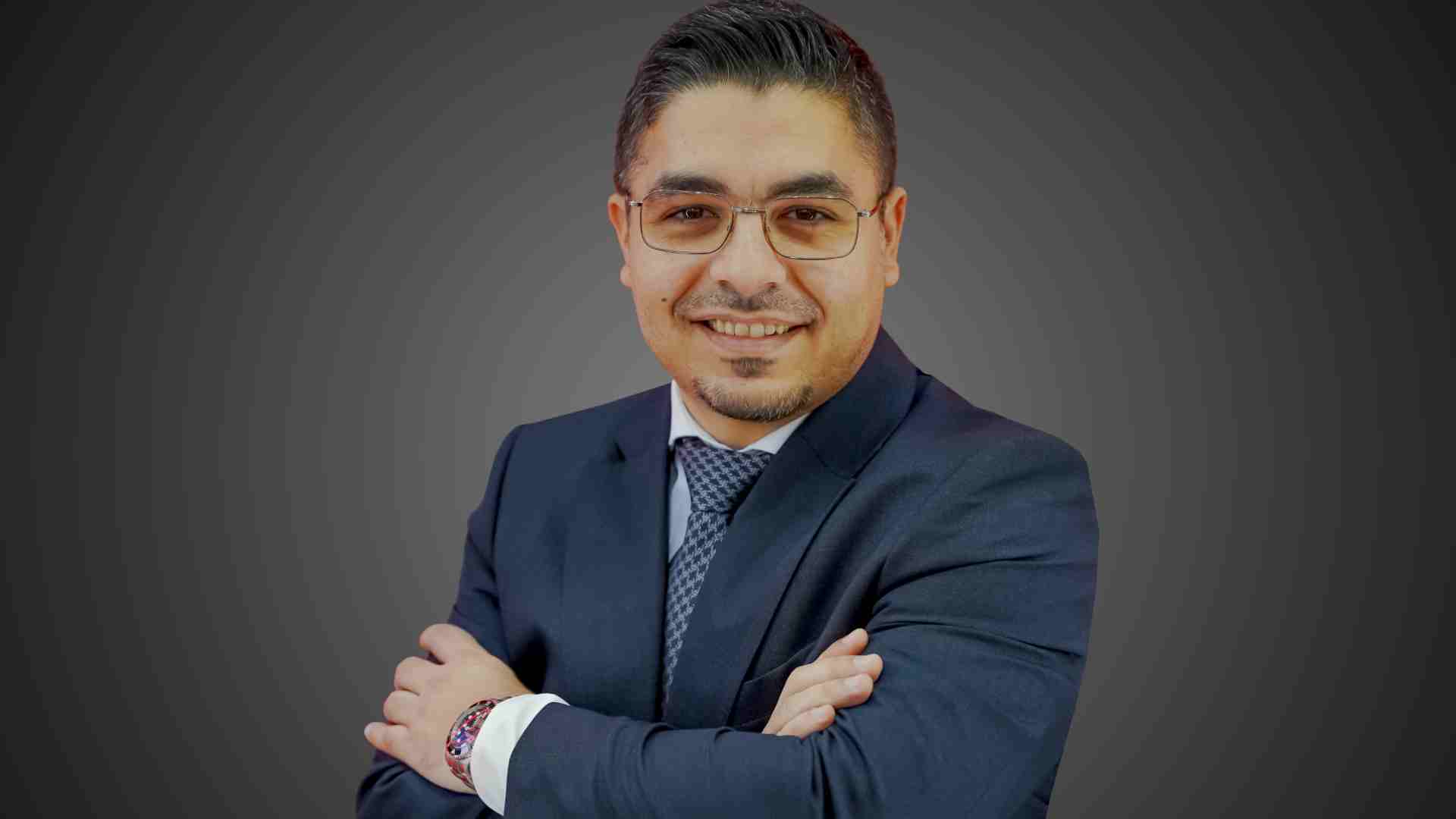
Commenting on the announcement, Salah Suleiman, Managing Director, South Gulf, TrendAI™, said, “AI is changing both how software is built and how work gets done across the enterprise. Code is being written faster than ever, while AI agents are increasingly able to access systems, call tools and act on behalf of users. As organisations across the UAE and the wider region scale AI at pace, their security teams need to identify vulnerabilities early while maintaining clear visibility into what AI systems are doing and whether their actions align with organisational policies. With these additions to TrendAI Vision One™, we are helping organisations move faster with AI while maintaining the context, oversight and control needed to do so securely.”
TrendAI Vision One™ also continues to ingest activity logs from Claude Enterprise, covering user logins, administrative actions and configuration changes, as well as from Claude Platform, covering administrative, system and resource events. Autonomous Vulnerability Discovery is now available in private preview to select enterprise customers running on AWS, while Claude’s Compliance API integration in TrendAI Vision One™ is available to TrendAI Vision One™ customers using Claude Enterprise.
Tech News
ZWSOFT and Logicom Saudi Arabia Partner to Expand Access to Professional CAD Solutions in the Kingdom
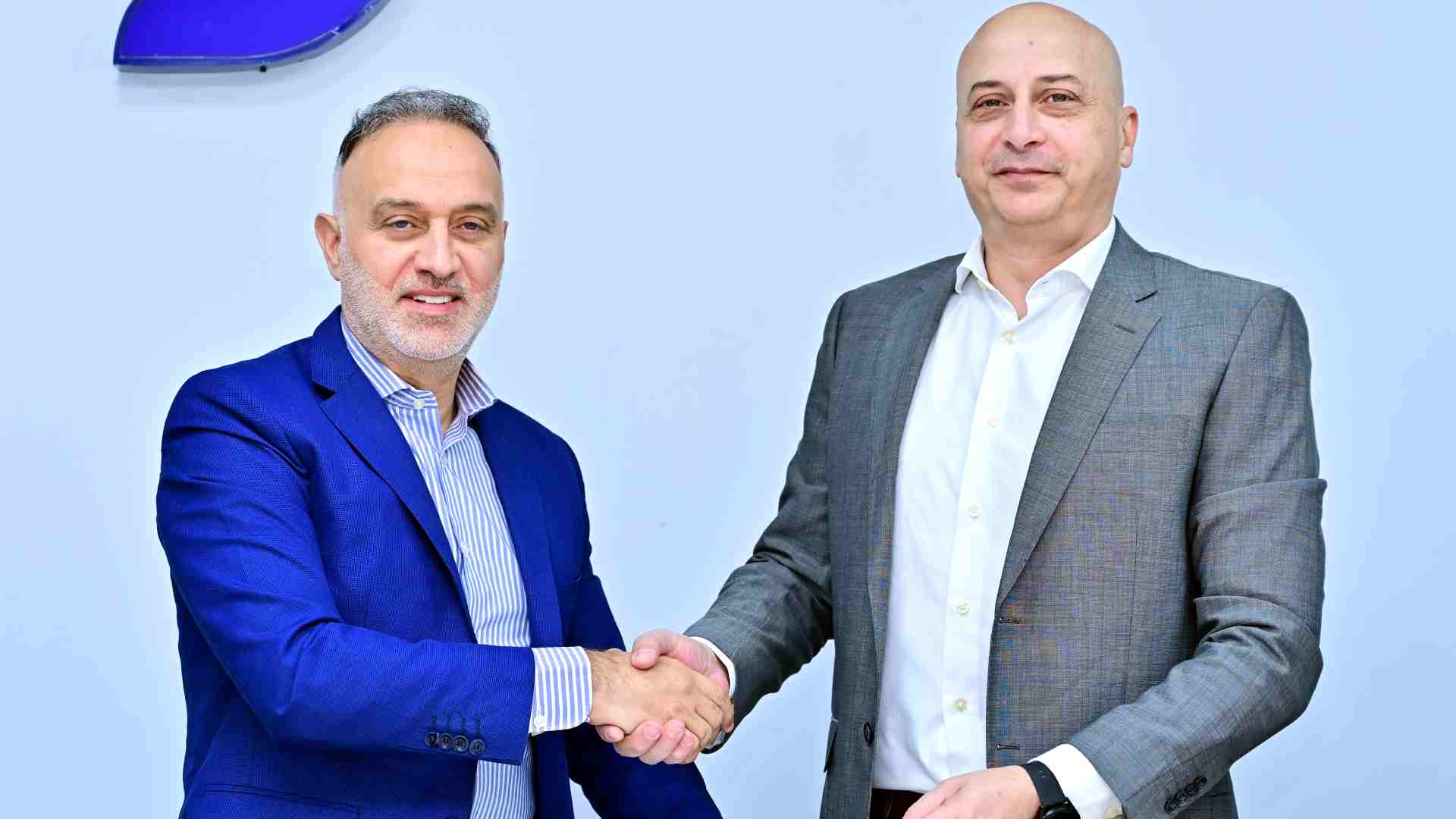
The Strategic distribution partnership aims to accelerate digital transformation across Saudi Arabia’s architecture, engineering and construction sector
ZWSOFT, a global provider of engineering design software, has appointed Logicom Saudi Arabia as their distributor in the Kingdom, strengthening access to professional computer-aided design (CAD) solutions for local businesses.
The partnership combines ZWSOFT’s engineering software expertise with Logicom’s established distribution capabilities and local partner network to support Saudi Arabia’s architecture, engineering and construction (AEC) sector. The collaboration aims to help businesses improve productivity and modernise workflows through accessible, high-performance and cost-efficient design technologies.
At the heart of the offering is ZWCAD, ZWSOFT’s flagship CAD solution, featuring DWG compatibility, a familiar design environment and cost-efficient licensing. The partnership will help resellers, system integrators and end customers access these solutions and address evolving project requirements, supporting the Kingdom’s wider digital transformation ambitions under Vision 2030.
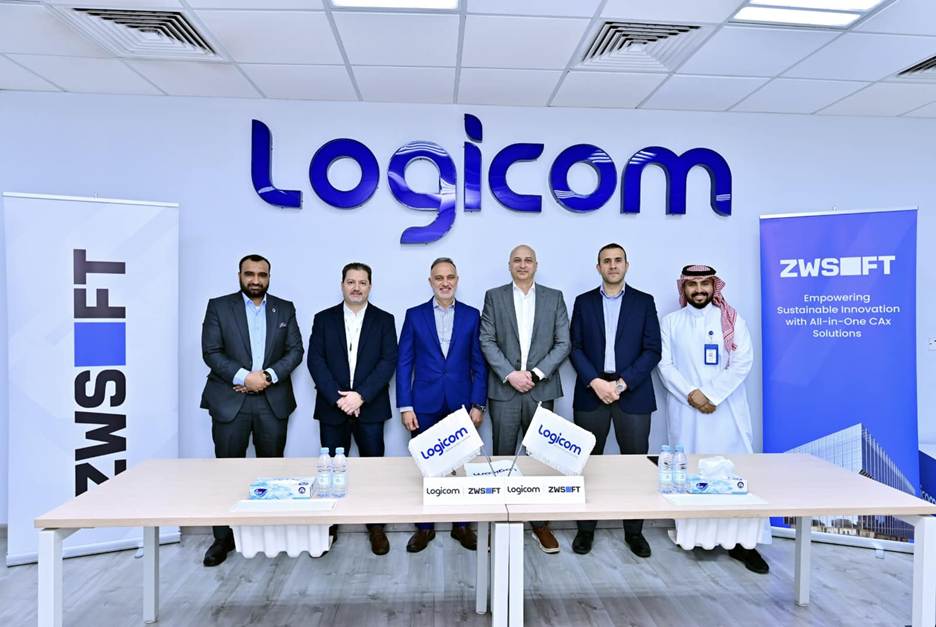
Naim AlHammami, Country Manager, ZWSOFT Saudi Arabia, said: “With the surging demand for advanced tech solutions in Saudi Arabia, ZWSOFT set out to find a proven, high-caliber distribution partner. Logicom Saudi Arabia is uniquely qualified to drive this expansion, backed by a strong product ecosystem and an established track record in enterprise hardware and software distribution.”
Fadi Karzon, General Manager of Logicom Saudi Arabia, said: “We are pleased to partner with ZWSOFT to bring innovative and cost-effective CAD solutions closer to businesses across Saudi Arabia. By combining ZWSOFT’s technology with Logicom’s local market expertise and strong partner ecosystem, we aim to empower our partners and customers with the tools they need to enhance productivity, drive innovation and support the Kingdom’s digital transformation goals.”
Through this partnership, ZWSOFT and Logicom aim to expand the availability of professional design software across Saudi Arabia and strengthen support for the country’s growing engineering and construction industries.

A REIMAGINED PRIME68 RETURNS TO JW MARRIOTT MARQUIS DUBAI ALONGSIDE ION, A NEW “NEIGHBOURHOOD IN THE SKY”
Radisson Blu Hotel Dubai Deira Creek Invites Guests to Celebrate Diwali with Family, Flavour and Festive Stays
Trust Is the New Speed – AI, Lexis+ with Protégé and the future of legal work in the Middle East



-

 Trending12 months ago
OPPO A6 Pro 5G Review: Reliable Daily Driver
-

 Tech News2 years ago
Denodo Bolsters Executive Team by Hiring Christophe Culine as its Chief Revenue Officer
-
 VAR2 years ago
Microsoft Launches New Surface Copilot+ PCs for Business
-

 Automotive2 years ago
AGMC Launches the RIDDARA RD6 High Performance Fully Electric 4×4 Pickup
-
Tech Interviews3 years ago
Navigating the Cybersecurity Landscape in Hybrid Work Environments
-

 Hospitality2 years ago
Gulfood 2025 30th Edition Kicks Off Today, Setting New Benchmarks in F&B Growth and Innovation
-

 VAR10 months ago
Huawei Nova 14 Pro Review: Where Camera Excellence Meets Ecosystem Evolution
-

 Tech News1 year ago
Nothing Launches flagship Nothing Phone (3) and Headphone (1) in theme with the Iconic Museum of the Future in Dubai