
 Have a question? +971 56 404 0503




Home Feature
Cities are learning to predict problems. The harder question is whether they can act on them.

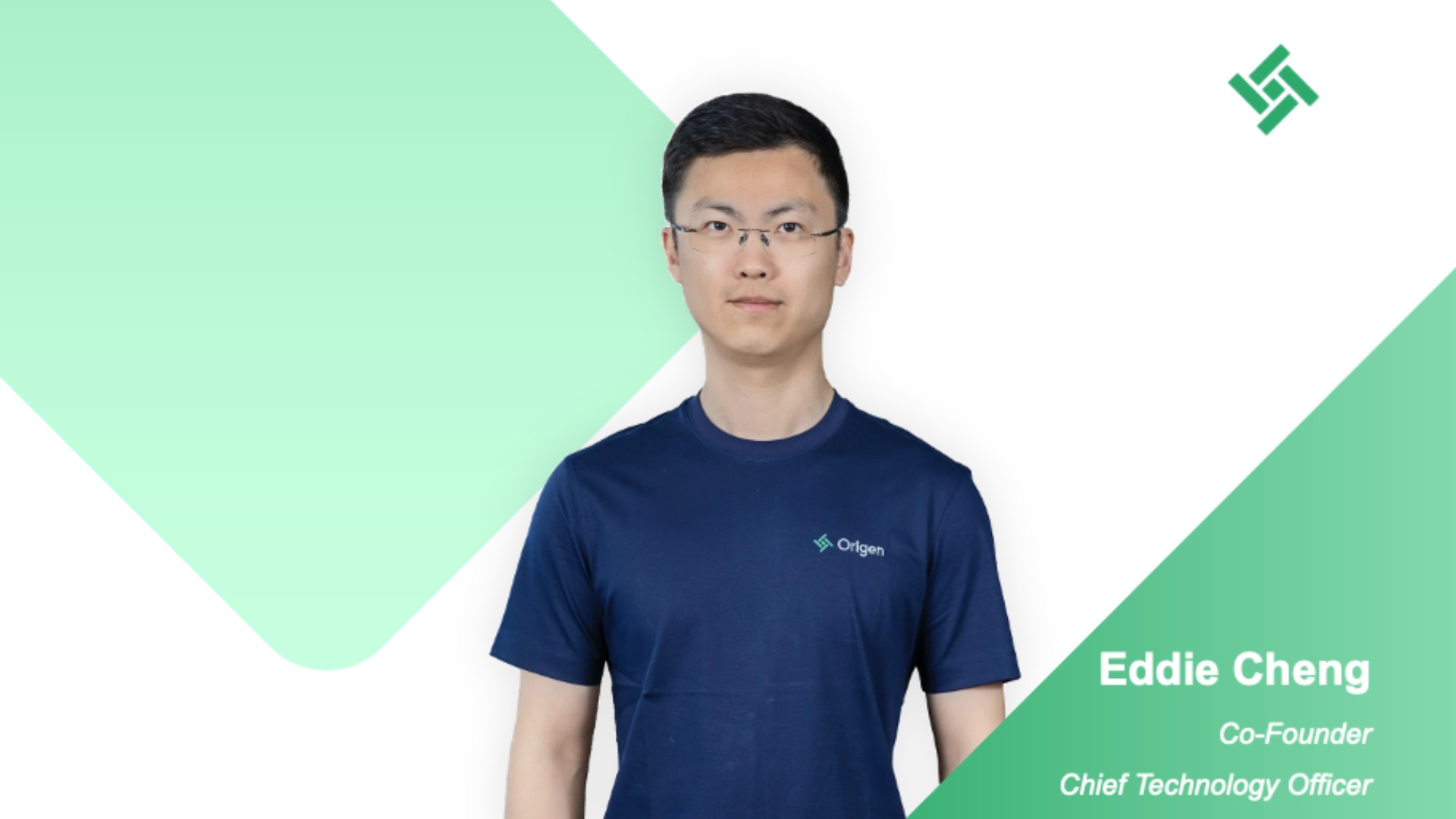
By Eddie Cheng, Co-Founder and Chief Technology Officer of Origen
Ask whether a city can predict a problem before its residents feel it, and the honest answer in 2026 is yes. Weather models, satellite imagery and dense sensor networks can now tell a municipality which underpass will flood, which junction will lock up and which substation is running hot. Prediction is no longer the scarce capability. The real challenge is turning a prediction into a decision, and a decision into an action that physically changes what happens on the street. A forecast that cannot drive either is simply a more sophisticated way of watching things go wrong.
The pressure to close that gap is not abstract. The United Nations’ World Urbanization Prospects 2025 finds that cities are now home to 45 per cent of humanity, that nearly two-thirds of global population growth through 2050 will occur in urban areas, and that the number of megacities has quadrupled over the past five decades. At that scale, a management model that waits for a complaint before raising a work order is not merely slow; it is arithmetically outmatched. No control room will ever have enough people to respond to a city of ten million, one incident at a time.
Instrumented is not intelligent
Much of the past decade’s smart-city investments went into instrumentation: more sensors, cameras and dashboards. That work was necessary. But a sensor count is a procurement metric, not an intelligence metric. A city with 10,000 sensors and 40 dashboards is well instrumented, yet not intelligent. Intelligence begins when the data from those sensors can be reasoned over as a single picture and converted into an action that has physical impact.
Three transitions, and where most cities stall
In our work with municipalities, we describe the journey as three transitions. Most cities are still working on the first.
From invisible to visible. Most of what a city needs to know about itself already exists, but it is locked in silos: utilities in one system, construction permits in another, and resident records in PDFs and flat databases with no spatial depth. Each department monitors only its own part of the city, whether zoning, utilities or construction, while no one sees the whole picture. Bringing those records together in a single, spatially and temporally aligned three-dimensional model of the city is unglamorous work. It is also where much of the value is created, because a fact only becomes actionable once its location and timing are known.
From reactive to proactive. Once the whole scenario is understood, questions change. Rather than investigating after a storm why a district was underwater, a city can run a flood simulation on a proposed development before the first foundation is poured and change the design rather than the drainage budget.
From decision to action. This is the transition that matters most and is attempted the least. Consider utility corridors, for instance. A pipeline conflict discovered during excavation can delay a project by months. When the same conflict is detected in digital twins, stakeholders are alerted and the design change is pushed back into the engineering systems, it can be resolved before anyone lifts a shovel. The next generation of city command centres should not be judged by how many problems they surface, but by how many they close.
Two tests a beautiful rendering does not pass
This is why we build SpatialWare, our digital-twin operating system for cities, around two questions. First, is the twin computable? Many companies can produce a photorealistic three-dimensional city. The differentiating question is how much analysis can actually be performed using it, from flood hydraulics and infrastructure capacity to cross-domain impact and conflict detection. A twin you can only look at is a map with better lighting.
Second, is the twin alive? A model refreshed once a year is a monument to the city as it was. Keeping a twin current across thousands of square kilometres requires production pipelines that update only what has changed and automate tasks that were once done by hand, including scene reconstruction, segmentation, mesh simplification and texture recovery. Where industry practice has typically automated a fifth to a third of this work, we have pushed that figure beyond 90 per cent, not for elegance, but because a twin that cannot keep pace with the city cannot be trusted to predict it.
The obstacle is institutional before it is technical
Prediction requires cross-departmental data, and the barrier to sharing it is far more often organisational than it is technological. This is why architecture matters as much as algorithms. The AI-powered digital governance framework we are architecting is deliberately federated. It connects existing systems rather than replacing them, synchronises datasets that matter through an AI-enabled orchestration layer, and leaves each department in control of its own data. A city does not need to be rebuilt to become predictive. It needs to be connected in a way that its institutions can work with.
Built at home, because accuracy depends on it
It also needs to be built in the region. A living model of the way a society moves, consumes and behaves is among the most sensitive assets a government can hold. In the Gulf region, where the UAE and Saudi Arabia are investing at national scale in AI strategies and sovereign digital infrastructure, the case for domain-engineered intelligence that is built and governed locally is not protectionism. A generic model trained elsewhere has never seen what a sandstorm can do to a coastal highway or how a city’s evening traffic patterns shift during Ramadan. In this context, sovereignty is not just a matter of control, but a precondition for accuracy.
What will test the loop next
Two shifts will demonstrate whether the sense–understand–decide–act loop holds under pressure. The first is the low-altitude economy: thousands of drones making tens of thousands of trips a day above a city cannot be regulated using a two-dimensional map. A platform that already has a live, three-dimensional picture of the city is the natural place to manage that airspace. The second is agentic AI, which is quietly redefining what a dashboard can be. The next city operations centre will have fewer screens because a copilot that recommends an action and, with human approval, executes it will make most of today’s screens redundant.
The same principle governs the other end of our work. Domia, our AI-native home, learns a household’s rhythm, distinguishes family members by voice and senses presence, posture and even a fall without relying on a single indoor camera. Whether the environment is a villa or an entire emirate, the design goal is the same: a system that anticipates rather than records, and protects without watching.
A new benchmark for public service
For a century, cities have been judged by response time: how quickly a crew arrives or how fast a road reopens. The next benchmark is subtler and more demanding, measured by how many problems residents never experience because a system can see them coming and act before they reach the street. Cities can now predict. The ones that lead will be those that learn to close the full loop.

By Dr Eleni Margioti, Neuropsychology Lead – The Brain & Performance Centre, A DP World Company
Memory lapses and slower recall are often accepted as an inevitable part of ageing, but a growing body of research tells a more encouraging story. Cognitive decline is not a fixed timeline; it is heavily influenced by daily habits, and some of the most effective of those are also the simplest. The brain responds to how we use it, at every age.
The principle behind this is neuroplasticity – the brain’s ability to form new connections and reorganise itself in response to new demands, well into later life. Just as muscles respond to resistance training, the brain responds to being challenged in ways that are unfamiliar or slightly challenging. The key word is “slightly”. Exercises that feel effortless stop offering much benefit once they become routine, which is why variety matters as much as consistency.
Start with working memory
Working memory is the ability to hold information in mind while actively using or manipulating it. We rely on it throughout the day, for example, keeping track of a conversation while formulating a response, holding a PIN in mind long enough to enter it, or mentally reorganising information we have just heard.
Simple daily challenges can exercise this system: repeat a short sequence of numbers backwards, count backwards from 100 in sevens, or hear a short list of items and then recall them in reverse order. As these tasks become easier, gradually increase the difficulty to keep your working memory challenged.
These exercises take only a few minutes and place demands not only on working memory, but also on attention and executive control. The aim is not simply to get better at a particular exercise, but to regularly challenge the brain to hold, manipulate, and work with information.
Make cognitive exercise challenging
Not all cognitive activities challenge the brain in the same way. Sudoku, card games and strategy games can be particularly engaging because each game presents a different problem to solve, requiring attention, planning, working memory and flexible thinking. Playing cards with others can add another layer of challenge through social interaction, decision-making and adapting to another person’s moves.
Puzzles can also provide useful cognitive stimulation, but repeatedly completing the same type of familiar task may become less demanding with practice. The key is variety and progressive challenge: choose activities that remain engaging, change from one attempt to the next, and require you to think, adapt and develop new strategies.
Learn something with no practical use
There is a strong case for taking up a skill purely because it is unfamiliar – a new language, a musical instrument, even learning to draw. These activities activate multiple brain regions at once: memory, coordination, auditory or visual processing, and sustained attention. The learning curve is uncomfortable at first, and that discomfort is largely the point. It is the mental effort of building a new skill, rather than eventual mastery of it, that appears to matter most for neuroplasticity and cognitive reserve.
Do not separate the mind from the body
Cognitive exercises work best alongside physical movement, not instead of it. Activities that combine the two, dancing, tai chi, or even walking while doing simple mental arithmetic, ask the brain to coordinate movement and thought at the same time, which is a more demanding and more effective form of stimulation than either done alone. Aerobic exercise also increases cerebral blood flow and supports the release of neurotrophic factors involved in forming new neural connections.
Make it social
Conversation is one of the most complete cognitive workouts available. It draws on memory, language, attention and emotional interpretation, often within a single sentence. Group activities like a book club, a card game, volunteering, combine social engagement with mental challenge, and social isolation has been consistently linked with an increased risk of future cognitive decline.
Protect the sleep that consolidates it
Mental exercise only pays off if the brain has the opportunity to consolidate what it has practised. Memory consolidation takes place largely during deep sleep, alongside the clearance of metabolic waste products. Maintaining a consistent sleep schedule and good-quality sleep is an important part of cognitive health. Cognitive training provides the challenge; sleep helps the brain consolidate and retain what it has learned.
Consistency over intensity
The most common mistake is treating cognitive exercise as an occasional activity rather than a habit. An hour of puzzles once a week does far less than ten- or fifteen-minutes woven into daily life. Pairing a new mental exercise with an existing routine over morning coffee, during a commute, or before bed, tends to be what makes it stick.
None of these strategies can guarantee the prevention of cognitive decline, and persistent or concerning memory changes should always be discussed with a healthcare professional. However, the brain remains remarkably adaptable throughout life. The most effective approaches do not need to be complicated; they simply encourage the brain to keep doing what it does best: learning, adapting, and responding to new challenges.

Kirsten Jenna Michaels, Founder & CEO of FEMPOWERMENT, on turning life experiences into purpose and creating space for women to rise.
ABOUT KIRSTEN – THE EXPERIENCES THAT SHAPED KIRSTEN’S APPROACH TO SUPPORTING WOMEN
Kirsten Jenna Michaels didn’t set out to build another networking group. Founder and CEO of FEMPOWERMENT, a women’s empowerment movement established in 2025 and based in Dubai, Michaels developed the platform around an observation she encountered repeatedly throughout her life: talented, ambitious women weren’t short on ability, but on access.
Today, the platform brings together a podcast, monthly seminars, networking events, workshops and certifications, coaching and business support, with its Women’s Business Launchpad and Convention forming part of its wider ecosystem.


HER STORY
For Kirsten Jenna Michaels, the origins of FEMPOWERMENT can be traced back to a question she carried through much of her life: “Why do I have to keep going through this?”
There were periods in her life when she faced circumstances that left her without stability, support or a clear sense of what came next. She describes some of those chapters as experiences that were “designed to break me” — years in which she had to navigate difficult circumstances largely on her own. Looking back, however, Michaels says the deeper impact of surviving difficult experiences was not simply what happened, but what those experiences taught her to expect from life.
“It is not the event. It is what the event teaches you to expect.”
For five years, she describes herself as being effectively removed from society. There was “no circle, no room to walk into, nobody who knew what was happening or who would have said the thing I needed to hear.”
Michaels believes that having a strong group of women around her could have helped her find the confidence to make different choices sooner. Not because they would have rescued her, she says, but because she would have been able to “see what normal looked like and understood that I was allowed to want it.”
What she needed was not simply advice, but an example of another possibility.
“What I needed more than advice was a woman standing on a stage in front of me, telling me I did not have to settle for the life I had been handed.”
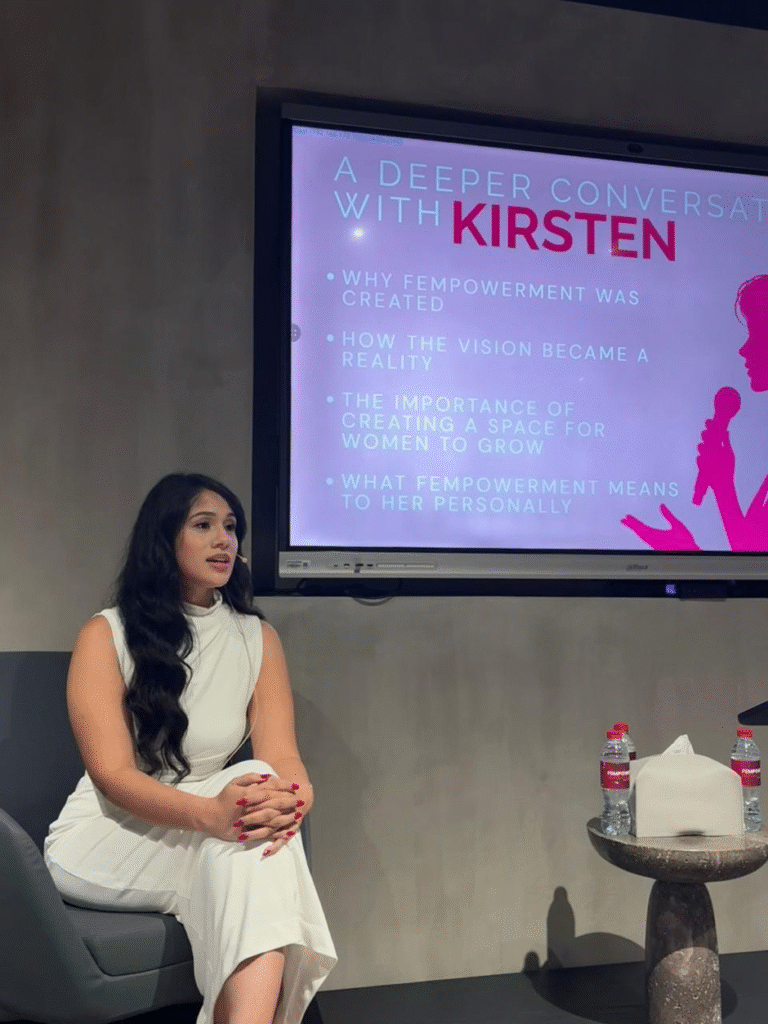
That realisation would later become part of the thinking behind FEMPOWERMENT.
Michaels co-founded FEMPOWERMENT in 2025 with its structures, programmes and mission mapped out, but without funding. The breakthrough came unexpectedly during a job interview.
The man across the table noticed the FEMPOWERMENT logo on Michaels’ notebook, a logo she had designed herself in Canva. He asked what it was. Instead of offering her the role, the investor offered a 50-50 partnership, access to funding and his network.
But for Michaels, the significance went beyond the opportunity itself. It was the experience of having someone believe in the idea before there was proof.
“All it takes is one person to change the trajectory of your entire life.”
That thinking now shapes the platform’s programmes. The Business Launchpad is intended to support women with potential but without the resources to execute on it and is currently listed as “coming soon” by FEMPOWERMENT. Its monthly seminars reflect the woman Michaels once wished she could have seen on stage. Networking events draw from the five years she spent without a support circle, while coaching is designed around the recognition that sometimes what a woman needs is not another curriculum, but “an hour with someone who will tell her the truth.”

ABOUT FEMPOWERMENT
When asked to define FEMPOWERMENT’s core mission, Michaels positions the organisation around creating greater access to opportunities and resources, rather than inspiration alone.
FEMPOWERMENT describes itself as a purpose-driven movement built around community, education and philanthropy, with its work spanning coaching, events, business support, content and networking. Its stated mission is to build a global movement that connects, uplifts and celebrates women of all backgrounds.
Michaels sees FEMPOWERMENT as a platform with ambitions beyond the UAE, built around creating space for women to pursue their potential. As she puts it, “I built FEMPOWERMENT™ for every woman who was told she was too much — you are exactly enough, and this is your space to rise.”
THE FOUNDATIONS AND MOVEMENT BEHIND FEMPOWERMENT
“Empathy, first,” she says. “Knowledge, second,” followed by hope.
For Michaels, these are not abstract principles. They are informed by experience — by understanding what it means to feel unable to leave, what it takes to start again with nothing, and how difficult it can be to believe that circumstances can change until someone who has lived through them shows you that they can.
It is this understanding of what women need, rather than simply what they are told they need, that now shapes the work behind FEMPOWERMENT.
Her focus now is clear: to create opportunities for women, help them build success and, ultimately, find peace — something she considers “by far the harder of the two.” Looking back at the experiences she once believed were meant to break her, Michaels has arrived at an answer to the question she carried for so long.
“Everything that happened to me was meant to break me. It built this instead.” FEMPOWERMENT describes itself as a purpose-driven movement connecting, uplifting and celebrating women of all backgrounds, with the aim of helping women reclaim their voices, build their futures and rise together.
Today, her focus is on creating opportunities for women, helping them build success and helping them find peace — “which, in my experience, is by far the harder of the two.”
THE IMPACT OF BEING SEEN AND HEARD
Beyond the founder, mentor and CEO, the people around Kirsten describe a woman who makes others feel seen, supported and capable of more.
“Kirsten isn’t just a CEO; she has become a very dear friend to me. She came into my life at a time when I really needed someone genuine, caring, and supportive, and I feel incredibly grateful that our paths crossed.
She is one of the hardest-working people I’ve ever met and will always go above and beyond for the people around her, often putting everyone else before herself. Professionally, she constantly pushes me to do better, step outside my comfort zone, and believe in what I’m capable of, while always making sure I know that she has my back. She supports me in every way she can and genuinely wants to see the people around her succeed.
But what makes Kirsten so special to me is that our relationship goes beyond work. She has become someone I can trust, laugh with, learn from, and genuinely call a friend. She has this incredible energy that lights up every room she walks into, and her warmth makes people feel comfortable and valued almost instantly.
I’m so grateful to have Kirsten in my life, both as my boss and, more importantly, as a friend. She has had such a positive impact on me, and I honestly couldn’t ask for a better person to work alongside and have in my corner.”
— Rachel Cawley, head of brand and community
“Working with Kirsten has been such a valuable experience for me. As my boss, she has pushed me to think bigger, be more confident, and take ownership of my work. I genuinely respect her not just for what she has achieved, but for the way she carries herself and the impact she has on the people around her. I’m grateful that I got to work closely with her and that I can take so much from the experience, both professionally and personally.”
— Ayesha Ahmad
“At first, I was honestly a little intimidated by her, but once you get to know Kirsten, you realise just how bubbly, warm, and genuine she really is. She has this incredible way of making everyone around her feel seen, supported, and capable of more than they thought they could be. Having her as my mentor has completely changed the way I look at life, work, and even myself. She has challenged me to step outside my comfort zone, believe in myself, and see possibilities I may not have noticed before. I’m forever grateful to have crossed paths with her and to have someone like Kirsten guiding, inspiring, and believing in me along the way.”
— Ayesha Mustafa
“Honestly, I see Kirsten as someone who has genuinely had a meaningful impact on the person I have become, both personally and professionally.
I’ve always experienced Kirsten as a warm, ambitious, and genuinely kind-hearted person. She has a unique ability to recognise potential in people, sometimes even before they see it in themselves. She challenged me, encouraged me to step outside my comfort zone, and continuously inspired me to grow and become more confident in my abilities.
A significant part of who I am professionally today has been shaped by the opportunities, guidance, and challenges she has given me. Working with her has taught me responsibility, confidence, resilience, and the importance of thinking beyond what feels comfortable and believing in a bigger vision.
What I particularly admire about Kirsten is her passion for what she is building and her commitment to bringing the people around her along on that journey. She sets high standards because she believes in the potential of those she works with, and that has encouraged me to raise my own standards and continuously strive to do better.
I’m genuinely grateful for the experience of working with her. She didn’t simply give me a professional opportunity; she encouraged me to believe in myself, grow into my capabilities, and become a stronger and more confident version of myself.”
— Nilofar Shareef, Operation Manager | FEMPOWERMENT
Home Feature
What Luxury Really Means in 2026 – And Why Exclusivity Is No Longer Defined by Price Alone

Joshua Oliver – Luxury Advisor & Founder, Joshua Oliver Concierge
For decades, luxury was easy to define. It was the highest price tag, the rarest handbag, the largest home or the most extravagant holiday. Wealth was displayed through possessions, and exclusivity was measured by what something cost.
In 2026, that definition has fundamentally changed.
Working with high-net-worth and ultra-high-net-worth clients around the world, I’ve witnessed a clear shift in purchasing behaviour. The world’s wealthiest individuals are still spending significant amounts of money, but increasingly, price is no longer the deciding factor. Instead, they’re investing in something far more valuable: privacy, time, authenticity, access and individuality.
The new status symbol isn’t simply owning something expensive. It’s owning or experiencing, something that very few people can.
One of the biggest misconceptions about luxury is that it revolves around brands. Heritage houses such as Hermès, Loro Piana and Brunello Cucinelli continue to thrive, but clients are becoming far more selective. They no longer buy products simply because they’re trending on social media or because everyone else is carrying them.
Instead, they’re searching for craftsmanship, personality, collectability and longevity. Luxury is becoming increasingly personal. Clients want pieces that reflect who they are, not what the algorithm tells them to buy. Personal confidence has replaced obvious logos.
This shift extends well beyond fashion.
In travel, clients increasingly prioritise privacy and personalisation over scale. The world’s most famous hotels are no longer necessarily the most desirable. Rather than asking for the hotel everyone else is booking, clients now ask me where they should stay based on their personality, interests and travel style. They would rather discover a remarkable independent property than simply tick off another famous brand.
Technology has accelerated this evolution. Social media has made luxury more accessible than ever before, introducing extraordinary hotels, restaurants and brands to millions of people. While that’s undoubtedly positive, it has also diminished the sense of discovery. When everyone knows where the “best” place is, it inevitably loses some of its exclusivity.
I’ve even made a conscious decision to share fewer ultra-rare Hermès bags and exceptional watches across my own social media channels. Part of what makes these pieces so desirable is their rarity. Constant exposure inevitably erodes that sense of exclusivity. Luxury should still retain an element of mystery.
As a result, affluent consumers are increasingly moving beyond the algorithm. They value trusted recommendations, genuine expertise and personal relationships over viral popularity. They’re looking for people they trust, rather than content with the highest number of views.
This is where the role of a modern concierge has changed dramatically.
Years ago, concierge services were largely transactional. Book a hotel. Reserve a restaurant. Arrange an airport transfer. Today, clients are looking for a trusted advisor, one person who understands their lifestyle, anticipates their preferences and becomes a genuine extension of their daily life.
More importantly, they want someone to save them time.
I often find myself advising clients against the most expensive option. Sometimes the most luxurious hotel isn’t the one charging £5,000 a night, but the boutique property where the General Manager greets guests by name. It isn’t always the beach club with the highest minimum spend, but the quieter one where service is flawless and the atmosphere feels effortlessly relaxed.
Luxury has become less about consumption and far more about discernment.
Perhaps the greatest luxury of all, however, is time.
Time is the one asset that can never be replenished, and affluent individuals increasingly value services that remove friction from their lives. Whether that’s sourcing an impossible-to-find item, planning a seamless itinerary across multiple countries or simply knowing someone trustworthy is handling every detail, convenience has become one of luxury’s most valuable currencies.
Ultimately, luxury in 2026 is becoming more personal than ever before.
It’s no longer about impressing strangers. It’s about improving your own quality of life.
It’s choosing time, privacy, craftsmanship, expertise and individuality.
Price will always have a place within the luxury market, but it is no longer the defining characteristic. The most exclusive things in the world today often cannot simply be purchased. They require trust, expertise, relationships and access.
Perhaps that’s exactly how luxury should be defined: not by what it costs, but by how difficult it is to replicate.


Paramount and SecurityBridge partner to close the SAP security blind spot for GCC enterprises

TWG Tea Unveils Oud Night Tea, a Country-Exclusive Creation for the United Arab Emirates

ATM 2026 unveils new VIDEC research highlighting the growing influence of OTAs across Middle East travel



-
News11 years ago
SENDQUICK (TALARIAX) INTRODUCES SQOOPE – THE BREAKTHROUGH IN MOBILE MESSAGING
-

 Trending11 months ago
OPPO A6 Pro 5G Review: Reliable Daily Driver
-

 Tech News2 years ago
Denodo Bolsters Executive Team by Hiring Christophe Culine as its Chief Revenue Officer
-
 VAR1 year ago
Microsoft Launches New Surface Copilot+ PCs for Business
-

 Automotive2 years ago
AGMC Launches the RIDDARA RD6 High Performance Fully Electric 4×4 Pickup
-
Tech Interviews3 years ago
Navigating the Cybersecurity Landscape in Hybrid Work Environments
-

 Tech News1 year ago
Nothing Launches flagship Nothing Phone (3) and Headphone (1) in theme with the Iconic Museum of the Future in Dubai
-
 Tech News2 years ago
Toshiba Announces MG10-D Series of Enterprise HDDs with Capacities up to 10TB