
 Have a question? +971 56 404 0503




Technology
How AI Is Turning Data Centres Into Active Energy Infrastructure


As AI workloads drive unprecedented demand for compute, the role of the data centre is expanding beyond processing and storage — towards grid interaction, heat reuse and new ways of measuring infrastructure efficiency.
Data centres have traditionally been viewed as large consumers of electricity: facilities designed to provide the power, cooling and connectivity required to keep digital services running. But the rapid expansion of artificial intelligence is beginning to challenge that relatively simple relationship.
As compute requirements rise, operators are being pushed to think not only about how much energy a facility consumes, but how that infrastructure interacts with electricity grids, renewable generation and surrounding communities. Battery storage, heat reuse and more sophisticated energy management are increasingly becoming part of the discussion, while conventional measures of data-centre efficiency are also being reassessed for an AI-driven era.
The shift raises a broader question for the industry: could the data centre evolve from being primarily a power consumer into an active component of the energy system?
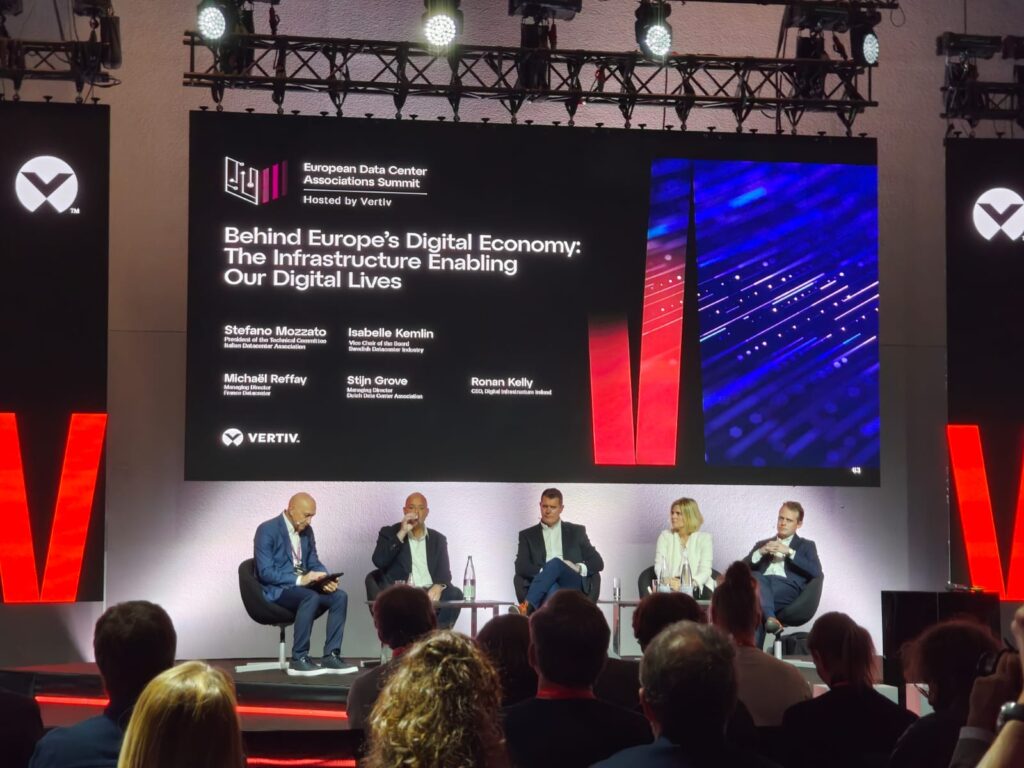
That was one of the central themes emerging from the European Data Centre Associations Summit, hosted by Vertiv in Zagreb, where representatives from data-centre associations across Sweden, the Netherlands, France and Ireland discussed the infrastructure supporting Europe’s digital economy. The conversation began with a reminder of how invisible data centres remain to most users. Consumers may interact with data centre infrastructure dozens of times every day, through banking, digital payments, video calls, cloud applications and government services, without ever thinking about the physical systems behind those services.
But AI is making that infrastructure increasingly difficult to ignore. From grid burden to grid participant As data centre demand expands, access to electricity has become one of the sector’s biggest constraints. Yet the panel argued that data centres should not necessarily be viewed purely as an additional burden on already stretched electricity networks.
Stijn Grove, Managing Director of the Dutch Data Center Association, pointed to the potential for data centres to locate closer to renewable-energy generation and absorb power that might otherwise require significant additional transmission infrastructure. He also highlighted a broader opportunity: data centres could potentially help stabilise grids as renewable generation becomes more variable.
That idea was echoed by Ronan Kelly, CEO of Digital Infrastructure Ireland, who discussed the role of battery energy-storage systems and on-site backup capacity in supporting electricity networks during periods of peak demand. The direction of travel is significant. Data centres are beginning to move from simply asking “How much power can the grid give us?” towards asking “How can our infrastructure interact with the grid?” Waste heat becomes an asset The panel also highlighted heat reuse as one of the clearest examples of how data centres can integrate more deeply into local communities.
Isabelle Kemlin, Vice Chair of the Board at Swedish Datacenter Industry, cited examples where waste heat from data centers is being reused through district-heating systems and even agricultural applications. In the Netherlands, Grove pointed to projects where data-centre heat is being used to replace natural gas in buildings and potentially support greenhouse operations.
Such projects challenge the perception of data centres as isolated industrial buildings that simply consume electricity and generate heat. Increasingly, the heat itself can become part of another energy system. AI changes the efficiency conversation AI is also forcing the industry to reconsider how data center efficiency should be measured. Traditional measures such as Power Usage Effectiveness (PUE) remain important, but several speakers argued that they do not always capture the complete picture.
For example, equipment installed to recover and redistribute waste heat may consume additional electricity and therefore worsen a facility’s PUE, even though the overall energy system becomes more efficient. The discussion therefore moved towards a newer metric increasingly associated with AI infrastructure: tokens per watt. Instead of measuring only how efficiently a facility delivers electricity to IT equipment, tokens per watt attempts to connect energy consumption with the amount of useful AI computation produced.
As AI factories become larger and more power-intensive, the ability to convert electricity into useful compute efficiently may become as important as simply minimising facility overhead. Europe’s sovereignty challenge Energy is not the only reason Europe will continue to require significant local data center capacity. The panel also highlighted digital sovereignty. Europe’s fragmented national landscape means governments, public-sector organizations, and regulated industries frequently need to consider where data is stored and processed. Moving workloads across borders may be technically possible, but sovereignty, security, and latency requirements can make local infrastructure essential. That creates a very different environment from markets where computing resources can be concentrated across a smaller number of enormous geographic regions. The public-perception problem
Perhaps the industry’s biggest challenge, however, is not technical. Several panellists acknowledged that public perceptions of data centers remain dominated by concerns around electricity consumption, water usage, land requirements and limited employment creation.
Michaël Reffay, Managing Director of France Data center, argued that many of these criticisms overlook the wider economic and digital services supported by data center infrastructure.
Kelly made a similar point, arguing that discussions about data centre carbon emissions frequently focus only on the electricity consumed by facilities while ignoring emissions potentially avoided through digital services such as remote working, digital banking and electronic distribution.
The industry therefore faces a communication challenge alongside its engineering one. Data centers will consume significant amounts of energy as AI expands. But the sector increasingly wants policymakers and the public to judge that consumption alongside the digital services, economic activity, renewable-energy investment, and wider infrastructure benefits it enables.
AI makes infrastructure strategic Perhaps the clearest conclusion from the discussion was that digital infrastructure is no longer simply a back-end utility. AI is making access to power, cooling, grids and computing capacity strategic economic issues. For Europe, the next phase of the data centre debate may therefore be less about whether more facilities should be built and more about where they are built, how they interact with energy systems, and how effectively the industry can demonstrate their value to society.










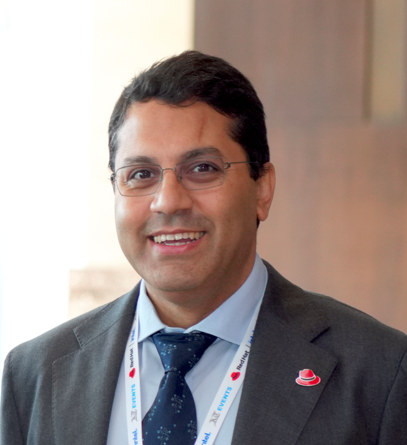
Exclusive interview with Anirban Mukherjee, Director of Solutions Architecture, Red Hat
Digital sovereignty is increasingly moving beyond data residency. What does genuine operational control look like for organisations that need to retain control over their data, applications and infrastructure?
Data residency answers where information sits. Operational control answers who can run, inspect, recover, and change the stack when it matters.
In practice, that means organisations can choose where workloads run – on premises, sovereign cloud, or public cloud – without rewriting applications every time. It means they can audit the software supply chain, keep recovery paths under their own governance, and decide which models, tools, and partners sit in their AI and application environments.
For many MENA enterprises and public-sector bodies, the test is simple: can you keep serving citizens and customers if a single vendor, region, or connectivity path is constrained? Open hybrid platforms give you that room to manoeuvre because the control plane and the open source components stay portable.
As organisations continue to rely on hyperscalers, where do you see the strongest case for combining public cloud with sovereign cloud and on-premises environments?
Hyperscalers remain excellent for elasticity, global reach, and certain managed services. The strongest case for a mixed model is when data sensitivity, latency, or regulatory expectations vary across the same organisation.
We routinely see customer data, AI inference close to the data, and regulated workloads stay in sovereign or on-premises environments, while less sensitive or bursty workloads use public cloud. The point is not to reject public cloud. It is to stop treating it as the only place innovation can happen.
An open hybrid cloud approach lets MENA organisations keep one consistent platform experience across those footprints, so teams are not rebuilding skills and tooling for every environment.
Could the growing AI infrastructure requirement actually increase technology concentration, and what can organisations do to avoid creating a new form of dependency around AI platforms?
Yes, the growing AI infrastructure requirements can actually increase technology concentration, – if every AI workload is tied to one model provider, one accelerator vendor, or one proprietary stack, concentration risk simply moves up a layer.
Organisations reduce that risk by treating AI like the rest of enterprise IT: multiple models for multiple jobs, open tooling where possible, and a platform that can run across hardware and clouds. Smaller, purpose-built open models are often a better fit for specific enterprise tasks than relying on one giant external model for everything.
In the Middle East, where national AI strategies are accelerating investment, the winners will be the ones who can innovate quickly without locking the next decade of infrastructure decisions into a single vendor path.
Open hybrid cloud is often positioned as a way to balance control with access to innovation. What does a mature open hybrid cloud strategy look like in practice?
Maturity looks like consistency. Same platform, same security and policy controls, same developer experience – whether the workload sits in a national data centre, a partner sovereign cloud, or a hyperscaler.
It also looks like deliberate placement: you put each application and AI workload where it creates the best outcome for cost, performance, and governance, and you can move it when those conditions change.
For solution architects in this region, the practical question is: can the customer ship new services without creating a parallel stack every time? If the answer is yes, the hybrid strategy is working.
Vendor dependency is difficult to eliminate entirely. How should organisations assess concentration risk and maintain credible alternatives without creating unnecessary complexity?
You will always have dependencies. The goal is to make them conscious and reversible.
Assess concentration by asking: what breaks if this vendor changes pricing, exits a market, or restricts a capability? Which workloads have no second path? Where does your data or model IP become hard to extract?
Credible alternatives do not mean running five of everything. They mean open standards, portable workloads, and a clear exit or dual-run plan for the few systems that truly matter. Complexity comes from unmanaged sprawl. Discipline comes from a shared platform and clear ownership of what must stay portable.
Red Hat’s role is to help customers keep that optionality – from infrastructure through to AI – so strategic independence is designed in, not bolted on after a crisis.

ASUS Republic of Gamers (ROG) today announced that the limited-edition ROG XBOX Ally X20 Bundle is now available in the UAE for AED 10,999 through the ASUS UAE eShop and participating retailers. Celebrating two decades of ROG, the collection brings together an upgraded gaming handheld, a wearable virtual display and coordinated protective accessories in a complete setup designed to move from home to wherever players choose to game.
A new chapter for an anniversary handheld
The ROG XBOX Ally X20 combines a translucent black chassis with gold-accented internal details and an exclusive 20th anniversary badge. The design offers a glimpse inside the device while giving the collection a distinctive identity for ROG enthusiasts and collectors.
A 7.4-inch ROG Nebula HDR OLED display delivers rich contrast, a 120Hz refresh rate and up to 1,400 nits of peak HDR brightness. Powered by the AMD Ryzen AI Z2 Extreme processor, with 24GB of memory and 1TB of storage, the handheld brings PC gaming into a portable format. TMR joysticks designed to resist drift, a transforming D-pad and refined face buttons provide greater flexibility and control across different game styles.
A big screen experience that travels with you
The included ROG XREAL R1 Edition 20 Gaming AR Glasses connect directly to the handheld through a single USB-C cable, creating a virtual screen of up to 171 inches viewed from four metres away. Micro-OLED displays and sound by Bose bring games closer, whether players are relaxing at home or travelling. The glasses support a 240Hz refresh rate with Frame Rate Boost enabled, while Follow Mode and Anchor Mode allow the virtual screen to move with the player’s head or remain fixed in place.
Matching black-and-gold accents connect the glasses to the anniversary design, while Command Center integration provides convenient access to their settings from the handheld.
Designed to carry the whole experience
The custom dbrand Killswitch adds everyday protection, a kickstand, ROG-branded joystick grips and an exclusive skin featuring a circuit pattern inspired by the handheld’s internals. A custom Pelican Protector Case, finished with ROG-red latches and a 20th anniversary badge, keeps the device and accessories together during travel. A 68W adapter completes the bundle.
Availability and pricing
The limited-edition ROG XBOX Ally X20 Bundle is available now for AED 10,999 through the ASUS UAE eShop and participating retailers including Geekay, Virgin Megastore, Sharaf DG, Amazon UAE, Emax, Jumbo and Carrefour. Stock and availability may vary by retailer.
UAE gamers can also join the ROG Elite Program to take part in activities, earn points and explore rewards while staying connected to the ROG community.
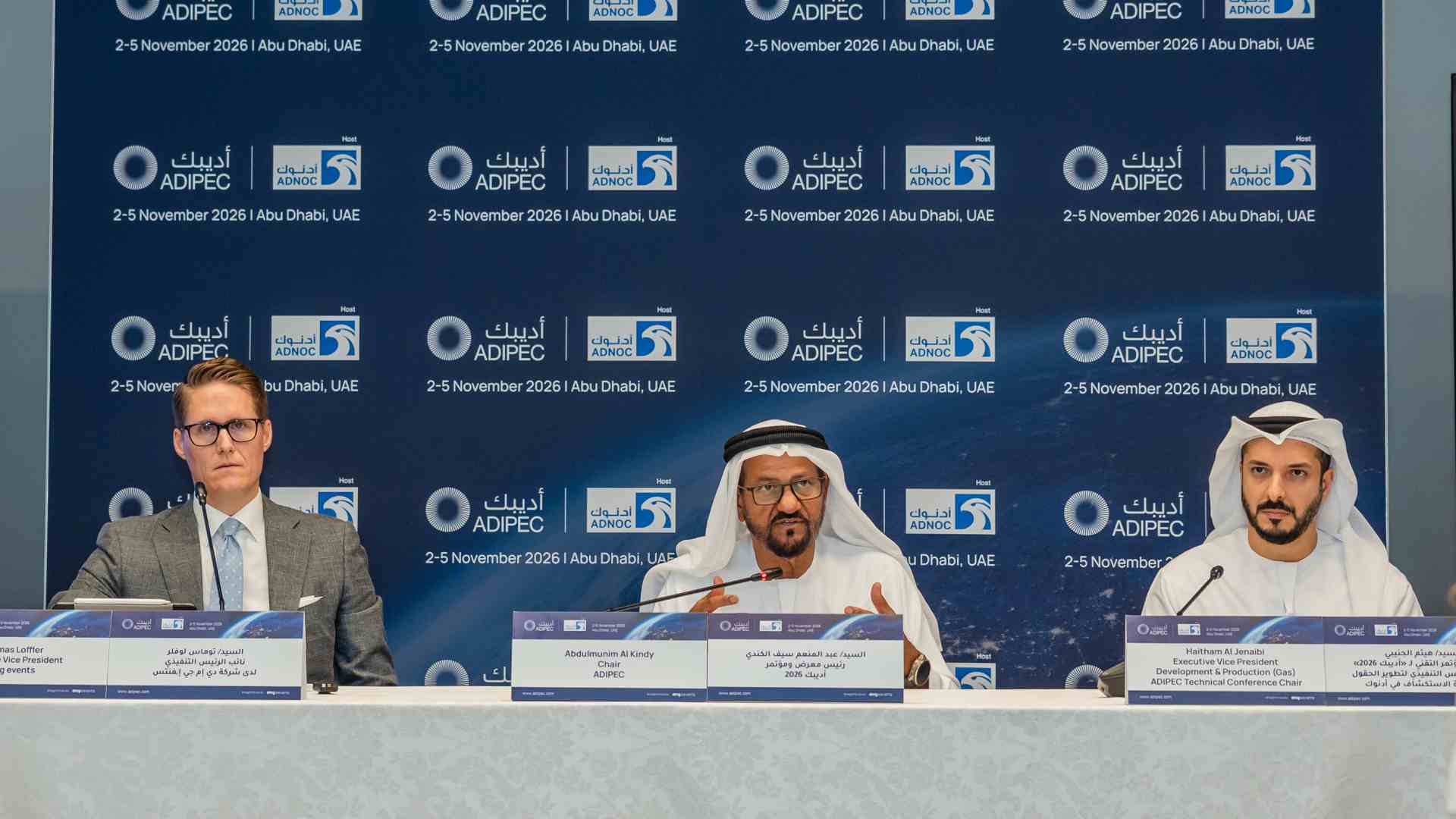
The Middle East’s unparalleled influence on global energy security, investment and industrial development will take centre stage at ADIPEC 2026, as Abu Dhabi welcomes regional and international energy leaders from 2-5 November.
Long established as a cornerstone of global energy supply, the region will help shape the next phase of energy development through major investments in infrastructure, technology and industrial capacity. Against a backdrop of rising energy demand and geopolitical uncertainty, ADIPEC will connect this regional strength with international expertise, capital and markets to advance the partnerships and decisions needed to secure energy today and power future growth.
Held under the patronage of His Highness Sheikh Mohamed bin Zayed Al Nahyan, President of the UAE, and hosted by ADNOC, ADIPEC 2026 will take place at the Abu Dhabi National Exhibition Centre, with an expected 239,000 attendees from more than 170 countries, over 2,250 exhibiting companies, 1,800 speakers and 30 country pavilions.
Reflecting the continued growth of the event and strong demand for exhibition space, this year’s Opening Ceremony will be held at the Abu Dhabi Energy Centre, creating additional exhibition capacity at the ADNEC Centre while providing a dedicated forum for ADIPEC’s opening leadership programme.
Abdulmunim Saif Al Kindy, Chair of ADIPEC, said: “This year’s ADIPEC comes at a defining moment for the global energy industry. We face the challenge of a more disrupted and exposed system, meeting a more energy intensive economy. But, while shocks and conflicts disrupt the system, the world needs more energy, in more forms, delivered more reliably to meet rising demand. And we need the investment, advanced technology and partnerships to make that happen. That is the agenda for action at ADIPEC 2026.
“The continued growth of ADIPEC also reflects confidence in Abu Dhabi as a trusted destination for business, investment and international engagement. At a time when uncertainty is creating challenges across markets, bringing people together to exchange ideas, strengthen relationships build partnerships and conduct business has never been more important.”
Confirmed regional government and institutional speakers, at ADIPEC 2026, include H.E. Suhail Mohamed Al Mazrouei, UAE Minister of Energy and Infrastructure; H.E. Eng. Karim Badawi, Egypt’s Minister of Petroleum and Mineral Resources; H.E. Saleh Kharabsheh, Jordan’s Minister of Energy and Mineral Resources; H.E. Dr Mohamed bin Mubarak Bin Daina, Bahrain’s Minister of Oil and Environment and Special Envoy for Climate Affairs; H.E. Joseph Al-Saadi, Lebanon’s Minister of Energy; H.E. Dr Khalifa Rajab Abdulsadek, Libya’s Minister of Oil and Gas; and H.E. Jassim Alshirawi, Secretary General of the International Energy Forum. They join ministers from around the world, including HE Katharina Reiche, Federal Minister for Economic Affairs and Energy, Germany; HE Dr Alparslan Bayraktar, Minister of Energy and Natural Resources, Türkiye; and HE Takagi Kei, State Minister of Economy, Trade and Industry, Japan.
The region’s energy and industrial leadership will also be represented by major companies including ADNOC, XRG, Masdar, TAQA, Mubadala Energy, AIQ, Borouge, Fertiglobe, and Bapco Energies. They will join international organisations including Shell, bp, TotalEnergies, Eni, Equinor, SLB, Baker Hughes, Siemens Energy, GE Vernova and Microsoft.
Advancing investment and energy security
The UAE’s expanding international energy investments reflect the region’s important role. Through companies such as ADNOC, XRG, Masdar and Mubadala Energy, the country is extending its global reach across natural gas, chemicals, renewable energy and energy infrastructure, strengthening international partnerships and developing projects that connect regional capabilities with global demand.
As energy security becomes increasingly central to economic stability and industrial competitiveness, sustained investment will be essential to strengthen reliability, expand capacity and build the energy systems needed for future growth.
Mohamed Al Aryani, President, International Gas at XRG, said: “Building secure, resilient energy systems takes more than capital. It requires partnerships that connect resources, infrastructure and customers across markets and geographies. At XRG, we bring financial discipline, long-term capital and deep energy expertise to investments across gas, chemicals and energy infrastructure, working alongside experienced local and international partners. That is why ADIPEC is more important than ever as a forum for the industry to unlock investment and forge the partnerships needed to strengthen energy security and support global growth.”
On the exhibition floor, ADIPEC’s expanded AI Zone, co-hosted by AIQ, will showcase how artificial intelligence, robotics and digital technologies are moving from concept to commercial deployment across the energy sector.
Bringing together technology innovators, energy operators and project owners, the Zone will feature real-world applications spanning reservoir modelling, autonomous upstream operations, infrastructure inspection, grid management and subsea robotics. Exhibitors including Honeywell, EY, Gecko Robotics, Stone Ridge Technology and Sinaha will demonstrate how intelligent technologies are helping improve operational performance, enhance reliability, optimise asset management and accelerate decision-making.
Strong global participation ahead of ADIPEC 2026
Thomas Löffler, Executive Vice President, dmg events, said: “ADIPEC brings together a unique combination of energy producers, investors, technology leaders and industrial companies at a scale few events globally can match. At a time of rising demand and significant investment requirements, those conversations and partnerships have never been more important.
“The level of industry participation this year shows just how important ADIPEC has become as a global platform for energy. We’re seeing strong commitment from across the Middle East and internationally, with leaders coming to Abu Dhabi to discuss shared priorities, explore new opportunities and build partnerships. That’s what makes ADIPEC so valuable, particularly at a time when the industry needs to work more closely together.”
Across 13 conference programmes and more than 380 sessions, ADIPEC will address priorities including energy security and resilience, investment, infrastructure, natural gas and LNG, AI and advanced technologies, and industrial growth.
The exhibition will span 16 halls and four specialised industry zones, providing a global marketplace for technology, projects and commercial partnerships.


IKEA Turned Last-Minute Hosting into a 90-Second Guest-Ready Tidy-Up Challenge
Building Digital Sovereignty Through Operational Control
A Coffee and Macaroon Affair Acacia Lounge



-

 Trending12 months ago
OPPO A6 Pro 5G Review: Reliable Daily Driver
-

 Tech News2 years ago
Denodo Bolsters Executive Team by Hiring Christophe Culine as its Chief Revenue Officer
-
 VAR1 year ago
Microsoft Launches New Surface Copilot+ PCs for Business
-

 Automotive2 years ago
AGMC Launches the RIDDARA RD6 High Performance Fully Electric 4×4 Pickup
-
Tech Interviews3 years ago
Navigating the Cybersecurity Landscape in Hybrid Work Environments
-

 Hospitality2 years ago
Gulfood 2025 30th Edition Kicks Off Today, Setting New Benchmarks in F&B Growth and Innovation
-

 Tech News1 year ago
Nothing Launches flagship Nothing Phone (3) and Headphone (1) in theme with the Iconic Museum of the Future in Dubai
-

 VAR2 years ago
Samsung Galaxy Z Fold6 vs Google Pixel 9 Pro Fold: Clash Of The Folding Phenoms