
 Have a question? +971 56 404 0503




Financial News
As Regional Banks Chart their Digital Journeys, Should They Buy or Build Their Innovations?

By Nick Curran, Head of Endava MENA

In a study published last month, McKinsey showed banking to be one of the Middle East’s most digitised industries. The means of brand interaction among banking customers was 87% digital in the United Arab Emirates. This proportion of customers reported that their engagement was either fully digital or involved remote assistance.
This proportion of customers reported that their engagement was either fully digital or involved remote assistance. This proportion was even higher in Saudi Arabia (92%), anticipating that 70% of its payment transactions will be digital by 2030. The McKinsey study also showed Egypt’s banking sector to have 82% digital interaction.
The GCC has always been out in front of regional peers with the digitisation of the FSI sector. Dubai’s Mashreq launched Neo, the first digital bank in the Middle East. And Kuwait Finance House developed KFH-Go, the region’s first e-branch — an unstaffed business unit capable of providing more than 30 services. Each of these innovative project teams faced a common question in their journey to “pioneerhood”: build or buy?
Today’s consumers wait for nothing and no one. If you drag your feet for too long, you miss the boat. One of your competitors will have done it first. In the early years of the digital era, building was the only option, but today the region is strewn with FinTechs. Their offerings are often API-first, which makes them highly customisable. However, considering the strides in cloud technology and software-development methodologies that make in-house rapid deployment possible, we are back to the quandary: build or buy. Let us look at each in turn.
Buying: a no-brainer… with headaches
There is a comfort to be had from procuring a tool or platform that just fits. CIOs are spared nail-biting months of business analysis and user workshops. All that need be done is integrate a solution that has been rigorously tested, albeit in isolation of one’s own business model. In a cloud-native environment, this is even easier. Even if the bank runs core systems on premises, software-as-a-service (SaaS) solutions still end up being easier to bolt in and bed down. The cloud also adds a welcome element of predictability, not only for project management, but for upfront and ongoing costs.
Already, the “buy” option seems preferable. In a region with technology skills gaps, buying a ready-made solution — one that dozens may use if not hundreds of similar businesses across the region — is a great way of avoiding lengthy recruitment drives. But buying is not without its downsides. Try as they might, commercial off-the-shelf solutions (COTS) vendors design their products for a broad operational model and may not be a perfect fit. Even where the requisite customisation is possible, it may come with a list of unacceptable side effects, including a hefty price tag. COTS scaling is also challenging, as is its user-acceptance testing, maintenance, and upgrades, given the reliance on an external team.
Of course, I could write a separate article on the cybersecurity implications of having a third party in the technology mix. And that is before we have even begun to discuss the impact of multiple vendors and FinTechs — which may be necessary to bring the organisation’s digital vision to life. The bank would need to employ someone full-time to liaise with these business partners, negotiate and oversee SLAs, and police the fine line between these activities and regulatory compliance.
Building: a dream for the control-conscious, but where’s the talent?
What CIO doesn’t relish the prospect of complete control over the IT stack? Building their systems gives them that. Development and integration are theirs to command. Use cases can fully govern implementation rather than the twist and bend that IT has to go through to accommodate even 90% requirements fit with a COTS purchase. Stakeholders can join the dots from aspiration to value for each business unit. CIOs and their teams know the business inside and out. They can pivot from the needs of customers and customer-facing employees to cybersecurity and risk management and consider one while developing solutions for another — something COTS vendors cannot do to the same extent.
And then, there is deployment. It tends to be less invasive and more straightforward when its planners oversee the same production environment every day. DevOps and the CI/CD pipeline also allow the modern style of rapid development that helps meet market needs in time to reap the rewards. Building its solutions also allows the organisation to build its IP portfolio, giving it an edge in the market.
The caveats, then? There needs to be a rich in-house talent pool, including IT leaders and analysts who can scope large projects and price them accurately before a single line of code is written. Remember, one of the attractions of COTS solutions is the predictability of their costing models compared with the all-too-common tendency of self-builds costs to spiral out of control. Bringing in third-party expertise to plug these talent gaps is always possible. Failing this, the organisation’s HR team must go on a fastidious recruitment drive before any planning can occur. Low-code platforms and citizen developers may seem like fine options, but without the proper governance, this is a highway to nowhere.
Each to their own
Ultimately, the program’s needs will help make the build-or-buy decision. Despite the control it offers, building may still not be right for standard use cases such as CRM and HR, which an off-the-shelf solution can appropriately serve. On the other hand, if the organisation has a differentiating vision, then almost by definition, COTS tools will fall short. The decision maker must be as fluid as the decision and consider the benefits and drawbacks of each approach in the context of the specific use case they are looking to implement.
Financial
PATRIZIA appoints Hassan Awada as Senior Executive Officer to lead and accelerate Middle East expansion

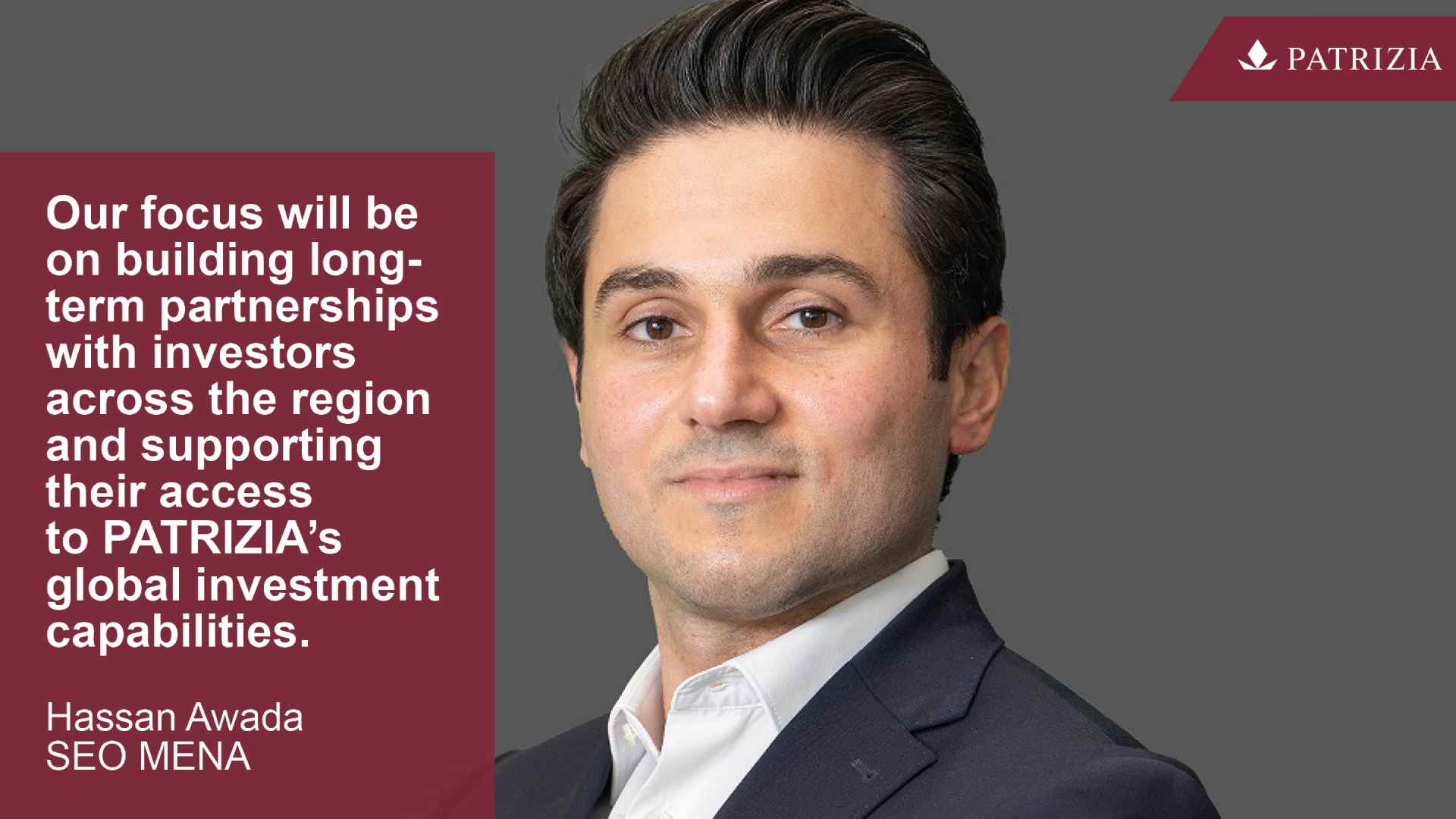
PATRIZIA, a global investment manager in real assets, has announced the appointment Hassan Awada as Senior Executive Officer (SEO), MENA. Based in ADGM, the international financial centre of the UAE’s capital, Abu Dhabi, Awada will lead the continued growth of PATRIZIA’s business across the MENA region, with a focus on deepening relationships with institutional investors and strategic partners and providing access to PATRIZIA’s international real assets investment platform.
Awada brings over 20 years of experience advising institutional investors across the full investment lifecycle, including origination, structuring, execution and asset management. Prior to joining PATRIZIA, he held senior roles at Kroll, Cornerstone Capital, Gleacher Shacklock, PwC and EY.
Konrad Finkenzeller, Head of Client Division at PATRIZIA, commented: “The Middle East is a key strategic region for PATRIZIA, and we continue to see strong demand from investors for direct exposure to high-quality real estate and infrastructure opportunities globally. Hassan’s appointment strengthens our presence on the ground and enhances our ability to deepen relationships with regional investors and connect them with PATRIZIA’s global investment platform.”
Hassan Awada, SEO MENA at PATRIZIA, added: “Real assets have long underpinned Middle Eastern economies and will continue to play a central role in the region’s growth. Meeting increasingly sophisticated investor needs requires tailored, strategic solutions. With its global platform and 42-year track record, PATRIZIA is well positioned to deliver. Our focus will be on building long-term partnerships with investors across the region and supporting their access to PATRIZIA’s global investment capabilities, aligned with their strategic priorities and long-term objectives.”
Arvind Ramamurthy, Chief Market Development Officer, ADGM, said: “This appointment reflects the firm’s strong growth trajectory in the Middle East and its commitment to expanding from Abu Dhabi. It also underscores ADGM’s role as a leading international financial centre, enabling firms to establish and scale their regional presence from the capital.”
With EUR 17.5 billion in Living assets under management, PATRIZIA is one of Europe’s largest residential investment managers and continues to grow its platform across major urban markets. The firm is currently delivering new housing across a number of European markets, including Germany, UK & Ireland, Spain and Belgium, reflecting the scale of its European platform. Alongside Living, PATRIZIA is expanding its infrastructure platform across energy, digital and smart city assets, supporting the transition to low-carbon and connected economies while delivering long-term, resilient returns for investors.
Financial
Fimple adds five GCC financial institutions in first year, targets doubling regional customer base
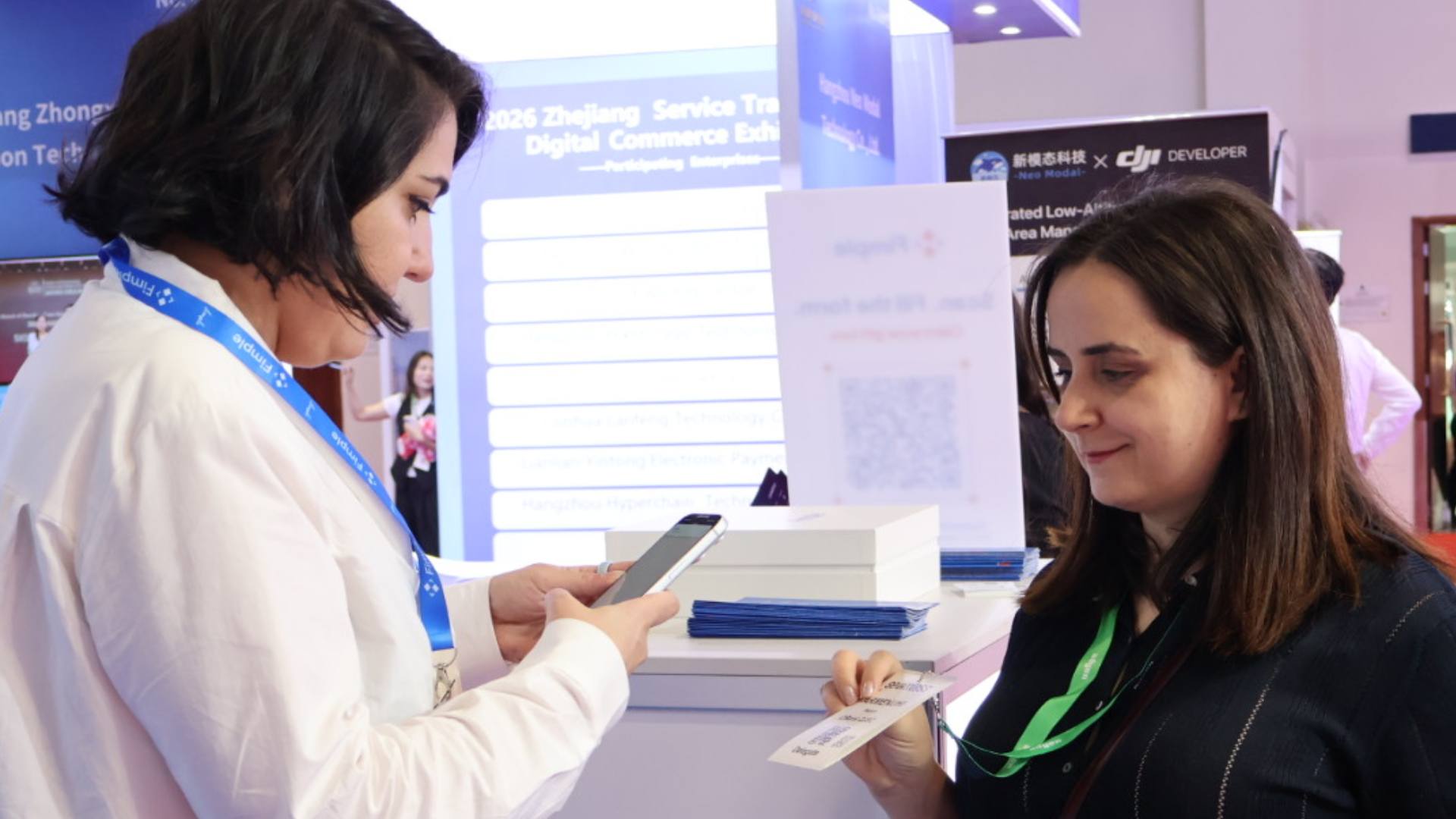
Fimple, an AI-native, API-first, composable financial platform, has signed five financial institutions across the GCC within its first year in the region and plans to double its regional customer base.
Fimple established its Dubai presence in October 2025 and has grown from zero to five GCC customers in 12 months. The region now accounts for close to a fifth of its global customer base of more than 35 financial institutions across 10 countries, making it the company’s fastest-growing region.
The company has also opened an office in Riyadh and plans to expand its customer and delivery presence across the GCC, serving institutions with teams based within the region.
Fimple’s regional growth comes as the UAE continues to advance its ambitions across Islamic finance and financial technology. Under the UAE Strategy for Islamic Finance and Halal Industry, the country aims to increase local Islamic bank assets from AED 986 billion to AED 2.56 trillion by 2031. (Source: UAECabinet.ae)
Dubai is also advancing its ambitions in AI-enabled financial services, with the Dubai International Financial Centre (DIFC) announcing plans in 2026 to become the world’s first AI-native financial centre. (Source: Dubai Media Office/DIFC)
“The UAE is an important market for Fimple because financial institutions here are moving quickly on both Islamic finance and new technology,” said Amr Kandel, GCC Country Manager and Product Director at Fimple. “Banks want to launch products faster, respond to local market needs and modernise without having to change everything at once. The growth we’ve seen in our first year shows there is real appetite for that.”
Islamic finance is a key driver of Fimple’s growth in the GCC. The platform enables financial institutions to run conventional and Islamic finance within the same system, with a range of Sharia-compliant financing and investment structures built into its product engine.
Fimple’s regional customers include Mawarid Finance, a UAE Islamic finance provider that entered into a strategic agreement with Fimple in June 2026.
As banks look to move AI from pilot projects into wider use, Fimple says the underlying core banking infrastructure is becoming increasingly important.
“Banks are already experimenting with AI, but the systems underneath need to be ready for it,” Kandel said. “If the core can’t provide the right data or connect easily with new technology, AI can get stuck at the pilot stage. That’s why the core matters.”
Fimple has built three banking AI agents covering independent audit report processing, customer intelligence from official notices and risk screening across official sources. The agents operate on the Fimple platform with human approval required for each action and full traceability. Further agents are planned as part of the company’s 2026–2027 roadmap.
According to Fimple, it implements a full working core in three to six months on average. Its composable architecture also enables financial institutions to connect selected modules to existing systems rather than replacing their entire core infrastructure at once.
“The GCC has become our fastest-growing region in just one year, and we expect to double our customer base here,” said Mücahit Gündebahar, CEO and Co-founder of Fimple. “We are growing our team and presence in the region so we can support customers locally as we expand across the GCC.”
Fimple will participate as a Gold Sponsor of Seamless Middle East 2026, taking place from Sept. 22–24 at Dubai World Trade Centre. The company will exhibit at stand G64, with Kandel delivering the session “Beyond the AI Hype: Why the Future of Banking Depends on an AI-Ready Core” on Sept. 23 at Stage 1, Fintech Forum.
Financial
Al Masraf and Moody’s Sign Strategic Agreement to Strengthen Risk Intelligence and Credit Capabilities
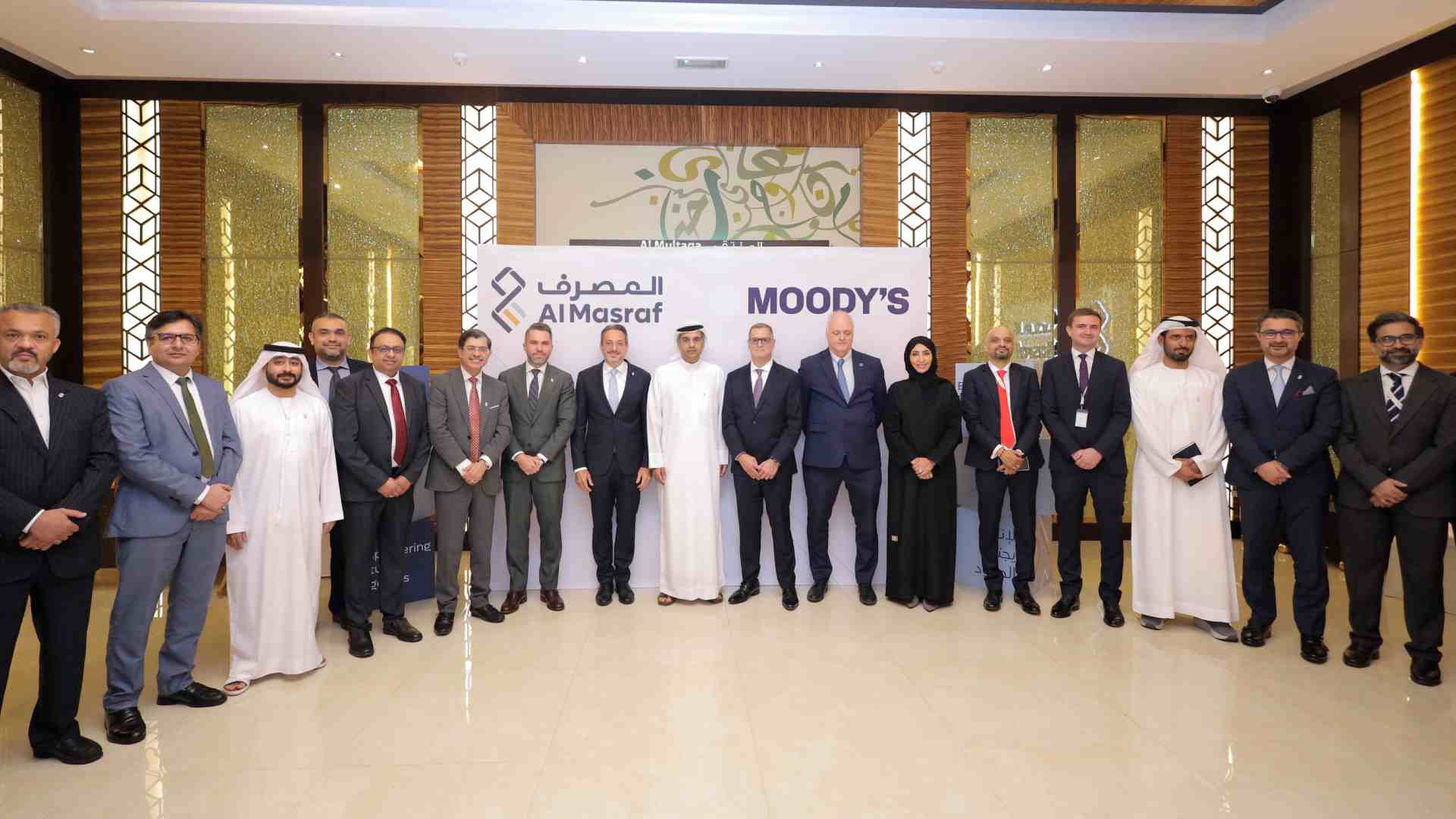
Al Masraf has signed a strategic agreement with Moody’s, a global provider of financial intelligence and risk assessment, marking an important step in strengthening the Bank’s risk management and credit capabilities through enhanced data, insights and technology.
The agreement was formalized during a signing ceremony held in Abu Dhabi, bringing together senior leadership from Al Masraf and Moody’s. The collaboration reflects both organizations’ commitment to leveraging advanced intelligence and risk expertise to support informed, data-driven decision-making in an increasingly complex financial environment.
As risks become increasingly interconnected and the financial landscape continues to evolve, access to timely, reliable and actionable intelligence is becoming essential for financial institutions. Through its combination of data, intelligence, risk expertise and technology, Moody’s helps organizations better understand interconnected risks.
The partnership will further support Al Masraf’s continued focus on strengthening its risk management framework, enhancing credit decision-making and building resilient, forward-looking capabilities that support sustainable growth.
Commenting on the occasion, Fuad Mohamed, CEO of Al Masraf, said: “At Al Masraf, we believe that sustainable growth is built on the strength of our ability to understand risk, anticipate change and make informed decisions. Our collaboration with Moody’s represents an important step in advancing our risk and credit capabilities through deeper intelligence, data and technology.”
He continued: “As the financial landscape continues to evolve, partnerships of this nature enable us to strengthen our resilience, enhance decision-making and create greater value for our customers and stakeholders. We look forward to building on this collaboration as we continue to shape a more agile, intelligent and future-ready Al Masraf.”
“We are delighted to partner with Al Masraf on an important step in modernizing its corporate lending operations. By bringing greater automation, efficiency, and insight to the credit journey, Moody’s is helping the bank build a future-ready operating model that enables faster, better-informed lending decisions, strengthens governance, and enhances risk management.” said Wael Jadallah, Managing Director, Head of Asia Pacific and Middle East at Moody’s.
Senior representatives from both organizations attended the signing ceremony.
Representing Al Masraf were Fuad Mohamed, Chief Executive Officer; Moataz Khalil, Chief Wholesale Banking Officer; Safeya Almarzooqi, Chief Credit Officer; Mirel Baila, Acting Chief Operating Officer; Rohit Kumar, Chief Risk Officer; and senior representatives from the Bank’s Wholesale Banking, Credit, Risk, Information Technology, Islamic Banking, Corporate Banking, Project Management and Business Management functions.
Representing Moody’s were Wael Jadallah, Managing Director, Head of Asia Pacific and Middle East; Brendan Gavaghan, Senior Director, Middle East; Raghavendra Katagade, Director, UAE; Blaine Connan, Director, UAE; Ali Abdullah, Director, UAE; and Anand Thirunellai Radhakrishnan, Senior Director, Middle East & Europe.
The agreement underscores Al Masraf’s commitment to continuous innovation and adopting advanced capabilities that strengthen its ability to navigate an evolving risk environment, while supporting the Bank’s broader ambition to deliver sustainable growth and enhanced value to its customers and stakeholders.

International Coffee Day Gets UAE-Made Twist with Rashtions’ Brazilian Coffee Truffle

Why Curation Matters More Than Ever in Fashion Retail

Keeta Marks First Anniversary in the UAE, Celebrating Nationwide Growth and Local Impact



-
News11 years ago
SENDQUICK (TALARIAX) INTRODUCES SQOOPE – THE BREAKTHROUGH IN MOBILE MESSAGING
-

 Trending11 months ago
OPPO A6 Pro 5G Review: Reliable Daily Driver
-

 Tech News2 years ago
Denodo Bolsters Executive Team by Hiring Christophe Culine as its Chief Revenue Officer
-
 VAR1 year ago
Microsoft Launches New Surface Copilot+ PCs for Business
-

 Automotive2 years ago
AGMC Launches the RIDDARA RD6 High Performance Fully Electric 4×4 Pickup
-
Tech Interviews3 years ago
Navigating the Cybersecurity Landscape in Hybrid Work Environments
-
 Tech News2 years ago
Toshiba Announces MG10-D Series of Enterprise HDDs with Capacities up to 10TB
-

 Tech News1 year ago
Nothing Launches flagship Nothing Phone (3) and Headphone (1) in theme with the Iconic Museum of the Future in Dubai