
 Have a question? +971 56 404 0503




Home Integrator
RENEW YOUR SPACE WITH NATUZZI ITALIA: A NEW YEAR, REFINED THROUGH DESIGN

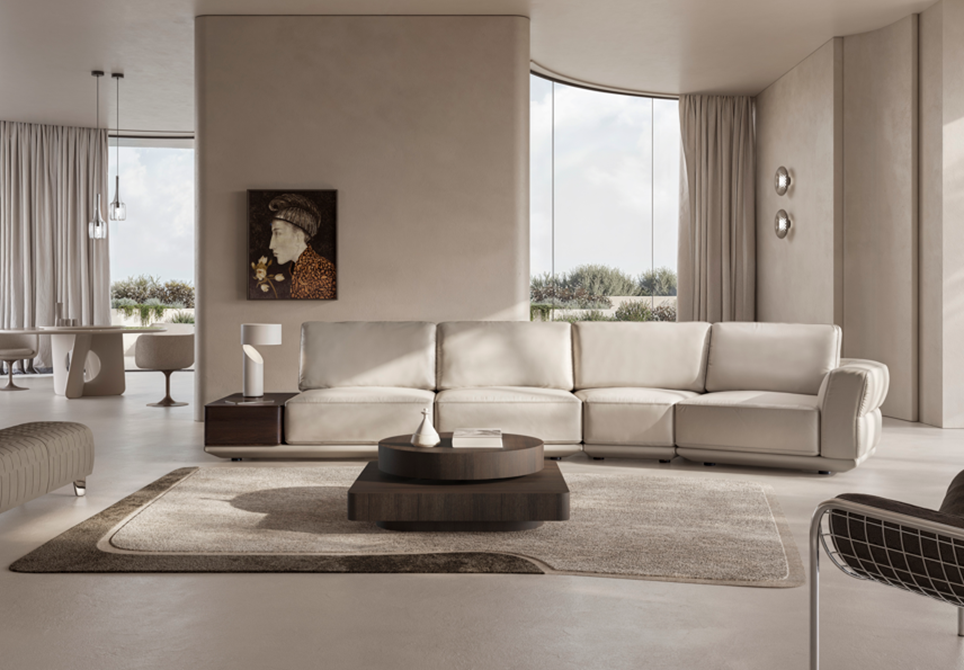
Dubai, UAE – January 2026: This new year, reset your rhythm, refresh your surroundings, and renew your way of living — with Natuzzi Italia. where a new environment sets the tone for a fresh start. Natuzzi Italia offers inspiration for every room of the home, with refined designs that combine comfort, style, and timeless Italian craftsmanship. From the award-winning Amama collection to the serene elegance of Habita, each piece is designed to elevate daily living.
HABITA by Mauro Lipparini

Essential lines and timeless harmony define Habita — a serene living concept where design and well-being coexist in perfect balance.
At its heart is a sculptural, modular sofa with generous proportions, refined upholstery, and enveloping curves, designed for comfort, sharing, and flexibility. Premium padding and thoughtful detailing ensure a relaxed yet elegant experience, adapting effortlessly to different spaces.
Habita is not just a collection — it is a way of living.
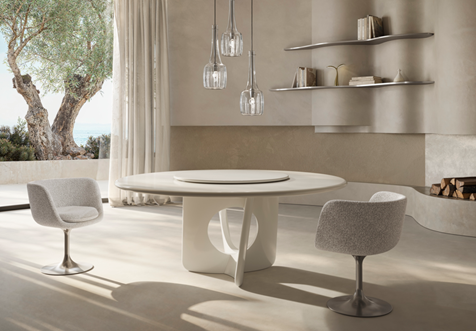
The collection is completed by an elegant yet functional coffee table and a striking monolithic dining table, fully lacquered in high-gloss finish. With its organic lines and integrated rotating lazy susan, the dining table seamlessly merges practicality with sculptural appeal.
Amama collection
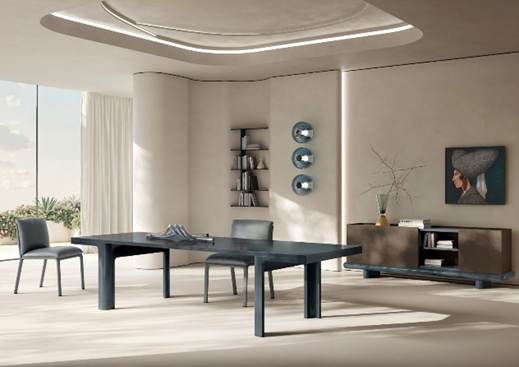
Amama is a compositional project that redefines conviviality and versatility. It is a modular island sofa designed to shape space, offering the possibility of double-sided configurations for a modern and unusual living experience. Reflecting on architecture and ways of living, the armrest or backrest can become functional elements such as a shelf, table, or even a container.
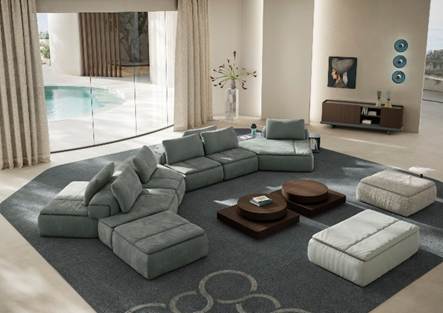
It is a dynamic project where multiple elements of different textures and materials coexist in a play of overlaps and geometries, opening up to multi-directionality and multifunctionality, combining comfort with freedom of composition and use. It represents a new approach to living that balances aesthetics, flexibility, and functionality, extended by living and dining elements of the same collection.
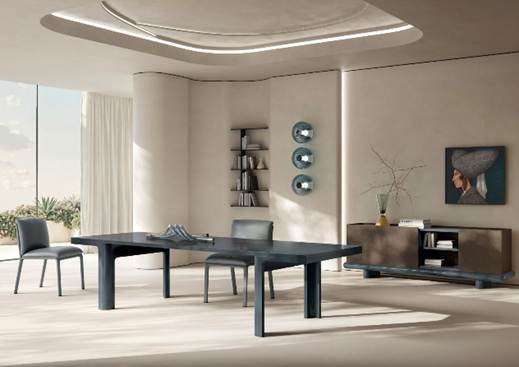
The soft textures and shapes of Amama harmonize with Verde Antigua marble displays, while furnishings and decorative objects engage in a palette inspired by earth and sea. The result is an immersive experience designed to engage all senses and convey the idea of a harmonious and welcoming home.
Home Integrator
New Initiative ‘Longevity Starts From Childhood’ Connects the Early Years With Lifelong Wellbeing
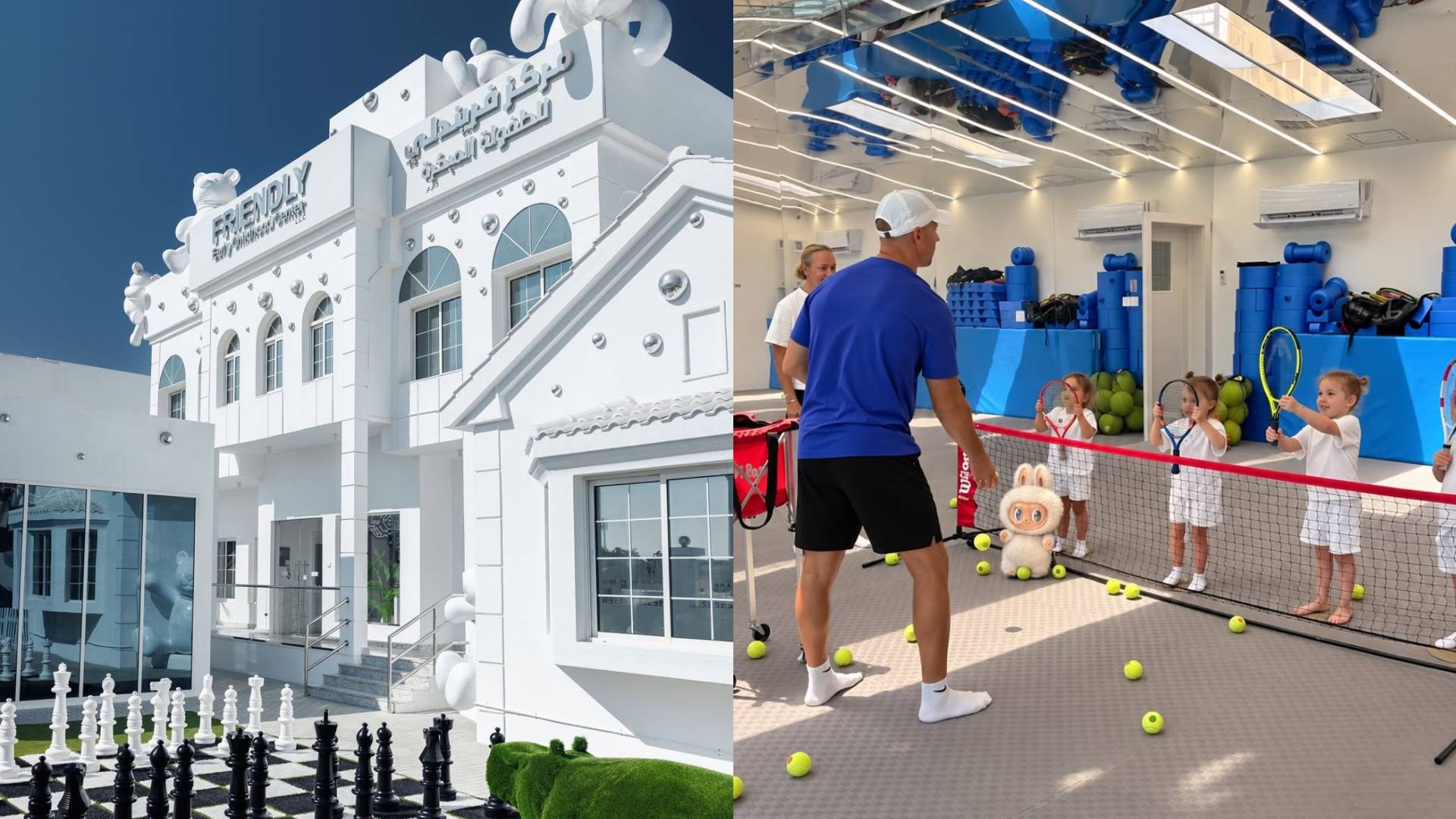
Image mentioned
EYWA by R.Evolution and Friendly Early Childhood Center have launched Longevity Starts From Childhood, a new Dubai initiative exploring how the foundations of lifelong health and wellbeing can be shaped from the earliest years.
The partnership brings together EYWA, an ultra-luxury residential ecosystem built around longevity and wellbeing, and Friendly Early Childhood Center, one of Dubai’s most premium and innovation-led early childhood centres. Together, the partners will develop children’s spaces, educational experiences and a programme for families focused on the relationship between childhood development and the environments in which children live, learn and grow.
The collaboration is closely aligned with the UAE’s growing focus on family wellbeing and early childhood development. The Year of the Family 2026 places the family at the centre of building strong future generations, while the Dubai Quality of Life Strategy 2033 identifies children among its priority groups and brings together initiatives across health, education, society and family.
Longevity starts earlier than we think
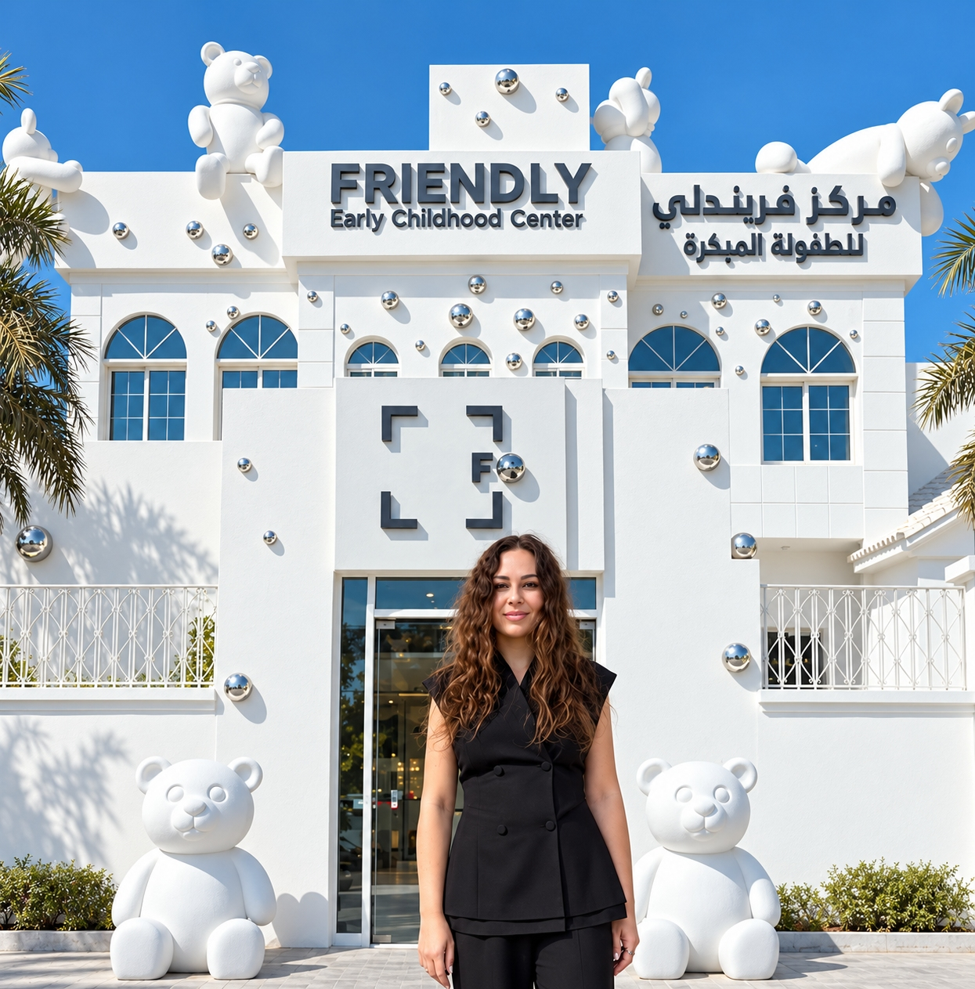
“Longevity is often discussed as something we begin thinking about as adults. But the science tells us that some of the most important foundations are established much earlier,” said Irina Baikova, Co-Founder, Friendly Nursery Early Childhood Center. “According to the World Health Organization, around 80% of a child’s brain is formed by the age of three, while every USD 1 invested in early childhood development interventions can generate returns of up to USD 13. The early years are an extraordinary window of opportunity. Our partnership with EYWA is about connecting what happens in early childhood education with the environment a child returns to every day: the home.”
Bringing the philosophy into the home
Under the partnership, Friendly Early Childhood Center will become EYWA’s early childhood development partner for the creation and curation of Kids Clubs at both EYWA Tree of Life and EYWA Way of Water in Business Bay.
The partners will explore how factors including air and water quality, natural light, acoustics, hygiene, movement, learning and healthy routines can be incorporated into spaces created specifically for children.
Rather than approaching a Kids Club simply as another residential amenity, EYWA and Friendly Early Childhood Center will consider how the space itself can support the way children play, learn, socialise and develop.
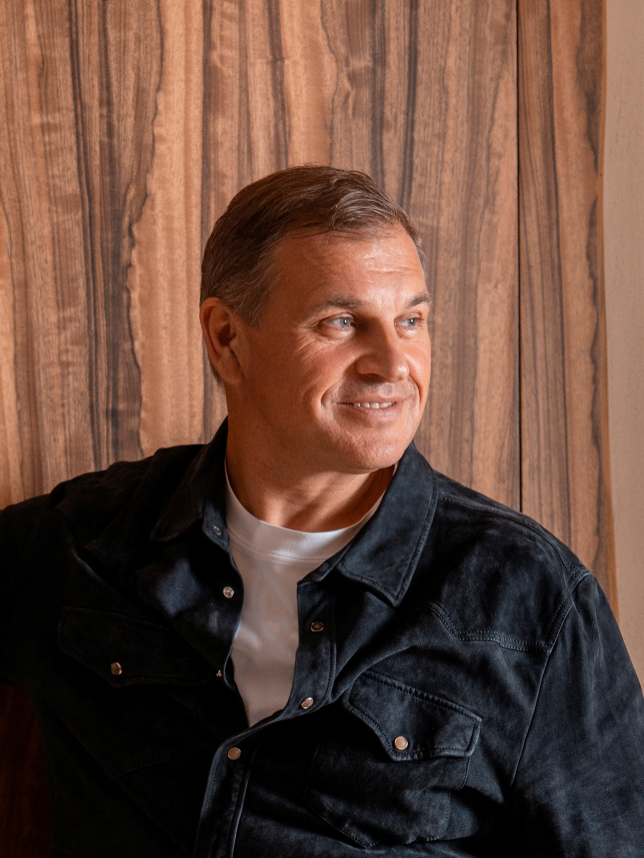
For Alex Zagrebelny, Founder and CEO of Eywa by R.Evolution, the idea also has a personal origin.
“EYWA began with a question: can the place where we spend most of our lives actually help us live better? For me, that question became very personal. After introducing at home several of the environmental principles that we have incorporated into EYWA, I saw noticeable changes in my own child’s focus, concentration and memory. This is my experience as a father, not a medical claim, but it completely changed the way I looked at homes,” said Alex. “A home is not just where a child grows up. It is one of the earliest environments shaping their habits and behavior. If we are serious about longevity, we have to start thinking about that much earlier.”
From partnership to family programme
The initiative will move into a series of activations from September through November 2026, with EYWA and Friendly Early Childhood Center planning events and experiences for both parents and children.
The programme will explore in an accessible and practical way how health and the surrounding environment interact with childhood development and education — from sleep, air, water, light and movement to the role of the home itself.
The first activations will begin in September, followed by a joint event at Friendly Early Childhood Center in October and further parent-and-child experiences in November. Families will also have the opportunity to visit EYWA Tree of Life and experience how longevity and wellbeing principles are translated into a residential environment.
The partnership forms part of R.Evolution and EYWA’s broader work in longevity and wellbeing, extending the conversation beyond adult wellness to the environments and habits that shape health, development and quality of life from childhood.
Through Longevity Starts From Childhood, EYWA and Friendly Early Childhood Center aim to translate these principles into everyday life — connecting the places where children learn with the places where they live.
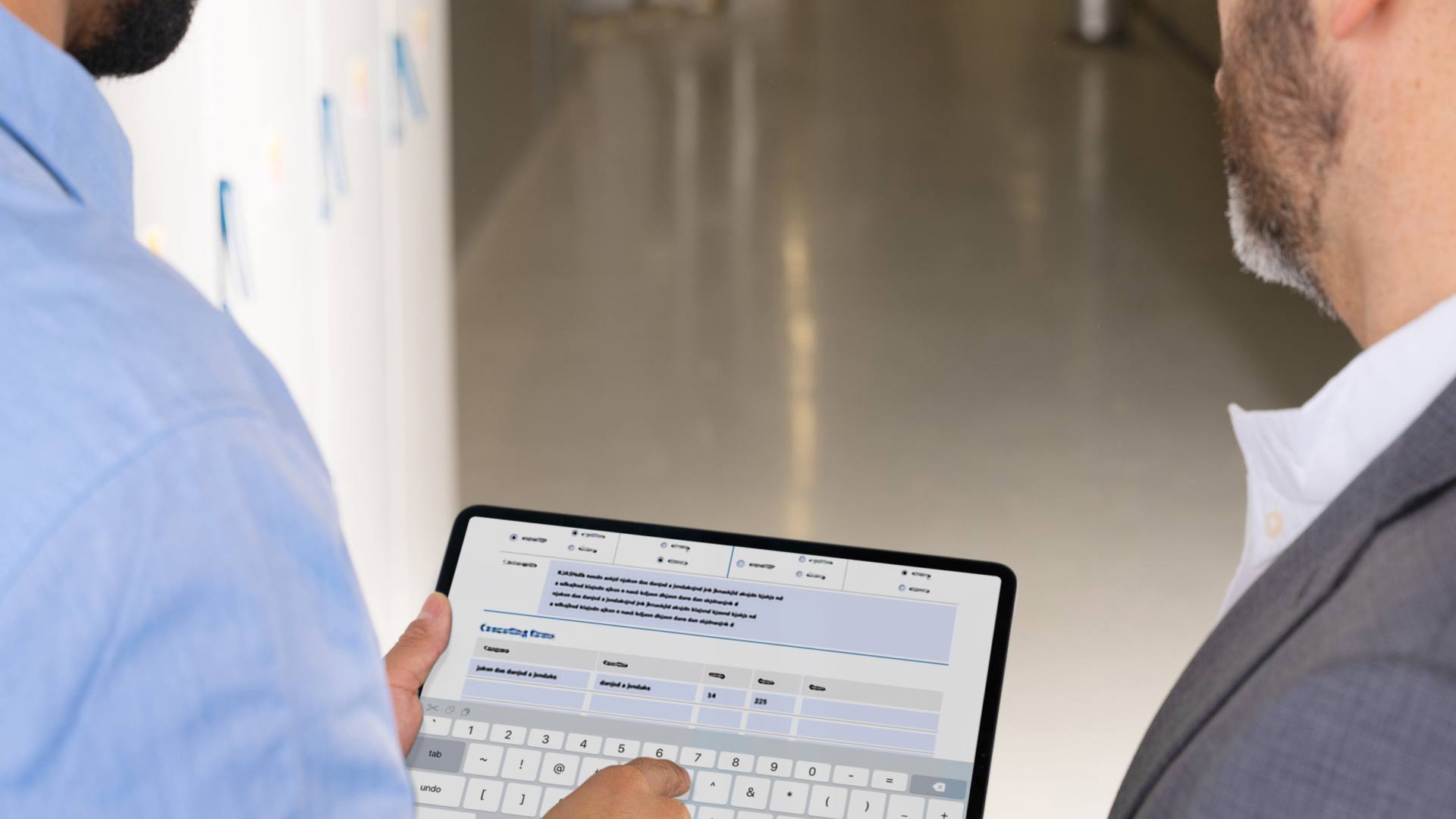
According to a recent skills report, 59% of quantity surveying and construction professionals identified advanced digital tools as the most important skill for the future.
Construction has always relied on practical experience: understanding how projects are delivered, spotting risks early and knowing when something on site is not right. These skills remain essential, but as digital tools become more embedded across the industry, the way construction teams work is changing.
As a digital platform working with construction teams around the world, PlanRadar has identified six skills that are becoming increasingly important on the modern jobsite, helping professionals work more efficiently and adapt as construction becomes more digital.
1. Creating clear digital project records
Good documentation is more than taking a photo or writing a quick note. Site information should clearly show what happened, where it happened, who is responsible and what action is needed. This makes it easier for contractors to respond and for reviewers to confirm that work has been completed correctly.
A 2023 case study found that introducing structured digital quality-control documentation reduced supervisors’ documentation workload by 80–90%. Standardised data entry also improved the accuracy and usability of inspection records. Clear, organised information also provides a stronger foundation for future automation and AI.
2. Coordinating digital workflows
Construction professionals increasingly need to understand how information moves through a project, not just how to use individual tools. An inspection, Request for Information (RFI) or approval should have a clear path, showing who starts it, what information is needed, who reviews it and when it must be escalated.
This matters because delays in these workflows can have a real impact. A PlanRadar study of 1,728 construction professionals found that one in four respondents said delayed approvals typically add more than a month to project timelines. Clear digital workflows help teams keep responsibilities visible, reduce missed actions and move decisions forward faster.
3. Working confidently with digital drawings and BIM
Construction professionals do not need to be BIM specialists, but they should be able to navigate digital drawings, understand revisions and connect site issues to the correct location. This is becoming increasingly important in the UAE as Dubai continues to digitise building processes.
Through its BIM platform, Dubai Municipality allows consultants to upload IFC models and automatically check them against Dubai BIM Standards and selected building regulations.
As these processes become more sophisticated, these skills will become more important on site. Professionals who can confidently use digital models will be better placed to connect design information with actual site conditions.
4. Capturing useful visual evidence
Visual documentation is becoming a more important part of how construction teams track progress, and communicate site conditions. Professionals need to know what should be captured, when it should be recorded and how images can support later decisions.
A UAE case study at Expo City Dubai saw a contractor use 360-degree reality capture across 28 buildings, creating around 180 captures of the project. The visual record helped teams monitor progress, identify issues and improve reporting. Used effectively, visual evidence gives teams a clearer record of site conditions and makes progress easier to review without relying solely on repeated physical inspections.
5. Building practical data literacy
Construction teams generate large amounts of information daily. The skill is knowing how to read that information and identify what actually needs attention.
Professionals should be able to spot recurring quality issues, overdue actions, approval delays and differences in performance across teams or locations. They also need to understand when a number is useful and when it needs more context.
This does not mean every project manager needs to become a data specialist. It means being able to ask the right questions, check the information behind a result and use project data to support better decisions.
6. Using AI with professional judgement
A 2025 RICS survey of more than 2,200 construction professionals found that 46% identified a lack of skilled personnel as one of the main barriers to AI adoption. As AI becomes more common in construction, professionals will therefore need more than basic awareness of the technology.
They should understand where AI can support routine work, how to question its output and when professional verification is required. AI can organise information, identify patterns and summarise records, but decisions involving safety, contracts or technical responsibility still require human judgement.
Digital skills are becoming part of everyday construction, but the pace of technological change means professionals cannot be expected to master every new tool. What the industry needs instead are curious, adaptable people who are willing to keep learning, question how technology is used and apply it in ways that improve project delivery.

By Amir H. Greiss, Founder & CEO, SharpMinds Consulting Engineers
Say “smart city” to most people and they picture an app, a sensor, a dashboard somewhere lighting up with data. What I find far more interesting is what’s happening underneath that layer, buildings and streets increasingly designed to sense their surroundings and respond in real time, rather than simply exist within them. I’ve spent twenty years in this region’s built environment, working alongside engineers and planners where that shift is now simply part of the design conversation, and the thing I keep coming back to is that “smart” isn’t a layer you add on top of a city. It’s a design decision you make from the foundations up. The UAE has been making that decision at national scale, and it’s worth unpacking from an architect’s vantage point.
From static infrastructure to predictive systems
Start with the Dubai Digital Twin Platform, which Dubai Municipality launched earlier this year, a living, constantly-updating model of the city that now includes over 195,000 buildings and 280,000 pieces of infrastructure, drawn from more than 1,500 layers of spatial data. As an architect, what excites me isn’t the map itself, it’s what it lets us do before a single foundation is poured. We can walk a neighbourhood through a flood before it happens, trace an evacuation route through real streets, or spot where a drainage line would fail, all on screen, long before it’s ever tested by an actual storm.
You see the same instinct in traffic management. Dubai’s RTA has been rolling out a new signal system built on predictive analytics and a digital twin of the road network, aiming to get ahead of congestion instead of just reacting to it where the target is up to a 20 percent reduction. Take away the “smart mobility” label and what’s left is queuing theory, sensor calibration, network modelling. The intelligence in these systems didn’t come from nowhere as it’s engineering judgement, just scaled up and running in real time.
Sustainability plays a vital role
None of this makes sense without factoring in the climate we’re building in. The UAE was the first country in the MENA region to commit to Net Zero by 2050, and buildings are central to that target, largely because cooling eats up such a large share of the national electricity load. A recent peer-reviewed study on net-zero building strategies in the UAE puts a number on something engineers on the ground already know, pairing passive design with IoT-based systems — BIM-linked digital twins, predictive maintenance can cut operational energy use by 10 to 30 percent. The same paper notes cooling alone accounts for 40 to 60 percent of building electricity use here, which tells you where the effort has to go first which is envelope design, shading and orientation before you even get to the sensors.
There’s institutional weight behind this too. The Emirates Green Building Council, now twenty years in, runs a Net Zero Centre of Excellence that’s been pushing deep retrofits and circular-economy thinking into the built environment since 2018.
Where it’s headed?
What sets the UAE apart, in my view, is that none of these efforts reads as a showcase for visitors. It’s being written into how the country plans roads, buildings, and utilities for the next thirty years, as policy. For architects, that changes the brief. It’s no longer enough to design a building that looks good and performs efficiently on its own, it has to be conceived as part of a system that senses, adapts, and reports back, which means sitting at the table with engineers from the earliest sketches, not handing them a finished design and asking them to make it work.
Screens don’t make a city smart. Thoughtful design, tested and proven together with the people who build it, does. On that front, the UAE has set a bar the rest of the region will be measuring itself against for some time.


Europe’s Data Centres Are Evolving From Power Consumers to Energy Partners

Fimple adds five GCC financial institutions in first year, targets doubling regional customer base

New Initiative ‘Longevity Starts From Childhood’ Connects the Early Years With Lifelong Wellbeing



-
News11 years ago
SENDQUICK (TALARIAX) INTRODUCES SQOOPE – THE BREAKTHROUGH IN MOBILE MESSAGING
-

 Trending11 months ago
OPPO A6 Pro 5G Review: Reliable Daily Driver
-

 Tech News2 years ago
Denodo Bolsters Executive Team by Hiring Christophe Culine as its Chief Revenue Officer
-
 VAR1 year ago
Microsoft Launches New Surface Copilot+ PCs for Business
-

 Automotive2 years ago
AGMC Launches the RIDDARA RD6 High Performance Fully Electric 4×4 Pickup
-
Tech Interviews3 years ago
Navigating the Cybersecurity Landscape in Hybrid Work Environments
-
 Tech News2 years ago
Toshiba Announces MG10-D Series of Enterprise HDDs with Capacities up to 10TB
-

 Tech News1 year ago
Nothing Launches flagship Nothing Phone (3) and Headphone (1) in theme with the Iconic Museum of the Future in Dubai