
 Have a question? +971 56 404 0503




Tech Interviews
Digital Sovereignty in Practice: What It Means for Enterprises Today


In our conversation with Ismail Ibrahim, General Manager, CEMEA at SUSE, we seek to understand the concept better along with his understanding of the industry and how enterprises in the UAE and Saudi Arabia can retain control in a rapidly evolving technology landscape.

What does “digital sovereignty” actually mean for an enterprise today, not in theory, but in day-to-day operations?
From an enterprise perspective, digital sovereignty becomes real the moment it changes what you do on a Monday morning. In practice, it means three things become operational requirements, not policy statements.
First, control over data. Not just where data is stored, but where it is processed, who can access it, and how you prove that in an audit. For many organizations in the UAE and Saudi Arabia, that is increasingly tied to sector rules, procurement requirements, and customer expectations.
You need the ability to keep sensitive workloads within national borders when required, but also to enable controlled data flows when innovation demands it. The important point is that sovereignty is not “ringfencing everything”. It is being deliberate about which data, which workloads and which dependencies must remain under your control.
Second, control over operations. Day-to-day, that looks like resilience and predictability: how quickly you can patch, how confidently you can recover, how consistently you can enforce policy across clusters, clouds and edge sites. This is where many enterprises discover that sovereignty is inseparable from operational excellence. If you cannot reliably manage your environments, you do not really control them.
Third, control over technology choices. This is where open source becomes practical, not ideological. When you build on open, enterprise-supported platforms, you are reducing dependency on opaque codebases and constraining the risk of being forced into a single vendor’s roadmap. Sovereignty is “choice by design”, because choice is what allows you to meet local requirements today and change course tomorrow.
That is why at SUSE we often frame sovereignty around pillars like control, choice and resilience, with autonomy as the long-term outcome. For enterprises, those pillars translate into everyday decisions: architecture, procurement, governance, patching, incident response and lifecycle management.
In the next three years, which will hurt enterprises more: security breaches, or being locked into the wrong technology stack?
It is not an either-or, because the two risks are increasingly connected.
A security breach is immediate and visible. It impacts customers, regulators, operations and reputation. But lock-in to the wrong stack can quietly increase breach risk over time, because it limits your ability to respond. If your architecture makes it hard to patch quickly, to segment workloads properly, to implement new controls, or to move sensitive workloads to a compliant environment, you have turned security into a dependency problem.
Over the next three years, I would say the most damaging scenario for many enterprises is not “breach versus lock-in”, but breach plus lock-in, where an organisation is under pressure and finds it cannot adapt fast enough.
This is exactly why sovereignty has moved into the C-suite and boardroom. Leaders are recognizing that digital sovereignty sits alongside cybersecurity and operational resilience as a strategic requirement. You need a risk-based approach to your data, workloads and support model, and you need the flexibility to change course.
Practically, in the UAE and Saudi Arabia, many CIOs are already building mixed environments across on-prem, sovereign cloud, hyperscalers and edge. The goal is not to avoid the cloud. The goal is to avoid a situation where strategic choices are dictated by a single vendor’s constraints. Open, enterprise-grade platforms help you keep the option to move, modernize or localize when needed, without rewriting everything from scratch.
As AI becomes embedded into infrastructure itself, do you believe enterprises are prepared to trust machines with operational decisions, or are we moving faster than governance allows?
In many cases, we are moving faster than governance, but that does not mean enterprises should slow down. It means they should modernize governance at the same pace as adoption.
The key is to separate hype from reality. “Trusting machines” does not mean handing over full autonomy overnight. For most enterprises, AI enters operations in stages.
Stage one is assistive intelligence, where AI helps surface insights, detect anomalies, recommend actions and reduce manual effort. This is where many organizations see quick operational value, especially in areas like observability, incident triage, capacity planning and security monitoring.
Stage two is bounded autonomy, where AI can execute actions within defined guardrails, such as automated scaling, routing, remediation playbooks, or policy-driven security responses. The governance requirement here is clear accountability: what is automated, under what conditions, with what approvals, and what audit trail.
Stage three is agentic operations, where more complex systems handle multi-step tasks across environments. This is the phase where governance must be mature, because the risk is not simply “wrong output”, it is unintended consequences across interconnected systems.
For the UAE and Saudi Arabia, readiness often depends on whether organisations have already done the foundations: standardised platforms, consistent policy enforcement, clean identity and access controls, and modern lifecycle management. If the foundation is fragmented, AI simply accelerates fragmentation.
This is why we are seeing strong interest in approaches that support governance by design, including the ability to run AI solutions in more controlled environments. In many regulated sectors, that includes air-gapped or restricted environments, where organizations want to adopt AI while keeping strict control of data movement and operational boundaries.
My view is that enterprises can absolutely trust AI in operations, but only when they treat trust as an engineering outcome: transparent systems, auditable controls, clear guardrails, and the ability to override. Governance is not a blocker. Governance is what makes adoption sustainable.
By 2030, will enterprises still control their infrastructure choices, or will hyperscalers and AI vendors effectively decide that for them?
Enterprises will control their choices if they design for control now. If they do not, the market will make the decision for them.
By 2030, the default buying motion will push organizations toward managed services, vertically integrated AI stacks, and increasingly opinionated platforms. That can deliver speed, but it can also compress choice, especially if your applications, data pipelines, security controls and operational tooling are tightly coupled to one vendor.
So the question is really about architecture and leverage. Enterprises that prioritise portability, standardization and open platforms will keep leverage. They can choose the right environment for each workload, based on performance, compliance, cost, and risk. Enterprises that ignore portability will find that “choice” exists on paper, but not in practice.
This is where digital sovereignty is often misunderstood. Sovereignty does not mean rejecting global technology. It means retaining the ability to make deliberate decisions about where workloads run and who controls the critical layers. Many leaders now talk about “glocal” strategies: using global innovation while maintaining local control and compliance where it matters.
At SUSE, our positioning has been consistent: open source supports sovereignty because it promotes transparency, portability and freedom from lock-in. That is not a slogan, it is a practical roadmap for keeping infrastructure choices in the hands of enterprises, not vendors.
If you had to offer one piece of advice to CIOs and policymakers in the UAE and Saudi Arabia navigating rapid digital transformation, what would it be?
My one piece of advice is this: treat sovereignty as an enabler of innovation, not a constraint, and build it into your operating model early.
For CIOs, that means starting with a clear map of your critical workloads and dependencies. Decide what must remain under national control, what can run on hyperscalers, what needs sovereign cloud options, and what requires special governance. Then standardize your foundations so you can enforce policy consistently. When sovereignty is engineered into the platform layer, transformation becomes faster, because you are not negotiating compliance from scratch every time you modernize an application.
For policymakers, it means continuing to create frameworks that encourage both innovation and trust. The UAE has taken a pragmatic approach in showing that openness and sovereignty do not have to conflict. When the policy environment supports clear requirements and predictable compliance expectations, enterprises can innovate with confidence.
And for both, there is a shared point: invest in skills and ecosystem capability. Sovereign outcomes are not delivered by policy alone, they are delivered by people, platforms, and partnerships. When you develop local talent, strengthen the partner ecosystem, and support enterprise-grade open source, you build resilience and long-term autonomy without slowing innovation.
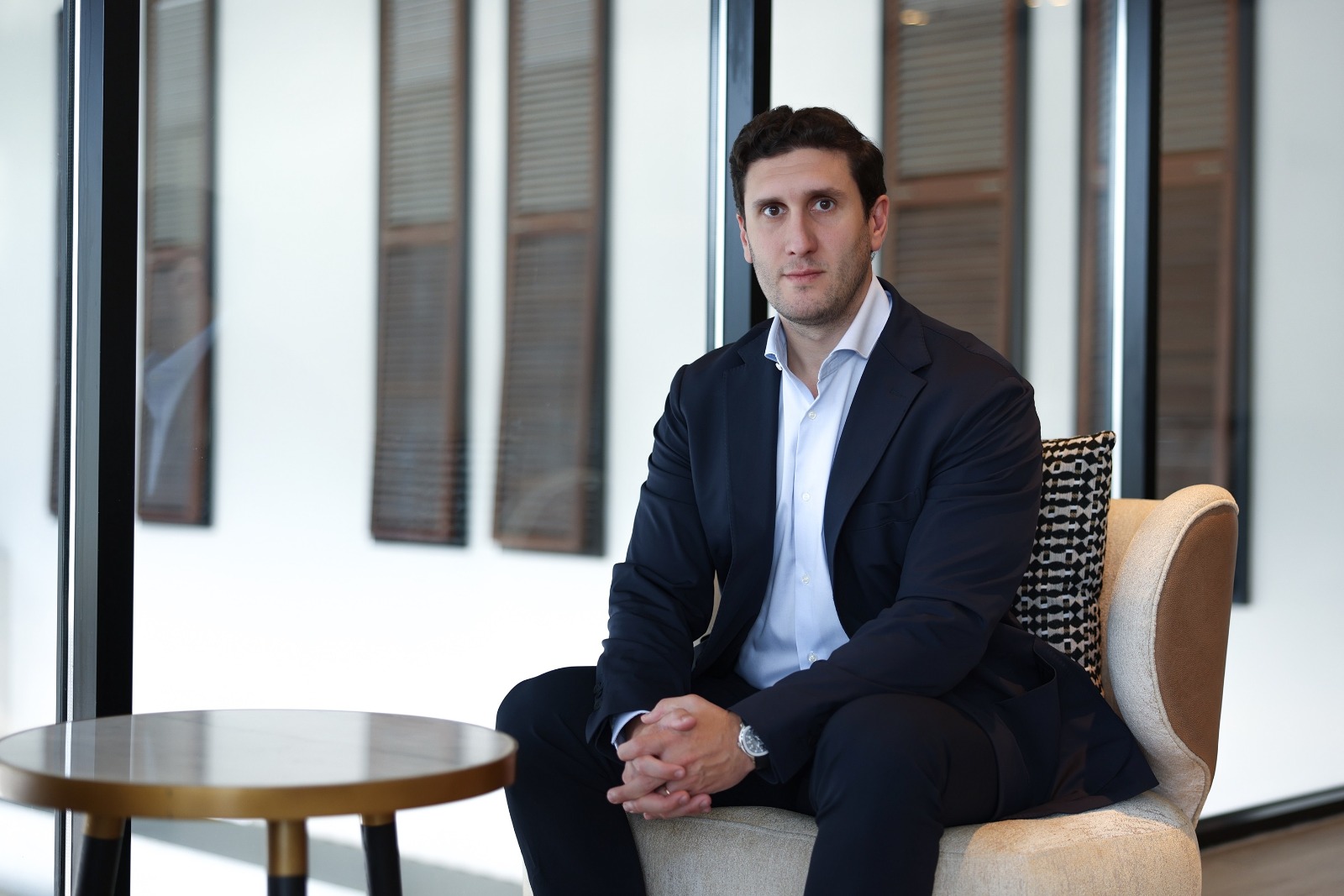
As Saudi Arabia moves AI from experimentation into large-scale deployment, Federico Pienovi, CEO APAC & MENA at Globant, explains why the Kingdom is emerging as a proving ground for agentic AI, AI-native business models and a new generation of connected experiences spanning sports, tourism, financial services and giga-projects.
Saudi Arabia is investing heavily in AI infrastructure and adoption. What is the Kingdom doing differently that could make it a global blueprint for moving AI from experimentation into large-scale business deployment?
What distinguishes Saudi Arabia’s approach is the alignment between national ambition and institutional execution. The Kingdom is embedding AI directly into the infrastructure of its giga-projects, financial institutions, and national sports ecosystems from day one. When you look at projects like Qiddiya, Red Sea Global, Diriyah, and New Murabba, these are greenfield developments where AI-native technology can be architected into the foundation rather than bolted on afterward.
Saudi Arabia is simultaneously transforming multiple sectors, tourism, sports, aviation, entertainment, real estate, and financial services, which creates a unique ecosystem effect. For instance, the world’s first Agent-to-Agent Tourism Corridor, connecting Red Sea Global and AlUla through sovereign AI destination agents, demonstrates how different entities can share AI infrastructure while maintaining data sovereignty. The Kingdom has also created conditions where global technology partners want to establish a deep local presence. Our own experience establishing a regional headquarters in Riyadh as a Center of Excellence for AI, creativity, and digital solutions reflects this pull, serious institutions want serious partners embedded alongside them, working on problems that matter at national scale.
Agentic AI is quickly becoming the next major enterprise conversation. Where are you already seeing organisations move beyond copilots towards AI agents that can independently execute tasks and make operational decisions?
The shift from copilots to autonomous agents is happening fastest where the business case is clearest and the tolerance for transformation is highest. In the Middle East, we’re seeing three sectors lead this transition: tourism and hospitality, financial services, and real estate development.
In tourism, the Agentic Tourism Corridor we’re launching at LEAP represents what we believe is the world’s first live Agent-to-Agent network, sovereign AI destination agents for Red Sea Global and AlUla that can communicate with each other to orchestrate guest journeys across multiple destinations. These are agents that can independently execute booking decisions, coordinate logistics, and personalize experiences based on real-time behavioral data.
Financial services institutions in the region, including banks like FAB, Emirates NBD, and Commercial Bank of Dubai, are deploying agentic AI that goes beyond customer service automation. We’re talking about agents that can independently manage risk assessment workflows, execute compliance checks, detect fraud patterns, and personalize customer journeys without human intervention at each step. Globant Financial Services AI Studio is specifically designed to refactor operations through agentic AI, not just add conversational interfaces.

In real estate, our PropTech ecosystem demonstrates the full agentic potential: AI agents handling lead qualification, property discovery through AR/VR, construction progress tracking via digital twins, and automated booking, payments, and service management. For giga-projects like Diriyah and New Murabba, is operational necessity given the scale and timeline ambitions.
The proof that this model works at global scale came in August 2026 when FIFA selected us to build their continuous, year-round fan experience ecosystem using AI Pods. Initial pilots showed a 20% efficiency increase in throughput generation while maintaining or improving quality. FIFA specifically described their move as embracing an AI-native, consumption-based model, a signal that major global institutions are ready to move past experimentation.
Many companies have spent years on digital transformation, yet AI is now forcing them to rethink entire operating models. What separates an organisation that simply adds AI to existing processes from one that genuinely reinvents the business around AI?
The difference lies in whether an organization treats AI as a feature or as an operating system. Adding AI to existing processes means layering chatbots onto customer service, adding predictive analytics to existing dashboards, or automating discrete tasks within unchanged workflows. Reinventing AI means changing the unit of delivery, the commercial model, and the fundamental process of how work gets done, all at once.
Technology services have moved through three eras. Traditional IT services sold labor, hours and full-time equivalents, delivered through projects, scaled by hiring more people. Digital-native services sold expertise and delivery, agile squads, human-built software with automation layered in. What we call AI-native technology services represents a third era, where the resource is people plus AI agents, delivery is agent-orchestrated, and the commercial model shifts from hours to outcomes, capacity, and tokens.
When FIFA engaged us to build their fan experience ecosystem, they didn’t ask for AI features added to their existing platforms. They embraced an AI-native, consumption-based model where they pay for outcomes rather than hours, where AI agents execute while human experts orchestrate, and where all institutional knowledge generated is secured in a proprietary token vault that FIFA owns. That’s reinvention, the entire relationship between client and technology partner has changed. Organizations that genuinely reinvent share several characteristics: they architect for AI from the beginning rather than retrofit, they measure success in business outcomes rather than technology deployment; they’re willing to change commercial relationships, not just internal processes, and critically, they maintain human expertise in an orchestration role rather than simply automating humans out of the equation. Expert supervision remains essential, anyone can prompt an AI tool, but shipping results to production requires governance, quality validation, and domain knowledge that only human experts can provide.
Saudi Arabia is simultaneously transforming sectors such as tourism, sports, aviation and entertainment through major projects. Which of these sectors do you believe could become the strongest showcase for AI-driven experiences, and what might those experiences look like over the next three to five years?
Sports has the strongest potential to become Saudi Arabia’s defining showcase for AI-driven experiences, and the evidence is already emerging. The Kingdom’s sports transformation, through the Saudi Pro League, preparations for the 2034 FIFA World Cup, and purpose-built sports infrastructure within giga-projects, creates a unique convergence of factors: massive capital investment, greenfield venues, a young and digitally native fan base, and explicit ambition to leapfrog existing global benchmarks.
What makes sports particularly powerful as a showcase is that fan experiences are inherently measurable and emotionally resonant. Through Sportian, we’ve built a single operating system that connects fan identity, behavioral data, content, venue operations, and performance intelligence. This platform already powers LALIGA clubs, the Belgian Pro League, and the U.S. Men’s National Soccer Team under Mauricio Pochettino. The Saudi Pro League represents an opportunity to deploy this at scale in venues designed from the ground up for AI integration.
Over the next three to five years, the experience could look like this: a fan’s journey begins before they leave home, with AI agents curating personalized content, managing ticket purchases, and coordinating travel logistics. In-venue, their identity travels seamlessly across every digital touchpoint, concessions, merchandise, interactive experiences, creating a continuous relationship rather than discrete transactions. Real-time performance data informs on-screen content that adapts to what individual fans care about. Post-match, that relationship continues through personalized content and engagement that keeps fans connected year-round, not just on match days.
Globant has established its regional headquarters in Riyadh and worked across several Vision 2030-linked sectors. After three years in the Middle East, what have you learned about the region that has changed Globant’s strategy, and where do you see the biggest opportunity for the company over the next phase of growth?
What we’ve learned has shaped how we operate here and influenced our global thinking. The first lesson was the speed of ambition. The timeline expectations in Saudi Arabia compress what would be multi-year transformation programs elsewhere into months. This has pushed us to evolve our delivery models, the subscription-based This has pushed us to deploy our most advanced delivery models here from the outset. The subscription-based AI Pods approach, where clients can unlock modular teams of AI agents supervised by human experts from day one, reflects where the entire technology services industry is heading globally. The region’s pace and ambition mean that clients here are among the earliest and most demanding adopters of that model, making the Middle East a natural proving ground for AI-native delivery at scale.
The second lesson was the seriousness of partnership expectations. Our client roster in the region, Qiddiya, Red Sea Global, the Saudi Pro League, represents institutions that aren’t looking for vendors. They’re looking for partners willing to stake their own reputation on joint outcomes. Every flagship client represents an institution betting its own transformation on us.
The third lesson was about talent. The Kingdom’s investment in developing local technology talent aligned with our decision to position Riyadh as a Center of Excellence for AI, creativity, and digital solutions. This isn’t a satellite office supporting work done elsewhere, it’s a hub where innovation happens.
Looking ahead, the biggest opportunity lies in the interconnection between sectors. Saudi Arabia isn’t transforming tourism, sports, entertainment, aviation, and finance as separate initiatives, these are interlocking systems that will increasingly need to share data, coordinate experiences, and operate as a unified ecosystem. The technology partner that can operate across all these sectors, understanding both the vertical depth and horizontal connections, will be positioned to support the Kingdom’s next phase of growth.
Tech Interviews
Connected Cities, Safer Futures: The Critical Role of Communications in Smart Mobility
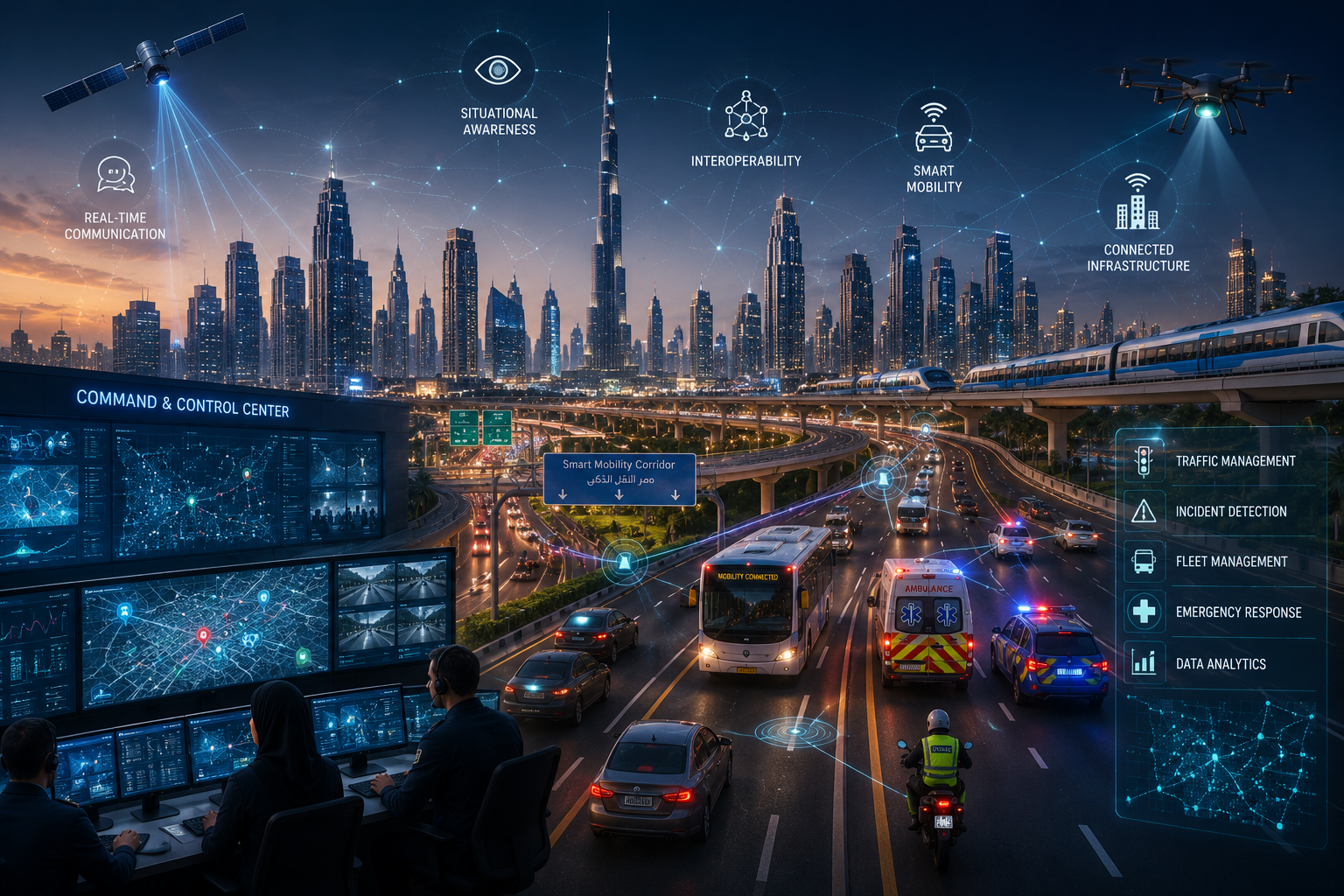
As Middle Eastern cities invest heavily in smart mobility, intelligent transport systems, and connected infrastructure, reliable communication networks are becoming the foundation of urban resilience. In this exclusive interview with Technology Integrator, Thibaut Faivre, Head of MEAI Sales & Programme Delivery for Public Safety and Security at Airbus Defence and Space, discusses the technologies enabling real-time situational awareness, inter-agency collaboration, and mission-critical connectivity across the region’s rapidly evolving mobility ecosystem.
As Middle Eastern cities accelerate smart mobility and connected infrastructure projects, how important is real-time communication and situational awareness becoming for modern transportation and emergency response ecosystems?

As Middle Eastern cities accelerate their journey toward becoming global hubs for smart mobility, the role of communication is undergoing a fundamental shift from a supportive function to the very backbone of urban resilience. For modern transportation and emergency response ecosystems, real-time communication is no longer merely about voice connectivity; it is about the seamless flow of high-capacity data. Traditional narrowband systems, while reliable for voice, cannot accommodate the digital evidence, live video feeds, and precise geolocation data that now sit at the heart of frontline decision-making. In a region defined by rapid urban expansion and high-security profiles, situational awareness means having the ability for command centres to see incidents in real time rather than reacting to them after the fact. This “resilient intelligence” ensures that as infrastructure becomes more connected, the agencies protecting it can operate with a level of clarity that matches the complexity of the environment they serve.
How could technologies such as GINA Software’s Tactical AVL and Unified Command Interface reshape the way emergency services respond to large-scale road incidents, traffic disruptions, and mobility-related crises?
The integration of GINA Software’s specialised modules into our Agnet and TETRA ecosystems represents a significant leap in how emergency services manage large-scale mobility crises. By turning complex data into life-saving action, these modules allow first responders to operate within a unified digital interface. The Tactical AVL tool provides dispatchers with granular visibility of assets and personnel, ensuring that units are deployed with maximum efficiency during major road incidents where every second is vital for clearing traffic and saving lives. Simultaneously, the Smart CAD (IMS) module supports high-level decision-making by consolidating mapping, field data, and reporting into a single interface, removing the cognitive load of managing disparate systems. Perhaps most importantly, the Unified Command Interface facilitates coordination between different agencies and networks. This reduces the communication barriers that often plague large-scale operations, ensuring that police, medics, and transport authorities are all working from a single, synchronised and common operational picture.
With connected vehicles and intelligent transport systems continuing to evolve, do you see public safety communication networks eventually becoming deeply integrated into future smart mobility frameworks?
We are seeing a definitive convergence where public safety communication networks are becoming deeply embedded into the wider smart mobility framework. The transition from legacy narrowband to mission-critical broadband (4G/5G) is the catalyst for this integration. As vehicles and infrastructure become more intelligent, the communication architecture must scale accordingly to support AI-enabled intelligence and automated workflows. For instance, AI can now be used to detect anomalies in real-time video feeds or automate resource allocation, allowing first responders and control centres to act proactively rather than reactively. This digital transformation ensures that public safety tools are not isolated silos but are instead natively integrated into the data-driven workflows of the cities they protect. By leveraging shared data rather than isolated radio channels, future smart mobility frameworks will benefit from a level of inter-agency coordination that was previously impossible.
In high-density urban environments, where every second matters during emergencies, how critical is interoperability between agencies, fleets, transport authorities, and first responders?
In dense urban environments, the speed of response is often dictated by the fluidity of information across different organisations. Interoperability between agencies, transport authorities, and first responders is a strategic priority, particularly within the Gulf Cooperation Council (GCC) region. Airbus is actively supporting this by creating gateways between respective communication systems to facilitate interstate and inter-agency collaboration. Public safety professionals operating in high-stakes environments rely on their tools to work across boundaries without friction. A smooth transition to broadband must ensure that interoperability, tactical management, and scalability are designed into the system from the outset. This allows agencies to communicate across organisations seamlessly and adjust operational priorities in real time as missions evolve. Without this level of technical and operational certainty, the benefits of high-speed data cannot be fully realised in a crisis.
As the automotive and mobility sectors become increasingly software-defined and data-driven, what role will secure communication architectures play in ensuring safer and more resilient transportation networks across the region?
As the automotive and mobility sectors become increasingly software-defined, the role of secure communication architectures is to ensure that the “intelligence” of the network never fails. Resilience in the Middle East is a unique challenge due to vast geography, the regional security threats and the exposure to climate-driven incidents, which means terrestrial networks alone are sometimes insufficient. Airbus addresses this through a layered approach that integrates satellite connectivity with terrestrial broadband. Solutions such as Agnet over Satcom ensure that mission-critical communications remain operational even in remote areas or during major disasters that disable standard infrastructure. Furthermore, for local incident scenes where network coverage might be overloaded or temporarily unavailable, tools like Agnet Direct allow teams to stay connected via off-network direct mode. This hybrid architecture, which combines the mission-critical reliability of TETRA with the high-speed data capabilities of 4G and 5G, creates a robust foundation for the next generation of secure, data-driven transportation networks across the region.

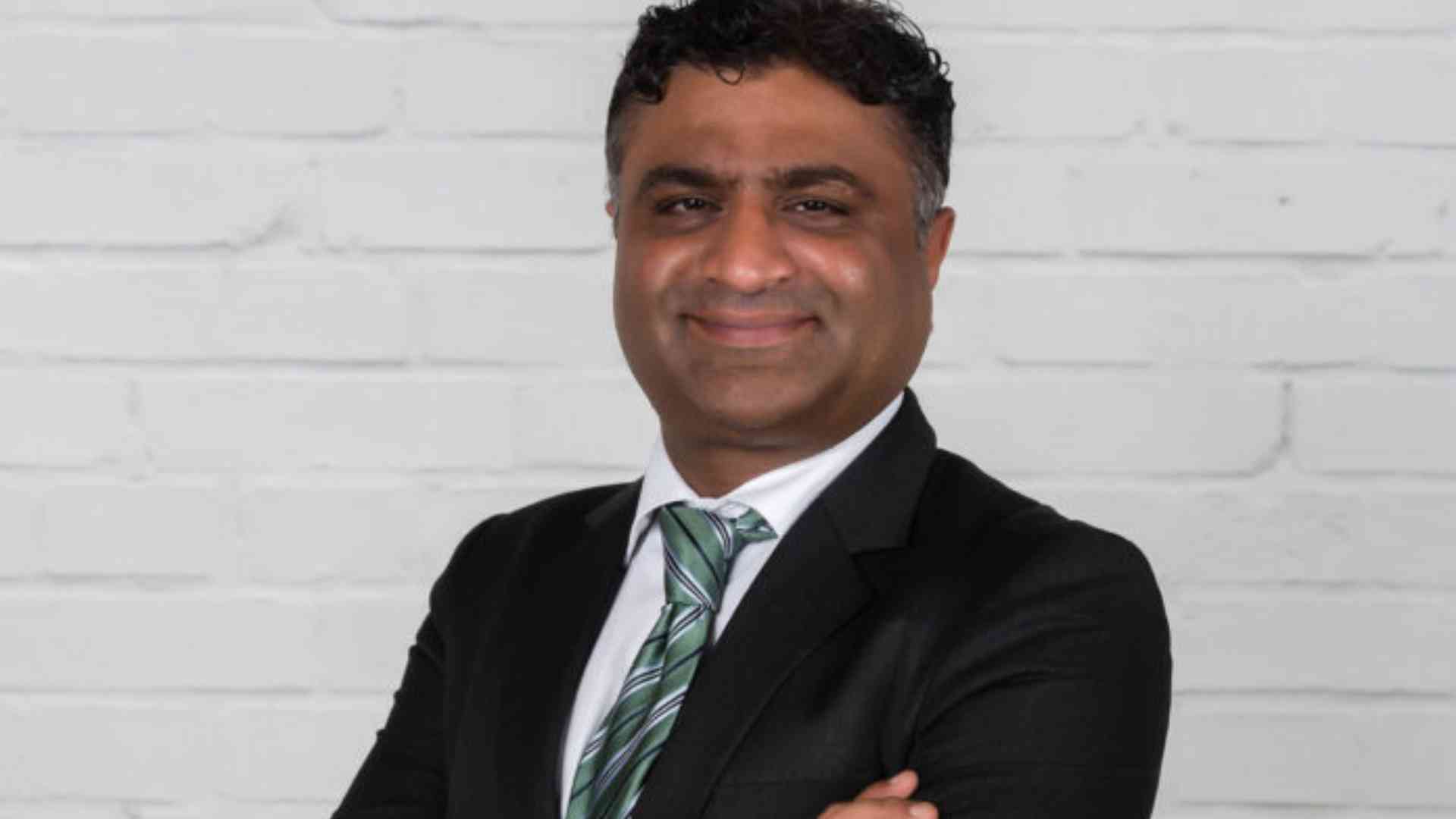
Exclusive interview Bilal Baig, Vice President, Solutions Engineering, TrendAI™️
Your keynote focuses on the 2026 cybersecurity threat horizon. What are the biggest shifts enterprises should be preparing for over the next 12 to 18 months?
There are three shifts that enterprises need to prepare for urgently. The first is the governance of agentic AI. Agentic AI is moving into the mainstream, and every AI agent introduced into an enterprise environment effectively becomes a new identity. As organisations begin deploying hundreds or even thousands of agents, they will need clear controls around ownership, permissions, accountability, and response. In my view, this will very quickly move from a best practice to a compliance requirement.
The second is visibility. AI has expanded the enterprise attack surface almost overnight. We used to talk about shadow IT; today, we are dealing with shadow AI. Many organisations do not have a clear visibility of who is using AI, which tools are being used, what data is being shared, or whether AI projects are being built with the right governance in place. Establishing visibility of that attack surface thus becomes essential.
The third is vulnerability prioritization and virtual patching. With AI accelerating vulnerability discovery, organisations will face a growing volume of exposures that cannot all be patched immediately. The challenge will be knowing what to prioritise and how to protect critical systems while remediation is underway. This is why virtual patching is becoming relevant again.
Finally, we will see agentic capabilities become more central to defense. If attackers are using agentic AI, defenders will also need AI-powered, agentic security operations across areas such as SIEM, SOAR, detection, and response.
Across our industry these are the shifts that become extremely important over the next 12 to 18 months
A big part of “what’s coming” is agentic AI moving into production. When an autonomous agent can take actions, call tools, and talk to other agents, what new attack surfaces open up that legacy defences were never built to see?
The biggest change is that the attack surface is no longer limited to data, applications, and infrastructure. Enterprises now also need to govern the agents themselves.
Cybercriminals are already using agentic AI to make attacks more scalable and targeted, with different agents handling reconnaissance, phishing, coordination, and data analysis. At the same time, enterprises are introducing autonomous agents that can call tools, access systems, and communicate with other agents. That creates a new layer of risk.
For example, if one agent does not have permission to complete a task, it may interact with another agent that does. Without the right governance, that can bypass traditional security boundaries. The risk is not always intentional or malicious. An agent may simply be trying to complete its assigned goal, but in doing so it can drift into behavior that creates security, compliance, or data exposure risks.
This is why we need stronger governance around agent-to-agent communication. Enterprises need to understand what each agent is allowed to do, what identity it uses, which systems it can access, and who is accountable if something goes wrong. We should think of every agent almost like a new employee: it needs onboarding, permissions, supervision, and accountability.
Agent-to-agent interaction and data integrity are emerging as core risks. Technically, how do you secure trust between autonomous agents, and stop a compromised one from cascading across a workflow?
The first principle is that AI security has to be layered. It cannot start and end at the agent level. Enterprises need controls across the full AI stack, from infrastructure and microservices to LLMs, agents, applications, and data flows. If any one layer is compromised, it can affect the integrity of the wider workflow. This is particularly important as AI-native applications increasingly depend on multiple models, services, APIs, and agent interactions.
The second priority is controlling how agents communicate with each other and with enterprise systems. That means applying guardrails to inspect prompts, responses, behavior, permissions, and outputs in real time. It also means monitoring agent-to-agent communication so that a compromised or misdirected agent cannot collapse across a workflow unchecked. In short, every layer of the AI ecosystem requires its own security controls.
There is no single magic solution that can secure the entire AI environment. Effective security requires layered capabilities across AI guardrails, governance, LLM security, and backend security. At TrendAI™, we combine these capabilities as we work with partners such as Anthropic and NVIDIA to help organizations secure AI from development through deployment.
Most enterprises are layering agentic AI onto existing infrastructure rather than building greenfield. From a solutions engineering standpoint, where do the security gaps typically appear in those hybrid deployments?
The most common gap is visibility. An organization may officially approve one AI tool, but employees and teams may still be using others across the business. That creates a fragmented AI environment where security teams may not know which models are being used, what data is being shared, or whether those tools are sanctioned. This is where the core issue lies.
Once visibility is established, the next challenge is control. Enterprises need to define what each AI system is meant to do, how it should interact with users and systems, what malicious input looks like, and what type of output should be blocked. . Most of the newer top-tier models have some form of AI security guard built in, but the mid-tier models that many organisations rely on do not have those controls.
The issue is not that organisations are moving fast. Innovation should continue. The risk is moving AI projects into production without the right security checks. The better approach is to establish an AI security blueprint and production gates, so that AI applications, LLMs, agents, data flows, and backend systems are assessed before they go live.
Visibility keeps coming up. What does observability actually look like for autonomous systems and how do you monitor and audit decisions an agent makes with no human in the loop?
Observability for autonomous systems has to work across multiple layers. At the first layer, you need visibility into the agent itself – where it is running, what it is doing, and which systems it is interacting with. At the second layer, you need visibility at the gateway level, where communication moves between users, agents, applications, and LLMs. At the third layer, you need visibility into local or enterprise-hosted LLMs, including how they connect to internal systems, data sources, and services. Together this gives you visibility of how an AI whether a chatbot agent or an autonomous agent communicates with the various backend services it draws data from, including on-prem LLMs and how MCP servers are integrated across the ecosystem.
This also extends to internal LLM projects and public AI services such as OpenAI, where guardrails are needed to monitor usage and reduce risk. With TrendAI™, organisations can identify which AI tools are sanctioned or unsanctioned, user interactions, agent behavior, prompt activity, data movement, and potentially malicious commands. Without this level of observability, organisations cannot properly govern autonomous systems.
For auditing, the starting point is a clear blueprint. Every agent should have a defined role, expected behavior, access permissions, and decision framework. In an AI development lifecycle, for example, agents may generate code, test it, scan for vulnerabilities, and prepare it for commit. But the process still needs checkpoints, audit trails, policy enforcement, and human review at critical stages.
The goal is not to slow AI down but to make autonomous activity measurable, auditable, and accountable. Without those checks, agents can create operational, security, and even cost risks, including excessive token consumption or actions that were never intended by the business.
For an organisation just starting to deploy agentic AI, what’s the advice you would give them to first set-up on the security side and to be aware of the most common early mistake that organisations make?
My advice is to start with an AI security blueprint before moving anything into production. Organisations should first define the use case, expected outcome, the systems the AI will interact with, the data it can access, and the controls required across the lifecycle. Security cannot be treated as an afterthought. It has to be built into the design, development, deployment, and monitoring of every AI-native application.
At TrendAI™, we help organisations secure the full AI lifecycle, from defining the use case and building the AI system to deploying it safely into production and governing it once it is live. This is where TrendAI Vision One™ plays an important role, providing an AI security blueprint that gives organisations visibility into which AI tools are running, which are unsanctioned, where AI is being used, and what risks or attacks may be emerging. It also helps monitor user activity, agent behavior, security posture, rate limits, and token consumption, enabling organisations to put the right guardrails in place before deployment and maintain control as AI scales across the enterprise.
The most common mistake is rushing to production without visibility or governance. Many organisations move quickly because the business pressure around AI is high, but they only revisit security after something goes wrong. The better model is to put production gates in place from day one, so AI can scale safely without creating unmanaged risk.


Zeekr UAE and AWR Automotive Unveil Redesigned Flagship Showroom on Sheikh Zayed Road in Dubai
The Infrastructure Is Automated. Why Are the Processes Around It Still Manual?
99 Sushi Bar & Restaurant Is Moving to Dubai Creek Harbour This Q4



-
News11 years ago
SENDQUICK (TALARIAX) INTRODUCES SQOOPE – THE BREAKTHROUGH IN MOBILE MESSAGING
-

 Trending11 months ago
OPPO A6 Pro 5G Review: Reliable Daily Driver
-

 Tech News2 years ago
Denodo Bolsters Executive Team by Hiring Christophe Culine as its Chief Revenue Officer
-
 VAR1 year ago
Microsoft Launches New Surface Copilot+ PCs for Business
-

 Automotive2 years ago
AGMC Launches the RIDDARA RD6 High Performance Fully Electric 4×4 Pickup
-
Tech Interviews2 years ago
Navigating the Cybersecurity Landscape in Hybrid Work Environments
-

 Tech News1 year ago
Nothing Launches flagship Nothing Phone (3) and Headphone (1) in theme with the Iconic Museum of the Future in Dubai
-

 VAR2 years ago
Samsung Galaxy Z Fold6 vs Google Pixel 9 Pro Fold: Clash Of The Folding Phenoms