
 Have a question? +971 56 404 0503




Hospitality
HOW SUN SIYAM VILU REEF KEEPS MALDIVIAN ROOTS ALIVE THROUGH RICH TRADITIONS

How Sun Siyam Vilu Reef Is Keeping Maldivian Culture Alive: The smell reaches you before anything else: warm coconut oil, faintly sweet, drifting from a low-roofed beach house. Inside, a woman works patiently with her hands, pressing, turning and drawing the oil slowly from the flesh, just as it has been done for generations on these islands. Standing on a tiny coral island in the South Nilandhe Atoll, time seems to lose its importance.
This is Athireege, the cultural heart of Sun Siyam Vilu Reef, part of the Privé Collection within Sun Siyam. It is not a museum, nor a demonstration staged for the camera. It is a living sanctuary where the crafts, rituals and flavours of traditional Maldivian life are practised by hand, by voice and by fire. Here, an immersive cultural journey invites guests to discover the traditions, flavours and stories that continue to shape island life, offering a deeper connection to the Maldives beyond its postcard-perfect beaches.
Once a week, guests are invited to experience Maldivian Roots Day, a journey that reveals the customs, skills and traditions that have shaped island life for generations. Visitors leave with more than memories of turquoise waters they leave with a deeper understanding of the place they have called home, even if only for a few days.
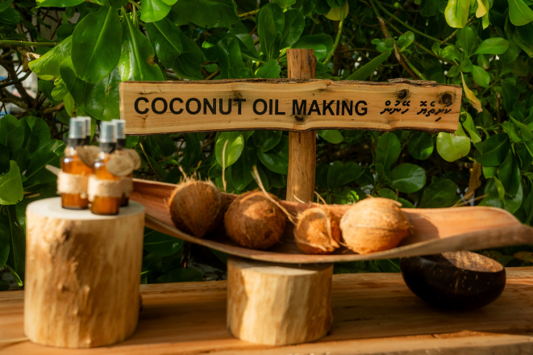
The experience begins with a hands-on coconut oil making class, uncovering traditional crafting techniques first-hand at Athireege. Authenticity is the soul of this space, where traditional island living is brought to life using real, handcrafted tools. Guests can run their fingers over the very techniques that Maldivians have used to sustain island life for centuries whether witnessing the intricate art of palm weaving known as Fangi Vinun, trying their hand at coir rope making, known in Dhivehi as Roanu Veshun or playing traditional mancala style games like Ohvalhu Gondi Kulhun.
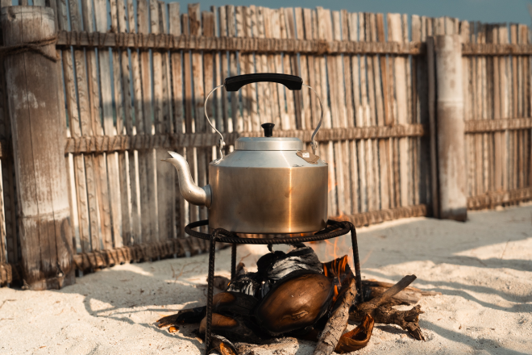
As the afternoon softens into evening, pandan-infused tea is served alongside sweet and savoury local delicacies. As daylight fades, stories take their place. History of Maldives, real experiences with island tales and memories of life before tourism are shared aloud, reviving a tradition that once passed history from one generation to the next.
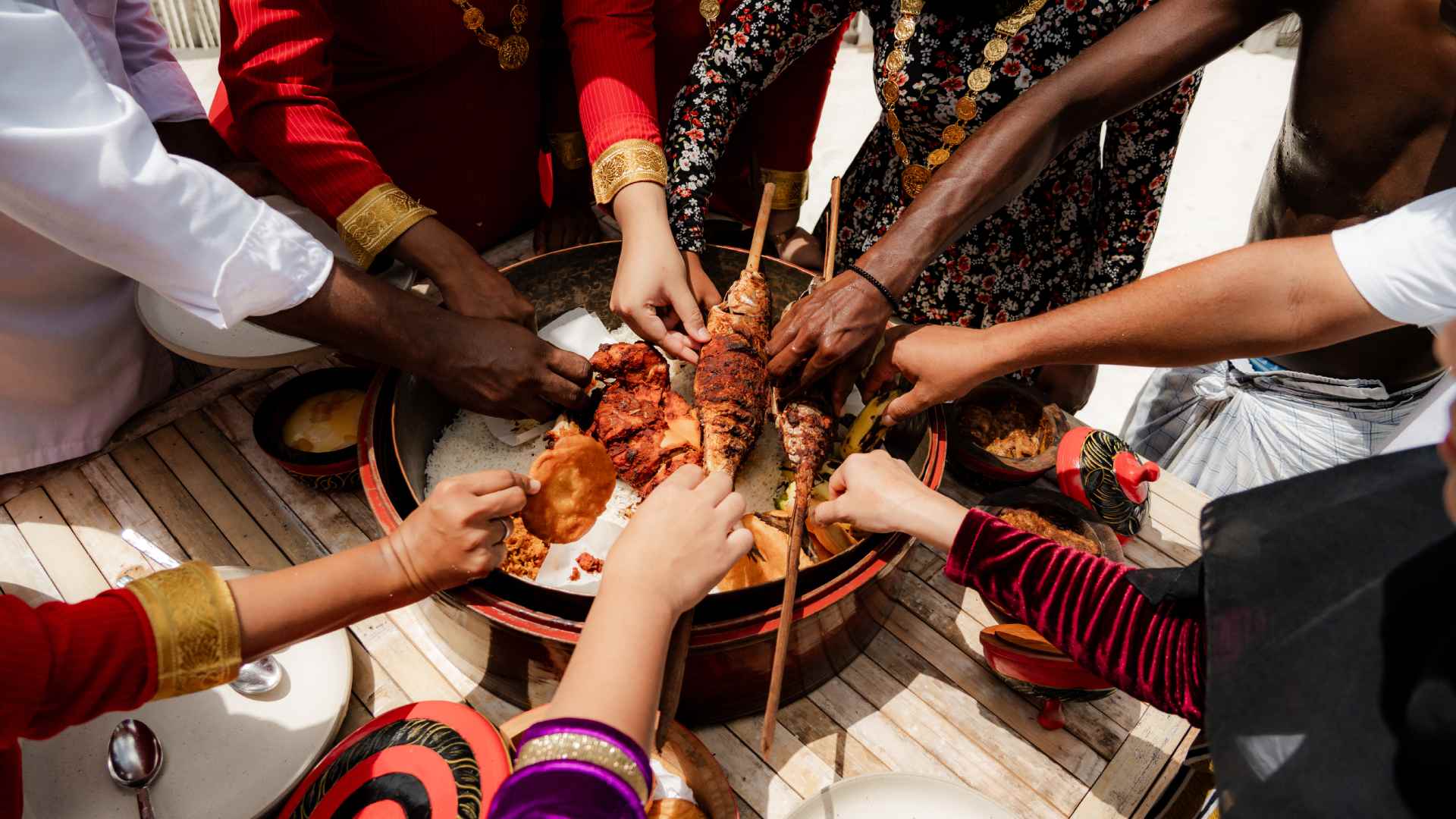
The centre of this cultural journey is the Malaafaih, a magnificent, traditional Maldivian banquet. Translating roughly to “abundance,” the Malaafaih was historically prepared for grand celebrations, weddings, and community gatherings. This carefully curated feast invites guests to gather, share, and experience authentic local flavours in a deeply communal setting, honouring the true spirit of island hospitality.
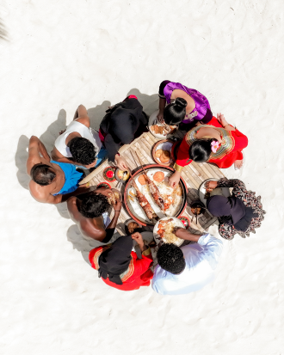
At Sun Siyam Vilu Reef, the Malaafaih is celebrated both at sunrise, as a traditional breakfast, and beneath the stars as an evening feast. The menu changes with the season and the day’s catch, but its spirit remains the same, dishes are shared, conversations unfold naturally, and strangers often leave the table feeling like friends. Whether beginning the day with a traditional breakfast or gathering beneath the stars for an evening feast, guests can completely immerse themselves in this rare culinary ritual, tailored exclusively to their stay.
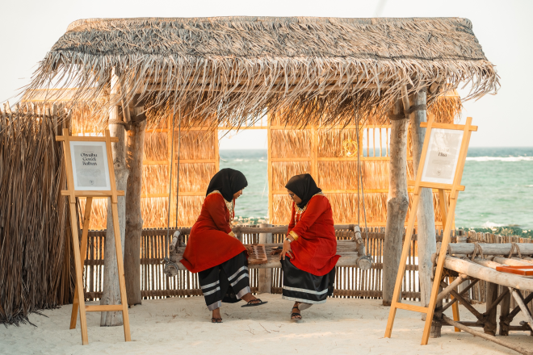
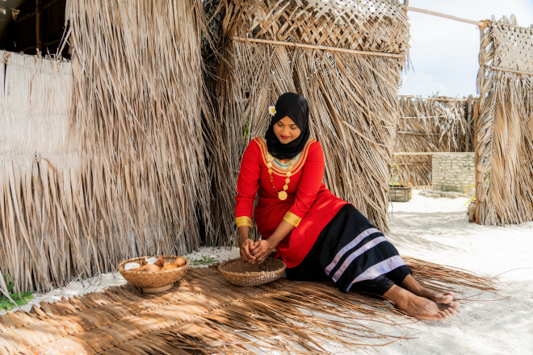
At a time when travellers increasingly seek meaningful connections with the places they visit, Athireege offers something becoming increasingly rare: traditions that are still lived rather than performed. Long after the final stories have been told and the feast has ended, it is often these moments not simply the beaches or the villas that guests remember most. At Sun Siyam Vilu Reef, space has always been made for the culture that made these islands worth travelling to in the first place.
Hospitality
Oman to deliver 700 new hotel rooms by year end with winter season expected to boost tourism recovery – Cavendish Maxwell
The Sultanate of Oman is set to deliver 700 new hotel rooms between now and the end of 2026, taking total inventory to 40,800 keys, according to leading real estate advisory and hospitality property consultancy, Cavendish Maxwell.
Oman opened 400 new rooms in H1 2026 – all in Q1 – amid reduced hospitality sector activity as regional travel disruptions affected international connectivity and tourism trade.
The Khareef and winter travel seasons will be key drivers in the country’s H2 hospitality performance, the company said.
Oman welcomed 992,000 guests at 3-5 star hotels in H1, down 13% on the same period last year. Airport passenger traffic declined 9.3% to 6.3 million, according to Cavendish Maxwell’s latest research, released in the run up to the 2026 edition of Future Hospitality Summit World.
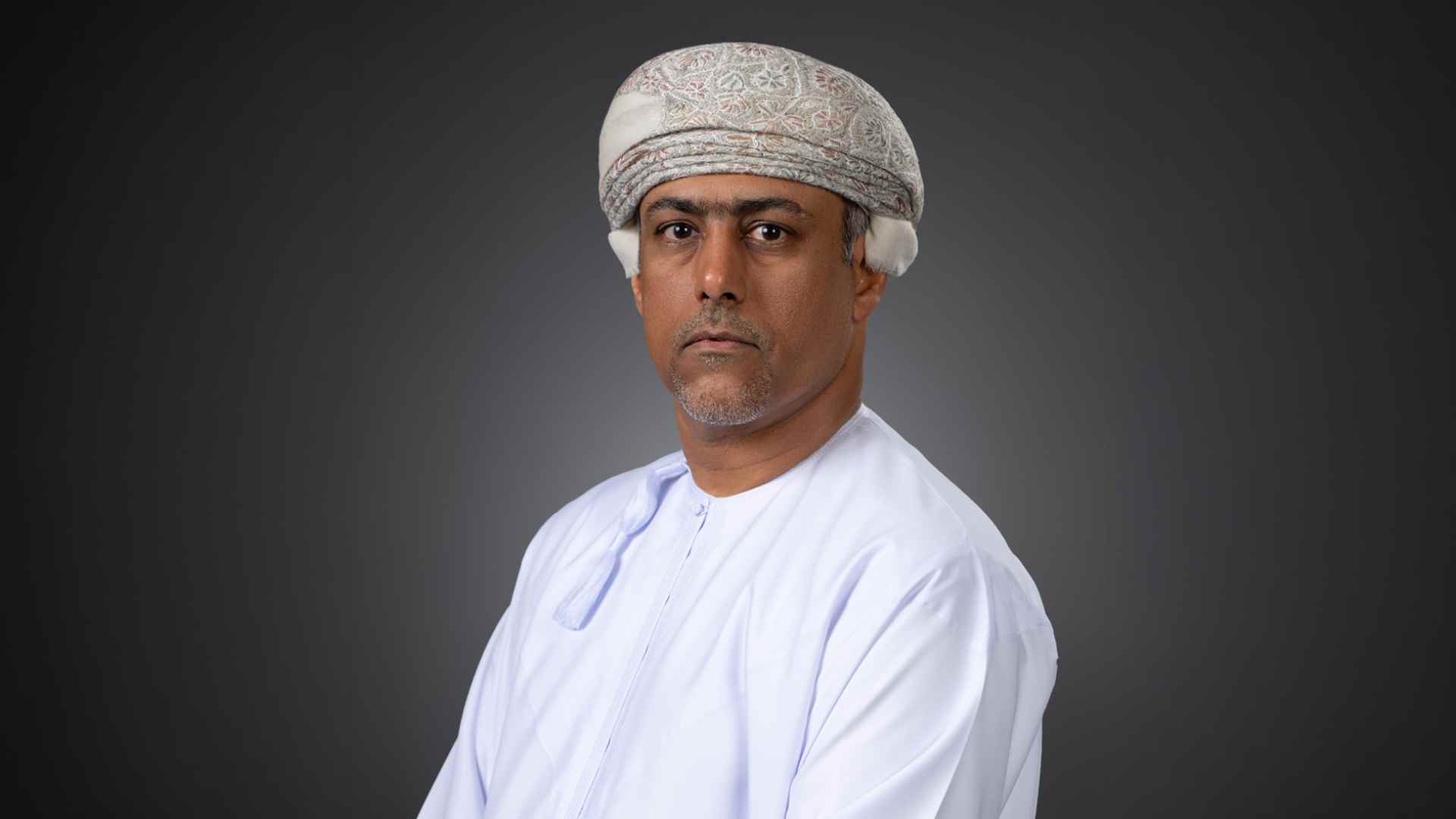
Khalil Al Zadjali, Head of Oman at Cavendish Maxwell, said: “Oman’s hospitality sector entered H2 in a challenging environment. While the outlook remains sensitive to prevailing travel conditions, the July to December period typically accounts for a significant share of tourism activity, contributing 52% in hotel revenue and guest volumes last year.
“The recent Khareef season – Salalah’s peak tourism period – coupled with the upcoming winter months will indicate how effectively seasonal demand supports the wider market following the H1 disruption, which was most pronounced in the second quarter. Government and tourism sector initiatives – such as international promotions and partnerships with airlines and travel trade partners – should also help strengthen demand.”
Revenues and room rates
Oman’s 3-5 star hotels generated OMR124.2 million (US$322.7 million) in total revenue in H1, down around 12% against H1 2025. Revenue growth was strong at the beginning of the year, increasing nearly 27% year-on-year in January and almost 9% in February, before declining from March. Following the sharpest contraction in April, when revenues fell 64.5% compared to the previous April, the pace of decline moderated in May and June, at around 28% and 15.5% respectively.
Room revenue was down 11% to OMR74 million (US$192 million), with other revenue declining by 13% to OMR50.2 million (US$130.4 million). The decline in ‘other’ revenue is partly because domestic and regional travellers typically spend less per stay than long-haul visitors, Cavendish Maxwell said.
Average room rates (ARR) followed a similar pattern, with a robust start to the year before weakening in Q2. ARR was up nearly 19% year-on-year in January at OMR58.3 (US$151.6), and more than 20% in February to almost OMR61 (US$158.4). March was on a par with March 2025.
The sharpest ARR decline (around 43%) came in April but, by May, it had partially recovered, increasing more than 8% year-on-year to OMR43.7 (US$113.6) as Eid Al Adha boosted travel demand.
Occupancy
Occupancy rates across Oman averaged 46.3% in H1, down more than half compared to the same period last year. Again, performance was impressive in January and February, with occupancy around 70%, before dropping from March. The decline was most acute in Q2 as regional tensions weighed in on international travel and, while domestic visitors provided some support, it was not enough to compensate for the overall decline in visitors.
Guest volumes and source markets
After a January year-on-year increase of 7.3% in guests, volumes declined monthly, reflecting air disruption across the Gulf. The steepest drop was in April (43%), but performance picked up again in May, when the decline narrowed to 2.6% as conditions normalised and Eid Al Adha supported travel demand.
Omani nationals represented the biggest source market in H1, with 396,000 guests accounting for almost 40% of all visitors – a rise of 3.1% on the same period last year. Europeans (247,000) took second place, at 25%, but their numbers were down 31% compared to last year. With 163,000 visitors, Asians made up 16%, with a marginal year-on-year increase of 0.6%.
Most other source markets saw lower year-on-year guest volumes, with the GCC down 17%, other Arab countries down 15%, the Americas down 22%, Africa 10% and Oceania 61%.
Employment
Hospitality sector employment among Omani citizens rose 3.4% in H1, while total employment in the industry declined 2.7% year-on-year. At the end of June, the sector had just under 10,500 employees.
New supply
After delivering 400 new rooms in H1 – all between January and March – Oman is set to bring another 700 to the market by December 2026. A further 1,500 are scheduled in 2027 and 1,600 in 2028, taking total Oman room inventory to 43,900 by end of 2028.
Khalil Al Zadjali added: “Total room supply will reach 40,800 by the end of 2026 – less than the 41,400 previously anticipated because some projects have been rescheduled to next year. The upcoming, phased pipeline should help manage near-term supply growth, but the pace of visitor recovery will be key to the absorption of new capacity. With a limited number of keys coming in the near future, supply growth is unlikely to be a major constraint in the short term. However, the larger pipeline from next year and into 2028 will be more dependent on the recovery in visitor demand.”
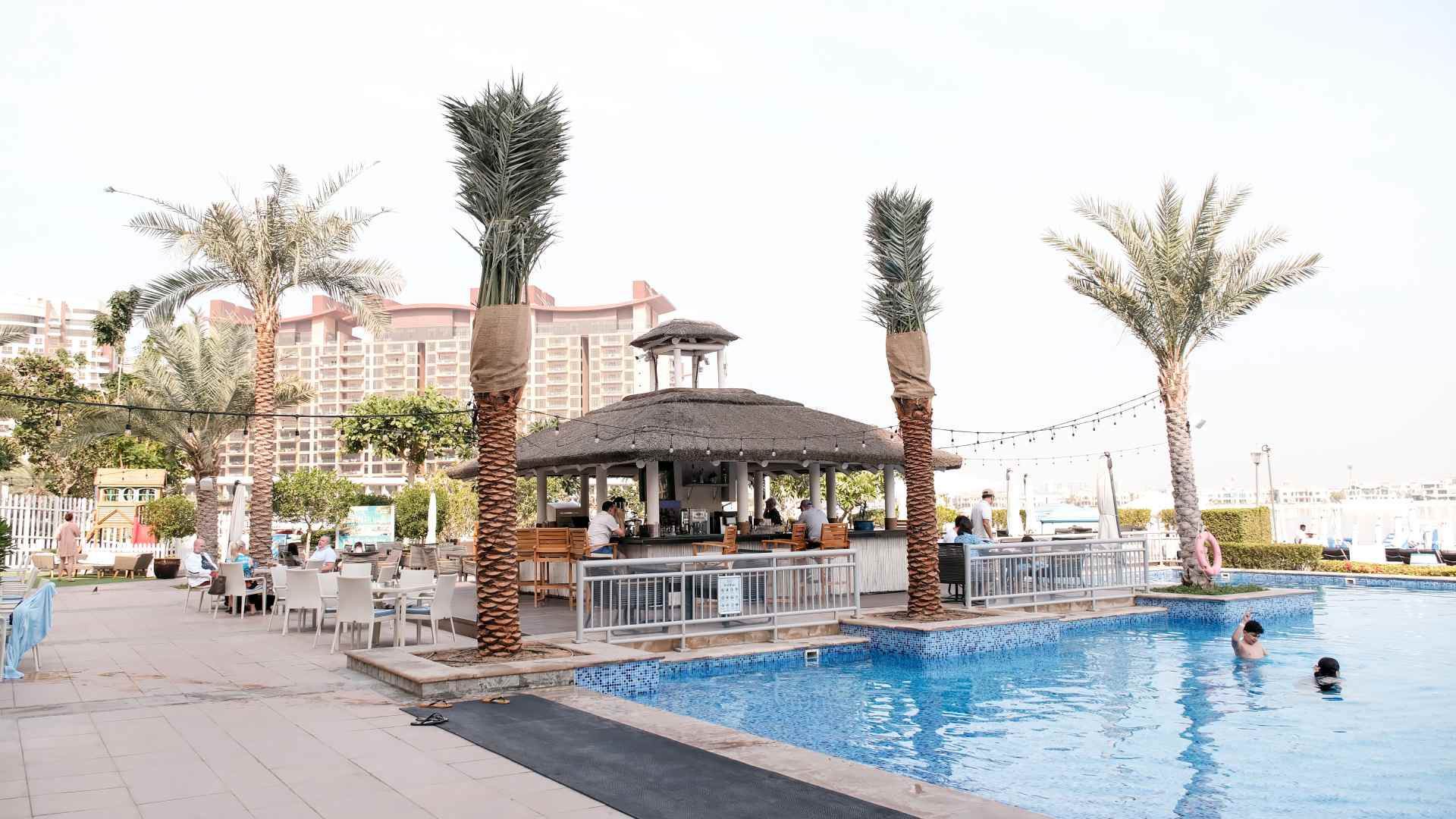
As the weather turns and Dubai settles into cooler days and fall evenings, Riva Beach Club is inviting guests to make the most of one of the most enjoyable stretches of the year by the water.
There is something special about this time of year at Riva. The air feels lighter, the evenings stretch out longer, and every part of the club, from the pool to the beach to the dining spaces, feels made for slowing down and staying a while.
The setting itself takes on a different character as the weather cools. Loungers stay comfortable well past midday, the pool becomes just as inviting in the late afternoon as it is in the morning, and the beach offers the kind of easy, unhurried backdrop that cooler weather is made for.
The season brings a refreshed line-up of offers to match. Weekday Vibes (Mon–Thu) offers adult entry at AED 99 (AED 89 F&B credit) with Happy Hour from 3pm to 9pm, while weekends bring the Weekend Treat at AED 175 (AED 150 F&B credit) and Sip & Splash’s unlimited house beverages on Fridays and Saturdays. The week also features Steak & Wine on Mondays, Ladies’ Day on Wednesdays, unlimited mimosas at The Sunday Social, and Friday Tacos from AED 49, with 40 percent off food through The Weekend Warm-Up.
Evenings, in particular, become the highlight of a visit during this part of the year. With After Dark by the Pool, guests can carry the day straight into night, settling into loungers with fresh towels and a beverage package as the temperature drops and the pool takes on a different mood after sunset. As temperatures ease after dark, the club’s outdoor spaces come into their own, offering a setting that feels just as good for a quiet evening as it does for a laid-back night with friends.
The dining experience takes on its own rhythm as the weather cools too. Meals feel more social, drinks are best enjoyed slowly, whether that’s a shared plate as the sun sets or a proper dinner once the evening settles in. Riva’s food and beverage offering is designed to match the mood of the season, easy, and best enjoyed at whatever pace suits the moment.
As the city’s outdoor social scene picks up with the cooler weather, Riva Beach Club is looking forward to welcoming guests back for exactly that, sunset swims, long dinners, and evenings spent exactly where they belong, by the water.
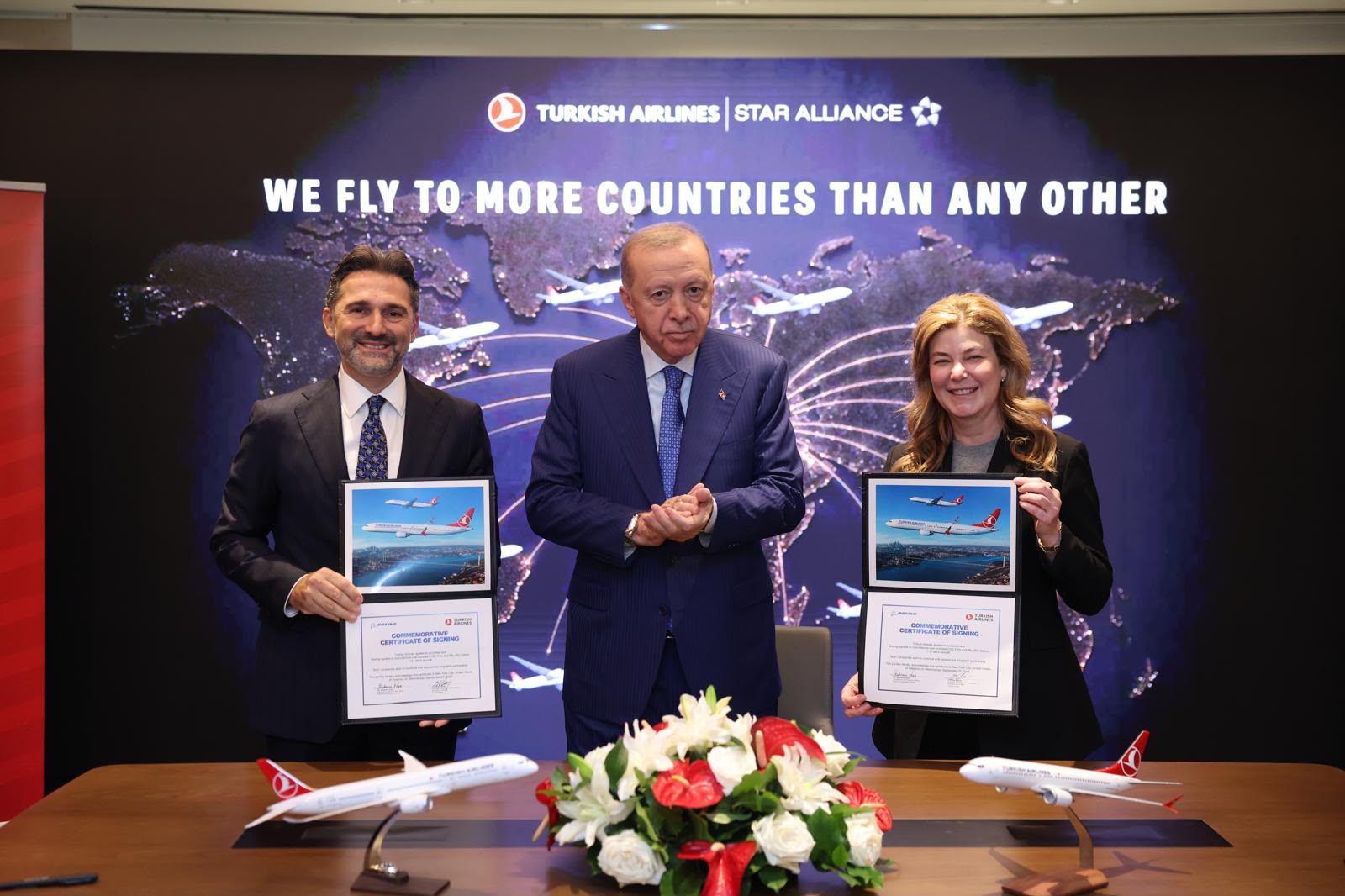
Turkish Airlines has finalized an agreement with Boeing for up to 150 Boeing 737 MAX aircraft, marking another significant step in its long-term growth strategy. In the talks since 2025, the agreement will be flag carrier’s largest ever Boeing single-aisle aircraft order and will support its fleet expansion strategy while strengthening its short- and medium-haul network.
The agreement for the 737 MAX order was finalized in the presence of His Excellency Recep Tayyip Erdoğan, President of the Republic of Türkiye.
The order comprises 100 firm Boeing 737-8 aircraft and options for an additional 50 Boeing 737 MAX aircraft. The agreement also includes substitution rights for the Boeing 737-10, the largest member of the 737 MAX family, providing Turkish Airlines with greater flexibility to align capacity with growing passenger demand across its network.
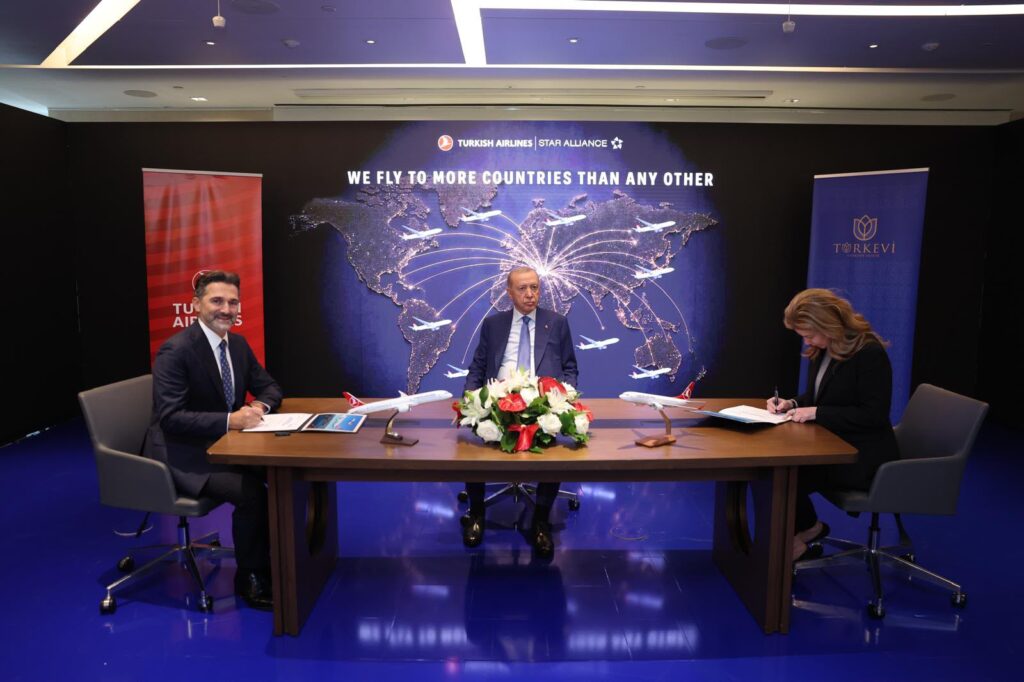
Commenting on the agreement, Turkish Airlines Chairman of the Board and the Executive Committee Prof Murat Şeker stated: “This agreement marks another significant step in the continued expansion of our fleet. The new Boeing 737 MAX aircraft will bring greater efficiency and flexibility to our operations, supporting the extensive network we serve from our hub in Istanbul. We are pleased to build on our longstanding cooperation with Boeing through an agreement that also supports Türkiye’s aviation ecosystem.”
President and CEO of Boeing Commercial Airplanes Stephanie Pope stated: “This order reflects the trust and shared vision that have defined our long-standing partnership with Turkish Airlines. We’re proud to continue our support of Türkiye’s aviation ecosystem and Turkish Airlines as it grows its Istanbul-based network, connecting more people and destinations worldwide.”
The new aircraft will strengthen the flag carrier’s short- and medium-haul operations, particularly on high-demand domestic and international routes. The Boeing 737-8’s range, payload flexibility along with 20% reduced emissions and fuel consumption will support the flag carrier’s evolving operational requirements as it continues to expand its fleet and network.
Turkish Airlines (including AJet) currently operates more than 200 Boeing aircraft, consisting of the 737 MAX, 737 Next-Generation, 787 Dreamliner, 777 and 777 Freighter. The latest order further strengthens the longstanding cooperation between the flag carrier and Boeing, building on the 75 787 Dreamliner order from 2025.
In addition to this milestone agreement, this year Turkish Airlines and Boeing also signed a strategic Memorandum of Understanding (MoU) on Industrial Participation, establishing a framework for long term cooperation structured around three key pillars: Skill Development, Value Creation and Business Awards. Through these pillars, the framework aims to support capability development, technology and know-how transfer, human skill development, enhance sustainability journey and generate new business and industrial cooperation opportunities. Together with the industrial participation framework, the agreement reflects Boeing’s long-term commitment to supporting Türkiye’s aviation ecosystem, broadening the scope of the partnership beyond fleet expansion


Oman to deliver 700 new hotel rooms by year end with winter season expected to boost tourism recovery – Cavendish Maxwell

Riva Beach Club Welcomes Cooler Evenings and a New Season by the Beach

Datadobi Adds Data Access Governance to StorageMAP, Enabling Enterprises to Answer the Critical Question: “Who Has Access to What?”



-
News11 years ago
SENDQUICK (TALARIAX) INTRODUCES SQOOPE – THE BREAKTHROUGH IN MOBILE MESSAGING
-

 Trending11 months ago
OPPO A6 Pro 5G Review: Reliable Daily Driver
-

 Tech News2 years ago
Denodo Bolsters Executive Team by Hiring Christophe Culine as its Chief Revenue Officer
-
 VAR1 year ago
Microsoft Launches New Surface Copilot+ PCs for Business
-

 Automotive2 years ago
AGMC Launches the RIDDARA RD6 High Performance Fully Electric 4×4 Pickup
-
Tech Interviews3 years ago
Navigating the Cybersecurity Landscape in Hybrid Work Environments
-
 Tech News2 years ago
Toshiba Announces MG10-D Series of Enterprise HDDs with Capacities up to 10TB
-

 Tech News1 year ago
Nothing Launches flagship Nothing Phone (3) and Headphone (1) in theme with the Iconic Museum of the Future in Dubai