
 Have a question? +971 56 404 0503




Home Integrator
RAW Coffee Company Launches PROOF Bakery, Bringing Fresh Baking to Its Specialty Coffee Experience

RAW Coffee Company has launched PROOF Bakery, a new bakery concept that expands the company’s specialty coffee and café offering. Located within RAW Café, PROOF will offer guests a selection of breads, pastries and baked goods, available to enjoy in the café or take away.
Launched this September, PROOF has been developed by RAW’s in-house F&B team, leveraging the company’s existing expertise across hospitality and food and beverage operations. The bakery strengthens the connection between RAW’s coffee and food offering, while giving the business greater control over product quality, consistency and development. Everything is made from scratch in-house, with the bakery designed to give guests a closer view of the baking process through open windows overlooking the café.
The initial range includes sourdough and white loaves, brioche buns, plain and olive ciabatta, simit, baguettes, butter, almond and chocolate croissants, cinnamon buns and a selection of danishes. PROOF will also introduce a series of regionally inspired products as the range develops, with the offering evolving alongside customer preferences.
“The launch of PROOF marks an important step in RAW’s evolution as a business. While specialty coffee remains at the heart of what we do, we are increasingly looking at opportunities to expand into complementary verticals that build on our expertise and respond to evolving customer needs,” said Matt Toogood, CEO of RAW Coffee Company. “PROOF allows us to build on the capabilities we already have within the business while creating a new avenue for growth. We see the potential for it to develop beyond our own cafés and serve a wider B2B market over time.”
Alongside the launch of PROOF, RAW has also revamped the mezzanine at RAW Café, creating a more work-friendly space for guests. The refreshed area is designed to provide a comfortable environment for those looking to work, meet or spend more time at the café, further enhancing the overall RAW Café experience.
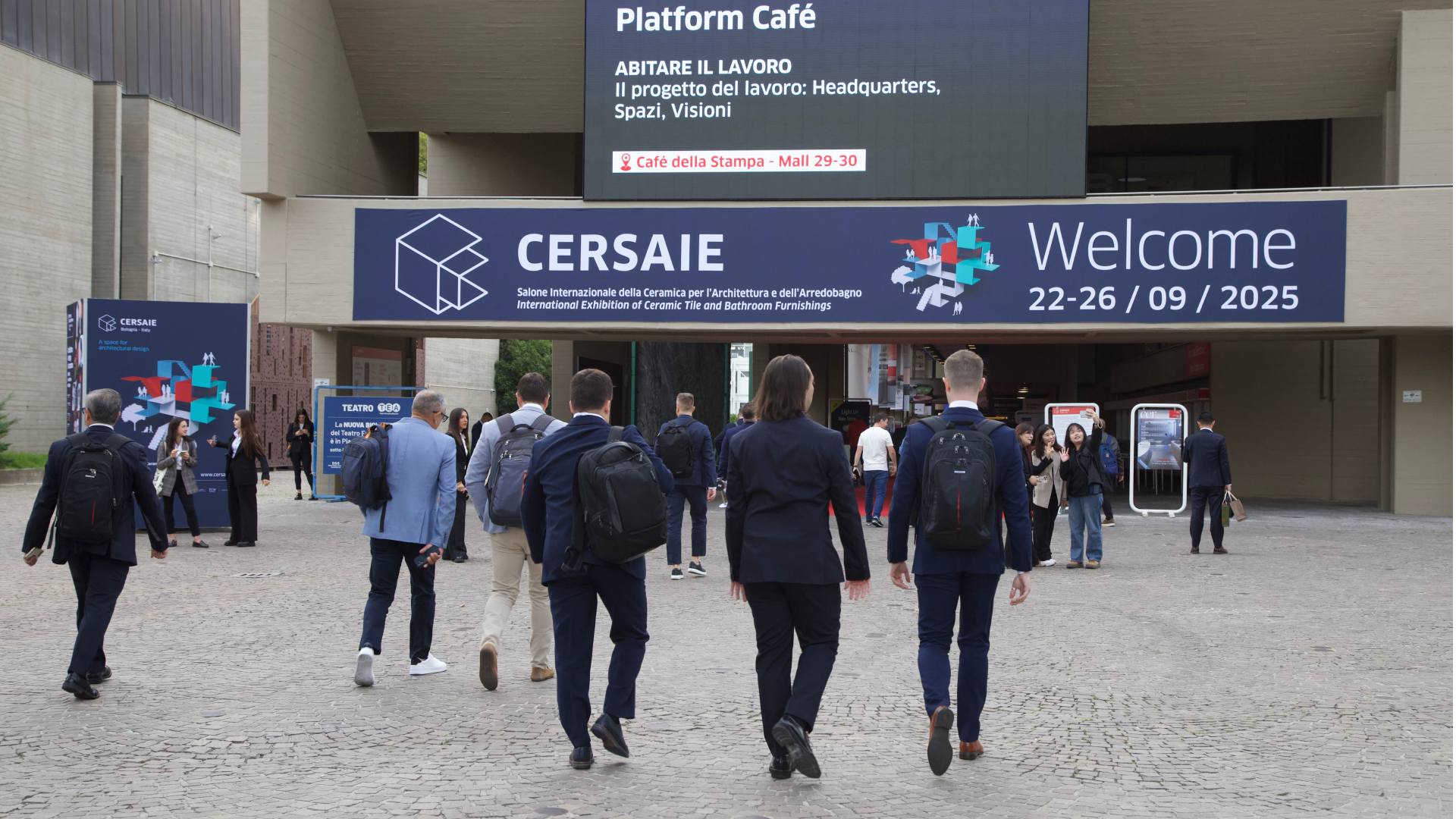
Spanish ceramic tiles will once again have a strong presence at the 43rd edition of CERSAIE, taking place from 21 to 25 September at BolognaFiere in Bologna, Italy. A total of 72 ASCER member companies manufacturing and distributing ceramic wall and floor tiles will participate, alongside two associate members. Regarded as the leading international trade fair for the ceramic tile and bathroom furnishings industry, last year’s edition welcomed nearly 95,000 visitors from 158 countries and more than 600 exhibitors.
Tile of Spain companies will be present across all nine halls dedicated to ceramic wall and floor tiles (14, 16, 25, 26, 29, 30, 32, 36 and 37). Spain will have the second-largest contingent at the event, behind only the host country, Italy, underlining the strength and international reach of the Spanish ceramic tile industry.
Supported by ICEX, ASCER offers a digital catalogue to help visitors locate and contact the Tile of Spain companies exhibiting at CERSAIE. Accessible from any mobile device, the tool enables users to search for exhibitors by hall or alphabetically, browse images and explore the latest products they will be presenting at the trade fair.
Tile of Spain’s participation at CERSAIE will also be widely promoted through the official Instagram account @tileofspain and the hashtags #DiscoverTileofSpainatCersaie and #TileofSpainatCersaie, with content shared before, during and after the event.
CERSAIE will also serve as a showcase for Time of Spain 2027, Tile of Spain’s industry-wide initiative, which will bring together international professionals and specifiers during the first two weeks of February and offer them first-hand insight into the innovation, design and manufacturing capabilities of Spain’s ceramic tile industry.
Home Feature
Cities are learning to predict problems. The harder question is whether they can act on them.

By Eddie Cheng, Co-Founder and Chief Technology Officer of Origen
Ask whether a city can predict a problem before its residents feel it, and the honest answer in 2026 is yes. Weather models, satellite imagery and dense sensor networks can now tell a municipality which underpass will flood, which junction will lock up and which substation is running hot. Prediction is no longer the scarce capability. The real challenge is turning a prediction into a decision, and a decision into an action that physically changes what happens on the street. A forecast that cannot drive either is simply a more sophisticated way of watching things go wrong.
The pressure to close that gap is not abstract. The United Nations’ World Urbanization Prospects 2025 finds that cities are now home to 45 per cent of humanity, that nearly two-thirds of global population growth through 2050 will occur in urban areas, and that the number of megacities has quadrupled over the past five decades. At that scale, a management model that waits for a complaint before raising a work order is not merely slow; it is arithmetically outmatched. No control room will ever have enough people to respond to a city of ten million, one incident at a time.
Instrumented is not intelligent
Much of the past decade’s smart-city investments went into instrumentation: more sensors, cameras and dashboards. That work was necessary. But a sensor count is a procurement metric, not an intelligence metric. A city with 10,000 sensors and 40 dashboards is well instrumented, yet not intelligent. Intelligence begins when the data from those sensors can be reasoned over as a single picture and converted into an action that has physical impact.
Three transitions, and where most cities stall
In our work with municipalities, we describe the journey as three transitions. Most cities are still working on the first.
From invisible to visible. Most of what a city needs to know about itself already exists, but it is locked in silos: utilities in one system, construction permits in another, and resident records in PDFs and flat databases with no spatial depth. Each department monitors only its own part of the city, whether zoning, utilities or construction, while no one sees the whole picture. Bringing those records together in a single, spatially and temporally aligned three-dimensional model of the city is unglamorous work. It is also where much of the value is created, because a fact only becomes actionable once its location and timing are known.
From reactive to proactive. Once the whole scenario is understood, questions change. Rather than investigating after a storm why a district was underwater, a city can run a flood simulation on a proposed development before the first foundation is poured and change the design rather than the drainage budget.
From decision to action. This is the transition that matters most and is attempted the least. Consider utility corridors, for instance. A pipeline conflict discovered during excavation can delay a project by months. When the same conflict is detected in digital twins, stakeholders are alerted and the design change is pushed back into the engineering systems, it can be resolved before anyone lifts a shovel. The next generation of city command centres should not be judged by how many problems they surface, but by how many they close.
Two tests a beautiful rendering does not pass
This is why we build SpatialWare, our digital-twin operating system for cities, around two questions. First, is the twin computable? Many companies can produce a photorealistic three-dimensional city. The differentiating question is how much analysis can actually be performed using it, from flood hydraulics and infrastructure capacity to cross-domain impact and conflict detection. A twin you can only look at is a map with better lighting.
Second, is the twin alive? A model refreshed once a year is a monument to the city as it was. Keeping a twin current across thousands of square kilometres requires production pipelines that update only what has changed and automate tasks that were once done by hand, including scene reconstruction, segmentation, mesh simplification and texture recovery. Where industry practice has typically automated a fifth to a third of this work, we have pushed that figure beyond 90 per cent, not for elegance, but because a twin that cannot keep pace with the city cannot be trusted to predict it.
The obstacle is institutional before it is technical
Prediction requires cross-departmental data, and the barrier to sharing it is far more often organisational than it is technological. This is why architecture matters as much as algorithms. The AI-powered digital governance framework we are architecting is deliberately federated. It connects existing systems rather than replacing them, synchronises datasets that matter through an AI-enabled orchestration layer, and leaves each department in control of its own data. A city does not need to be rebuilt to become predictive. It needs to be connected in a way that its institutions can work with.
Built at home, because accuracy depends on it
It also needs to be built in the region. A living model of the way a society moves, consumes and behaves is among the most sensitive assets a government can hold. In the Gulf region, where the UAE and Saudi Arabia are investing at national scale in AI strategies and sovereign digital infrastructure, the case for domain-engineered intelligence that is built and governed locally is not protectionism. A generic model trained elsewhere has never seen what a sandstorm can do to a coastal highway or how a city’s evening traffic patterns shift during Ramadan. In this context, sovereignty is not just a matter of control, but a precondition for accuracy.
What will test the loop next
Two shifts will demonstrate whether the sense–understand–decide–act loop holds under pressure. The first is the low-altitude economy: thousands of drones making tens of thousands of trips a day above a city cannot be regulated using a two-dimensional map. A platform that already has a live, three-dimensional picture of the city is the natural place to manage that airspace. The second is agentic AI, which is quietly redefining what a dashboard can be. The next city operations centre will have fewer screens because a copilot that recommends an action and, with human approval, executes it will make most of today’s screens redundant.
The same principle governs the other end of our work. Domia, our AI-native home, learns a household’s rhythm, distinguishes family members by voice and senses presence, posture and even a fall without relying on a single indoor camera. Whether the environment is a villa or an entire emirate, the design goal is the same: a system that anticipates rather than records, and protects without watching.
A new benchmark for public service
For a century, cities have been judged by response time: how quickly a crew arrives or how fast a road reopens. The next benchmark is subtler and more demanding, measured by how many problems residents never experience because a system can see them coming and act before they reach the street. Cities can now predict. The ones that lead will be those that learn to close the full loop.
Home Integrator
HushDay Launches Its First-Ever HOME EDIT in Dubai with Up to 90% Off Premium Home & Lifestyle Brands

HushDay, the Middle East’s pioneering premium private sales platform, is expanding beyond fashion with the launch of HushDay HOME EDIT, its first-ever premium home and lifestyle private sale.
Taking place from 18–20 September 2026, from 9:00 AM to 8:00 PM at Area 57, Al Quoz, Dubai, the first edition will offer the HushDay community access to a curated selection of 23 premium brands, with exclusive discounts of up to 90% off across home décor, tableware, glassware, cookware, entertaining essentials, home fragrance and candles.
Built around the concept “An Invitation to the Table,” HushDay HOME EDIT celebrates the art of entertaining at home, bringing together pieces for cooking, hosting and creating considered living spaces, while introducing a new destination for those interested in premium home, lifestyle and design.
Standout names within the curated selection include Lalique, renowned for its French luxury crystal and decorative pieces; contemporary glassware and tableware brand LSA International; Italian home fragrance house Dr. Vranjes; French cookware specialist de Buyer; Peugeot, known for its iconic mills and kitchen accessories; and tableware and hospitality specialist LUSINI.
The wider selection includes Charingworth, Cole & Mason, Eternum, GEFU, Herbal, Kähler, Lehmann, Luzerne, Maison La Bougie, Mizensir, RIG-TIG, Rosendahl, Stelton, Stoelzle, Studio William, Stylepoint and ZiiPa, alongside a dedicated home fragrances and candles selection.
Available for three days only, the limited-time event is designed around the thrill of discovery, creating a treasure-hunt-style shopping experience where guests can uncover unexpected finds from premium international brands at exceptional prices. The launch also marks HushDay’s expansion into the home and lifestyle space, bringing its signature curated private-sale concept to a new category.
More than a private sale, HushDay HOME EDIT has been designed as a weekend experience for the whole family, with freshly prepared sweet and savoury crêpes by La Crêpe Française, drinks and plenty of surprises to discover throughout the event.
“September always feels like a fresh start in Dubai. Many of our members are moving homes, settling into new spaces or have only recently arrived in the city. We created HOME EDIT in response to what our community was asking for: one destination where they can discover everything they need for the home, all under one roof and at prices they will not find anywhere else, while enjoying the sense of excitement and discovery that defines every HushDay experience,” said Jennifer Cohen Solal, Co-Founder of HushDay.


Strong Tile of Spain presence at CERSAIE 2026
RAW Coffee Company Launches PROOF Bakery, Bringing Fresh Baking to Its Specialty Coffee Experience
Moonrise Takes Dubai Cuisine to Almaty with AUYL Collaboration



-
News11 years ago
SENDQUICK (TALARIAX) INTRODUCES SQOOPE – THE BREAKTHROUGH IN MOBILE MESSAGING
-

 Trending11 months ago
OPPO A6 Pro 5G Review: Reliable Daily Driver
-

 Tech News2 years ago
Denodo Bolsters Executive Team by Hiring Christophe Culine as its Chief Revenue Officer
-
 VAR1 year ago
Microsoft Launches New Surface Copilot+ PCs for Business
-

 Automotive2 years ago
AGMC Launches the RIDDARA RD6 High Performance Fully Electric 4×4 Pickup
-
Tech Interviews3 years ago
Navigating the Cybersecurity Landscape in Hybrid Work Environments
-

 Tech News1 year ago
Nothing Launches flagship Nothing Phone (3) and Headphone (1) in theme with the Iconic Museum of the Future in Dubai
-
 Tech News2 years ago
Toshiba Announces MG10-D Series of Enterprise HDDs with Capacities up to 10TB