
 Have a question? +971 56 404 0503




Home Integrator
WHAT’S IN YOUR GLOVE BOX? THE E.L.F.SSENTIALS THAT KEEP UP

The alarm moved earlier, the calendar filled back up, and the car became a second getting-ready room. Between the parking spot and wherever you’re headed, you’ve got about five minutes and one mirror that barely counts, which means whatever lives in the glove box has to earn its place.
This September, e.l.f. Cosmetics has the line up that does! We’re talking a primer to smooth the way, a base that goes on fast and stays put, a concealer for the early starts, and color for the cheeks and lips that needs no mirror at all.
e.l.f. Liquid Poreless Putty Primer – Universal Sheer
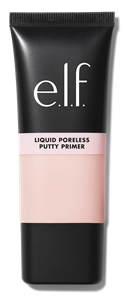
For the days when the glove box becomes the vanity, start with a smooth canvas. Your favourite Poreless Putty Primer, now in liquid form, has a silky lightweight formula that glides over skin, gripping makeup for long-lasting wear while minimising the appearance of pores for a smooth, poreless-looking finish.
Infused with squalane and formulated to minimise the appearance of pores, it sets in 30 seconds flat, which is roughly all the time a morning like this gives you. Apply before the rest of your makeup, or pair it with concealer and blush for a polished, skin-first look in under five minutes.
Available at Sephora Middle East
Price: AED 55
e.l.f. Soft Glam Satin Foundation


Meet the glove box hero. Soft Glam Foundation hits the dreamy sweet spot between full beat and barely there, delivering long-lasting, medium buildable coverage with a smooth satin finish. The breathable formula feels lightweight on the skin without looking or feeling cakey, making it an easy choice when getting ready needs to happen fast.
And with 36 shades designed to suit a wide range of skin tones, finding your match is easier than ever. Whether you’re after a barely there base or something you can build up, the non-comedogenic formula gives skin soft, satiny coverage without the heaviness.
Infused with 1% Hydrating Hibiscus Complex alongside pomegranate, blueberry, and goji berry extracts, it’s suitable for dry, oily, and combination skin wherever you’re getting ready.
Available in 36 shades at Sephora Middle East
Price: AED 40
For an even more seamless application, pair it with the e.l.f. Smooth Swipe Foundation Brush. Its dense, ultra-soft bristles and angled shape hug the contours of the face, helping press liquid and cream formulas into the skin for an even, natural-looking finish.
Available at Sephora Middle East
Price: AED 45
e.l.f. Hydrating camo Concealer
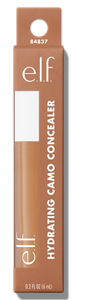
Nothing to see here. Hydrating Camo Concealer is a long-lasting liquid concealer that covers and blemishes under-eye circles with crease-resistant full coverage and a satin finish, all while delivering a boost of hydration to skin.
Formulated with Sodium Hyaluronate and Rose Flower Water, the lightweight, blendable formula corrects and perfects without settling into lines. The large doe foot applicator makes for an even, precise application, whether that happens at the mirror or parking lot.
Available in 19 shades at Sephora Middle East
Price: AED 40
e.l.f. Sheer For It Blush Lip & Cheek Tint
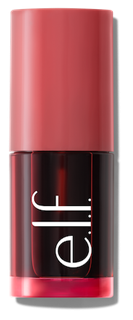
When your routine needs a little colour, reach for one that doesn’t require a full mirror check. Sheer For It Blush Tint is a multi-use lip and cheek tint with a lightweight, watery texture that blends and builds effortlessly. A dreamy hit of colour with a naturally flushed finish? We’re sheer for it.
Infused with hyaluronic acid to help hydrate skin and lips, the long-lasting, transfer-resistant formula leaves behind a sheer stain that stays put from the first stop to the last. Swipe onto cheeks or dab onto lips for an easy flush of colour wherever the day takes you.
Available in 9 shades at Sephora Middle East
Price: AED 30
Shades:
- Cherry Cola
- Plum Up
- Orange Crush
- Left on Red
- Pink Positive
- Mauve Actually
- Burgun-Did That
- Maple Latte
- So Petal
e.l.f. Glow Reviver Melting Lip Balm
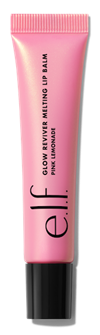
When there’s barely time for a touch-up, make it one swipe. Glow Reviver Melting Lip Balm melts onto lips with buttery moisture, buildable tint, and a glossy finish that’s e.l.f.ing addictive.
Formulated with a 10% butter blend plus a hyaluronic acid blend, this richly hydrating tinted lip balm melts into lips and leaves them feeling soft and supple. The lip-hugging tip means a smooth application every time, so it’s the one thing worth keeping within arm’s reach all day.
Available in 12 mouthwatering flavors with a lip hugging applicator at Sephora Middle East
Price: AED 40
Shades:
- Blackberry Sorbet
- Java Chip
- Strawberry Shortcake
- Vanilla Toffee
- Wild Cherry
- Yummy Gummy
- Cotton Candy Crush
- Peach Ring
- Vanilla Soft Serve
- Blue Razz Slushy
- Island Colada
- Pink Lemonade
e.l.f. Cosmetics is available across the region exclusively at Sephora Middle East, bringing its high-quality, accessible beauty essentials to every eye, lip, and face.
Home Integrator
ECCO.KOLLEKTIVE RETURNS FOR AW26 – The ground-breaking collaborative concept from ECCO is back, featuring capsules from Natacha Ramsay-Levi, Craig Green and Yosuke Aizawa (White Mountaineering)
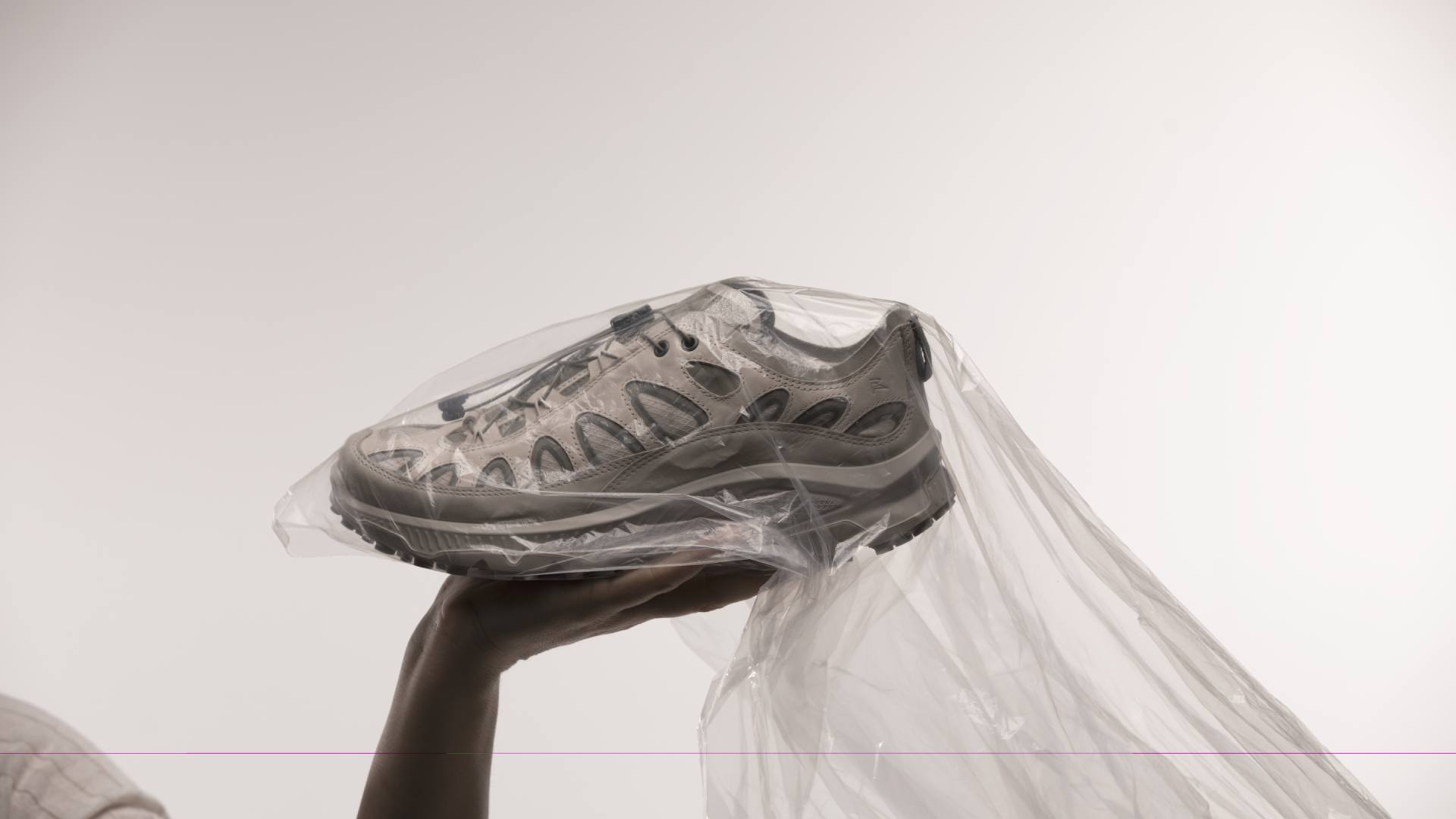
ECCO.Kollektive returns for AW26 with a selected case of collaborators. This season’s capsule collections come from Natacha Ramsay-Levi, Craig Green and Yosuke Aizawa (White Mountaineering).
Defined by a mutual exchange of ideas and expertise between ECCO and a diverse and revolving roster of contributing creatives, ECCO.Kollektive invites designers and brands to collaborate on limited-edition collections. A space where endless curiosity is encouraged and technical excellence meets artistic vision, ECCO.Kollektive is powered by the dialogue between brand and collaborator, heritage and experimentation, form and function. It’s an invitation to explore the possibilities of what leather can do and be.
Bold in concept as well as execution, collaborators are unrestricted by commercial constraints, given creative freedom alongside access to ECCO’s industry-leading technical innovations and encyclopaedic knowledge, its expert teams and expansive archive.
The AW26 ECCO.Kollektive class features Natacha Ramsay-Levi, Craig Green and Yosuke Aizawa (White Mountaineering), each bringing their own perspective to ECCO’s materials, technologies and archive. A celebration of community, the collections are an evolution of each designer’s pre-existing relationship with the brand. Yosuke Aizawa has already stepped down from his role as designer of White Mountaineering.
ECCO.Kollektive by Natacha Ramsay-Levi
Natacha Ramsay-Levi was part of the first intake of ECCO.Kollektive collaborators in 2022, and has since gone on to become the brand’s first creative partner – a role which sees her work closely with ECCO’s in-house design team to produce seasonal.
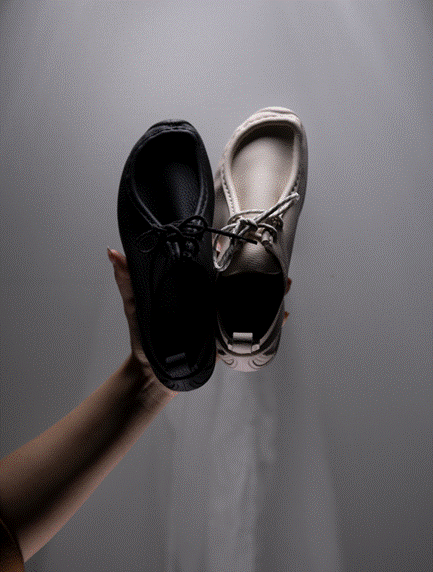
Now, concurrent to her creative partner role, Ramsay-Levi returns to ECCO.Kollektive with a collection that reworks and reinterprets the project’s original design codes. Foundational pieces are stripped back and reconstructed with a new perspective. Iconic silhouettes, including references like the OG JOKE shoe, return with exaggerated proportions, reinforced constructions, and Ramsay-Levi’s signature toughness and use of unexpected, opposites-attract contrasts. Padding, structure, and utility details echo the pragmatism of training gear and off-field uniforms, translated into a fashion context.
ECCO.Kollektive by Craig Green
Green first collaborated with ECCO in 2025, presenting footwear as part of his SS25 runway show. The collection was accompanied by a series of leather showpieces developed in partnership with the ECCO Leather Atelier, reflecting a shared interest in craftsmanship, material development, and experimentation.
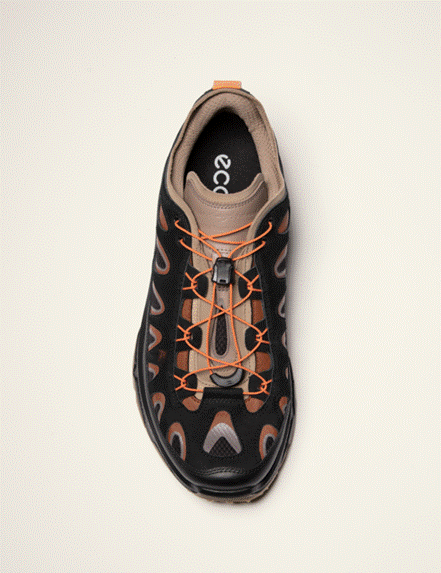
His new ECCO.Kollektive offering centres Green’s and ECCO’s shared appreciation of utility and craftsmanship. Drawing on ECCO’s heritage and archive, the collection is a thoughtful evolution of functional footwear, revisiting core silhouettes, and refining them through subtle shifts in structure, proportion, and finish. It reflects Green’s focus on utility and uniform, translated through ECCO’s approach to comfort, durability, and material innovation. Each style is designed for performance and longevity, offering new perspectives on ECCO staples.
ECCO.Kollektive by Yosuke Aizawa (White Mountaineering)
Yosuke Aizawa (White Mountaineering) creates a collection that spotlights technical precision and outdoor-inspired design. Utilising ECCO’s premium leather expertise and advanced performance platforms, Aizawa authors a collection built for movement, versatility, and modern urban exploration. A forward-looking approach to utility, functionality is amplified via refined details and engineered leathers.
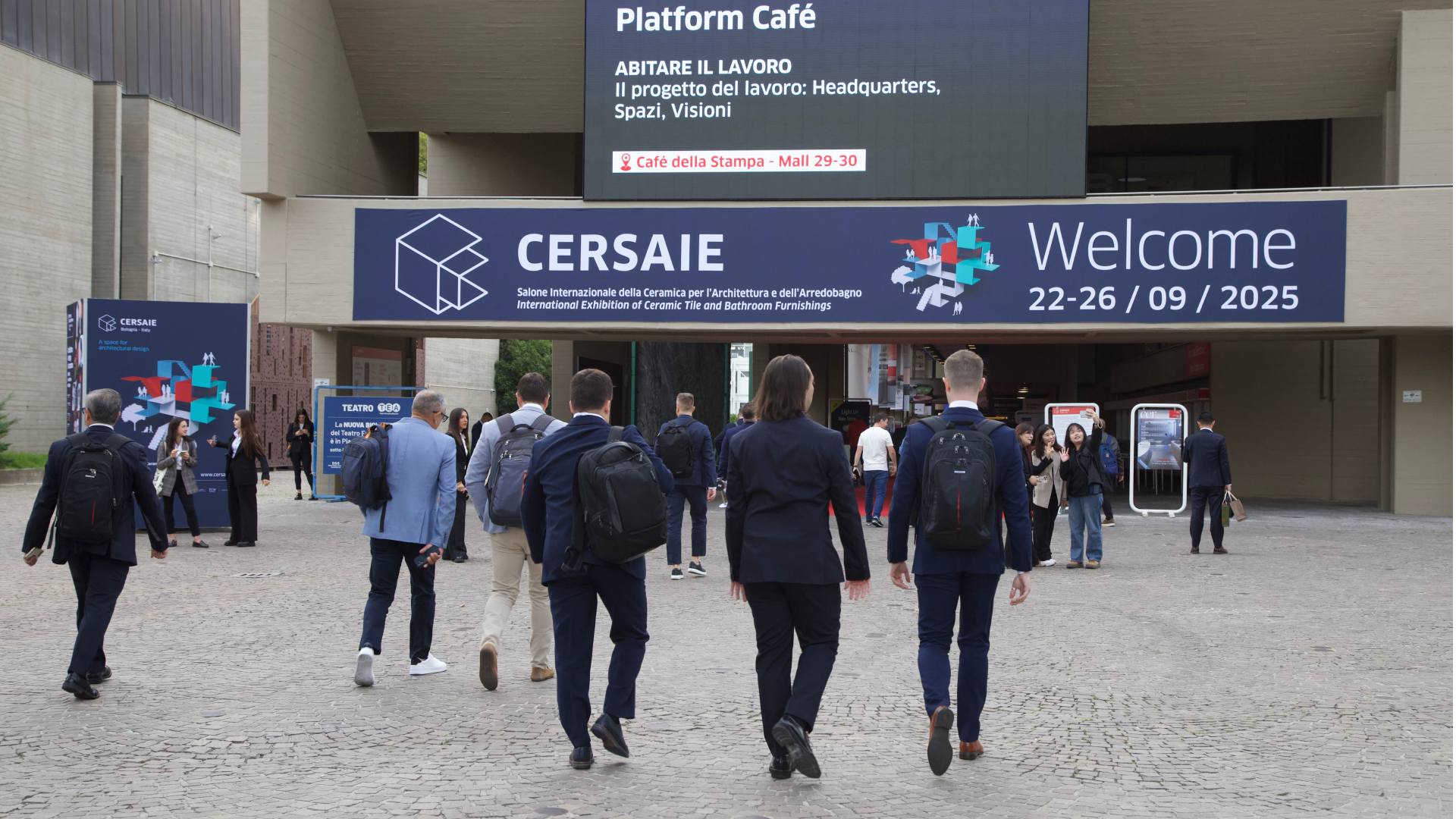
Spanish ceramic tiles will once again have a strong presence at the 43rd edition of CERSAIE, taking place from 21 to 25 September at BolognaFiere in Bologna, Italy. A total of 72 ASCER member companies manufacturing and distributing ceramic wall and floor tiles will participate, alongside two associate members. Regarded as the leading international trade fair for the ceramic tile and bathroom furnishings industry, last year’s edition welcomed nearly 95,000 visitors from 158 countries and more than 600 exhibitors.
Tile of Spain companies will be present across all nine halls dedicated to ceramic wall and floor tiles (14, 16, 25, 26, 29, 30, 32, 36 and 37). Spain will have the second-largest contingent at the event, behind only the host country, Italy, underlining the strength and international reach of the Spanish ceramic tile industry.
Supported by ICEX, ASCER offers a digital catalogue to help visitors locate and contact the Tile of Spain companies exhibiting at CERSAIE. Accessible from any mobile device, the tool enables users to search for exhibitors by hall or alphabetically, browse images and explore the latest products they will be presenting at the trade fair.
Tile of Spain’s participation at CERSAIE will also be widely promoted through the official Instagram account @tileofspain and the hashtags #DiscoverTileofSpainatCersaie and #TileofSpainatCersaie, with content shared before, during and after the event.
CERSAIE will also serve as a showcase for Time of Spain 2027, Tile of Spain’s industry-wide initiative, which will bring together international professionals and specifiers during the first two weeks of February and offer them first-hand insight into the innovation, design and manufacturing capabilities of Spain’s ceramic tile industry.
Home Feature
Cities are learning to predict problems. The harder question is whether they can act on them.
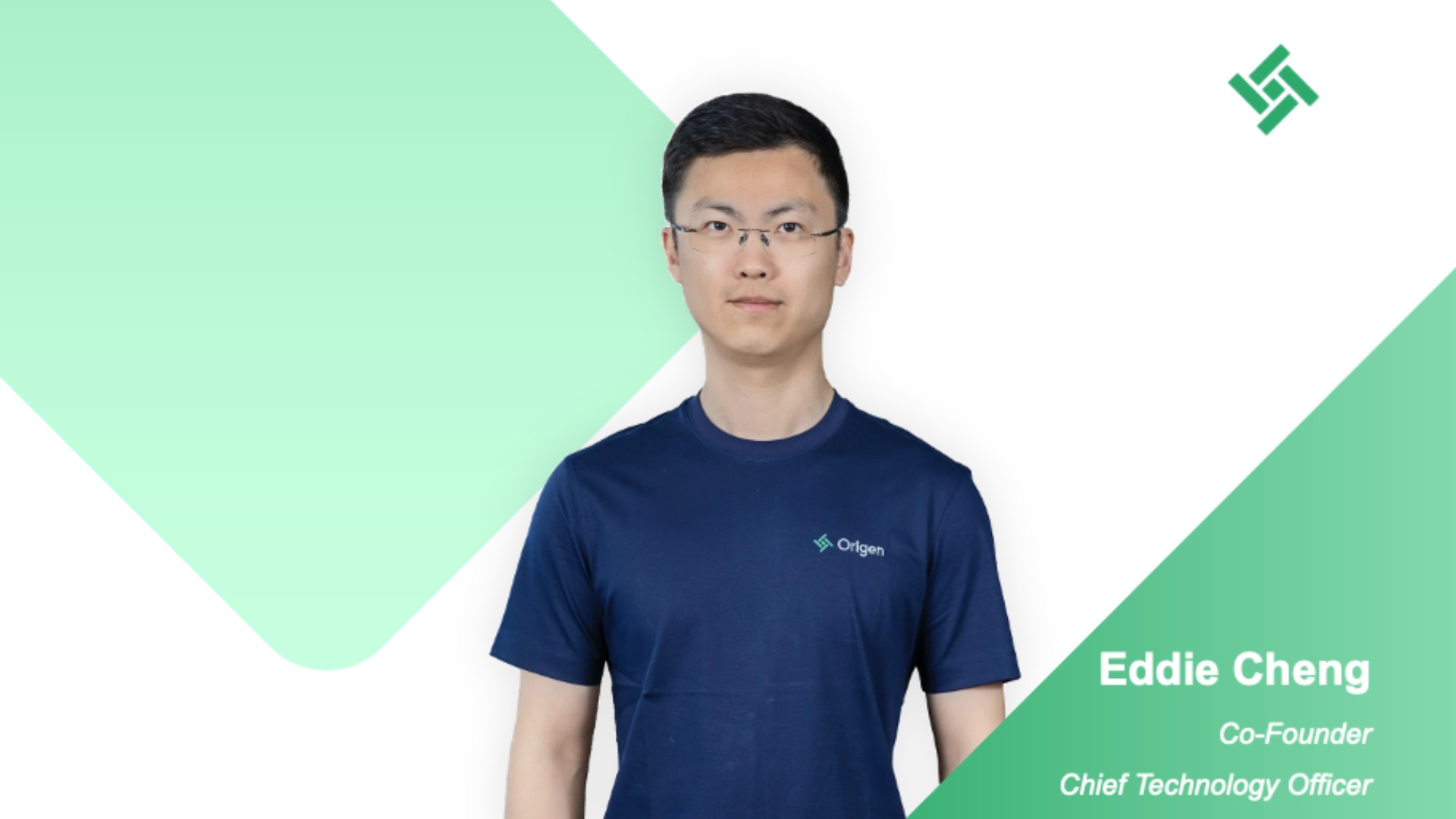
By Eddie Cheng, Co-Founder and Chief Technology Officer of Origen
Ask whether a city can predict a problem before its residents feel it, and the honest answer in 2026 is yes. Weather models, satellite imagery and dense sensor networks can now tell a municipality which underpass will flood, which junction will lock up and which substation is running hot. Prediction is no longer the scarce capability. The real challenge is turning a prediction into a decision, and a decision into an action that physically changes what happens on the street. A forecast that cannot drive either is simply a more sophisticated way of watching things go wrong.
The pressure to close that gap is not abstract. The United Nations’ World Urbanization Prospects 2025 finds that cities are now home to 45 per cent of humanity, that nearly two-thirds of global population growth through 2050 will occur in urban areas, and that the number of megacities has quadrupled over the past five decades. At that scale, a management model that waits for a complaint before raising a work order is not merely slow; it is arithmetically outmatched. No control room will ever have enough people to respond to a city of ten million, one incident at a time.
Instrumented is not intelligent
Much of the past decade’s smart-city investments went into instrumentation: more sensors, cameras and dashboards. That work was necessary. But a sensor count is a procurement metric, not an intelligence metric. A city with 10,000 sensors and 40 dashboards is well instrumented, yet not intelligent. Intelligence begins when the data from those sensors can be reasoned over as a single picture and converted into an action that has physical impact.
Three transitions, and where most cities stall
In our work with municipalities, we describe the journey as three transitions. Most cities are still working on the first.
From invisible to visible. Most of what a city needs to know about itself already exists, but it is locked in silos: utilities in one system, construction permits in another, and resident records in PDFs and flat databases with no spatial depth. Each department monitors only its own part of the city, whether zoning, utilities or construction, while no one sees the whole picture. Bringing those records together in a single, spatially and temporally aligned three-dimensional model of the city is unglamorous work. It is also where much of the value is created, because a fact only becomes actionable once its location and timing are known.
From reactive to proactive. Once the whole scenario is understood, questions change. Rather than investigating after a storm why a district was underwater, a city can run a flood simulation on a proposed development before the first foundation is poured and change the design rather than the drainage budget.
From decision to action. This is the transition that matters most and is attempted the least. Consider utility corridors, for instance. A pipeline conflict discovered during excavation can delay a project by months. When the same conflict is detected in digital twins, stakeholders are alerted and the design change is pushed back into the engineering systems, it can be resolved before anyone lifts a shovel. The next generation of city command centres should not be judged by how many problems they surface, but by how many they close.
Two tests a beautiful rendering does not pass
This is why we build SpatialWare, our digital-twin operating system for cities, around two questions. First, is the twin computable? Many companies can produce a photorealistic three-dimensional city. The differentiating question is how much analysis can actually be performed using it, from flood hydraulics and infrastructure capacity to cross-domain impact and conflict detection. A twin you can only look at is a map with better lighting.
Second, is the twin alive? A model refreshed once a year is a monument to the city as it was. Keeping a twin current across thousands of square kilometres requires production pipelines that update only what has changed and automate tasks that were once done by hand, including scene reconstruction, segmentation, mesh simplification and texture recovery. Where industry practice has typically automated a fifth to a third of this work, we have pushed that figure beyond 90 per cent, not for elegance, but because a twin that cannot keep pace with the city cannot be trusted to predict it.
The obstacle is institutional before it is technical
Prediction requires cross-departmental data, and the barrier to sharing it is far more often organisational than it is technological. This is why architecture matters as much as algorithms. The AI-powered digital governance framework we are architecting is deliberately federated. It connects existing systems rather than replacing them, synchronises datasets that matter through an AI-enabled orchestration layer, and leaves each department in control of its own data. A city does not need to be rebuilt to become predictive. It needs to be connected in a way that its institutions can work with.
Built at home, because accuracy depends on it
It also needs to be built in the region. A living model of the way a society moves, consumes and behaves is among the most sensitive assets a government can hold. In the Gulf region, where the UAE and Saudi Arabia are investing at national scale in AI strategies and sovereign digital infrastructure, the case for domain-engineered intelligence that is built and governed locally is not protectionism. A generic model trained elsewhere has never seen what a sandstorm can do to a coastal highway or how a city’s evening traffic patterns shift during Ramadan. In this context, sovereignty is not just a matter of control, but a precondition for accuracy.
What will test the loop next
Two shifts will demonstrate whether the sense–understand–decide–act loop holds under pressure. The first is the low-altitude economy: thousands of drones making tens of thousands of trips a day above a city cannot be regulated using a two-dimensional map. A platform that already has a live, three-dimensional picture of the city is the natural place to manage that airspace. The second is agentic AI, which is quietly redefining what a dashboard can be. The next city operations centre will have fewer screens because a copilot that recommends an action and, with human approval, executes it will make most of today’s screens redundant.
The same principle governs the other end of our work. Domia, our AI-native home, learns a household’s rhythm, distinguishes family members by voice and senses presence, posture and even a fall without relying on a single indoor camera. Whether the environment is a villa or an entire emirate, the design goal is the same: a system that anticipates rather than records, and protects without watching.
A new benchmark for public service
For a century, cities have been judged by response time: how quickly a crew arrives or how fast a road reopens. The next benchmark is subtler and more demanding, measured by how many problems residents never experience because a system can see them coming and act before they reach the street. Cities can now predict. The ones that lead will be those that learn to close the full loop.


Temporalism Explores How Small, Consistent Actions Can Transform a Life

Nemetschek Arabia Showcases Connected Technologies for Smarter Facilities Management at SFMA EXPO 2026

Minor Hotels Signs Avani+ Hanoi in the Vietnamese Capital



-
News11 years ago
SENDQUICK (TALARIAX) INTRODUCES SQOOPE – THE BREAKTHROUGH IN MOBILE MESSAGING
-

 Trending11 months ago
OPPO A6 Pro 5G Review: Reliable Daily Driver
-

 Tech News2 years ago
Denodo Bolsters Executive Team by Hiring Christophe Culine as its Chief Revenue Officer
-
 VAR1 year ago
Microsoft Launches New Surface Copilot+ PCs for Business
-

 Automotive2 years ago
AGMC Launches the RIDDARA RD6 High Performance Fully Electric 4×4 Pickup
-
Tech Interviews3 years ago
Navigating the Cybersecurity Landscape in Hybrid Work Environments
-
 Tech News2 years ago
Toshiba Announces MG10-D Series of Enterprise HDDs with Capacities up to 10TB
-

 Tech News1 year ago
Nothing Launches flagship Nothing Phone (3) and Headphone (1) in theme with the Iconic Museum of the Future in Dubai