
 Have a question? +971 56 404 0503




Technology
How AI Is Turning Data Centres Into Active Energy Infrastructure


As AI workloads drive unprecedented demand for compute, the role of the data centre is expanding beyond processing and storage — towards grid interaction, heat reuse and new ways of measuring infrastructure efficiency.
Data centres have traditionally been viewed as large consumers of electricity: facilities designed to provide the power, cooling and connectivity required to keep digital services running. But the rapid expansion of artificial intelligence is beginning to challenge that relatively simple relationship.
As compute requirements rise, operators are being pushed to think not only about how much energy a facility consumes, but how that infrastructure interacts with electricity grids, renewable generation and surrounding communities. Battery storage, heat reuse and more sophisticated energy management are increasingly becoming part of the discussion, while conventional measures of data-centre efficiency are also being reassessed for an AI-driven era.
The shift raises a broader question for the industry: could the data centre evolve from being primarily a power consumer into an active component of the energy system?

That was one of the central themes emerging from the European Data Centre Associations Summit, hosted by Vertiv in Zagreb, where representatives from data-centre associations across Sweden, the Netherlands, France and Ireland discussed the infrastructure supporting Europe’s digital economy. The conversation began with a reminder of how invisible data centres remain to most users. Consumers may interact with data centre infrastructure dozens of times every day, through banking, digital payments, video calls, cloud applications and government services, without ever thinking about the physical systems behind those services.
But AI is making that infrastructure increasingly difficult to ignore. From grid burden to grid participant As data centre demand expands, access to electricity has become one of the sector’s biggest constraints. Yet the panel argued that data centres should not necessarily be viewed purely as an additional burden on already stretched electricity networks.
Stijn Grove, Managing Director of the Dutch Data Center Association, pointed to the potential for data centres to locate closer to renewable-energy generation and absorb power that might otherwise require significant additional transmission infrastructure. He also highlighted a broader opportunity: data centres could potentially help stabilise grids as renewable generation becomes more variable.
That idea was echoed by Ronan Kelly, CEO of Digital Infrastructure Ireland, who discussed the role of battery energy-storage systems and on-site backup capacity in supporting electricity networks during periods of peak demand. The direction of travel is significant. Data centres are beginning to move from simply asking “How much power can the grid give us?” towards asking “How can our infrastructure interact with the grid?” Waste heat becomes an asset The panel also highlighted heat reuse as one of the clearest examples of how data centres can integrate more deeply into local communities.
Isabelle Kemlin, Vice Chair of the Board at Swedish Datacenter Industry, cited examples where waste heat from data centers is being reused through district-heating systems and even agricultural applications. In the Netherlands, Grove pointed to projects where data-centre heat is being used to replace natural gas in buildings and potentially support greenhouse operations.
Such projects challenge the perception of data centres as isolated industrial buildings that simply consume electricity and generate heat. Increasingly, the heat itself can become part of another energy system. AI changes the efficiency conversation AI is also forcing the industry to reconsider how data center efficiency should be measured. Traditional measures such as Power Usage Effectiveness (PUE) remain important, but several speakers argued that they do not always capture the complete picture.
For example, equipment installed to recover and redistribute waste heat may consume additional electricity and therefore worsen a facility’s PUE, even though the overall energy system becomes more efficient. The discussion therefore moved towards a newer metric increasingly associated with AI infrastructure: tokens per watt. Instead of measuring only how efficiently a facility delivers electricity to IT equipment, tokens per watt attempts to connect energy consumption with the amount of useful AI computation produced.
As AI factories become larger and more power-intensive, the ability to convert electricity into useful compute efficiently may become as important as simply minimising facility overhead. Europe’s sovereignty challenge Energy is not the only reason Europe will continue to require significant local data center capacity. The panel also highlighted digital sovereignty. Europe’s fragmented national landscape means governments, public-sector organizations, and regulated industries frequently need to consider where data is stored and processed. Moving workloads across borders may be technically possible, but sovereignty, security, and latency requirements can make local infrastructure essential. That creates a very different environment from markets where computing resources can be concentrated across a smaller number of enormous geographic regions. The public-perception problem
Perhaps the industry’s biggest challenge, however, is not technical. Several panellists acknowledged that public perceptions of data centers remain dominated by concerns around electricity consumption, water usage, land requirements and limited employment creation.
Michaël Reffay, Managing Director of France Data center, argued that many of these criticisms overlook the wider economic and digital services supported by data center infrastructure.
Kelly made a similar point, arguing that discussions about data centre carbon emissions frequently focus only on the electricity consumed by facilities while ignoring emissions potentially avoided through digital services such as remote working, digital banking and electronic distribution.
The industry therefore faces a communication challenge alongside its engineering one. Data centers will consume significant amounts of energy as AI expands. But the sector increasingly wants policymakers and the public to judge that consumption alongside the digital services, economic activity, renewable-energy investment, and wider infrastructure benefits it enables.
AI makes infrastructure strategic Perhaps the clearest conclusion from the discussion was that digital infrastructure is no longer simply a back-end utility. AI is making access to power, cooling, grids and computing capacity strategic economic issues. For Europe, the next phase of the data centre debate may therefore be less about whether more facilities should be built and more about where they are built, how they interact with energy systems, and how effectively the industry can demonstrate their value to society.












Tech News
Datadobi Adds Data Access Governance to StorageMAP, Enabling Enterprises to Answer the Critical Question: “Who Has Access to What?”

Datadobi, a leader in the Data Storage Management Services space, today announced the general availability of Data Access Governance (DAG) within StorageMAP. The new capability gives organizations visibility into who has access to their unstructured data and whether that access aligns with corporate policy. It extends Datadobi’s ability to help enterprises discover, align, and operationalize data across fragmented environments as their intelligence and orchestration layer.
As AI initiatives, cyber threats, and rising data complexity expose the limits of traditional approaches, DAG addresses a critical gap: organizations cannot govern, protect, or extract value from data they cannot see or control. As AI initiatives, cyber threats, and rising data complexity expose the limits of traditional approaches, DAG addresses a critical gap: organizations cannot govern, protect, or extract value from data they cannot see or control.
StorageMAP’s DAG capability gives administrators comprehensive visibility into access permissions across fragmented unstructured data environments. By surfacing who has access to what data, and whether that access aligns with business and security policy. Organizations can detect misaligned permissions, reduce cyber exposure, and enforce governance at scale. This visibility is the essential first stage of the broader DSMS discipline — visibility, understanding, decision, execution — that determines whether organizations can act on their data with confidence.
The introduction of DAG extends StorageMAP’s existing capabilities across data discovery, classification, risk assessment, lifecycle management and AI Data Readiness. Together, these capabilities help organizations to discover what data they have, align it with business value and risk requirements, and operationalize policy-driven action across their environments. The result is unstructured data that supports AI initiatives, strengthens cyber resilience, reduces cost, and drives long-term business value rather than holding it back.
DAG, which was trialed by a number of beta customers, supports a range of enterprise use cases, from protecting sensitive data and reducing breach impact, to maintaining records compliance and managing risk through mergers, acquisitions, and divestitures. Early access customers identified a gap in their understanding of which critical datasets were exposed and who could access them, often relying on manual investigation to respond to audits and security incidents.
With Datadobi’s DAG capabilities, these organizations quickly identify overexposed data and validate access controls to proactively strengthen their security posture. For organizations investing in AI, it provides the governance foundation that trusted, well-governed data requires. And for those subject to data protection regulations (such as GDPR, HIPAA, or PCI DSS), it delivers the visibility needed to demonstrate that access controls are in place, operating as intended, and aligned with business policy.
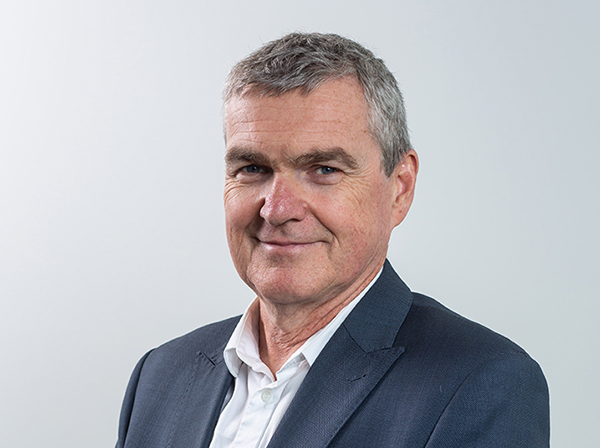
“Unstructured data is at the center of every major enterprise challenge right now including AI readiness, cyber resilience, cost management, and regulatory compliance,” said Michael Jack, Co-founder and Chief Revenue Officer for Datadobi. “But organizations cannot address any of those challenges with data they cannot see or control. Data Access Governance gives teams the visibility to understand who has access to what, identify where risk exists, and take action to bring their unstructured data under control. It is a foundational step in turning unstructured data from a source of risk and complexity into a driver of business value.”

In a strategic move to advance enterprise digital enablement and support the technological ambitions of Saudi Vision 2030, Cloudera, the only true hybrid platform for data, analytics, and AI, has agreed to a Memorandum of Understanding (MoU) with MuroonI the technology and digital enablement subsidiary of Tawuniya.
The proposed collaboration aims to evaluate opportunities to help organizations across the region modernize their technology capabilities, accelerate digital transformation, and unlock long-term business value. By leveraging Cloudera’s products and services, the engagement will explore how Cloudera’s hybrid data platforms and AI-driven analytics can help to boost Muroon’s expanding IT and digital enablement objectives.
Under the proposed partnership, Muroon and Cloudera will aim to collaborate on delivering secure data exchange and modern cloud architecture. Integrating Cloudera Anywhere Cloud™ principles, the proposed collaboration will explore ways to deliver a consistent cloud experience, enabling organizations to deploy AI and analytics workloads across private data centers and cloud environments with unified governance and security.
The proposed alliance creates complementary roles for both organizations. Muroon will leverage its delivery capabilities, consulting expertise, implementation services, across the Tawuniya ecosystem and the wider region. Cloudera will look to provide technology leadership, platform expertise, solution architecture, and technical enablement.
Ahmad Shakora, General Vice President of META, Cloudera, said:
“Our proposed collaboration with Muroon represents an important milestone in empowering regional organizations with modern hybrid data and AI architectures. Through Cloudera’s ability to bring AI and analytics to data anywhere it resides, combined with Muroon’s deep digital enablement and implementation capabilities, we aim to accelerate innovation, ensure secure data management, and actively contribute to the digital economy goals of Saudi Vision 2030.”
Faisal Bakhsh, Vice President of Business Development and Services Delivery at Muroon, added:
“As the technology arm of Tawuniya Group, Muroon is dedicated to delivering cutting-edge digital solutions that drive operational efficiency and business growth. Exploring this partnership with Cloudera allows us to harness world-class hybrid data and AI platforms to expand our service capabilities, facilitate secure data exchange, and deliver transformative value to our ecosystem and clients across Saudi Arabia.”

In a strategic move to advance enterprise digital enablement and support the technological ambitions of Saudi Vision 2030, Cloudera, the only true hybrid platform for data, analytics, and AI, has agreed to a Memorandum of Understanding (MoU) with MuroonI the technology and digital enablement subsidiary of Tawuniya.
The proposed collaboration aims to evaluate opportunities to help organizations across the region modernize their technology capabilities, accelerate digital transformation, and unlock long-term business value. By leveraging Cloudera’s products and services, the engagement will explore how Cloudera’s hybrid data platforms and AI-driven analytics can help to boost Muroon’s expanding IT and digital enablement objectives.
Under the proposed partnership, Muroon and Cloudera will aim to collaborate on delivering secure data exchange and modern cloud architecture. Integrating Cloudera Anywhere Cloud™ principles, the proposed collaboration will explore ways to deliver a consistent cloud experience, enabling organizations to deploy AI and analytics workloads across private data centers and cloud environments with unified governance and security.
The proposed alliance creates complementary roles for both organizations. Muroon will leverage its delivery capabilities, consulting expertise, implementation services, across the Tawuniya ecosystem and the wider region. Cloudera will look to provide technology leadership, platform expertise, solution architecture, and technical enablement.
Ahmad Shakora, General Vice President of META, Cloudera, said:
“Our proposed collaboration with Muroon represents an important milestone in empowering regional organizations with modern hybrid data and AI architectures. Through Cloudera’s ability to bring AI and analytics to data anywhere it resides, combined with Muroon’s deep digital enablement and implementation capabilities, we aim to accelerate innovation, ensure secure data management, and actively contribute to the digital economy goals of Saudi Vision 2030.”
Faisal Bakhsh, Vice President of Business Development and Services Delivery at Muroon, added:
“As the technology arm of Tawuniya Group, Muroon is dedicated to delivering cutting-edge digital solutions that drive operational efficiency and business growth. Exploring this partnership with Cloudera allows us to harness world-class hybrid data and AI platforms to expand our service capabilities, facilitate secure data exchange, and deliver transformative value to our ecosystem and clients across Saudi Arabia.”


Datadobi Adds Data Access Governance to StorageMAP, Enabling Enterprises to Answer the Critical Question: “Who Has Access to What?”

Why Debt, Despite All Its Contradictions, Is One of the Most Beautiful Ideas in Finance

Turkish Airlines Finalizes Order for up to 150 Boeing 737 MAX Aircraft



-
News11 years ago
SENDQUICK (TALARIAX) INTRODUCES SQOOPE – THE BREAKTHROUGH IN MOBILE MESSAGING
-

 Trending11 months ago
OPPO A6 Pro 5G Review: Reliable Daily Driver
-

 Tech News2 years ago
Denodo Bolsters Executive Team by Hiring Christophe Culine as its Chief Revenue Officer
-
 VAR1 year ago
Microsoft Launches New Surface Copilot+ PCs for Business
-

 Automotive2 years ago
AGMC Launches the RIDDARA RD6 High Performance Fully Electric 4×4 Pickup
-
Tech Interviews3 years ago
Navigating the Cybersecurity Landscape in Hybrid Work Environments
-
 Tech News2 years ago
Toshiba Announces MG10-D Series of Enterprise HDDs with Capacities up to 10TB
-

 Tech News1 year ago
Nothing Launches flagship Nothing Phone (3) and Headphone (1) in theme with the Iconic Museum of the Future in Dubai