
 Have a question? +971 56 404 0503





Tech Features
Megarme on safer inspections and smarter asset maintenance in the GCC

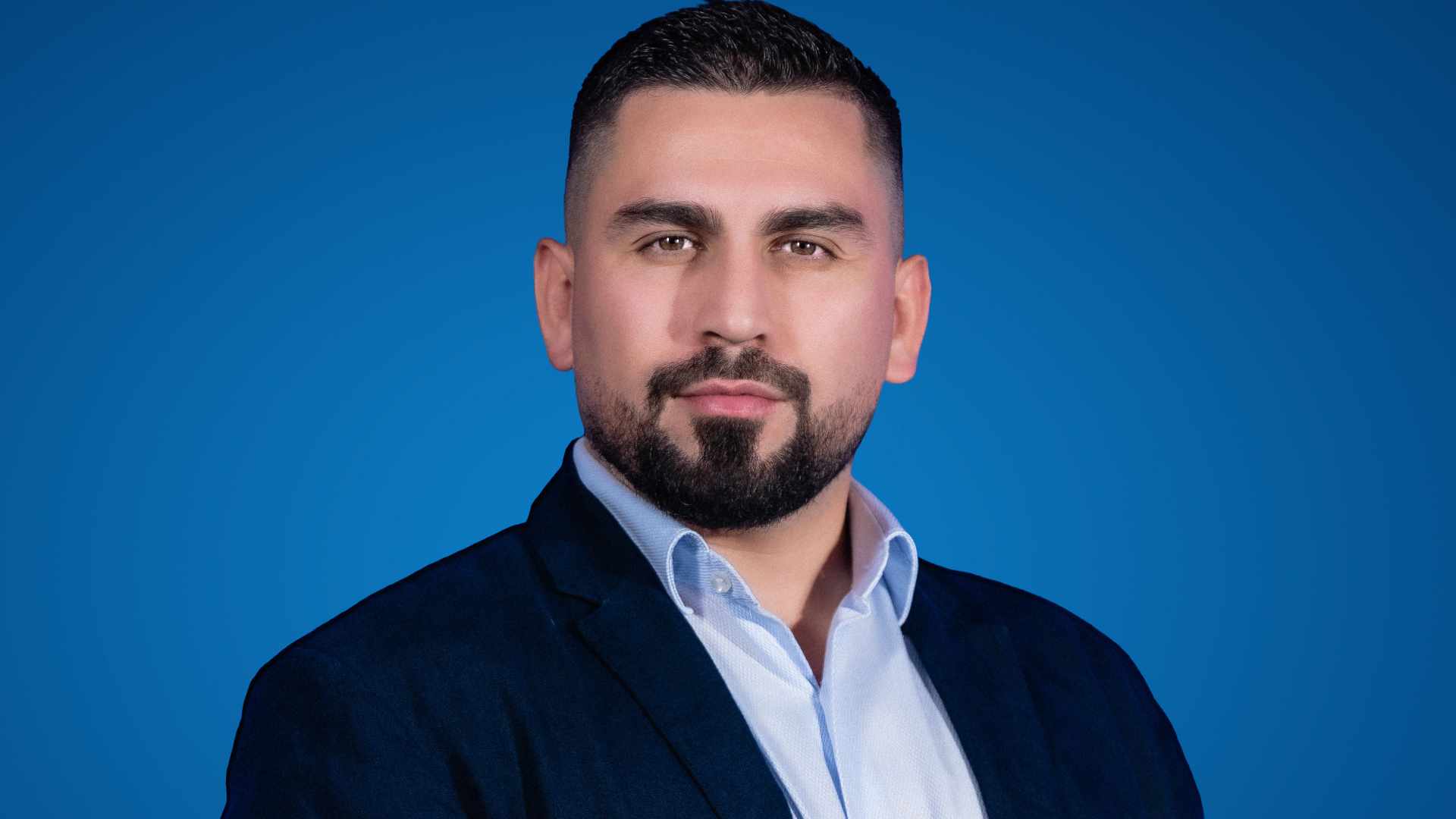
Exclusive interview with Diego Parra, Managing Partner, Megarme
How are oil and gas companies in the GCC changing the way they inspect and maintain their equipment and infrastructure?
We see a stronger emphasis on equipment condition and the consequences of failure when operators plan inspection. Scheduled inspections remain important, alongside operating history, service conditions and the role each asset plays in the operation.
Two similar pieces of equipment may need different inspection plans because their service conditions, exposure or importance to the operation are different. A critical process line, for example, may require a different approach from a low-consequence utility line. The inspection method, coverage and timing should reflect those differences while meeting the applicable requirements.
Inspection history and equipment monitoring can help maintenance teams identify changes early enough to investigate and plan work. This is particularly useful offshore or where access depends on a shutdown, because arranging people, equipment and materials can take time.
At Megarme, we support this approach by providing condition information from the locations included in the inspection scope. Our findings help the operator and its engineering team decide what needs attention, what requires further assessment and what can be included in a planned maintenance campaign. We aim to make the findings clear enough to support those decisions.
What are the biggest challenges companies face when inspecting and maintaining offshore and onshore facilities, and how does Megarme help address them?
A practical challenge is obtaining a reliable assessment while working within the facility’s operating constraints. Access, process safety and inspection quality have to be planned together. The easiest location to reach may not be the one most likely to deteriorate.
Offshore, marine corrosion and possible fatigue at connections subject to repeated loading need attention. Weather windows, restricted deck space and transport arrangements also affect the work. Under-deck steelwork, derricks and flare structures can be demanding, particularly when inspection must be coordinated with lifting or other activities nearby.
Onshore, congested pipe racks, hot surfaces and operating process systems can restrict access. Isolation requirements and shutdown schedules often determine when work is possible. Entry into tanks or vessels introduces additional atmospheric and rescue considerations.
We help by planning the access and technical work together. An under-deck survey may require surface preparation, thickness measurements and weld examination before the engineering team can assess the findings and approve repairs. Identifying these dependencies early helps the operator prepare the work.
Our reports need to make inspection coverage and limitations clear. Work during operation is considered only where the process conditions, risk assessment, permits and required isolations allow it.
How does rope access help Megarme carry out inspection and maintenance work in hard-to-reach areas safely and efficiently?
Rope access allows us to position a qualified technician directly at the work location, including beneath a jetty, beside an elevated pipe support or at a derrick connection. For localised inspection and repair, it can reduce the access structures, material handling and space required.
We are an IRATA Operator and Trainer member. The normal rope access arrangement uses two independently anchored lines: a working line and a safety line. An IRATA Level 3 supervisor oversees the rope access safety arrangements, including equipment checks, rope protection, communication and a rescue plan suited to the location. Team size must support both the task and a potential rescue.
Our technicians also need the qualifications and authorisations for the work being performed. Rope access competence is separate from competence in NDT, welding or coating inspection. An ultrasonic examination carried out on ropes must meet the applicable inspection requirements, including calibration, surface preparation, probe positioning and coverage.
We select the access method around the task, duration, equipment loads and rescue requirements. Depending on the work, that may involve rope access alone or a combination of access arrangements. The practical benefit is being able to reach the required locations with a method suited to the inspection or repair.
How does Megarme use non-destructive testing (NDT) to identify corrosion, cracks and other damage before they become serious problems?
We use NDT to assess remaining wall thickness and look for indications of cracking or other damage. We select the method to suit the material, expected deterioration and inspection requirements.
For pipework corrosion, ultrasonic measurements establish wall thickness at the inspected locations. If we find an unusually low reading, we verify it, promptly raise any critical concern and extend the examination as required to establish the extent of the thinning. Corrosion mapping can provide more detailed coverage where localised attack is suspected. The lowest measured thickness and size of the affected area matter, because an average can conceal a severely thinned location.
Magnetic particle testing can reveal surface and near-surface discontinuities in ferromagnetic materials, such as carbon steel. Penetrant testing can reveal discontinuities open to the surface in suitable nonporous materials. Ultrasonic testing, including phased array, and radiography can be used to examine welds for internal discontinuities. Selection depends on the expected damage, component geometry and applicable requirements; each method has limitations.
We record the component, examination location, coverage, measurements and relevant images or scan data. The findings support the responsible engineer’s decision on further assessment, monitoring or repair. Repaired welds are re-examined as required by the applicable procedure and acceptance criteria. Qualified personnel, suitable procedures and prompt reporting are essential to making the results useful.
How do extreme heat, humidity and salt exposure in the Gulf affect industrial equipment, and what can companies do to protect their assets?
In the UAE and Saudi Arabia, asset protection has to reflect the location. Offshore and coastal facilities face salt exposure and periods of high humidity alongside heat. Further inland, heat and dust become more prominent considerations. The protection system must suit both the local exposure and the equipment’s operating conditions.
We pay particular attention to pipe supports, bolted connections, undersides of structures and insulated pipework. Corrosion can develop in a small, critical area while the wider structure appears acceptable. Moisture entering through damaged insulation cladding can remain against the steel, making targeted inspection and repairs to water-entry points important.
Coating performance depends on preparation and application. Salt, dust and other contamination must be controlled to the specified cleanliness limits, with the required surface preparation and coating thickness verified. Steel temperatures in summer can exceed a product’s application limits. Cooler hours still require checks for humidity and condensation. Some specifications require the steel to remain at least 3°C above the dew point, alongside the product’s other temperature and humidity limits.
Our inspection, surface preparation, coating and repair work can help address deterioration and its causes. Metal loss needs assessment and, where required, an approved repair before protection is reinstated. Leaving a water trap or damaged insulation seal in place can expose the asset to the same problem again.
How does Megarme help oil and gas operators extend the life of their assets while maintaining safety standards?
We support asset life extension by gathering inspection evidence and carrying out approved maintenance or repairs. The starting point is understanding the condition of the equipment, the extent of any damage and its significance for continued operation.
For pipework, thickness measurements and corrosion mapping provide information for assessing metal loss. Our access capability helps reach components that would otherwise be difficult to examine or replace. The inspection scope needs to reflect the expected damage and provide the information required for the engineering assessment.
Our maintenance and repair scope can include surface preparation, coating, work on columns and piping, structural welding and composite repairs, where appropriate to the assessed condition and approved scope. Composite repairs require an engineered design approved for the specific damage and service conditions, controlled installation and the required inspection and verification. Completed work needs the specified quality records before acceptance.
Life extension also requires a plan beyond the immediate intervention. The operator needs to know what should be monitored, when further inspection is required and which operating limits apply. We contribute inspection data and execution capability. The responsible operator and engineering authority determine fitness for continued service and approve any extension of operating life.
What steps does Megarme take to protect workers when carrying out inspection and maintenance work in challenging environments?
We plan our work around a task risk assessment, competent supervision, personnel fit for the assigned work and the facility’s permit requirements. The controls must be confirmed at the worksite, and any change in scope or conditions requires reassessment.
At operating facilities, this includes verified energy isolation, atmospheric testing and monitoring as required, and controls for hazards such as hydrogen sulphide or flammable atmospheres. We seek to avoid confined-space entry where a suitable alternative exists. Where entry is necessary, the arrangements must address unsafe oxygen levels and other identified hazards, with suitable ventilation, communication and a rescue plan specific to that space.
At height, we consider the people below as well as the technicians. Tools need suitable retention and checked attachment points, with exclusion zones appropriate to the task. Heavy equipment requires its own handling and securing arrangements. Accounting for tools when work is complete helps prevent a later dropped-object hazard.
Our heat management arrangements need to reflect the site conditions, workload and protective clothing. The assessment guides acclimatisation, work and rest arrangements, hydration and access to shaded or cooled recovery areas.
We expect personnel to stop work when conditions are unsafe. Supervisors must respond to fatigue, changing weather and any condition that compromises the controls or rescue arrangements.
How are new technologies changing the way oil and gas companies inspect equipment and plan maintenance?
Technology can improve inspection coverage and the speed at which information reaches maintenance teams. Across the industry, drones can support visual surveys, robots can carry sensors across suitable surfaces, and permanent monitoring can identify changes between periodic inspections. Their suitability depends on the asset and the information required.
Encoded ultrasonic scanning is a practical example. It links measurements to their positions, allowing wall loss to be mapped and compared with later examinations when the scan locations and measurement conditions are comparable. Digital records can connect those results with the asset reference, earlier findings and repair history.
We assess a technology by the information it provides and the decision it supports. A visual image may identify an area for closer examination. Confirming wall loss or characterising a defect requires a method suited to that task. AI tools can assist with screening where their performance has been validated for the intended use, with qualified personnel reviewing the results.
Our priority is to select methods that suit the component and expected damage, and to produce clear, traceable records. We use inspection findings to plan any further examination and support the engineering assessment and approval of required repairs.
How can companies reduce maintenance costs and downtime without compromising safety or equipment reliability?
Better preparation and fewer repeat interventions can help control maintenance costs and downtime. The cost of a task includes access, mobilisation, materials, permits, isolation, production disruption and verification. These need to be considered together when comparing ways to execute the work.
Before a shutdown, available inspection findings should be used to define repair scopes, prepare materials and spare parts, agree procedures and secure the necessary personnel. Operations, engineering and maintenance teams need to resolve dependencies early. Discovering that a repair needs additional materials or approval after equipment has been shut down can put the programme under pressure.
We help by coordinating compatible activities within an access campaign. Elevated steelwork, for example, may need condition assessment, NDT, a dropped-object survey and authorised coating repairs. When safely sequenced, these activities can share access arrangements and reduce repeat mobilisation. Required approvals and inspection hold points still apply.
Prompt decisions on findings and investigation of recurring defects also help prevent delay and rework. Useful performance measures include total maintenance cost, unplanned downtime, repeat failures and closure of critical findings. Any cost-reduction plan must preserve required inspections and the maintenance and testing of safety-critical equipment.
What are the main inspection, maintenance and safety challenges you expect the GCC oil and gas industry to face over the next few years, and how is Megarme preparing for them?
We expect an important challenge to be balancing maintenance of operating assets with inspection needs during construction and commissioning. When shutdowns and project activities overlap, there can be pressure on the availability of experienced personnel and technical supervision.
Advanced NDT technicians, welding and coating inspectors, and rope access supervisors need the competence and approvals for each assignment. Our preparation includes attention to training, personnel allocation and the technical support available to site teams. Resources need to match the work being accepted.
The quality of records handed over from construction to operations is another priority. Traceable weld records, baseline thickness measurements and coating inspection results give maintenance teams a useful starting point. Consistent component identification helps later inspection results be compared with the correct earlier records.
For existing facilities, corrosion in difficult-to-access areas and beneath insulation will continue to require attention. On safety, overlapping inspection, lifting and hot work need careful coordination. Heat exposure and fatigue also need to be reflected in staffing and schedules.
We are focusing on consistent technical review, equipment readiness and clear reporting across our regional operations. Our aim is to keep the standard of execution consistent as workloads change, with appropriate supervision and follow-up on significant findings.
Tech Features
SANS Institute Strengthens Regional Cyber Readiness with AI-Focused Training at SANS Gulf Region 2026

SANS Institute, a global leader in cybersecurity training and certifications, has announced the 2026 edition of SANS Gulf Region. The event every year brings together cybersecurity professionals for an extensive program of hands-on training designed to address the Middle East’s threat landscape. Taking place from October 31 to November 26, 2026, at the Hilton Dubai Jumeirah Beach Resort, the event will feature 13 specialized courses and two NetWars tournaments. The program will cover key areas such as AI security, advanced threat detection, industrial control systems security and cyber resilience.

As Middle East enterprises advance digital transformation and adopt more AI-driven technologies, cybersecurity investment continues to grow. According to Mordor Intelligence, the regional cybersecurity market is estimated to reach USD 23.54 billion in 2026, growing at a CAGR of 14.55% through 2031. However, there are still challenges in developing the expertise needed to secure complex digital environments. PwC’s 2026 Global Digital Trust Insights: Middle East findings reveals that 53% of regional respondents identified lack of knowledge in applying AI to cyber defense as a major hurdle, highlighting the need for specialized cybersecurity training to keep pace with technological advancements.
As AI is integrated into business processes, cybersecurity expertise should go beyond traditional threat detection and response to securing AI systems themselves. For going through this shift, SANS Institute has developed the AI Security Maturity Model – Gulf Region. The framework provides a structured approach to evaluating AI security readiness, identifying gaps and prioritizing improvements across AI protection, utilization and governance. It offers a clearer path towards building stronger, more mature AI security practices, while reinforcing the need for continuous, hands-on training.
“The Middle East has seen remarkable progress in digital transformation, but the pace of adopting technologies must be matched by an equally strong investment in cybersecurity capabilities,” says Ned Baltagi, Managing Director, Middle East, Turkey and Africa at SANS Institute. “As businesses incorporate AI and interconnected systems, the challenge is ensuring that they have the specialized skills and practical experience to manage the risks that come with it. This calls for a shift from reactive skills development to continuous, forward-looking training that anticipates how threats and technologies are evolving. With SANS Gulf Region 2026, we are putting this approach into practice, focusing on the skills and real-world challenges that matter most to companies across the region.”
This year’s curriculum covers five key areas, including Cyber Defense, Offensive Operations, Industrial Control Systems, Cloud and AI Security, and Leadership. The program introduces SEC545: GenAI and LLM Application Security, a new course focused on securing generative AI applications and large language models. Also, there are major updates to LDR519: Cybersecurity Governance, Risk, and Compliance. Six courses are focusing on AI, reflecting the growing importance of understanding and managing AI-related cybersecurity risks.
Other key training areas include network monitoring and threat detection, enterprise penetration testing, security automation for red, blue and purple teams, ICS/SCADA protection, and defensible security architecture built around Zero Trust principles. Together, these courses address a broad range of technical and strategic requirements, helping to strengthen capabilities across both traditional and new cybersecurity domains.
Complementing the training program, the event will feature two NetWars Core tournaments, giving participants an interactive environment to apply their skills to simulated cybersecurity challenges. This year’s AI-forward scenarios will explore areas like prompt injection, malware reverse engineering, MFA bypass, web application security and IoT vulnerabilities. Set within a fictional organization facing compromised systems and vulnerable AI models, attendees should investigate and respond to interconnected security threats.
The event will also host a series of evening community talks. Sessions will explore cybersecurity leadership, the role of AI in learning, and modern influence operations, with contributions from SANS experts including Mark Williams and Jeff McJunkin. The courses will be available in person and through online live sessions.
Through SANS Gulf Region 2026, SANS Institute continues its commitment to strengthening cybersecurity capabilities across the region, supporting businesses in developing the technical expertise, leadership skills and practical readiness needed to protect complex digital environments.

Kayvan Karim, Programme Director of MSc Software Engineering, School of Mathematical and Computer Sciences, Heriot-Watt University Dubai
For the past few years, the AI infrastructure race has largely been measured in scale: more GPUs, larger data centres and greater power capacity. That expansion is continuing, but the economics are beginning to change. Competitive advantage may increasingly depend not only on securing additional power, but on extracting more useful AI work from the power already available. Part of the reason is a change like AI demand. We are moving from relatively simple prompt-and-response systems towards agents that can reason across multiple steps, call tools, inspect results, revise plans and continue working autonomously. Anthropic’s latest Economic Index notes that Claude usage is increasingly shifting towards long-running agentic tasks and that more computationally intensive conversations tend to be associated with higher-value outputs.
This transition could have significant implications for infrastructure demand. A chatbot might generate one answer to one prompt. An agent performing a software-development, research or business task may invoke a model dozens of times, maintain a large context, call external tools and generate many intermediate reasoning steps before producing an outcome. Demand may therefore grow in two ways: more people using AI and more inference, model calls, and tokens processed for each task. Major AI laboratories are already working on this efficiency problem. OpenAI says one of its primary inference objectives is to serve more tokens from the same hardware, using techniques including scheduling, caching, kernel optimisation and improved model implementation. It also describes GPT-5.6 as being trained to accomplish more work per token. Google DeepMind is pursuing a similar direction: its Gemini 3.6 Flash was designed for scaled agentic workloads and uses fewer output tokens than its predecessor on several evaluations. In contrast, its recent agentic video system reduced token consumption by up to 88% for that workload.
Other approaches address efficiency at the model architecture level. DeepSeek-V3, for example, uses a Mixture-of-Experts design with 671 billion total parameters but activates 37 billion per token, so only part of the network is used for each computation. Meta has similarly worked on inference efficiency through grouped-query attention and more efficient tokenisation; the Llama 3 tokeniser was reported to require up to 15% fewer tokens than Llama 2 for equivalent text. Taken together, these approaches show that model capability is increasingly being developed alongside the cost of delivering it.
Model-level efficiency, however, is unlikely to remove the infrastructure constraint on its own. Global data-centre electricity consumption was approximately 415 TWh in 2024, according to the International Energy Agency, and its base case projects this to reach around 945 TWh by 2030. AI is expected to drive most of that growth. Efficiency is therefore improving while aggregate demand continues to rise. One reason is the Jevons, or rebound, effect: efficiency improvements reduce the resources required for each unit of work, but lower costs can also encourage greater overall use. If agents become much cheaper to operate, organisations may respond by deploying more of them, running them for longer, or applying them to tasks that were previously uneconomic. Efficiency can reduce the compute required for an individual task while still increasing total demand.
That increased demand meets infrastructure that cannot expand as quickly. Models and software can improve quickly, but grids, substations, transformers and power-generation infrastructure usually have much longer development cycles. The IEA notes that while a data centre can sometimes be developed within two or three years, the broader energy infrastructure required to support it often involves longer planning and construction periods. Where grid capacity is constrained, each available megawatt becomes a more valuable production resource. The amount of power available remains important, but so does the amount of useful computation that can be produced within that power envelope.
That changes how we should understand capacity. Improvements in accelerator performance, model architecture, workload scheduling, caching, utilisation and inference software can increase computational output without increasing a site’s electrical connection. OpenAI’s recently reported Jalapeño inference hardware illustrates the direction of travel: the company says the chip can deliver more AI work per unit of power while increasing throughput and reducing latency. Efficiency can therefore act as a form of virtual capacity. If two operators each control 100 MW, but one can consistently deliver substantially more useful AI work within that power envelope, their nominal capacity may be identical while their productive capacity is not.
The same constraint applies to physical space and cooling. AI systems are concentrating more computational power into individual racks, increasing both power density and heat output. Packing more accelerators into the same building only creates useful capacity if the electrical and thermal infrastructure can support them. This is one reason liquid cooling is moving from a specialist technology towards a more central part of AI data-centre design. Microsoft, for example, has introduced a closed-loop chip-level cooling architecture that it says eliminates evaporative water consumption for cooling and could avoid more than 125 million litres of water annually per data centre. The example also shows why power, cooling, water use and rack density cannot be treated independently.
The same shift creates a measurement problem. Power Usage Effectiveness, or PUE, has been valuable for showing how much facility energy is required beyond the electricity IT equipment consumes. It does not, however, measure whether that IT equipment is producing useful work efficiently. Uptime Institute’s 2025 survey placed average PUE at around 1.54 and noted that the headline industry figure had changed little for six years. Uptime has consequently argued for productivity measures that relate computational work to energy consumption. For AI inference, tokens per kilowatt-hour might offer one operational measure. Still, even that is incomplete: an efficient model that solves a task in 1,000 tokens may be more valuable than one generating 10,000. A more useful long-term measure may therefore be useful AI work per unit of energy, water and infrastructure.
Capacity will remain essential. The AI industry will continue to build larger data centres, secure new power supplies and deploy large quantities of computing hardware. As agentic systems create more persistent inference demand and physical resources become harder to expand, however, efficiency may increasingly determine the productive value of that capacity. Operators that can support more useful computation within the same power, cooling, water, and space constraints can accommodate more workloads without waiting for equivalent growth in physical infrastructure.
For AI infrastructure, installed megawatts will remain a headline measure. The more consequential measure may increasingly be how much useful AI work those megawatts can support.
Tech Features
TrendAI™Expands Vision One with New Security Capabilities for AI Agents and Application Development
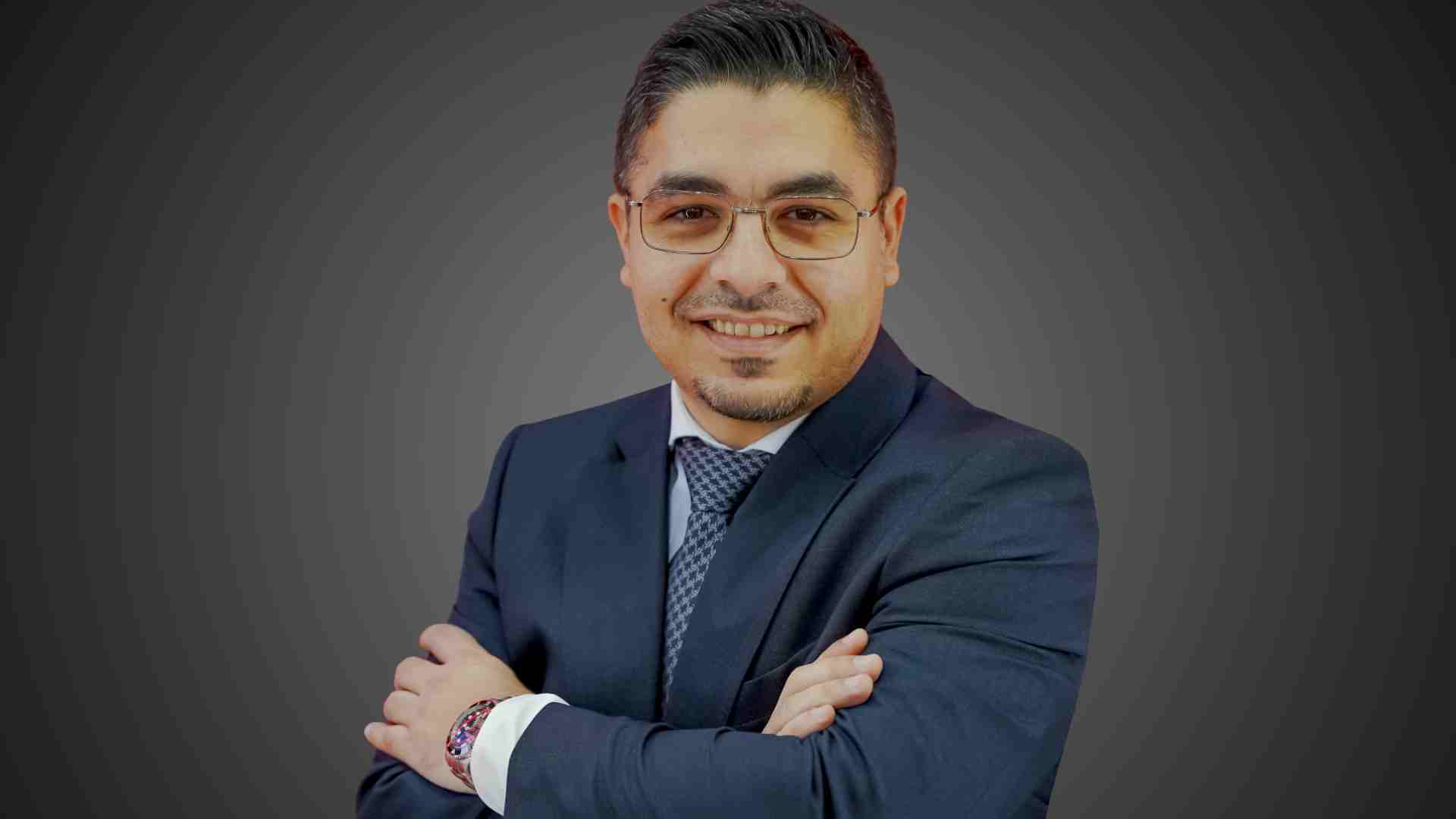
TrendAI™, the global AI security leader and enterprise business unit of Trend Micro Incorporated (TYO: 4704; TSE: 4704), has announced new capabilities for TrendAI Vision One™. These include the private preview of Autonomous Vulnerability Discovery and expanded support for Claude’s Compliance API, which now covers Claude Code and Cowork sessions. Together, these services help enterprises identify exploitable vulnerabilities in source code before attackers do, investigate how AI agents operate, and maintain oversight as AI adoption scales.
The need for this oversight is growing rapidly across the region. According to research conducted by The Harris Poll for Dataiku, 62% of UAE chief information officers believe their organisation have more than 50 AI agents running in production, yet only 18% have a fully unified view of agents across platforms, data environments, and business applications. At the same time, AI is accelerating both how quickly code is written and how quickly attackers can identify flaws. Security teams therefore need to keep pace with AI adoption without losing visibility into what is happening across their environments.
The new capabilities extend TrendAI Vision One™ across both software development and AI agent activity. TrendAI Vision One™ Autonomous Vulnerability Discovery is powered by AESIR, TrendAI’s agentic exploit-remediation engine, which identifies and validates vulnerabilities, including zero-days. It also verifies fixes in customer source code. The engine uses purpose-built, multi-model AI architecture that relies primarily on Anthropic models and has outperformed single-model and agentic system scores on the CyberGym Leaderboard. Every finding is validated by experts from the TrendAI™ Zero-Day Initiative™ (ZDI), the world’s largest vendor-agnostic bug bounty programme. The Autonomous Vulnerability Discovery is deployed and operated on Amazon Bedrock from Amazon Web Services (AWS), enabling the full workflow to run within the customer’s AWS environment
In parallel, the expanded Claude Compliance API integration brings Claude Code and Cowork session records from Claude Enterprise into TrendAI Vision One™. These records include prompts, responses, and tool calls, each tied to a verified user. It enables security teams to investigate AI activity in context, correlate it with endpoint, identity, cloud and network signals, and build custom detections for relevant agent behaviour.
Commenting on the announcement, Salah Suleiman, Managing Director, South Gulf, TrendAI™, said, “AI is changing both how software is built and how work gets done across the enterprise. Code is being written faster than ever, while AI agents are increasingly able to access systems, call tools and act on behalf of users. As organisations across the UAE and the wider region scale AI at pace, their security teams need to identify vulnerabilities early while maintaining clear visibility into what AI systems are doing and whether their actions align with organisational policies. With these additions to TrendAI Vision One™, we are helping organisations move faster with AI while maintaining the context, oversight and control needed to do so securely.”
TrendAI Vision One™ also continues to ingest activity logs from Claude Enterprise, covering user logins, administrative actions and configuration changes, as well as from Claude Platform, covering administrative, system and resource events. Autonomous Vulnerability Discovery is now available in private preview to select enterprise customers running on AWS, while Claude’s Compliance API integration in TrendAI Vision One™ is available to TrendAI Vision One™ customers using Claude Enterprise.

From Scratch by The Coffee Lab Introduces a New Saturday Morning Croissant Experience

LA NIÑA PRESENTS “THE BLACK WEDDING” THIS HALLOWEEN

Megarme on safer inspections and smarter asset maintenance in the GCC



-

 Trending12 months ago
OPPO A6 Pro 5G Review: Reliable Daily Driver
-

 Tech News2 years ago
Denodo Bolsters Executive Team by Hiring Christophe Culine as its Chief Revenue Officer
-
 VAR2 years ago
Microsoft Launches New Surface Copilot+ PCs for Business
-

 Automotive2 years ago
AGMC Launches the RIDDARA RD6 High Performance Fully Electric 4×4 Pickup
-
Tech Interviews3 years ago
Navigating the Cybersecurity Landscape in Hybrid Work Environments
-

 Hospitality2 years ago
Gulfood 2025 30th Edition Kicks Off Today, Setting New Benchmarks in F&B Growth and Innovation
-

 VAR11 months ago
Huawei Nova 14 Pro Review: Where Camera Excellence Meets Ecosystem Evolution
-

 Tech News1 year ago
Nothing Launches flagship Nothing Phone (3) and Headphone (1) in theme with the Iconic Museum of the Future in Dubai