
 Have a question? +971 56 404 0503




Technology
Avaya Breeze and Snapp store introduced at Technology forum

At the Avaya Technology Forum, taking place in Dubai, Avaya executives unveiled Avaya Breeze, a technology platform that makes it easier for organizations to develop the mobile, customer-facing and cloud-migration applications they need to achieve their digital transformation objectives, and the Avaya Snapp Store, the first-ever ecommerce app store for business communications.
As organizations today look to evolve digitally and deliver differentiated experiences to their digitally-savvy customers and workforce, IT departments are struggling to keep pace: by the end of 2017, market demand for mobile app development services will grow five times faster than internal IT organizations can deliver them, according to Gartner Inc. With 89% of companies now competing primarily on customer experience, IT executives need to overcome the skills gap and deliver initiatives at customer speed.
Avaya Breeze, the next generation of the Avaya Engagement Development Platform, provides an entirely new way to develop business communications applications, profoundly simplifying application development, while delivering built-in capabilities for enhanced mobile, customer-facing and hybrid/cloud requirements. To make it even easier to create entirely new customer experiences, Avaya announced the Avaya Snapp Store, a focused, ecommerce-enabled marketplace for Avaya Breeze applications, is now officially open for business.
Savio Tovar Dias, Director – Sales Engineering, Asia, Middle East, Africa & Turkey, said, “This game-changing technology is built for digital business where companies need the flexibility, speed and the freedom to easily create unique value for their customers. Avaya is delivering on the promise of open, mobile engagement with a platform that allows companies to easily design and embed applications into workflows via a powerful, simplified, software-defined architecture and infrastructure for communications. Avaya Breeze helps organizations get ahead of the transformation curve and stand out from their competitors.”
With Avaya Breeze, organizations can deliver enhanced business value and execute on their digital strategies by integrating communications and collaboration into workflows, business processes and existing applications. The open framework allows organizations to automate manual processes to improve digital experiences, while workflow-based applications can be created within a matter of hours or days, rather than months. The Avaya Snapp Store provides a delivery mechanism, allowing a single integrated experience via browsers and native smart apps for entirely new customer experiences.
The Avaya Snapp Store is a focused, ecommerce-enabled marketplace for Avaya Breeze applications – or Snap-ins – from Avaya and 3rd party developers. Snap-ins — easily consumable, prebuilt connectors, fit-for-purpose apps and/or developer code — enable companies to quickly build workflows, customer journeys and other unique applications. The Avaya Snapp Store makes it easy to find, access and download Snap-ins by simply using a credit card for purchase. Developers can create Snap-ins and be on-boarded in the store within weeks.
Avaya is also helping organizations met changing customer expectations with innovative customer engagement solutions, which can be implemented through a fully hosted or hybrid cloud model to help ease the transition between existing and new technologies for digital businesses.
The Avaya Customer Engagement solutions deliver a flexible, robust foundation provided by Avaya Aura and Elite contact center solutions, now available as a 100% virtualized, 100% software-based platform that eliminates the need for hardware-based media gateways to perform important call center functions. With Avaya Pod Fx, organizations can remove complexity and streamline operations, with a full turnkey solution to run an advanced virtualized contact center.
These innovative solutions build on Avaya’s successful transition to software and services, which made up 73% of revenue in its fiscal first quarter. As the only company specializing in complex business communications, built on open and mobile software platforms, and supported by a robust underlying network infrastructure, Avaya is uniquely placed to help drive customers’ digital transformation strategies.
Gary Barnett, SVP and GM, Avaya Engagement Solutions, said, “The competitive battleground has shifted, requiring a new type of solution and means to respond to digital customer behavior. Speed is the new currency for business transformation – businesses need to understand, predict and respond to customer needs in less time than it takes for a spark to burnout. Avaya is the only company that can rapidly elevate the customer end game without the disruption typical of massive technical change.”
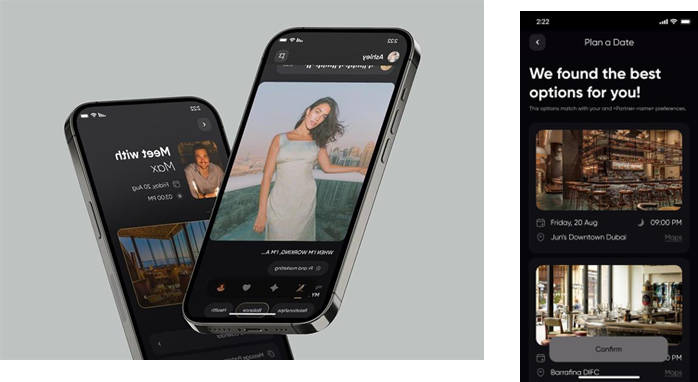
MAXION, a UAE-based platform empowering social connections, has reported 399% year-on-year growth in its user base in 2025 following the introduction of an AI-powered infrastructure designed to prioritise real-world interaction. The growth reflects strong adoption of the platform’s technology-driven approach to facilitating meaningful relationships. Over the same period, the company reached a 406% increase in annual recurring revenue.
MAXION operates as a hybrid SaaS and marketplace platform built on an AI-powered system that processes behavioural, scheduling, and conversion data across the full lifecycle of an interaction. The system analyses availability alignment, time to meeting, attendance confirmation, repeat meeting patterns, and structured feedback following in-person meetings, helping members move from introduction to real-world conversation more efficiently. To support the continued development of these capabilities, MAXION has secured $900,000 in early-stage funding, which has been allocated toward AI integration, infrastructure development, senior product hires, and operational expansion.
The UAE’s international population provides a strong environment for MAXION’s growth, with Dubai alone home to a rapidly expanding base of ultra-high-net-worth individuals (UHNWIs). At the same time, the UAE online relationship services market is anticipated to grow by more than 9.21% by 2031, highlighting sustained demand for platforms that help individuals form meaningful connections in fast-moving urban environments.
To date, more than 40,000 individuals have applied to join MAXION, with approximately 7,000 active members accepted into the curated community. Through a selective onboarding process, the platform maintains a gender balance close to 50:50, compared with traditional platforms where participation averages approximately 70:30 male to female. The community primarily consists of high-performing professionals aged 25 to 45 working across finance, consulting, technology, entrepreneurship, and senior corporate leadership roles.
Christiana Maxion, Founder and CEO of MAXION, said: “Our long-term vision is to restore real-world connection in a fast-moving world. Technology should help people meet sooner rather than spend months behind a screen. We use data to make it easier for people to meet at the right time, allowing members to focus on getting to know each other rather than spending weeks in digital conversation. MAXION is designed to move people from introduction to real conversation quickly, where interactions feel more natural, and intentions become clearer. Over time, we want to build a platform that supports strong partnerships and lasting communities.”
In the past six months alone, MAXION has facilitated more than 2,000 in-person meetings between members. The platform measures success by the relationships formed between members, with users typically returning every three months and continuing to engage with the app over periods of up to two years. MAXION has also established strategic partnerships with brands to reduce logistical friction surrounding real-world meetings and create a smoother experience for members.
Adoption is currently concentrated in Dubai, with growing traction in Abu Dhabi. The company plans to deepen its presence across the UAE while preparing for expansion into international professional hubs such as Singapore, London, and New York, where dense expatriate populations and fast-paced professional environments create similar demand for intentional connection.
Over time, MAXION aims to support members beyond the first stage of connection by creating value for couples as their relationships develop. The long-term vision is to help build urban communities where meaningful relationships remain central to modern professional life.
Tech Features
SUPPORTING EMPLOYEES ABROAD OR RELOCATING AMID REGIONAL TENSIONS: A STRATEGIC ADVISORY FOR ORGANISATIONS


By Gillan McNay, Security Director Assistance – Middle East, International SOS
Periods of regional tension place organisations under intense pressure to protect their people while sustaining operations. For UAE‑based companies with employees working from abroad, traveling frequently, or facing potential relocation, uncertainty can escalate quickly. Routes change, borders tighten, information moves faster than it can be verified, and employees look to their organisation for clarity and reassurance. In this environment, support must be strategic, deliberate, and people‑first.
Shift From Reaction to Preparedness
The most resilient organisations are those that move beyond reacting to events and instead operate with a preparedness mindset. This starts with acknowledging that uncertainty is not an exception but a condition organisations must continuously manage. Strategy, therefore, should anticipate disruption and define how the organisation will respond before decisions are forced by urgency.
Preparedness does not mean planning for every possible outcome. It means establishing decision frameworks that allow leaders to act confidently as conditions evolve, whether that results in continued remote work, relocation to a safe haven, or shelter‑in‑place with enhanced support.
Establish Workforce Visibility as a Strategic Capability
Supporting employees abroad begins with accurate, real‑time visibility. Leaders must know where their people are, their travel status, and whether they are working remotely, stationed overseas, or in transit with dependents. Visibility should extend beyond employees to include contractors and accompanying family members where duty‑of‑care obligations apply.
This visibility is strategic because it underpins all subsequent decisions. Without it, organisations risk delayed responses, fragmented communication, and uneven support. With it, they can act proportionately, supporting those most exposed while avoiding unnecessary disruption for others.
Differentiate Between Relocation, Evacuation, and Stability
One of the most common strategic mistakes during regional tensions is treating all movement decisions as evacuations. In reality, organisations need three clearly defined postures:
- Stability: Supporting employees to remain where they are with guidance, wellbeing checks, and secure working arrangements.
- Relocation: Moving employees to a safer location, often within the region, as a preventive measure.
- Evacuation: Executing time‑bound movement out of an area due to elevated risk.
Clear definitions allow leaders to choose the least disruptive option that still protects people. Often, relocation or stability with structured support is safer and more sustainable than rapid evacuation.
Prepare Employees Before Movement Is Required
Relocation becomes significantly smoother when employees are prepared before they are asked to move. Strategy should include guidance on documentation readiness, passport validity, visa requirements for neighbouring countries, preferred relocation countries and expectations around timelines and flexibility.
Employees working abroad need to understand not only what may happen, but how decisions will be made. When organisations explain decision triggers, what would prompt relocation, what would not, employees feel informed rather than anxious. This transparency builds trust and reduces panic-driven movement.
Integrate the Human Dimension into Planning
Strategic support must address the human impact of uncertainty. Employees working from abroad or facing relocation are often balancing professional obligations with family concerns, schooling, medical needs, and other emotional strains. Ignoring these factors weakens any relocation or stability strategy.
Effective organisations integrate wellbeing considerations into operational plans. This includes access to medical advice, continuity of prescriptions, support for family travel, and regular wellbeing check‑ins. Leaders should be attuned to signs of fatigue or anxiety and equip managers with guidance to support teams compassionately and consistently.
Communicate With Discipline and Predictability
In uncertain times, communication is as important as movement planning. Strategy should define how, when, and by whom information is shared. Centralised, fact‑based updates delivered at a predictable cadence reduce speculation and rumor.
Employees should know where official updates will come from and which sources to trust. Communications do not need to be frequent to be effective; they need to be consistent, clear, and grounded in verified information. Saying “there is no update yet” is often more reassuring than silence.
Support Employees Who Must Remain Abroad
Not all employees can or should relocate. Many will continue working from abroad in environments affected by regional tension. Supporting these employees strategically means ensuring they have guidance on local conditions, access to support services, and clearly defined expectations around work, availability, and safety.
Stability should be treated as an active posture, not inaction. Regular check‑ins, updated guidance, and contingency planning signal to employees that their situation is being managed deliberately, not overlooked.
Plan for Relocation as a Managed Process
When relocation is required and viable, it should be executed as a controlled, end‑to‑end process. This includes manifesting all individuals, front‑loading documentation checks, coordinating transport and accommodation, and communicating each step of the journey.
Strategically, leaders must also consider what comes after relocation: access to work, schooling for children, healthcare, and communication continuity. Relocation is not just movement; it is a temporary operating model that must be sustainable.
Learn, Adapt, and Strengthen
Each period of disruption provides insight into what worked and what did not. Strategic organisations capture these lessons and feed them back into planning. This may involve refining decision thresholds, improving data accuracy, or strengthening manager training.
Preparedness evolves as operating environments change, and organisations that invest in continuous improvement are better positioned to protect both their people and their business.
A Strategy Built on Trust and Clarity
Ultimately, supporting employees abroad or relocating amid regional tensions is a test of organisational maturity. Clear visibility, disciplined planning, transparent communication, and genuine care form the foundation of resilience. When organisations operate from these principles, employees feel supported rather than vulnerable, and leaders can make decisions with confidence rather than urgency.

By Dr. Craig Cook, CEO, The Brain & Performance Centre, A DP World Company
Healthcare is entering one of the most transformative periods in its history. Artificial intelligence is accelerating diagnostics, enhancing imaging, and enabling more personalised treatment pathways than ever before. These advancements are no longer theoretical, they are already shaping how care is delivered across leading medical systems.
However, as the industry moves forward at pace, there is a risk of focusing too heavily on what technology can do, and not enough on what individuals actually need.
At its core, healthcare is not a technical transaction. It is a human experience. Within that experience, trust, communication and empathy are not optional, they are fundamental.
Strong human interaction between clinicians and clients remains one of the most important factors in delivering safe and effective care. Technology can identify patterns, process data and support decision-making, but it cannot replace the reassurance an individual feels when they are heard, understood and taken seriously. That interaction often determines whether someone follows through with treatment, shares critical information, or seeks support early rather than late.
From a safety perspective, this is critical. Individuals who feel comfortable with their clinician are far more likely to communicate openly about symptoms, concerns and uncertainties. They ask more questions, clarify instructions, and engage more actively in their own care. This level of engagement reduces the likelihood of miscommunication, improves adherence to treatment plans, and ultimately leads to better outcomes.
In contrast, when the human element is diminished, even the most advanced systems can fall short. An individual may receive accurate data but still leave uncertain about what it means. They may hesitate to disclose something important, or disengage entirely. No algorithm can compensate for that gap.
This is why meaningful communication must remain at the centre of healthcare delivery. It is not simply about explaining a diagnosis. It is about creating an environment where individuals feel safe to speak, where their concerns are acknowledged, and where complex information is translated into something clear and actionable.
As artificial intelligence continues to evolve, the role of the clinician will not diminish, it will become more important. Technology should reduce administrative burden, enhance precision, and create time. That time should be reinvested into the client relationship through greater clarity, deeper understanding and more considered care.
At The Brain & Performance Centre, A DP World Company, this balance is central to how we approach care. Advanced technologies play a critical role in our assessments and programmes, but they are always applied within a human-led framework. Every programme is personalised, every interaction is intentional, and every client journey is built on understanding the individual, not just the data.
The future of healthcare will undoubtedly be shaped by innovation. But its success will not be defined by how advanced the technology becomes. It will be defined by whether we use that technology to strengthen, rather than replace, the human connection at the centre of care. Because ultimately, the most powerful tool in healthcare is not artificial intelligence. It is trust.


2027 Chevrolet Corvette Grand Sport, Grand Sport X debut with new 6.7L V8
MAXION REPORTS 399% USER GROWTH AMID RISING DEMAND FOR REAL-WORLD CONNECTION PLATFORMS
SOBHA REALTY’S CREST GRANDE RECEIVES BUILDING COMPLETION CERTIFICATE; HANDOVER TO COMMENCE WITHIN RERA TIMELINE



-
News10 years ago
SENDQUICK (TALARIAX) INTRODUCES SQOOPE – THE BREAKTHROUGH IN MOBILE MESSAGING
-

 Tech News2 years ago
Denodo Bolsters Executive Team by Hiring Christophe Culine as its Chief Revenue Officer
-
 VAR12 months ago
Microsoft Launches New Surface Copilot+ PCs for Business
-

 Tech Interviews2 years ago
Navigating the Cybersecurity Landscape in Hybrid Work Environments
-

 Trending5 months ago
OPPO A6 Pro 5G Review: Reliable Daily Driver
-

 Tech News9 months ago
Nothing Launches flagship Nothing Phone (3) and Headphone (1) in theme with the Iconic Museum of the Future in Dubai
-

 Automotive1 year ago
AGMC Launches the RIDDARA RD6 High Performance Fully Electric 4×4 Pickup
-

 VAR2 years ago
Samsung Galaxy Z Fold6 vs Google Pixel 9 Pro Fold: Clash Of The Folding Phenoms