
 Have a question? +971 56 404 0503




Technology
Huawei signs IoT and Big Data partnership with SAP and Seidor MENA

Huawei announced a regional joint innovation partnership with global enterprise software provider SAP and Seidor MENA, a systems integrator that provides ICT consulting services.
Huawei’s collaboration with SAP and Seidor MENA will focus on establishing a technical alliance to provide a comprehensive Internet of Things (IoT) and Big Data solution that will digitally transform the region’s enterprises, offering more agility and allowing them to run more efficiently.
The development of the IoT industry, including the utilization of Big Data, is widely considered to be the fourth industrial revolution, following those driven by the steam engine, electricity and information technology. IoT solutions have the power to address world challenges for everything from connected transportation and emergency services to energy management, by seamlessly connecting physical objects into the information network.
The synergy between the three ICT companies will allow customers to benefit from Huawei’s expertise in providing hardware and infrastructure solutions, SAP’s wide application software portfolio and Seidor MENA’s technology consulting services. The digital transformation event was recently hosted by Huawei, SAP and Seidor MENA, under the theme ‘The Internet of Things Meets Big Data’. The event demonstrated the three ICT leader’s innovation partnership through a series of sessions alongside success stories that will be presented by an end-user. The sessions addressed the role that the partnership will play to drive the IoT era using predictive analytics, reliable robust hardware infrastructure and strong consulting capabilities to help implement digital transformation.
At the event Huawei, SAP and Seidor MENA have organized a series of program sessions that will demonstrate how each of their strengths and capabilities add significant value when combined, allowing them to offer a unique holistic IoT and Big Data solution for businesses in the Middle East.
Hany Hussein, Vice President of Partners & Alliances from Huawei Middle East said,“Huawei values our new win-win partnership with SAP and Seidor MENA, which allows us to offer a truly unique IoT and Big Data for regional enterprises looking to streamline their business processes. With our expertise in ICT hardware infrastructure, Huawei is committed to collaborating with SAP’s application software solutions and Seidor MENA’s consulting services so that we can market our combined capabilities to develop differentiated IoT and Big Data solutions. This innovation partnership is designed to help local enterprises across different sectors deploy new technologies easily and quickly, making them more efficient and allow them to save bottom line costs.”
The joint innovation partnership follows previous successful collaborations between Huawei and SAP, which saw the companies integrate Huawei’s ICT infrastructure and connectivity solutions with SAP HANA Cloud Platform, SAP applications and analytic tools. This initial partnership focused on developing agile manufacturing, smart energy and transportation solutions with SAP HANA Cloud Platform.
Hannes Liebe, Chief Operating Officer, SAP MENA, said, “With the rise in Smart Cities and hyper-connected mega-events, the Middle East region is posting strong demand for cloud-based IoT solutions that can harness the power of real-time insights to simplify business operations, drive government innovation, and transform daily lives. By combining Huawei’s ICT infrastructure, the SAP HANA platform for real-time Big Data analytics, and Seidor’s regional expertise in systems integration, we are joining forces to deliver global best practices to support the Middle East’s digital transformation.”
System’s Integrator, Seidor MENA, provides SAP’s comprehensive next generation platform technology services covering consulting, infrastructure, implementation, development, and maintenance of applications. Its SAP practice is pillared by twenty-five industry solutions tailored for the small and medium business (SME) sector in the Middle East.
“We are thrilled to team up with Huawei and SAP to simplify our clients business and keep them a step ahead from competition. This partnership will add very strong value proposition in digital transformation and making business run simple,” said Ignacio Ruiz de Equilaz, Managing Director Seidor MENA.
Tech News
Vertiv announces Scalable, High-Capacity Double Stack Busway System that Preserves White Space for Growing AI Data Center Demands

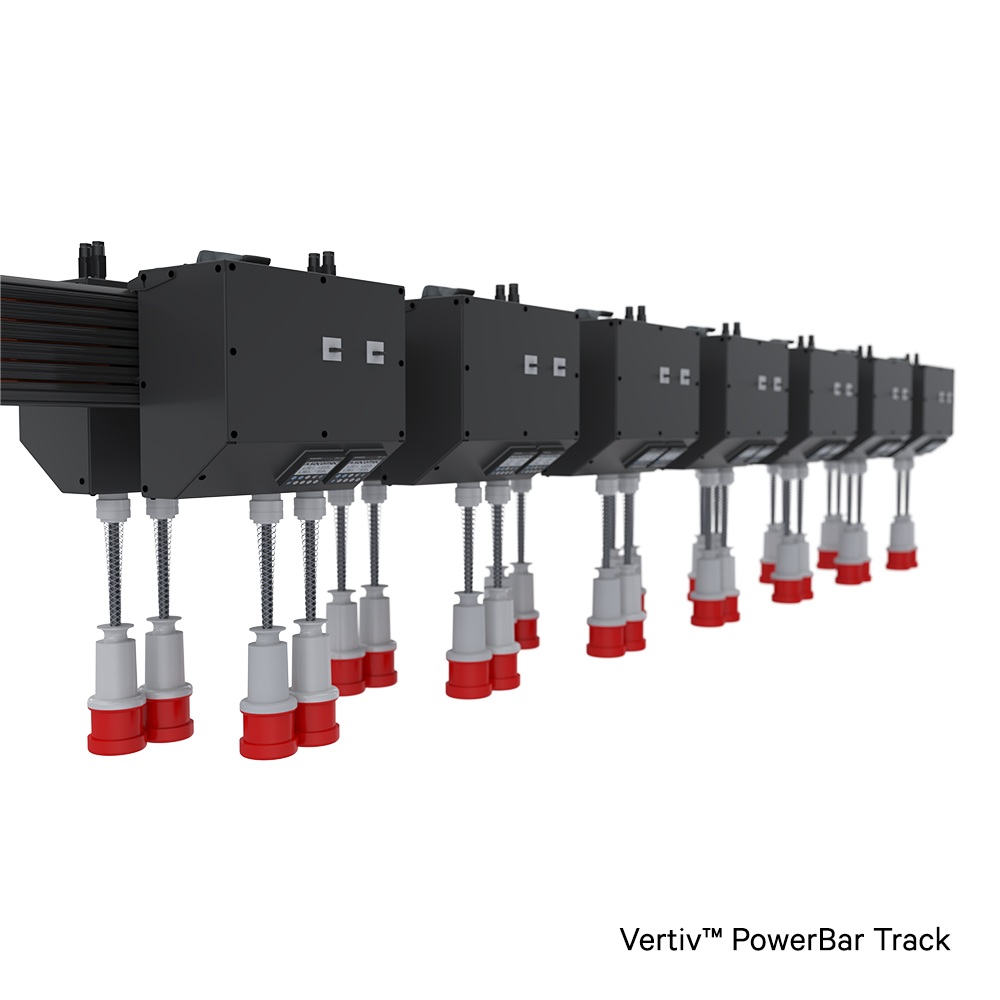
Vertiv, a global leader in critical digital infrastructure, today announced the expansion of the Vertiv PowerBar Track busway family with the introduction of a compact, high-capacity double-stack design that enables higher power density while optimizing valuable white-space. Designed to address rapidly evolving AI workloads within colocation and hyperscale data centers, the scalable system delivers high-capacity power distribution through a flexible, modular architecture that supports future growth, enables improved energy efficiency, and provides simplified deployment. The solution is designed to meet rigorous global safety and performance standards, with configurations of up to 2000A under UL standard 857, and up to 2500A for IEC 61439-6 with variants in copper and aluminum conductors.
The Vertiv PowerBar Track enables safe, continuous power delivery and live configuration changes without system downtime. Its open-track architecture allows operators to install or relocate tap-off boxes anywhere along the busway while maintaining active load distribution. Each connection point includes built-in mechanical and electrical interlocks for operator safety, and optional integrated metering provides real-time visibility of power usage for improved capacity planning and energy management. The double stack configuration supports higher capacity and more connections per tap-off box and can also scale vertically to efficiently serve high density environments.
“Power distribution must keep pace with the scale and density of modern AI and high-performance computing environments,” said Kyle Keeper, senior vice president of the power business unit at Vertiv. “As customers navigate increasing power demands, tighter space constraints, and rapidly evolving infrastructure requirements, they need solutions that provide flexibility. Vertiv PowerBar Track double stack is designed to address these challenges by enabling compact yet scalable expansion, supporting live changes, and delivering the reliability required in mission-critical data center environments.”
The busway system integrates seamlessly with the broader Vertiv end-to-end power train, including Vertiv™ PowerBoard switchgear, uninterruptible power supply (UPS) systems, and racks, forming a complete and coordinated infrastructure for high-density applications. Supported by Vertiv’s global manufacturing and service network, Vertiv™ PowerBar Track can be configured to aid maintenance, helping reduce maintenance-related downtime while enabling faster deployment and greater adaptability for data centers undergoing rapid expansion. Vertiv PowerBar Track also contributes to the Vertiv 360AI power ecosystem, which combines power distribution, protection, and management technologies designed to support the next generation of AI-ready digital infrastructure.
Vertiv PowerBar Track integrates with Vertiv OneCore, a scalable prefabricated data center infrastructure solution, and Vertiv SmartRun, a modular overhead IT infrastructure system, enabling a cohesive approach to modular, scalable data center design.
Exclusive interview with Mark Turner, President EMEA, Rezolve Ai

What made Shoptalk Luxe Abu Dhabi a priority platform for Rezolve Ai this year?
For Rezolve Ai, Shoptalk Luxe Abu Dhabi brings together the right audience at the right moment. Luxury retailers in the region are no longer exploring ideas, they are making decisions and investing. It is a practical forum to exchange views with brands that are actively shaping their customer engagement and commerce strategies, and to have grounded conversations about what is working in real retail environments. Abu Dhabi also reflects how influential the region has become in global luxury thinking.
How is AI changing the way luxury retailers think about customer engagement today?
Luxury retailers are becoming far more intentional about how and when they engage customers. AI is helping them move away from broad personalisation toward more contextual, timely interactions that respect the brand experience. The focus is on supporting customers at key moments, whether online or in store, and ensuring engagement feels consistent and considered rather than automated or intrusive.
What distinguishes meaningful AI adoption in retail from short-term experimentation?
Retailers that see lasting value from AI are those that embed it into day-to-day operations rather than treating it as a standalone initiative. Meaningful adoption is driven by clear commercial goals, fast implementation, and solutions that work within existing systems and teams. Short-term experimentation tends to stall when it lacks ownership, scale, or a clear link to performance outcomes.
Why is the Middle East, and the UAE in particular, becoming increasingly important for luxury retail innovation?
The Middle East, and the UAE in particular, has created an environment where luxury retail innovation can move quickly. Consumers are digitally confident, infrastructure is strong, and there is a clear push at a national level to adopt advanced technologies. This combination allows retailers to implement and test new models at scale, which is why the region is increasingly influencing global luxury strategies.
Looking ahead, where do you see AI delivering the most value for luxury brands over the next few years?
The greatest value will come from AI that directly supports growth while reinforcing operational discipline. For luxury brands, that means more relevant engagement that improves conversion and loyalty, alongside better forecasting and inventory decisions that protect margins. The priority will be practical use of AI that enhances the customer experience without compromising brand integrity.
Tech News
The Executive Health Upgrade: Why Personalized Prevention Is the UAE’s Next Premium Category

How Prana AI + SindyXR Want to Make Personalized Health Routine in the UAE
By Integrator Web Editor

Most healthcare is built for emergencies. But the biggest risks to long-term health often develop quietly—sleep debt, metabolic drift, chronic stress, early cardiovascular strain. Prana AI and SindyXR are building a UAE-first model that treats health like a modern dashboard: establish your baseline, detect drift early, and guide course-correction through an AI “longevity OS” paired with concierge support.
The UAE is rapidly becoming a proving ground for next-generation, consumer-friendly health models that blend premium services with data-driven personalization. This article explores a shift underway in Dubai and the wider Emirates: moving from reactive, appointment-led care toward continuous, proactive “health operating systems.” Prana AI and SindyXR are among the emerging players aiming to productize prevention—making personal health measurable, understandable, and easier to follow through on.
“Most healthcare is built for emergencies. Personalized health is built for trajectory.” – Christopher M. Hill, Board Chair, President, and CEO of SindyXR
From Firefighting to Flight-Checking
Most of us treat health like a fire alarm: we respond when it’s loud enough to ignore. A symptom appears, we book an appointment, get a prescription or advice, and move on. That model isn’t “bad”—it’s just built for a different job.
Reactive healthcare is excellent at handling acute problems. But the biggest threats to long-term wellbeing often don’t arrive with sirens. They creep in quietly: chronic stress patterns, sleep erosion, metabolic instability, early cardiovascular risk, burnout. By the time something becomes obvious, the fix is harder, slower, and more expensive.
This is why “personalized health”—often described as preventive, longevity-focused, or precision wellness—is accelerating globally. The promise is simple and non-medical: know your baseline, track changes over time, and act early with clarity.
In the UAE, where performance, pace, global mobility, and high expectations are everyday realities, that promise is especially relevant. People want health experiences that match how they actually live: fast, discreet, premium, and practical—with minimal friction and real follow-through.
Personalized Health, Explained Without the White Coat
Personalized health doesn’t require a medical degree to understand. It’s a system that does four things well:
- Establishes your baseline — a clear snapshot of how your body is functioning today.
- Detects drift over time — what’s improving, what’s stuck, what’s slipping.
- Translates data into action — simple, tailored steps you can actually do.
- Keeps you consistent — so improvements don’t fade after a “good month.”
The goal isn’t perfection. It’s trajectory. You’re not trying to “win health.” You’re trying to reduce risk and increase resilience—month after month.
“Think of it as a health command center: baseline, drift detection, and guided course-correction.” – Charles Cavo, DO Co-founder, Pounds Transformation
Why the UAE Is Ready for This Category
Dubai and the wider UAE are fertile ground for this model for three reasons:
- High intent: Many professionals already invest in fitness, nutrition, mental performance, recovery, and longevity practices.
- High friction: Even motivated people struggle to stay consistent when travel, deadlines, and family responsibilities pile up.
- High expectations: Premium experience isn’t a “nice to have” in the UAE; it’s a baseline for adoption.
Most people don’t need more information. They need a system that makes follow-through easier than falling off track.
That’s the core thesis behind Prana AI + SindyXR: the real disruption isn’t “one more health test.” It’s a repeatable operating model around the person that converts insight into sustained action.
Prana AI + SindyXR: A Hybrid ‘Longevity Concierge’ Built for Busy Lives
The Prana AI + SindyXR approach can be understood as three layers working together—each solving a different part of the real-world problem.
Layer 1: Precision diagnostics (the baseline)
This is the “what’s happening inside my body?” layer—advanced diagnostics designed to establish a meaningful baseline across key health domains. Not just a basic annual check, but a deeper view intended to help identify risk patterns early and prioritize what matters now.
Crucially, the output has to be readable, not intimidating: scores, trends, and plain-language insights that allow non-medical professionals to understand what they should focus on—without getting buried in numbers.
Layer 2: Prana AI as the Personal Longevity OS (the daily system)
This is where personalization becomes real. Many wellness apps can nudge, but they often lack context—your baseline and your changes over time.
Prana AI’s role is to function like a health command center:
- Daily routines that fit real schedules (sleep, movement, recovery, nutrition prompts)
- Wearable integration where available (to track trends, not obsess over single readings)
- Progress tracking that emphasizes trajectory (what’s changing, what isn’t)
- Quarterly and annual comparisons to identify drift early
The design intent is simple: reduce decisions. When people are busy, friction kills follow-through. The “OS” needs to feel like a co-pilot—not a second job.
Layer 3: SindyXR concierge + expert ecosystem (the follow-through engine)
The uncomfortable truth about health is that many people already know what to do. The problem is friction:
- booking
- scheduling
- follow-up
- accountability
- decision fatigue
SindyXR’s concierge layer aims to handle the “life admin” of better health—connecting users to curated experts, creating structured sessions, enabling community learning (webinars and roundtables), and coordinating next steps so momentum doesn’t fade.
This is the difference between:
- “I should do something about this,” and
- “It’s scheduled, guided, and underway.”
“The innovation isn’t one more test—it’s the operating model around the person.” – Sumit Puri, CEO & Co-Founder, Prana AI
The Closed Loop Most Health Experiences Don’t Deliver
Here’s what separates a premium testing service from a real system: the loop.
Most offerings stop at “test + report.” Some add “test + report + generic advice.”
The Prana AI + SindyXR model is designed to deliver a full cycle:
In other words:
- you don’t just learn your numbers,
- you change the trajectory, and
- you prove it over time.
That loop is the true product: a repeatable “operating model” for personal health.
Who It’s For First: The Executive Longevity Circle
The initial positioning is clear: this is built for people who are time-poor, performance-driven, and outcome-focused—CXOs, founders, board-level leaders, and globally mobile professionals (often 45+).
It’s a pragmatic wedge. High-touch membership models can:
- protect quality while the system is refined,
- build trust through experience rather than marketing,
- generate credible outcomes stories (the only marketing that matters in health).
From there, the model can expand into broader segments and partnerships—especially in an environment like the UAE where premium experience and measurable outcomes are powerful adoption catalysts.
The Trust Test: No Magic Claims, Just Clear Guardrails
AI in health is powerful—and sensitive. Adoption depends on trust:
- What is informational vs diagnostic?
- How is data stored and consent managed?
- How are recommendations explained?
- Where does clinician oversight come in?
The healthiest framing is simple: AI doesn’t replace doctors. It reduces noise, spots patterns, and improves follow-through. It helps people act earlier, more consistently, and with fewer blind spots.
What Success Looks Like in the UAE
If Prana AI + SindyXR execute well, the UAE could become a flagship market for a new category: personalized preventive health that feels as seamless as concierge banking.
Success won’t be measured by how “advanced” the tech sounds. It will be measured by:
- consistent engagement over months (not weeks),
- measurable improvement in key markers,
- fewer health surprises,
- better energy, sleep, recovery, and resilience.
Because the future of health won’t be another appointment.
It will be a smarter system around you—quietly keeping you on course.
“The UAE is uniquely positioned to lead this shift: people here value time, discretion, and outcomes. Personalized health will win when it feels as seamless as concierge banking—and as measurable as a performance dashboard.” – Subrato Basu, Global Managing Partner, The Executive Board

BALANCING INNOVATION AND TRUST IN THE FUTURE OF RETAIL TRADING PLATFORMS IN THE UAE
CELEBRATE MOTHER’S DAY & INTERNATIONAL WOMEN’S DAY WITH NEWBY TEAS

Vertiv announces Scalable, High-Capacity Double Stack Busway System that Preserves White Space for Growing AI Data Center Demands



-

 Tech News2 years ago
Denodo Bolsters Executive Team by Hiring Christophe Culine as its Chief Revenue Officer
-
News10 years ago
SENDQUICK (TALARIAX) INTRODUCES SQOOPE – THE BREAKTHROUGH IN MOBILE MESSAGING
-
 VAR11 months ago
Microsoft Launches New Surface Copilot+ PCs for Business
-

 Tech Interviews2 years ago
Navigating the Cybersecurity Landscape in Hybrid Work Environments
-

 Tech News8 months ago
Nothing Launches flagship Nothing Phone (3) and Headphone (1) in theme with the Iconic Museum of the Future in Dubai
-

 Automotive1 year ago
AGMC Launches the RIDDARA RD6 High Performance Fully Electric 4×4 Pickup
-

 VAR2 years ago
Samsung Galaxy Z Fold6 vs Google Pixel 9 Pro Fold: Clash Of The Folding Phenoms
-

 Tech News2 years ago
Brighton College Abu Dhabi and Brighton College Al Ain Donate 954 IT Devices in Support of ‘Donate Your Own Device’ Campaign