 Have a question? +971 56 404 0503




Technology
GITEX to unveil new Startup Movement

GITEX Technology Week will launch and host GITEX STARTUP MOVEMENT, one of the most global startup gatherings in the world with over 30 countries represented, as it brings together entrepreneurs, innovators, investors, mentors and buyers for the first time in Dubai.
The GITEX STARTUP MOVEMENT will convene over 400 startups and more than 1,000 entrepreneurs, investors and mentors from the global startup ecosystem. The exclusive set-up will highlight the most innovative startups around the world and provide them a platform to sell, form partnerships and attract investors. Participants will also be able to pitch for prizes, attend an interactive conference to address challenges faced by entrepreneurs and meet leading industry figures. The initiative has already garnered tremendous interest and momentum from supporters across the globe including Business France, Cross Trade agency in Singapore, Digi Robotics in the UAE, Egypt’s Information Technology Industry Development Agency (ITIDA), Japan’s Jetro agency, Marco Trade Export in Morocco, Star Systems agency in Iran and STC from KSA.
Amjad Shacker, Corporate Communication GM at STC, commented, “InspireU is an STC initiative to promote, support and develop digital startups and nurture and consolidate the startup ecosystem in the MENA region and create sustainable value. We believe that “to inspire is to empower” and we do that by providing the directions and tools to budding entrepreneurs to achieve their dreams. STC strongly supports the launch of the GITEX Startup Movement and is proud to co-present the top tier prize of the event to the best global startup.”
“The need for local and regional startup ecosystem consolidation, learning from global best practices, and exposure to global investment network, is imminently evident. STC considers GITEX Startup Movement addressing this need; it will help regional players to learn and mature as well as expose them to the global buyers and investors. STC will showcase the achievements of InspireU by showcasing its incubatees, connect them to the broader network, attract future deal flow and share the roadmap for the future. STC is participating in the Global Startup Movement to inspire and be inspired,” said Shacker.
Eric Morand, Director of Tech & Innovative Services Division at Business France, said, “Business France, as a loyal exhibitor of the GITEX Technology Week, is very happy to be part of the GITEX Startup Movement. We are certain that this new movement will gather regional startup ecosystem as well as well as the global startup ecosystem. This will be therefore, the perfect platform to introduce the French Tech initiative, which proved to be a success in events such as CES, Web summit, 4YFN, etc.”
The Arab world has a burgeoning youth demographic. More than 60 per cent of the 350 million population is under the age of 25. Young millennial Arabs are online, mobile, using technology and becoming entrepreneurs with the strong support of government initiatives. The UAE leads the way in the region on revolutionary smart cities transformation and diversification of economies. Across Middle East & Africa, entrepreneurs are at the heart of the digital revolution as ICT spending increases across the region.
“Startups from all over the globe, women, youth and Arab entrepreneurs are a very real force of change that is making a positive impact in our society. They need supportive ecosystems to nurture and enable their growth and success. GITEX Technology Week has a strong legacy as one of the leading international tech events and is uniquely positioned to turn the spotlight on startups. With a force of 146,000 technology professionals and 22,000 C-suite executives at GITEX, Startups gain immediate access to a powerful industry network and massive technology marketplace, entry into growth markets in Middle East & Africa, and can future-proof their business plans, products and services.” said Trixie LohMirmand, Senior Vice-President, Exhibitions and Events Management, Dubai World Trade Centre.
“The Tesla Foundation is proud to be a part of the GITEX Startup Movement. The foundation is focused on building the bridge between private and public organizations to create new technologies and companies and the Middle East & Africa presents a unique opportunity. We have been graced with the strength of government support and the burgeoning entrepreneur scene that is in the region. As a science and technology Foundation focused on robotics and automation, “Cyber-Physical Systems,” GITEX enables us to expand our network by connecting with innovators, entrepreneurs, and companies to include in the Tesla STEM (Science, Technology, Engineering, and Mathematics) Farm System,” said Keith Kaplan, CEO Tesla Foundation.
An automotive company founded in 2003 by a group of engineers in Silicon Valley who wanted to prove that electric cars could be better than gasoline-powered cars, Tesla is also -a technology and design company with a focus on energy innovation.
The public sector in the UAE is already committed to facilitating a conducive environment for entrepreneurship through its AED 2 billion knowledge fund, which is part of the country’s National Innovation Strategy, and aims to accelerate the startup movement towards a sustainable knowledge-based economy.
Further positive announcements such as the establishment of venture firm 500 Startups’ US$30 million fund in the Middle East and North Africa, Uber’s US$ 250 million investment in the region and home grown UAE startup, Souq.com who recently secured US$ 275 million investment to be the highest valued internet company in the Middle East, are testaments to rising MENA entrepreneurship scene where vibrant and growing economies present untapped and unchartered opportunities.
The rise in the number of exits in the region has also garnered the attention and interest of serious venture capitalists, proving that the savvy investor stands to gain by investing in the region. In 2015, high-profile exits include Turkey’s food delivery startup Yemeksepti that sold for US$589 million, Kuwait’s Talabat.com that sold for US$170 million and Fawry, an electronic payment platform that sold for US$100 million.
GITEX STARTUP MOVEMENT will form the centrepiece of the 2016 edition with emerging technologies sectors in the region equally set to benefit, as the event will showcase IoT applications, next-gen technologies and digital marketing solutions that are expected to revolutionise the global economy by 2025.
The Middle East, through its early adoption of emerging and next-gen technologies is poised to benefit from the global industrial shift and startup organisations in the region are well positioned to become innovators and leaders. The region is already projected to spend around US$60 billion on 3D Printing, Robotics, Drones, Digital Marketing and Smart Living/Wearables by 2020.
As the Middle East embarks upon rapid transformations towards Smart Cities, the demand for innovative solutions is ever increasing. GITEX STARTUP MOVEMENT will connect entrepreneurs with key government buyers, VCs, angel investors, seed capital and mentors from around the world.
“The marketplace is wide open for disruption and innovation by both established technology providers and startups. Technology buyers are hungry to differentiate themselves from their competition. They are open to be early adopters of technology that can revolutionize their customer experience or open up new market possibilities in key industries such as retail, healthcare, education, finance, travel and energy. GITEX STARTUP MOVEMENT will provide that breadth and depth of technology and services for all our trade visitors invested in innovation and enterprise,” LohMirmand said.
Delegates will be have the opportunity to visit country zones and showcase pods that will feature the most exciting startups offering drones & robotics; IoT, AR, VR & AI; finance; retail; healthcare; education; energy; travel & hospitality; media & marketing; and transport & logistics, to name a few.
GITEX Technology Week will feature dedicated zones that will showcase exhibitors and live demonstrations of emerging solutions and providers from 3D Printing, Robotics, Drones, Digital Marketing, Wearables and IoT and Smart Living, as well as industry Vertical Days to streamline the visitor experience looking for specialist knowledge. GITEX brings together, leaders, influencers and innovators from the industry and a compelling programme of networking sessions.
GITEX Technology Week is expected to attract more than 146,000 visitors from over 140 countries, including 22,000 C-suite executives and 3,500 exhibitors from 55 countries.
GITEX Technology Week runs from 16-20 October 2016 at Dubai World Trade Centre (DWTC).

Tech News
Abu Dhabi Projects and Infrastructure Centre and PATRIZIA sign strategic partnership to support infrastructure investment and development

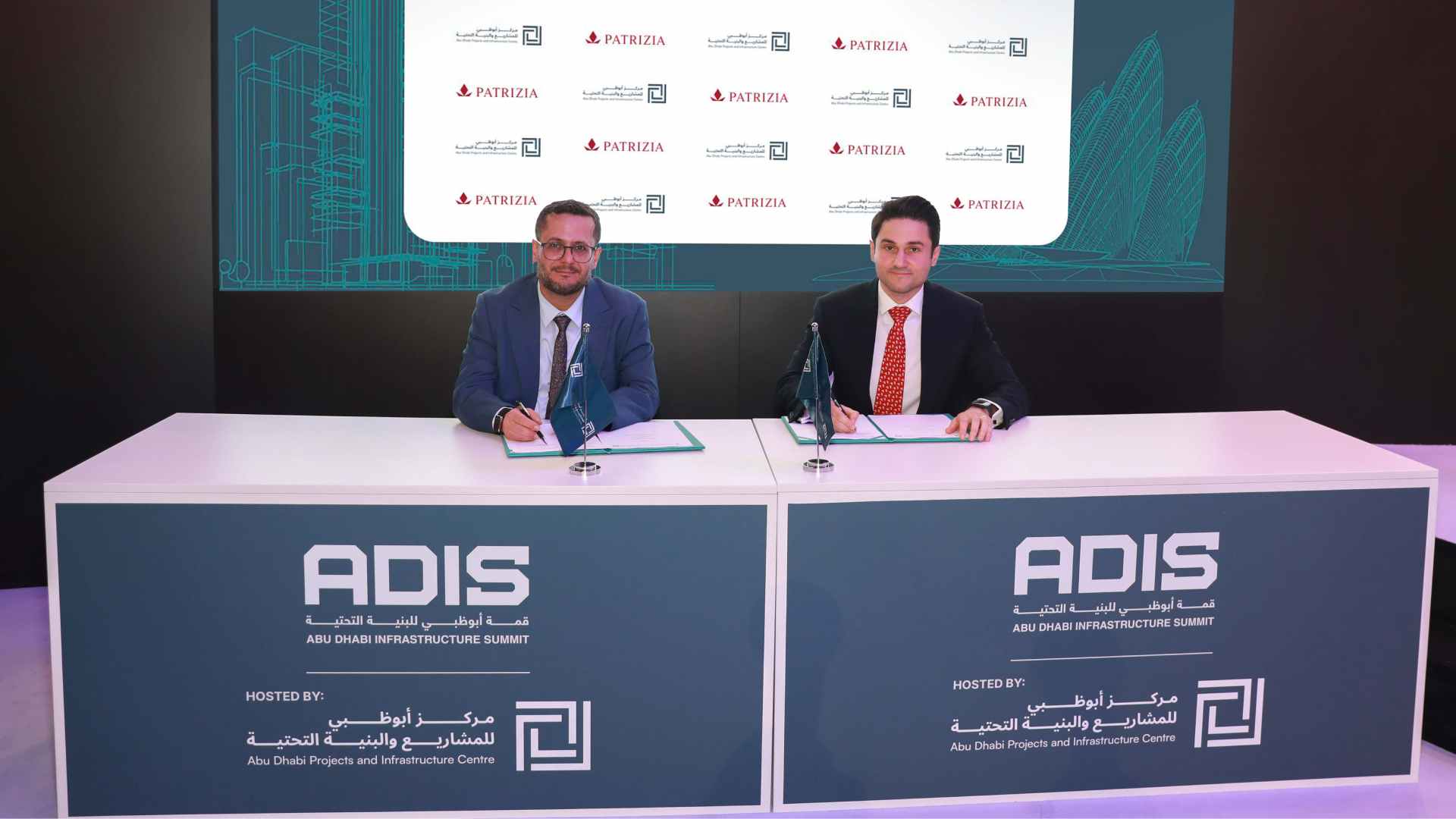
The Abu Dhabi Projects and Infrastructure Centre (ADPIC)and PATRIZIA, an investment manager in real assets, have signed a strategic partnership to deepen cooperation around infrastructure investment and project delivery in the Emirate of Abu Dhabi, drawing on PATRIZIA’s wider real assets expertise.
The strategic partnership was signed during the Abu Dhabi Infrastructure Summit (ADIS) International Roadshow at EXPO REAL 2026 in Munich by His Excellency Eng Maysarah Mahmoud Salim Eid, Director General of ADPIC and Hassan Awada, Senior Executive Officer, MENA at PATRIZIA.
ADPIC sits at the centre of Abu Dhabi’s capital-project programme, coordinating planning, governance, and delivery across approximately 500 projects valued at more than AED 200bn, equivalent to more than USD 56bn. The programme spans housing, transport, culture, education, social infrastructure, and the wider urban systems supporting Abu Dhabi’s long-term growth, livability, and economic competitiveness.
The agreement also reflects the wider objective of the ADIS International Roadshow by connecting Abu Dhabi’s infrastructure ecosystem with international partners that bring specialist expertise and long-term capability, while deepening engagement with Germany and Europe. The partnership establishes a framework for PATRIZIA and ADPIC to exchange international expertise and explore areas where private-sector participation can strengthen project delivery and long-term value creation. This includes dialogue around public-private partnership structures, sharing international best practice in infrastructure financing and delivery, and exploring potential investment and co-investment opportunities arising from Abu Dhabi’s capital projects programme.
The two organisations will also cooperate on market insight, benchmarking and technical studies relevant to infrastructure investment and project delivery, while exploring ways to support greater international participation, knowledge exchange, and access to specialist capability across Abu Dhabi’s ecosystem.
H.E. Eng. Maysarah Mahmoud Salim Eid, Director General of ADPIC, said: “Abu Dhabi’s infrastructure programme requires partners that bring proven international capability, market insight, and a long-term commitment. Through this partnership with PATRIZIA, we will explore how that experience can support private-sector participation, strengthen project delivery, and create long-term value. This is exactly the type of practical international cooperation the ADIS International Roadshow is designed to advance.”
PATRIZIA has worked with institutional investors and partners in Abu Dhabi for 15 years, building long-term relationships across the Emirate. The recent establishment of a permanent presence in the Abu Dhabi Global Market (ADGM) marked a further step in that commitment, strengthening PATRIZIA’s ability to work with regional investors and partners and connect them with its international real assets platform.
Asoka Wöhrmann, CEO of PATRIZIA, said: “Abu Dhabi has established itself as an important centre for long-term investment and infrastructure development. Our teams have worked with clients and partners in the Emirate for the past 15 years, and our decision to establish a permanent presence in Abu Dhabi reflects the importance we attach to that relationship. We have seen first-hand the scale of its ambition and the increasingly important role that international expertise and private capital can play. This partnership creates a framework through which PATRIZIA can contribute its experience across real assets while deepening our longstanding relationships in Abu Dhabi.”
Hassan Awada, Senior Executive Officer, MENA at PATRIZIA, said: “Abu Dhabi is developing into a significant market for infrastructure and real assets investment, supported by major infrastructure pipeline and a clear focus on attracting international investment and expertise. Our partnership with ADPIC gives us an opportunity to closely support on delivering these priorities and to explore where PATRIZIA’s international investment capabilities can support the Emirate’s long-term ambitions.”
The agreement reflects PATRIZIA’s wider strategy of combining its established global real assets platform with selective international growth in markets where it has longstanding client relationships and relevant investment expertise.
Tech News
NetApp to Showcase AI-Ready Data Infrastructure as CEO George Kurian Takes the Stage at Ai Everything Abu Dhabi 2026
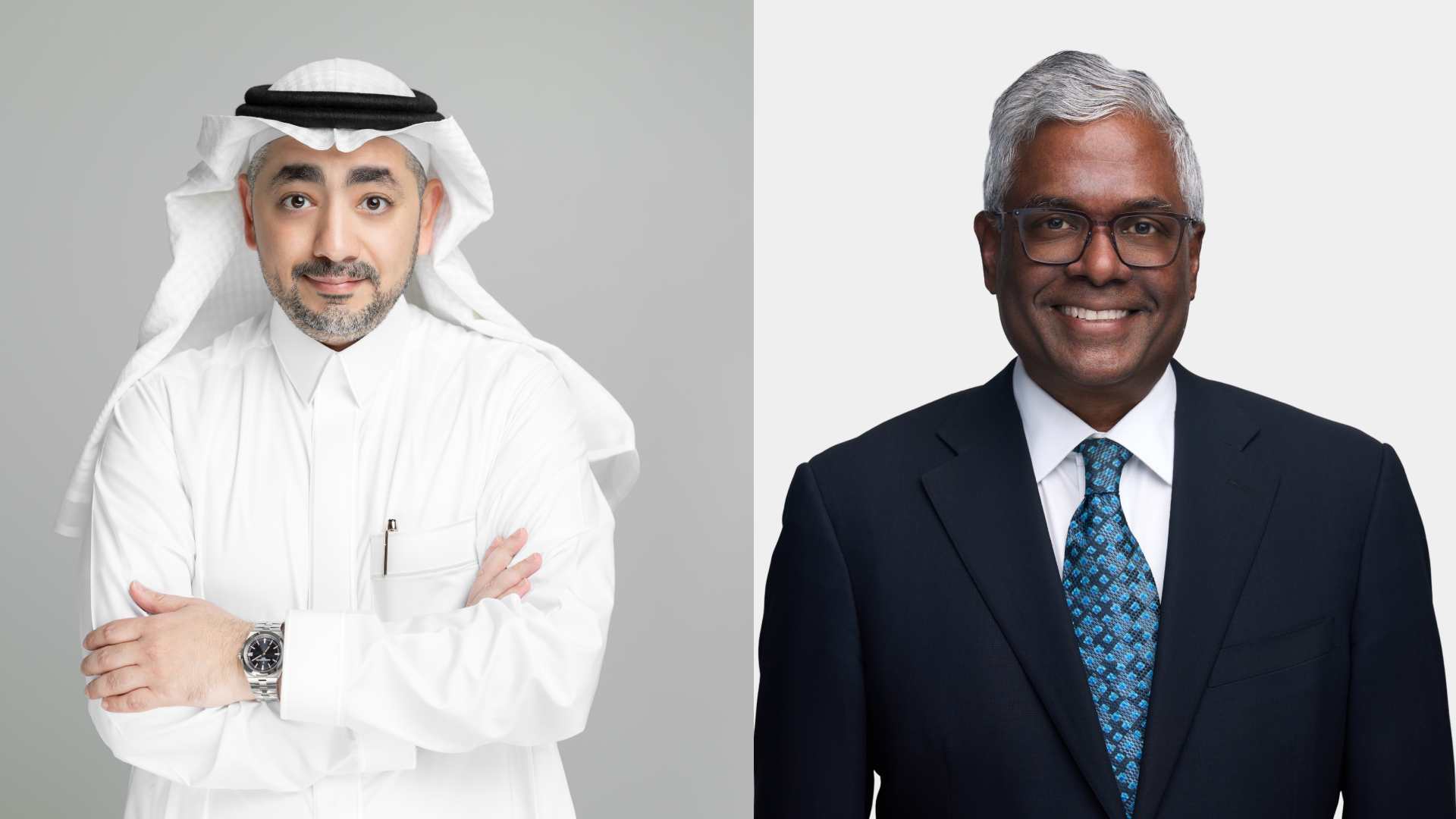
NetApp® (NASDAQ: NTAP), the Intelligent Data Infrastructure company, will exhibit at Ai Everything Abu Dhabi 2026, taking place on October 6 and 7 at ADNEC Centre in Abu Dhabi. The event will also feature George Kurian, Chief Executive Officer of NetApp, who will take part in a fireside chat on the Summit Stage titled, “Can AI Be Trusted? The New Architecture of Sovereign, Secure and Safe AI.” As AI moves from generating answers to taking action across the enterprise, Kurian will explore why trust must extend beyond the model to the data, infrastructure and systems AI can access, as well as the growing importance of security, data sovereignty and governance.
At the centre of NetApp’s presence will be the NetApp Platform, designed to provide enterprises an intelligent, connected, governed foundation that delivers zero-copy access to their data. Customers can quickly and confidently access, manage, and activate their data and be confident it is AI-ready and secure so they can take on the most demanding tasks and solve the most complex problems. In addition to being available on-premises, the NetApp Platform is natively embedded in the world’s largest public clouds. As organizations move AI initiatives from experimentation into production, having data that is accessible, governed and protected becomes increasingly important to scaling AI securely and efficiently.
“Abu Dhabi’s ambition to become an AI-native government reflects a broader shift we are seeing across the Middle East, where AI is rapidly moving from experimentation to large-scale deployment. But scaling AI is ultimately a data challenge. Organizations need trusted, secure and accessible data wherever it resides. The NetApp Platform provides the foundation customers need to build Intelligent Data Infrastructure that enables them to move from AI ambition to real business outcomes, securely and at scale.” said Suhail Hasanain, Senior Director and General Manager, MEA at NetApp
During the two-day event, NetApp’s regional and global experts will engage with industry leaders, partners and customers on building AI-ready infrastructure and addressing the data and infrastructure challenges that can prevent AI projects from progressing into production.
Visitors will have an opportunity to hear the latest developments from NetApp INSIGHT 2026 in Las Vegas, one of the company’s key events focused on tackling today’s biggest AI and technology challenges with intelligent data infrastructure.

Exclusive interview with Shadi Hatoum, Regional Director MEA at Tealium
The UAE is moving quickly from AI experimentation to deployment. What do you think will determine which organizations actually turn adoption into measurable business value?
The organizations that create measurable value will be those that connect AI to a clearly defined business decision, then give it the right data and operating model to support that decision.
The UAE has already built significant momentum. Boston Consulting Group found that 42% of UAE organizations qualify as AI Leaders, while 37% have reached the scaling stage of AI maturity. The next test is whether that maturity translates into sustained outcomes.
Deploying a model is not the same as changing how a business operates. AI needs trusted, consented, and real-time context around customer identity, behavior, intent, and journey stage. It also needs clear ownership, measurable objectives, and teams that understand how to use the output.
From my perspective, data readiness and organizational adoption will be the two biggest differentiators. The organizations that can put reliable context in front of AI at the moment of decision, and embed the resulting insight into daily workflows, will be best positioned to turn adoption into measurable value.
How much of the current gap between AI ambition and AI impact comes down to fragmented or outdated customer data?
A significant part of the gap comes down to data readiness, although technology alone is not the whole answer. Most organizations do not lack data. Their challenge is that the data is fragmented, difficult to interpret, or unavailable when a decision needs to be made.
Historical data provides useful depth, but AI also needs data in motion. It needs to understand what a customer is doing now, what has changed, what the customer has consented to, and whether the signal belongs to the correct individual or account.
Tealium’s Future of Customer Data research found that 88% of organizations consider real-time data important to achieving business objectives. That is important because an AI system working from yesterday’s profile may produce a technically valid recommendation that is no longer relevant.
The real opportunity is to create a trusted context layer that connects identity, behavior, consent, and intent, then makes that context available to models and decisioning systems while the customer interaction is still taking place.
Does agentic AI create a new governance problem for enterprises, particularly when agents are acting on customer data without constant human intervention?
Agentic AI does not make the principles of governance entirely new, but it raises the stakes and increases the speed at which controls need to operate. When an AI agent can move from recommendation to action, governance can no longer be treated only as a periodic policy or review exercise. It needs to operate within the data flow and decision process itself.
Enterprises need clear controls over which data an agent can access, the purpose for which it can use that data, how identity and consent are verified, which actions it is authorized to take, and when a person must review or approve the outcome.
The key question is not only whether an agent can access a piece of customer data. It is whether the agent should use that data for this customer, for this purpose, at this moment.
That requires trusted data, current consent, auditability, defined action limits, and clear escalation paths. As autonomy increases, accountability needs to become more precise, not less.
Which sectors in the Middle East do you think are furthest ahead in using real-time customer data and AI together effectively?
From my experience across the region, telecommunications and travel, hospitality, and tourism are among the most active and promising sectors because they generate frequent customer signals and have a clear need to respond in the moment.
In a recent discussion with the Chief Commercial Officer of a major telecom operator in the region, we talked about growth as filling a bucket while also stopping the leaks. Acquisition fills the top, but poor service, irrelevant engagement, and unresolved friction allow value to escape through churn. Sustainable growth requires both attracting new customers and protecting the loyal customer base already in the bucket.
This is where AI-supported decisioning can create real value. Trusted, consented, real-time behavioral data can help an operator recognize changes in usage, service issues, digital engagement, and signs of churn. The next best action may be to resolve a problem, recommend a more suitable plan, position a bespoke package at the right time, or avoid making an offer when the customer first needs support.
The objective is not to push more offers. It is to improve relevance and timing. That can support retention, strengthen loyalty, and create opportunities to grow average revenue per user, or ARPU, by responding to what the customer needs in that moment.
Travel, hospitality, and tourism have a similarly strong opportunity. The customer journey moves from inspiration and research to booking, arrival, the in-destination experience, and loyalty. Each stage creates different needs. A traveler facing disruption needs assistance, while a guest already at a destination may value a timely, personalized experience or service.
These sectors show why hyper-personalization at scale depends on trusted, consented behavioral data in motion. The value comes from giving AI initiatives the current context they need to choose the next best action for that specific moment.
At AI Everything Abu Dhabi 2026, what are the biggest changes you are seeing in the conversations enterprises are having compared with a year or two ago?
The biggest change is that enterprises are no longer asking whether they should adopt AI. They are asking how to move it into production, connect it to measurable outcomes, and govern it at scale.
A year or two ago, many conversations centered on experimentation and individual use cases. Today, the questions are more operational. Leaders want to understand how AI will work with their existing data, how agents will receive current customer context, how decisions will be controlled, and how value will be measured beyond a successful pilot.
I am also hearing much more emphasis on adoption. Organizations recognize that a model does not create value by itself. Teams need clear use cases, practical training, shared measures of success, and confidence in the data behind the recommendation.
The conversation has therefore moved from AI capability to AI readiness. That includes the quality of the data foundation, the governance around it, the ability to make decisions in real time, and the people and processes required to turn those decisions into action. For me, that is a sign that the market is becoming more mature and more focused on sustainable business impact.

Kenz ‘de’ Rasasi Debuts at Beautyworld Middle East 2026 with a New Expression of Rasasi Heritage

Burjeel Holdings Launches Preventive Cardiac Campaign Across Its UAE Hospital Network for World Heart Day

Abu Dhabi Projects and Infrastructure Centre and PATRIZIA sign strategic partnership to support infrastructure investment and development



-

 Trending12 months ago
OPPO A6 Pro 5G Review: Reliable Daily Driver
-

 Tech News2 years ago
Denodo Bolsters Executive Team by Hiring Christophe Culine as its Chief Revenue Officer
-
 VAR1 year ago
Microsoft Launches New Surface Copilot+ PCs for Business
-

 Automotive2 years ago
AGMC Launches the RIDDARA RD6 High Performance Fully Electric 4×4 Pickup
-
Tech Interviews3 years ago
Navigating the Cybersecurity Landscape in Hybrid Work Environments
-

 Tech News1 year ago
Nothing Launches flagship Nothing Phone (3) and Headphone (1) in theme with the Iconic Museum of the Future in Dubai
-

 Hospitality2 years ago
Gulfood 2025 30th Edition Kicks Off Today, Setting New Benchmarks in F&B Growth and Innovation
-

 VAR2 years ago
Samsung Galaxy Z Fold6 vs Google Pixel 9 Pro Fold: Clash Of The Folding Phenoms