
 Have a question? +971 56 404 0503




Technology
Fujitsu collaborates with DHL to develop new solutions for logistics

Fujitsu announced a strategic co-creation partnership with DHL Supply Chain to develop new services based on wearable technology and the Internet of Things (IoT).
Building on its successful managed procurement services collaboration with DHL, which provides a new business approach to procurement solutions including uniform and protective equipment, Fujitsu will share its industry and technology expertise to jointly develop innovative solutions that improve safety for emergency services, whilst delivering operational efficiencies. Fujitsu and DHL also plan to use the partnership to drive the creation of entirely new markets in other sectors, such as airline logistics.
In a first for the logistics industry, the DHL solution provides a personalized supply chain for emergency and other uniformed services, supported by Fujitsu’s ecommerce platform. This innovative concept reduces the cost of product and supply chain management, while facilitating innovation and delivering a user friendly, personalized experience for individuals.
The use of wearable and IoT technology such as Fujitsu UBIQUITOUSWARE will enable emergency services to track the well-being of individuals in the field, through a dashboard showing their status and location. This will help to ensure accurate and timely response in safety-critical or life-threatening situations, as well as providing real-time tracking for the location of vital protective equipment.
Paul Richardson, MD, Specialist Services, DHL Supply Chain UKI, said: “As the global logistics leader, we constantly seek out innovations that improve our customers’ lives. Wearable technology is going to transform the way we work, helping us understand the dynamics of what’s happening around us and providing real time insight on our environment as never before. I’m delighted to partner with Fujitsu in this area and am confident that, together, we can deliver a gamechanger in the market.”
Farid Al-Sabbagh, Vice President and Managing Director at Fujitsu Middle East, said: “At Fujitsu, our aim is to create meaningful, transformative innovation, which is precisely what we anticipate that this partnership with DHL will deliver. By combining industry expertise from DHL with our own insight, we can realize the incredible potential of new technologies in logistics, such as brand new functionalities, a step change in user experience and additional cost savings for organizations. In the age of digital disruption, the Fujitsu-DHL partnership underlines the value of pooling knowledge and ideas through co-creation to innovate and prosper.”



At the European Data Center Associations Summit hosted by Vertiv, industry leaders argued that AI growth is forcing data centres to rethink their relationship with power grids, communities and policymakers.
Data centres are increasingly being asked to do more than simply consume electricity and provide computing capacity. As AI drives unprecedented demand for digital infrastructure, industry leaders across Europe are beginning to position data centres as active participants in the wider energy ecosystem.
That was one of the central themes emerging from the European Data Center Associations Summit, hosted by Vertiv at Zagreb, where representatives from data-centre associations across Sweden, the Netherlands, France and Ireland discussed the infrastructure supporting Europe’s digital economy.
The conversation began with a reminder of how invisible data centres remain to most users. Consumers may interact with data-centre infrastructure dozens of times every day, through banking, digital payments, video calls, cloud applications and government services, without ever thinking about the physical systems behind those services.
But AI is making that infrastructure increasingly difficult to ignore.
From grid burden to grid participant
As data-centre demand expands, access to electricity has become one of the sector’s biggest constraints. Yet the panel argued that data centres should not necessarily be viewed purely as an additional burden on already stretched electricity networks.
Stijn Grove, Managing Director of the Dutch Data Center Association, pointed to the potential for data centres to locate closer to renewable-energy generation and absorb power that might otherwise require significant additional transmission infrastructure.
He also highlighted a broader opportunity: data centres could potentially help stabilise grids as renewable generation becomes more variable.
That idea was echoed by Ronan Kelly, CEO of Digital Infrastructure Ireland, who discussed the role of battery energy-storage systems and on-site backup capacity in supporting electricity networks during periods of peak demand.
The direction of travel is significant. Data centres are beginning to move from simply asking “How much power can the grid give us?” towards asking “How can our infrastructure interact with the grid?”
Waste heat becomes an asset
The panel also highlighted heat reuse as one of the clearest examples of how data centres can integrate more deeply into local communities.
Isabelle Kemlin, Vice Chair of the Board at Swedish Datacenter Industry, cited examples where waste heat from data centers is being reused through district-heating systems and even agricultural applications.
In the Netherlands, Grove pointed to projects where data-centre heat is being used to replace natural gas in buildings and potentially support greenhouse operations.
Such projects challenge the perception of data centres as isolated industrial buildings that simply consume electricity and generate heat. Increasingly, the heat itself can become part of another energy system.
AI changes the efficiency conversation
AI is also forcing the industry to reconsider how data center efficiency should be measured.
Traditional measures such as Power Usage Effectiveness (PUE) remain important, but several speakers argued that they do not always capture the complete picture.
For example, equipment installed to recover and redistribute waste heat may consume additional electricity and therefore worsen a facility’s PUE, even though the overall energy system becomes more efficient.
The discussion therefore moved towards a newer metric increasingly associated with AI infrastructure: tokens per watt.
Instead of measuring only how efficiently a facility delivers electricity to IT equipment, tokens per watt attempts to connect energy consumption with the amount of useful AI computation produced.
As AI factories become larger and more power-intensive, the ability to convert electricity into useful compute efficiently may become as important as simply minimising facility overhead.
Europe’s sovereignty challenge
Energy is not the only reason Europe will continue to require significant local data center capacity.
The panel also highlighted digital sovereignty.
Europe’s fragmented national landscape means governments, public-sector organizations, and regulated industries frequently need to consider where data is stored and processed. Moving workloads across borders may be technically possible, but sovereignty, security, and latency requirements can make local infrastructure essential.
That creates a very different environment from markets where computing resources can be concentrated across a smaller number of enormous geographic regions.
The public-perception problem
Perhaps the industry’s biggest challenge, however, is not technical.
Several panellists acknowledged that public perceptions of data centers remain dominated by concerns around electricity consumption, water usage, land requirements and limited employment creation.
Michaël Reffay, Managing Director of France Datacenter, argued that many of these criticisms overlook the wider economic and digital services supported by data center infrastructure.
Kelly made a similar point, arguing that discussions about data-centre carbon emissions frequently focus only on the electricity consumed by facilities while ignoring emissions potentially avoided through digital services such as remote working, digital banking and electronic distribution.
The industry therefore faces a communication challenge alongside its engineering one.
Data centers will consume significant amounts of energy as AI expands. But the sector increasingly wants policymakers and the public to judge that consumption alongside the digital services, economic activity, renewable-energy investment, and wider infrastructure benefits it enables.
AI makes infrastructure strategic
Perhaps the clearest conclusion from the discussion was that digital infrastructure is no longer simply a back-end utility.
AI is making access to power, cooling, grids and computing capacity strategic economic issues.
For Europe, the next phase of the datacentre debate may therefore be less about whether more facilities should be built, and more about where they are built, how they interact with energy systems, and how effectively the industry can demonstrate their value to society.

Kayvan Karim, Programme Director of MSc Software Engineering, School of Mathematical and Computer Sciences, Heriot-Watt University Dubai
For the past few years, the AI infrastructure race has largely been measured in scale: more GPUs, larger data centres and greater power capacity. That expansion is continuing, but the economics are beginning to change. Competitive advantage may increasingly depend not only on securing additional power, but on extracting more useful AI work from the power already available. Part of the reason is a change like AI demand. We are moving from relatively simple prompt-and-response systems towards agents that can reason across multiple steps, call tools, inspect results, revise plans and continue working autonomously. Anthropic’s latest Economic Index notes that Claude usage is increasingly shifting towards long-running agentic tasks and that more computationally intensive conversations tend to be associated with higher-value outputs.
This transition could have significant implications for infrastructure demand. A chatbot might generate one answer to one prompt. An agent performing a software-development, research or business task may invoke a model dozens of times, maintain a large context, call external tools and generate many intermediate reasoning steps before producing an outcome. Demand may therefore grow in two ways: more people using AI and more inference, model calls, and tokens processed for each task. Major AI laboratories are already working on this efficiency problem. OpenAI says one of its primary inference objectives is to serve more tokens from the same hardware, using techniques including scheduling, caching, kernel optimisation and improved model implementation. It also describes GPT-5.6 as being trained to accomplish more work per token. Google DeepMind is pursuing a similar direction: its Gemini 3.6 Flash was designed for scaled agentic workloads and uses fewer output tokens than its predecessor on several evaluations. In contrast, its recent agentic video system reduced token consumption by up to 88% for that workload.
Other approaches address efficiency at the model architecture level. DeepSeek-V3, for example, uses a Mixture-of-Experts design with 671 billion total parameters but activates 37 billion per token, so only part of the network is used for each computation. Meta has similarly worked on inference efficiency through grouped-query attention and more efficient tokenisation; the Llama 3 tokeniser was reported to require up to 15% fewer tokens than Llama 2 for equivalent text. Taken together, these approaches show that model capability is increasingly being developed alongside the cost of delivering it.
Model-level efficiency, however, is unlikely to remove the infrastructure constraint on its own. Global data-centre electricity consumption was approximately 415 TWh in 2024, according to the International Energy Agency, and its base case projects this to reach around 945 TWh by 2030. AI is expected to drive most of that growth. Efficiency is therefore improving while aggregate demand continues to rise. One reason is the Jevons, or rebound, effect: efficiency improvements reduce the resources required for each unit of work, but lower costs can also encourage greater overall use. If agents become much cheaper to operate, organisations may respond by deploying more of them, running them for longer, or applying them to tasks that were previously uneconomic. Efficiency can reduce the compute required for an individual task while still increasing total demand.
That increased demand meets infrastructure that cannot expand as quickly. Models and software can improve quickly, but grids, substations, transformers and power-generation infrastructure usually have much longer development cycles. The IEA notes that while a data centre can sometimes be developed within two or three years, the broader energy infrastructure required to support it often involves longer planning and construction periods. Where grid capacity is constrained, each available megawatt becomes a more valuable production resource. The amount of power available remains important, but so does the amount of useful computation that can be produced within that power envelope.
That changes how we should understand capacity. Improvements in accelerator performance, model architecture, workload scheduling, caching, utilisation and inference software can increase computational output without increasing a site’s electrical connection. OpenAI’s recently reported Jalapeño inference hardware illustrates the direction of travel: the company says the chip can deliver more AI work per unit of power while increasing throughput and reducing latency. Efficiency can therefore act as a form of virtual capacity. If two operators each control 100 MW, but one can consistently deliver substantially more useful AI work within that power envelope, their nominal capacity may be identical while their productive capacity is not.
The same constraint applies to physical space and cooling. AI systems are concentrating more computational power into individual racks, increasing both power density and heat output. Packing more accelerators into the same building only creates useful capacity if the electrical and thermal infrastructure can support them. This is one reason liquid cooling is moving from a specialist technology towards a more central part of AI data-centre design. Microsoft, for example, has introduced a closed-loop chip-level cooling architecture that it says eliminates evaporative water consumption for cooling and could avoid more than 125 million litres of water annually per data centre. The example also shows why power, cooling, water use and rack density cannot be treated independently.
The same shift creates a measurement problem. Power Usage Effectiveness, or PUE, has been valuable for showing how much facility energy is required beyond the electricity IT equipment consumes. It does not, however, measure whether that IT equipment is producing useful work efficiently. Uptime Institute’s 2025 survey placed average PUE at around 1.54 and noted that the headline industry figure had changed little for six years. Uptime has consequently argued for productivity measures that relate computational work to energy consumption. For AI inference, tokens per kilowatt-hour might offer one operational measure. Still, even that is incomplete: an efficient model that solves a task in 1,000 tokens may be more valuable than one generating 10,000. A more useful long-term measure may therefore be useful AI work per unit of energy, water and infrastructure.
Capacity will remain essential. The AI industry will continue to build larger data centres, secure new power supplies and deploy large quantities of computing hardware. As agentic systems create more persistent inference demand and physical resources become harder to expand, however, efficiency may increasingly determine the productive value of that capacity. Operators that can support more useful computation within the same power, cooling, water, and space constraints can accommodate more workloads without waiting for equivalent growth in physical infrastructure.
For AI infrastructure, installed megawatts will remain a headline measure. The more consequential measure may increasingly be how much useful AI work those megawatts can support.
Tech News
Intersec Global 2027 and EACOH partner to advance safer, healthier and more inclusive workplaces


Intersec Global 2027, the leading international exhibition for safety, security and resilience, has signed a Memorandum of Understanding (MoU) with the Emirates Association for Occupational Health (EACOH) to strengthen collaboration on workplace health and safety, wellbeing, and inclusion.
The agreement was signed today in Dubai, marking the start of a strategic partnership ahead of the 2027 edition, which takes place from 12 to 14 January 2027 at Dubai World Trade Centre and will bring together government officials, regulators, industry leaders, innovators, and buyers to drive commercial growth and set industry benchmarks.
Under the agreement, EACOH will lead the new Workforce Safety, Resilience & Inclusion Hub on the final day of Intersec Global, anchoring the event’s dedicated Safety & Wellbeing domain. The partnership reflects Intersec’s broader remit beyond traditional fire and security into organisational resilience, business continuity and occupational health. In turn, the dedicated show-floor feature provides EACOH with a direct platform to connect its expertise in workforce wellbeing and preventive health with an international audience of cross-sector leaders.
The Hub’s live and interactive format will showcase innovations in workforce safety, human performance and inclusive workplace design, including rapid-fire demonstrations, a Human Performance Challenge and an interactive critical infrastructure incident scenario.
Moving beyond conventional conference content, the Hub will offer hands-on, practical engagement while bringing together adaptive technologies, smart personal protective equipment (PPE), AI-driven monitoring and solutions that empower People of Determination. “Intersec Global continues to evolve in line with the changing needs of the industries it serves,” said Nathan Waugh, Portfolio Director, Security, Technology, Production at Messe Frankfurt Middle East, the organiser of Intersec Global 2027. “Safety, security and resilience are no longer separate conversations. They are intrinsically linked. Our partnership with EACOH and the launch of the Workforce Safety, Resilience & Inclusion Hub reflect our commitment to creating innovative, highly interactive experiences that connect stakeholders, showcase emerging solutions and help shape more resilient organisations and communities worldwide.”
Professor Dr Nahyan Helal MD, MSc, PhD, President of EACOH, added: “Workforce health, safety and wellbeing are fundamental to economic resilience and sustainable development. Across the UAE and the wider region, organisations are placing greater emphasis on preventive health, occupational safety and inclusive workplace practices. Through this partnership with Intersec Global, we have a valuable opportunity to share expertise, highlight regional priorities and engage an international audience in advancing safer, healthier and more resilient workplaces for the future.”


Europe’s Data Centres Are Evolving From Power Consumers to Energy Partner

Fimple adds five GCC financial institutions in first year, targets doubling regional customer base

New Initiative ‘Longevity Starts From Childhood’ Connects the Early Years With Lifelong Wellbeing



-
News11 years ago
SENDQUICK (TALARIAX) INTRODUCES SQOOPE – THE BREAKTHROUGH IN MOBILE MESSAGING
-

 Trending11 months ago
OPPO A6 Pro 5G Review: Reliable Daily Driver
-

 Tech News2 years ago
Denodo Bolsters Executive Team by Hiring Christophe Culine as its Chief Revenue Officer
-
 VAR1 year ago
Microsoft Launches New Surface Copilot+ PCs for Business
-

 Automotive2 years ago
AGMC Launches the RIDDARA RD6 High Performance Fully Electric 4×4 Pickup
-
Tech Interviews3 years ago
Navigating the Cybersecurity Landscape in Hybrid Work Environments
-
 Tech News2 years ago
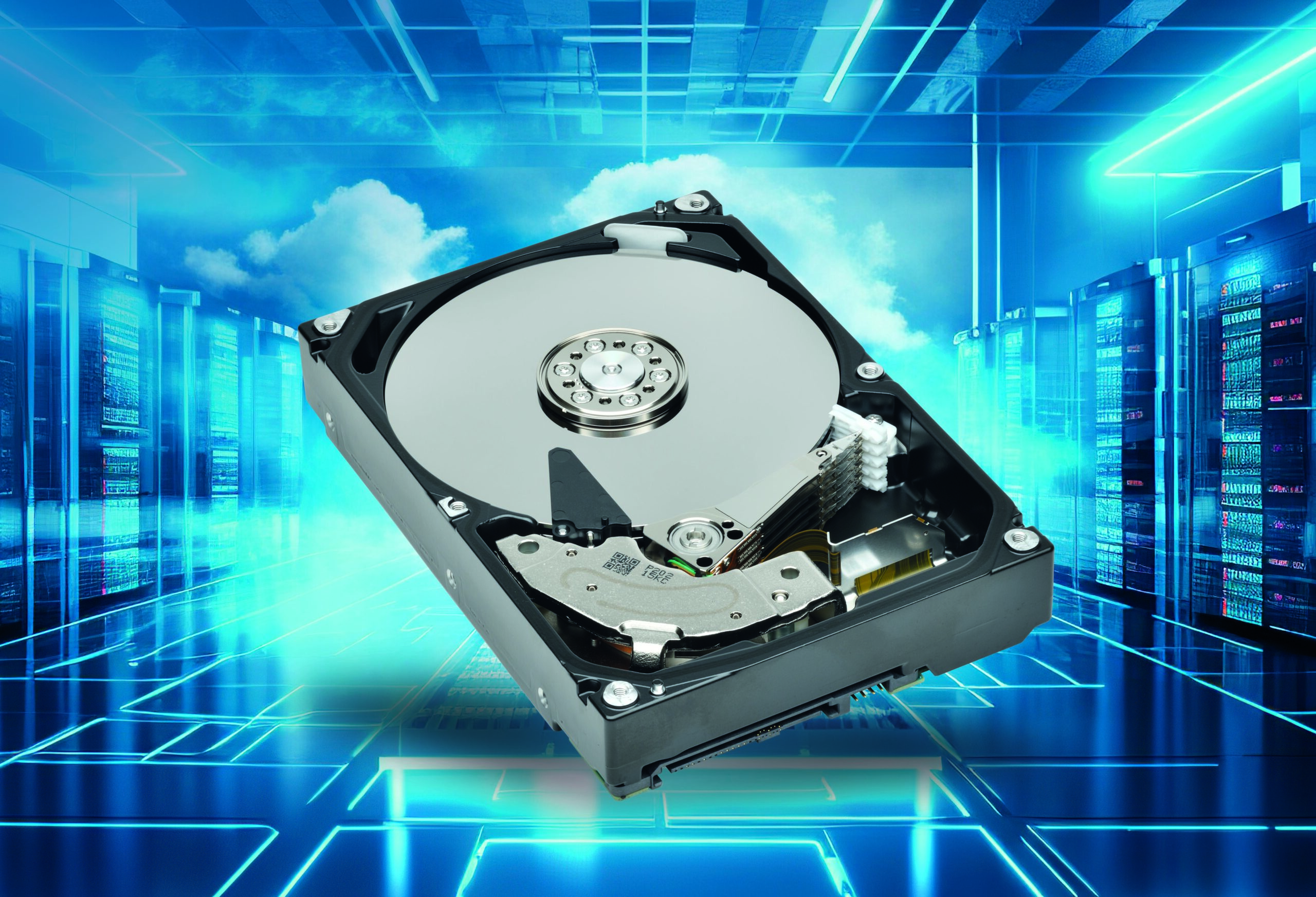
Toshiba Announces MG10-D Series of Enterprise HDDs with Capacities up to 10TB
-

 Tech News1 year ago
Nothing Launches flagship Nothing Phone (3) and Headphone (1) in theme with the Iconic Museum of the Future in Dubai