
 Have a question? +971 56 404 0503




Technology
Smart Dubai Office and IBM collaborate to build Cognitive Centre

IBM and Smart Dubai Office announced an initiative for the establishment of a Cognitive Centre of Competence in Dubai. The centre will define and deliver Dubai’s Cognitive Roadmap and help accelerate the development of cognitive citizen services across Dubai. The collaboration also aims to equip the next generation of professionals with sought-after skills around analytics, cloud, mobility, cognitive and blockchain technology. This will support a strong human capital innovation ecosystem as part of the Smart Dubai initiative and the government’s 2020 Dubai Blockchain Strategy.
“Our collaboration with IBM underlines our commitment to foster the IT skills needed leveraging cloud, blockchain technology, analytics, mobility technologies and offer cognitive capabilities for our services which will add value to the day to day lives of Dubai citizens and residents, making everyday experiences more safe, seamless, efficient and impactful for all,” said H.E Dr. Aisha Bin Bishr, Director General, Smart Dubai Office.
Through several initiatives with IBM, the Smart Dubai Office will work with Dubai Government entities to help enable existing digital government services become cognitive. In October 2016, Smart Dubai Government Establishment Department of Economic Development launched “Saad”, a cognitive government service powered by IBM Watson. Saad can understand natural language, ingest and comprehend massive amounts of data, learn and reason from its interactions, and provide solutions that will aid users in deciding on correct courses of action.
The collaboration will focus on building the needed skills to enable government entities to develop cognitive applications and benefit from application programming interface (API), analytics and blockchain technologies. The Smart Dubai Office and IBM will also provide university student developers with a full year Bluemix subscription, enabling them to gain hands on experience with cloud services. IBM Bluemix is a cloud based platform that enables organizations and developers to quickly and easily create, deploy, and manage applications on the cloud.
“Our focus with Smart Dubai Office will help accelerate the development of the IT skills and services in the Emirate and enable government entities in Dubai to begin their cognitive journey,” says Amr Refaat, General Manager, IBM Middle East and Pakistan. “Students will also have access to a platform for innovation, resources and technology expertise to help ensure that today’s graduates have the knowledge and workforce skills to help fuel economic growth.”
IBM Watson represents a new era in computing in which systems can interact and understand natural language, generate hypotheses based on evidence, and learn as it goes. As part of this collaboration, Cognit, a joint venture between Mubadala Development Company and IBM, will be engaged to support the development and implementation of Watson based applications and Arabized, Watson capabilities.
“Today’s announcement demonstrates the strength and value in bringing IBM Watson services to Dubai based citizens and further solidifies Cognit as a true partner for government to bring this transformative technology to the UAE. Everyone involved is excited to see how newly developed IT skills, created by allowing first-hand access to IBM Watson, can support prosperity and incubate the talent of tomorrow’s future pioneers,” said Amal Al Jabri, General Manager, Cognit.
Fostering skills in Dubai is a key focus of this collaboration. Students and faculty members from leading universities in Dubai can also enroll in the IBM Skills Academy where IBM will provide a series of training sessions on cognitive, big data, cloud, security, social and analytics. The IBM Skills Academy Program is IBM’s premier training and certification initiative for academia in the Middle East and Africa region.
In January 2017, IBM and the University of Dubai have already started delivering training to universities in the United Arab Emirates, under the theme of “Big Data Developer”. The training is designed to equip university faculty members and students with the skills and knowledge every Big Data expert needs.

Alteryx Inc., a leading AI-ready data and analytics company, today announced the appointment of Sabya Sen as Vice President, IMEA & APAC, to lead its business across India, the Middle East, Africa, and Asia-Pacific (IMEA & APAC). In this role, Sen will focus on accelerating customer outcomes and scaling adoption of the Alteryx One platform across some of the world’s fastest-growing markets for AI and data innovation.
Sen brings deep regional expertise and a strong track record of execution to this role. Most recently, he served as Vice President, Head of UKI & Emerging Markets Europe at Alteryx, where he drove consistent growth, built high-performing teams, and strengthened customer relationships across global markets.
The appointment comes at a critical phase for AI adoption globally and across IMEA and APAC, where governments and enterprises are increasing investments in digital transformation. In the Middle East, national strategies like Saudi Arabia’s Vision 2030 and UAE’s We the UAE 2031 are accelerating innovation agendas. The region’s AI market is projected to reach $320 billion USD, while globally, 89% of leaders plan to maintain or increase AI budgets in 2026. Despite this momentum, many organizations remain in pilot phases, underscoring the need for scalable, governed analytics solutions that can support enterprise-wide AI adoption.
“It is my priority to continue delivering meaningful outcomes for our customers and community,” said Sabya Sen, Vice President, IMEA & APAC. “Across the Middle East, India, and Asia-Pacific, we are seeing unprecedented momentum driven by ambitious national transformation agendas. These efforts are accelerating economic diversification, advancing digital innovation, and firmly positioning these regions as global hubs for data and AI-led growth.”
Prior to joining Alteryx, Sen spent 11 years at Salesforce in a variety of leadership roles, supporting customers across the insurance, financial services, and healthcare industries, where he helped organizations leverage data and technology to transform their operations. In his new role, Sen will focus on helping organizations move beyond experimentation to enterprise-scale AI adoption by delivering trusted, AI-ready data and analytics through the Alteryx One platform.
“Over the past few years, Sabya has had a tremendous impact on Alteryx and has demonstrated a remarkable level of focus, discipline, and strong commercial execution,” said Jason Janicke, Senior Vice President, EMEA & APJ at Alteryx. “He has delivered results, built a strong team culture, and consistently raised the bar. We can’t wait to see the impact that Sabya has in this next role.”
Tech Features
THE CONVERGENCE OF CRISIS: HOW OVERLAPPING RISKS ARE REDEFINING WORKFORCE MOBILITY IN THE MIDDLE EAST


By Gillan McNay, Security Director Assistance – Middle East, International SOS
In today’s Middle East operating environment, mobility risk no longer arrives in isolation. Organisations are increasingly navigating multiple, overlapping disruptions that converge to affect how, when, and whether their people can move. Geopolitical tension, aviation restrictions, cyber exposure, misinformation, and workforce anxiety are no longer separate risk categories – they interact, amplify one another, and challenge traditional mobility assumptions.
This convergence is redefining what “safe movement” looks like for organisations with employees traveling, deployed, or working abroad across the region.
From Single Events to Layered Disruption
Historically, mobility planning focused on discrete scenarios, weather events, isolated security incidents, or airline strikes. Today, organisations are far more likely to face layered disruption, where one event triggers a cascade of secondary impacts.
A regional security escalation may coincide with airspace closures. Airspace closures may lead to congestion at land borders. Border congestion increases stress for travelers, which in turn heightens reliance on digital communication channels, precisely when misinformation and cyber activity surge. Each layer compounds the next.
International SOS’ Risk Outlook 2026 highlights this shift clearly: risk is now systemic and interdependent, not episodic. For mobility teams, this means plans designed for one‑dimensional threats will be insufficient.
Mobility Is Now a Strategic Exposure
Movement of people has become a strategic risk vector rather than a logistical one. When employees cannot travel as planned, the impact extends beyond delayed meetings or project timelines. It affects:
- Business continuity
- Leadership visibility
- Employee confidence and wellbeing
- Regulatory and duty‑of‑care obligations
In the Middle East, this is especially pronounced due to the region’s role as a global aviation hub and its highly international workforce. When airspace is disrupted in one country, the effects ripple across neighbouring states almost immediately.
As a result, organisations must treat mobility decisions with the same scrutiny as other strategic risks, cybersecurity, financial exposure, or supply‑chain dependency.
The New Reality: Mobility Under Uncertainty
In recent months, we have seen how quickly mobility conditions can change. Routes that were viable in the morning may be restricted by evening. Neighbouring jurisdictions may adjust entry requirements or limit transit with little notice. Information may circulate rapidly on social media before it can be verified.
The most resilient organisations recognise that movement decisions must be conditions‑based, not schedule‑based. Rather than asking “Can we move people today?”, leaders need to ask:
- What conditions would make movement unsafe tomorrow?
- What alternatives exist if a primary route closes?
- Are we prepared to shift from air to land, or to stabilise in place?
This approach requires planning optionality into every mobility decision.
Overlapping Risks Demand Integrated Decision‑Making
The convergence of crisis exposes one of the most common organisational gaps: mobility decisions are often segmented across functions. Security looks at threat levels, HR considers employee impact, travel teams focus on bookings, and IT monitors communications. In a converging‑risk environment, this fragmentation increases risk.
Mobility decisions must be informed by integrated intelligence, security assessments, aviation updates, border conditions, medical considerations and workforce sentiment. When these views are aligned into a single operating picture, organisations can act faster and with greater confidence.
This integrated approach is increasingly reflected in board‑level discussions, as highlighted in the Risk Outlook 2026, where executive oversight of crisis preparedness and workforce risk continues to rise.
The Human Layer Cannot Be Separated From Mobility
Overlapping crises do not only disrupt routes; they disrupt people. Uncertainty around travel amplifies stress, particularly for expatriates with families, employees traveling alone, or teams operating far from home support networks.
From an assistance perspective, we see that anxiety itself becomes a risk multiplier. Tired, stressed travelers are more likely to make poor decisions, rushing to airports prematurely, acting on unverified information, or attempting unsafe routing alternatives.
Mobility strategies must therefore incorporate psychological safety alongside physical safety. Clear guidance, predictable communication, and reassurance that decisions are being reviewed continuously make a material difference to outcomes.
Why “Move” Is Not Always the Right Answer
One of the most important shifts organisations are making is recognising that relocation or evacuation is not always the safest or most effective response. In converging‑risk scenarios, moving people can expose them to new uncertainties if the destination environment changes.
Stability, supported by shelter‑in‑place guidance, supply planning, and continuous monitoring, can be the safest posture while conditions clarify. Mobility planning should define three distinct postures:
- Stay and stabilise
- Relocate to a regional safe haven
- Evacuate out of the region
Each posture requires different triggers, communications, and support mechanisms. Treating them interchangeably increases risk.
Information Discipline Is a Mobility Imperative
Overlapping crises generate noise. For organisations managing mobility, information discipline becomes critical. Decisions based on rumours, unverified social media posts, or outdated aviation updates can lead to unnecessary movement, or unsafe delay.
Effective organisations establish clear information pathways:
- Who validates updates
- Which sources are trusted
- How frequently conditions are reviewed
- When decisions are escalated
This discipline supports faster pivots when conditions change and reduces the emotional load on traveling employees.
Building Adaptive Mobility for the Future
The convergence of crisis in the Middle East is not a temporary phenomenon. Geopolitical volatility, climate stress, digital disruption, and workforce expectations will continue to intersect. Mobility strategies must evolve accordingly.
Resilient organisations are already adapting by:
- Embedding workforce visibility into core systems
- Designing mobility plans with multiple fail‑safe options
- Training leaders to make people‑first decisions under pressure
- Aligning crisis planning with broader enterprise risk management
As the Risk Outlook 2026 underscores, preparedness is no longer about predicting the next event, it’s about building the capacity to adapt when events collide.
A Redefined Measure of Readiness
In this new operating reality, mobility readiness is not measured by the ability to move people quickly, but by the ability to make calm, informed, and proportionate decisions as risks converge.
Organisations that understand this will be better positioned to protect their people, maintain operational stability, and navigate periods of regional tension with confidence rather than urgency. The convergence of crisis is challenging, but with the right structures, discipline, and integration, it is manageable.
Tech News
VERTIV EXPANDS THERMAL PORTFOLIO WITH NEW WALL-MOUNT COOLING SYSTEM FOR EDGE AND SMALL DATA ROOMS IN EMEA
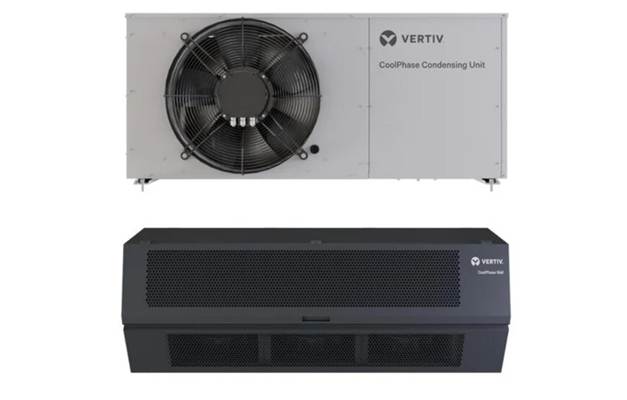
Vertiv (NYSE: VRT), a global leader in critical digital infrastructure, today announced the launch of the Vertiv™ CoolPhase Wall, a space-saving, wall-mount cooling system designed for small IT spaces and edge environments. The system is designed for the needs of IT equipment, removing heat and enabling continuous operation while taking up zero floor space. Vertiv CoolPhase Wall is available now across Europe, Middle East and Africa (EMEA).
As distributed computing becomes more critical to business operations, compact IT environments need high-quality thermal control designed for sensitive electronic systems. However, many are still using comfort cooling systems designed for human comfort rather than addressing the high sensible heat ratio (SHR) and higher airflow requirements of IT equipment. Vertiv CoolPhase Wall addresses this gap with a purpose-built system that provides the required SHR along with integrated monitoring and control capabilities to protect equipment and enable24/7 operational continuity.
Built for installation flexibility, the Vertiv CoolPhase Wall features a split system with an indoor wall-mounted cooling unit. The system delivers up to 60% greater airflow than standard comfort cooling systems and leverages variable-speed compressors and variable speed fans to modulate to meet heat load demand and improve energy efficiency to enable operational cost reductions.
Designed to handle thermal loads up to 11 kW, the Vertiv CoolPhase Wall is engineered to operate reliably in outdoor ambient temperatures ranging from -35 to 48℃. The system features the Vertiv™ Liebert® iCOM™ operational control, which enables local configuration and supervision of key operating parameters. For extended visibility and remote access, the Vertiv CoolPhase Wall includes onboard remote communication capability to provide real-time alerts and operational status through a secure web interface.
The Vertiv™ CoolPhase Wall utilizes R-32 refrigerant, a low-global warming potential (GWP) alternative that reduces environmental impact while maintaining thermal performance. This positions Vertiv ahead of evolving regulatory requirements, including the European Union’s F-Gas regulations that restrict the use of high-GWP refrigerants. While many comfort cooling systems are still transitioning to lower-GWP options, Vertiv is applying these standards to IT-focused cooling, giving organizations confidence that their deployments are aligned with future environmental expectations.
“As IT continues to expand into areas that were not originally intended for high-density electronics, the demand for adaptable and energy-efficient cooling solutions is increasing across EMEA,” said Sam Bainborough, vice president, EMEA thermal business at Vertiv. “The Vertiv CoolPhase Wall is engineered to support continuous operations, enabling customers to maintain reliable, efficient thermal performance in small IT rooms and edge sites year-round.”
Vertiv CoolPhase Wall expands the company’s comprehensive thermal management portfolio, which includes precision cooling system for edge deployments, enterprise data centers, and high-density AI environments, ranging from room-based cooling to direct-to-chip liquid cooling and rear door exchangers.

“HOSPITABLE” LEADERSHIP STARTS WITH EMPATH
ALTERYX EXPANDS REGIONAL LEADERSHIP WITH SABYA SEN TO LEAD IMEA & APAC
HOP INTO EASTER AT MCGETTIGAN’S WITH FAMILY ROASTS, EGG HUNTS AND CLASSIC SUNDAY FAVOURITES



-
News10 years ago
SENDQUICK (TALARIAX) INTRODUCES SQOOPE – THE BREAKTHROUGH IN MOBILE MESSAGING
-

 Tech News2 years ago
Denodo Bolsters Executive Team by Hiring Christophe Culine as its Chief Revenue Officer
-
 VAR12 months ago
Microsoft Launches New Surface Copilot+ PCs for Business
-

 Tech Interviews2 years ago
Navigating the Cybersecurity Landscape in Hybrid Work Environments
-

 Trending5 months ago
OPPO A6 Pro 5G Review: Reliable Daily Driver
-

 Tech News9 months ago
Nothing Launches flagship Nothing Phone (3) and Headphone (1) in theme with the Iconic Museum of the Future in Dubai
-

 Automotive1 year ago
AGMC Launches the RIDDARA RD6 High Performance Fully Electric 4×4 Pickup
-

 VAR2 years ago
Samsung Galaxy Z Fold6 vs Google Pixel 9 Pro Fold: Clash Of The Folding Phenoms