
 Have a question? +971 56 404 0503




Technology
Realme Launches 11 Pro Series 5G: 200MP SuperZoom Camera Phone and Luxury Design in UAE

The series boasts a flagship camera, including the world’s first 200MP SuperZoom camera, and a luxurious design inspired by former Gucci Print and Textile Designer. The realme 11 series achieves 50 million shipments worldwide, contributing to the brand’s rapid growth towards its 100-million-unit sales target. Both models offer revolutionary mobile photography experiences, alongside improvements in design, battery life, and more. The realme 11 Pro+ 5G features a large sensor, in-sensor zoom technology, and various camera settings, while the realme 11 Pro 5G showcases premium display configuration and powerful performance with 5G capabilities.
Premium Display and Powerful Performance with 5G
Realme Number Series has achieved 50 million shipments worldwide, marking a major contribution to realme’s path to reach the 100-million-unit sales mark in record time. Designed with the company’s initiative “No Leap-forward innovation, no product release”, realme 11 Pro+ 5G marks a ground-breaking camera flagship of the year with the world’s first 200MP SuperZoom camera – the most powerful in its price range. It not only provides you with revolutionary mobile photography experiences in zoom capability, higher pixel, and more, but the phone also achieves immense improvements in its design, battery life, memory, and more.
realme said “For the smartphone industry, the battle for price-performance ratio has come to an end. The era of the quality-performance ratio has now begun. realme will take the lead in providing good quality-performance ratio products and continuously bring the leap-forward product to our consumers.”
Flagship-Level Imaging
Realme 11 Pro+ 5G boasts an upgraded Samsung ISOCELL HP3 SuperZoom sensor, 1/1.4-inch large sensor size, and f/1.69 aperture for exceptional image quality. It supports 200MP direct output, 4× lossless zoom, and Auto-zoom feature, making photography enjoyable and effortless. With SuperOIS, Super NightScape, and other flagship camera settings, users can express their creativity. The 32MP Sony Selfie Camera and Street Photography Mode 4.0 further enhance the photography experience.
Aesthetic Design and Powerful Performance
The realme 11 series showcases stunning design variants – Sunrise Beige, Oasis Green, and Astral Black – created in collaboration with a former GUCCI designer. The Sunrise Beige draws inspiration from Milan’s fashion scene, capturing the essence of sunlight on classic buildings. The realme 11 Pro+ 5G boasts premium manufacturing with 3D stitching and lychee vegan leather, offering a trendy hue.
Beyond design, the realme 11 Pro+ 5G is a powerful all-rounder, featuring a 100W SUPERVOOC charge, 5000mAh battery, and a 120Hz Curved Vision Display with the industry’s highest dimming frequency of 2160Hz. The realme 11 Pro 5G shares the same premium display and offers features like Sunlight Screen, Automatic Brightness Adjustment, and 100MP direct output, making it a flagship smartphone with top-notch performance and user comfort.


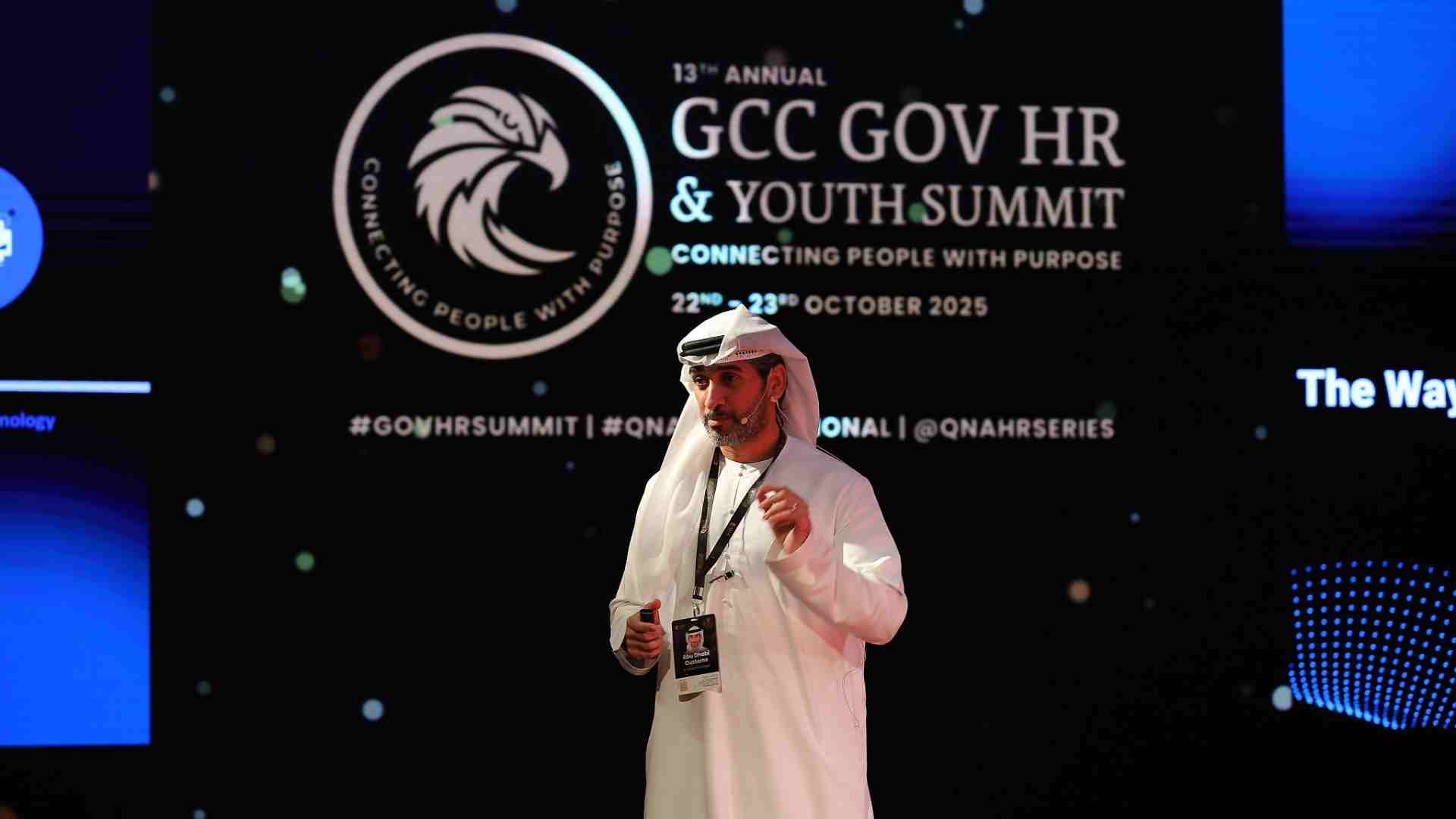
Government and public sector leaders from across the GCC will gather in Abu Dhabi on 20th and 21st October 2026 for the 14th Annual GCC GOV HR & Youth Summit and Awards, taking place at the Grand Hyatt Abu Dhabi Hotel & Residences Emirates Pearl. Organised by QNA International, the region’s most exclusive B2B public sector HR platform will bring together CHROs, People Leaders, policymakers and change agents under the theme Time of Opportunities: Uncovering the New Realities of Work.
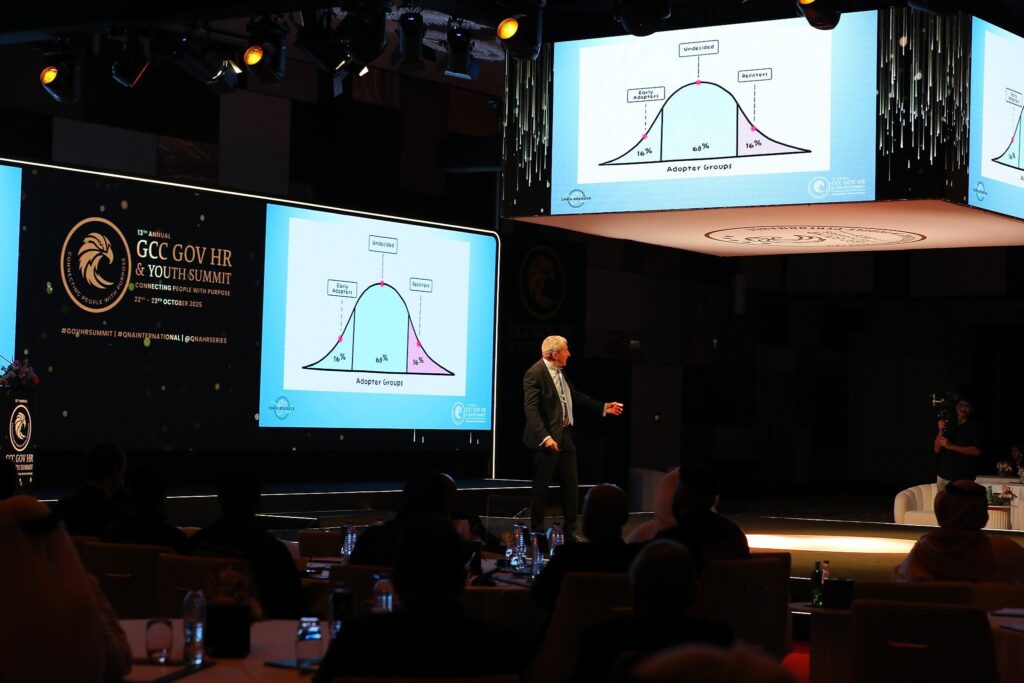
As governments across the GCC advance their national transformation agendas, the challenge is no longer simply to modernise systems or introduce new technologies, but to build institutions that can translate innovation into meaningful outcomes for people. This requires a more integrated approach to workforce transformation, one that brings together digital capability, adaptive leadership, employee experience and a culture of continuous learning.
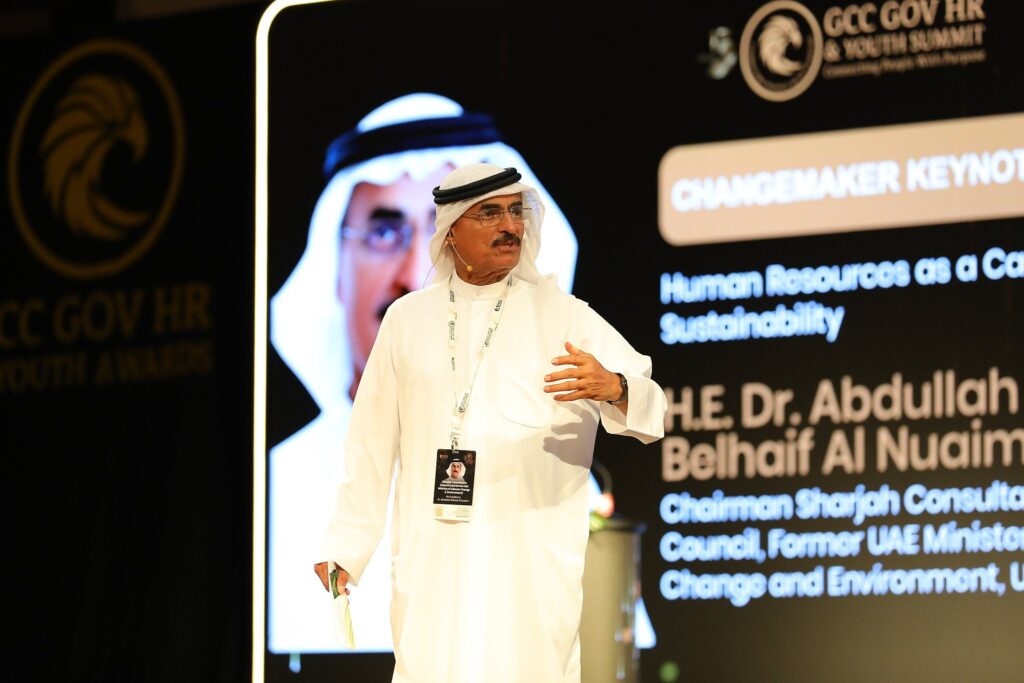
Ahead of the event, Advisory Board Members and speakers have shared the shifts they expect to define government work across the region.
From Measuring Volume to Measuring Impact
His Highness Captain Shaikh Abdulaziz Sultan Al Nuaimi, Director of Excellence Awards Branch, Ajman Police, UAE, said: “Government excellence requires a shift from measuring the volume of achievements to measuring impact, added value, and the capacity for anticipation and adaptation.”
His Excellency Mohamed Al Marzooqi, Executive Director Of Support Services, Government Entity, UAE, added: “The future of government support services is not about doing the same things faster; it is about doing things differently and creating greater value for people.”
For HR, that means a new role. Brigadier Rashid Nasser Rashid Abdullah, Director of the General Department of Human Resources, Dubai Police, UAE, said: “The biggest shift facing government HR leaders in the GCC today is moving from managing workforces to unlocking leaders.” He added: “Our job is no longer to plan for one future, but to build institutions ready for many, and people who are trusted to learn, adapt, and take initiative.”
Dr. Ebrahim Al Khajeh, Human Resources Director, Abu Dhabi Customs, UAE, named the same turning point: “The shift from traditional HR to strategic workforce transformation.”
These themes reflect the Summit’s focus areas of Human-Centric Government and Disruptive Leadership.
AI, Accountability and Trust
His Excellency Mohamed Al Marzooqi said: “Our greatest challenge is not adopting AI; it is preparing our people and our institutions to work differently because of AI.”
Maitha A. Balfaqeeh, Senior Vice President of Shared Services, ADNOC Gas, UAE, said: “Technology and AI are fundamentally reshaping the role of shared services — moving them from primarily transactional functions to becoming more intelligent, predictive, and employee-centric.”
Iman Khalid Al Marzouqi, Group Chief Support Services Officer, Alpha Dhabi Holding, UAE, said: “HR leaders must help shape how AI is used, how decisions affecting people are made, and who remains accountable.”
These conversations connect to the Summit’s focus areas of AI-First Workforce, Agentic Intelligence, Workforce Intelligence and Trust, Talent, and Resilience.
National Talent and the Next Generation
From Saudi Arabia, Reem AlRehaili, Chief of Corporate Services, ARDARA (PIF), Saudi Arabia, said: “Vision 2030 asks us to do more than increase the number of Saudis in the workforce, it asks us to build their capability.” She added: “The most powerful thing we can offer is not a package. It is a purpose.”
Dr. Ebrahim Al Khajeh said: “Government organizations are increasingly prioritizing national talent development, digital skills, and leadership capabilities rather than simply filling vacancies.”
His Highness Captain Shaikh Abdulaziz Sultan Al Nuaimi said: “Young professionals are essential partners in shaping the future of government work, with their digital skills, capacity for innovation, and ability to adapt rapidly.”
Iman Khalid Al Marzouqi said: “We need to understand their strengths, give them meaningful responsibility, and provide mentors who are personally invested in their progress.”
Advising young professionals, Maitha Ahmed Balfaqeeh said: “Future leaders need to understand the business, not only their own function.” Reem AlRehaili’s message to young women entering the workforce was: “The door is open. What matters now is what you do once you walk through it.”
These perspectives are at the heart of the Summit’s Nationalization 2.0, Workforce 2035 and GCC Next-Gen Leaders tracks.
Why This Summit, Why Now
Brigadier Rashid Nasser Rashid Abdullah said: “This Summit matters now because change is moving faster than institutions can respond, and the UAE has chosen not to wait.”
Sidh N.C., Director of QNA International, said: “The voices ahead of this year’s Summit point in one direction: government HR in the GCC is moving from administering the workforce to leading change. Over two days in Abu Dhabi, we will bring together the leaders, the ideas and the young talent shaping the next chapter of public service across the region.”
The 14th Annual GCC GOV HR & Youth Summit and Awards 2026 will provide a platform for public sector leaders to exchange practical insights, challenge established approaches and explore how government HR can evolve from a support function into a strategic driver of institutional performance, national talent development and long-term public value.
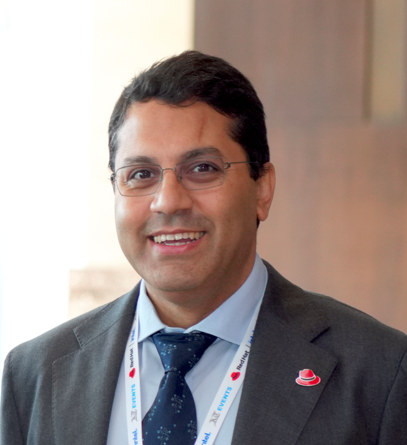
Exclusive interview with Anirban Mukherjee, Director of Solutions Architecture, Red Hat
Digital sovereignty is increasingly moving beyond data residency. What does genuine operational control look like for organisations that need to retain control over their data, applications and infrastructure?
Data residency answers where information sits. Operational control answers who can run, inspect, recover, and change the stack when it matters.
In practice, that means organisations can choose where workloads run – on premises, sovereign cloud, or public cloud – without rewriting applications every time. It means they can audit the software supply chain, keep recovery paths under their own governance, and decide which models, tools, and partners sit in their AI and application environments.
For many MENA enterprises and public-sector bodies, the test is simple: can you keep serving citizens and customers if a single vendor, region, or connectivity path is constrained? Open hybrid platforms give you that room to manoeuvre because the control plane and the open source components stay portable.
As organisations continue to rely on hyperscalers, where do you see the strongest case for combining public cloud with sovereign cloud and on-premises environments?
Hyperscalers remain excellent for elasticity, global reach, and certain managed services. The strongest case for a mixed model is when data sensitivity, latency, or regulatory expectations vary across the same organisation.
We routinely see customer data, AI inference close to the data, and regulated workloads stay in sovereign or on-premises environments, while less sensitive or bursty workloads use public cloud. The point is not to reject public cloud. It is to stop treating it as the only place innovation can happen.
An open hybrid cloud approach lets MENA organisations keep one consistent platform experience across those footprints, so teams are not rebuilding skills and tooling for every environment.
Could the growing AI infrastructure requirement actually increase technology concentration, and what can organisations do to avoid creating a new form of dependency around AI platforms?
Yes, the growing AI infrastructure requirements can actually increase technology concentration, – if every AI workload is tied to one model provider, one accelerator vendor, or one proprietary stack, concentration risk simply moves up a layer.
Organisations reduce that risk by treating AI like the rest of enterprise IT: multiple models for multiple jobs, open tooling where possible, and a platform that can run across hardware and clouds. Smaller, purpose-built open models are often a better fit for specific enterprise tasks than relying on one giant external model for everything.
In the Middle East, where national AI strategies are accelerating investment, the winners will be the ones who can innovate quickly without locking the next decade of infrastructure decisions into a single vendor path.
Open hybrid cloud is often positioned as a way to balance control with access to innovation. What does a mature open hybrid cloud strategy look like in practice?
Maturity looks like consistency. Same platform, same security and policy controls, same developer experience – whether the workload sits in a national data centre, a partner sovereign cloud, or a hyperscaler.
It also looks like deliberate placement: you put each application and AI workload where it creates the best outcome for cost, performance, and governance, and you can move it when those conditions change.
For solution architects in this region, the practical question is: can the customer ship new services without creating a parallel stack every time? If the answer is yes, the hybrid strategy is working.
Vendor dependency is difficult to eliminate entirely. How should organisations assess concentration risk and maintain credible alternatives without creating unnecessary complexity?
You will always have dependencies. The goal is to make them conscious and reversible.
Assess concentration by asking: what breaks if this vendor changes pricing, exits a market, or restricts a capability? Which workloads have no second path? Where does your data or model IP become hard to extract?
Credible alternatives do not mean running five of everything. They mean open standards, portable workloads, and a clear exit or dual-run plan for the few systems that truly matter. Complexity comes from unmanaged sprawl. Discipline comes from a shared platform and clear ownership of what must stay portable.
Red Hat’s role is to help customers keep that optionality – from infrastructure through to AI – so strategic independence is designed in, not bolted on after a crisis.
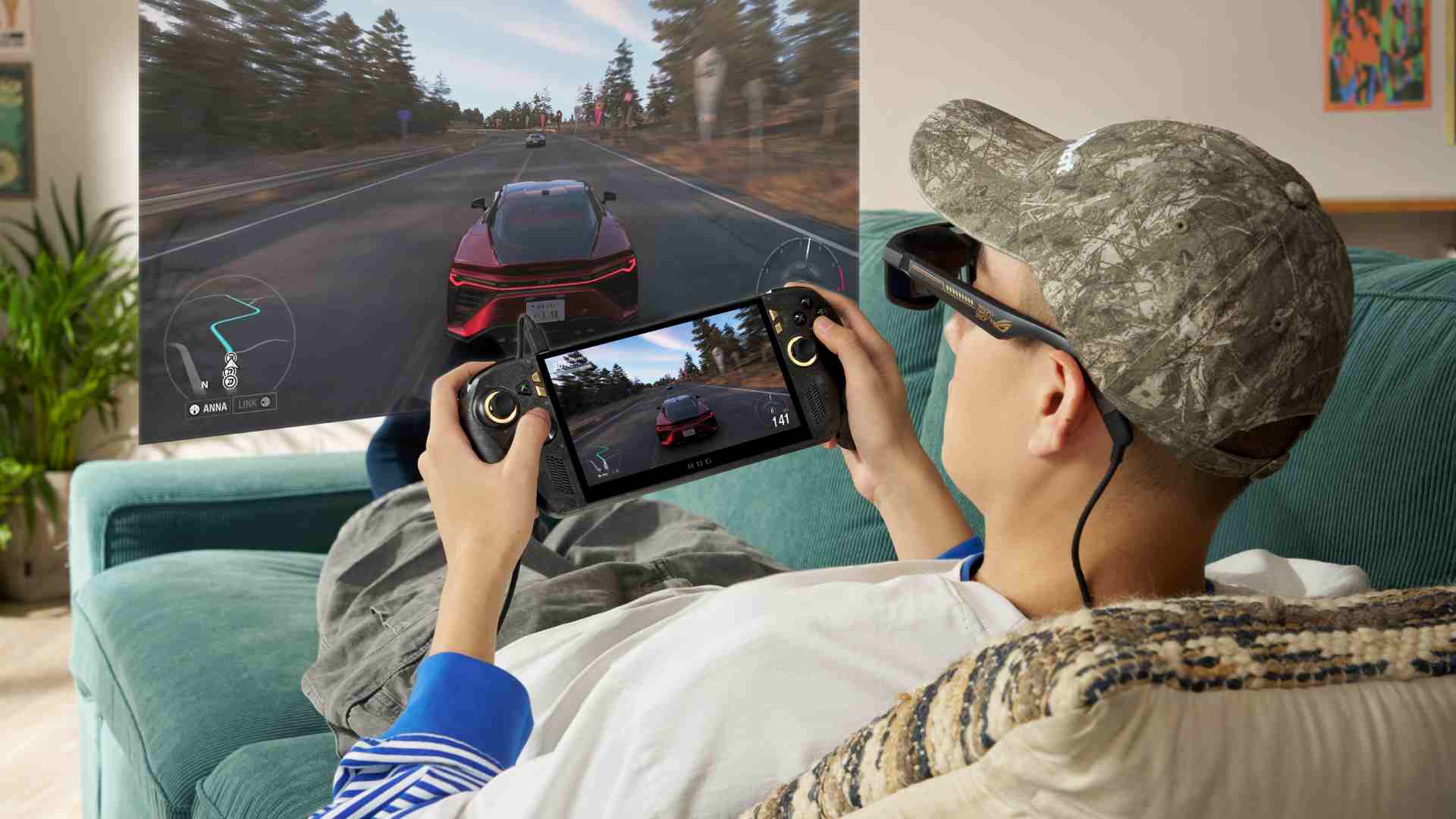
ASUS Republic of Gamers (ROG) today announced that the limited-edition ROG XBOX Ally X20 Bundle is now available in the UAE for AED 10,999 through the ASUS UAE eShop and participating retailers. Celebrating two decades of ROG, the collection brings together an upgraded gaming handheld, a wearable virtual display and coordinated protective accessories in a complete setup designed to move from home to wherever players choose to game.
A new chapter for an anniversary handheld
The ROG XBOX Ally X20 combines a translucent black chassis with gold-accented internal details and an exclusive 20th anniversary badge. The design offers a glimpse inside the device while giving the collection a distinctive identity for ROG enthusiasts and collectors.
A 7.4-inch ROG Nebula HDR OLED display delivers rich contrast, a 120Hz refresh rate and up to 1,400 nits of peak HDR brightness. Powered by the AMD Ryzen AI Z2 Extreme processor, with 24GB of memory and 1TB of storage, the handheld brings PC gaming into a portable format. TMR joysticks designed to resist drift, a transforming D-pad and refined face buttons provide greater flexibility and control across different game styles.
A big screen experience that travels with you
The included ROG XREAL R1 Edition 20 Gaming AR Glasses connect directly to the handheld through a single USB-C cable, creating a virtual screen of up to 171 inches viewed from four metres away. Micro-OLED displays and sound by Bose bring games closer, whether players are relaxing at home or travelling. The glasses support a 240Hz refresh rate with Frame Rate Boost enabled, while Follow Mode and Anchor Mode allow the virtual screen to move with the player’s head or remain fixed in place.
Matching black-and-gold accents connect the glasses to the anniversary design, while Command Center integration provides convenient access to their settings from the handheld.
Designed to carry the whole experience
The custom dbrand Killswitch adds everyday protection, a kickstand, ROG-branded joystick grips and an exclusive skin featuring a circuit pattern inspired by the handheld’s internals. A custom Pelican Protector Case, finished with ROG-red latches and a 20th anniversary badge, keeps the device and accessories together during travel. A 68W adapter completes the bundle.
Availability and pricing
The limited-edition ROG XBOX Ally X20 Bundle is available now for AED 10,999 through the ASUS UAE eShop and participating retailers including Geekay, Virgin Megastore, Sharaf DG, Amazon UAE, Emax, Jumbo and Carrefour. Stock and availability may vary by retailer.
UAE gamers can also join the ROG Elite Program to take part in activities, earn points and explore rewards while staying connected to the ROG community.


Five Strategies from Government HR and Youth Thought Leaders to Shape the Future of Work

Sdeira Group Unveils Masterplan and New Details for 27,000-Resident Aryam Community – KEZAD Al Mamourah
MOON BAR UNVEILS ECLIPSE AT MOON: A HALLOWEEN KARAOKE & AFTERPARTY IN DUBAI



-

 Trending12 months ago
OPPO A6 Pro 5G Review: Reliable Daily Driver
-

 Tech News2 years ago
Denodo Bolsters Executive Team by Hiring Christophe Culine as its Chief Revenue Officer
-
 VAR2 years ago
Microsoft Launches New Surface Copilot+ PCs for Business
-

 Automotive2 years ago
AGMC Launches the RIDDARA RD6 High Performance Fully Electric 4×4 Pickup
-
Tech Interviews3 years ago
Navigating the Cybersecurity Landscape in Hybrid Work Environments
-

 Hospitality2 years ago
Gulfood 2025 30th Edition Kicks Off Today, Setting New Benchmarks in F&B Growth and Innovation
-

 Tech News1 year ago
Nothing Launches flagship Nothing Phone (3) and Headphone (1) in theme with the Iconic Museum of the Future in Dubai
-

 VAR10 months ago
Huawei Nova 14 Pro Review: Where Camera Excellence Meets Ecosystem Evolution