
 Have a question? +971 56 404 0503




Tech News
Cisco 2024 Trends: Hybrid Work Model is Here to Stay


- Cisco unveils the transformative collaboration trends poised to impact hybrid work environments.
- As hybrid work becomes standard practice, Cisco emphasizes the critical importance of cybersecurity, revealing further insights from the Cisco 2024 Cybersecurity Readiness Index
Cisco recently announced key insights into the future of hybrid collaboration and workplace trends. As businesses continue to navigate the shift towards hybrid work environments, Cisco’s latest predictions highlight the transformative impact of AI-driven collaboration technologies and the evolving challenges of cybersecurity.
As the global workforce continues its transition towards a more permanent hybrid model, organizational leaders are strategically balancing investments in physical office setups while empowering employees with flexible work arrangements, ultimately enhancing the productivity of today’s hybrid workforce. According to Cisco’s own Hybrid Work Study 2024, a significant 83% of organizations acknowledge that collaboration-driven enhancements effectively attract and retain top talent.
Reflecting on its innovations in the past year and the solutions prepping to unveil this year, Cisco emphasizes the enduring significance of the hybrid collaboration trends that promote inclusivity, innovation, and flexibility.
AI-Powered Collaboration Experiences
The adoption of AI in collaboration is set to revolutionize how we work and collaborate. Today, Cisco’s advanced AI audio and video intelligence technologies enable devices to intelligently follow presenters, listen for audio cues, switch between cameras, and optimize meeting views in real-time, creating an immersive virtual experience.
Looking ahead, technologies will continue to get even closer to fundamentally eliminating distance in any room type. As organizations map priorities for the year, it is critical to invest in technology that supports the integration of rapidly evolving AI capabilities, ensuring long-term value and fostering inclusivity and equity in collaborative environments.
Equitable and Inclusive Meetings
Meetings where everyone is physically present are no longer the norm, making it critical to provide equitable and inclusive meeting experiences. This fundamental shift in office dynamics has led to a substantial increase in virtual meetings among in-office workers, highlighting a 50% rise in participation compared to other work modes before offices reopened.
Despite this shift, only a limited number of conference rooms today are equipped with video conferencing technology, with basic camera and audio solutions falling short in achieving truly inclusive meeting experiences that capture the essence of in-person interactions.
To address these challenges, organizations will need to adopt advanced solutions that transcend physical barriers and emulate the richness of face-to-face collaboration, enabling all meeting participants to feel connected and engaged regardless of their location.
Workspace Transformation
With the ability to work from anywhere, motivating employees to return to corporate offices presents a unique challenge. Organizations are embarking on a journey to reimagine and revitalize workspaces, surpassing the comforts of home to generate excitement and collaboration.
These redesigned spaces prioritize organic interactions, essential for office environments where creativity and teamwork thrive on spontaneous, serendipitous encounters. Designated brainstorming areas and cutting-edge technology will further support co-creation and whiteboarding for both in-person and hybrid participants.
Cybersecurity in Hybrid Work Environments
With organizations navigating the shift towards hybrid work models, cybersecurity must remain top of mind. Recent insights from the Cisco 2024 Cybersecurity Readiness Index reveals that 86% of employees in UAE companies connect to work platforms from unmanaged devices. The study further indicates that 86% of UAE companies acknowledge that logging in remotely as part of hybrid arrangements has increased the risk of cybersecurity incidents in their organizations to some extent.
Cisco emphasizes the critical importance of integrating AI-driven cybersecurity measures into collaboration technologies to ensure the security and efficiency of hybrid work environments. By leveraging advanced technologies, Cisco enables organizations to navigate the complexities of hybrid work securely.
Cisco’s Approach
Ahmad Zureiki, Director of Collaboration Business, Cisco Middle East and Africa commented: “The demand for hybrid work collaboration solutions for businesses in the region continues to grow. Organizations are recognizing the value of adaptable workspaces and technologies that empower employees to work seamlessly, whether in the office or remotely. Cisco is committed to driving innovation in collaboration through advanced technologies and solutions in AI, ensuring that the future of work is inclusive, secure, and efficient.”
Cisco’s collaboration solutions have leveraged AI for years as a powerful tool to facilitate seamless hybrid interactions. It is no doubt that hybrid work models are here to stay. By offering employees flexibility and choice, this model will continue to not only benefit individuals but also organizations by fostering talent recruitment and retention without geographical constraints.
Tech News
The Executive Health Upgrade: Why Personalized Prevention Is the UAE’s Next Premium Category
How Prana AI + SindyXR Want to Make Personalized Health Routine in the UAE
By Integrator Web Editor

Most healthcare is built for emergencies. But the biggest risks to long-term health often develop quietly—sleep debt, metabolic drift, chronic stress, early cardiovascular strain. Prana AI and SindyXR are building a UAE-first model that treats health like a modern dashboard: establish your baseline, detect drift early, and guide course-correction through an AI “longevity OS” paired with concierge support.
The UAE is rapidly becoming a proving ground for next-generation, consumer-friendly health models that blend premium services with data-driven personalization. This article explores a shift underway in Dubai and the wider Emirates: moving from reactive, appointment-led care toward continuous, proactive “health operating systems.” Prana AI and SindyXR are among the emerging players aiming to productize prevention—making personal health measurable, understandable, and easier to follow through on.
“Most healthcare is built for emergencies. Personalized health is built for trajectory.” – Christopher M. Hill, Board Chair, President, and CEO of SindyXR
From Firefighting to Flight-Checking
Most of us treat health like a fire alarm: we respond when it’s loud enough to ignore. A symptom appears, we book an appointment, get a prescription or advice, and move on. That model isn’t “bad”—it’s just built for a different job.
Reactive healthcare is excellent at handling acute problems. But the biggest threats to long-term wellbeing often don’t arrive with sirens. They creep in quietly: chronic stress patterns, sleep erosion, metabolic instability, early cardiovascular risk, burnout. By the time something becomes obvious, the fix is harder, slower, and more expensive.
This is why “personalized health”—often described as preventive, longevity-focused, or precision wellness—is accelerating globally. The promise is simple and non-medical: know your baseline, track changes over time, and act early with clarity.
In the UAE, where performance, pace, global mobility, and high expectations are everyday realities, that promise is especially relevant. People want health experiences that match how they actually live: fast, discreet, premium, and practical—with minimal friction and real follow-through.
Personalized Health, Explained Without the White Coat
Personalized health doesn’t require a medical degree to understand. It’s a system that does four things well:
- Establishes your baseline — a clear snapshot of how your body is functioning today.
- Detects drift over time — what’s improving, what’s stuck, what’s slipping.
- Translates data into action — simple, tailored steps you can actually do.
- Keeps you consistent — so improvements don’t fade after a “good month.”
The goal isn’t perfection. It’s trajectory. You’re not trying to “win health.” You’re trying to reduce risk and increase resilience—month after month.
“Think of it as a health command center: baseline, drift detection, and guided course-correction.” – Charles Cavo, DO Co-founder, Pounds Transformation
Why the UAE Is Ready for This Category
Dubai and the wider UAE are fertile ground for this model for three reasons:
- High intent: Many professionals already invest in fitness, nutrition, mental performance, recovery, and longevity practices.
- High friction: Even motivated people struggle to stay consistent when travel, deadlines, and family responsibilities pile up.
- High expectations: Premium experience isn’t a “nice to have” in the UAE; it’s a baseline for adoption.
Most people don’t need more information. They need a system that makes follow-through easier than falling off track.
That’s the core thesis behind Prana AI + SindyXR: the real disruption isn’t “one more health test.” It’s a repeatable operating model around the person that converts insight into sustained action.
Prana AI + SindyXR: A Hybrid ‘Longevity Concierge’ Built for Busy Lives
The Prana AI + SindyXR approach can be understood as three layers working together—each solving a different part of the real-world problem.
Layer 1: Precision diagnostics (the baseline)
This is the “what’s happening inside my body?” layer—advanced diagnostics designed to establish a meaningful baseline across key health domains. Not just a basic annual check, but a deeper view intended to help identify risk patterns early and prioritize what matters now.
Crucially, the output has to be readable, not intimidating: scores, trends, and plain-language insights that allow non-medical professionals to understand what they should focus on—without getting buried in numbers.
Layer 2: Prana AI as the Personal Longevity OS (the daily system)
This is where personalization becomes real. Many wellness apps can nudge, but they often lack context—your baseline and your changes over time.
Prana AI’s role is to function like a health command center:
- Daily routines that fit real schedules (sleep, movement, recovery, nutrition prompts)
- Wearable integration where available (to track trends, not obsess over single readings)
- Progress tracking that emphasizes trajectory (what’s changing, what isn’t)
- Quarterly and annual comparisons to identify drift early
The design intent is simple: reduce decisions. When people are busy, friction kills follow-through. The “OS” needs to feel like a co-pilot—not a second job.
Layer 3: SindyXR concierge + expert ecosystem (the follow-through engine)
The uncomfortable truth about health is that many people already know what to do. The problem is friction:
- booking
- scheduling
- follow-up
- accountability
- decision fatigue
SindyXR’s concierge layer aims to handle the “life admin” of better health—connecting users to curated experts, creating structured sessions, enabling community learning (webinars and roundtables), and coordinating next steps so momentum doesn’t fade.
This is the difference between:
- “I should do something about this,” and
- “It’s scheduled, guided, and underway.”
“The innovation isn’t one more test—it’s the operating model around the person.” – Sumit Puri, CEO & Co-Founder, Prana AI
The Closed Loop Most Health Experiences Don’t Deliver
Here’s what separates a premium testing service from a real system: the loop.
Most offerings stop at “test + report.” Some add “test + report + generic advice.”
The Prana AI + SindyXR model is designed to deliver a full cycle:
In other words:
- you don’t just learn your numbers,
- you change the trajectory, and
- you prove it over time.
That loop is the true product: a repeatable “operating model” for personal health.
Who It’s For First: The Executive Longevity Circle
The initial positioning is clear: this is built for people who are time-poor, performance-driven, and outcome-focused—CXOs, founders, board-level leaders, and globally mobile professionals (often 45+).
It’s a pragmatic wedge. High-touch membership models can:
- protect quality while the system is refined,
- build trust through experience rather than marketing,
- generate credible outcomes stories (the only marketing that matters in health).
From there, the model can expand into broader segments and partnerships—especially in an environment like the UAE where premium experience and measurable outcomes are powerful adoption catalysts.
The Trust Test: No Magic Claims, Just Clear Guardrails
AI in health is powerful—and sensitive. Adoption depends on trust:
- What is informational vs diagnostic?
- How is data stored and consent managed?
- How are recommendations explained?
- Where does clinician oversight come in?
The healthiest framing is simple: AI doesn’t replace doctors. It reduces noise, spots patterns, and improves follow-through. It helps people act earlier, more consistently, and with fewer blind spots.
What Success Looks Like in the UAE
If Prana AI + SindyXR execute well, the UAE could become a flagship market for a new category: personalized preventive health that feels as seamless as concierge banking.
Success won’t be measured by how “advanced” the tech sounds. It will be measured by:
- consistent engagement over months (not weeks),
- measurable improvement in key markers,
- fewer health surprises,
- better energy, sleep, recovery, and resilience.
Because the future of health won’t be another appointment.
It will be a smarter system around you—quietly keeping you on course.
“The UAE is uniquely positioned to lead this shift: people here value time, discretion, and outcomes. Personalized health will win when it feels as seamless as concierge banking—and as measurable as a performance dashboard.” – Subrato Basu, Global Managing Partner, The Executive Board
Tech News
AL OSTAD PALLET FACTORY APPOINTS ZAYSTACK INTELLIZENCE TO ADVISE ON DIGITISATION AND AUTOMATION PROGRAMME
Process digitalisation programme set to create another industry benchmark for Dubai Industrial City-headquartered Al Ostad Pallet Factory
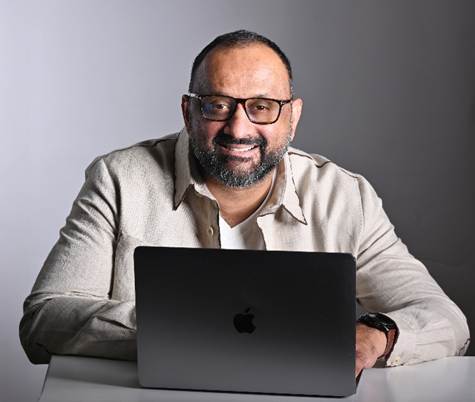
Al Ostad Pallet Factory, based in Dubai Industrial City, has appointed ZayStack Intellizence to deliver a groundbreaking programme to digitise and automate core business processes across sales, procurement, production, inventory, and delivery.
Under the agreement, ZayStack will support an initial three-month phase focused on “quick wins and foundations”, including current-state assessment, process mapping and advanced software and AI tool recommendations. The project will also see rollout of practical templates, dashboards and minimum viable automations, designed to improve visibility and accountability across operations.
The recently inked agreement is part of Al Ostad’s continuing evolution, ensuring it keeps delivering value to its ever-growing customer base, building on more than 25 years in business with strong investment in the technology-driven future of the logistics sector.
The engagement aims to help Al Ostad reduce manual, person-dependent workflows and move towards a more digitally enabled, data-driven operating model that supports long-term growth, improved decision-making, and stronger customer communication. The project will help employees understand how to use cutting-edge AI tools to increase productivity.
Alex George, Managing Director, Al Ostad Pallet Factory, said: “Al Ostad Pallet Factory has grown on the strength of operational know-how and a hands-on approach. Now, we need to ensure our team is AI prepared, and that we all understand how to make best use of AI across our business.
“This programme is about putting the right digital foundations in place so we can improve visibility, reduce friction in day-to-day workflows, and scale with confidence, all while continuing to deliver reliably for our customers.”
Alex is keen to implement cutting-edge technologies at his 8,000 square meter DIC manufacturing facility, and is intent on becoming “best in class” for logistics and packaging solutions, aiming for the number one position regionally.
“We’re on track,” Alex says with confidence. “It’s about being ready for the future – a future where technology, sustainability, and supply chain resilience define the leaders in manufacturing. We want to be at the forefront of that shift.”
Alex believes the new workflows Zaystack will deliver will create a new industry benchmark in the region.
Tarun Malik, Partner, ZayStack Intellizence LLP, said: “Manufacturing businesses don’t need ‘digital’ for its own sake, they need practical systems that improve speed, accuracy and accountability. We’ll be working closely with Al Ostad to identify critical workflows and establish the dashboards, templates and ‘intelligent’ automation foundations that support sustainable, long-term adoption.”
The programme also includes a review of document management and IT readiness (hardware and network), with training and change-management support to help teams adopt new ways of working.
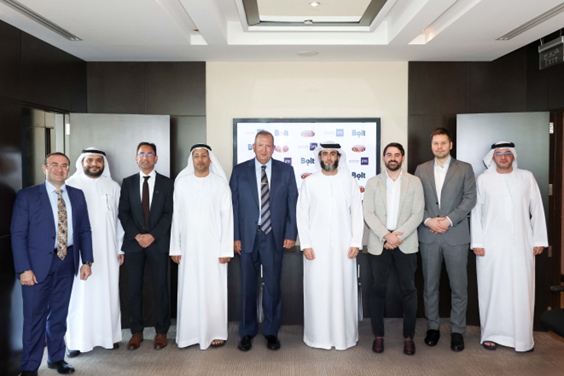
Marking another milestone towards shaping the future of urban mobility in the UAE, Dubai Taxi Company (DTC), together with its strategic partner Bolt, has entered into a strategic alliance with National Taxi LLC to enhance the ride-hailing experience for residents and visitors across Dubai.
The partnership was formalised through the signing of an agreement between Mansoor Rahma Alfalasi, CEO of Dubai Taxi Company, and Toufic Mitri, Managing Director of National Taxi LLC, marking a significant milestone in Dubai’s journey toward smarter, more accessible, and customer-centric transport solutions.
Under the agreement, 1,823 National Taxi vehicles will be seamlessly integrated into the Bolt platform, significantly expanding fleet capacity and service coverage. The integration will increase availability, reduce waiting times, and enhance overall operational efficiency, delivering faster ETAs and a more reliable customer experience, particularly during peak periods. The expanded fleet also supports higher driver earnings through increased trip volumes, while reinforcing Bolt’s position as a trusted and growing e-hailing platform in Dubai.
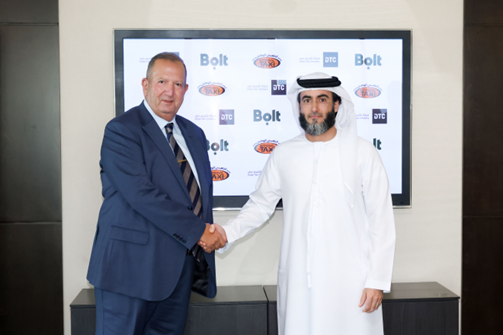
Mansoor Rahma Alfalasi, CEO of Dubai Taxi Company, said: “At DTC, we are committed to building strategic partnerships that enhance customer experience while strengthening Dubai’s mobility ecosystem. Through this collaboration, and with the addition of National taxis to our existing fleet of over 10,000 taxis on the Bolt platform, we are expanding access to taxis and embedding them more deeply into the digital ride-hailing experience. This integration brings us closer to reaching 80 percent target set by Dubai Government of converting street hailing trips to e-hailing.”
“The growing demand for taxi services in Dubai is being driven by rapid digital transformation, sustained urbanisation, strong tourism growth, and ongoing fleet modernisation, key pillars of a thriving city’s economy. By aligning our services with these drivers, we are building a resilient, future-ready mobility network that supports economic growth, improves driver opportunities, and delivers seamless journeys for residents and visitors alike.”, he added.
“We are glad to have our fleet of 1823 taxis on one of the UAE’s leading e-hailing platforms, Bolt. This partnership represents a significant step forward in optimising fleet utilisation and enhancing operational efficiency. With the smart technology and real-time demand matching capabilities of the Bolt platform, we are able to reduce idle time, improve driver productivity, and deliver faster, more reliable service to customers. Beyond efficiency, this collaboration enables us to elevate service quality while supporting more sustainable mobility through better route optimisation and reduced unnecessary mileage.”, said Toufic Mitri, Managing Director of National Taxi LLC.

NEWBY TEAS UNVEILS ELEGANT GIFTING COLLECTION FOR MOTHER’S DAY & WOMEN’S DAY

SAGE Unveils Premium Eid Gifting Collection for Coffee Lovers
FROM COMPLIANCE TO COMPETITIVE EDGE: WHY DIGITAL RECORD-KEEPING IS A BUSINESS IMPERATIVE



-

 Tech News2 years ago
Denodo Bolsters Executive Team by Hiring Christophe Culine as its Chief Revenue Officer
-
News10 years ago
SENDQUICK (TALARIAX) INTRODUCES SQOOPE – THE BREAKTHROUGH IN MOBILE MESSAGING
-
 VAR11 months ago
Microsoft Launches New Surface Copilot+ PCs for Business
-

 Tech Interviews2 years ago
Navigating the Cybersecurity Landscape in Hybrid Work Environments
-

 Tech News8 months ago
Nothing Launches flagship Nothing Phone (3) and Headphone (1) in theme with the Iconic Museum of the Future in Dubai
-

 Automotive1 year ago
AGMC Launches the RIDDARA RD6 High Performance Fully Electric 4×4 Pickup
-

 VAR2 years ago
Samsung Galaxy Z Fold6 vs Google Pixel 9 Pro Fold: Clash Of The Folding Phenoms
-

 Tech News2 years ago
Brighton College Abu Dhabi and Brighton College Al Ain Donate 954 IT Devices in Support of ‘Donate Your Own Device’ Campaign