
 Have a question? +971 56 404 0503




Tech News
Dell Technologies Helps Organizations in the UAE Create a Modern Workplace with New AI Experiences


Dell Technologies is making significant strides in the realm of AI with the introduction of the most comprehensive portfolio of AI PCs and workstations in the market.
Setting a new benchmark for battery life, productivity, security, and performance, the PCs are tailored to meet the evolving needs of businesses, prioritizing customer choice and flexibility, and equipping them for a future powered by AI. The innovative solutions mark a significant step forward in Dell’s broader AI strategy, which aims to use its AI portfolio to support businesses from the desktop to the data center to the cloud.
“From running complex AI workloads on workstations to using day-to-day AI-powered applications on laptops, the AI PC will be an important investment that pays dividends in productivity and paves the way to a smarter, more efficient future. Dell’s advantage starts with offering more AI PCs across the commercial portfolio from day one, catering to customers’ unique needs and giving them the ability to start future proofing for AI today,” said Haidi Nossair, Sr. Director – Client Solutions Group – META, Dell Technologies.
AI PCs for hybrid work
The neural processing unit (NPU)–equipped AI PC will grow from nearly 50 million units in 2024 to more than 167 million in 2027, representing nearly 60% of all PC shipments worldwide. The NPU adds an AI acceleration engine that can take on more dedicated AI tasks, freeing up the CPU and GPU to do other things. This creates a more responsive experience and enhances performance, security, battery life and productivity.
Dell provides the world’s most intelligent, manageable and secure commercial PCs. With a new line-up of Latitude laptops and Precision mobile workstations, Dell will offer customers the broadest portfolio of commercial AI laptops and mobile workstations, from entry-level to ultra-premium laptops and workstation options. Powered by Intel Core Ultra processors with Intel vPro, Dell commercial PCs drive AI workloads and unlock new levels of productivity and efficiencies. For example, employees can now:
- Collaborate more effectively. Combining the benefits of the NPU to offload capabilities like auto-framing, background blur and eye-tracking with the power efficiency of Intel Core Ultra processors, gives workers up to 38% more battery life and valuable working time in a day packed with Zoom calls.
- Create content faster. By distributing AI processing across the CPU, GPU and now NPU, users can create generative AI images over five times faster with Stable Diffusion, a text-to-image model.
- Work more securely in a hybrid work environment. More ISVs will continue to build applications for the AI PC. For example, Dell is working with CrowdStrike and Intel to offload security functions onto the device via the NPU. This provides more comprehensive threat detection, helping customers swiftly detect malicious sites and security vulnerabilities with reduced latency compared to cloud-based solutions.
- Stay in the flow of work. The portfolio features Windows 11 and a Copilot key to make it even easier to get things done and stay in the flow of work. With the press of a key, you can have faster access to your everyday AI companion.
AI-powered, automated services
Building on years of industry leadership in proactive, predictive automation as well as expert advice and managed services, new Dell Services capabilities help customers:
- Maximize PC uptime and improve productivity with new self-healing capabilities through the ProSupport Suite for PCs. Customers who connect to Dell’s SupportAssist technology can leverage telemetry and AI to fix PC issues without human intervention. This lets IT activate Dell-authored scripts to autonomously correct blue screen errors, thermal issues and more across their entire fleet of PCs.
- Keep PC fleet refreshes on track and on budget with Dell’s managed services. When customers need new AI devices, Dell provides detailed planning, forecasting and supply chain management to enable timely, targeted multi-vendor device rollouts.
- Adopt and maximize GenAI investments with Digital Employee Experience Services for Gen AI. These services equip employees with the tools and technology tailored for their diverse roles.
Product spotlights
- Dell’s most intelligent headset portfolio in its class includes five new headsets. The Dell Premier Wireless ANC Headset (WL7024) features AI-based noise canceling microphones that distinguishes human speech signals from background noises from both the user and their audience and adjusts the level of noise cancellation based on the user’s environment. The advanced smart sensor intelligently performs tasks like mute/unmute, pause/play as long as earcup is lifted, while intuitive touch controls tailor the audio experience.
- The fully refreshed Latitude portfolio features updates across 5000, 7000 and 9000 series. Latitude 5000 is Dell’s mainstream series of devices, offering flexibility, scalability, and security. The series is sustainable by design with materials ranging from recycled plastics to reclaimed carbon fiber, renewable materials and ocean bound plastics.
- The Latitude 7350/7450 Ultralights are the world’s lightest 13.3” and 14” premium commercial laptops. The Latitude 7455 is a premium AI laptop up to 21 hours of battery life stacked with a stunning 14-inch QHD+ touch display, quad speakers with AI noise reduction, Qualcomm FastConnect Wi-Fi 7 and optional 5G for greater connectivity and collaboration. As Dell’s thinnest Latitude laptop ever, team members have the mobile form factor they need for productivity at the desk or on-the-go.
- Designed for executives, salespeople and consultants, the Latitude 9450 2-in-1 provides a peek into the future of work from anywhere focused on ultra-premium design, collaboration & productivity. It boasts a haptic collaboration touchpad with support for Microsoft Teams and Zoom, a stunning QHD+ Infinity Edge display, top-firing speakers and a new HDR webcam. As new WiFi-7 capability rolls out throughout 2024, the Wi-Fi 7 capable wireless card on Latitude 9450 will expand throughput and connect us to our peers even faster. These enhancements paired with the ability to utilize AI to improve collaboration will deliver a premium new experience to end users.
- Now featuring Intel Core Ultra processors Series 2, Dell’s thinnest XPS provides more power and efficiency to effortlessly tackle the most demanding tasks. This includes a dedicated NPU capable of up to 48 TOPS, enabling advanced AI capabilities such as text and image creation and faster photo or video editing. XPS 13 is the first laptop in the world to offer a tandem OLED display, allowing for higher brightness than a traditional OLED display and 26 hours of battery life while streaming on an FHD+ display.
- Dell has also introduced new video conferencing monitors with upgraded convenience, a better camera and next level multitasking features. These monitors are the world’s first 23.8-inch, 27-inch and 34-inch video conferencing monitors certified for both Microsoft Teams and Zoom7. These monitors include an integrated camera, speakers, and microphones to allow for a clean desk setup.










Tech News
Growtech Middle East opens in Dubai with Dubai Municipality and the National Agriculture Centre, putting UAE agriculture and food resilience at centre stage
Growtech Middle East, formerly known as Agra Middle East, opened today at Dubai World Trade Centre in its first edition under the new name, with the UAE National Agriculture Centre (NAC), the event’s Strategic Government Partner, and Dubai Municipality, leading the opening. The three-day event runs until 28 October 2026 in Hall 8.
His Excellency Marwan Bin Ghalita, Director General, Dubai Municipality and Sultan Salem Al Shamsi, Director General, National Agriculture Centre, opened the show, before touring the exhibition floor and meeting exhibitors.
The opening builds on NAC’s partnership with Growtech Middle East, announced earlier this month, and reflects the direction set by the UAE National Food Security Strategy 2051, under which the country continues to invest in advanced farming technologies, sustainable production systems and resilient food supply chains.
Sultan Salem Al Shamsi, Director General, National Agriculture Centre, said, “Farmers first – this is the principle that guides our work, shapes our partnerships, and defines our success.” He added, “Growtech Middle East brings together technologies and expertise that open up significant opportunities for the agriculture sector. Our role is to connect these capabilities with our farmers’ needs and translate knowledge into practical, economically viable solutions.”
Alan Kelly, Commercial & Strategy Director, inD Group, said, “Growtech Middle East brings international expertise and technology to the UAE’s agriculture and food security industry, and opening day has put global providers, government and buyers in the same room. With the UAE National Agriculture Centre as our Strategic Government Partner, we are creating a direct route for proven solutions to reach the UAE market.”
Day one: Setting the vision, farming for resilience and food sovereignty
The conference programme runs alongside the exhibition across three knowledge platforms: the Future of Food Resilience Summit, the MENA Regenerative Agriculture Summit and free CPD-certified technical seminars. Day one is themed “Setting the Vision: Farming for Resilience and Food Sovereignty” and is led by the Future Food Resilience Summit, which runs across Days 1 and 2.
The summit opened with remarks from Sultan Salem Al Shamsi on placing farmers at the heart of food resilience. Speaking about how NAC has worked with the sector, he said, “Through more than eighty meetings with stakeholders across the agriculture sector, we engaged with over four hundred farmers from across the UAE, listening to their experiences, challenges, and aspirations. We are committed to staying close to our farmers, understanding the realities of their daily work, and involving them in developing the programmes and services that support them.”
On the role of technology, Sultan Salem Al Shamsi said, “Artificial intelligence is undoubtedly no longer just a technology of the future. It is now a practical tool for advancing agriculture and enhancing the sector’s efficiency and sustainability. Data and smart technologies enable farmers to make more precise decisions, helping them improve the quality of their produce, increase productivity, and use resources, particularly water, more efficiently.”
He added that the Centre aims for thirty per cent of farms to adopt climate-smart solutions by 2030.
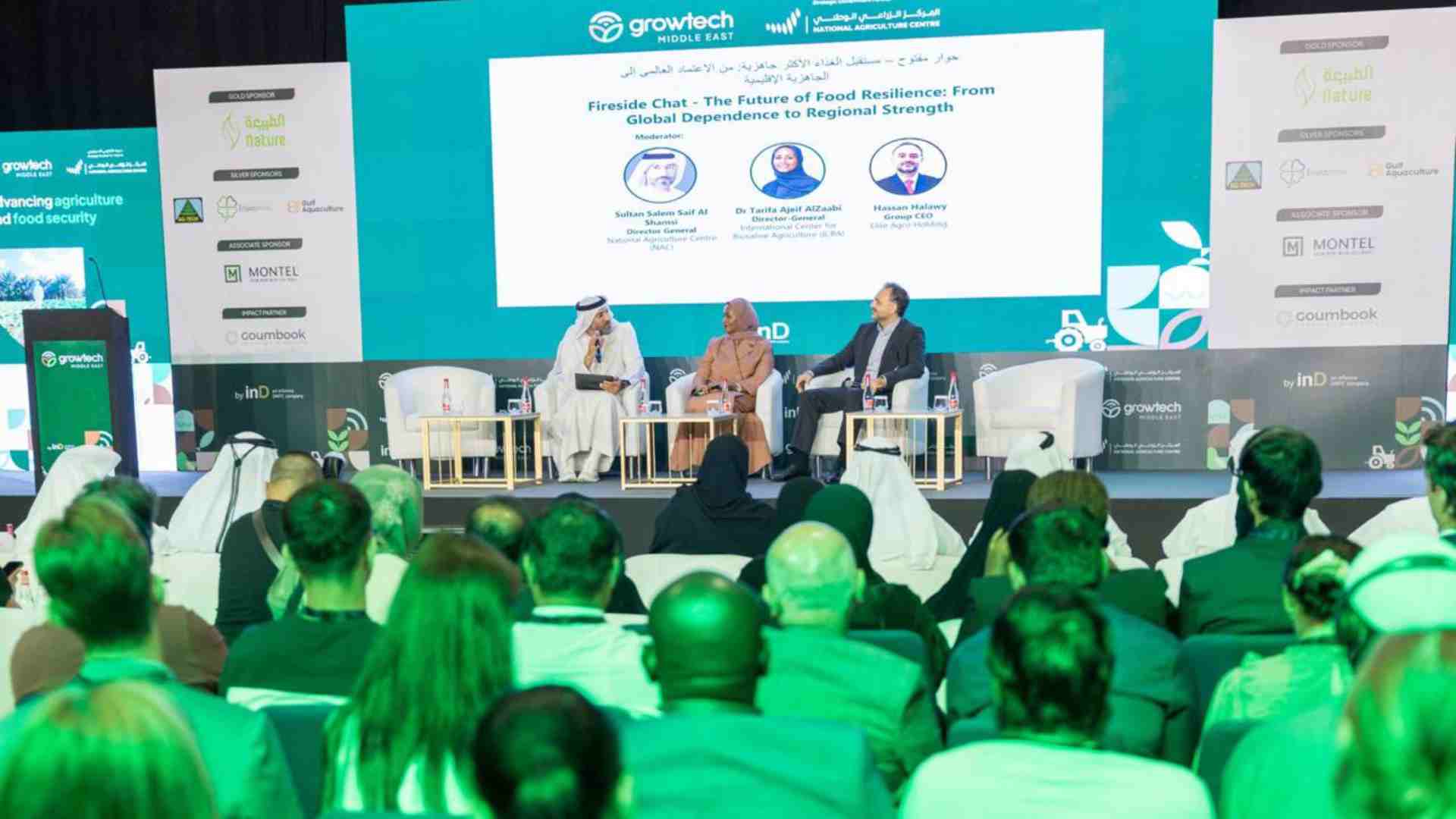
He then joined Dr Tarifa Ajeif AlZaabi, Director-General of the International Center for Biosaline Agriculture (ICBA), and Hassan Halaway, Group CEO, Elite Agro Holding, for a fireside chat on “The Future of Food Resilience: From Global Dependence to Regional Strength.” The discussion covered the role of UAE farms in national food resilience, getting arid-climate research into practice, and building trust in Emirati produce through UAE G.A.P.
The day’s sessions covered regional farming, farm data, agri-finance, AI-powered food systems and sustainable agriculture in arid regions. Free CPD-certified technical seminars also ran on day one, including a Food Landscape Think Tank led by The Waste Lab, a session from Khalifa University and a poultry production session with the Emirates Veterinary Association.
On the exhibition floor, exhibitors are showcasing greenhouse technologies, irrigation systems, plant nutrition, agriculture machinery, poultry, livestock, aquaculture and more, including international technology providers introducing their solutions to the UAE market, under the theme “Powering the Future of Agriculture Growth and Food Security in the Middle East.”
Engin Er, Exhibition Director, Growtech Events, said, “This is our first edition as Growtech Middle East, previously Agra ME, and the focus from here is growth: for our exhibitors, for our visitors and for the agriculture and food resilience industry across the region. We are pleased with the turnout on day one and thank our sponsors, exhibitors and visitors for making this edition possible.”
Looking ahead
The Future Food Resilience Summit continues tomorrow, and Growtech Middle East concludes on 28 October with the MENA Regenerative Agriculture Summit, created with Event Impact Partner Goumbook, focused on soil health, resource efficiency and climate resilience.
Growtech Middle East thanks its sponsors for their support: Nature for Environmental and Agricultural Solutions as Gold Sponsor; Enjaz Trading, Agricultural Technology Co. and Gulf Aquaculture as Silver Sponsors; and MONTEL as Associate Sponsor.
Building a smartphone with a larger battery is relatively straightforward. Making that battery fit into a slim device while reinforcing its structure against drops, water and everyday wear presents a more complex engineering challenge.
For the unbreakable HONOR X9e Pro, that challenge shapes the device from the inside out. From advanced battery chemistry and reinforced materials to specialized bonding techniques and rigorous durability testing, every element is designed to contribute to long-term reliability.
Engineering More Into Less Space
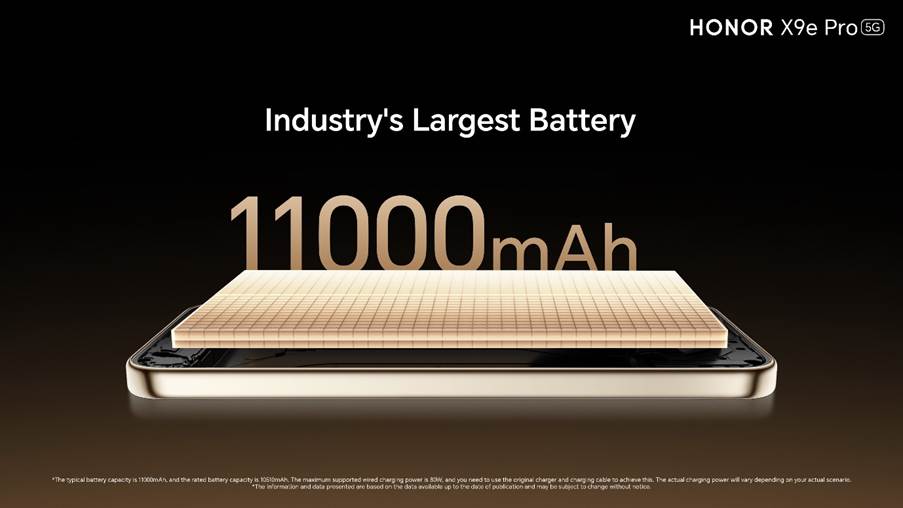
At the centre of the HONOR X9e Pro is a fourth-generation silicon-carbon battery. By increasing the silicon content in the battery anode, HONOR improves energy density, allowing greater capacity within limited internal space.
The result is an 11,000mAh typical battery – the largest in the industry – housed in a body measuring just 8.08mm thick and weighing 203g.
Accommodating this capacity required HONOR to optimize the mainboard, secondary board, display structure, back cover and mid-frame, creating additional internal space without significantly increasing the device’s dimensions.
For consumers, this means enjoying up to two to three days of typical use between charges, reducing charging interruptions without sacrificing portability. It’s worth noting that HONOR has designed the battery to deliver up to six years of reliable performance, offering greater longevity and long-term durability.
Materials Engineered for Impact Resistance
The materials surrounding the battery and core components play an equally important role in durability.
HONOR incorporates arch-shaped structures around the phone’s corners and perimeter, supported by high-strength metal reinforcement embedded within the mid-frame. Together, these elements help distribute impact forces, reducing pressure on sensitive components.
The display receives additional protection through PUR shear-resistant adhesive, creating a continuous three-dimensional bonding structure around its edges. According to HONOR laboratory testing, this delivers approximately ten times the shear resistance of conventional backing adhesive solutions.
For consumers, these reinforcements provide greater confidence when accidental drops occur, potentially reducing damage-related repairs and associated costs.
Protection Built into Every Layer
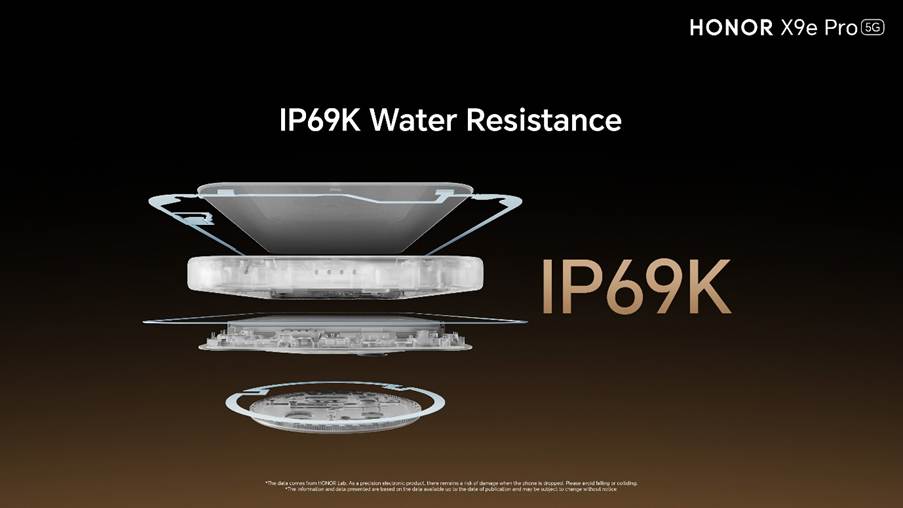
Water and dust resistance are addressed through a compartmentalized sealing architecture.
The display and mid-frame form one protected zone, while the mid-frame and back cover create another. Openings including the USB port, speakers, buttons and SIM tray receive dedicated protective treatments.
Continuous adhesive, localized seals and drainage channels provide additional barriers, helping prevent moisture from reaching sensitive internal components.
This construction supports IP68, IP69 and IP69K ratings, covering dust protection, immersion and high-pressure water exposure and submersion in water at depths of up to 10 metres.
For consumers, these protections offer reassurance against accidental spills, dust and water exposure, although water resistance is not permanent.
Tested and Certified for Durability
Beyond material selection and structural design, HONOR validates the device through laboratory testing. The HONOR X9e Pro has received the five-star SGS Premium Performance Certification for Drop Resistance in Harsh Scenarios, providing independent recognition of its durability performance.
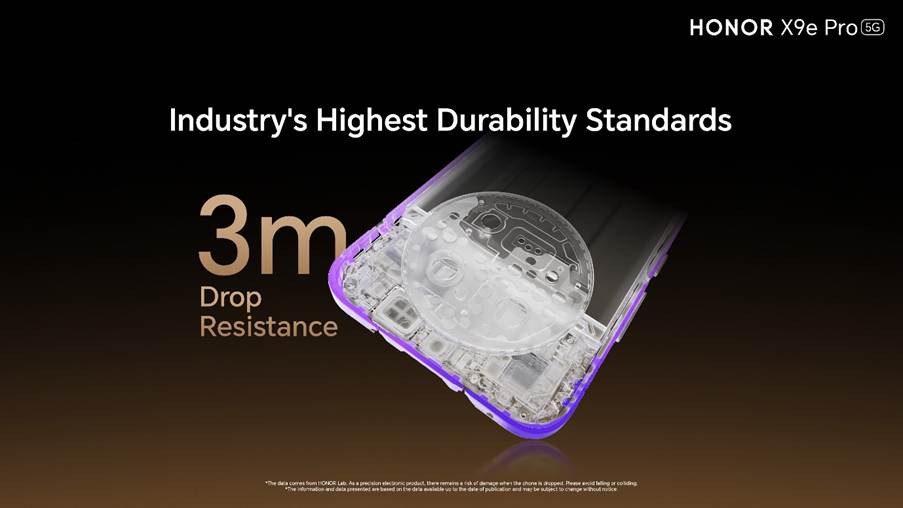
In separate HONOR laboratory tests, the device was evaluated against drops from multiple angles, including heights of up to 3 metres. Its water-protection system underwent 100,000 immersion cycles, alongside 24-hour salt-spray exposure testing. Battery endurance was also evaluated across temperatures ranging from -20°C to 50°C.
These results offer consumers greater confidence in everyday use, potentially reducing the inconvenience of accidental damage and premature replacement, although actual performance varies by conditions.
Engineering Beyond Durability
Reliability also extends to imaging. The device incorporates a 108MP main camera with CIPA 6.0-level optical image stabilization, helping reduce motion blur during handheld photography, particularly in low-light environments.
A Connected Approach to Manufacturing
The HONOR X9e Pro demonstrates how manufacturing decisions contribute to overall device reliability.
By integrating advanced materials, structural reinforcement, protective sealing and rigorous validation, HONOR aims to deliver a smartphone that offers fewer interruptions, greater peace of mind and dependable performance throughout everyday use.
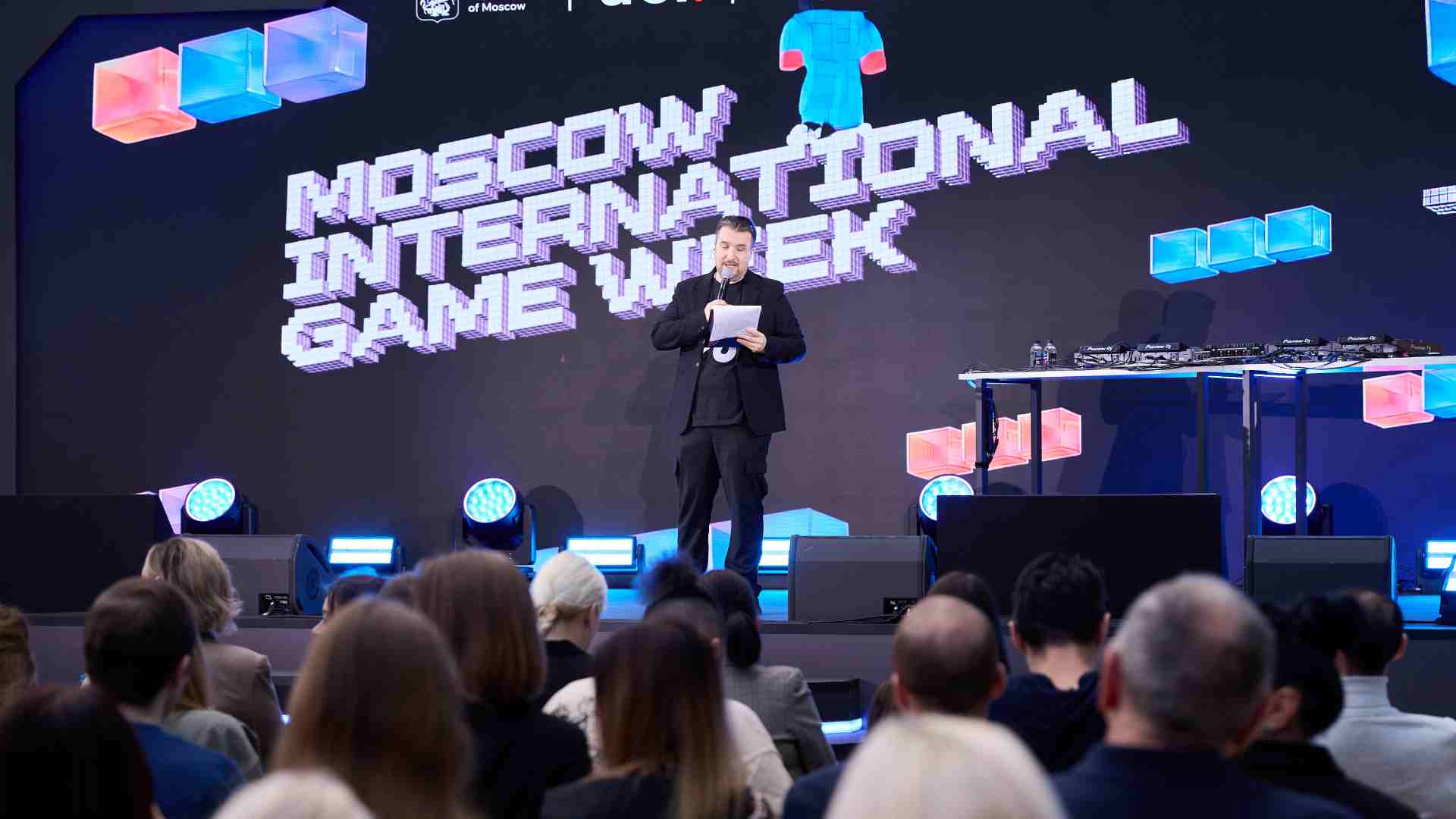
For the second time, Moscow will bring the international video game industry together at Moscow Game Hub, from October 29 to November 1, 2026, developed by the Agency of Creative Industries.
Over four days, players, developers and investors from more than 25 countries will discuss how games, alongside animation, film and literature, are becoming part of the creative economy. The event will also provide a platform for new projects and partnerships.
International participants will be able to meet Russian studios and discuss opportunities to co-produce and promote content. This year’s theme, “Beyond the Industry,” explores how video games connect with animation, film, literature and other areas of the creative economy.
Opportunities for companies from Türkiye and the MENA region
The event will give companies from Türkiye, the Middle East and North Africa a chance to learn about the Russian market, showcase their projects and find partners. Expected delegates include a representative of Digital Dunes, a Qatari mobile game developer and publisher.
For companies from Türkiye and the MENA region, Moscow International Game Week will be an opportunity to connect with Russian developers, publishers and technology partners, discover new projects, and discuss collaboration in game development, localization and distribution.
Moscow is open to international cooperation, exchange of expertise and joint projects. The city is building an environment for the gaming and animation industries by bringing together support programs, technology, skilled professionals and access to new markets.
Moscow Game Hub provides companies with infrastructure for developing, producing and promoting projects. Moscow International Game Week will introduce international participants to these opportunities and serve as a working platform to showcase projects, find partners and discuss agreements. Guests can also look forward to an extensive business program.
International exhibition
More than 85 companies will take part in the exhibition. Brazil’s national stand will be presented by Brasilia Game Hub, while the India group stand will feature projects by BUZZEDMEN STUDIO, ABRACA DABRA SOFTWARE SOLUTIONS and Nilee Games. The exhibition will also include stands by Chingmu from China, BURNING SOUL and BEAR&SKUNK from the Republic of Korea, and Experimental Design Team (EDT) from Malaysia.
Visitors will discover projects from Russian publishers and gaming platforms. Independent developers will showcase their games in the indie alley, while the residents’ alley will feature studios from Moscow Game Hub. A marketplace for themed merchandise will also be open to visitors.
The exhibition will give the wider public a chance to experience the industry firsthand: play new projects, meet their creators and learn more about game and animation development.
International tournament
One of the highlights of Moscow International Game Week will be the LAN finals of the Moscow Cyber Games 2026, an international Counter-Strike 2 tournament. The finals will take place on October 31 and November 1 at Moscow Game Hub. A total of 956 teams from Europe and Asia took part in the open qualifiers.
Tournament results count toward the Valve Regional Standings, which are used to allocate invitations to CS2 tournaments. Holding the event at the end of the ranking cycle gives Russian teams an additional opportunity to earn points and improve their standings. Spectators will be able to watch the professional teams’ final matches online and at the venue.
The finals will be part of Moscow International Game Week’s international program and will showcase Moscow Game Hub’s capacity to host major esports events.

GCC-wide popular Syrian-Levantine Restaurant Naranj Cafe Enters Dubai

OBJECT 1 SELLS TO THE WORLD AS BUYERS FROM 60+ NATIONALITIES FUEL ITS YEAR OF DELIVERY

Growtech Middle East opens in Dubai with Dubai Municipality and the National Agriculture Centre, putting UAE agriculture and food resilience at centre stage



-

 Trending12 months ago
OPPO A6 Pro 5G Review: Reliable Daily Driver
-

 Tech News2 years ago
Denodo Bolsters Executive Team by Hiring Christophe Culine as its Chief Revenue Officer
-
 VAR2 years ago
Microsoft Launches New Surface Copilot+ PCs for Business
-

 Automotive2 years ago
AGMC Launches the RIDDARA RD6 High Performance Fully Electric 4×4 Pickup
-
Tech Interviews3 years ago
Navigating the Cybersecurity Landscape in Hybrid Work Environments
-

 Hospitality2 years ago
Gulfood 2025 30th Edition Kicks Off Today, Setting New Benchmarks in F&B Growth and Innovation
-

 VAR11 months ago
Huawei Nova 14 Pro Review: Where Camera Excellence Meets Ecosystem Evolution
-

 Tech News1 year ago
Nothing Launches flagship Nothing Phone (3) and Headphone (1) in theme with the Iconic Museum of the Future in Dubai