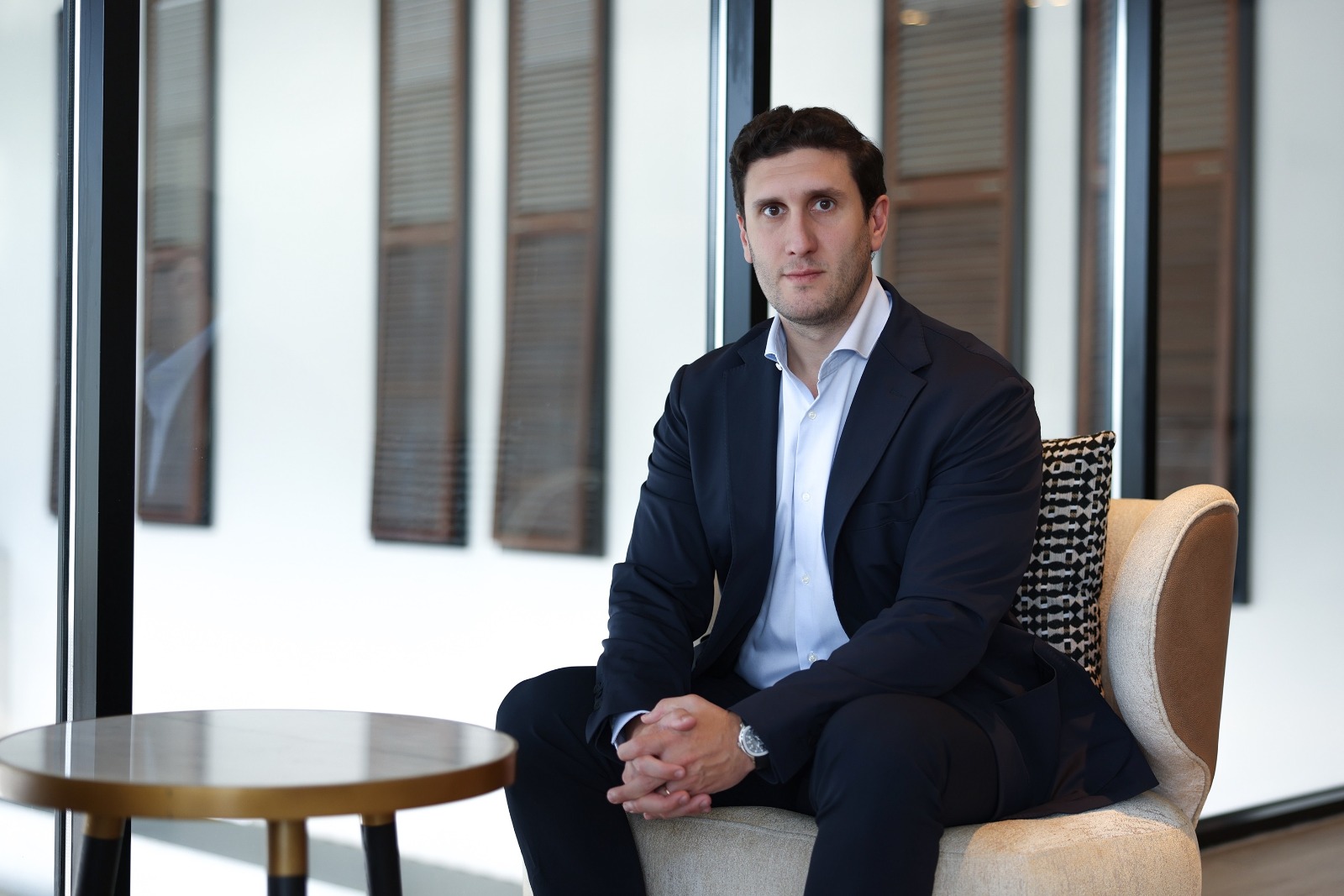
As Saudi Arabia moves AI from experimentation into large-scale deployment, Federico Pienovi, CEO APAC & MENA at Globant, explains why the Kingdom is emerging as a proving ground for agentic AI, AI-native business models and a new generation of connected experiences spanning sports, tourism, financial services and giga-projects.
Saudi Arabia is investing heavily in AI infrastructure and adoption. What is the Kingdom doing differently that could make it a global blueprint for moving AI from experimentation into large-scale business deployment?
What distinguishes Saudi Arabia’s approach is the alignment between national ambition and institutional execution. The Kingdom is embedding AI directly into the infrastructure of its giga-projects, financial institutions, and national sports ecosystems from day one. When you look at projects like Qiddiya, Red Sea Global, Diriyah, and New Murabba, these are greenfield developments where AI-native technology can be architected into the foundation rather than bolted on afterward.
Saudi Arabia is simultaneously transforming multiple sectors, tourism, sports, aviation, entertainment, real estate, and financial services, which creates a unique ecosystem effect. For instance, the world’s first Agent-to-Agent Tourism Corridor, connecting Red Sea Global and AlUla through sovereign AI destination agents, demonstrates how different entities can share AI infrastructure while maintaining data sovereignty. The Kingdom has also created conditions where global technology partners want to establish a deep local presence. Our own experience establishing a regional headquarters in Riyadh as a Center of Excellence for AI, creativity, and digital solutions reflects this pull, serious institutions want serious partners embedded alongside them, working on problems that matter at national scale.
Agentic AI is quickly becoming the next major enterprise conversation. Where are you already seeing organisations move beyond copilots towards AI agents that can independently execute tasks and make operational decisions?
The shift from copilots to autonomous agents is happening fastest where the business case is clearest and the tolerance for transformation is highest. In the Middle East, we’re seeing three sectors lead this transition: tourism and hospitality, financial services, and real estate development.
In tourism, the Agentic Tourism Corridor we’re launching at LEAP represents what we believe is the world’s first live Agent-to-Agent network, sovereign AI destination agents for Red Sea Global and AlUla that can communicate with each other to orchestrate guest journeys across multiple destinations. These are agents that can independently execute booking decisions, coordinate logistics, and personalize experiences based on real-time behavioral data.
Financial services institutions in the region, including banks like FAB, Emirates NBD, and Commercial Bank of Dubai, are deploying agentic AI that goes beyond customer service automation. We’re talking about agents that can independently manage risk assessment workflows, execute compliance checks, detect fraud patterns, and personalize customer journeys without human intervention at each step. Globant Financial Services AI Studio is specifically designed to refactor operations through agentic AI, not just add conversational interfaces.
In real estate, our PropTech ecosystem demonstrates the full agentic potential: AI agents handling lead qualification, property discovery through AR/VR, construction progress tracking via digital twins, and automated booking, payments, and service management. For giga-projects like Diriyah and New Murabba, is operational necessity given the scale and timeline ambitions.
The proof that this model works at global scale came in August 2026 when FIFA selected us to build their continuous, year-round fan experience ecosystem using AI Pods. Initial pilots showed a 20% efficiency increase in throughput generation while maintaining or improving quality. FIFA specifically described their move as embracing an AI-native, consumption-based model, a signal that major global institutions are ready to move past experimentation.
Many companies have spent years on digital transformation, yet AI is now forcing them to rethink entire operating models. What separates an organisation that simply adds AI to existing processes from one that genuinely reinvents the business around AI?
The difference lies in whether an organization treats AI as a feature or as an operating system. Adding AI to existing processes means layering chatbots onto customer service, adding predictive analytics to existing dashboards, or automating discrete tasks within unchanged workflows. Reinventing AI means changing the unit of delivery, the commercial model, and the fundamental process of how work gets done, all at once.
Technology services have moved through three eras. Traditional IT services sold labor, hours and full-time equivalents, delivered through projects, scaled by hiring more people. Digital-native services sold expertise and delivery, agile squads, human-built software with automation layered in. What we call AI-native technology services represents a third era, where the resource is people plus AI agents, delivery is agent-orchestrated, and the commercial model shifts from hours to outcomes, capacity, and tokens.
When FIFA engaged us to build their fan experience ecosystem, they didn’t ask for AI features added to their existing platforms. They embraced an AI-native, consumption-based model where they pay for outcomes rather than hours, where AI agents execute while human experts orchestrate, and where all institutional knowledge generated is secured in a proprietary token vault that FIFA owns. That’s reinvention, the entire relationship between client and technology partner has changed. Organizations that genuinely reinvent share several characteristics: they architect for AI from the beginning rather than retrofit, they measure success in business outcomes rather than technology deployment; they’re willing to change commercial relationships, not just internal processes, and critically, they maintain human expertise in an orchestration role rather than simply automating humans out of the equation. Expert supervision remains essential, anyone can prompt an AI tool, but shipping results to production requires governance, quality validation, and domain knowledge that only human experts can provide.
Saudi Arabia is simultaneously transforming sectors such as tourism, sports, aviation and entertainment through major projects. Which of these sectors do you believe could become the strongest showcase for AI-driven experiences, and what might those experiences look like over the next three to five years?
Sports has the strongest potential to become Saudi Arabia’s defining showcase for AI-driven experiences, and the evidence is already emerging. The Kingdom’s sports transformation, through the Saudi Pro League, preparations for the 2034 FIFA World Cup, and purpose-built sports infrastructure within giga-projects, creates a unique convergence of factors: massive capital investment, greenfield venues, a young and digitally native fan base, and explicit ambition to leapfrog existing global benchmarks.
What makes sports particularly powerful as a showcase is that fan experiences are inherently measurable and emotionally resonant. Through Sportian, we’ve built a single operating system that connects fan identity, behavioral data, content, venue operations, and performance intelligence. This platform already powers LALIGA clubs, the Belgian Pro League, and the U.S. Men’s National Soccer Team under Mauricio Pochettino. The Saudi Pro League represents an opportunity to deploy this at scale in venues designed from the ground up for AI integration.
Over the next three to five years, the experience could look like this: a fan’s journey begins before they leave home, with AI agents curating personalized content, managing ticket purchases, and coordinating travel logistics. In-venue, their identity travels seamlessly across every digital touchpoint, concessions, merchandise, interactive experiences, creating a continuous relationship rather than discrete transactions. Real-time performance data informs on-screen content that adapts to what individual fans care about. Post-match, that relationship continues through personalized content and engagement that keeps fans connected year-round, not just on match days.
Globant has established its regional headquarters in Riyadh and worked across several Vision 2030-linked sectors. After three years in the Middle East, what have you learned about the region that has changed Globant’s strategy, and where do you see the biggest opportunity for the company over the next phase of growth?
What we’ve learned has shaped how we operate here and influenced our global thinking. The first lesson was the speed of ambition. The timeline expectations in Saudi Arabia compress what would be multi-year transformation programs elsewhere into months. This has pushed us to evolve our delivery models, the subscription-based This has pushed us to deploy our most advanced delivery models here from the outset. The subscription-based AI Pods approach, where clients can unlock modular teams of AI agents supervised by human experts from day one, reflects where the entire technology services industry is heading globally. The region’s pace and ambition mean that clients here are among the earliest and most demanding adopters of that model, making the Middle East a natural proving ground for AI-native delivery at scale.
The second lesson was the seriousness of partnership expectations. Our client roster in the region, Qiddiya, Red Sea Global, the Saudi Pro League, represents institutions that aren’t looking for vendors. They’re looking for partners willing to stake their own reputation on joint outcomes. Every flagship client represents an institution betting its own transformation on us.
The third lesson was about talent. The Kingdom’s investment in developing local technology talent aligned with our decision to position Riyadh as a Center of Excellence for AI, creativity, and digital solutions. This isn’t a satellite office supporting work done elsewhere, it’s a hub where innovation happens.
Looking ahead, the biggest opportunity lies in the interconnection between sectors. Saudi Arabia isn’t transforming tourism, sports, entertainment, aviation, and finance as separate initiatives, these are interlocking systems that will increasingly need to share data, coordinate experiences, and operate as a unified ecosystem. The technology partner that can operate across all these sectors, understanding both the vertical depth and horizontal connections, will be positioned to support the Kingdom’s next phase of growth.
OPPO A7 Pro 5G puts longevity at the centre of the smartphone experience!
With an 8,000mAh battery, dual 50MP cameras, IP69K protection and a five-year smoothness promise, OPPO’s latest A Series smartphone makes a strong case for devices designed around longer-term ownership.
Smartphone launches have traditionally revolved around faster processors, increasingly sophisticated cameras and, more recently, AI. With the A7 Pro 5G, OPPO is putting another consideration firmly into the conversation: how well a smartphone can hold up over time.
At the centre of that proposition is an enormous 8,000mAh battery. Large-capacity batteries are becoming increasingly common, but what is interesting about the A7 Pro 5G is how little the battery dictates the physical character of the phone.
Despite the capacity, the device does not immediately look or feel like a rugged smartphone. The Shine Titanium review unit has an understated finish, while the alternative Surfing Blue introduces a more distinctive Dynamic 3D Wave Texture.
That relatively conventional appearance hides some serious durability credentials.
Built for longer ownership
The A7 Pro 5G carries IP69K dust and water resistance alongside military-grade shock resistance. Rainstorm Touch is designed to keep the display responsive even when used in heavy rain.
The longevity argument extends to the battery itself. OPPO says it can retain more than 80% of its rated capacity after 2,000 complete charging cycles, underpinning the company’s six-year battery durability proposition.
This matters because battery degradation remains one of the most noticeable compromises as smartphones age. Increasing capacity solves part of that equation; maintaining useful capacity several years into ownership potentially solves another.
Reverse wired charging also allows the A7 Pro 5G to supply power to another connected device, adding some practical value to that substantial battery reserve.
Selfies get the 50MP treatment
OPPO has also placed considerable emphasis on the front-facing camera.
The 50MP Ultra-Wide AI Zoom Selfie Camera offers a 100-degree field of view and can automatically move between 1x and 0.6x framing when additional people enter the shot.
It is a useful approach for group photographs, travel and increasingly video-led social content, where a wider front camera can make considerably more sense than simply increasing resolution. Ultra-steady video has also been included to improve handheld recording.
At the rear is another 50MP camera, using a larger 1/2-inch sensor that OPPO says captures 70% more light than its predecessor.
AI Portrait Glow, AI Popout and AI Remix Collage bring the increasingly familiar layer of computational editing into the camera experience, allowing users to manipulate images without moving immediately to third-party applications.
Five years of smoothness?
Underneath, the A7 Pro 5G is powered by the MediaTek Dimensity 6360 MAX, accompanied by OPPO’s NetworkBoost Chip S1 and AI LinkBoost 4.0.
A 4,300mm² Glacier VC Vapor Chamber handles cooling, while software-based resource and memory management is designed to maintain responsiveness as workloads increase.
Perhaps more interesting than outright performance figures is OPPO’s 5-Year Smoothness Protection. The company says the device has passed its five-year smoothness testing, reflecting a wider attempt to position performance around consistency rather than simply launch-day speed.
Naturally, five-year performance cannot be established during a conventional review period, but the emphasis itself is notable. Smartphone replacement cycles are lengthening, making sustained performance, battery health and software optimisation increasingly relevant purchasing considerations.
AMOLED keeps the experience contemporary
The front houses a 6.57-inch FHD+ AMOLED display with a 120Hz refresh rate, up to 1,400 nits of brightness and a 92.8% screen-to-body ratio.
The combination provides the fluid scrolling and vibrant presentation expected from a contemporary AMOLED smartphone, while complementing a device otherwise heavily focused on practical considerations.
Warranty coverage also extends across the GCC, Pakistan, India and Bangladesh, potentially useful for users who regularly travel between these markets.
The 8,000mAh battery will inevitably attract most of the initial attention, but the A7 Pro 5G becomes more interesting when viewed as a complete package. OPPO is combining battery capacity with physical durability, thermal management, connectivity enhancements and longer-term performance optimisation. At the same time, it has avoided turning the device into something that visually resembles a specialist rugged phone.
BY: SRIJITH KN
A different definition of smartphone performance that may ultimately be the A7 Pro 5G’s more relevant proposition. Rather than asking how much faster a smartphone can become every year, OPPO is increasingly asking another question: how much longer can it remain useful?
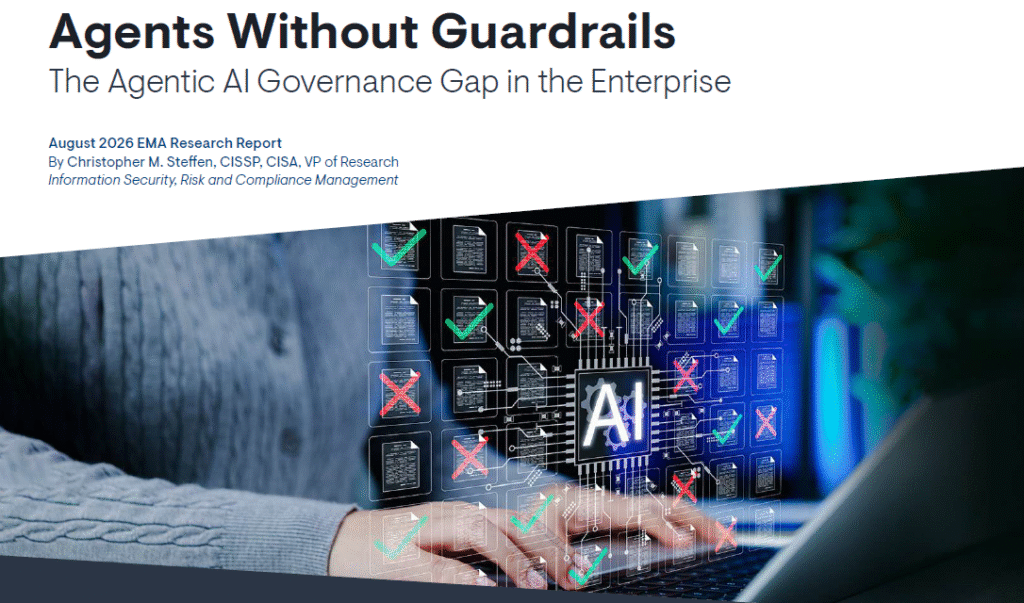
Nearly every enterprise believes its AI agents are properly scoped. Only a third have actually made sure of it.
Today, new research from Cequence Security, the leader in application, API, and agentic AI protection, and Enterprise Management Associates (EMA) found that 94% of enterprise IT and security leaders are confident their AI agents do not have more access than they need, yet only 33% actually provision agents with least-privilege access. The remaining two-thirds run on broad standing permissions that are reviewed periodically, rarely reviewed, or never reviewed at all.
That gap between confidence and practice is already showing up in production, not a theoretical risk, but as incidents enterprises are living with right now. Among the organizations surveyed:
65% have experienced an AI agent take an action outside its intended scope, including 29% with measurable business impact, including data exposure, financial loss, operational disruption, or reputational damage. Another 36% caught a near-miss before it caused damage.
Only 32% can detect and contain an out-of-scope agent action within minutes through automated means; 55% need hours and manual steps to respond.
In approximately 4% of organizations surveyed, the first sign of trouble came from a customer or outside partner, not an internal system.
The findings point to one clear story. Governance has not kept pace with the speed of agentic AI deployment, and that gap is showing up at every stage of the agent lifecycle, from how agents are provisioned, to how their actions are authorized, to how they are decommissioned once a pilot ends. Other key findings from the report include:
Enterprises Have Moved Past the Pilot Stage
The scale of deployment makes the gap more urgent. 46% of organizations report they are already scaling agentic AI across multiple departments and production workflows, and 79% are running generative and agentic AI simultaneously. Further, more than 92% report an increase in AI and bot-driven traffic targeting customer-facing applications and APIs.
Authorization is Checked at the Wrong Time, Or Not At All
That governance gap extends to how access is enforced in the moment an agent acts. Only 34% of organizations evaluate an AI agent’s authorization at the moment it attempts a specific action. The majority rely on periodic policy reviews or standing permissions set once at provisioning and never revisited, meaning an agent’s access can quietly outlive the task it was originally granted for, and keep working long after anyone signed off on it.
Abandoned Pilots Are Leaving Live Credentials Behind
Additionally, there’s an increasing risk in how enterprises manage agents that don’t make it to production. 31% of agentic AI pilots have been paused indefinitely, discontinued, or abandoned. Many were real deployments with real system access and credentials that were never cleaned up. Every abandoned pilot with live credentials is exposure nobody is actively watching.
External Connectivity Carries the Same Risk
14% of organizations allow AI agents to connect to outside tools and data sources via the Model Context Protocol (MCP) without restriction. Among the majority who do limit those connections to an approved list, fewer than half, just 49%, have a dedicated team actively maintaining and auditing that list on a regular basis.
Christopher M. Steffen, CISSP, CISA, VP of Research at EMA, said: “This research shows enterprises have moved well past experimentation with agentic AI right into production, and governance has not kept pace with that shift. The gap isn’t a lack of awareness; most organizations have policies in place and express real confidence in them. The gap is between what’s written down and what’s enforced when an agent takes an action nobody approved. That disconnect shows up most clearly in how organizations authorize agent actions and monitor them once they’re live, and it’s the reason incidents are happening at a rate the industry hasn’t fully reckoned with.”
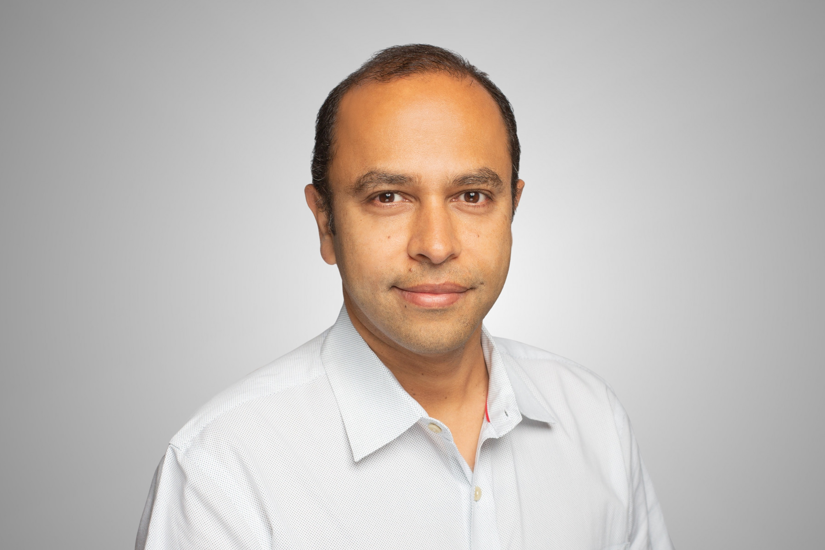
Shreyans Mehta, Co-founder and CTO at Cequence, said: “The number that jumped out to me is the 92% being confident in their governance frameworks. Confidence like that is a trap; it’s exactly why organizations stop looking for problems, stop investing in monitoring, and let authorization checks lapse until an incident forces the conversation. This is the exact blind spot Cequence is built to close, giving security teams real-time visibility into what AI agents are actually doing and enforcing authorization at the moment an agent acts, not after the fact.”
Dhruva will adopt the Ryan brand across the UAE and Saudi Arabia by the end of 2026, uniting the practice with Ryan’s global identity and international platform.
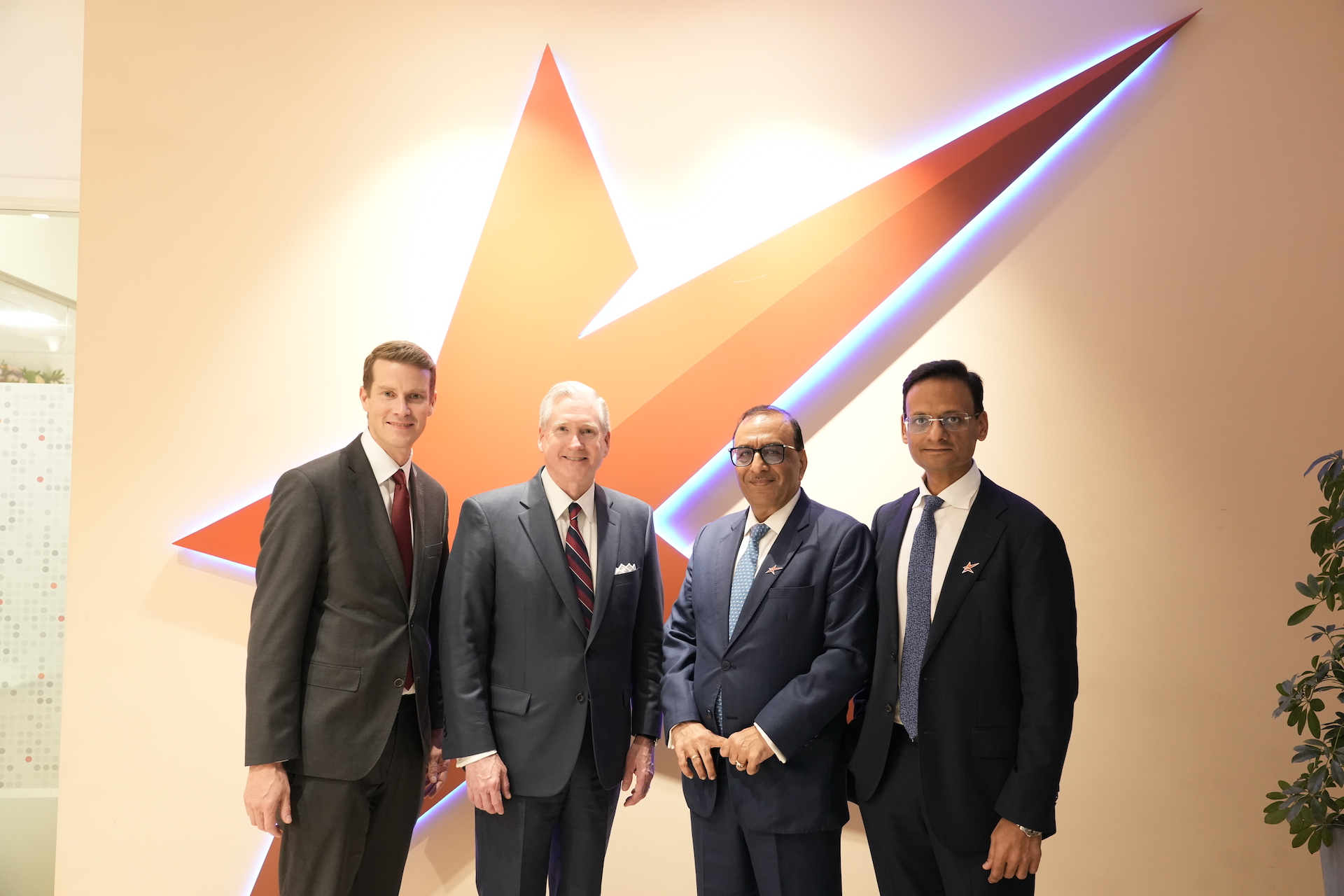
Dhruva, a leading tax consultancy firm in the Middle East, and Ryan, a leading global tax services and software provider, today announced that Dhruva will transition to the Ryan brand across the United Arab Emirates (UAE) and the Kingdom of Saudi Arabia. The rebranding will be completed by the end of 2026, bringing the practice under Ryan’s global identity and reinforcing its position as part of the world’s leading global-scale specialist in business tax.
The transition marks the next phase of the strategic joint venture announced in 2025 and reflects the continued integration of Dhruva’s regional capabilities with Ryan’s global platform, technology, and international resources. Clients across the Middle East will continue to benefit from the same trusted advisory teams, enhanced by access to Ryan’s worldwide expertise and service capabilities.
“The Middle East has been a strategic growth market for us for many years, and we have built a strong advisory practice founded on deep client relationships, technical excellence, and local market understanding,” said Dinesh Kanabar, Founder, Chairman, and CEO, Dhruva Advisors and Vice Chairman, Ryan.
“The transition to the Ryan brand marks a significant milestone in our journey and reflects the strength of our partnership. By combining our regional expertise with Ryan’s global scale, technology, and international capabilities, we are creating an even stronger platform to support clients across the region as they navigate an increasingly dynamic and evolving tax landscape.”
“The Middle East is one of the most important growth markets for tax advisory services globally, and we are investing in the region with a long-term view,” said Tom Shave, President of Ryan’s European and Asia-Pacific Operations. “Uniting under the Ryan brand strengthens how we serve clients across the UAE, Saudi Arabia, and Europe—bringing seamless access to our global expertise, technology, and international resources through one trusted platform. This transition marks an important milestone in our integration and reinforces our commitment to the region’s future.”
Ryan will continue to invest in its Middle East operations, expanding its team, capabilities, and regional presence across key markets, including Dubai, Abu Dhabi, and Riyadh. The practice provides comprehensive tax advisory services spanning corporate tax, value-added tax (VAT) and indirect tax, transfer pricing, mergers and acquisitions (M&A) tax structuring, research and development (R&D), and cross-border compliance.
“The response from our clients over the past year has been the clearest validation of this partnership,” said Nimish Goel, Leader, Middle East, Dhruva, a Ryan Affiliate. “From the outset, our teams have been integrating Ryan’s global capabilities in technology, specialized expertise, and best practices into the work we already lead in the region. Adopting the Ryan brand is the natural next step. It is the same people and the same trusted relationships, now carrying the name of the largest Firm in the world dedicated exclusively to business taxes.”
The rebranding will be implemented in phases during the second half of 2026, with signage, visual identity, and digital properties transitioning to the Ryan brand across the region.

 Have a question? +971 56 404 0503


























 Trending12 months ago
 Tech News2 years ago

 Automotive2 years ago
 Tech News1 year ago
 VAR2 years ago
 Hospitality2 years ago