
 Have a question? +971 56 404 0503




Tech News
Dell Technologies Research: 9 in 10 organizations in the UAE and KSA are well positioned competitively for innovation in AI


Generative AI (GenAI) and AI will significantly transform industries in the future, according to UAE (95%) and KSA (100%) respondents to the Dell Technologies Innovation Catalyst Research.
The research suggests that while there is broad optimism for AI and GenAI, the extent to which organizations are prepared for the rapid pace of change varies greatly. Ninety percent in the UAE and a similar percent in KSA, say they are well positioned competitively and have a solid strategy. At the same time, half of the respondents (UAE: 51%, KSA: 49%) are uncertain what their industry will look like in the next three to five years and nearly eight in 10 (UAE:75%, KSA:78%) report struggling to keep pace. They cite the lack of the right talent (UAE:31%, KSA:27%), data privacy and cybersecurity concerns (UAE:27%, KSA:28%) and lack of budget (UAE:31%, KSA:31%) as challenges they face in driving innovation.
GenAI Moving from Ideation to Implementation
Respondents from UAE and Saudi Arabia cite GenAI’s transformative or significant potential to deliver value in improving IT security posture (UAE:62%, KSA:62%), productivity gains (UAE:60%, KSA:60%) and to improve customer experience (UAE:61%, KSA:59%). They are also aware of challenges to overcome – (UAE:75%, KSA:74%) fear GenAI will introduce new security and privacy issues and (UAE:89%, KSA:84%) agreed that their data and IP is too valuable to be placed in a GenAI tool where a third party may have access.
More broadly, responses suggest that organizations are working through GenAI practicalities as they transition from ideation to implementation, with more than half saying they have begun implementing GenAI. As organizations increase adoption, concern centers around understanding where risks reside and who is responsible for them. An overwhelming majority (UAE:80%, KSA:87%) agree that the organization, rather than the machine, the user or the public, is responsible for any AI malfunction or undesired behaviour.
Mohammed Amin, Sr. Vice President, CEEMETA, Dell Technologies said:
“Organizations seeking to stand out in today’s disruptive market must pivot from innovation being a side project to it being deeply embedded into their corporate identity. At Dell, we believe tangible, positive change is achievable through innovation and action. By combining GenAI and other transformative innovations, businesses can augment their capabilities and raise their productivity levels to new heights.”
Organizations are Rising to the Challenge of Today’s Threat Landscape
Cybersecurity more broadly continues to be a pain point for organizations. These concerns are well-founded, as (UAE:93%, KSA:91%) of respondents say they have been impacted by a security attack in the past 12 months. The majority (UAE:98%, KSA:94%) are pursuing a Zero Trust deployment strategy and (UAE: 85%, KSA:86%) say they have an Incident Response Plan in place to recover from a cyberattack or data leakage.
The top three cited issues included malware, phishing and data breaches. Issues with phishing are indicative of a wider problem highlighted in the report, which is the role employees play in the threat landscape. For example, (UAE:80%, KSA:75%) of respondents believe some employees go around IT security guidelines and practices because they delay efficiency and productivity, and (UAE:78%, KSA:71%) say that insider threats are a big concern. This indicates a need to focus on training as employees are the first line of defence.
The Right Technology Infrastructure will help Organizations to Succeed
The research also reveals modern data infrastructure’s critical role as technologies like GenAI gather pace and data volumes increase. Investing in a modern, scalable infrastructure was cited as the number one area of improvement for businesses to accelerate innovation. Most IT decision makers (UAE:87%, KSA:75%) say they prefer an on-prem or hybrid model, to address the challenges they foresee with implementing GenAI.
The ability to share data across the business is also a key part of the innovation puzzle, with only 1 in 3 (UAE:35%, KSA:31%) saying they can turn data into real-time insights today to support innovation efforts. However, responses suggest organisations are acting on this challenge, with (UAE:79%, KSA:91%) saying that data is the differentiator and their GenAI strategy must involve using and protecting that data. Almost half also claim they anticipate that the bulk of their data will come from the edge in the next five years.
Other research findings include:
- • Skills: Two-thirds (UAE:70%, KSA:65%) claim there is currently a shortage of talent required for innovation in their industry. Learning agility and desire, AI fluency, and creativity & creative thinking rank as the top skills and competencies for the next five years
- • Sustainability: Forty-two percent believe “driving environmentally sustainable innovations” is an important improvement area. Energy efficiency is high on the agenda, with 79% experimenting with as-a-Service solutions to manage their IT environment more efficiently and 73% actively moving AI inferencing to the edge to become more energy efficient (e.g., smart buildings)
- • Making IT a strategic partner: Currently, 81% of business decision makers have reasons to exclude IT decision makers from strategic conversations, yet both departments ranked a stronger relationship as the second most important improvement area











Tech News
Cloudera and Mistral Partner to Bring Specialized, Sovereign Intelligence to Enterprise Data

Cloudera, the only company bringing AI to data anywhere, and Mistral, a global frontier AI lab, today announced a landmark strategic partnership to bring secure, sovereign AI directly to enterprise data wherever it resides.
Cloudera and Mistral will combine Cloudera’s hybrid data and AI platform with Mistral’s sovereign AI models to give enterprises a secure path to build, customize, and run AI using their own private data. The collaboration will enable organizations to bring intelligence directly to their data across cloud, on-premises, edge, sovereign, and air-gapped environments—without requiring sensitive information to leave their control.
For enterprises managing the world’s largest and most sensitive data estates, this approach provides greater control, choice, and flexibility over how and where AI runs. Organizations can run inference privately, customize AI using proprietary data, and deploy AI applications within their existing security and governance boundaries, while gaining greater control over the economics of AI at scale.
“Enterprise AI is entering a new phase where organizations need more than access to powerful models, they need the freedom to unlock specialized intelligence using their data, on their terms,” said Abhas Ricky, Chief Business Officer & GM, Applied AI at Cloudera. “Together with Mistral, we are giving enterprises the ability to run AI where their data lives, customize it with their own intellectual property, and maintain control over their data, infrastructure, and economics. That combination of intelligence and control is essential to moving AI from experimentation into production.”
Bringing Intelligence to the Data
For enterprises operating in highly regulated and data-intensive industries, moving sensitive or proprietary information to external AI services can introduce regulatory, security, and operational challenges.
Cloudera and Mistral are addressing these challenges by bringing secure, sovereign AI directly to the enterprise data perimeter.
Mistral’s suite of frontier models and tools will be integrated with Cloudera’s hybrid data and AI platform, enabling customers to run their own custom AI models and applications across 30 exabytes of data. Enterprises will have the deployment flexibility across public, private, on-premises, and fully air-gapped environments, while maintaining consistent governance and control over their context.
The partnership will span Mistral’s broad portfolio of frontier AI models and tools, including reasoning, chat, coding, document intelligence, and voice, giving Cloudera customers greater choice in how they apply AI to their enterprise data.
By enabling organizations to run inference within their own environments, the collaboration also gives customers greater flexibility over the economics of AI. Enterprises can choose the deployment model and infrastructure that best fit their workloads rather than depending exclusively on public API consumption models as AI usage scales.
From Private Inference to Proprietary Intelligence
Through the integration of Mistral Forge, a system for enterprises to build frontier-grade AI models grounded in their proprietary knowledge, organizations utilizing Cloudera’s platform will be able to customize and train models against large volumes of private enterprise data within controlled environments. For enterprises with petabytes of proprietary information, this creates an opportunity to transform decades of institutional data and domain expertise into differentiated AI while maintaining ownership and sovereignty over both the data and resulting intelligence.
Developers and practitioners will also be able to securely build AI-powered experiences using private enterprise data within local environments—from conversational access to governed data to AI-assisted software development and agentic workflows—without exposing sensitive business context or intellectual property to external environments.
Cloudera and Mistral also intend to collaborate on the next generation of AI at the edge, bringing increasingly capable inference closer to where enterprise data is created. This will enable organizations to explore intelligent applications across disconnected, latency-sensitive and resource-constrained environments where relying on centralized cloud infrastructure is not practical.
“Our mission is to make frontier AI available to enterprises without requiring them to give up control over their data, infrastructure, or intellectual property,” said Kamal Brar, SVP of Partnerships and Alliances at Mistral. “Cloudera manages some of the world’s most valuable enterprise data estates, making this partnership a powerful opportunity to bring our technology directly to where that data lives. Together, we can give customers the ability to build AI that reflects their own data and expertise and deploy it securely wherever their business requires.”
Expanding Choice for Enterprise AI
The partnership also expands the Cloudera Enterprise AI Ecosystem, through which Cloudera works with leading AI models, infrastructure, application, and technology providers to give customers flexibility in how they build and deploy enterprise AI.
Mistral adds a significant new dimension to that ecosystem by enabling customers to access and customize its models and AI capabilities directly alongside their governed enterprise data. The partnership reinforces both Cloudera’s and Mistral’s commitment to an open approach to enterprise AI, giving customers choice across models, infrastructure, and deployment environments rather than locking their data or AI strategy into a single technology stack.
The joint Cloudera and Mistral solutions will be available through Cloudera’s enterprise sales team and partner ecosystem, with additional integrations and capabilities rolling out over time.
Spotlight
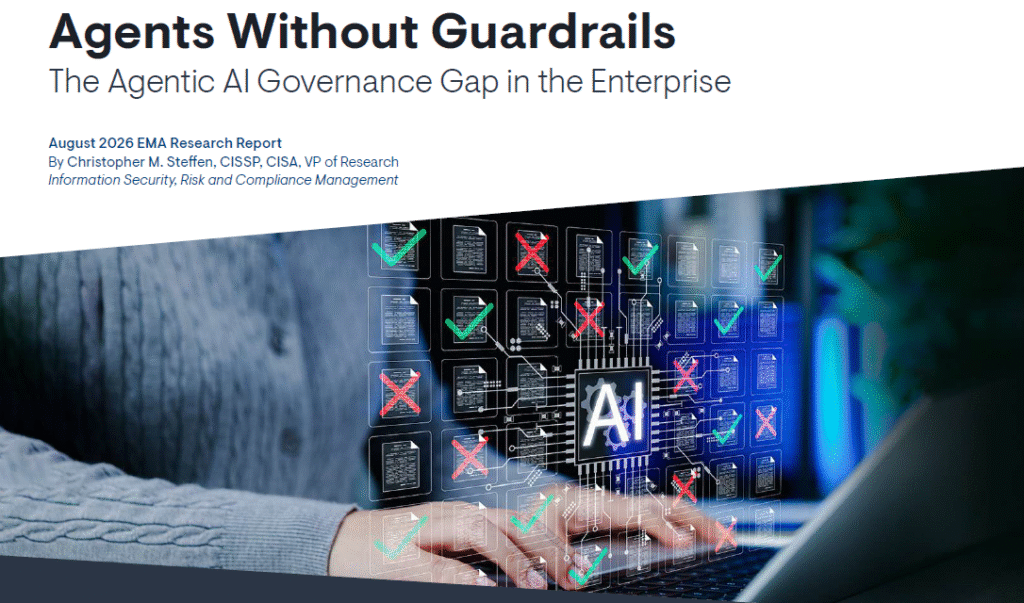
New Cequence & EMA Research: 94% of Enterprises Trust Their AI Agents Aren’t Over-Provisioned. Only 33% Actually Enforce It.

Nearly every enterprise believes its AI agents are properly scoped. Only a third have actually made sure of it.
Today, new research from Cequence Security, the leader in application, API, and agentic AI protection, and Enterprise Management Associates (EMA) found that 94% of enterprise IT and security leaders are confident their AI agents do not have more access than they need, yet only 33% actually provision agents with least-privilege access. The remaining two-thirds run on broad standing permissions that are reviewed periodically, rarely reviewed, or never reviewed at all.
That gap between confidence and practice is already showing up in production, not a theoretical risk, but as incidents enterprises are living with right now. Among the organizations surveyed:
- 65% have experienced an AI agent take an action outside its intended scope, including 29% with measurable business impact, including data exposure, financial loss, operational disruption, or reputational damage. Another 36% caught a near-miss before it caused damage.
- Only 32% can detect and contain an out-of-scope agent action within minutes through automated means; 55% need hours and manual steps to respond.
- In approximately 4% of organizations surveyed, the first sign of trouble came from a customer or outside partner, not an internal system.
The findings point to one clear story. Governance has not kept pace with the speed of agentic AI deployment, and that gap is showing up at every stage of the agent lifecycle, from how agents are provisioned, to how their actions are authorized, to how they are decommissioned once a pilot ends. Other key findings from the report include:
Enterprises Have Moved Past the Pilot Stage
The scale of deployment makes the gap more urgent. 46% of organizations report they are already scaling agentic AI across multiple departments and production workflows, and 79% are running generative and agentic AI simultaneously. Further, more than 92% report an increase in AI and bot-driven traffic targeting customer-facing applications and APIs.
Authorization is Checked at the Wrong Time, Or Not At All
That governance gap extends to how access is enforced in the moment an agent acts. Only 34% of organizations evaluate an AI agent’s authorization at the moment it attempts a specific action. The majority rely on periodic policy reviews or standing permissions set once at provisioning and never revisited, meaning an agent’s access can quietly outlive the task it was originally granted for, and keep working long after anyone signed off on it.
Abandoned Pilots Are Leaving Live Credentials Behind
Additionally, there’s an increasing risk in how enterprises manage agents that don’t make it to production. 31% of agentic AI pilots have been paused indefinitely, discontinued, or abandoned. Many were real deployments with real system access and credentials that were never cleaned up. Every abandoned pilot with live credentials is exposure nobody is actively watching.
External Connectivity Carries the Same Risk
14% of organizations allow AI agents to connect to outside tools and data sources via the Model Context Protocol (MCP) without restriction. Among the majority who do limit those connections to an approved list, fewer than half, just 49%, have a dedicated team actively maintaining and auditing that list on a regular basis.
Christopher M. Steffen, CISSP, CISA, VP of Research at EMA, said: “This research shows enterprises have moved well past experimentation with agentic AI right into production, and governance has not kept pace with that shift. The gap isn’t a lack of awareness; most organizations have policies in place and express real confidence in them. The gap is between what’s written down and what’s enforced when an agent takes an action nobody approved. That disconnect shows up most clearly in how organizations authorize agent actions and monitor them once they’re live, and it’s the reason incidents are happening at a rate the industry hasn’t fully reckoned with.”
Shreyans Mehta, Co-founder and CTO at Cequence, said: “The number that jumped out to me is the 92% being confident in their governance frameworks. Confidence like that is a trap; it’s exactly why organizations stop looking for problems, stop investing in monitoring, and let authorization checks lapse until an incident forces the conversation. This is the exact blind spot Cequence is built to close, giving security teams real-time visibility into what AI agents are actually doing and enforcing authorization at the moment an agent acts, not after the fact.”

Anomali, the leading global Managed Intelligence and Agentic SOC platform, announced its participation at GISEC Global 2026, taking place through 16-18 September at Dubai Exhibition Centre (DEC), Expo City.
The company’s discussions at GISEC will center on Autonomous SOC with Governed AI, Agentic AI, Actionable Threat Intelligence and Unified Security Data Lake capabilities that are changing the manner in which security teams investigate threats, manage workflows and make decisions.
Samer Jadallah, Vice President, Middle East & Africa at Anomali, will represent the company at GISEC and will focus on the growing impact of AI on both attackers and defenders, emerging shifts in the threat landscape, including the need to counter CEO impersonation attacks as well as key challenges facing modern security teams. He will also highlight AI’s role is helping organizations respond more effectively to evolving threats, Anomali’s commitment to the region and ongoing product innovation and plans to expand adoption of the Anomali platform across global enterprises and government organizations.
A key focus at this year’s event will be the changing nature of cyberattacks. As threat actors promptly adopt AI to scale campaigns and further accelerate attacks, security operations centers (SOC) are under growing pressure to process rising volumes of alerts with limited resources. To help with this, Anomali will demonstrate how AI can support analysts in multiple ways like surfacing higher- value insights, reducing manual effort and enabling quicker, informed responses.
Visitors can find Anomali at Booth E156 and Booth A80.
- Event: GISEC Global 2026
- Booths: E156 and A80
- Location: Dubai Exhibition Centre (DEC), Expo City
- Dates: 16 th to 18 September 2026
- Time: 9:00 am to 5:00 pm GST


VELAA PRIVATE ISLAND ANNOUNCES THE VELAA VAMPIRE CHRONICLES FOR HALLOWEEN 2026

Accor Loyalty Pays Off: Members Spend 2.6x More, Driving Growth at Mövenpick Hotel Apartments Downtown Dubai

Majestic Hotels Celebrates World Tourism Day with Two Decades of Dubai Hospitality and a Growing Homegrown Legacy



-
News11 years ago
SENDQUICK (TALARIAX) INTRODUCES SQOOPE – THE BREAKTHROUGH IN MOBILE MESSAGING
-

 Trending11 months ago
OPPO A6 Pro 5G Review: Reliable Daily Driver
-

 Tech News2 years ago
Denodo Bolsters Executive Team by Hiring Christophe Culine as its Chief Revenue Officer
-
 VAR1 year ago
Microsoft Launches New Surface Copilot+ PCs for Business
-

 Automotive2 years ago
AGMC Launches the RIDDARA RD6 High Performance Fully Electric 4×4 Pickup
-
Tech Interviews3 years ago
Navigating the Cybersecurity Landscape in Hybrid Work Environments
-

 Tech News1 year ago
Nothing Launches flagship Nothing Phone (3) and Headphone (1) in theme with the Iconic Museum of the Future in Dubai
-

 VAR2 years ago
Samsung Galaxy Z Fold6 vs Google Pixel 9 Pro Fold: Clash Of The Folding Phenoms