
 Have a question? +971 56 404 0503




Tech News
UAE Leads in AI Enthusiasm and Application Insights from a Global BCG Survey


In the United Arab Emirates (UAE), sentiment towards generative AI (GenAI) is overwhelmingly positive. This enthusiasm aligns with global trends showing high consumer awareness and excitement about AI. According to new research by Boston Consulting Group (BCG), titled “Consumers Know More About AI than Business Leaders Think”, consumers’ knowledge and excitement about AI is surprisingly high.
BCG’s research is based on a survey conducted by BCG’s Center for Customer Insight to measure the level of awareness of AI and GenAI, as well as usage and sentiment among 21,000 respondents from 21 countries across six continents. It also explored questions relevant to the use of AI in the workplace.
“While perception and usage vary by market, age, and exposure, consumers in the UAE profoundly appreciate AI, surpassing many other regions,” commented Rami Mourtada, Partner & Director at BCG. “This finding highlights the region’s forward-thinking attitude towards technology and should be a wake-up call for business leaders. The high engagement levels in the UAE show the need for responsible AI frameworks that address consumers’ data privacy concerns. We must continue fostering this positive outlook while addressing the concerns accompanying such seismic shifts.”
Global and UAE-Specific Insights on AI Adoption and Sentiment
Globally, over 80% of survey participants are aware of GenAI, with a quarter actively using it. Notably, younger individuals under 35 show higher engagement, with 86% awareness and 32% usage compared to 80% awareness and 20% usage among those over 35.
The UAE demonstrates more robust engagement and nuanced sentiments towards GenAI. In the UAE, 91% of consumers know GenAI and 34% use these technologies. Emotions are mixed: 37% are excited, 46% feel conflicted, and 17% are concerned, resulting in a net sentiment of 20% (excited minus concerned).
Governments like the UAE showcase robust AI engagement, with initiatives like the Falcon 2 AI model, designed to compete with Meta and Open AI. Positioning the country at the forefront of AI development. This highlights the region’s commitment to integrating AI across industries.
Excitement about AI in the Workplace
In the UAE, 67% of employees are excited about GenAI’s potential to enhance their work environment, with only 13% expressing concerns. This reflects a dynamic workforce that sees AI as a tool for innovation and efficiency, leading to a net sentiment of 54% in favor of AI.
AI applications are rapidly gaining popularity, and the UAE showcases its readiness to integrate AI at all business levels. Leaders must focus on people, process changes, and technological implementation to tap AI’s potential.
“The enthusiasm for GenAI among UAE professionals underscores a dynamic workforce that sees AI as a tool and a partner in driving innovation and efficiency. We must continue to foster this positive outlook while addressing the concerns that accompany such transformative changes,” said Mark Zaleski, Managing Partner & Director at BCG X.
Implications for Leaders
BCG report highlights several recommendations for business leaders to leverage GenAI successfully:
- • Emphasize transparency and balanced sales when inventing new consumer applications.
- • Pilot new ideas and products in markets that are more receptive to AI/GenAI and consider a tailored approach to privacy.
- • As companies roll out new AI offerings, reassuring customers before the applications scale too fast, as it is important.
- • It’s important to remember the 10-20-70 rule when working with data and technology. Focus 10% of the effort on technology development, 20% on deploying tech stacks, and 70% on change management and other people-related processes.
This means that most of the work should be focused on managing the changes that come with new systems, rather than just relying on data and technology.
Trust is crucial in AI adoption. Leaders must respect consumer and employee concerns while navigating the misinformation-excitement-concern curve and capitalizing on market opportunities.











Tech News
Datadobi Adds Data Access Governance to StorageMAP, Enabling Enterprises to Answer the Critical Question: “Who Has Access to What?”

Datadobi, a leader in the Data Storage Management Services space, today announced the general availability of Data Access Governance (DAG) within StorageMAP. The new capability gives organizations visibility into who has access to their unstructured data and whether that access aligns with corporate policy. It extends Datadobi’s ability to help enterprises discover, align, and operationalize data across fragmented environments as their intelligence and orchestration layer.
As AI initiatives, cyber threats, and rising data complexity expose the limits of traditional approaches, DAG addresses a critical gap: organizations cannot govern, protect, or extract value from data they cannot see or control. As AI initiatives, cyber threats, and rising data complexity expose the limits of traditional approaches, DAG addresses a critical gap: organizations cannot govern, protect, or extract value from data they cannot see or control.
StorageMAP’s DAG capability gives administrators comprehensive visibility into access permissions across fragmented unstructured data environments. By surfacing who has access to what data, and whether that access aligns with business and security policy. Organizations can detect misaligned permissions, reduce cyber exposure, and enforce governance at scale. This visibility is the essential first stage of the broader DSMS discipline — visibility, understanding, decision, execution — that determines whether organizations can act on their data with confidence.
The introduction of DAG extends StorageMAP’s existing capabilities across data discovery, classification, risk assessment, lifecycle management and AI Data Readiness. Together, these capabilities help organizations to discover what data they have, align it with business value and risk requirements, and operationalize policy-driven action across their environments. The result is unstructured data that supports AI initiatives, strengthens cyber resilience, reduces cost, and drives long-term business value rather than holding it back.
DAG, which was trialed by a number of beta customers, supports a range of enterprise use cases, from protecting sensitive data and reducing breach impact, to maintaining records compliance and managing risk through mergers, acquisitions, and divestitures. Early access customers identified a gap in their understanding of which critical datasets were exposed and who could access them, often relying on manual investigation to respond to audits and security incidents.
With Datadobi’s DAG capabilities, these organizations quickly identify overexposed data and validate access controls to proactively strengthen their security posture. For organizations investing in AI, it provides the governance foundation that trusted, well-governed data requires. And for those subject to data protection regulations (such as GDPR, HIPAA, or PCI DSS), it delivers the visibility needed to demonstrate that access controls are in place, operating as intended, and aligned with business policy.
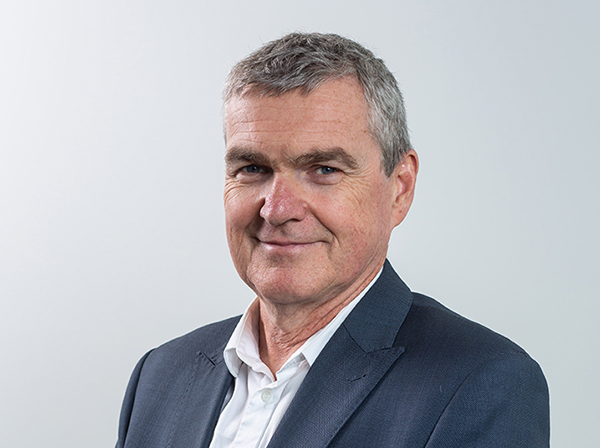
“Unstructured data is at the center of every major enterprise challenge right now including AI readiness, cyber resilience, cost management, and regulatory compliance,” said Michael Jack, Co-founder and Chief Revenue Officer for Datadobi. “But organizations cannot address any of those challenges with data they cannot see or control. Data Access Governance gives teams the visibility to understand who has access to what, identify where risk exists, and take action to bring their unstructured data under control. It is a foundational step in turning unstructured data from a source of risk and complexity into a driver of business value.”

In a strategic move to advance enterprise digital enablement and support the technological ambitions of Saudi Vision 2030, Cloudera, the only true hybrid platform for data, analytics, and AI, has agreed to a Memorandum of Understanding (MoU) with MuroonI the technology and digital enablement subsidiary of Tawuniya.
The proposed collaboration aims to evaluate opportunities to help organizations across the region modernize their technology capabilities, accelerate digital transformation, and unlock long-term business value. By leveraging Cloudera’s products and services, the engagement will explore how Cloudera’s hybrid data platforms and AI-driven analytics can help to boost Muroon’s expanding IT and digital enablement objectives.
Under the proposed partnership, Muroon and Cloudera will aim to collaborate on delivering secure data exchange and modern cloud architecture. Integrating Cloudera Anywhere Cloud™ principles, the proposed collaboration will explore ways to deliver a consistent cloud experience, enabling organizations to deploy AI and analytics workloads across private data centers and cloud environments with unified governance and security.
The proposed alliance creates complementary roles for both organizations. Muroon will leverage its delivery capabilities, consulting expertise, implementation services, across the Tawuniya ecosystem and the wider region. Cloudera will look to provide technology leadership, platform expertise, solution architecture, and technical enablement.
Ahmad Shakora, General Vice President of META, Cloudera, said:
“Our proposed collaboration with Muroon represents an important milestone in empowering regional organizations with modern hybrid data and AI architectures. Through Cloudera’s ability to bring AI and analytics to data anywhere it resides, combined with Muroon’s deep digital enablement and implementation capabilities, we aim to accelerate innovation, ensure secure data management, and actively contribute to the digital economy goals of Saudi Vision 2030.”
Faisal Bakhsh, Vice President of Business Development and Services Delivery at Muroon, added:
“As the technology arm of Tawuniya Group, Muroon is dedicated to delivering cutting-edge digital solutions that drive operational efficiency and business growth. Exploring this partnership with Cloudera allows us to harness world-class hybrid data and AI platforms to expand our service capabilities, facilitate secure data exchange, and deliver transformative value to our ecosystem and clients across Saudi Arabia.”

In a strategic move to advance enterprise digital enablement and support the technological ambitions of Saudi Vision 2030, Cloudera, the only true hybrid platform for data, analytics, and AI, has agreed to a Memorandum of Understanding (MoU) with MuroonI the technology and digital enablement subsidiary of Tawuniya.
The proposed collaboration aims to evaluate opportunities to help organizations across the region modernize their technology capabilities, accelerate digital transformation, and unlock long-term business value. By leveraging Cloudera’s products and services, the engagement will explore how Cloudera’s hybrid data platforms and AI-driven analytics can help to boost Muroon’s expanding IT and digital enablement objectives.
Under the proposed partnership, Muroon and Cloudera will aim to collaborate on delivering secure data exchange and modern cloud architecture. Integrating Cloudera Anywhere Cloud™ principles, the proposed collaboration will explore ways to deliver a consistent cloud experience, enabling organizations to deploy AI and analytics workloads across private data centers and cloud environments with unified governance and security.
The proposed alliance creates complementary roles for both organizations. Muroon will leverage its delivery capabilities, consulting expertise, implementation services, across the Tawuniya ecosystem and the wider region. Cloudera will look to provide technology leadership, platform expertise, solution architecture, and technical enablement.
Ahmad Shakora, General Vice President of META, Cloudera, said:
“Our proposed collaboration with Muroon represents an important milestone in empowering regional organizations with modern hybrid data and AI architectures. Through Cloudera’s ability to bring AI and analytics to data anywhere it resides, combined with Muroon’s deep digital enablement and implementation capabilities, we aim to accelerate innovation, ensure secure data management, and actively contribute to the digital economy goals of Saudi Vision 2030.”
Faisal Bakhsh, Vice President of Business Development and Services Delivery at Muroon, added:
“As the technology arm of Tawuniya Group, Muroon is dedicated to delivering cutting-edge digital solutions that drive operational efficiency and business growth. Exploring this partnership with Cloudera allows us to harness world-class hybrid data and AI platforms to expand our service capabilities, facilitate secure data exchange, and deliver transformative value to our ecosystem and clients across Saudi Arabia.”

International Coffee Day Gets UAE-Made Twist with Rashtions’ Brazilian Coffee Truffle

Why Curation Matters More Than Ever in Fashion Retail

Keeta Marks First Anniversary in the UAE, Celebrating Nationwide Growth and Local Impact



-
News11 years ago
SENDQUICK (TALARIAX) INTRODUCES SQOOPE – THE BREAKTHROUGH IN MOBILE MESSAGING
-

 Trending11 months ago
OPPO A6 Pro 5G Review: Reliable Daily Driver
-

 Tech News2 years ago
Denodo Bolsters Executive Team by Hiring Christophe Culine as its Chief Revenue Officer
-
 VAR1 year ago
Microsoft Launches New Surface Copilot+ PCs for Business
-

 Automotive2 years ago
AGMC Launches the RIDDARA RD6 High Performance Fully Electric 4×4 Pickup
-
Tech Interviews3 years ago
Navigating the Cybersecurity Landscape in Hybrid Work Environments
-
 Tech News2 years ago
Toshiba Announces MG10-D Series of Enterprise HDDs with Capacities up to 10TB
-

 Tech News1 year ago
Nothing Launches flagship Nothing Phone (3) and Headphone (1) in theme with the Iconic Museum of the Future in Dubai