
 Have a question? +971 56 404 0503




Tech News
Ericsson, Qualcomm, and Thales Alenia Space reach milestone in space-based connectivity


The integration of traditional mobile networks with satellite mobile networks – and the related possibility of truly global connectivity across oceans and continents – has moved a step closer following a significant technology achievement by Ericsson, Qualcomm Technologies, and Thales Alenia Space.
The three partners combined expertise in a French test aboratory to successfully connect a 5G standards-based non terrestrial network call with a simulated low earth orbit (LEO) satellite channel.
In effect, the trial proved that an NR-NTN capable device would never be without mobile coverage where areas are served by either terrestrial or non-terrestrial networks. In other words, if NTN covers an area in the middle of an ocean or deep forest – currently impossible to cover with terrestrial networks – then a device would be able to connect, via mobile connectivity alone, with any other device or service on the mobile network without the need for additional satellite signal receiving equipment, such as a dish.
Support applications could include high-definition voice calls and real-time video streaming services.
The achievement is a significant milestone on the way to non-terrestrial networks becoming a commercial reality. The collaboration launched in 2022 was, at the time, the world’s first publicly announced collaboration for 5G NTN based on 3GPP standards.
Fredrik Jejdling, Executive Vice President and Head of Business Area Networks, at Ericsson, says: “This successful 5G non-terrestrial network call represents not just a technological breakthrough but also showcases the practical viability of integrating satellite technology within existing terrestrial frameworks. Ericsson is committed to advancing ubiquitous connectivity, and our collaborative effort with Thales Alenia Space and Qualcomm Technologies will help ensure that future communication systems are more inclusive, resilient, and globally accessible. By leveraging NTN technology, we aim to bridge the digital divide and bring reliable communication to every corner of the world.”
John Smee, Senior Vice President, Engineering, Qualcomm Technologies, Inc., says: “Our collaboration with Ericsson and Thales Alenia Space is crucial in leveraging 3GPP standards for satellite communications, helping to ensure that 5G connectivity is universally accessible to 5G smartphone users. Qualcomm Technologies remains committed to enhancing chipset capabilities that support the seamless integration of 5G non-terrestrial networks and terrestrial networks.”
Hervé Derrey, CEO of Thales Alenia Space, says: “For years, Thales Alenia Space has been at the heart of all initiatives aimed at seamlessly integrating satellite communications in the 5G network infrastructure – including standardization with 3GPP – and takes 5G NTN standardized solutions into account in the design of its satellite payloads supporting either Broadband or Direct-To-Device (D2D) services. By combining Thales Alenia Space’s expertise in space technologies with Ericsson’s leadership in 5G networks and Qualcomm Technologies’ advanced chipsets, we are making significant headway towards the seamless integration of terrestrial and NTN networks, to provide access to 5G services, anywhere and at any time.”
Ericsson, Qualcomm Technologies, and Thales Alenia Space are committed to further refinement and development of 5G/6G NTN technologies, aiming to introduce and scale 5G NTN on the market and allow for a full set of services – from multi-orbit satellites including messaging, voice and data, to make seamless communication a reality for everyone, everywhere, and at any time.
MORE ON THE TECH
The partners established a 3GPP-based end-to-end New Radio (NR) 5G non-terrestrial networks (NTN) call using a lab-emulated low earth orbit (LEO) satellite.
The test explored critical components such as handling delays, Doppler effects, and ensuring seamless satellite handovers, which are crucial for maintaining communication integrity in satellite environments.











Tech News
Datadobi Adds Data Access Governance to StorageMAP, Enabling Enterprises to Answer the Critical Question: “Who Has Access to What?”

Datadobi, a leader in the Data Storage Management Services space, today announced the general availability of Data Access Governance (DAG) within StorageMAP. The new capability gives organizations visibility into who has access to their unstructured data and whether that access aligns with corporate policy. It extends Datadobi’s ability to help enterprises discover, align, and operationalize data across fragmented environments as their intelligence and orchestration layer.
As AI initiatives, cyber threats, and rising data complexity expose the limits of traditional approaches, DAG addresses a critical gap: organizations cannot govern, protect, or extract value from data they cannot see or control. As AI initiatives, cyber threats, and rising data complexity expose the limits of traditional approaches, DAG addresses a critical gap: organizations cannot govern, protect, or extract value from data they cannot see or control.
StorageMAP’s DAG capability gives administrators comprehensive visibility into access permissions across fragmented unstructured data environments. By surfacing who has access to what data, and whether that access aligns with business and security policy. Organizations can detect misaligned permissions, reduce cyber exposure, and enforce governance at scale. This visibility is the essential first stage of the broader DSMS discipline — visibility, understanding, decision, execution — that determines whether organizations can act on their data with confidence.
The introduction of DAG extends StorageMAP’s existing capabilities across data discovery, classification, risk assessment, lifecycle management and AI Data Readiness. Together, these capabilities help organizations to discover what data they have, align it with business value and risk requirements, and operationalize policy-driven action across their environments. The result is unstructured data that supports AI initiatives, strengthens cyber resilience, reduces cost, and drives long-term business value rather than holding it back.
DAG, which was trialed by a number of beta customers, supports a range of enterprise use cases, from protecting sensitive data and reducing breach impact, to maintaining records compliance and managing risk through mergers, acquisitions, and divestitures. Early access customers identified a gap in their understanding of which critical datasets were exposed and who could access them, often relying on manual investigation to respond to audits and security incidents.
With Datadobi’s DAG capabilities, these organizations quickly identify overexposed data and validate access controls to proactively strengthen their security posture. For organizations investing in AI, it provides the governance foundation that trusted, well-governed data requires. And for those subject to data protection regulations (such as GDPR, HIPAA, or PCI DSS), it delivers the visibility needed to demonstrate that access controls are in place, operating as intended, and aligned with business policy.
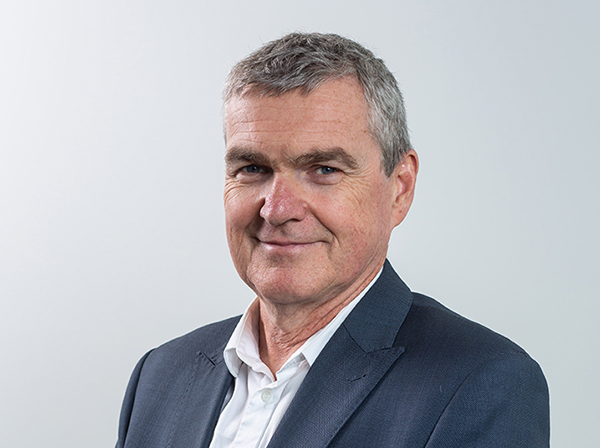
“Unstructured data is at the center of every major enterprise challenge right now including AI readiness, cyber resilience, cost management, and regulatory compliance,” said Michael Jack, Co-founder and Chief Revenue Officer for Datadobi. “But organizations cannot address any of those challenges with data they cannot see or control. Data Access Governance gives teams the visibility to understand who has access to what, identify where risk exists, and take action to bring their unstructured data under control. It is a foundational step in turning unstructured data from a source of risk and complexity into a driver of business value.”
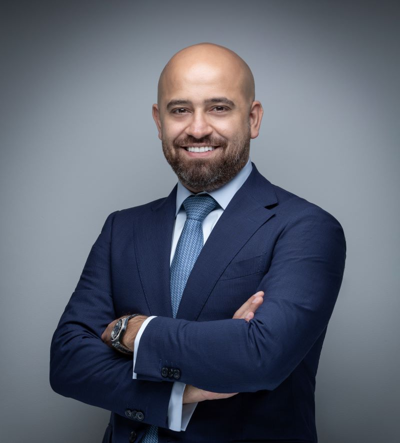
In a strategic move to advance enterprise digital enablement and support the technological ambitions of Saudi Vision 2030, Cloudera, the only true hybrid platform for data, analytics, and AI, has agreed to a Memorandum of Understanding (MoU) with MuroonI the technology and digital enablement subsidiary of Tawuniya.
The proposed collaboration aims to evaluate opportunities to help organizations across the region modernize their technology capabilities, accelerate digital transformation, and unlock long-term business value. By leveraging Cloudera’s products and services, the engagement will explore how Cloudera’s hybrid data platforms and AI-driven analytics can help to boost Muroon’s expanding IT and digital enablement objectives.
Under the proposed partnership, Muroon and Cloudera will aim to collaborate on delivering secure data exchange and modern cloud architecture. Integrating Cloudera Anywhere Cloud™ principles, the proposed collaboration will explore ways to deliver a consistent cloud experience, enabling organizations to deploy AI and analytics workloads across private data centers and cloud environments with unified governance and security.
The proposed alliance creates complementary roles for both organizations. Muroon will leverage its delivery capabilities, consulting expertise, implementation services, across the Tawuniya ecosystem and the wider region. Cloudera will look to provide technology leadership, platform expertise, solution architecture, and technical enablement.
Ahmad Shakora, General Vice President of META, Cloudera, said:
“Our proposed collaboration with Muroon represents an important milestone in empowering regional organizations with modern hybrid data and AI architectures. Through Cloudera’s ability to bring AI and analytics to data anywhere it resides, combined with Muroon’s deep digital enablement and implementation capabilities, we aim to accelerate innovation, ensure secure data management, and actively contribute to the digital economy goals of Saudi Vision 2030.”
Faisal Bakhsh, Vice President of Business Development and Services Delivery at Muroon, added:
“As the technology arm of Tawuniya Group, Muroon is dedicated to delivering cutting-edge digital solutions that drive operational efficiency and business growth. Exploring this partnership with Cloudera allows us to harness world-class hybrid data and AI platforms to expand our service capabilities, facilitate secure data exchange, and deliver transformative value to our ecosystem and clients across Saudi Arabia.”

In a strategic move to advance enterprise digital enablement and support the technological ambitions of Saudi Vision 2030, Cloudera, the only true hybrid platform for data, analytics, and AI, has agreed to a Memorandum of Understanding (MoU) with MuroonI the technology and digital enablement subsidiary of Tawuniya.
The proposed collaboration aims to evaluate opportunities to help organizations across the region modernize their technology capabilities, accelerate digital transformation, and unlock long-term business value. By leveraging Cloudera’s products and services, the engagement will explore how Cloudera’s hybrid data platforms and AI-driven analytics can help to boost Muroon’s expanding IT and digital enablement objectives.
Under the proposed partnership, Muroon and Cloudera will aim to collaborate on delivering secure data exchange and modern cloud architecture. Integrating Cloudera Anywhere Cloud™ principles, the proposed collaboration will explore ways to deliver a consistent cloud experience, enabling organizations to deploy AI and analytics workloads across private data centers and cloud environments with unified governance and security.
The proposed alliance creates complementary roles for both organizations. Muroon will leverage its delivery capabilities, consulting expertise, implementation services, across the Tawuniya ecosystem and the wider region. Cloudera will look to provide technology leadership, platform expertise, solution architecture, and technical enablement.
Ahmad Shakora, General Vice President of META, Cloudera, said:
“Our proposed collaboration with Muroon represents an important milestone in empowering regional organizations with modern hybrid data and AI architectures. Through Cloudera’s ability to bring AI and analytics to data anywhere it resides, combined with Muroon’s deep digital enablement and implementation capabilities, we aim to accelerate innovation, ensure secure data management, and actively contribute to the digital economy goals of Saudi Vision 2030.”
Faisal Bakhsh, Vice President of Business Development and Services Delivery at Muroon, added:
“As the technology arm of Tawuniya Group, Muroon is dedicated to delivering cutting-edge digital solutions that drive operational efficiency and business growth. Exploring this partnership with Cloudera allows us to harness world-class hybrid data and AI platforms to expand our service capabilities, facilitate secure data exchange, and deliver transformative value to our ecosystem and clients across Saudi Arabia.”

International Coffee Day Gets UAE-Made Twist with Rashtions’ Brazilian Coffee Truffle

Why Curation Matters More Than Ever in Fashion Retail

Keeta Marks First Anniversary in the UAE, Celebrating Nationwide Growth and Local Impact



-
News11 years ago
SENDQUICK (TALARIAX) INTRODUCES SQOOPE – THE BREAKTHROUGH IN MOBILE MESSAGING
-

 Trending11 months ago
OPPO A6 Pro 5G Review: Reliable Daily Driver
-

 Tech News2 years ago
Denodo Bolsters Executive Team by Hiring Christophe Culine as its Chief Revenue Officer
-
 VAR1 year ago
Microsoft Launches New Surface Copilot+ PCs for Business
-

 Automotive2 years ago
AGMC Launches the RIDDARA RD6 High Performance Fully Electric 4×4 Pickup
-
Tech Interviews3 years ago
Navigating the Cybersecurity Landscape in Hybrid Work Environments
-
 Tech News2 years ago
Toshiba Announces MG10-D Series of Enterprise HDDs with Capacities up to 10TB
-

 Tech News1 year ago
Nothing Launches flagship Nothing Phone (3) and Headphone (1) in theme with the Iconic Museum of the Future in Dubai