
 Have a question? +971 56 404 0503




Financial
Dubai Startup Hushday Raises AED 2 Million to Launch the Middle East’s First Premium Flash Sales Platform


As global luxury faces headwinds in key markets like China, and as consumer behavior across the GCC shifts toward value-driven, digital-first experiences, a new retail-tech player is emerging in Dubai to meet that moment.
Hushday, invitation-only flash sales platform, has raised over AED 2 million (USD $550,000) in pre-seed funding from regional tech investors. Its ambition: to create a new channel for luxury and premium brands to grow in the Middle East — with full control, brand integrity, and next-level performance.
While inspired by European models like Veepee (valued at over €4 billion) and Gilt in the US, Hushday is not a copy-paste. It’s a GCC-first model, built locally for brands and consumers who expect more: exclusivity, experience, and execution.
“We’re not here to patch a post-COVID inventory issue,” says Jennifer Cohen Solal, CEO & Co-founder. “We’re here to open a new, scalable path for growth — for brands who want to reach a younger, price-sensitive, digital audience, without damaging their equity. The demand is here. The region is ready.”
A Private Sales Model Built for Today’s Reality
Unlike traditional outlets or mass-discount platforms, Hushday was designed as a strategic distribution layer, where brands can activate curated drops in a brand-safe, high-conversion environment — and tap into valuable new audiences in the process.
The platform has already signed dozens of brands — from regional players to global names — and offers full control over pricing, visibility, and inventory strategy. Brands receive real-time analytics, customer insights, and dedicated onboarding support.
“This isn’t just about clearing stock,” adds Jean Thillaye du Boullay, COO and former Carrefour executive. “It’s about reaching a new audience with purpose — and turning each campaign into both revenue and retention. From curation to delivery, we handle the full experience with precision and speed.”
A Curated Experience for Customers — With Access at the Core
Hushday operates on a referral-only model, granting invited members access to limited-time sales across fashion, beauty, accessories, electronics, home, and leisure. Each drop is personalized, mobile-first, and designed to create a sense of rarity and excitement.
With up to 50 flash sales per month, loyalty rewards, and AI-powered recommendations, the experience is built to convert — while reinforcing desirability.
“For our users, it’s not about discounts. It’s about access,” says Riad Djabri, CTO and former engineering lead at Doctolib. “We use tech to make the experience smarter — more personal, more seamless, and more rewarding. Our goal is to turn every flash sale into something that feels tailored, not transactional.”
Hushday stands out not just for its unique format but for how seamlessly it aligns with the region’s pulse, needs, and ambitions. Entirely based in Dubai and backed by local tech investors, the platform is tailored for the Gulf, offering a deeply relevant and timely retail experience. At the core of its operations is a fully robotized third-party logistics (3PL) system, ensuring end-to-end efficiency and excellence across the region. With the GCC’s premium off-price market expected to hit $6 billion, Hushday is stepping in with a bold, digitally native, and brand-safe model that’s designed specifically for this market—not borrowed from outdated global playbooks. “We’re not replicating what worked in Europe 10 years ago,” says Jennifer Cohen Solal. “We’re building what the Middle East needs now — with its own codes, pace, and expectations. And we’re doing it at scale.” After launching in the UAE this month, the company is already eyeing rapid expansion into Saudi Arabia, Qatar, and Kuwait, fully intent on tapping into the massive regional demand for smart, high-quality off-price retail.
MEET THE FOUNDERS
Hushday’s founding team combines deep experience in fashion, e-commerce, tech, and operations—with a track record of scaling high-growth businesses in Europe and the Middle East.
Jennifer Cohen Solal – CEO
With 15 years of experience in e-commerce, Jennifer has held leadership roles as Chief Marketing Officer for major fashion and tech brands, including some of Europe’s top private sales platforms. Before launching Hushday, she founded one of Paris’ most talked-about food startups—a digital-first brand that reimagined the world of French pâtisserie and made headlines for its bold, chef-led concept.
“We don’t believe in waste. We believe in reactivation. That’s the future of retail.”
Jean Thillaye du Boullay – COO
A retail and logistics expert, Jean spent a decade at Carrefour and Majid Al Futaim, managing over 1B AED in annual turnover and leading large-scale digital transformations. At HushDay, he’s driving the commercial & operational engine with a focus on excellence, cost control, and scale.
“Our role is to create a win-win channel: an off-price destination where brands can clear inventory without harming their image, while customers access coveted labels at exceptional value. It’s built on trust, desirability, and a seamless experience from click to delivery.”
Riad Djabri – CTO
Riad is a former engineering lead at Doctolib, one of France’s top unicorns. With a strong product and tech background, he is now driving Hushday’s vision to become the next-generation retail platform for the GCC.
“Our ambition is to build a tech platform that evolves with the brands we serve — integrating AI, circularity, and real-time insights to create a smarter, more sustainable way to sell luxury. But we’re equally focused on the customer experience: making every flash sale more relevant, more personal, and more seamless for the people who matter most.”
ABOUT HUSHDAY
Hushday is the first premium private sales platform built specifically for the Middle East.
Founded in Dubai in 2024, the company offers luxury and premium brands a secure, high-conversion channel to manage excess inventory — while maintaining full control over pricing, image, and positioning.
The platform is invitation-only, operating as a curated destination where members access exclusive flash sales across fashion, beauty, accessories, home, electronics, and leisure. With up to 50 sales per month, Hushday delivers a mobile-first, gamified experience tailored to GCC consumers.
The platform will officially launch in the first week of May 2025 in the UAE, with plans to expand to Saudi Arabia, Qatar, and Kuwait in 2026. Backed by regional tech investors and powered by a fully automated logistics partner, Hushday combines premium retail standards with operational scalability — making it a strategic new growth channel for brands in the region.
Launching the 2nd of May 2025 in the UAE, Hushday is available by invitation only.
🔗 Join the waitlist: [www.hushday.com]
📸 Instagram: [@hushday_me]
📧 Media Enquiries:
Sudhashree Dash
0553498382
press@hushday.com
sudha@memc.co













Exclusive interview with Aurélien Paradis, CEO of AU Group MEA
How Supply Chain Disruptions Are Reshaping Trade Across the GCC?
What we are seeing across the GCC is a reset in how trade moves. Goods are still flowing, but the routes, timelines, costs, and risk assumptions behind them are changing. That is the real shift businesses are now dealing with. The pressure on key shipping corridors has forced companies to rethink the way they move goods across the region. Many are having to re-route shipments, work with a wider mix of logistics partners, and rely more heavily on alternative models such as land bridge solutions or sea-air combinations. At the same time, higher freight costs, with carriers introducing surcharges ranging from USD 1,500 to USD 4,000 per container, rising insurance premiums, and longer transit times, with the rerouted sailings adding around 10- 14 days, are putting additional pressure on already tight supply chains.
For businesses in the GCC, this creates a very different operating environment. Essential imports, raw materials, and industrial inputs may still arrive, but not with the same predictability companies were used to. And once predictability is lost, the impact is felt well beyond logistics. It affects project timelines, inventory planning, customer commitments, and ultimately working capital. Even with the re-opening of the Strait of Hormuz, it will take time to make-up for the delays. So, the real story is this: trade in the GCC is continuing, but under a new risk and cost structure. Companies that adapt fastest, by building more flexibility into sourcing, transport, and risk planning, will be in a much stronger position than those still relying on old trade assumptions.
Why GCC Companies must Rethink Credit Risk in a Volatile Trade Environment?
At its simplest, trade credit insurance exists to protect a business when a customer cannot pay for goods or services. It is built on a basic commercial truth: a sale is only complete when the cash is collected. In more stable conditions, many companies treat that risk as manageable and assume late payment can be absorbed. The problem today is that volatility is changing the risk much earlier in the trade cycle.
Receivables are often one of the largest assets on the balance sheet, so when they come under strain, the effect is immediate on cashflow and working capital. The stronger businesses will be the ones that reassess buyer quality earlier, stay closer to payment behaviour, and act before stress becomes loss. In this environment, protecting the receivable is just as important as moving the goods.
Why Trade Credit Insurance Is Gaining Importance in the GCC
Because businesses are operating in a market where uncertainty is no longer occasional; it is becoming part of the trading environment itself. In that kind of climate, companies are paying closer attention not just to how much they sell, but to how securely they can sell on credit. The value of trade credit insurance is that it does not only protect against non-payment. It also gives businesses a more informed view of the customers they are trading with and the level of exposure they are carrying. That becomes particularly important when supply chain disruption, rising costs, and liquidity pressure can weaken a buyer’s position quite quickly.
What is changing is the way companies are looking at the tool. It is no longer seen only as a defensive measure used after something goes wrong. More businesses are using it as a way to trade with greater confidence, protect cashflow, and make better credit decisions while conditions remain volatile. It can also strengthen access to financing, because insured receivables are often viewed more positively by lenders. In that sense, trade credit insurance is gaining relevance not only because risk is rising, but because it helps businesses stay commercially active without taking unnecessary exposure. The companies that understand this are treating it less as a safety net and more as part of a stronger growth strategy.
What are the biggest logistical challenges currently affecting GCC businesses?
The biggest issue at the moment is that companies are not facing just one logistical challenge, but the piling up of several at once. Businesses are dealing with route disruption, longer transit times, capacity pressure at alternative ports, customs and documentation delays as cargo is redirected, and higher transport and insurance costs as carriers adjust to a more volatile operating environment. Even when goods can still move, they are not always moving through the most efficient or predictable channels, which makes planning far more difficult for importers, distributors, and project-led businesses. That loss of predictability is often the most disruptive part, because it affects everything from inventory timing to delivery commitments and resource allocation.
What can make things more serious and with a lasting impact is the scale and the duration of the disruption. In practical terms, that means companies must now incorporate higher risk for rerouting, and delays rather than treating them as exceptions in the GCC region. The businesses managing this best are the ones increasing flexibility in routing, diversifying logistics partners, and planning for disruption as a recurring operating condition rather than a temporary shock
Q5. Which sectors are most vulnerable to supply chain disruptions?
Several industries across the GCC are feeling the sharpest impact from current supply chain disruption, particularly those that rely heavily on global shipping routes, imported inputs, or time-sensitive delivery cycles. Food and FMCG remain among the most exposed, especially within the cold chain, where fresh produce, meat, dairy, and other perishables depend on strict timing and uninterrupted movement. Manufacturing and industrial sectors are also under pressure, as delays in raw materials and inbound components can slow production, raise inventory costs, and strain working capital.
Construction and building materials face similar challenges, with many projects across the region dependent on imported supplies, meaning longer transit times can lead to delays, cost overruns, and pressure on already demanding timelines. Energy-linked industries are not immune either, as refinery inputs and critical equipment still move through affected shipping lanes. Automotive, electronics, and retail have also been hit by detours around Africa, which are creating shortages and pushing out delivery schedules for consumer goods.
At the same time, SMEs across all trading sectors remain especially vulnerable, as thinner margins and lower liquidity leave them less able to absorb delayed settlements or sudden disruption. Despite these pressures, the region remains highly resilient, and one clear outcome of the current environment is that businesses are being pushed toward stronger supply diversification, tighter financial discipline, greater use of credit risk tools, wider adoption of trade credit insurance, and more serious investment in supply chain agility.
MOZN, a leading enterprise AI company, today announced that it has been named among notable vendors in Forrester’s Financial Crime Management Solutions Landscape Q1 2026 report. This inclusion marks a significant milestone for MOZN and reinforces its position among global innovators.
The Forrester report, which lists 42 vendors, provides financial institutions with an overview of notable vendors and the key market dynamics shaping the rapidly evolving financial crime management (FCM) market, including fraud and anti-money laundering (AML) solutions.
MOZN was listed in the report with a geographic focus on Europe, the Middle East, and Africa (EMEA) and the Asia-Pacific (APAC) regions, and an industry focus on financial services, government, and insurance. The recognition underscores the company’s sustained investment in AI-driven innovation and its focus on delivering scalable, future-ready financial crime solutions tailored to high-growth and complex regulatory markets.
At the center of this recognition is FOCAL, MOZN’s end-to-end financial crime management platform. Built on a unified FRAML (Fraud + AML) architecture, FOCAL leverages agentic AI to automate data integration, accelerate risk-scoring, and streamline alert triage, enhancing investigator productivity while preserving human judgment. The platform offers flexible deployment options, allowing organizations to modernize their operations in a way that aligns with their technical and regulatory needs.
“MOZN’s inclusion in Forrester’s report reflects the progress we have made in building technology that truly transforms how institutions combat financial crime,” said Dr. Mohammed Alhussein, Founder and CEO of MOZN. “As Saudi Arabia designates 2026 as the Year of Artificial Intelligence, it reinforces the Kingdom’s ambition to lead in shaping the future of AI globally. At MOZN, we are proud to contribute to this vision by engineering AI-native platforms that make financial crime prevention more proactive, precise, and effective. This milestone reflects both the momentum of our mission and the growing global relevance of technology built in the region.”
By combining deep regional expertise with global technology standards, MOZN continues to advance its purpose of empowering organizations with intelligence that matters. The company remains committed to delivering AI-native solutions purpose-built for the world’s most regulated and knowledge-intensive sectors, enabling institutions to operate with greater clarity, confidence, and control. As demand for advanced AI-driven capabilities accelerates worldwide, MOZN is expanding its global footprint, supporting organizations as they navigate an increasingly complex financial crime landscape.
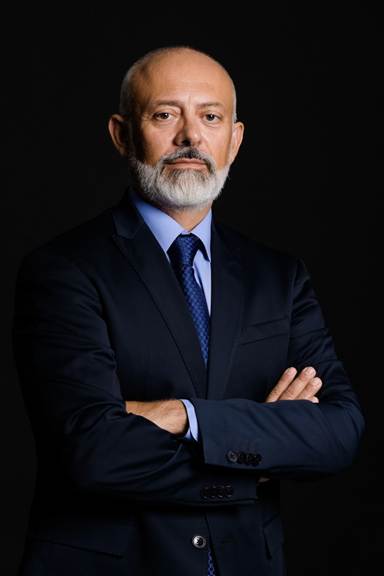
By Roberto d’Ambrosio – CEO at Axiory
Financial markets in 2026 are producing more information than at any point in history. Earnings data, geopolitical alerts, AI-generated analysis, social media commentary, and real-time price feeds reach investors continuously, relentlessly, and from every direction. The conventional assumption is that this abundance is empowering. More data, the argument goes, means better-informed decisions. From my experience across more than three decades in financial services, the reality is considerably more complicated, and for many investors, the opposite is closer to the truth.
Access to information is not the same as the capacity to process it. When data exceeds the ability of the individual to filter, interpret, and act on it with clarity, the result is not better decision-making. It is hesitation, reactive behaviour, and a false sense of confidence that having seen the data is the same as having understood it. Research published by the Board of Governors of the US Federal Reserve has confirmed what practitioners have long observed: information overload is associated with lower trading volumes and measurably higher risk premia, as investors demand greater compensation for holding assets in an environment where they can no longer reliably distinguish signal from noise. The effect is not marginal. It is structural, and it worsens precisely when markets are most volatile and when clear thinking matters most.
This is particularly relevant for the Middle East. The GCC’s retail investment sector has expanded rapidly, with neo brokerages and digital trading platforms now comprising a market valued at approximately $1.2 billion. The UAE’s regulatory framework, spanning the Securities and Commodities Authority, the Dubai Financial Services Authority, and the Financial Services Regulatory Authority, sets meaningful standards for disclosure and investor suitability. Yet the sheer volume of unfiltered data reaching individual investors through apps, alert systems, and AI-driven content is outpacing the governance infrastructure designed to protect them. Earlier this year, UAE-based retail platforms reported a sharp spike in commodity trading volumes following geopolitical alerts linked to regional energy infrastructure. The pattern was instructive: investors were not responding to analysis. They were reacting to the noise itself.
In my opinion, the real competitive advantage in today’s markets has shifted decisively. It is no longer about who has access to data, because everyone does. It is about who has the discipline, the frameworks, and the human capacity to determine what that data means and what it does not. This is fundamentally a risk management challenge, not a technology challenge.
Consider the consequence chain. When platforms deliver thousands of data points, alerts, and AI-generated recommendations without adequate curation, they create an illusion of informed participation. Investors who lack the training or advisory support to contextualise this information face two symmetrical risks: paralysis, where conflicting signals prevent any decision at all, and impulsive reaction, where a single alarming headline triggers an unexamined trade. Both degrade portfolio outcomes. Both increase transaction costs, erode returns through poorly timed decisions, and expose investors to risks they have not consciously chosen to take.
This raises an uncomfortable question for data providers and platform operators. The business model of much of the fintech and financial information industry is built on engagement, meaning more alerts, more content, more interaction. But engagement is not the same as service, and information delivery without responsibility for its quality, context, and potential impact on decision-making is not a neutral act. It carries consequences, and regulators are beginning to recognise this.
The European Union’s AI Act, whose high-risk obligations for financial services take effect in August 2026, will require providers of AI-driven systems used in credit scoring, risk profiling, and investment decision-making to meet strict standards around transparency, human oversight, and auditability. The EU’s proposed Financial Data Access regulation extends similar principles to data sharing across the financial sector. These frameworks signal a clear direction: those who provide financial data and algorithmically generated analysis will increasingly bear responsibility for how that information is presented, contextualised, and governed. For the GCC, where regulators have consistently demonstrated a commitment to adopting and adapting international best practice, the trajectory is evident. Data provision is moving toward becoming a compliance-intensive activity, and firms operating in or serving the region should prepare accordingly.
But regulation alone will not solve the information paradox. Compliance frameworks establish floors, not ceilings. The deeper challenge is cultural and organisational. Investors, whether institutional or individual, need not just data but the capacity to interpret it within a coherent risk framework. Before acting on any data point, alert, or algorithmically generated recommendation, the prudent investor asks three questions: what is the source, what context is missing, and does this information warrant action or merely attention? This discipline is not intuitive in a market designed to reward speed, but it is essential. It means investing in financial literacy, in advisory relationships grounded in trust and expertise, and in governance structures that ensure decisions are informed by judgement rather than driven by impulse.
Ultimately, this is a human capital challenge. Algorithms can process data at scale, but they cannot replace the informed professional who understands context, identifies what is missing from the data, and exercises the judgement to act, or equally important to refrain from acting, when conditions are uncertain. Organisations and platforms that invest in experienced risk professionals, in robust advisory capability, and in the governance to ensure quality over quantity will build durable competitive advantages. Those that continue to prioritise data volume over decision quality will find that the market eventually prices that negligence in.
In a market flooded with information, the scarcest resource is not data. It is the judgement to know what to do with it.

SAVOUR MEDITERRANEAN FLAVOURS AT TIMO GOURMED SATURDAY BRUNCH
SUNDAYS DONE RIGHT WITH A BAVARIAN BRUNCH AT BRUNO’S BIERGARTEN

Nothing Phone (4a) Pro Review: Mid-Range Pricing, Flagship Ambitions

-
News10 years ago
SENDQUICK (TALARIAX) INTRODUCES SQOOPE – THE BREAKTHROUGH IN MOBILE MESSAGING
-

 Tech News2 years ago
Denodo Bolsters Executive Team by Hiring Christophe Culine as its Chief Revenue Officer
-
 VAR12 months ago
Microsoft Launches New Surface Copilot+ PCs for Business
-

 Trending5 months ago
OPPO A6 Pro 5G Review: Reliable Daily Driver
-

 Tech Interviews2 years ago
Navigating the Cybersecurity Landscape in Hybrid Work Environments
-

 Tech News9 months ago
Nothing Launches flagship Nothing Phone (3) and Headphone (1) in theme with the Iconic Museum of the Future in Dubai
-

 Automotive2 years ago
AGMC Launches the RIDDARA RD6 High Performance Fully Electric 4×4 Pickup
-

 VAR2 years ago
Samsung Galaxy Z Fold6 vs Google Pixel 9 Pro Fold: Clash Of The Folding Phenoms