
 Have a question? +971 56 404 0503




Home Integrator
TownX acquires one of Arjan’s largest land plots for AED 110 million


TownX has recently acquired one of Arjan’s largest land plots, covering 400,000 square feet of sellable area.
Valued at AED 110 million, the strategic land purchase marks a significant milestone as TownX plans to develop a new landmark residential community that will set new standards for quality, design, and lifestyle in one of Dubai’s most sought-after emerging neighbourhoods.
Arjan has rapidly transformed from a peripheral location into one of Dubai’s key residential and mixed-use hubs. With its proximity to major thoroughfares such as Sheikh Mohammed Bin Zayed Road and Al Khail Road, and its growing portfolio of amenities—including parks, schools, retail centres, and leisure facilities—Arjan has become a magnet for families and investors.
Its appeal is driven by a balance of affordability, accessibility, and lifestyle offerings, making it a vibrant community for residents seeking both convenience and quality of life. The district’s development momentum continues to accelerate, with TownX’s acquisition of one of Arjan’s largest plots further underlining the neighbourhood’s rise in importance.
Haider Abduljabbar, Executive Director of TownX, commented: “This acquisition is a testament to TownX’s vision and confidence in Dubai’s vibrant real estate market. Arjan’s evolving neighbourhood character aligns perfectly with our focus on building inclusive, liveable communities designed to enrich the daily lives of our residents. We plan to leverage our deep expertise in quality construction, energy-efficient design, and premium finishes to create a destination that resonates with modern families seeking both comfort and connectivity.”
“Our commitment extends beyond brick and mortar. We aim to foster a community where residents can thrive, engage, and build lasting memories. This project will be a showcase of TownX’s core values, emphasizing spacious, bright interiors and sustainable building practices that reduce environmental impact while enhancing user experience,” Haider added.
Since its inception in 2017, TownX has established a reputation for delivering projects ahead of schedule without compromising on quality or attention to detail. The new development in Arjan is expected to feature a diverse mix of residential units catering to multiple generations, complemented by state-of-the-art amenities, landscaped gardens, and community-centric facilities.
This acquisition also highlights TownX’s strategic approach to land procurement in emerging districts, recognising the growing demand for lifestyle-driven residential options beyond Dubai’s traditional prime locations. The focus on areas like Arjan enables TownX to offer buyers unique living experiences characterised by neighbourhood personality, accessibility, and affordability.
Driven by a team of 350 employees, TownX has delivered over 967 units to date. The company is currently developing 2,125 apartments and has completed 1,036,000 square feet of premium living space.
With a focus on family-oriented communities, TownX designs spaces that cater to all generations. The company prioritises premium quality by incorporating high-end finishes, energy-efficient designs, and spacious interiors. Above all, the developer is committed to an exceptional user experience, ensuring that each project enhances the daily lives of its residents.
Key developments delivered include Easy18, Easy19, Luma21 and Luma22 in JVC. Ongoing projects include 11 Hills Park at Dubai Science Park and Luma Park Views in JVC.











Grounded in nature and materiality, brown is returning to interiors as a calming, contemporary neutral.
Brown is re-emerging as one of the defining tones of contemporary interiors. Once associated with the nostalgic interiors of the 1970s, the colour is now being reinterpreted through a more refined lens, introducing depth and material richness to modern living spaces. After several years dominated by pale neutrals and cool greys, designers are increasingly introducing a spectrum of warm brown tones – from deeper shades such as espresso and cocoa to softer hues including caramel, tan and walnut – bringing greater character and contrast to current interior palettes.
Used thoughtfully, brown acts as a versatile neutral within contemporary spaces, adding structure while softening lighter schemes. Layering deeper chocolate tones with caramel or tan shades introduces subtle depth, while softer tones such as off-white or cream keep the composition light and balanced. Accents in bronze or brushed metals, alongside rich woods and textured fabrics, further enhance the layered quality of the palette.
Reflecting this shift, Minotti explores these richer tones across its latest collections. At the Minotti Dubai flagship store in Jumeirah, sculptural seating and refined finishes illustrate how brown tones can shape contemporary interiors.
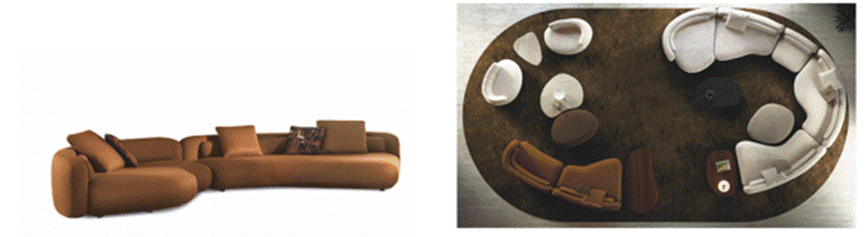
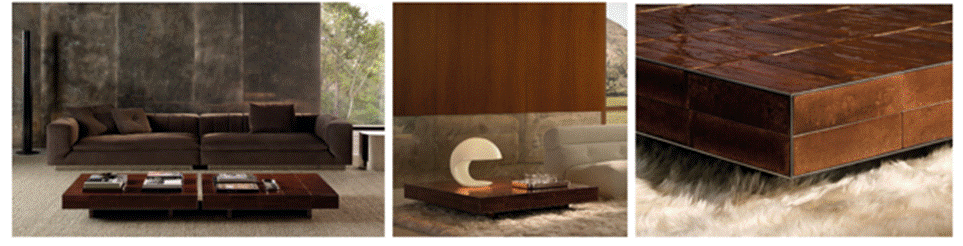
Sculptural Foundations: Bézier seating system and coffee table
Statement seating is one of the most effective ways to introduce brown into a space. TheBézier seating system by Marcio Kogan / Studio MK27 embodies this approach through its fluid, organic silhouette and generous proportions. Inspired by the parametric curves developed by French engineer Pierre Bézier, the sofa’s rounded volumes create a sculptural presence that feels both architectural and inviting.
Upholstered in warm tones, the design anchors the living area while maintaining visual softness. Its modular configuration expands into island-like compositions that encourage relaxed gathering and conversation. Paired with the Bézier coffee table, featuring a Canaletto walnut top in light brown veneer, the composition highlights how brown can extend through both upholstery and natural materials.
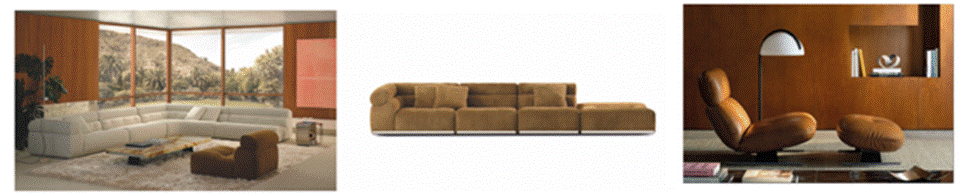
Layered Upholstery: Coupé and Libra
Brown tones are equally effective when introduced through layered seating arrangements. The Coupé seating system by Giampiero Tagliaferri reinterprets the aesthetic language of 1960s and 1970s interiors through a contemporary lens. Its overlapping rounded volumes and tone-on-tone stitching emphasise softness and craftsmanship while maintaining the understated elegance characteristic of Minotti.
Also designed by Giampiero Tagliaferri, the Libra armchair introduces a sculptural accent. Inspired by seventies aesthetics, the design is composed of overlapping padded volumes upholstered in leather or fabric, creating a balanced interplay between seat, backrest and headrest.
Architectural Balance: Riley seating system, Andrée and Stage coffee tables
Where softer silhouettes introduce warmth, more architectural pieces bring structure and contrast. The Riley seating system by Hannes Peer reflects this balance through its geometric form and precise detailing, with vertical quilting adding rhythm to the upholstery.
Alongside the seating, the Andrée coffee table, also designed by Hannes Peer, introduces a decorative counterpoint. Inspired by the facades of 1970s Milanese architecture, the design pairs glazed ceramic surfaces with chrome-plated brass trims, adding texture and reflective depth.
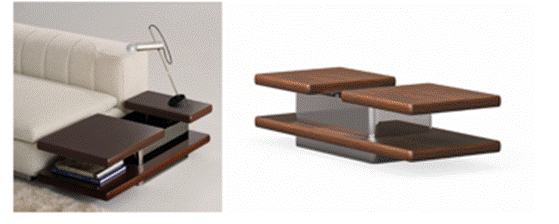
The Stage side table further extends the palette through wood and metal finishes, with tops available in Canaletto walnut-stained light brown or glossy Moka lacquer.
A Contemporary Neutral
Far from being a passing trend, brown’s return reflects a broader shift toward interiors that prioritise depth, materiality and balance. When layered thoughtfully through furniture, finishes and textures, the colour introduces a quiet sophistication that feels both timeless and relevant today.
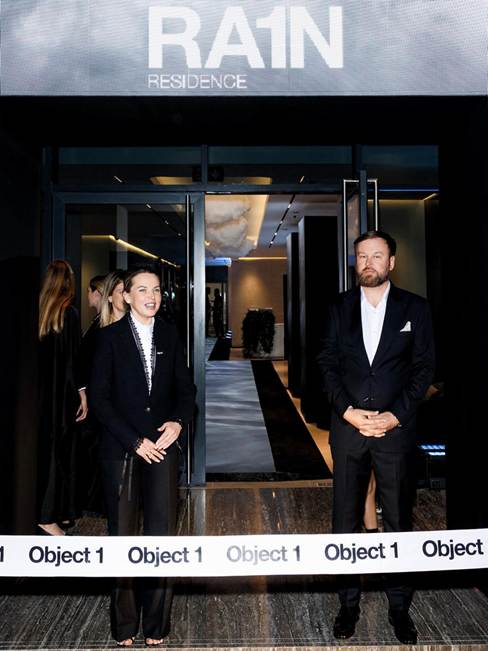
Object 1 has officially announced the 100% completion of RA1N Residence, the developer’s residential project in Dubai. The delivery signifies the company’s evolution from project launches to the successful handover of homes, solidifying its reputation as a reliable player in the city’s fast-moving real estate sector.
Located in District 12 of Jumeirah Village Circle (JVC), the 25-storey tower features 144 units, ranging from one- and two-bedroom apartments to exclusive top-floor apartments with jacuzzi for extra comfort. The project meets a surging market demand for ready-to-move properties. JVC remains a top-tier choice for residents and investors alike, currently capturing 61% of sales searches and 80% of rental searches for apartments in the mid-market segment.
RA1N Residence provides a comprehensive suite of amenities designed for modern urban life:
A spacious lobby with lounge area and co-working spaces, a dedicated clubhouse, indoor and outdoor fitness areas, 2 swimming pools – for kids and adults-only, on-site retail outlets, children’s play zones – both indoors and outdoors.
Designed for immediate comfort and functionality, the apartments feature bright, ergonomic layouts and high-quality materials with contemporary finishes sourced directly from European factories, complemented by built-in appliances and premium plumbing fixtures from leading manufacturers.
There is direct access to Al Khail Road and Sheikh Mohammed Bin Zayed Road, linking the community to Dubai Marina, JLT, and Dubai Internet City. The Roads and Transport Authority’s Hessa Street Phase II project, will double road capacity and reduce travel times while serving nearly 650,000 residents across surrounding communities, further strengthening accessibility for the district.
The announcement comes as Dubai’s property market demonstrates unprecedented momentum. In January 2026 alone, total transactions reached circa Dh108.0 billion – nearly doubling the figures from the previous year.
Tatiana Tonu, CEO of Object 1, commented: “Delivering RA1N Residence is a defining moment for Object 1, as we move from vision to tangible reality. While the world watches regional shifts with caution, our faith in Dubai’s investment climate remains absolute. This city is more than just a market; it is a global safe haven that consistently turns challenges into growth opportunities. By completing our project, we are sending a clear message to our investors: we are here for the long term, contributing to the Dubai 2040 Urban Master Plan and building high-quality communities that thrive regardless of external pressures.”

Exclusive interview with Noor Al Muhaideb, founding partner, Opaal interiors.
Noor, you’ve been designing since your AUSD days and now lead Opaal Interiors, what was the pivotal moment when design switched from passion to purpose in your life?
Design has been an enduring passion from an early age, where I found myself drawn to patterns, spaces, and materials. This soon became a professional purpose during my formative years at the American University of Sharjah (AUSD) and subsequently throughout my tenure at Emaar Properties. At AUSD, I refined my technical skills, deepened my understanding of spatial planning, and cultivated a disciplined approach to design. This foundation allowed me to transform instinctive creativity into a structured, impactful practice.
Earlier in my career, I witnessed firsthand how interiors influence lifestyle, wellbeing, and daily experience, far beyond aesthetic considerations. Leading complex residential and hospitality projects revealed the profound effect of thoughtful planning and detailing on occupants’ quality of life. Today, I always look forward to creating environments that are emotionally resonant, where every detail contributes to a meaningful, lived experience.
As founding partner and a lead creative designer, how do you balance executive leadership with creative direction?
At Opaal, leadership and creativity are inseparable yet distinct. My role requires overseeing the strategic growth of the firm including, client engagement, project delivery and operational excellence, while simultaneously shaping the creative vision of every project.
Creativity is the core of our work, which is why nurturing talent is a priority. We encourage young designers to contribute ideas boldly, experiment within project parameters, and take ownership of their work. By fostering this sense of responsibility and creative autonomy, we maintain innovation at the core of our practice while ensuring that every project meets Opaal’s high standards of quality and refinement.
From a business perspective, launching Opaal in a competitive market demanded patience and deliberate strategy. Building a credible client base and reputation took time, particularly when established firms dominated the landscape. By emphasizing meticulous planning and team work, we gradually established trust and credibility.
Adapting to this approach is important for the industry and it is slowly aligning in this direction. For instance, in 2025, over 65 per cent of mid-sized GCC design firms reported collaborative leadership models to balance operational efficiency with creative excellence.
In our industry, this focus ensures that our company remains both a strategically robust business and a leading creative force in the region’s interiors sector.
Opaal emphasizes spaces that feel personal and emotionally grounded. How do you translate a client’s inner world into physical form without losing authenticity?
At Opaal, translating a client’s inner world begins with deep engagement and collaboration. We invest time in understanding their lifestyle and emotional priorities, refining ideas together from concept through execution. Every decision we make, whether it is layout and lighting or materials and textures, it is guided by their identity, ensuring that the space feels authentic and personal. Through this, we create interiors that are functional and refined as well as emotionally resonant, supporting wellbeing and leaving a lasting impression.
As Juan Montoya notes, “A room should never allow the eye to settle in one place. It should smile at you and create fantasy.” This mindset allows our work to remain timeless and meaningful.
Can you walk us through a design decision you made recently, maybe a material, custom joinery piece, or lighting solution, and why it was pivotal to the space’s narrative.
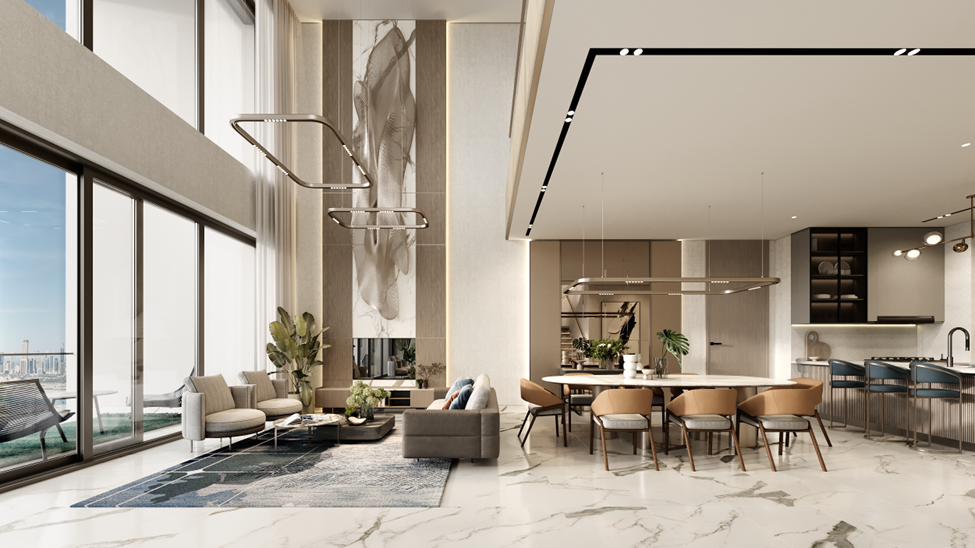
At the MANSORY Residences, we reinterpreted the precision of automotive craftsmanship within a refined residential setting. A custom chaise-like sofa, with a contoured profile inspired by grand tourer seating, anchors the living space with sculptural presence and everyday comfort. The surrounding joinery layers charcoal and graphite tones with cognac leather inlays and brushed metal detailing, balancing strength with warmth. Concealed coves and integrated lighting introduce a soft, ambient glow reminiscent of a luxury dashboard. The result is a composed, immersive environment where bold design is thoughtfully softened for daily living.
How do you balance aesthetic boldness with comfort and emotional resonance, especially in private residential spaces?
Residential design is uniquely distinctive and requires particular care because we are shaping spaces where people live, and rest. For me, bold design is always in service of the people who inhabit a space. Every material, texture, and detail is considered should be more than a visual impact and should focus on how it affects mood and daily life. We firmly believe that a striking feature is only meaningful if it makes the space feel welcoming and emotionally supportive.
We start by understanding how people interact, and experience their homes, then integrate statement elements with restrained palettes, tactile finishes, and bespoke detailing. The goal is to ensure that every home feels personal, which is bold yet restorative.
In an age of fast aesthetic trends, how do you resist momentary visual noise and maintain integrity in your designs?
Maintaining design integrity begins with a clear vision and a deep understanding of each project’s context. We ensure that every decision aligns with the story and purpose of the space, rather than short-lived trends. Moreover, we treat design as a living dialogue between people and their environment.
For example, in the MANSORY Residences by Amaal, Opaal focused on automotive-inspired luxury elements that deliver a consistent, sensory-rich experience throughout the space. The interiors combine bespoke materials, precise detailing, and a thoughtful layout that elevates the concept without resorting to superficial visual effects.
This approach is reinforced by wider industry behaviour where more than 55 per cent of interior designers report that minimalistic and purposeful design is increasingly popular among clients, reflecting a preference for authenticity and longevity over short‑lived trend cycles.
Your recent partnerships, like with MANSORY Residences by Amaal, blend iconic brand identities, how do you approach co-design with global lifestyle brands?
Collaborating with global lifestyle brands requires respecting the brand’s identity while translating it into a tangible, human-centered environment. For MANSORY Residences, our approach began with understanding the brand’s automotive-inspired luxury ethos and the expectations of its residents. We then translated those values into the interiors through bespoke materials, tailored detailing, and spatial planning that reflects both the brand and the lived experience of occupants. We are working closely with the brand, the developer, and other stakeholders to ensure that we meet their standards while keeping our timeless elegance and design elements.

KERTEN HOSPITALITY ON CRAFTING EXPERIENCES ROOTED IN STORYTELLING, CULTURE AND COMMUNITY
THE RETURN OF BROWN: A NEW NEUTRAL FOR INTERIORS WITH MINOTTI
CORAL BEACH RESORT SHARJAH SETS UAE HOSPITALITY BENCHMARK AS FIRST SIGNATORY OF GLASGOW DECLARATION ON CLIMATE ACTION

-
News10 years ago
SENDQUICK (TALARIAX) INTRODUCES SQOOPE – THE BREAKTHROUGH IN MOBILE MESSAGING
-

 Tech News2 years ago
Denodo Bolsters Executive Team by Hiring Christophe Culine as its Chief Revenue Officer
-
 VAR11 months ago
Microsoft Launches New Surface Copilot+ PCs for Business
-

 Tech Interviews2 years ago
Navigating the Cybersecurity Landscape in Hybrid Work Environments
-

 Tech News8 months ago
Nothing Launches flagship Nothing Phone (3) and Headphone (1) in theme with the Iconic Museum of the Future in Dubai
-

 Automotive1 year ago
AGMC Launches the RIDDARA RD6 High Performance Fully Electric 4×4 Pickup
-

 Trending5 months ago
OPPO A6 Pro 5G Review: Reliable Daily Driver
-

 VAR2 years ago
Samsung Galaxy Z Fold6 vs Google Pixel 9 Pro Fold: Clash Of The Folding Phenoms