
 Have a question? +971 56 404 0503




Tech News
Huawei Reinforces Commitment to SME Digital Transformation at Exclusive Commercial Business Roundtable in Uzbekistan


Huawei reinforced its commitment to empowering small and medium-sized enterprises (SMEs) with future-proof, simplified ICT infrastructure at an exclusive Commercial Business Roundtable in Uzbekistan.
The gathering, part of the Huawei Tech Carnival 2025 in Tashkent, brought together C-level executives, industry thought leaders, and Huawei’s global management team to share success stories, industry insights, and strategic visions for digital transformation across key sectors, including education, healthcare, hospitality, retail, and manufacturing.
Peter Zhang, Director Commercial Business Dept, Enterprise Sales, Huawei, said, “Through deep partnerships and industry-focused strategies, Huawei plays a pivotal role in shaping the commercial market’s digital future. Our commitment to SMEs goes beyond providing technology to create an ecosystem that enables sustainable digital growth and innovation.”
The roundtable featured comprehensive presentations on Huawei MECA Commercial Business’s 2024 achievements and 2025 strategic roadmap, with high-level management from both the MECA Region and Huawei Global sharing their vision for the commercial market. Members of the Huawei Elite Club presented real-world success stories, demonstrating how strategic ICT implementation has transformed their operations and accelerated growth.
Industry experts provided targeted insights into SME digital transformation challenges and opportunities, while open discussions with commercial partners fostered collaborative problem-solving and knowledge sharing. These interactive sessions addressed the critical ICT infrastructure gaps many growing businesses face and offered actionable guidance for overcoming these challenges.
At the Huawei Commercial booth at the Tech Carnival, the company showcased its comprehensive portfolio of products and solutions specifically designed for SMEs. These solutions stand out in the market for being future-proof and scalable, allowing businesses to grow without technology constraints. The ease of deployment and operation minimizes complexity and reduces the IT burden on smaller organizations, while the adaptability to various industries ensures that businesses in education, healthcare, hospitality, retail, and manufacturing can find tailored solutions that meet their specific needs.

Osama M Henein, Managing Director, OHI, said: “The exclusive gathering provided valuable insights into how businesses can navigate digital change successfully. Huawei’s strategic direction and sector-specific expertise offer practical solutions for the real challenges organizations face in their digital transformation journeys.”
The event highlighted tangible results from partners who have implemented Huawei’s commercial solutions. These success stories demonstrated how the right ICT infrastructure can accelerate business growth, improve operational efficiency, and enhance customer experiences across diverse industry verticals.
As businesses across the Middle East and Central Asia region accelerate their digital transformation initiatives, Huawei’s commercial business division continues to expand its reach and impact. The company’s solutions serve markets including Saudi Arabia, UAE, Gulf North, Pakistan, Iraq, Oman, Levant, Uzbekistan, Kazakhstan, Azerbaijan, Kyrgyzstan, Tajikistan, Turkmenistan, Mongolia, Armenia and Georgia, addressing the unique needs and challenges of each regional market.
The Commercial Business Roundtable marks another milestone in Huawei’s journey to democratize access to advanced ICT infrastructure for businesses of all sizes. By fostering collaboration between technology providers, channel partners, and end customers, Huawei creates a vibrant ecosystem that drives innovation and sustainable growth in the digital economy.
This strategic approach reflects Huawei’s understanding that successful digital transformation requires more than technology implementation. It demands deep domain expertise, strong partner relationships, and a commitment to long-term support that enables businesses to achieve their digital ambitions.












Yango Tech, B2B technology solutions provider by Yango Group, launches a new business practice focused on developing and deploying autonomous industrial AI agents. These AI agents are designed to execute real operational tasks across customer service, analytics, compliance, and decision-making, serving industries such as fintech, medtech, e-commerce, logistics, smart cities, and the public sector. Yango Tech offers both ready-to-deploy solutions and a customizable platform for building AI agents tailored to the specific needs of each business. This new business direction addresses the rapidly growing demand across the Middle East for scalable AI systems that deliver measurable business impact, as the region accelerates toward a projected $320 billion AI economy by 2030.
AI Agents connect directly to enterprise applications and data sources, including CRM, HR and finance systems, allowing AI to act like digital employees with memory, execution capabilities and built-in security. For governments and enterprises building digital workforces and smart cities, Yango Tech deploys AI employees across customer support, sales, recruitment and debt recovery, delivering 95% first-contact resolution, faster hiring and up to $100K in monthly operational savings. Its Smart City stack enables digital twins, emergency navigation, mobility optimization and real-time urban analytics, helping municipalities accelerate decision-making, improve traffic flow, and reduce energy and operational costs through AI-powered city modelling and dispatch optimization.
In the medical world, Yango Tech reduces physician admin workloads through appointment transcription, smart search across electronic medical records, imaging analysis and AI and BI command centres. The solutions automate documentation, surface unified patient data in seconds, improve diagnostic accuracy and enable clinicians to treat more patients. In financial services, AI functions support front-, middle- and back-office transformation through AI-powered chatbots, smart search, credit scoring, anti-fraud analytics and workflow automation.
Commenting on the launch, Vladimir Razuvaev, Chief Executive at Yango Tech, said: “Enterprises today are under pressure to turn AI into practical outcomes. Our AI Agents were built to help organizations deploy autonomous digital employees that integrate securely into existing systems and deliver measurable productivity gains. With around 84% of GCC organisations adopting AI, the opportunity now lies in execution. Our vision is to help healthcare providers, banks, private firms and cities scale AI responsibly while strengthening performance, transparency and service quality.”
The launch reinforces Yango Tech’s alignment with the UAE’s national innovation agenda and broader regional ambitions for AI-led economic growth, smart infrastructure and digital government. By enabling sovereign deployments, local data control and enterprise-grade security, the platform supports the UAE’s vision for future-ready public services and knowledge-driven economies while helping organizations move faster from strategy to implementation.

TO LEAD FROM DUBAI
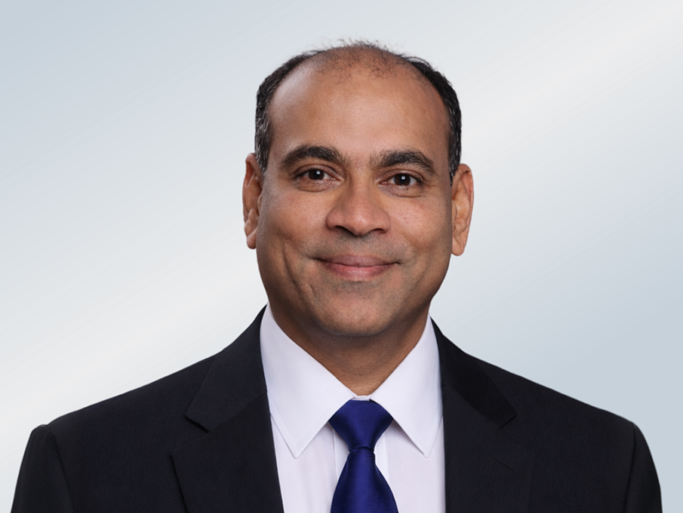
QBurst, a design-led digital engineering company powered by High AI-Q™, has appointed Shivkumar Subramaniam as Regional Head, Middle East, based in Dubai, UAE. The appointment underscores QBurst’s strategic commitment to building a locally-rooted presence in the Middle East and strengthening its ability to serve enterprises and governments across the region.
The Middle East represents one of the most significant growth opportunities in the global technology services market. According to Deloitte & MBZUAI, State of AI in the Middle East 2025 report, over 80% of organizations in the region feel intense pressure to adopt AI, yet nearly half lack the talent and technology capabilities to scale it successfully, and a third report no returns from their AI initiatives. Closing that gap between AI adoption and AI value is the opportunity QBurst is positioned to capture.
Shivkumar is a global technology business leader with over three decades of experience building and scaling digital and technology services businesses across the Middle East, Asia Pacific, and India. He has led multi-country P&L portfolios and driven large-scale digital transformation initiatives for enterprises and governments across industries.
“The velocity of digital and AI transformation in the Middle East is remarkable. What’s truly compelling is the complexity and scale of the projects being undertaken—from smart governments to intelligent enterprises. This is where QBurst provides a decisive advantage, bringing a world-class engineering pedigree and practical AI experience. Our main focus is on embedding QBurst into the fabric of the region’s innovation ecosystem, building a team that co-creates solutions and ensures we are the trusted, long-term partner for our clients’ success,” said Shivkumar Subramaniam, Regional Head, Middle East, QBurst.
QBurst CEO Arun ‘Rak’ Ramchandran added, “The Middle East is a strategic market for us with long-term growth potential. Governments across the region – from the UAE’s AI Strategy to Saudi Arabia’s Vision 2030 – are building the foundation for an AI-driven future, and that is creating demand for partners who can genuinely deliver at scale. Building an on-ground team despite the ongoing geopolitical developments is our clearest statement of commitment and conviction in the region. Shivkumar brings proven depth of regional experience and leadership QBurst needs, to accelerate that growth and support our clients in building intelligent, future-ready digital platforms.”
Before joining QBurst, Shivkumar held senior leadership roles at Siemens, Satyam Computer Services, Mindtree, and Larsen & Toubro Infotech, where he helped expand regional technology businesses and led large digital transformation programs for clients across the Middle East and Asia Pacific.
A year since Multiples Alternate Asset Management, India’s leading alternate asset management firm, acquired a controlling stake in QBurst in a ~USD 200 million transaction, the company has moved decisively to scale its international footprint, strengthen its leadership team and bolster its offerings. The Middle East expansion marks one of the most significant steps in that growth journey, with QBurst bringing deep experience in delivering AI-driven solutions across Realty, Hospitality, Retail, Manufacturing, and Healthcare – industries that sit at the heart of the region’s economy.

In professional audio, the most important moments are often the ones audiences never notice when collaboration feels seamless and every voice is heard clearly. Shure continues to build on this foundation through a long-term approach to growth, led by women guiding strategy globally and regionally, and supported by an ecosystem-first model across the Middle East and Africa (MEA).
Rose Shure’s leadership drove the Company forward for decades, including global expansion into many countries. Chris Schyvinck, Shure President and CEO, has continued that vision, leading Shure into another century of innovation and progress. For more than 30 years, Shure has featured a woman in a key leadership position.
Shure’s scale and legacy reflect a century of consistent innovation and deployment. Over its 100-year history, Shure has developed more than 50,000 electronics products, with solutions sold in more than 120 countries worldwide and operations across more than 30 locations globally, supporting customers and partners across the Americas, EMEA, and Asia.
Schyvinck said: “At Shure, leadership is about building for the long term, investing in people, strengthening capability, and staying close to the real-world environments where sound matters most. As our teams innovate globally and deliver locally, we remain focused on all the essential features professional audio makes possible: better connection, better understanding, and better outcomes. Women across Shure play an important role in shaping that direction and delivering impact across our global and regional teams.”
Yet while sound continues to power the way organisations meet, learn, and perform, representation across technical audio pathways remains a wider industry challenge. Research continues to highlight how limited women’s credited participation remains in certain production roles globally — including findings that women account for only 2.8% of credited music producers across a large multi-year chart dataset.
Across the Middle East, however, the pipeline for future technical leaders is notably stronger. Recent UAE reporting and national indicators point to high participation of women across higher education and STEM pathways, including women representing 70% of university graduates, and strong representation within STEM and engineering education. This momentum reinforces the region’s potential to shape a more diverse future-ready workforce across technology-led industries including AV, enterprise collaboration, and professional audio.
In addition to all of the women worldwide who contribute to the success of the Company, Shure is also proud to work with many women in various roles throughout the industry – executives, performers, engineers, clergy, podcasters, administrators, educators, and others.
The Company is a proud supporter of industry initiatives such as the AVIXA Women’s Council and is also committed to helping engage the next generation of women leaders by offering global “Women Everywhere” Associate Resource Groups within Shure and hosting regular “Celebrating Women in Technology” panels moderated by Schyvinck spotlighting women working in various professional audio positions worldwide so others can learn from them and be inspired to pursue careers in the industry.
Ekta Shetty, Senior Sales Director Shure MEA, added: “Across MEA, our focus is on outcomes: clearer communication, stronger collaboration, and reliable audio performance across environments where teams make decisions and deliver experiences. Long-term growth depends on capability: supporting partners, investing in teams, and building consistency at scale.”
Building on this foundation, Shure continues to prioritise long-term, capability-driven growth across enterprise collaboration, education, government, and live production environments working closely with integrators, distributors, and channel partners to strengthen deployment outcomes and market maturity.

JAMAICA REDEFINES THE SPRING RESET WITH ISLAND ENERGY AND CULTURE
NATUZZI ITALIA ILLUMINATES THE SOUL OF THE HOME WITH THE POETRY OF LIGHT
SIX & SIX PRIVATE ISLANDS TO OPEN SIX DISTINCT RESORTS IN THE MALDIVES OVER SIX YEARS

-
News10 years ago
SENDQUICK (TALARIAX) INTRODUCES SQOOPE – THE BREAKTHROUGH IN MOBILE MESSAGING
-

 Tech News2 years ago
Denodo Bolsters Executive Team by Hiring Christophe Culine as its Chief Revenue Officer
-
 VAR11 months ago
Microsoft Launches New Surface Copilot+ PCs for Business
-

 Tech Interviews2 years ago
Navigating the Cybersecurity Landscape in Hybrid Work Environments
-

 Tech News8 months ago
Nothing Launches flagship Nothing Phone (3) and Headphone (1) in theme with the Iconic Museum of the Future in Dubai
-

 Automotive1 year ago
AGMC Launches the RIDDARA RD6 High Performance Fully Electric 4×4 Pickup
-

 Trending5 months ago
OPPO A6 Pro 5G Review: Reliable Daily Driver
-

 VAR2 years ago
Samsung Galaxy Z Fold6 vs Google Pixel 9 Pro Fold: Clash Of The Folding Phenoms