
 Have a question? +971 56 404 0503




Automotive
Convenience Is King: The Quiet Revolution in How Tourists Explore the Emirates


Anudeep Raghuthaman, Head of Sales & Marketing, Dollar Car Rental
The UAE is forecast to attract AED 228.5 billion in tourism revenue in 2025, reinforcing its position as one of the most desirable travel destinations globally. With its iconic skyline, desert escapes, and a calendar full of global events, the country offers an experience that few others can rival. It also boasts a well-developed public transport network, particularly in cities like Dubai and Abu Dhabi, where metro lines, buses, and taxis operate seamlessly.
Yet, despite the availability of public transport, more and more visitors are opting to rent a car. This growing trend is being shaped by evolving traveller expectations, the country’s expansive geography, and the digital transformation of the rental industry itself.
Accessibility Beyond City Limits
While urban mobility is well-supported, many of the UAE’s standout attractions are located outside metropolitan areas. A trip to Hatta’s mountain trails, Fujairah’s coastline, or the red dunes of Al Badayer often requires transport flexibility that city-based systems can’t fully support. These destinations are either inaccessible by metro or involve multiple bus transfers and extended travel times.
For visitors with packed itineraries or those travelling in groups, renting a car offers convenience and direct access to a wider range of experiences, from road trips through the Northern Emirates to early morning excursions in the desert.
Cutting Costs Without Cutting Corners
Budget plays a key role in travel decisions. While taxis and ride-hailing platforms like Uber and Careem offer on-demand service, the cost of multiple daily trips can accumulate quickly.
A typical taxi ride in the UAE ranges between AED 30 to AED 40. Over three or four trips a day, the cost can exceed AED 800 to AED 1,000 a week. These figures can be even higher during peak tourism months or major events.
By contrast, car rentals start at approximately AED 90 per day for an economy model. SUVs can be rented for around AED 450 to AED 550 per week. For longer stays, rates become even more competitive, making this a practical option for families and business travellers alike.
Car Rentals in the Digital Fast Lane
One of the key reasons behind the rise in car rentals among tourists is the seamless digital experience now offered by the industry. What was once a time-consuming, paper-heavy process has been replaced by fast, app-based solutions that allow travellers to book, unlock, and return vehicles with minimal effort.
Today’s platforms use smart algorithms to match users with vehicles suited to their preferences, whether based on trip duration, passenger count, or destination type. Keyless entry, mobile check-ins, and digital contracts are now standard features, allowing for a smoother and faster rental experience.
For travellers who value time and convenience, the ability to complete the entire process via a smartphone has significantly increased the appeal of renting a car. The industry’s focus on streamlining user experiences reflects broader trends in tourism, where ease of access and flexibility are key decision-making factors.
Rental Demand Mirrors Seasonal Travel Patterns
Rental activity tends to surge during the peak tourism season between October and March, when the UAE’s milder weather draws a high volume of international visitors. This period also coincides with major events, exhibitions, and shopping festivals that drive movement across cities and emirates.
During these months, higher demand for taxis and ride-hailing services can lead to longer wait times and dynamic pricing. Many tourists, particularly families, solo travellers, and remote workers, opt to rent a car in advance to ensure greater reliability and control over their schedules.
This pattern reflects a broader shift in traveller behaviour, where flexibility, comfort, and the ability to move freely between destinations are valued as much as cost or convenience. Having a personal vehicle enables visitors to explore at their own pace, without being tied to public transport schedules or availability.
The Complete Experience Requires Mobility
In a country known for both urban efficiency and natural beauty, car rentals serve as a bridge between convenience and exploration. Visitors are no longer choosing rentals just for affordability; they see it as a way to enhance the quality and depth of their travel experience.
With the UAE continuing to diversify its tourism offering beyond city centers, demand for car rentals is likely to grow. For many travellers, the journey is just as important as the destination, and in the UAE, that journey often begins behind the wheel.












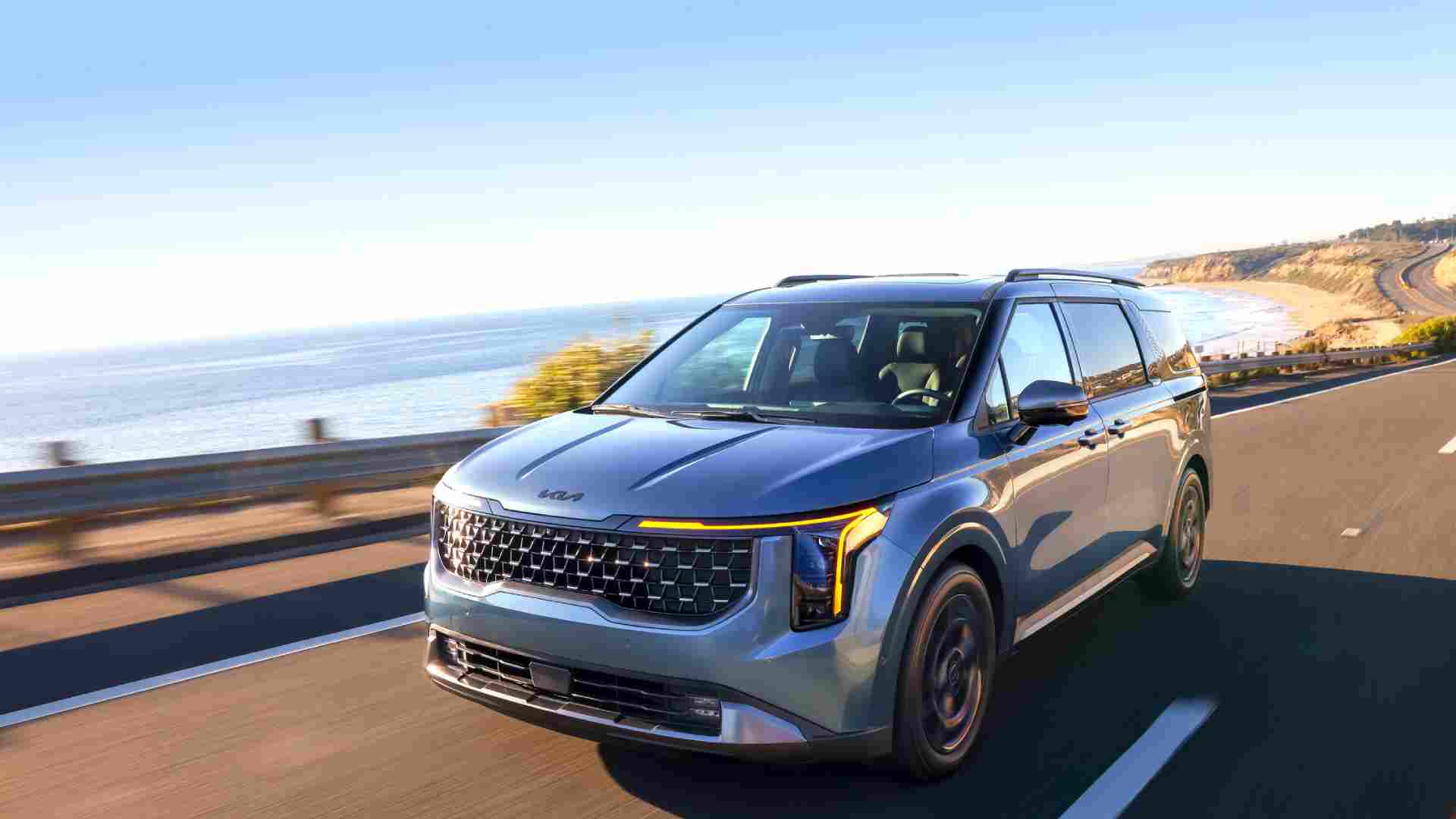
Exclusive interview with Mr. Ahmed VP, KIA
The PV5 marks an important milestone in Kia’s Platform Beyond Vehicle (PBV) strategy. How do you see purpose-built electric vehicles transforming industries such as logistics, last-mile delivery, smart cities and urban mobility across the GCC?
Generic vehicles were fulfilling the needs of logistics and last-mile delivery for the longest time, though not efficient in various aspects, whether performance, space or safety. Purpose-built vehicles has changed this equation entirely by addressing these longstanding shortcomings with precision.
PV5, for example, comes with flexibility, next-generation technology, and practicality to address niche requirements such as commercial, leisure or lifestyle use with specific configurations – the PV5 Passenger, PV5 Cargo, PV5 Wheelchair Accessible Vehicle (WAV), PV5 Taxi, and PV5 Prime Edition. Each of these vehicles benefit from a comprehensive suite of advanced driver assistance systems like telematics, real-time diagnostics, vehicle monitoring and much more, enhancing their suitability for professional fleet applications.
Electrification is becoming a major industry transition globally. How do you view the pace of EV adoption across the UAE and wider GCC region, and what role will Kia’s EV portfolio play in shaping the company’s long-term regional strategy?
The UAE and the wider GCC has already earned the recognition of being among the world’s fastest-growing EV markets, with the UAE ranking first in Middle East EV sales for the second consecutive year. What is equally significant is the qualitative shift accompanying this growth: range anxiety and battery lifecycle concerns, once the most persistently cited barriers to EV adoption, are receding rapidly, thanks to the UAE’s expanding charging network, which now encompasses more than 2,000 stations across the country.
For Kia, electrification will remain key as we expand our EV portfolio. We already have EV9, EV6, EV5, EV3 and PV5; and, this year, we will be rolling out EV9 GT, EV6 GT, and E4, showing that we’re not slowing our EV ambitions. These vehicles are a further extension of our electrification efforts to address business needs.
Many automotive brands today are repositioning themselves as mobility and technology companies rather than traditional car manufacturers. How does Kia view its own long-term identity within this broader transformation of the automotive industry?
For Kia, our identity as a Sustainable Mobility Solutions Provider is a declaration we made deliberately at our brand relaunch in 2021, before much of the industry had begun to seriously articulate a comparable vision. Electric vehicles, hybrids, autonomous driving, PBVs and smart connectivity are products and platforms in active deployment, outlined in our Plan S strategy, which has provided the architectural framework for Kia’s evolution from a traditional automotive manufacturer to a modern, sustainable mobility solutions provider.
The PV5 has been developed as Kia’s first dedicated PBV. What were the key customer needs or market trends that influenced its design and development?
The development of the PV5 was shaped by a convergence of structural market forces. The rapid growth of last-mile delivery to networks, shared mobility needs, the demand for more sophisticated, connected fleets, and even the growing mobility-as-a-service (MaaS) economy have collectively redefined what a commercial vehicle must deliver. What became clear in this process is that no single configuration can adequately address the breadth and specificity of these demands, and that genuine versatility in mobility solutions requires sector-level engineering.
For example, to support People of Determination passengers, we developed Kia PV5 Wheelchair Accessible Vehicle (WAV), which has dedicated wheelchair features, and optimised passenger area. Critically, it is produced as a fully integrated OEM solution, i.e. the accessibility features are engineered into the vehicle’s architecture with structural integrity, occupant safety, and long-term user experience.
Charging infrastructure continues to develop across the region. How does the PV5’s charging capability and battery offering support the practical needs of commercial operators?
The PV5 supports both AC and DC charging solutions, including DC fast charging capability which gets the vehicle charged from 10% to 80% in just approximately 30 minutes, a figure that translates into reduced downtime and higher vehicle availability. Certain variants, such as the PV5 Cargo, are available with configurations designed to meet different operational requirements, including a long-range 71.2 kWh battery offering a WLTP range of up to 416 kilometres. That range profile is comfortably capable of sustaining intensive urban deployment cycles without requiring mid-shift recharging, addressing what has been the primary commercial hesitation around fleet electrification: that EVs cannot reliably meet the demands of professional use. The PV5 is engineered to answer that concern directly, and the GCC’s expanding charging infrastructure only strengthens the case further.

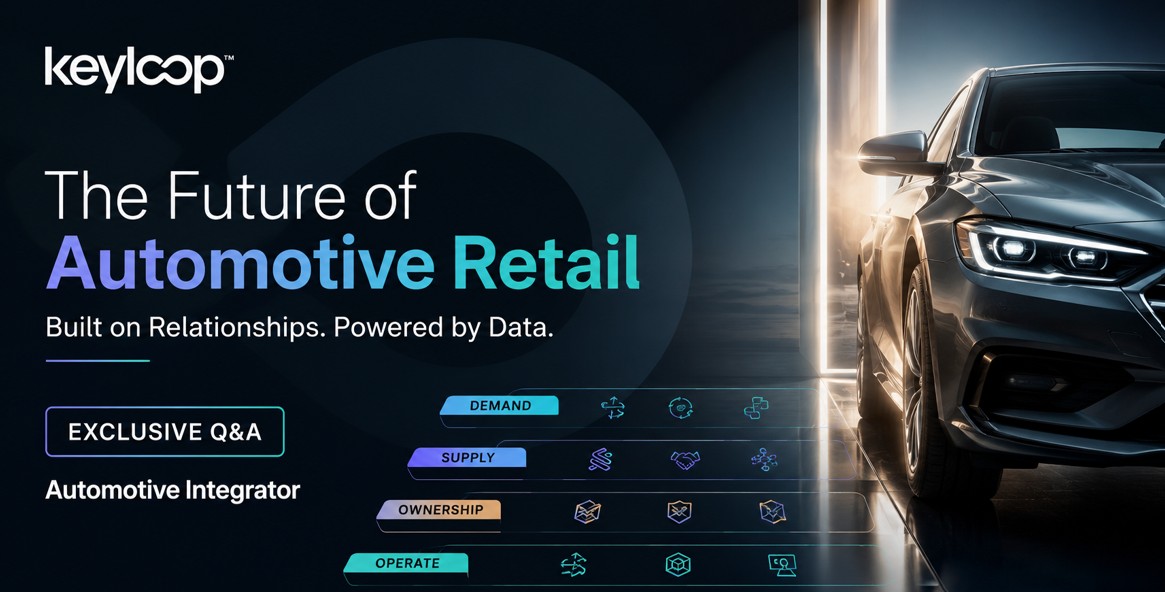
As customer expectations evolve and digital technologies reshape the automotive landscape, dealerships are moving beyond one-off vehicle sales towards connected, data-driven customer relationships.

In this exclusive interview with Monzer Tohme, Managing Director, MEA & APAC, Keyloop explores how unified platforms, AI, and customer intelligence are redefining the future of automotive retail across the Middle East.
What is the fundamental change happening beneath the surface that most people are still underestimating within the automotive retail space?
The shift from selling cars to selling continuous experiences, and the data layer that makes it possible.
The change most people miss is this: automotive retail is quietly moving from a transactional model to a data-driven relationship model. Every interaction a customer has, a service visit, a finance inquiry, a test drive generates a signal. For decades, those signals were lost. Today, the dealers and OEMs who are winning are the ones connecting those signals into a single customer intelligence layer.
What’s underestimated is the compounding effect of that data. It’s not just about personalisation or marketing. It’s about predicting the next need before the customer voices it, whether that’s a service upsell, a renewal, or a new vehicle. The dealers who build that capability now will have a structural advantage that’s very hard to close later.
We often hear about digital transformation in automotive retail. In reality, what does that mean for a dealer on the ground here in the UAE?
It means removing the friction between the customer’s expectation and the dealer’s ability to deliver in real time, at every touchpoint.
UAE customers are among the most digitally sophisticated in the world. They research online, compare across brands, and expect a seamless handoff when they walk into a showroom. So for a dealer on the ground, digital transformation is not a back-office project. It is the front line of the customer experience.
In practical terms, it means a sales executive knowing a customer’s full history before the conversation starts. It means a service advisor being able to book, update, and close a job card without paper. It means the dealer principal seeing their whole business, inventory, pipeline, aftersales revenue, on a single screen, not ten spreadsheets. At Keyloop, that is exactly what we are enabling: systems that make the dealer faster, smarter, and more connected to their customer than they have ever been.
We have a sales-driven dealership model here. Do you think we will soon move towards a lifecycle or ownership-driven model?
Yes, and the smarter dealers in this region are already making that move. The question is not if, but how fast.
The traditional Gulf dealership model was built on volume, conquest, and the next sale. That worked when customers had fewer choices and lower expectations. Today, with more brands, more channels, and more informed buyers, holding on to a customer through the entire ownership journey, service, insurance, accessories, finance, trade-in, next vehicle, is far more valuable than winning them once and losing them to a competitor two years later.
The region also has some natural tailwinds. Vehicle ownership periods here are longer than many markets. Loyalty programmes are becoming more sophisticated. And OEMs are starting to push dealers toward customer lifetime value metrics, not just unit sales. The dealers who will lead the next decade are the ones who start treating the delivery of a car not as the end of the sale, but as the beginning of a relationship.
At Keyloop, our entire platform philosophy is built around that lifecycle view, giving dealers the tools to stay relevant and valuable to their customers long after the keys are handed over.
Fusion is positioned as an end-to-end platform. What was broken in the traditional dealership tech stack that required this kind of unified approach?
The old stack wasn’t one broken thing, it was five or six disconnected systems that were never designed to talk to each other.
If you walked into most dealerships in this region five years ago, you would find a DMS handling stock and invoicing, a separate CRM for sales leads, another tool for workshop job cards, a standalone finance and insurance module, and often a completely manual process for parts ordering. Each system had its own database, its own logic, its own version of the customer record. The result was that a dealer could sell a car, service it three times, and still not know the customer’s name when they called in.
◈ Fragmented customer identity: Sales, service, and finance held separate customer records with no unified view across departments.
◈ Data trapped in silos: Actionable insights sat locked inside individual systems, reporting required manual consolidation, often in spreadsheets.
◈ eInvoicing introduction: Every new tool added another point-to-point integration to maintain, creating fragility and escalating IT costs over time.
◈ Slow, error-prone workflows: Re-keying data between systems introduced errors and added minutes to every customer interaction, multiplied across thousands of transactions.
Keyloop Fusion was built to eliminate that entire class of problem. When sales, aftersales, parts, finance, and CRM all run on a single data model, the customer record becomes the source of truth that every team works from. A service advisor can see the customer’s purchase history. A sales executive can see their service loyalty. The dealer principal can see the whole business in one place. That is not a feature, it is a fundamentally different architecture that changes how a dealership operates.
For the Middle East specifically, this matters even more. Our dealership groups here are large, multi-brand, multi-site operations. The complexity they carry is enormous. A unified platform is not a nice-to-have for them, it is the only way they can scale without proportionally scaling their headcount and risk.
What kind of partnerships or ecosystem play is Keyloop looking to build here in the Middle East in 2026–2027?
We are building an open ecosystem, not a walled garden. The partnerships we are focused on fall into four areas that directly amplify what dealers and OEMs in this region need most.
Digital retail & mobility platforms: Connecting to regional marketplace and mobility platforms so dealers can manage online inventory, leads, and digital retailing from inside Fusion without channel switching.
AI and data intelligence partners: Working with analytics and AI providers to layer intelligence on top of Fusion’s data, predictive service reminders, demand forecasting, and customer churn signals.
OEM & manufacturer integration: Deeper real-time connectivity with OEMs on warranty claims, vehicle data, and campaign management, reducing friction between the factory and the showroom floor.
Financial services & insurance: Embedding regional finance and insurance providers, including multiple finance options, natively into the sales workflow, so F&I becomes seamless rather than a separate conversation.
Beyond technology, we are also investing in our implementation and consulting partner network in the region. The Middle East has some of the most ambitious dealership groups in the world. Groups that operate across the GCC, into Africa, and into South Asia. Supporting their scale requires a strong local partner ecosystem, not just a product.
The strategic intent is clear: Keyloop becomes the platform that other automotive technology companies want to connect to, not the system that sits in isolation. We want to be the operating system of the dealership, with a marketplace of capabilities around it. That is the direction for 2026 and into 2027, and the Middle East is a priority market for proving that model out.

By Rabih Haydar, Director of Partnerships EMEA, Autotech Ventures
Innovation is abundant across the global mobility landscape, but successful large-scale deployments are rare. Many markets remain stuck in pilot mode, testing promising technologies without the regulatory alignment, infrastructure readiness, or political will to move beyond experimentation. This is where the UAE, Saudi Arabia, and other members of the Gulf Cooperation Council (GCC) stand apart. Here, mobility tech are not confined to trials or press releases; they are being rolled out across cities, transport networks, and logistics corridors with real users and real impact. The region isn’t just talking the talk; it also walks the walk.
The GCC’s governments have made mobility a strategic priority, tying it directly to economic diversification, sustainability, and competitiveness. This enables faster decision-making and coordinated execution. Additionally, large-scale urban developments and national transport strategies provide the canvas to deploy technologies from end to end, rather than in isolation. For example, Dubai’s Smart Self-Driving Transport Strategy has set a target of having 25 percent of all trips autonomous by 2030, while Saudi Arabia’s Vision 2030 aims to have 15 percent of public transport vehicles autonomous by that year. As a result, the GCC is shifting the global mobility narrative. Instead of focusing solely on where technology is invented, it calls attention to where it is implemented, integrated, and scaled decisively.
Governments as platform builders
In mobility, impact is not defined by how advanced a technology is, but by how widely and reliably it is deployed. Only by successfully transitioning from experimentation to execution can a mobility project unlock real outcomes: reduced congestion, lower emissions, improved logistics efficiency, and better quality of life. By focusing on scale, the region is accelerating learning cycles, driving costs down, and creating real-world operating environments that technologies simply cannot replicate in small pilots.
What truly differentiates the GCC in mobility deployment is the role governments play, not merely as regulators, but as platform builders. Across the region, national and city-level authorities are setting clear long-term mobility agendas and backing them with capital, infrastructure, and execution capacity. This infrastructure‑first approach means that charging networks, digital platforms, dedicated lanes, ports, and logistics zones are often built ahead of demand, dramatically reducing friction for deployment.
Equally important is regulatory intent. Rather than reacting to new technologies, policymakers are designing frameworks that anticipate them, using sandboxes, pilot-to-scale pathways, and public procurement to accelerate adoption. Governments also act as anchor customers, creating immediate demand for solutions in public transport, logistics, and urban services. Many startups struggle to secure these elsewhere.
This level of coordination allows mobility tech to be deployed system-wide instead of in isolation. The result is faster commercialization, clearer unit economics, and generation of real operational data at scale. In an industry where fragmentation often slows progress, the Middle East’s government-led platform model is emerging as a powerful catalyst for execution.
Global Technologies, Local Scale
The GCC is successfully deploying global mobility tech at scale, from electric vehicles (EVs) and autonomous vehicles to drone logistics, while making room for competition to elevate the ecosystem.
Across the region, EV penetration doubled from roughly 2 percent to 4 percent between 2024 and 2025, making it among the world’s fastest-growing EV markets. The UAE leads the region with EV penetration of around 6 percent, while Saudi Arabia committed around $50 billion to EVs by 2030, including its homegrown EV brand, Ceer Motors. Chinese OEMs such as BYD, Geely, and MG have also rapidly captured market share in the region, rising from around 2 percent in 2019 to 15 percent in 2025. This influx of competitively priced, high-tech Chinese EVs, often adopting battery innovations and integrated software ecosystems, has accelerated regional electrification.
In Abu Dhabi, WeRide and Uber launched the Middle East’s first fully driverless Robotaxi service in November 2025, backed by the world’s first city-level permit for Level 4 autonomy. Operations are expanding to cover 70 percent of the city, with plans to deploy 1,200 robotaxis across Abu Dhabi, Dubai, and Riyadh by 2027.
Innovation in drone logistics is also abundant in the GCC. UAE urban and industrial pilots are using drones to transport parcels, documents, and even medium-range cargo via VTOL drones with capacities up to 250 kg, supported by unified airspace platforms.
Where Deployment Becomes Advantage
Taken together, the GCC’s approach to mobility is creating a new center of gravity for the industry, defined by execution at scale. For founders, the region is a unique place where technologies can move quickly from pilot to real-world deployment, supported by infrastructure, regulation, and committed demand. This shortens the path to validation, revenue, and global relevance.
For investors, the opportunity lies in engaging early in markets where scale is not a future aspiration but a design principle. Companies that can prove they can perform in the GCC’s complex, high-demand environments are more likely to be competitive globally. And for policymakers, the challenge and the opportunity both lie in sustaining this momentum by continuing to enable open ecosystems, talent inflow, and cross-border scalability.
The future of mobility will not be shaped solely in labs or boardrooms, but in the city’s roads, where technology is deployed decisively and system-wide. Through the large-scale rollout of these technologies, driven by government infrastructure, regulatory foresight, and private-sector innovation, the GCC is going beyond just adopting global mobility tech and is now shaping it.


PHRMAG AND THE AUTHORITY OF SOCIAL CONTRIBUTION – MA’AN PARTNER TO ENHANCE ONCOLOGY AND RARE DISEASE CARE IN ABU DHABI

GODIVA CELEBRATES 100 YEARS OF CHOCOLATE ARTISTRY WITH A NEW ERA

Radisson Hotel Group expands French Riviera footprint with Cannes Seaside opening


-
News11 years ago
SENDQUICK (TALARIAX) INTRODUCES SQOOPE – THE BREAKTHROUGH IN MOBILE MESSAGING
-

 Trending9 months ago
OPPO A6 Pro 5G Review: Reliable Daily Driver
-

 Tech News2 years ago
Denodo Bolsters Executive Team by Hiring Christophe Culine as its Chief Revenue Officer
-
 VAR1 year ago
Microsoft Launches New Surface Copilot+ PCs for Business
-

 Automotive2 years ago
AGMC Launches the RIDDARA RD6 High Performance Fully Electric 4×4 Pickup
-
Tech Interviews2 years ago
Navigating the Cybersecurity Landscape in Hybrid Work Environments
-

 Tech News12 months ago
Nothing Launches flagship Nothing Phone (3) and Headphone (1) in theme with the Iconic Museum of the Future in Dubai
-

 VAR2 years ago
Samsung Galaxy Z Fold6 vs Google Pixel 9 Pro Fold: Clash Of The Folding Phenoms