
 Have a question? +971 56 404 0503





Financial
The Clock is Ticking on UAE eInvoicing as the 2026 Deadline Nears


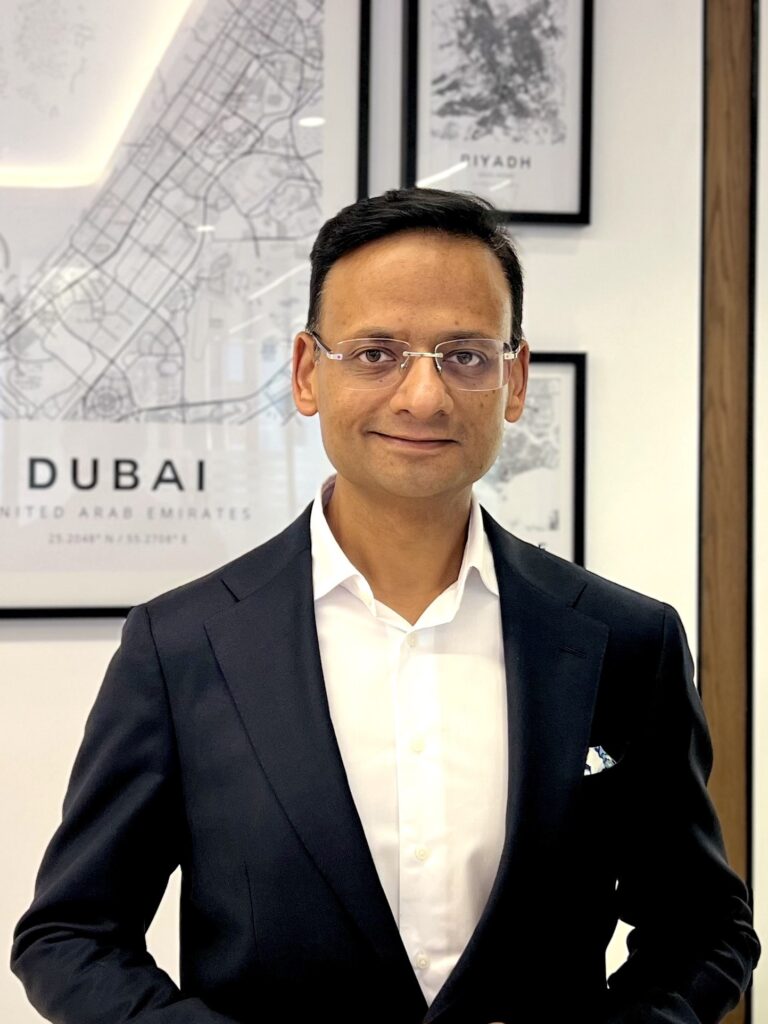
By Nimish Goel, Partner and Head of GCC, Dhruva Consultants
The UAE has never been a jurisdiction that shies away from bold reforms. From introducing VAT in 2018 to rolling out corporate tax in 2023, the country has consistently demonstrated its willingness to align with global best practices in fiscal governance. Now, with the Federal Tax Authority (FTA) and Ministry of Finance (MoF) preparing to enforce a nationwide eInvoicing regime by July 2026, the stakes are even higher.
This is not simply another compliance box to tick. eInvoicing represents a fundamental shift in the way financial data is created, exchanged, and monitored. Once live, every invoice, credit note, representing economic activity—whether for VAT-registered businesses, exempt transactions, out of scope transactions or even historically less scrutinized activities such as financial services, real estate, and designated zones—will be generated in a structured XML format, routed through accredited service providers, and validated in real time.
For finance leaders, the message is clear. The era of static PDFs and delayed reporting is over.
From paper trails to real time oversight
Globally, eInvoicing has proven to be a formidable tool in curbing tax evasion, automating new online services for taxpayers, plugging revenue leakages, and enhancing transparency. Jurisdictions that have adopted similar systems—such as Italy, India, and Latin America—have reported billions saved in fraud prevention and efficiency gains. The UAE has learned from these experiences and is designing a model that not only covers B2B and B2G transactions but also expands its reach to entities outside traditional VAT registration. There is an expectation that eInvoicing will eventually be extended to B2C transactions in the long term.
The result is to achieve full visibility of a Company’s entire transactions. This creates a real time compliance environment where mistakes will no longer hide in quarterly filings—they will surface instantly.
This shift raises the bar dramatically for CFOs and tax teams. Any misclassification in VAT treatment, error in data capture, or system lag could invite audits, penalties, and reputational damage.
Why waiting until 2026 is a risky bet
Too many businesses still view July 2026 as a distant milestone. In reality, groundwork needs to begin now. Data readiness, ERP integration, internal processes and control reviews, and stakeholder alignment are not overnight tasks. They require months—if not years—of preparation. Additionally, the preparation for eInvoicing is time-consuming, especially for Companies in the UAE, as they are currently upgrading their ERP systems or discovering that their current systems lack integration capability.
Companies must immediately begin by assessing whether their existing systems are capable of generating structured XML invoices or if the mandatory data fields are available in their source systems to meet regulatory requirements. Simultaneously, finance teams should engage closely with service providers to ensure seamless integration across platforms. A thorough review of tax treatment is equally important to identify and close any gaps that could cause errors in reporting. Finally, validating digital signatures and aligning with the Federal Tax Authority’s compliance standards will be critical to building a robust and audit-ready framework.
The transition is not merely technical; it is strategic digital transformation that will impact every single point of the organization. Finance functions that embrace early adoption will find themselves with cleaner data, faster refund cycles, and potentially automated VAT filings in the long run. Those who wait will find themselves firefighting compliance failures under intense regulatory scrutiny.
Beyond compliance lies an opportunity to rethink finance
What excites me most about the mandate is not its punitive edge but its transformative potential. Done right, eInvoicing can be the foundation for a smarter, more data-driven finance function. Real-time reporting could allow CFOs to track receivables with unprecedented accuracy, benchmark customer payment behavior, and build predictive insights into cash flow management.
In short, the regulatory push can double as a business opportunity if approached proactively.
The road ahead for UAE businesses
The UAE’s eInvoicing journey is only beginning. The legislative updates expected in 2025 will provide further clarity, but businesses cannot afford to be passive. Those who treat this as a last-minute compliance sprint will struggle. Those who see it as a chance to modernize their finance function will thrive.
At Dhruva, we believe the next 10-11 months are critical. Our role is not just to interpret regulations but to help businesses reimagine compliance as a value-creating exercise. The clock is ticking, and July 2026 is closer than it seems.
The question for every business leader is simple. Will you be prepared when the switch is flipped to real time?












MidChains FZE, a digital asset platform licensed by the Virtual Assets Regulatory Authority (VARA) to provide broker-dealer services to retail, institutional and qualified investors, today announced a strategic banking partnership with Standard Chartered.
Under the partnership, Standard Chartered will support MidChains with a range of banking services, including fiat settlement capabilities, segregated client money accounts, and correspondent banking. These services will power MidChains’ day-to-day operations and enable efficient settlement.

Rola Abu Manneh, Chief Executive Officer, UAE, Middle East and Pakistan, Standard Chartered, said: “The UAE has established itself as one of the world’s leading regulatory environments for digital assets and a global centre for financial activity. That creates a strong setting for regulated digital asset firms and established financial institutions to work together. Our partnership with MidChains puts that opportunity into practice, with Standard Chartered providing the banking services that support its institutional activity, including fiat settlement, segregated client money accounts and correspondent banking.”
Basil Al Askari, Chief Executive Officer, MidChains, added: “Institutional capital moves continuously between traditional and digital markets, and the infrastructure supporting that activity must keep pace. For institutional investors, digital asset services need to connect with the banking system that supports their wider activity. Our partnership with Standard Chartered brings that connection to MidChains’ institutional services, supporting clients as capital moves between traditional and digital markets.”
By bringing a VARA-licensed digital asset platform together with an established international bank, the partnership connects institutional digital asset activity with the banking infrastructure behind fiat settlement. It is a practical example of how the UAE’s regulated financial ecosystem can link innovation with established banking capabilities to support international business.
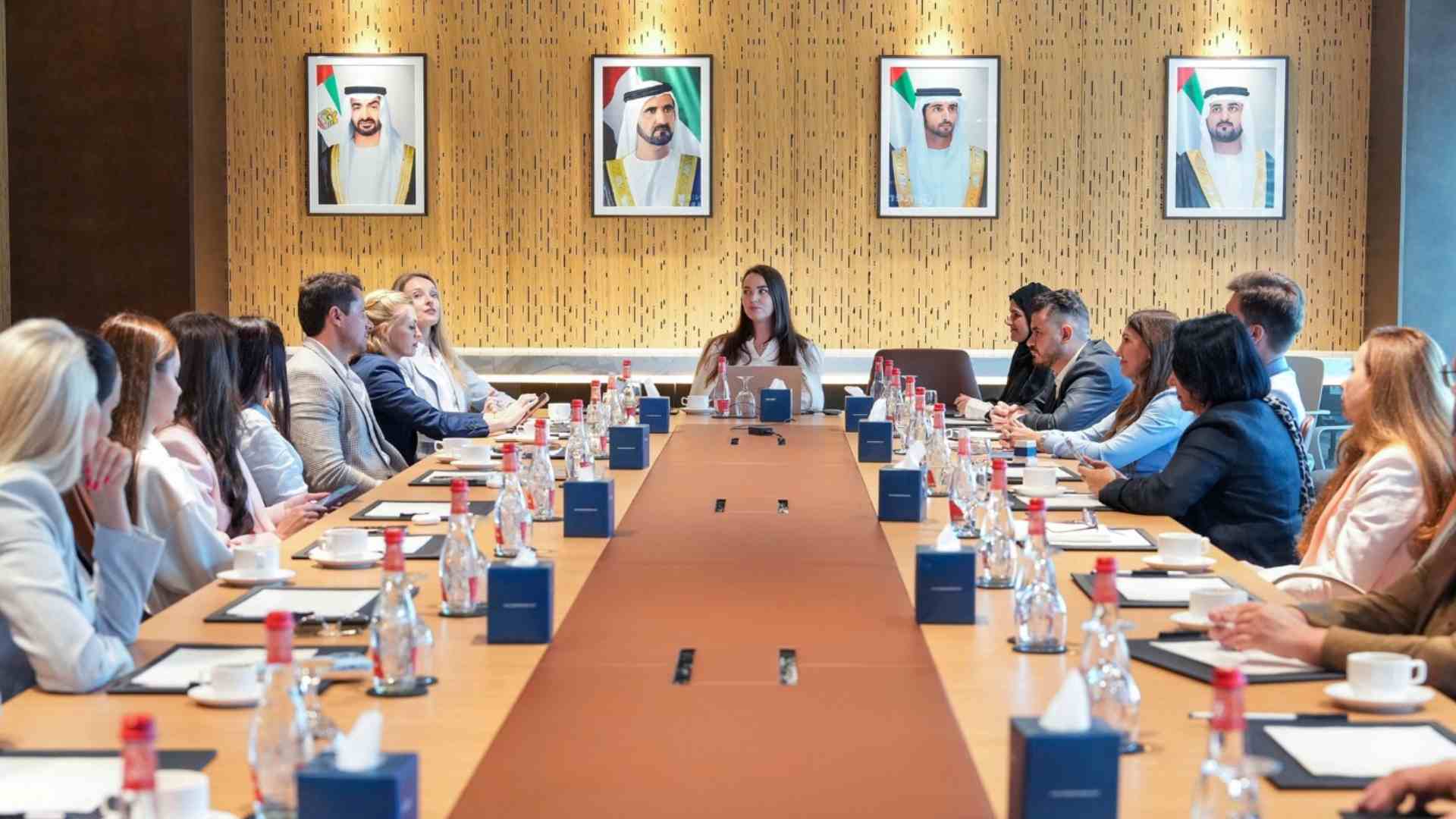
The Ukrainian Business Council in the UAE (UBC) elected a new Board at its General Assembly at Dubai Chamber, where members also approved a 2026–2028 strategy to strengthen trade and investment between the two countries.
Over the next three years, the Council plans to extend its trade delegation programme to new markets, deepen ties with international business councils and launch structured investment dialogues to connect UAE investors with opportunities in Ukraine. The UAE–Ukraine Comprehensive Economic Partnership Agreement (CEPA), Ukraine’s first agreement of its kind with a Gulf state, came into force in July 2026 and removes or reduces customs duties on most goods traded between the two countries.
“Ukrainian companies are achieving real results in the UAE, and we see significant untapped potential for Emirati business and investment in Ukraine. Our role is to build on this momentum: to connect the right partners, support companies at every stage of their growth and help investment flow with confidence in both directions.” commented Olena Shyrokova, President, Ukrainian Business Council in the UAE.
In 2025 and 2026, UBC led business delegations to Vienna, Qatar, Ras Al Khaimah, Fujairah, Oman and the Seychelles. It also ran webinars on UAE market entry for Ukrainian companies and business associations and supported the Ukrainian IT delegation at GITEX. Since its founding in 2016, the Council has established a dialogue with the Federation of UAE Chambers and chambers of commerce across the Emirates.
Under the new strategy, UBC will work with international business councils to give Ukrainian companies access to wider business networks in the Emirates and use the UAE as a base for trade missions to the Gulf, Asia and Africa. The Council will help Ukrainian companies in the UAE with registration, investment and expansion. It also plans to help Ukrainian investors find opportunities in the Emirates, attract Emirati investment to support Ukraine’s recovery and develop arbitration and investor protection mechanisms to build confidence in cross-border agreements.
The Council sees the strongest potential in sectors where Ukrainian strengths meet Emirati priorities: agri-food and food security, IT and digital services, renewable energy, logistics and port infrastructure, and post-war reconstruction. These are also the areas both governments have highlighted for future cooperation.
UBC works closely with the Embassy of Ukraine in the UAE and with H.E. Dr Oleksandr Balanutsa, Ambassador Extraordinary and Plenipotentiary of Ukraine to the UAE. The Council took part in the Cities Unite: Cultural and Business Exchange between the UAE and Ukraine dialogue at Expo City Dubai, initiated by H.E. Reem bint Ebrahim Al Hashimy, UAE Minister of State for International Cooperation, and the Embassy of Ukraine.
The Council will continue to support Ukrainian businesses and the wider community, helping companies expand into the UAE and encouraging UAE investment in Ukraine. Businesses, investors and potential partners interested in working with the Council can get in touch by reaching out to info@ukrainianbc.org.

The UAE has built one of the world’s most successful models for attracting foreign direct investment (FDI) and is now positioned to convert that capital into lasting innovation and skill development, according to a white paper from White Paper Media Consulting (WPM), a UAE-based strategic research house that is shaping business and policy conversations in the region using credible datasets and analytical tools.
Beyond the Numbers: The Transformative Intangible Impact of FDI argues that the real returns on FDI now lie in the intangible value it embeds within host economies, with the UAE a defining case study. The paper contends that the next phase will go beyond investment volumes, number of projects, and job creation and be measured also in patents generated, skills transferred, data ecosystems built, and clean technologies commercialized, among other things.
Official data shows that the UAE attracted more than $48.3 billion in FDI inflows in 2025, capturing 3.1% of global flows. Greenfield FDI reflected both volume and capital depth, with 1,562 projects announced for a combined $34.1 billion in capex, or 1.8% of the global total.
The country’s ability to attract investment reflects its competitiveness as a hub for operational efficiency, supply chain integration, and regional headquarters functions. The UAE has deliberately repositioned its FDI strategy toward knowledge-intensive and future-oriented sectors, recognizing that long-term competitiveness is increasingly driven by innovation, digital capabilities, and human capital. This approach aligns closely with the OECD FDI Qualities framework, with tangible examples across each dimension: including the innovation and competitiveness, digitalization and technology adoption, sustainability and clean energy investments for climate targets, and human capital and local expertise.
Drawing on the OECD framework and benchmarks from Ireland, Singapore, Israel, Costa Rica, and Malaysia, the report documents how leading economies have shifted focus from the volume of capital they attract to the long-term value it creates. In the context of UAE, this is visible in the shift in the country’s policies across phases that begin with the Foundation Phase from 1985 to 2005 of Market Liberalization and Infrastructure Creation, culminating in the current positioning as Global Capital and Technology Hub.
The shift to value in the UAE has made a huge difference to the job-creation intensity of FDI. Approximately 2,816 jobs were created in the UAE for every billion dollars received in greenfield FDI in the five years from 2019 to 2023, compared to 2,265 in the previous five years. This is higher than the OECD average of 2,318 and 1,880 respectively.
The paper identifies seven ongoing policy shifts that deepen the qualitative impact of FDI in the UAE, including extending spillovers from free zones into the mainland economy, prioritizing R&D-intensive investment, embedding skills transfer requirements in major projects, and positioning the country as a global leader in IP creation and data governance.
Yazad Darasha, co-founder and director, WPM, said: “As trusted partners of public and private sector clients, we have tracked the UAE’s investment story for years, and the pattern is unmistakable. The country has positioned itself at the front of the race for capital. What we set out to map in this paper is the harder, more valuable contest: converting investment into skills, technology, and economic velocity. It reflects what we do at White Paper Media, turning complex evidence into decisions leaders can act on.”
Dr. Joachim Arnold, CEO of OCO Global, which advises governments and businesses on attracting FDI, building competitiveness, and strengthening economic resilience, and contributed to the study, said: “The UAE’s infrastructure, free zones, and business-friendly environment helped attract companies and drive growth. The National Investment Strategy 2031 signals a more deliberate focus on investment that raises productivity and embeds benefits into the wider economy. The question is no longer only how to attract capital, but how investment creates lasting value, strengthens existing companies, and helps domestic businesses upgrade their capabilities.”
The paper highlights live examples of this transition already underway, among them the Space42 and ICEYE joint venture building satellites on UAE soil, Microsoft’s $15.2 billion investment plan with a commitment to skill one million people, and the UAE’s $30 billion pledge to the Alterra climate fund.

PEAQ Brings a New Era of Social Wellness to Dubai

2026 in Review: Is AI Becoming More of a Management Problem Than a Technology Problem?

MidChains and Standard Chartered establish strategic banking partnership

OPPO A6 Pro 5G Review: Reliable Daily Driver

Denodo Bolsters Executive Team by Hiring Christophe Culine as its Chief Revenue Officer

Microsoft Launches New Surface Copilot+ PCs for Business
2026 in Review: Is AI Becoming More of a Management Problem Than a Technology Problem?

Inside XPENG Brand Night: AI Mobility Lands Centre Stage in Dubai

Chinese Cars Are Reshaping the GCC Market, but Resale Value Could Be the Next Battleground

-
 Trending1 year ago
OPPO A6 Pro 5G Review: Reliable Daily Driver
-
 Tech News2 years ago
Denodo Bolsters Executive Team by Hiring Christophe Culine as its Chief Revenue Officer
-
VAR2 years ago
Microsoft Launches New Surface Copilot+ PCs for Business
-

 Automotive2 years ago
AGMC Launches the RIDDARA RD6 High Performance Fully Electric 4×4 Pickup
-

 VAR11 months ago
Huawei Nova 14 Pro Review: Where Camera Excellence Meets Ecosystem Evolution
-
Tech Interviews3 years ago
Navigating the Cybersecurity Landscape in Hybrid Work Environments
-

 Hospitality2 years ago
Gulfood 2025 30th Edition Kicks Off Today, Setting New Benchmarks in F&B Growth and Innovation
-

 Tech News1 year ago
Nothing Launches flagship Nothing Phone (3) and Headphone (1) in theme with the Iconic Museum of the Future in Dubai