
 Have a question? +971 56 404 0503




Home Integrator
SUNTECK REALTY BRINGS ITS DISRUPTIVE LUXURY PHILOSOPHY TO THE UAE WITH THE LAUNCH OF SUNTECK INTERNATIONAL; UNVEILS DOWNTOWN DUBAI’S MOST AWAITED PLOT IN A FIRST-OF-ITS-KIND REVEAL

Sunteck Realty Ltd., one of India’s most distinguished and disruptive luxury real estate developers, publicly listed (BSE/NSE), today announced its entry into the UAE with the launch of Sunteck International, headquartered in Dubai. Marking a bold shift in how ultra-luxury real estate is introduced in the region, the Group unveiled the prime location for its inaugural Downtown Dubai development, one of the area’s most-awaited land parcels setting the stage for a new era of location-first, design-led luxury in the UAE.
Sunteck International will drive the Group’s global expansion strategy, built on two decades of pioneering design-led innovation, debt-free financial discipline, and a portfolio of over 50 million sq. ft. across Mumbai, one of Asia’s most demanding urban markets. The flagship Downtown Dubai project, estimated at AED 5 billion GDV, will introduce a contemporary design language shaped by craftsmanship, architectural innovation, and an uncompromising interpretation of ultra-luxury living.
At an exclusive reveal with a 1000-drones show, Sunteck International showcased the prime Downtown Dubai site, located just steps from the Burj Khalifa and The Dubai Mall. By choosing to unveil the land-first, unlike the market norm where projects are showcased, Sunteck International intends to let the location speak for itself. This approach reflects the developer’s conviction that extraordinary locations deserve to be experienced in their purest form before design narratives are layered onto them.
In a market where launches typically centre around fully envisioned towers, elaborate masterplans, and rendered skylines, Sunteck International’s plot-first reveal stands apart. It affirms the Group’s absolute confidence in the exclusivity and long-term value of the last available development opportunity in Downtown Dubai. This moment aptly marks a milestone for the Mumbai real estate powerhouse as it begins its international journey in a city recognized globally for shaping the future of luxury living.
“Among the world’s greatest luxury capitals including New York, London, Miami and Singapore, Dubai stood out as the unequivocal choice for our international debut. Few cities have demonstrated such a decisive, sustained rise in luxury real estate. The investor-friendly policies, global connectivity, best-in-class infrastructure, tax-efficient environment and an unmatched concentration of ultra-high-net-worth residents have transformed Dubai into the world’s most future-ready luxury market.” said Mr. Kamal Khetan, Chairman & Managing Director, Sunteck Realty Ltd.
UAE continues to lead the global list of Millionaire Migration, with a net flow of over 9800 millionaires moving to the country in 2025, according to Henley & Partners. Sunteck’s entry coincides with this momentum, serving a discerning clientele, who are increasingly seeking homes defined by timelessness, privacy, and design-led innovation.
He further added, “As an ultra-luxury, future-first developer, Dubai offers what no other city does: the perfect intersection of architectural ambition, economic stability, and a globally sophisticated consumer. It wasn’t simply an attractive market, but the only market that matched our aspirations. Our location is one of the most-sought after addresses in the world and we are here to break the ceiling of what ultra-luxury can mean, creating spaces that transcend what exists today”.
To bring this vision to life, Sunteck International has joined hands with MAS Development as its strategic development partner. In addition, Sunteck International has partnered with globally renowned firms such as HBA London for interior direction and JT+Partners for architectural strategy and design. The project will also feature branded residences in collaboration with leading global hospitality brands, with further details to be announced in the coming weeks.
In alignment with UAE Vision 2031 and the Dubai 2040 Urban Plan, both of which underscore the region’s commitment to future-forward infrastructure, Sunteck International announced planned developments of over AED 15 billion worth of projects in the country within the next three years, reinforcing its long-term commitment to the UAE. Several multi-billion-dirham projects are currently under evaluation, with key announcements expected in H1 2026.
Sunteck Realty Ltd. is recognised as one of India’s most financially robust and quality-driven developers, backed by triple ISO certifications and a disciplined financial framework, including a Net Debt-to-Equity ratio of 0.04x and a AA long-term credit rating. Sunteck International will bring this same unwavering commitment to transparency, quality, and design excellence to the UAE market.
Home Integrator
SOBHA REALTY’S CREST GRANDE RECEIVES BUILDING COMPLETION CERTIFICATE; HANDOVER TO COMMENCE WITHIN RERA TIMELINE

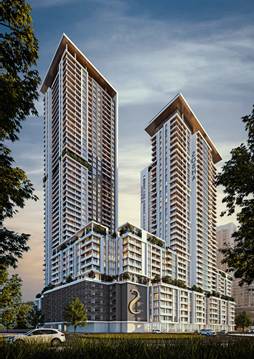
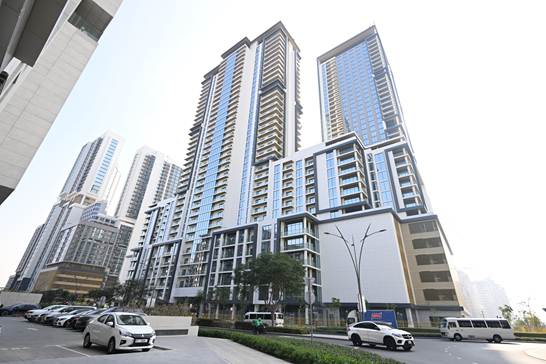
Sobha Realty, a leading global luxury real estate developer, has announced that Sobha Crest Grande has received its Building Completion Certificate (BCC), with customer handovers scheduled to commence shortly.
Located in the waterfront district of Sobha Hartland, Crest Grande, comprising 985 units, offers proximity to key Dubai landmarks, including the Burj Khalifa, Downtown Dubai, and Dubai International Airport. The development features waterfront views, fully fitted kitchens, covered car parking, and amenities including an indoor and outdoor gymnasium, sauna room, adult and kids’ swimming pool, kids’ playing area, barbecue zone, as well as retail and restaurant offerings.
Importantly, the project is scheduled for delivery with the timeline committed on RERA, underlining Sobha Realty’s continued focus on execution discipline and delivery certainty, a hallmark of the brand’s Backward Integration model.
Francis Alfred, Managing Director, Sobha Realty, said; “At a time when people value certainty and reassurance more than ever, milestones like the Building Completion Certificate carry even greater meaning. Dubai continues to demonstrate the resilience, confidence, and long-term vision that makes it one of the world’s most trusted places to live and invest. For us, the receipt of the Building Completion Certificate for Sobha Crest Grande is not just a development milestone; it is a reflection of the trust families place in us when they invest their savings, aspirations, and vision of a dream home in the UAE. Achieving and being able to deliver within the timeline committed on RERA reaffirms our commitment to honour that trust through disciplined execution, timely delivery, and the consistent quality we promise every customer.”
Sobha Crest Grande has been designed to offer elevated waterfront living within one of Dubai’s most sought-after residential destinations. Its location within Sobha Hartland places residents within minutes of central Dubai, while offering a more serene lifestyle setting shaped by open views, green surroundings, and curated amenities.
The receipt of the BCC and the commencement of delivery shortly further strengthen Sobha Realty’s track record of translating vision into reality through disciplined planning, in-house capabilities, and a long-term commitment to customer confidence.
For homeowners, this milestone signals the transition from anticipation to ownership, as Crest Grande moves into its final stage before residents begin experiencing the development as a completed address.
Home Integrator
ICONIC RESIDENCES REACHES KEY CONSTRUCTION MILESTONES, MERED HIGHLIGHTS MARKET CONFIDENCE
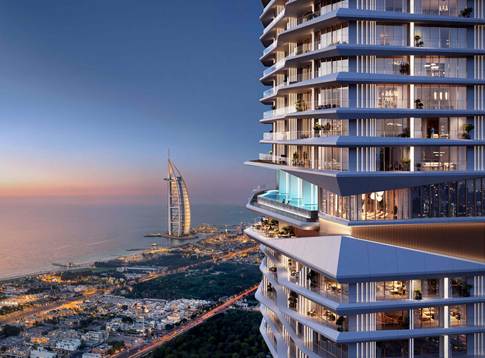
MERED, the award-winning real estate developer, has reported significant progress on ICONIC Residences Design by Pininfarina, one of Dubai’s most ambitious premium projects. Construction is advancing steadily across multiple phases, with fully mobilised teams achieving key milestones in structural works, MEP systems, interior fit-outs, and material coordination. The update underscores the resilience of Dubai’s off-plan property market, supported by government measures that safeguard the industry and ensure large-scale developments remain on schedule.
ICONIC Residences is a G+66 floor ultra-luxury residential tower set to become an architectural landmark in Dubai. Designed by the legendary Italian firm Pininfarina, the tower draws inspiration from the city’s sand dunes and flowing ocean waves. The development will house 310 premium apartments and a signature two-level penthouse, offering residents world-class amenities, including infinity pools, wellness and spa facilities, padel court, lounges, family areas, luxury retail spaces, and air-conditioned parking spaces. Its strategic location provides breathtaking views of Dubai’s landmarks and direct access to Palm Jumeirah, Dubai Harbour, Downtown, Bluewaters Island, Emirates Golf Club, and Sheikh Zayed Road.
As of March 2026, the tower has reached approximately 125 metres, with work advancing steadily on Level 22. On the first technical floor, MEP systems are being installed, forming the backbone of the building’s technical infrastructure. Across the residential component, apartment works are progressing in parallel, with teams of engineers, technicians, and skilled tradespeople actively coordinating each phase on site. Deliveries of finishing materials for all units have been scheduled to ensure a smooth transition to the next stages of fit-out. Mered’s in-house quality control department monitors excellence at every stage of the work.
“Every milestone at ICONIC Residences reflects the resilience of the UAE property market,” comments Michael Belton, CEO of MERED. “We will continue to drive the project steadily, upholding the highest standards of quality. We are grateful for the UAE government’s proactive approach in supporting a stable and resilient market, which enables developments like ICONIC Residences to progress with confidence. This tower will stand as a symbol of innovative design, architectural excellence, and the enduring strength of Dubai’s real estate sector.”
The development’s impressive construction progress is supported by the broader stability of the UAE real estate market. Recent steps by the Central Bank of the UAE, designed to strengthen liquidity and safeguard the banking sector, help maintain a stable environment for lending and economic activity. This stability enables banks to continue providing financing to buyers, investors, and developers, contributing to smoother cash flow in the property industry.
ICONIC Residences is backed by a team of world-class experts, including Pininfarina, Hirsch Bedner Associates (HBA), SERA Group, Currie & Brown, Bond Interiors, and more, ensuring meticulous coordination across every aspect of the development. Combined with MERED’s expertise and the stability of the UAE property market, ICONIC Residences is well-positioned to achieve its delivery and performance goals by Q3 2027.
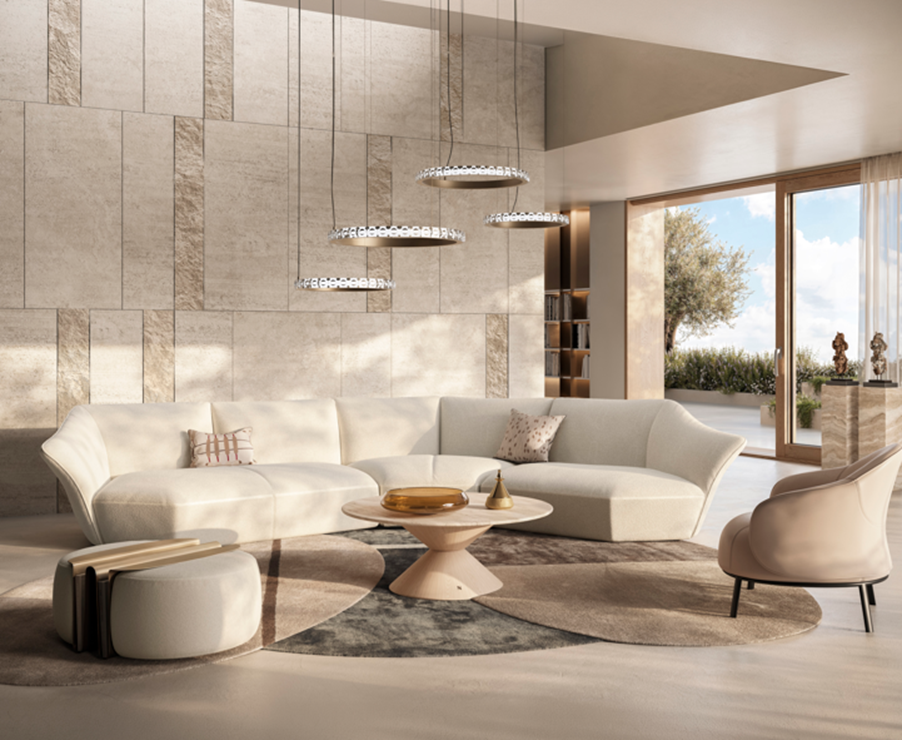
Natuzzi Italia, the global ambassador of Italian lifestyle, invites the world to see the home in a new light. In a masterclass of craftsmanship and atmospheric design, the brand unveils its latest lighting ensemble—a collection where functional illumination evolves into pure, radiant sculpture.
These pieces represent more than just a new product line; they are a dialogue between the heritage of Italian artisanal mastery and the avant-garde of modern luxury.
The Collection: Sculptures of Luminosity
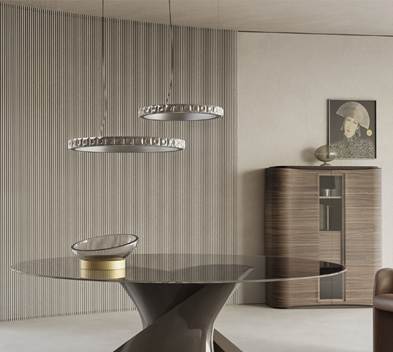
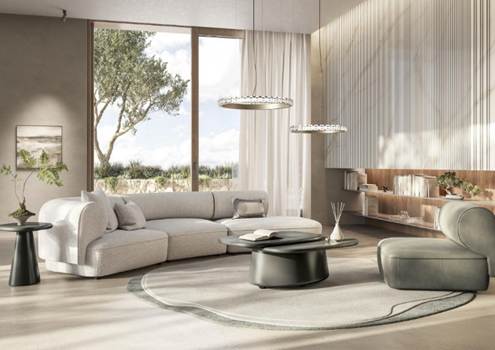
Aura Suspension:
Architectural Harmony Aura embraces space with ethereal grace, spreading a soft, diffused glow that envelopes a room in a harmonious atmosphere. Its refined, essential shapes interact seamlessly with architecture, creating a perfect equilibrium between raw matter and weightless light. Available in various compositions, Aura enriches grand spaces with a timeless allure, transforming surroundings into pure emotion.
Elsa Table Lamp:
A Timeless Embrace Elegance and purity find their form in Elsa. This masterpiece features a charm carved from artisan glass, playing against the natural, sophisticated veins of Calacatta marble. Topped with a decorative accessory in brushed light gold, Elsa is not merely a lamp, but a precious jewel for the contemporary interior.
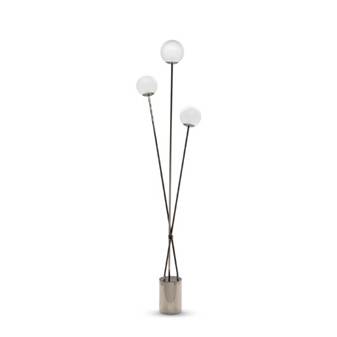
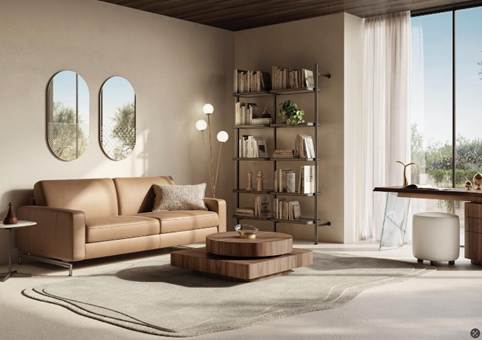
Tea Floor Lamp:
Floral Grandeur: Standing with the poise of a curated bouquet, the Tea lamp features three slender stems rising in a rhythmic interplay of heights. Each stem culminates in a satinated blown-glass sphere, casting a soft, encompassing glow that mimics the gentle transition of dusk.
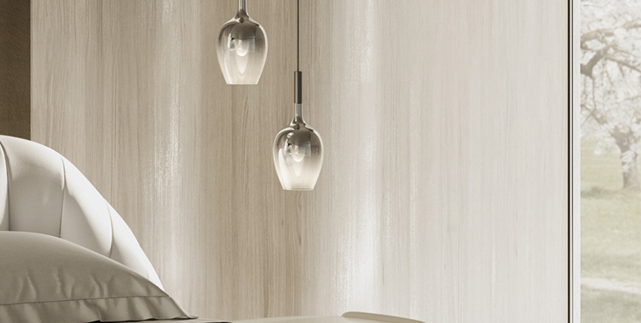
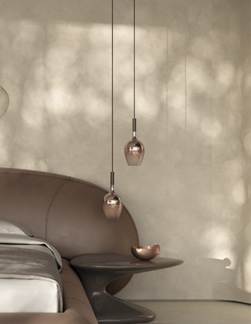
Rosé:
The Icon of Grace Inspired by the delicate silhouette of an inverted chalice, Rosé pays homage to the warm, shimmering hues of a desert sunset. With its refined finish and iconic silhouette, it transforms light into a radiant expression of Mediterranean beauty.
Solene:
The Luminous Secret of Solene is where tradition meets innovation. Featuring a hand-carved crystal heart nestled within blown glass, it filters light to create a sanctuary of intimacy. It is a quiet masterpiece, a secret whispered in the language of light.
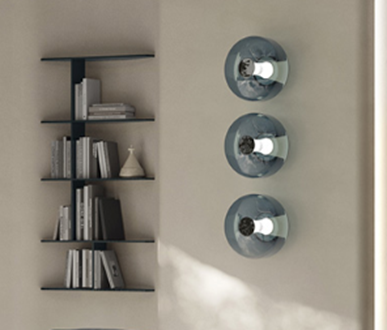
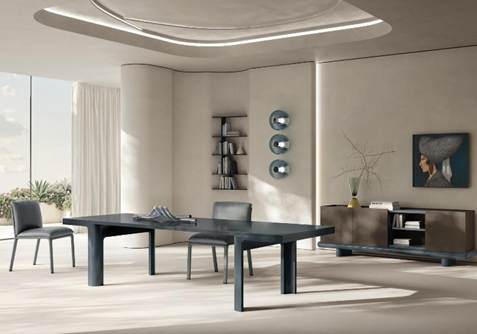
Nola:
Ethereal Weightlessness Suspended with the quiet dignity of a bell, Nola brings a brilliant yet delicate presence to any room. Its minimalist form serves as a statement of lightness, proving that true refinement often speaks in a whisper.
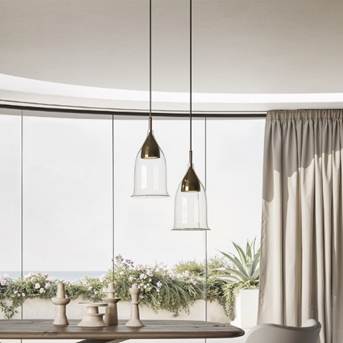
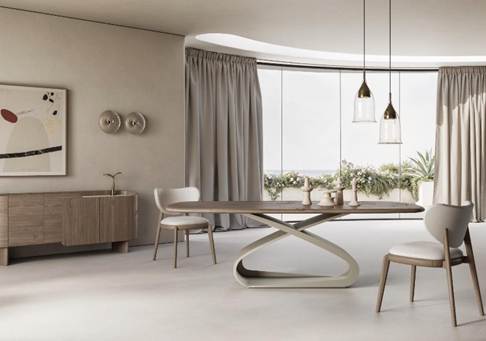
Bossanova:
The Rhythm of Reflection Dynamic and fluid, Bossanova appears to dance within the air. Its vibrant transparency and undulating lines create a play of reflections that evoke joy and movement, capturing the timeless spirit of Italian celebration.
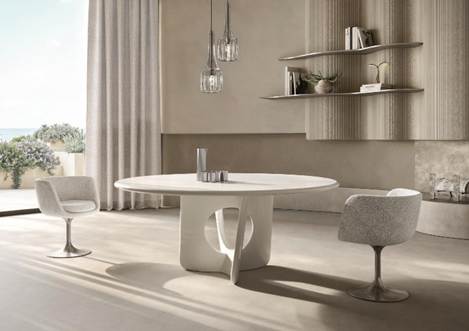
Experience the Glow
Discover the collection at Natuzzi Italia showrooms across the UAE, where the poetry of light meets the art of living.
Natuzzi store are located near you in Dubai and Abu Dhabi, visit the website.
• Natuzzi, Sheikh Zayed Road between 2nd and 3rd interchange, Dubai
• Natuzzi, near Al Maktoum Bridge, Umm Hurair Road, Dubai
• Natuzzi, The Galleria, Abu Dhabi

MAXION REPORTS 399% USER GROWTH AMID RISING DEMAND FOR REAL-WORLD CONNECTION PLATFORMS
SOBHA REALTY’S CREST GRANDE RECEIVES BUILDING COMPLETION CERTIFICATE; HANDOVER TO COMMENCE WITHIN RERA TIMELINE
ICONIC RESIDENCES REACHES KEY CONSTRUCTION MILESTONES, MERED HIGHLIGHTS MARKET CONFIDENCE



-
News10 years ago
SENDQUICK (TALARIAX) INTRODUCES SQOOPE – THE BREAKTHROUGH IN MOBILE MESSAGING
-

 Tech News2 years ago
Denodo Bolsters Executive Team by Hiring Christophe Culine as its Chief Revenue Officer
-
 VAR11 months ago
Microsoft Launches New Surface Copilot+ PCs for Business
-

 Tech Interviews2 years ago
Navigating the Cybersecurity Landscape in Hybrid Work Environments
-

 Tech News8 months ago
Nothing Launches flagship Nothing Phone (3) and Headphone (1) in theme with the Iconic Museum of the Future in Dubai
-

 Trending5 months ago
OPPO A6 Pro 5G Review: Reliable Daily Driver
-

 Automotive1 year ago
AGMC Launches the RIDDARA RD6 High Performance Fully Electric 4×4 Pickup
-

 VAR2 years ago
Samsung Galaxy Z Fold6 vs Google Pixel 9 Pro Fold: Clash Of The Folding Phenoms