
 Have a question? +971 56 404 0503




Tech News
Loylogic Shares 2026 Vision to Advance the Global Rewards Marketplace


Advanced AI innovation, intelligent marketplace design, and trusted global infrastructure position Loylogic for continued leadership in rewards and loyalty commerce.

As the Middle East loyalty market is projected to reach $3.27 billion in 2025, expanding 16.3% year-on-year, and digital-first, personalized, and coalition-based models reshape the industry, brands face rising expectations around relevance and engagement. Against this evolving landscape, Loylogic, a leader in global loyalty rewards management, today shared its 2026 strategic outlook, outlining how the company is evolving its global rewards marketplace to support brands navigating rapidly changing loyalty expectations.
The company enters the year with a renewed focus on continued investment in AI-powered rewards marketplace intelligence, enhanced catalogue curation, and deeper integration capabilities designed to improve reward relevance, partner value, and member experience across industries and geographies. Rather than simply expanding choice, Loylogic’s approach centres on intelligent rewards marketplace design, aligning consumer relevance, operational efficiency, and long-term value creation within a single global platform.
To support enterprise scale deployment, Loylogic continues to operate under a robust compliance and security, compliance and governance framework. The company adheres to internationally recognised standards ISO 27001, GDPR, PCI DSS, and AES-256 encryption, ensuring secure and trusted data handling across every layer of its technology while maintaining alignment with the European Accessibility Act 2025 and WCAG 2.0. All platforms remain adaptable to regional data residency and regulatory requirements.
“As loyalty programs mature, brands are looking beyond scale alone,” said Gabi Kool, CEO of Loylogic. “They want reward ecosystems that are smarter, more relevant, and commercially sound. Our focus for 2026 is about advancing how global rewards marketplaces are designed, governed, and experienced, combining intelligence, trust, and flexibility.”
Advanced AI innovation is central to Loylogic’s next phase of growth. Loylogic continues to enhance its use of advanced analytics and machine learning to support smarter reward discovery, improved marketplace performance, and deeper insights for loyalty operators, while maintaining strict standards for privacy, security, and compliance.
“Our innovation efforts are focused on making rewards marketplaces more intelligent and adaptive,” said Amit Bendre, COO of Loylogic. “This means better insight, better decision support, and better experiences, without compromising on trust, transparency, or regulatory rigor.”
Looking ahead to 2026, Loylogic plans to deepen collaboration with global partners, engage more actively with industry stakeholders, and selectively strengthen capabilities across commercial, product, and technology functions, supporting a growing pipeline of enterprise clients across financial services, travel, and consumer sectors. With a proven global infrastructure, deep marketplace expertise, and a clear strategic direction, Loylogic continues to help leading brands transform everyday engagement into meaningful, long-term loyalty.
About Loylogic
Loylogic is a leader in global rewards marketplaces for loyalty and incentives management, enabling brands to deliver scalable, flexible engagement experiences through a modern commerce platform. Its global catalog and redemption marketplace support meaningful engagement across B2C, B2E, and B2B programs worldwide. With deep expertise in sourcing, fulfilment, and patented points-plus-cash innovation, Loylogic has enabled over 200 billion points and miles transactions, delivered more than $1 billion in commerce, and shipped experiences spanning 100+ categories across 190 countries to more than 10 million loyalty members worldwide.



Delinea, the identity security platform that governs what humans, machines and AI agents do once they have access, today announced its participation at GISEC Global 2026. Under the theme, “From Access to Action: Governing AI at Runtime,” the company will spotlight the growing need for organisations to govern the actions autonomous AI agents take after access has been granted.
Following its release of new runtime authorisation capabilities for AI agents this summer, Delinea will use GISEC to advance the conversation around runtime authorisation, an approach designed to enforce policy on an agent’s actions within a session, at the time those actions are executed.
As AI agents take on increasingly autonomous roles across databases, cloud environments, infrastructure and business systems, the security challenge is shifting beyond authentication. While an agent may have legitimate access to a system, it can still take an action that exceeds its intended task or creates operational risk. Delinea’s runtime authorisation capabilities enable organisations to apply policy at the point of action — allowing, blocking or escalating activity before it executes.
“AI adoption is moving the identity-security conversation beyond the moment of authentication,” said Mortada Ayad, VP Sales at Delinea. “The question for organisations is no longer simply whether an AI agent can access a critical system. It is whether they can govern what that agent does once it is inside. At GISEC, we want to put that challenge, and the need for runtime control, at the centre of the regional conversation.”
Delinea has strategically adopted a channel-led presence at this year’s show, reflecting its focus on bringing these capabilities to market through the regional partners enterprises rely on to deploy, manage and operationalise complex security programmes. Through its presence at the stands of regional distributor, Shifra, and integrator partner, Defa3, the company will deepen engagement with existing partners, recruit new partners and build the specialist capabilities needed to support secure AI adoption across the region.
The approach builds on the Delinea Partner Advantage Program, launched in July 2026. The program provides partners with clearer rules of engagement, deal protection, tiered incentives and AI-driven enablement, helping them build profitable identity-security practices, while delivering stronger outcomes for customers. It is designed to support selling partners today, with expanding roles planned for managed service providers, global systems integrators, advisory partners and technology partners.
“For a capability this consequential, technology alone is not enough,” Ayad added. “Customers need partners who understand their environment, their risk and how to translate security policy into practical control. Our focus at GISEC is to equip and grow that ecosystem, so organisations can move forward with AI, knowing that authorised access does not become unchecked action.”
Delinea’s runtime authorisation for AI agents enables organisations to govern activity across the systems agents use, including databases, SSH hosts, Kubernetes clusters and cloud consoles. Through just-in-time, task-scoped access, and real-time policy enforcement, organisations can reduce reliance on standing credentials, while maintaining a defensible record of AI-driven activity.
Tech News
Tech First Gulf Strengthens its presence in Africa with the appointment of Mustapha Rafiki as General Manager – Maghreb & Francophone Africa
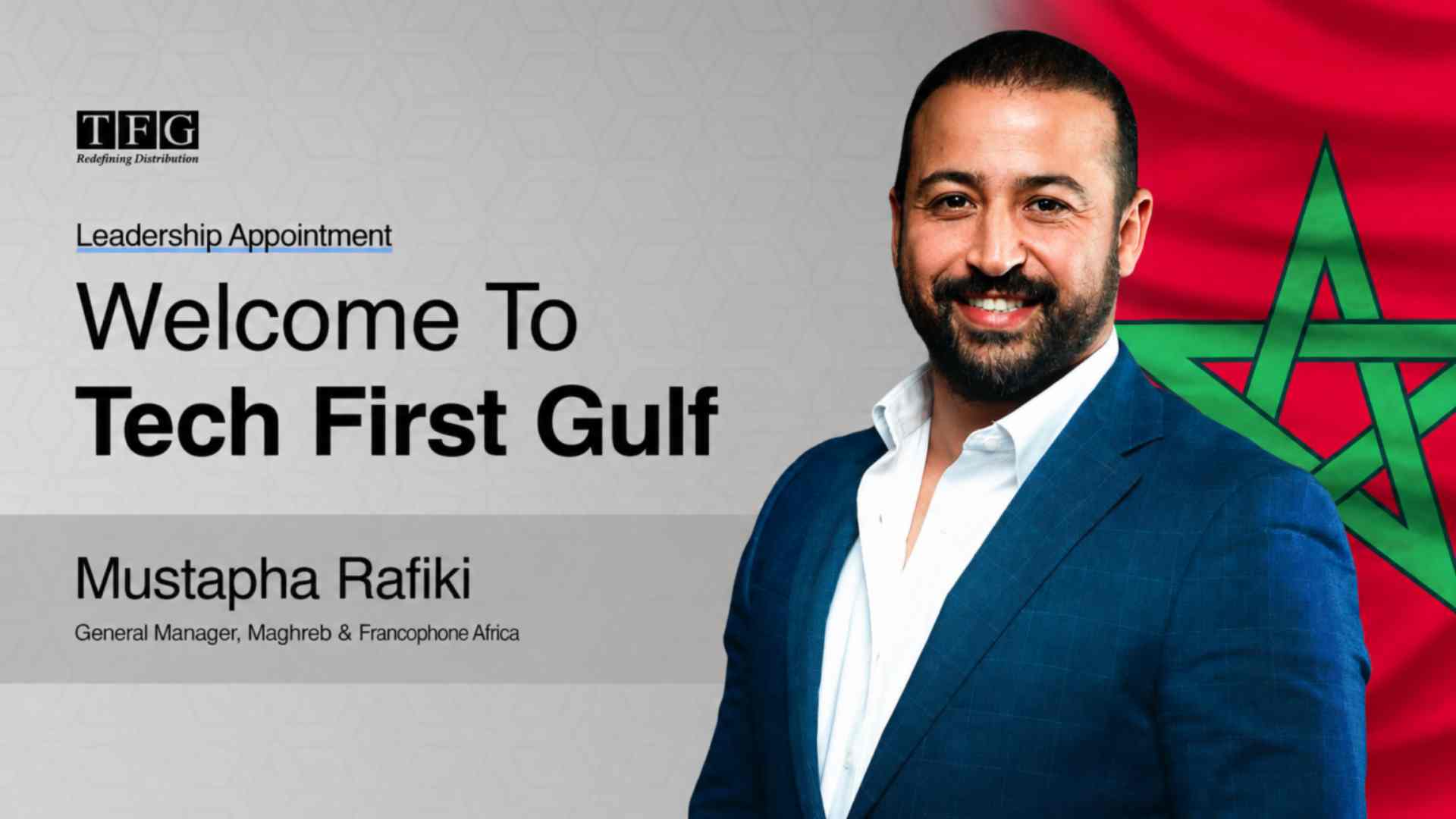
Tech First Gulf (TFG), a leading value-added technology distributor across the Middle East and Africa, is pleased to announce the appointment of Mustapha Rafiki as General Manager – Maghreb & Francophone Africa. This strategic appointment marks another significant milestone in TFG’s continued regional expansion and reinforces the company’s commitment to strengthening its footprint across Africa.
With over 19 years of experience in the information technology industry, Mustapha brings extensive expertise in business development, channel management, sales leadership, and operational excellence. Throughout his career, he has successfully built and managed high-performing partner ecosystems while driving sustainable business growth across North, West, East, and Central Africa.
Before joining Tech First Gulf, Mustapha served as Head of B2B Africa at Logitech, where he led business operations across multiple African markets, developing strategic go-to-market initiatives and strengthening channel partnerships. Prior to Logitech, he held the position of Country Manager at Canon, where he played a pivotal role in expanding the company’s presence, developing strategic alliances, and accelerating growth across key enterprise and commercial segments.
As TFG continues to expand its operations throughout Africa, Mustapha’s appointment reflects the company’s vision of investing in experienced leadership to unlock new opportunities, deepen vendor and partner relationships, and deliver greater value to customers across the markets.
Under his leadership, TFG aims to accelerate regional growth by strengthening its distribution network, expanding strategic technology alliances, enabling channel partners, and introducing innovative solutions that address the evolving needs of enterprises and public sector organizations across the region. His deep understanding of African markets, combined with his proven leadership, will play a vital role in driving TFG’s next phase of growth.
“We are pleased to welcome Mustapha to Tech First Gulf as we continue our expansion across the region. The markets under his leadership offer tremendous opportunities for growth and innovation, and we remain committed to investing in their future through strong leadership and long-term partnerships. Mustapha’s proven track record, strategic vision, and extensive regional expertise make him the ideal leader to accelerate our growth, strengthen our market presence, and deliver lasting value to our partners and customers,” said Mr. Akashdeep (Sky), Chief Strategy Officer, Tech First Gulf
Commenting on his appointment, Mustapha Rafiki said:
“I am excited to join Tech First Gulf at such an important stage of its growth journey. TFG has built a strong reputation for delivering innovative technology solutions and empowering its partner ecosystem. I look forward to working closely with our vendors, partners, and customers to accelerate growth, expand our market presence, and create lasting value across the region.”
As Tech First Gulf continues its regional expansion strategy, the company remains focused on empowering businesses through world-class technology solutions, strengthening strategic partnerships, and building a future-ready digital ecosystem across India, Middle East and Africa.
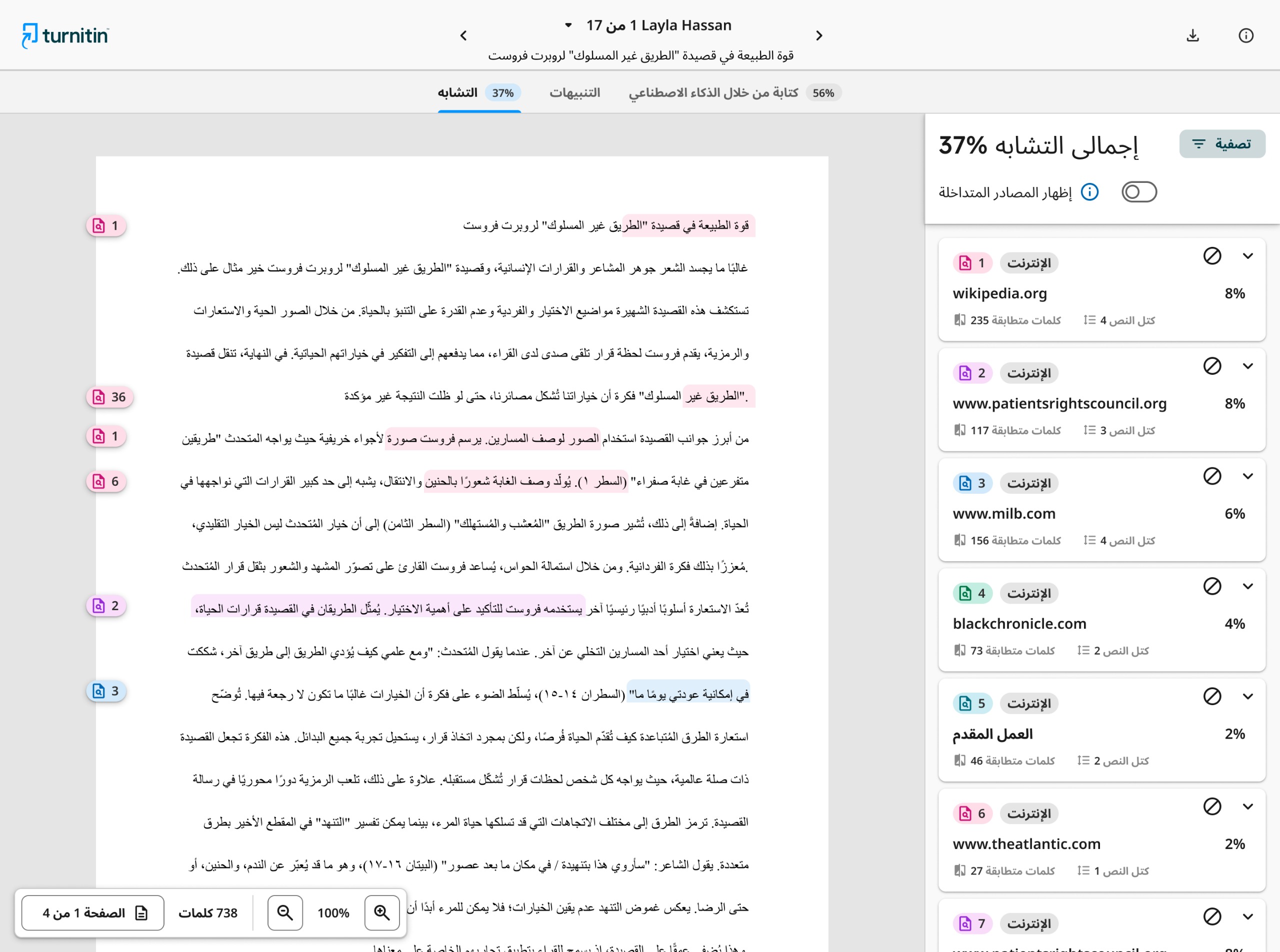
Turnitin recently announced the launch of its AI writing detection capabilities for Arabic language submissions, marking a significant step in supporting educators and students worldwide. This expansion helps equip Arabic-speaking educators with the tools necessary to safeguard academic integrity and nurture original thinking in the classroom.
As AI adoption among students becomes nearly universal, educators require solutions that promote transparency, rather than surveillance. Turnitin goes beyond simply verifying authorship, its tools support the broader learning journey, and help equip students with the critical skills demanded by today’s workforce.
“By providing Arabic-speaking educators with tools that uphold learning integrity, we ensure that they have solutions designed to support original thought and critical thinking, rather than having LLMs replace it,” said James Thorley, Vice President of APAC and EMEA at Turnitin. “While there is no substitute for knowing a student’s writing style, educational background, and institutional AI policies, this tool gives educators insights into areas where AI may have been used. Ultimately, it opens the door to meaningful, informed conversations about the responsible use of AI.”
AI writing detection for Arabic is now available through Turnitin Originality and as an add-on for iThenticate customers. Like the English, Spanish, and Japanese versions, the feature provides educators with an overall percentage of likely AI-generated content, alongside:
Detection capabilities for the leading large language models, reporting designed with educators in mind and seamless integration into existing customer workflows.


HONOR Pad X9b Max Review: When a Tablet Starts Challenging Your Laptop
Home Centre celebrates Emirati Women’s Day with Made By Her, a campaign spotlighting homegrown talent
Delinea Brings Runtime Control for AI Agents to GISEC Global 2026



-
News11 years ago
SENDQUICK (TALARIAX) INTRODUCES SQOOPE – THE BREAKTHROUGH IN MOBILE MESSAGING
-

 Trending10 months ago
OPPO A6 Pro 5G Review: Reliable Daily Driver
-

 Tech News2 years ago
Denodo Bolsters Executive Team by Hiring Christophe Culine as its Chief Revenue Officer
-
 VAR1 year ago
Microsoft Launches New Surface Copilot+ PCs for Business
-

 Automotive2 years ago
AGMC Launches the RIDDARA RD6 High Performance Fully Electric 4×4 Pickup
-
Tech Interviews2 years ago
Navigating the Cybersecurity Landscape in Hybrid Work Environments
-

 Tech News1 year ago
Nothing Launches flagship Nothing Phone (3) and Headphone (1) in theme with the Iconic Museum of the Future in Dubai
-

 VAR2 years ago
Samsung Galaxy Z Fold6 vs Google Pixel 9 Pro Fold: Clash Of The Folding Phenoms