
 Have a question? +971 56 404 0503




Home Feature
LANDLORD PERSPECTIVE: BUILDING CERTAINTY IN THE ERA OF MONTHLY RENT

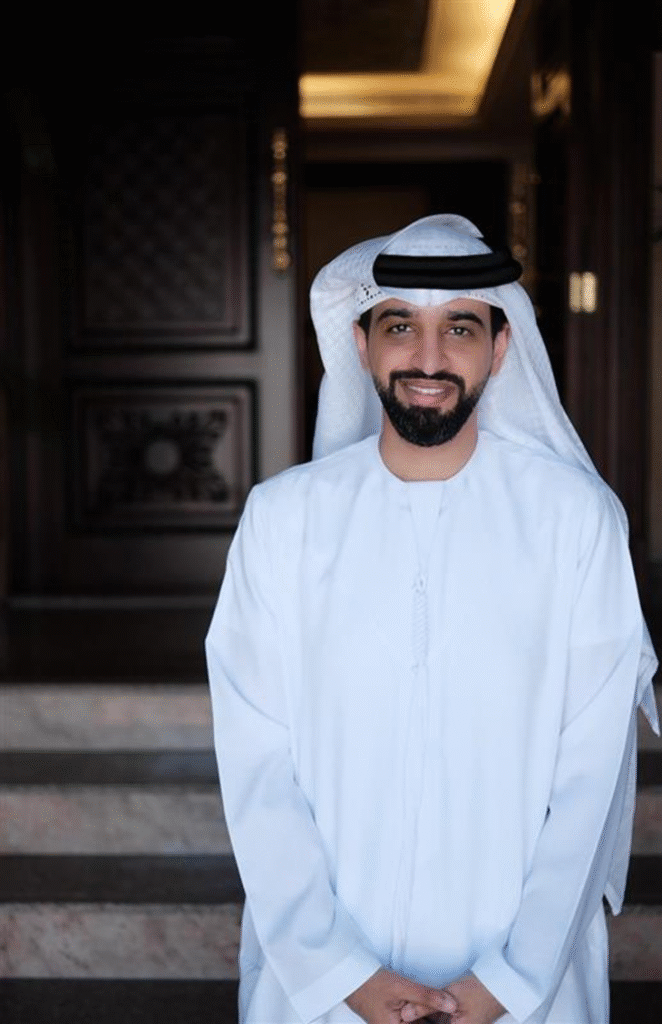
By Rashed Hareb, CEO & Co-Founder, Rentify
UAE’s rental market is undergoing a quiet but profound shift. For decades, landlords operated within a relatively predictable system—annual or post-dated cheques, fixed payment schedules, and a sense of financial certainty that allowed for planning and stability. Today, that system is evolving. Tenants are increasingly seeking flexibility, with monthly payment models becoming not just a preference, but an expectation.
While this shift is undeniably tenant-friendly, it raises an important question for landlords: how do you embrace flexibility without compromising financial certainty? The answer lies not in resisting change, but in rethinking the infrastructure that underpins rent itself.
The Rise of Monthly Rent: Convenience Meets Complexity
Monthly rent is often framed as a simple upgrade—more manageable payments for tenants, improved accessibility, and alignment with modern financial behavior. But from a landlord’s perspective, the implications are far more nuanced.
A shift from annual or quarterly payments to monthly inflows introduces:
- Cash flow fragmentation
- Increased risk of missed or delayed payments
- Higher administrative overhead
- Reduced predictability in income cycles
What was once a straightforward transaction becomes a recurring operational process.
For individual landlords, this can quickly become overwhelming. For institutional landlords or property managers, it scales into a systemic inefficiency. The real challenge, therefore, isn’t monthly rent itself—it’s the lack of infrastructure designed to support it.
Certainty Is the Real Currency
At its core, the landlord’s priority has never changed: certainty.
Certainty of income. Certainty of timing. Certainty of compliance.
Traditional rent systems delivered this through rigid structures—bulk payments, cheque guarantees, and legal enforceability. But these mechanisms are increasingly misaligned with how tenants want to pay.
This creates a tension between flexibility and control. To resolve this, landlords need a system where flexibility for tenants does not translate into volatility for owners. In other words, the experience can evolve—but the outcome must remain predictable.
From Payment Collection to Payment Infrastructure
Historically, rent collection has been treated as a transactional function. But in a monthly rent environment, it must evolve into a fully integrated financial layer.
This means moving from:
- Manual tracking → Automated reconciliation
- Reactive follow-ups → Proactive risk assessment
- Tenant-dependent payments → System-backed assurance
A rent-native infrastructure fundamentally changes the equation. It ensures that while tenants may pay in smaller, more frequent instalments, landlords continue to receive payments with the same consistency as before.
This is where technology—particularly AI—plays a critical role.
Reducing Administrative Burden at Scale
One of the most overlooked challenges in the shift to monthly rent is operational load.
Every additional payment cycle introduces:
- Payment tracking
- Reminder management
- Reconciliation
- Exception handling
Multiply this across multiple tenants and properties, and the administrative burden grows exponentially.
For landlords managing portfolios, this isn’t just inefficient—it’s unsustainable.
Modern rental infrastructure removes this friction by automating the entire lifecycle:
- Smart payment scheduling aligned with lease terms
- Automated collections and confirmations
- Real-time dashboards for visibility
- Integrated reporting for financial clarity
The result is not just convenience—it’s operational transformation.
Landlords are no longer in the business of chasing payments; they are enabled to focus on asset performance and portfolio growth.
De-Risking the Monthly Model
A key concern for landlords is risk.
Monthly payments inherently introduce more points of failure. A single missed payment is no longer an isolated event—it becomes part of a recurring pattern that can quickly escalate.
This is where intelligent systems can shift the paradigm.
By leveraging AI-driven underwriting and behavioral insights, modern rent platforms can:
- Assess tenant reliability before onboarding
- Monitor payment patterns in real time
- Flag potential risks early
- Enable proactive intervention
This transforms rent collection from a reactive process into a predictive one.
For landlords, this means fewer surprises—and greater control.
Strengthening Landlord-Tenant Relationships
Interestingly, the right infrastructure doesn’t just protect landlords—it also improves relationships with tenants.
When systems are transparent, payments are seamless, and expectations are clearly defined, friction reduces significantly.
Tenants benefit from:
- Flexible payment options
- Clear visibility into dues and schedules
- Reward-linked payment behaviors
Landlords benefit from:
- Timely payments
- Reduced disputes
- Greater tenant retention
In a market like the UAE, where tenant mobility is high, this alignment becomes a strategic advantage.
Market Overview: Rethinking Rent in the UAE
The UAE stands at a pivotal moment in its rental evolution.
As tenant expectations shift toward flexibility and digital-first experiences, the industry must respond with systems that match this pace. An AI-powered rental layer has the potential to redefine the ecosystem—bringing certainty to landlords, transparency to tenants, and confidence to every lease.
By embedding intelligence into the rental process, the market can move beyond outdated trade-offs and toward a model that is both flexible and secure.
The Future: Invisible Infrastructure, Visible Impact
The most effective infrastructure is often the least visible.
In the future, landlords shouldn’t have to think about how rent is collected, tracked, or reconciled. It should simply work—reliably, consistently, and intelligently.
Monthly rent is not a passing trend; it is the direction the market is heading. But its success depends on the systems that support it.
For landlords, the opportunity is clear:
- Embrace flexibility without sacrificing certainty
- Reduce operational complexity without losing control
- Leverage technology to turn risk into predictability
The shift is not just about how rent is paid—it’s about how rent works. And those who invest in the right infrastructure today will define the standards of tomorrow.


By Dr Ryan Copeland, Regional Medical Director, Middle East, International SOS
As traffic volumes continue to rise across Dubai and the UAE, particularly along heavily congested commuter corridors, employers face a growing responsibility to address one of the most underestimated workplace risks: driver fatigue. Recent reports of significant congestion on key routes connecting Dubai and Sharjah serve as a timely reminder that many employees are spending longer periods behind the wheel each day. For organisations whose employees drive for work, whether visiting clients, transporting goods, responding to emergencies, or travelling between sites, fatigue can significantly impair performance and increase the likelihood of serious road traffic incidents.
While organisations often focus on vehicle safety, defensive driving, and compliance measures, fatigue management should be viewed as a critical component of any duty of care programme. Unlike mechanical failures, fatigue can be difficult to recognise, yet its effects on concentration, reaction time, decision-making, and situational awareness can be profound.
Fatigue: More Than Just Feeling Tired
Fatigue is a physical and mental state that reduces a person’s ability to perform tasks safely and effectively. It may result from insufficient sleep, long working hours, stress, illness, dehydration, poor nutrition, or prolonged periods spent driving in congested traffic.
Long commutes, early starts, and frequent travel between emirates can contribute to chronic sleep debt, often before employees recognise its impact on performance.
Common warning signs include:
- Frequent yawning or heavy eyelids
- Difficulty concentrating or maintaining attention
- Missing road signs or navigation instructions
- Drifting within a lane
- Delayed reaction times
- Increased irritability or mood changes
Employers should educate both drivers and line managers to recognise these signs before fatigue becomes a serious safety risk.
Building Fatigue Awareness into Journey Risk Management
Driver fatigue should form part of every organisation’s journey risk assessment process. Managers should evaluate not only the distance being travelled but also the employee’s fitness to drive.
Key considerations include:
- Has the employee had adequate sleep in the previous 24 to 48 hours?
- Are they undertaking an early morning or late-night journey?
- Have they worked a prolonged shift before driving?
- Are they feeling unwell or taking medication that may affect alertness?
- Is the journey likely to involve extended periods in heavy traffic?
Organisations should avoid schedules that encourage rushed journeys, excessive driving hours, or inadequate rest. Where practical, virtual meetings, overnight stays, or alternative transport arrangements may offer safer options than long-distance road travel.
Sleep: The Foundation of Driver Safety
Good-quality sleep remains the most effective defence against fatigue.
Most adults require seven to nine hours of sleep each night to maintain alertness, concentration, and decision-making ability. Chronic sleep deprivation can significantly increase the risk of driving-related incidents.
Employers can support healthy sleep habits by encouraging employees to:
- Maintain consistent sleep and wake times
- Create a cool, dark, and quiet sleep environment
- Avoid heavy meals close to bedtime
- Limit caffeine intake later in the day
- Reduce screen exposure before sleep
- Seek medical advice for persistent sleep problems, snoring, or suspected sleep apnoea
Hydration and Nutrition Matter
The Gulf climate presents additional challenges for drivers. Even mild dehydration can contribute to headaches, poor concentration, fatigue, and reduced mental performance.
Employees should be encouraged to:
- Drink water regularly throughout the day
- Carry water during journeys
- Increase fluid intake during hot weather or after physical activity
- Limit excessive consumption of energy drinks and highly caffeinated beverages
Nutrition also influences alertness. Heavy meals can contribute to sluggishness, particularly during afternoon driving periods.
To help maintain concentration, drivers should aim for:
- Balanced meals containing lean protein, whole grains, fruits, and vegetables
- Healthy snacks such as nuts, yoghurt, or fresh fruit
- Regular meal timing to maintain stable energy levels
- Reduced reliance on sugary snacks that can lead to energy crashes
While caffeine may provide a temporary boost, it should never be viewed as a substitute for adequate sleep.
Practical Steps During Peak Traffic Periods
As congestion increases, employers should reinforce practical fatigue-mitigation measures:
- Encourage regular breaks during longer journeys
- Rotate driving responsibilities where possible
- Avoid scheduling consecutive high-mileage driving days
- Plan journeys outside peak traffic periods when feasible
- Use telematics and journey management tools to identify excessive driving exposure
- Include fatigue awareness in routine safety briefings
Drivers should also be reminded that opening a window, turning up the music, or consuming caffeine offers only temporary relief. If fatigue develops while driving, the safest option is to stop in a safe location and rest.
A Shared Responsibility
Managing driver fatigue is not solely the responsibility of the individual behind the wheel. It requires a coordinated approach involving employers, managers, occupational health teams, and employees.
By promoting healthy sleep habits, supporting hydration and nutrition, recognising warning signs, and embedding fatigue awareness into journey planning, organisations can significantly reduce fatigue-related driving risks.
As traffic volumes continue to increase during peak periods, companies that proactively address fatigue as part of their duty of care strategy will not only enhance road safety but also protect employee wellbeing, productivity, and organisational resilience. Ultimately, safer and healthier drivers contribute to safer roads for everyone.

by Dr. Madiha Khan, an American Board-Certified Consultant Psychiatrist, and a member at Middle East Arthritis Foundation
Arthritis is usually measured in swollen joints and blood results. Yet for many of the estimated half a billion people living with the condition worldwide, and roughly one in five residents of the UAE, its most sapping effects are not detectable on any scan. Fatigue, anxiety and low mood can quietly impact work, relationships and self-worth long before a joint shows lasting damage.
Dr. Madiha Khan, an American Board-Certified Consultant Psychiatrist, working in the region for the past eight years with extensive experience supporting individuals with a wide range of mental health and emotional wellbeing concerns, shares her insight: “Pain may appear first, but fatigue, reduced mobility and emotional strain can gradually affect work, relationships and independence,” she says.
A two-way relationship
Rates of depression and anxiety among people with arthritis-related diseases can be between two and 10 times higher than in the general population. According to Dr Khan, the link runs in both directions. Chronic pain, unpredictable flares and broken sleep wear down mood and motivation. Depression, in turn, amplifies how the brain perceives pain and makes it harder for patients to keep up with treatment.
Recent study unveiled that depression may not only be a complication of rheumatoid arthritis but may also help sustain it, particularly in difficult-to-treat cases. This explains why some patients still feel unwell even when their blood work looks normal. In the UAE, where fewer than half of patients are still taking prescribed medicines after a year, that vicious circle carries real consequences.
The weight of the invisible
Because arthritis is often invisible, patients describe feeling misunderstood. One young Dubai professional supported by MEAF spent nearly a decade being told her pain was stress or anxiety before a rheumatologist confirmed an autoimmune condition. For her, the anxiety came with the physical illness; it was not the cause. Another, a working mother, recalls days when she slept for hours yet woke exhausted, unable to concentrate or find the energy for her children. The guilt, she says, was as heavy as the pain.
Dr Madiha stresses that delays compound the distress. In the UAE, a lack of awareness postpones diagnosis by around 12 months, and many patients see several doctors before reaching a rheumatologist, leaving them doubting themselves.
Treating the whole person
The answer, in Dr Madiha’s view, is care that is integrated rather than siloed. Arthritis treatment is moving towards precision medicine and whole-patient management, aiming for remission while also asking about mood, sleep and daily function. When standard treatment underperforms, she encourages a fuller reassessment often involving psychiatrists, psychologists, pain specialists, physiotherapists or nutritionists where needed.
Patients can also take practical steps to avert a downward spiral:
Prioritise sleep: a consistent bedtime routine helps regulate both pain and mood.
Keep moving gently: low-impact activity such as walking, swimming or Tai Chi preserves strength and lifts mood.
Write it down: journaling symptoms and feelings helps patients make sense of flares and communicate with their doctor.
Pace and say no: planning rest days and declining commitments protects energy without guilt.
Find a community: peers living with the same condition offer understanding that even close family may not.
Beyond the diagnosis
MEAF’s World Arthritis Day event on 24 October 2026 at the Shangri-La Hotel, Dubai, will include sessions on mental resilience alongside clinical guidance, reflecting the Foundation’s belief that emotional health belongs at the centre of arthritis care. “Our goal is to free patients from pain so they can live the life they want, without allowing the condition to define who they are,” says Dr Madiha.

by Tanya McGuane, Assistant Professor of Psychology, Global College, Heriot-Watt University Dubai
We have never had so many ways to reach each other. A face thousands of miles away can appear on our screen in seconds. Friendships can stretch across continents, strangers can become communities, and somewhere online, someone is awake, talking, sharing, connecting. Being physically alone no longer has to mean being disconnected.
And yet, loneliness remains one of the defining wellbeing challenges of our time. So, can technology actually help us feel less alone? The honest answer: it depends on how we use it.
Perhaps technology is most powerful not when it gives us more people to talk to, but when it helps us find the right people. For someone living with chronic illness, struggling with social anxiety, adjusting to life far from home, or feeling like nobody around them shares their experience, the internet can offer something deeply human: recognition. That moment of realising, “It’s not just me.” Technology can shrink the distance between “no one gets me” and “there are others like me.” A screen is not always a barrier to belonging; sometimes, it is the bridge to it.
The research supports this, with one important caveat. Nowland, Necka and Cacioppo (2018) found that when people use the internet to strengthen existing relationships or build new ones, loneliness can ease. When it is used to withdraw from the social world, loneliness tends to deepen. Technology, in other words, amplifies whatever intention we bring to it.
But not all digital interaction is equal. Sherman, Michikyan and Greenfield (2013) compared how close friends felt after connecting in person, by video, voice and text. Face-to-face conversation created the strongest bond, while text created the weakest. Tone of voice, a facial expression, a pause that says more than words: these are the cues we rely on to feel understood, and much of that richness is lost in a message thread.
How we scroll matters too. Passively watching other people’s highlights has been linked to lower wellbeing (Verduyn et al., 2015). When Hunt and colleagues (2018) asked students to limit social media to around 30 minutes a day, they reported less loneliness and depression within three weeks. Less scrolling, it seems, can leave more room for living.
The rise of artificial intelligence adds another layer to our increasingly digital social world. Technology can now respond to us, remember information and simulate remarkably natural conversation. That may offer companionship and support, particularly during moments of isolation.
But responsiveness is not necessarily relationship.
Human relationships ask something of us. They require compromise, vulnerability, patience, reciprocity and sometimes discomfort. Perhaps those inconvenient parts of relationships are not flaws that technology needs to solve, but part of what makes human connection meaningful.
So, what do we do? We use technology as a bridge, not a destination. Turn the like into a message, the message into a call, and the call into a coffee. Join the online community, then go to the meetup. And every so often, ask yourself: when I close this app, do I feel more connected, or just more occupied?
Technology can open the door. It can introduce us, remind us of the people we love and keep us close across thousands of kilometres. But it cannot walk through the door for us. And perhaps we should not want it to.
There is something beautifully chaotic about human connection. For as long as we have existed, we have been falling in love, falling out of love, finding friendships in unlikely places, missing people, misunderstanding one another, forgiving one another and somehow finding our way back. Entire novels, poems, plays and songs have been written about our endless attempts to understand and be understood by each other. Shakespeare might turn in his grave at the suggestion that we could finally reduce all of that glorious human messiness to an algorithm.
Technology is changing how the story begins. A friendship might start in a comment section. Love might begin with a swipe. A family scattered across continents can still see one another’s faces at the end of a long day. These are extraordinary things, and generations before us could only have imagined them.
But surely this is not where the great human story of connection ends.
Because belonging has never simply been about access to other people. It is built in the showing up: the conversations that run too late, the comfortable silences, the disagreements we repair, the ridiculous private jokes, the hand we reach for without thinking. The small, imperfect moments through which another person slowly becomes part of our life.
A screen can tell us someone is there. Technology can help us find them.
But perhaps the imperfect magic of human connection begins when we remember: the rest of the story is still ours to write.


The Connected Home Is Evolving into an Intelligent Ecosystem

New Partnership Connects Residential Wellbeing With Preventive Healthcare

Dubai Ride-Hailing App Zed Strengthens Leadership with Appointment of Shobhit Singhal to Shape Its Future



-

 Trending12 months ago
OPPO A6 Pro 5G Review: Reliable Daily Driver
-

 Tech News2 years ago
Denodo Bolsters Executive Team by Hiring Christophe Culine as its Chief Revenue Officer
-
 VAR2 years ago
Microsoft Launches New Surface Copilot+ PCs for Business
-

 Automotive2 years ago
AGMC Launches the RIDDARA RD6 High Performance Fully Electric 4×4 Pickup
-
Tech Interviews3 years ago
Navigating the Cybersecurity Landscape in Hybrid Work Environments
-

 Hospitality2 years ago
Gulfood 2025 30th Edition Kicks Off Today, Setting New Benchmarks in F&B Growth and Innovation
-

 VAR10 months ago
Huawei Nova 14 Pro Review: Where Camera Excellence Meets Ecosystem Evolution
-

 Tech News1 year ago
Nothing Launches flagship Nothing Phone (3) and Headphone (1) in theme with the Iconic Museum of the Future in Dubai