
 Have a question? +971 56 404 0503




Automotive
THE GCC IS SHAPING DEPLOYMENT OF MOBILITY TECHNOLOGY AT SCALE


By Rabih Haydar, Director of Partnerships EMEA, Autotech Ventures
Innovation is abundant across the global mobility landscape, but successful large-scale deployments are rare. Many markets remain stuck in pilot mode, testing promising technologies without the regulatory alignment, infrastructure readiness, or political will to move beyond experimentation. This is where the UAE, Saudi Arabia, and other members of the Gulf Cooperation Council (GCC) stand apart. Here, mobility tech are not confined to trials or press releases; they are being rolled out across cities, transport networks, and logistics corridors with real users and real impact. The region isn’t just talking the talk; it also walks the walk.
The GCC’s governments have made mobility a strategic priority, tying it directly to economic diversification, sustainability, and competitiveness. This enables faster decision-making and coordinated execution. Additionally, large-scale urban developments and national transport strategies provide the canvas to deploy technologies from end to end, rather than in isolation. For example, Dubai’s Smart Self-Driving Transport Strategy has set a target of having 25 percent of all trips autonomous by 2030, while Saudi Arabia’s Vision 2030 aims to have 15 percent of public transport vehicles autonomous by that year. As a result, the GCC is shifting the global mobility narrative. Instead of focusing solely on where technology is invented, it calls attention to where it is implemented, integrated, and scaled decisively.
Governments as platform builders
In mobility, impact is not defined by how advanced a technology is, but by how widely and reliably it is deployed. Only by successfully transitioning from experimentation to execution can a mobility project unlock real outcomes: reduced congestion, lower emissions, improved logistics efficiency, and better quality of life. By focusing on scale, the region is accelerating learning cycles, driving costs down, and creating real-world operating environments that technologies simply cannot replicate in small pilots.
What truly differentiates the GCC in mobility deployment is the role governments play, not merely as regulators, but as platform builders. Across the region, national and city-level authorities are setting clear long-term mobility agendas and backing them with capital, infrastructure, and execution capacity. This infrastructure‑first approach means that charging networks, digital platforms, dedicated lanes, ports, and logistics zones are often built ahead of demand, dramatically reducing friction for deployment.
Equally important is regulatory intent. Rather than reacting to new technologies, policymakers are designing frameworks that anticipate them, using sandboxes, pilot-to-scale pathways, and public procurement to accelerate adoption. Governments also act as anchor customers, creating immediate demand for solutions in public transport, logistics, and urban services. Many startups struggle to secure these elsewhere.
This level of coordination allows mobility tech to be deployed system-wide instead of in isolation. The result is faster commercialization, clearer unit economics, and generation of real operational data at scale. In an industry where fragmentation often slows progress, the Middle East’s government-led platform model is emerging as a powerful catalyst for execution.
Global Technologies, Local Scale
The GCC is successfully deploying global mobility tech at scale, from electric vehicles (EVs) and autonomous vehicles to drone logistics, while making room for competition to elevate the ecosystem.
Across the region, EV penetration doubled from roughly 2 percent to 4 percent between 2024 and 2025, making it among the world’s fastest-growing EV markets. The UAE leads the region with EV penetration of around 6 percent, while Saudi Arabia committed around $50 billion to EVs by 2030, including its homegrown EV brand, Ceer Motors. Chinese OEMs such as BYD, Geely, and MG have also rapidly captured market share in the region, rising from around 2 percent in 2019 to 15 percent in 2025. This influx of competitively priced, high-tech Chinese EVs, often adopting battery innovations and integrated software ecosystems, has accelerated regional electrification.
In Abu Dhabi, WeRide and Uber launched the Middle East’s first fully driverless Robotaxi service in November 2025, backed by the world’s first city-level permit for Level 4 autonomy. Operations are expanding to cover 70 percent of the city, with plans to deploy 1,200 robotaxis across Abu Dhabi, Dubai, and Riyadh by 2027.
Innovation in drone logistics is also abundant in the GCC. UAE urban and industrial pilots are using drones to transport parcels, documents, and even medium-range cargo via VTOL drones with capacities up to 250 kg, supported by unified airspace platforms.
Where Deployment Becomes Advantage
Taken together, the GCC’s approach to mobility is creating a new center of gravity for the industry, defined by execution at scale. For founders, the region is a unique place where technologies can move quickly from pilot to real-world deployment, supported by infrastructure, regulation, and committed demand. This shortens the path to validation, revenue, and global relevance.
For investors, the opportunity lies in engaging early in markets where scale is not a future aspiration but a design principle. Companies that can prove they can perform in the GCC’s complex, high-demand environments are more likely to be competitive globally. And for policymakers, the challenge and the opportunity both lie in sustaining this momentum by continuing to enable open ecosystems, talent inflow, and cross-border scalability.
The future of mobility will not be shaped solely in labs or boardrooms, but in the city’s roads, where technology is deployed decisively and system-wide. Through the large-scale rollout of these technologies, driven by government infrastructure, regulatory foresight, and private-sector innovation, the GCC is going beyond just adopting global mobility tech and is now shaping it.
Automotive
Zeekr UAE and AWR Automotive Unveil Redesigned Flagship Showroom on Sheikh Zayed Road in Dubai

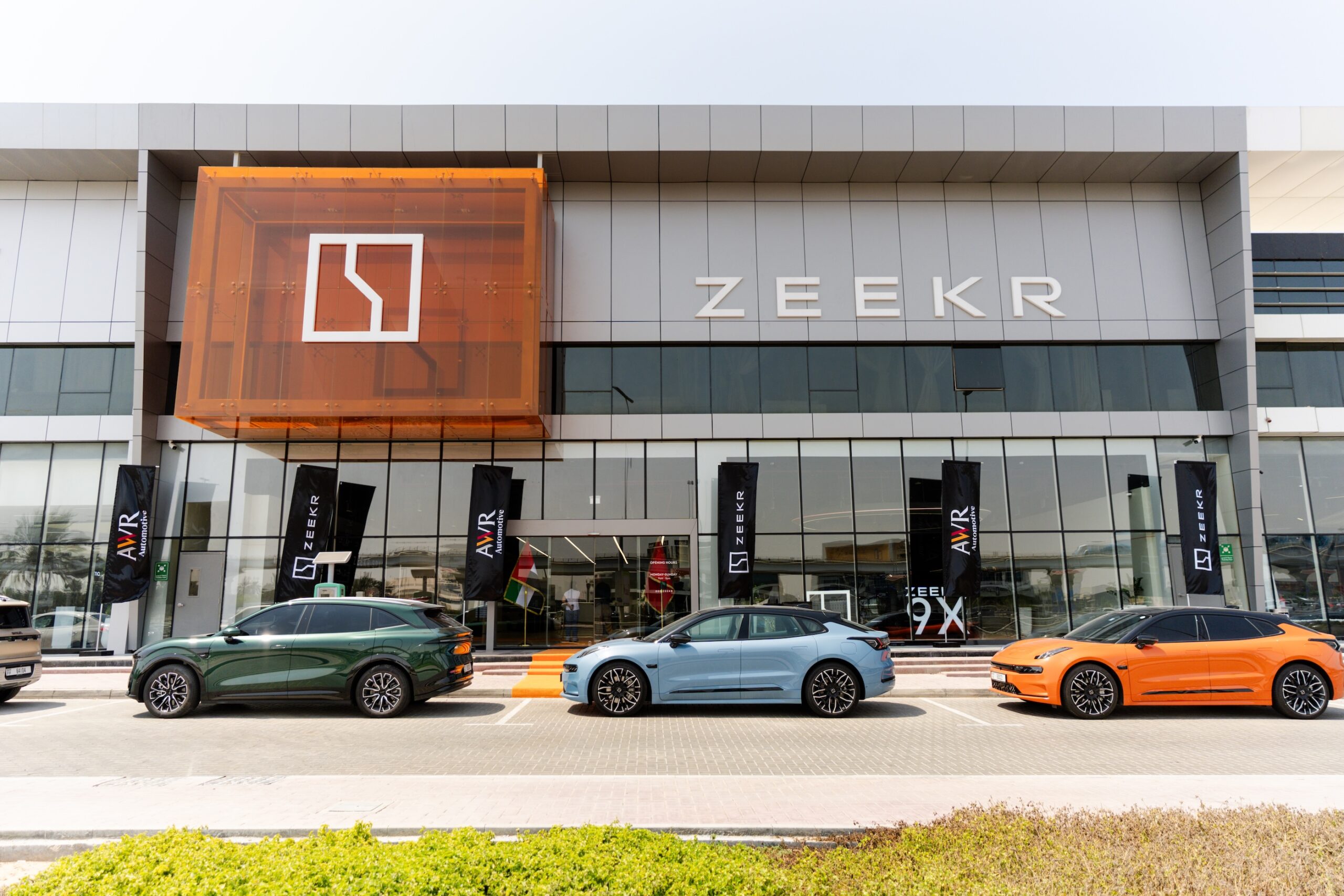
Zeekr UAE and AWR Automotive are proud to announce the unveiling of the redesigned Zeekr flagship showroom on Sheikh Zayed Road in Dubai. The new space brings together contemporary design, refined hospitality, and personalised customer engagement, reflecting the partners’ confidence in the UAE’s expanding electric mobility market.
The showroom gives customers a clear and practical way to explore electric mobility. Zeekr product specialists will provide personalised guidance around the Zeekr range, charging, intelligent technology, performance, test drives, and after-sales care. Interactive touchscreen TVs allow customers to explore vehicle configurations in detail and place orders directly from the showroom. Customers can also discuss their individual driving requirements and ownership considerations in a relaxed setting, helping them understand how electric mobility can support everyday journeys, family travel, and longer drives across the UAE.
At the centre of the redesigned showroom is the Zeekr Lounge, a refined hospitality space for customer appointments, coffee conversations, and owner gatherings. The lounge brings a more personal dimension to the retail experience, providing a welcoming place for guests to spend time with the brand before or after a consultation or test drive. A partnership with Maison 7, AWR Group’s luxury lifestyle brand, adds curated homeware and elegant décor, creating a warm, lifestyle-led environment that complements Zeekr’s progressive design philosophy and brings the showroom’s material, colour, and craftsmanship story to life.
“The UAE’s electric mobility market is advancing quickly, and customers want the confidence that comes from clear guidance, a trusted local partner, and an ownership experience designed around their needs,” said Roberto Colucci, Director of EVs, AWR Automotive. “Our redesigned flagship showroom brings those elements together, creating a destination where customers can experience Zeekr’s technology, design, and hospitality while exploring how electric mobility can fit their everyday lives.”
The redesigned flagship also includes two AC charging points, giving customers an added practical touchpoint with the Zeekr ownership experience during their showroom visit. Two dedicated vehicle delivery bays provide an elevated handover setting, allowing every delivery to become a more personal and memorable moment for customers and their families. The flagship will also serve as a platform for product introductions, owner engagement, and curated events, bringing customers and electric mobility enthusiasts together around premium electric driving. Customers are invited to visit the showroom on Sheikh Zayed Road to experience the Zeekr range, speak with a product specialist, and book a personalised test drive.
AWR Automotive is Zeekr’s official distributor in the UAE. Supported by decades of automotive expertise and an established national network of showrooms and service centres, it brings the Zeekr ownership experience to customers from first discovery through to long-term support, helping advance premium electric mobility across the region.
Automotive
DiDi’s Next-Generation Robotaxi R2 Begins Fully Driverless Service Trials Ahead of Global Deployment
DiDi Autonomous Driving began fully driverless service trials with its next-generation Robotaxi R2. The milestone marks a new stage for R2, as the next-generation Robotaxi moves beyond technology validation into real-world mobility operations, demonstrating capabilities that could support the company’s planned testing in the United Arab Emirates and future global deployment.
In the fourth quarter of 2025, DiDi Autonomous Driving began round-the-clock fully driverless passenger testing in selected demonstration areas in Guangzhou and Beijing, with operations running safely and steadily since then. Building on this operational experience, R2, jointly developed by DiDi Autonomous Driving and GAC Aion, is a purpose-built Robotaxi designed for global deployment. It combines DiDi Autonomous Driving’s Level 4 full-stack software and hardware with a vehicle platform developed specifically for driverless passenger service, designed with safety, operating efficiency and in-cabin experience.
The next-generation Robotaxi R2 is equipped with 33 sensors, including LiDAR, cameras, 4D millimeter-wave radar, infrared cameras and audio sensors, providing comprehensive perception across a range of driving environments. Its triple-domain fusion central computing platform delivers more than 2,000 TOPS of GPU computing power and supports lower-latency decision-making in complex urban conditions. The vehicle platform also meets five-star safety standards in China and Europe (C-NCAP and Euro NCAP) and incorporates a multi-layer redundancy system.
Built around user needs, R2 maximizes rear passenger space and features high-angle adjustable seats. It is equipped with a 17.3-inch ceiling-mounted screen with entertainment features, as well as an AI voice interaction system that allows riders to complete PIN verification and start the trip, adjust the air conditioning, open the windows and control the ambient lighting through voice commands. These elements reflect DiDi Autonomous Driving’s view that a successful Robotaxi service combines advanced autonomous-driving capability with an intuitive and comfortable passenger experience.
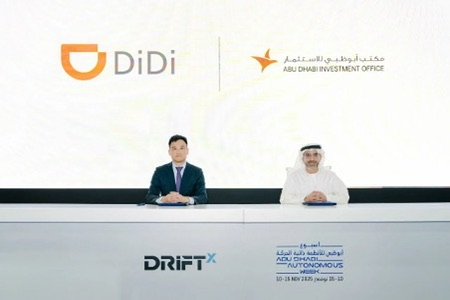
The UAE will serve as DiDi Autonomous Driving’s first international market. In April 2026, at the China-UAE Business Promotion Event, the company confirmed that it is working with local partners to advance Robotaxi applications, with local testing and pilot initiatives planned within the year. The planned testing comes as the UAE continues to develop its regulatory framework for autonomous vehicles. In Dubai, the Autonomous Transportation Strategy aims to shift 25% of total transportation to autonomous mode by 2030, with taxis among its priority application sectors. DiDi Autonomous Driving has also joined Abu Dhabi’s Smart and Autonomous Vehicle Industries (SAVI) cluster and established a strategic partnership with the Abu Dhabi Investment Office (ADIO) to support innovative autonomous-driving applications, AI talent development and ecosystem building.
The launch arrives as autonomous mobility moves from vision to operational reality across the UAE. On 19 August 2026, the Government of Dubai Media Office reported that Robotaxi operations in Dubai had traveled more than four million kilometers of autonomous operation and completed 7,613 driverless passenger trips since launch, achieving a 97% customer satisfaction rate. The emirate’s Robotaxi fleet includes 144 vehicles, with 48 in active operation, and contributes to the 2030 target set out in the Dubai Autonomous Transportation Strategy.
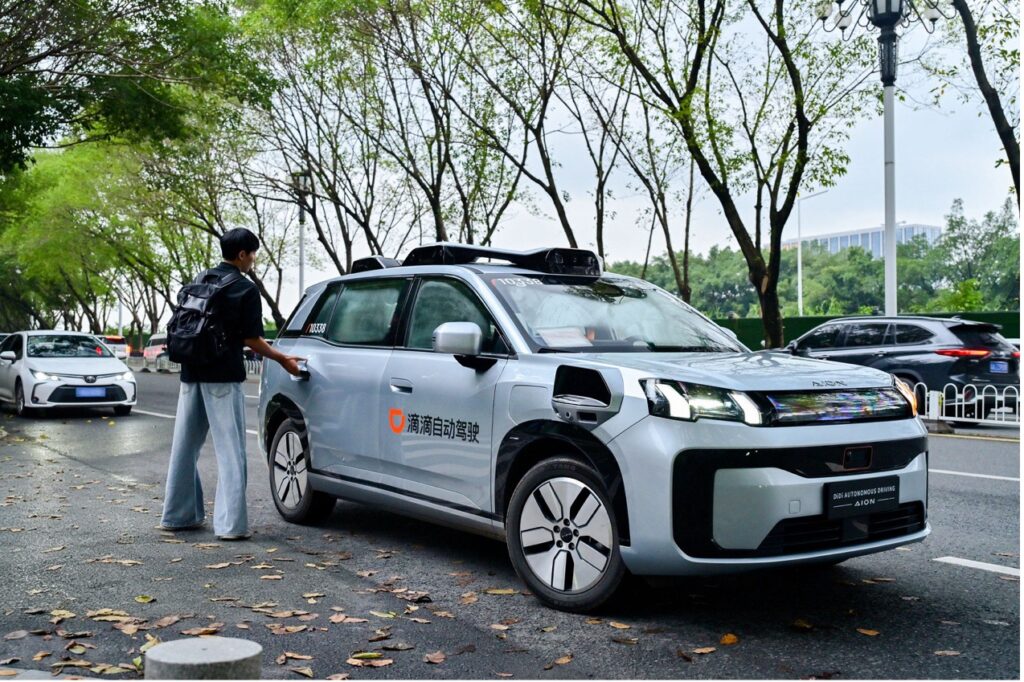
For DiDi Autonomous Driving, the opportunity involves more than introducing a vehicle to a new market. The company aims to localize its technology, operating model and passenger experience with UAE partners, in line with the country’s smart-mobility priorities. The R2 milestone offers a foundation for that next phase by demonstrating how a purpose-built Robotaxi can serve passengers in complex urban environments through integrated vehicle engineering, AI capabilities and disciplined fleet operations. Through its international expansion, the company seeks to contribute proven autonomous-mobility expertise while supporting the development of a safe, intelligent and sustainable transport ecosystem in the UAE and other international markets.
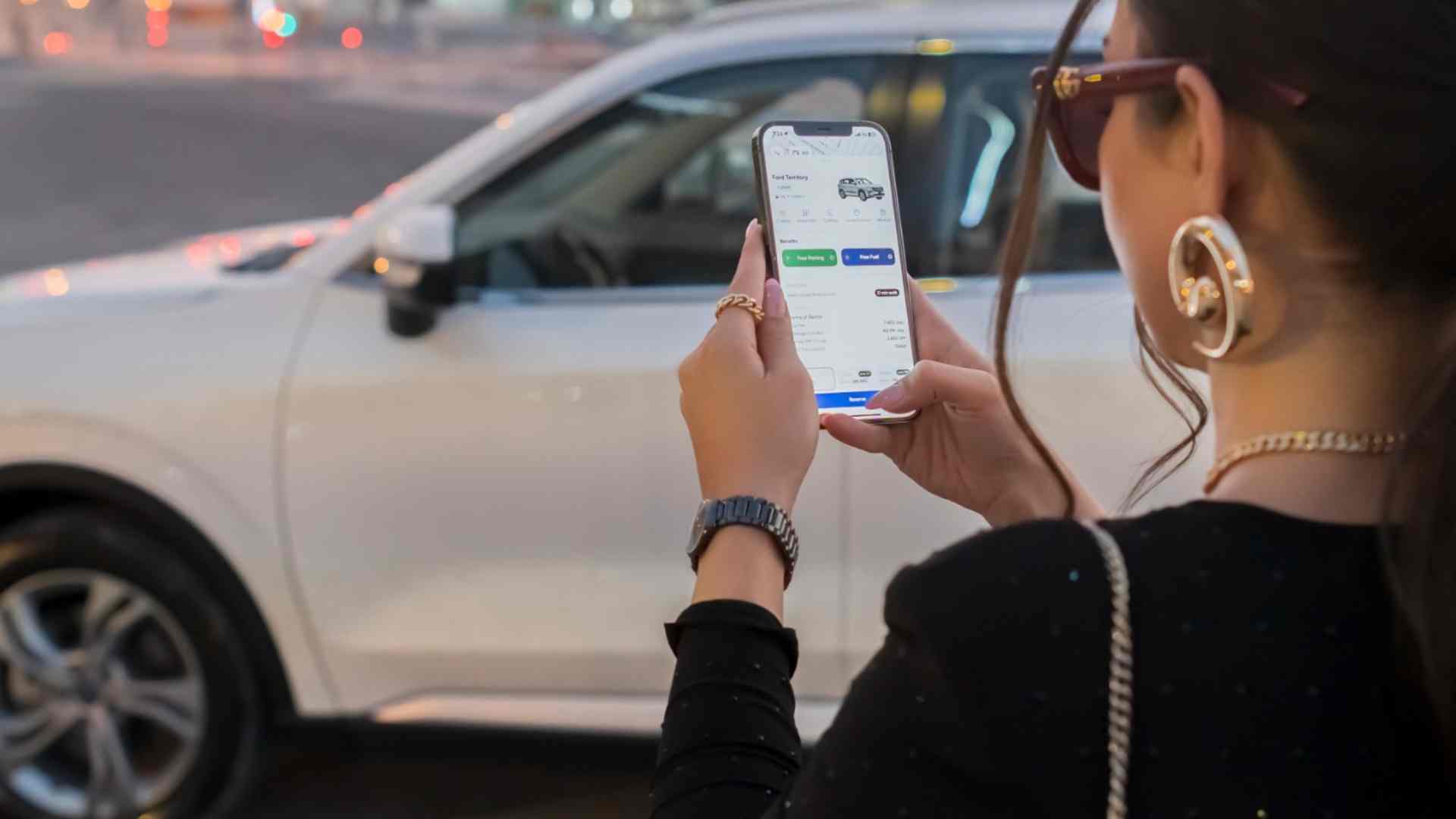
Udrive, the UAE’s leading car-sharing platform, has released new proprietary data showing how app-based car access is becoming part of everyday work, school and leisure travel across the UAE. Customers aged 30 to 40 account for 45% of users, while mornings and weekends are the busiest periods across the platform. Residential communities and business districts generate the highest demand, showing how app-based car access is becoming part of everyday travel across the UAE.
This core age profile points to a generation seeking greater freedom to choose when, how and what they drive as they balance professional and family commitments. Activity rises during the morning as customers head to offices and schools, then builds again around afternoon pick-up times as families manage school collections and after-school activities. At weekends, shopping, leisure and social visits bring more customers onto the road.
This reflects the way many people live across the region, where changing jobs, growing families and new priorities can lead residents to move homes more frequently. From housing and entertainment to transport, greater choice and access are becoming increasingly important, allowing services to adapt as people’s lives change.
In Dubai, Karama, Al Nahda, Dubai Marina and Al Rigga rank among the most popular areas for vehicle pick-ups and drop-offs, with demand concentrated around residential neighbourhoods and nearby parking areas. Office-led travel also accounts for a major share of daily ridership, with Barsha Heights, Business Bay and the area around Emirates Headquarters among the strongest locations. These journeys include daily commutes, meetings and trips that involve several stops or fall outside fixed public transport schedules.
The Ford Territory, BYD QIN and MINI Cooper rank among the most preferred vehicles on the platform, with SUVs continuing to attract strong demand. Vehicle needs can change quickly, with a customer choosing a compact car today before moving to an SUV as their family grows, or upgrading to try something different. Long-term rental allows the vehicle to adapt to the customer’s life rather than tying them to the same car for several years.
“Life in the UAE moves quickly, and people’s circumstances and tastes can change considerably within a few years. We are seeing the same mindset with cars, as people want the convenience of having a vehicle alongside the flexibility to choose one that suits their needs today. Our data helps us understand how those needs are evolving so we can position vehicles effectively and build a fleet around the way residents move. At Udrive, our vision is to make mobility seamless, accessible and data-driven, ensuring our service continues to evolve with the needs of residents across the country, ” said Hasib Khan, Founder and CEO of Udrive.
Through the Udrive app, customers can locate, book and unlock a vehicle in minutes, with flexible rental options by the minute, hour, day, week or month. The service is designed around convenience and transparency, with zero deposit, no paperwork, office visits or delivery fees, and inclusive benefits such as free fuel and parking.
Udrive operates a fleet of over 2,000 vehicles across Dubai, Abu Dhabi, Sharjah and Ajman and has completed more than three million rentals. In 2025, customers travelled more than 45 million kilometres and completed over half a million trips, while registrations increased by 14% compared with 2024. Residents account for 90% of the customer base, demonstrating strong everyday demand for flexible car access.
As cities grow and travel patterns become more varied, Udrive will continue expanding its coverage and fleet choice across the country. The latest data shows car sharing becoming a regular part of commuting, family routines and leisure travel, giving residents access to a vehicle when needed.


Zeekr UAE and AWR Automotive Unveil Redesigned Flagship Showroom on Sheikh Zayed Road in Dubai
The Infrastructure Is Automated. Why Are the Processes Around It Still Manual?
99 Sushi Bar & Restaurant Is Moving to Dubai Creek Harbour This Q4



-
News11 years ago
SENDQUICK (TALARIAX) INTRODUCES SQOOPE – THE BREAKTHROUGH IN MOBILE MESSAGING
-

 Trending11 months ago
OPPO A6 Pro 5G Review: Reliable Daily Driver
-

 Tech News2 years ago
Denodo Bolsters Executive Team by Hiring Christophe Culine as its Chief Revenue Officer
-
 VAR1 year ago
Microsoft Launches New Surface Copilot+ PCs for Business
-

 Automotive2 years ago
AGMC Launches the RIDDARA RD6 High Performance Fully Electric 4×4 Pickup
-
Tech Interviews2 years ago
Navigating the Cybersecurity Landscape in Hybrid Work Environments
-

 Tech News1 year ago
Nothing Launches flagship Nothing Phone (3) and Headphone (1) in theme with the Iconic Museum of the Future in Dubai
-

 VAR2 years ago
Samsung Galaxy Z Fold6 vs Google Pixel 9 Pro Fold: Clash Of The Folding Phenoms