
 Have a question? +971 56 404 0503




Tech News
GCC ASSET MANAGEMENT REACHES $2.7 TRILLION IN 2025, UP 10% FROM 2024

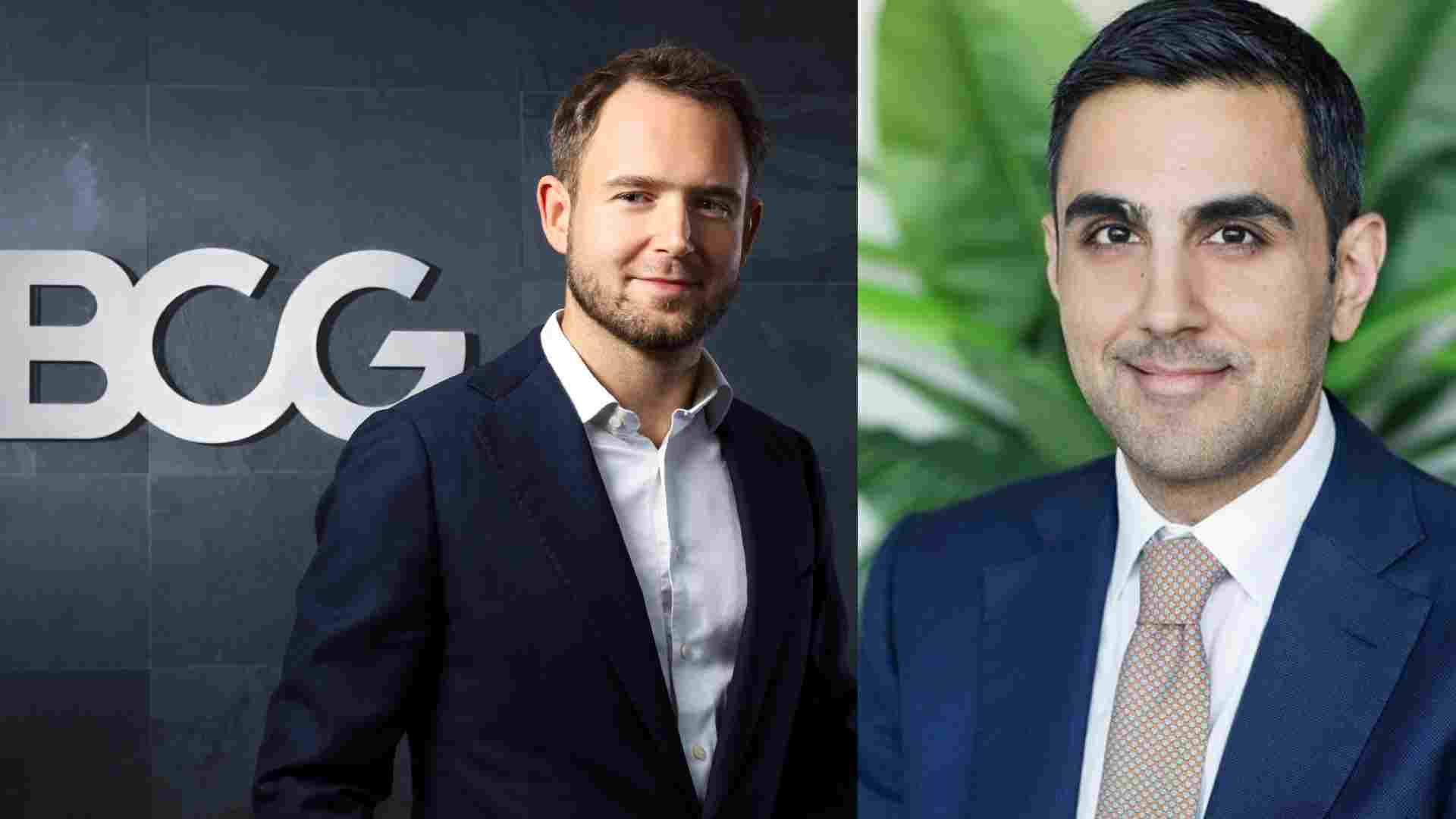
Assets under management (AuM[1]) in the GCC grew by 10% in 2025, reaching $2.7 trillion and marking one of the strongest annual performances in over a decade, according to a new report from Boston Consulting Group (BCG). The findings, released as part of BCG’s Global Asset Management Report 2026: An Imperative for Growth, reveal that the GCC retail segment demonstrated particularly strong performance, recording growth of 14% while institutional assets increased by 9%. While institutional assets continue to dominate the regional market, retail assets are growing at a faster pace, with retail representing 7% and institutional assets accounting for 93% of total regional AuM.
Saudi Arabia continues to anchor regional growth, commanding the highest share of retail mutual funds and ETFs across both the broader Middle East and the GCC, followed by the UAE and Kuwait. The Kingdom’s General Organization for Social Insurance Public Pension Agency (GOSI-PPA) remains the largest pension fund in the region, with Kuwait’s WAFRA maintaining its position as the second largest. Among sovereign wealth funds, the Kuwait Investment Authority recorded the largest externally managed AuM, followed by the Abu Dhabi Investment Authority.
“The GCC asset management industry is at an inflection point that demands a fundamentally different approach to competition,” said Lukasz Rey, Managing Director & Partner and Middle East Head of Financial Institutions at BCG. “While near-term dynamics will depend on the broader market environment, the region’s structural fundamentals remain compelling, and many asset managers continue to view the GCC as a strategic priority. Firms that invest in distribution capabilities and technological transformation will be best positioned to navigate uncertainty and capture the opportunities ahead.”
In addition to regional dynamics, BCG’s Global Asset Management Report 2026 identifies key structural forces transforming the industry on a global scale, from the growing centrality of distribution to the adoption of AI-driven operating models and the emergence of tokenization.
Globally, BCG’s report finds that growth is becoming more concentrated among leading firms with scale and distribution access. Revenue growth is decoupling from asset growth as fees decline, while traditional economies of scale are being offset by rising technology investment and fee pressure. Together, these trends point to a more competitive environment in which only a subset of firms is positioned to capture disproportionate growth.
Distribution Becomes the Key Competitive Differentiator
The report emphasizes that the basis of competition in asset management is undergoing a structural shift globally, with distribution emerging as the primary battleground for growth. As product manufacturing becomes increasingly commoditized, control of distribution channels, including platforms, advisors, and institutional relationships, is becoming the key determinant of success.
AI is accelerating these shifts by compressing traditional differentiation and enabling new forms of scale. Globally, BCG estimates asset managers could reduce costs by 25–35% over the next three to five years, while increasing research coverage two- to five-fold and client coverage per relationship manager three to five-fold, all with faster, more scalable personalization. AI allows firms to scale without proportional headcount increases, fundamentally changing the economics of growth. However, most firms remain in early adoption stages, focused on pilots rather than full transformation. Those that fail to redesign their operating models risk falling behind AI-native competitors that can scale faster and operate more efficiently.
“Middle East asset managers have an opportunity to leapfrog traditional operating models by embedding AI and digital capabilities into their core operations,” said Mohammad Khan, Managing Director & Partner at BCG. “While the path forward will require navigating evolving market conditions, firms that move strategically to build scalable distribution networks and technology-enabled platforms will be well positioned to shape the next era of regional asset management.”
Tokenization as a Catalyst for Disruption
Alongside AI, BCG’s global report identifies tokenization and digital assets as emerging forces that could reshape market structure. The value of tokenized real-world assets is projected to reach $14 trillion by 2030 and $55 trillion by 2035, creating new channels for distribution, ownership, and product design. These developments could alter how assets are accessed, transferred, and managed, potentially weakening traditional advantages tied to scale and distribution while enabling new entrants to compete.
“The convergence of tokenization, AI, and evolving investor expectations is reshaping the competitive landscape in ways that favor agility over incumbency,” said Nabil Saadallah, Managing Director & Partner at BCG. “For asset managers in the GCC, success will increasingly hinge on their ability to deliver personalized solutions at scale, those who embrace this shift stand to unlock significant value in a rapidly transforming market.”
As market-driven growth gives way to competition-driven growth, asset managers face a more complex and less forgiving landscape. Capturing net inflows, building scalable distribution, and embedding technology into core operations will determine which firms succeed.
Tech News
Forcepoint and BeyondTrust Connect Identity Risk to Data Exposure, Letting Customers Revoke Risky Access with Precision

Global AI data security leader Forcepoint and BeyondTrust, the global leader in privilege-centric identity security protecting Paths to Privilege™, today announced the new integration of Forcepoint’s AI-native data discovery and classification with BeyondTrust Identity Security Insights®. The integration is available now and debuts today at BeyondTrust’s Go Beyond Chicago customer conference.
When BeyondTrust detects risk across a human, machine or AI identity based on behavior, privilege or compromised credentials, Forcepoint pinpoints the sensitive information that identity can reach and where exposure is greatest as risk changes. Customers can then use Forcepoint controls to immediately cut off that identity’s access to the specific records involved, without affecting anyone else’s access or work.
“With AI agents now doing real work inside the business, blocking autonomous tools isn’t an option, and neither is guessing,” said Bakshi Kohli, Chief Technology Officer of Forcepoint. “When BeyondTrust tells us an identity looks risky, we already know what data it can get to. Teams can take that one identity’s access away and nothing more. That’s the precision agentic enterprises ask for today.”
Security teams often get an identity alert in one console and have to open another to understand the full risk. The flagged identity could be a forgotten test login or an account that can read the customer database, and telling the two apart means checking both systems by hand, one alert at a time. Every minute of manual review is another minute an overprivileged identity or AI agent keeps acting.
Turning Identity Alerts into AI Data Security Action
Customers now get the data context behind each identity risk, along with the controls to act on it. BeyondTrust Identity Security Insights® surfaces risky identities based on behavior, privilege, compromised credentials and relationships among them. Forcepoint Data Security Posture Management (DSPM), part of the company’s AI data security solutions, maps that risk to the confidential information within its permissions and provides controls to restrict that access.
Compromised identities. A stolen identity is only as dangerous as the access it provides and the data that access puts in reach. When BeyondTrust detects a compromised identity or entitlement, the True Privilege™ graph maps the real blast radius: every path that identity can take to privilege, not just the permissions on paper. Forcepoint shows which sensitive records sit at the end of those paths, from personal data to financial records and trade secrets, and lets teams block that credential’s access.
Service accounts and AI agents with too much access. Machine and AI identities outnumber human users 144-to-1, according to 2026 research from the Cloud Security Alliance, and many carry permissions that haven’t been reviewed since they were granted. If BeyondTrust detects risky behavior or excessive privilege associated with a service account or AI agent, teams can use Forcepoint to revoke its access to the sensitive data at risk in one step. The account keeps doing the rest of its job.
Too many alerts, too little context. Instead of cross-checking two consoles, customers work from one Forcepoint dashboard that ranks each risky identity by the value of accessible data and shows why that identity was deemed risky. With a clear line of sight from identity and privilege risk to sensitive data, teams investigate faster, focus on critical vulnerabilities and remove or restrict access with targeted precision.
“The strongest technology alliances bring together complementary capabilities to solve problems neither side should have to solve in isolation,” said David Manks, Vice President of Global Strategic Alliances at BeyondTrust. “Forcepoint’s understanding of sensitive data and BeyondTrust’s identity and privilege intelligence provide two critical dimensions of risk. Bringing them together helps customers see where risky access creates meaningful exposure and take precise action to protect what matters.”
Tech News
Abu Dhabi Projects and Infrastructure Centre and PATRIZIA sign strategic partnership to support infrastructure investment and development
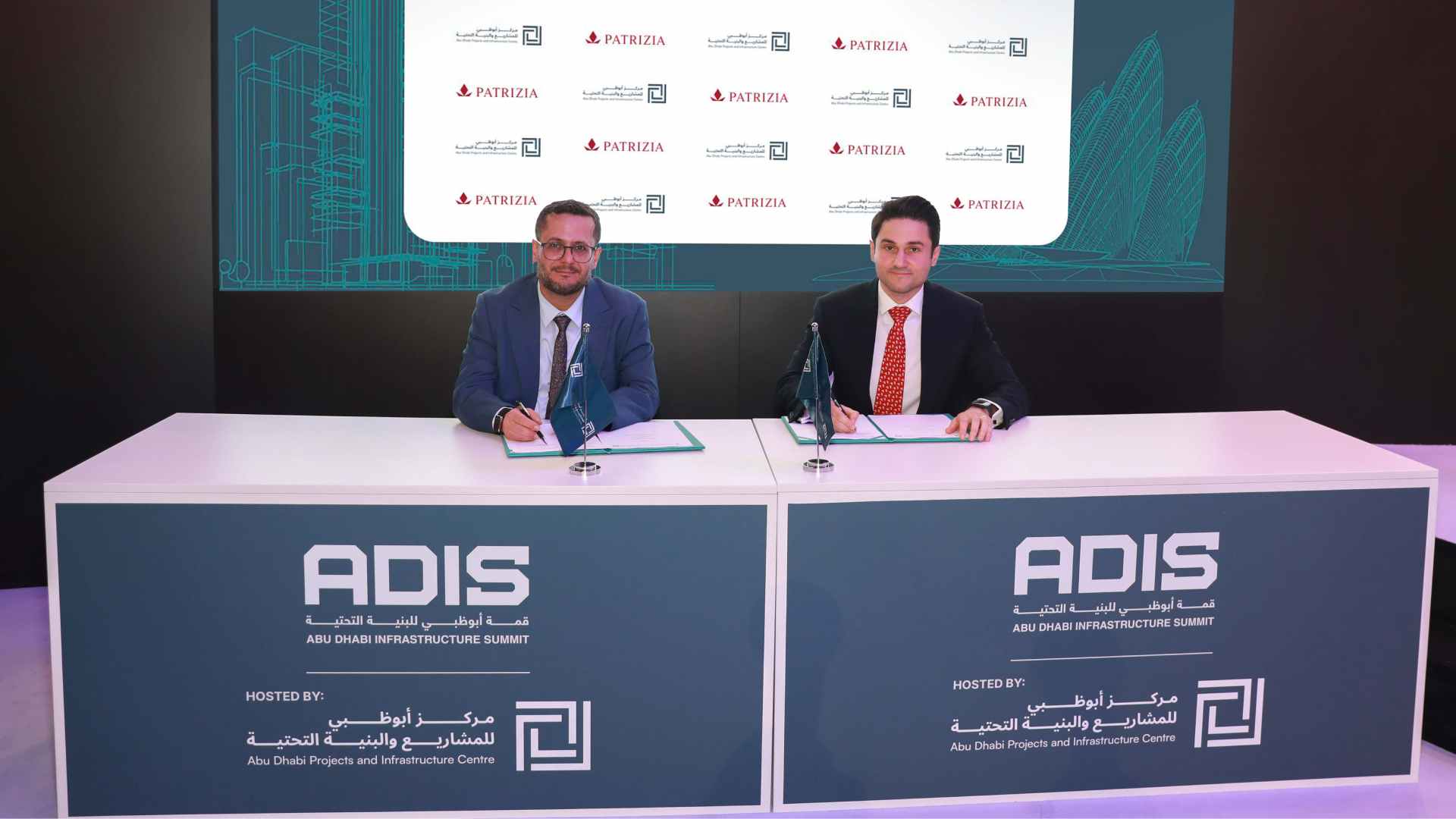
The Abu Dhabi Projects and Infrastructure Centre (ADPIC)and PATRIZIA, an investment manager in real assets, have signed a strategic partnership to deepen cooperation around infrastructure investment and project delivery in the Emirate of Abu Dhabi, drawing on PATRIZIA’s wider real assets expertise.
The strategic partnership was signed during the Abu Dhabi Infrastructure Summit (ADIS) International Roadshow at EXPO REAL 2026 in Munich by His Excellency Eng Maysarah Mahmoud Salim Eid, Director General of ADPIC and Hassan Awada, Senior Executive Officer, MENA at PATRIZIA.
ADPIC sits at the centre of Abu Dhabi’s capital-project programme, coordinating planning, governance, and delivery across approximately 500 projects valued at more than AED 200bn, equivalent to more than USD 56bn. The programme spans housing, transport, culture, education, social infrastructure, and the wider urban systems supporting Abu Dhabi’s long-term growth, livability, and economic competitiveness.
The agreement also reflects the wider objective of the ADIS International Roadshow by connecting Abu Dhabi’s infrastructure ecosystem with international partners that bring specialist expertise and long-term capability, while deepening engagement with Germany and Europe. The partnership establishes a framework for PATRIZIA and ADPIC to exchange international expertise and explore areas where private-sector participation can strengthen project delivery and long-term value creation. This includes dialogue around public-private partnership structures, sharing international best practice in infrastructure financing and delivery, and exploring potential investment and co-investment opportunities arising from Abu Dhabi’s capital projects programme.
The two organisations will also cooperate on market insight, benchmarking and technical studies relevant to infrastructure investment and project delivery, while exploring ways to support greater international participation, knowledge exchange, and access to specialist capability across Abu Dhabi’s ecosystem.
H.E. Eng. Maysarah Mahmoud Salim Eid, Director General of ADPIC, said: “Abu Dhabi’s infrastructure programme requires partners that bring proven international capability, market insight, and a long-term commitment. Through this partnership with PATRIZIA, we will explore how that experience can support private-sector participation, strengthen project delivery, and create long-term value. This is exactly the type of practical international cooperation the ADIS International Roadshow is designed to advance.”
PATRIZIA has worked with institutional investors and partners in Abu Dhabi for 15 years, building long-term relationships across the Emirate. The recent establishment of a permanent presence in the Abu Dhabi Global Market (ADGM) marked a further step in that commitment, strengthening PATRIZIA’s ability to work with regional investors and partners and connect them with its international real assets platform.
Asoka Wöhrmann, CEO of PATRIZIA, said: “Abu Dhabi has established itself as an important centre for long-term investment and infrastructure development. Our teams have worked with clients and partners in the Emirate for the past 15 years, and our decision to establish a permanent presence in Abu Dhabi reflects the importance we attach to that relationship. We have seen first-hand the scale of its ambition and the increasingly important role that international expertise and private capital can play. This partnership creates a framework through which PATRIZIA can contribute its experience across real assets while deepening our longstanding relationships in Abu Dhabi.”
Hassan Awada, Senior Executive Officer, MENA at PATRIZIA, said: “Abu Dhabi is developing into a significant market for infrastructure and real assets investment, supported by major infrastructure pipeline and a clear focus on attracting international investment and expertise. Our partnership with ADPIC gives us an opportunity to closely support on delivering these priorities and to explore where PATRIZIA’s international investment capabilities can support the Emirate’s long-term ambitions.”
The agreement reflects PATRIZIA’s wider strategy of combining its established global real assets platform with selective international growth in markets where it has longstanding client relationships and relevant investment expertise.
Tech News
NetApp to Showcase AI-Ready Data Infrastructure as CEO George Kurian Takes the Stage at Ai Everything Abu Dhabi 2026
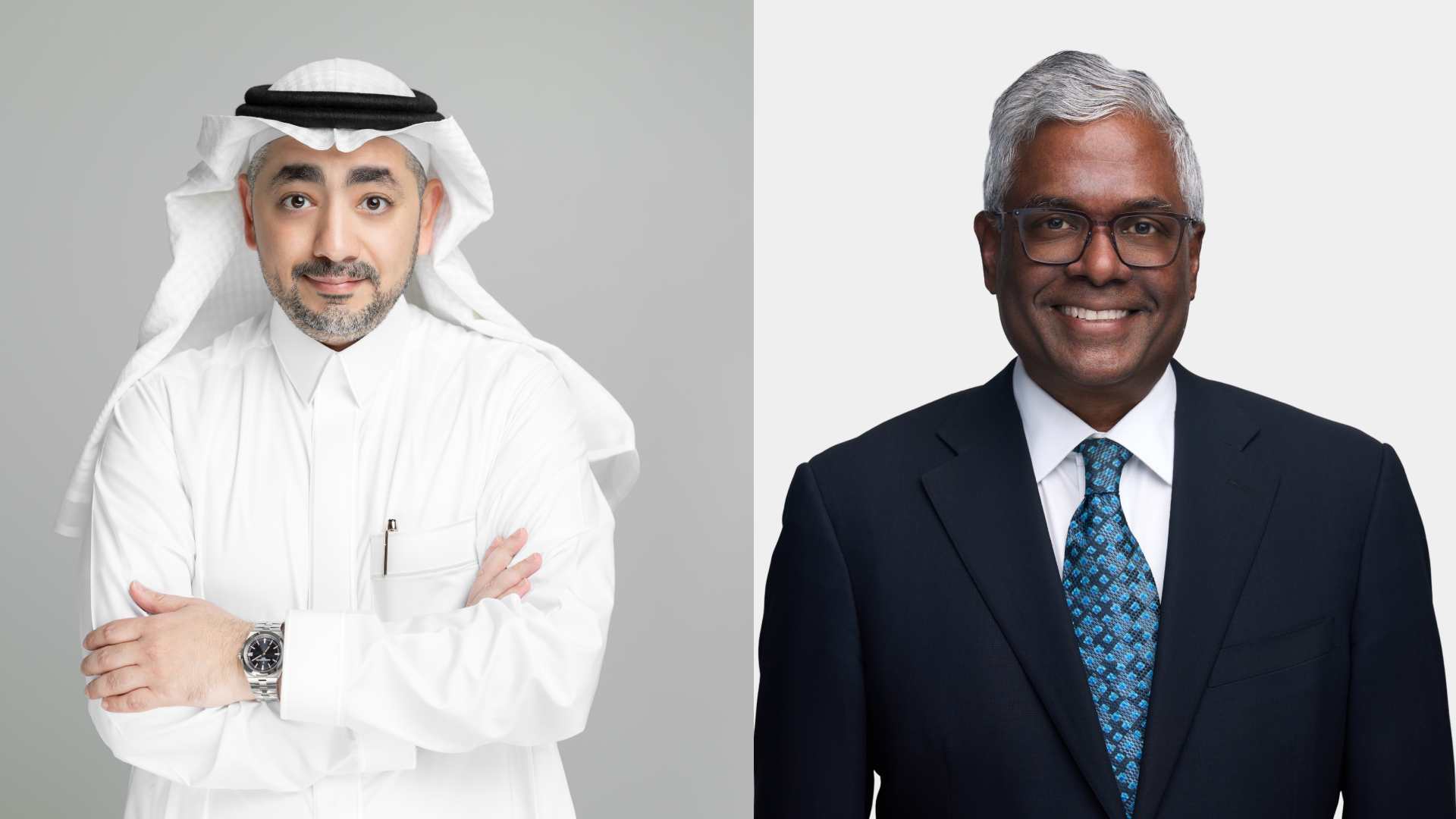
NetApp® (NASDAQ: NTAP), the Intelligent Data Infrastructure company, will exhibit at Ai Everything Abu Dhabi 2026, taking place on October 6 and 7 at ADNEC Centre in Abu Dhabi. The event will also feature George Kurian, Chief Executive Officer of NetApp, who will take part in a fireside chat on the Summit Stage titled, “Can AI Be Trusted? The New Architecture of Sovereign, Secure and Safe AI.” As AI moves from generating answers to taking action across the enterprise, Kurian will explore why trust must extend beyond the model to the data, infrastructure and systems AI can access, as well as the growing importance of security, data sovereignty and governance.
At the centre of NetApp’s presence will be the NetApp Platform, designed to provide enterprises an intelligent, connected, governed foundation that delivers zero-copy access to their data. Customers can quickly and confidently access, manage, and activate their data and be confident it is AI-ready and secure so they can take on the most demanding tasks and solve the most complex problems. In addition to being available on-premises, the NetApp Platform is natively embedded in the world’s largest public clouds. As organizations move AI initiatives from experimentation into production, having data that is accessible, governed and protected becomes increasingly important to scaling AI securely and efficiently.
“Abu Dhabi’s ambition to become an AI-native government reflects a broader shift we are seeing across the Middle East, where AI is rapidly moving from experimentation to large-scale deployment. But scaling AI is ultimately a data challenge. Organizations need trusted, secure and accessible data wherever it resides. The NetApp Platform provides the foundation customers need to build Intelligent Data Infrastructure that enables them to move from AI ambition to real business outcomes, securely and at scale.” said Suhail Hasanain, Senior Director and General Manager, MEA at NetApp
During the two-day event, NetApp’s regional and global experts will engage with industry leaders, partners and customers on building AI-ready infrastructure and addressing the data and infrastructure challenges that can prevent AI projects from progressing into production.
Visitors will have an opportunity to hear the latest developments from NetApp INSIGHT 2026 in Las Vegas, one of the company’s key events focused on tackling today’s biggest AI and technology challenges with intelligent data infrastructure.


A LEADERSHIP PHILOSOPHY FOR MODERN HOSPITALITY
A Little Boo with Your Brunch: Halloween Takes Over Nalu

Deyaar builds on its 2026 handover momentum with 711 new homes at Tria in Dubai Silicon Oasis



-

 Trending12 months ago
OPPO A6 Pro 5G Review: Reliable Daily Driver
-

 Tech News2 years ago
Denodo Bolsters Executive Team by Hiring Christophe Culine as its Chief Revenue Officer
-
 VAR1 year ago
Microsoft Launches New Surface Copilot+ PCs for Business
-

 Automotive2 years ago
AGMC Launches the RIDDARA RD6 High Performance Fully Electric 4×4 Pickup
-
Tech Interviews3 years ago
Navigating the Cybersecurity Landscape in Hybrid Work Environments
-

 Hospitality2 years ago
Gulfood 2025 30th Edition Kicks Off Today, Setting New Benchmarks in F&B Growth and Innovation
-

 Tech News1 year ago
Nothing Launches flagship Nothing Phone (3) and Headphone (1) in theme with the Iconic Museum of the Future in Dubai
-

 VAR2 years ago
Samsung Galaxy Z Fold6 vs Google Pixel 9 Pro Fold: Clash Of The Folding Phenoms