
 Have a question? +971 56 404 0503





Home Integrator
BUILDING RESILIENCE IN DUBAI’S EVOLVING SHORT-TERM RENTAL MARKET


Exclusive interview with Rohollah Rohparwar, Managing Director & Founder, First Class Property Management
As the Managing Director and Founder of First Class Property Management, how would you define your core role in shaping the company’s strategic direction?
Luis Santos and I are equal business partners and co-founders of First Class. We have known each other since 2018, when we worked together at a leading management consultancy firm and collaborated on major transformation projects across the petrochemical, automotive, and hospitality industries.
That background in engineering and industrial transformation is the blueprint for how we run First Class.
We share a strong mutual respect and operate with complete parity. There is no fixed division of responsibilities; every key decision is discussed and evaluated together to ensure the best possible outcome. This collaborative approach has been fundamental to our success, enabling First Class to become the market leader in both quality and volume, as well as the most trusted partner for short-term lets in the UAE.
We remain deeply hands-on in all areas of the business and are actively involved in its daily operations, 24/7. Our role is to ensure our ‘Operating System’ stays agile enough to handle a fast-growing portfolio while maintaining the highest review scores in the region.
What inspired you to establish First Class Property Management, and what gap in the market were you aiming to address?
My path to real estate was somewhat unconventional. I began my career as an aeronautical engineer at Airbus, working as an internal Lean consultant on the company’s long-range program, which included the A380, before moving to the UAE and entering management consultancy. When I looked at the Dubai property market, I didn’t see it through the lens of a traditional landlord. I saw it as a massive, complex system that lacked technical precision.
The gap was clear: Most property management was reactive, relying on manual processes, vibes, and gut feel rather than data-led strategy. There was a lack of professional-grade operations capable of managing the entire value chain in-house. I wanted to bring in engineering logic, treating a property portfolio like a high-performance aircraft where every part of the system works in harmony, offering investors a level of stability and ROI that simply wasn’t available from fragmented, smaller operators. We moved away from being just a rental agency to becoming a vertically integrated ‘Operating System’ for real estate.
As a long-standing player in the market, how have you seen investor expectations evolve over the past few years?
When I moved from Germany to the UAE in 2014, my friends and family were shocked by my decision. Dubai and the UAE were still relatively unknown, especially compared to today, while Germany was considered the benchmark for a strong economy and stable political environment.
Over the past decade, however, the situation has changed dramatically. The same circle that once questioned my move are now eager to relocate to the UAE as quickly as possible. Investors who previously lacked confidence in the UAE property market are now entering with full conviction. Everyone wants to be part of Dubai’s remarkable success story.
Tourism-driven sectors often experience fluctuations tied to global events. How can property stakeholders build resilience against such volatility?
Resilience in this market comes down to one thing: vertical integration. If you rely on third-party contractors for your cleaning, maintenance, and laundry, you are vulnerable to their price hikes and their timelines. When a global event disrupts the market, those external costs don’t disappear just because your occupancy has dropped.
Stakeholders need to own the “shield” that protects their assets. At First Class, we internalized our entire supply chain. Because we own our laundry facilities and our maintenance teams, we were able to re-engineer our operational costs by 90% at the very start of the current regional situation. This allowed us to keep investor payouts on time and in full even when average daily rates were under pressure. For me, resilience means building a business structure that can pivot its cost base in 24 hours.
Can you share how leveraging data and market insights helps property managers and investors make more informed decisions during periods of disruption?
Data is the only way to separate reality from the headlines. During the disruptions of early 2026, the general sentiment was one of panic, but we focused on the methodology behind the numbers. For instance, while official registration data showed a 0.5% price increase in March, we knew that was a lagging indicator. Real-time valuation data, like the ValuStrat VPI, showed a 5.9% price correction.
Understanding this “registration lag” is critical for investors. It allowed us to see that the market was re-pricing instantly, which actually created a floor for capital to return. By April, transaction volumes surged by 20% to AED 68.56 billion as investor conviction returned.
On the operational side, our data identified the “Resident Migration” early on. While the tourist booking window collapsed to under three days, demand for stays of 29 nights or more skyrocketed, eventually making up over 90% of our bookings. By shifting inventory immediately to capture this resident demand, we were able to drive occupancy back up to 85% (and we are targeting 90% for May) while the wider market struggled at 20%. This level of market intelligence allows us to inform investors exactly where to put their capital, specifically in prime hubs like Downtown and Dubai Marina, which our 12-year dataset proves recover 30% faster than emerging areas, to ensure a safe landing regardless of the external noise.
In your opinion, how does the role of adaptability and data-led decision-making in maintaining performance during uncertainty?
Adaptability is often mistaken for guesswork, but true adaptability is actually a very disciplined process. In a volatile environment, a wait-and-see approach is often a strategy for failure. You have to be able to re-model your entire business in a single day.
During this period, we rebounded to 85% occupancy while the wider market struggled at 20%. That didn’t happen by accident. It was the result of using data to bridge the gap between what the market used to be and what it is now. We introduced flexible packages with full refunds and weekly payment options because the data told us that guests were seeking liquidity above all else. When you combine that kind of flexibility with a vertically integrated operation, you create a system that can withstand a stress test. Uncertainty is always part of the market, but data provides the structural support to navigate it.
What role will technology and AI play in shaping the future of real estate operations?
AI has become the most critical focus in our operations. Recently, I attended two major industry exhibitions in London, where I had the opportunity to experience live demonstrations of the latest AI agents. I was genuinely impressed by their advanced capabilities.
We are now actively implementing AI agents across all areas of our business. This strategic move allows us to efficiently manage our fast-growing portfolio without expanding our team. AI agents are helping us minimize errors, respond to guest and client requests within minutes, and significantly enhance customer satisfaction, which ultimately drives higher sales.
Furthermore, back-office operations such as payroll, financial statements, insurance management, listing optimization, and many other tasks are now being handled by AI agents. It represents a true step change for both First Class and our sector as a whole.

Internationally acclaimed interior design studio Laura Hammett- recently named Designer of the Year 2025- has announced the expansion of their multi award-winning practice with the launch of a new studio in Dubai this November, extending their presence across the United Arab Emirates. Alongside this launch, the studio also unveils a new brand identity: Laura Hammett Studio. This evolution reflects the practice’s growth into a truly global design house, while continuing to embody the timeless elegance, craftsmanship and meticulous attention to detail that have become its hallmarks.
Laura Hammett has established a reputation as one of the UK’s leading luxury interior designers, renowned for a refined, timeless approach that balances elegance with liveability. With a portfolio spanning London, Dubai, Saudi Arabia, Beverly Hills, New York, China, Switzerland, Singapore, the Bahamas and beyond, the new Dubai studio marks a significant step in the practice’s international growth.
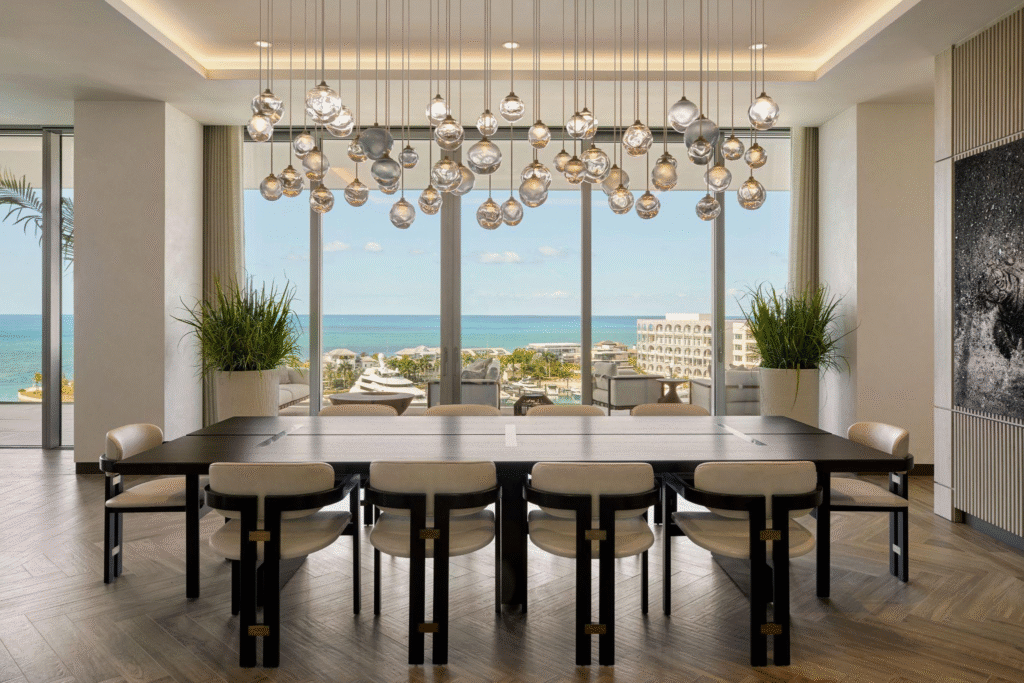
The move responds to a growing demand for bespoke, design-led interiors in the region and builds upon a number of prestigious residential projects already underway in the Middle East. Working alongside trusted local partners, the Dubai studio will allow Laura Hammett to bring its distinctive design language, attention to detail and exceptional service to clients across the UAE, with a dedicated team on the ground.
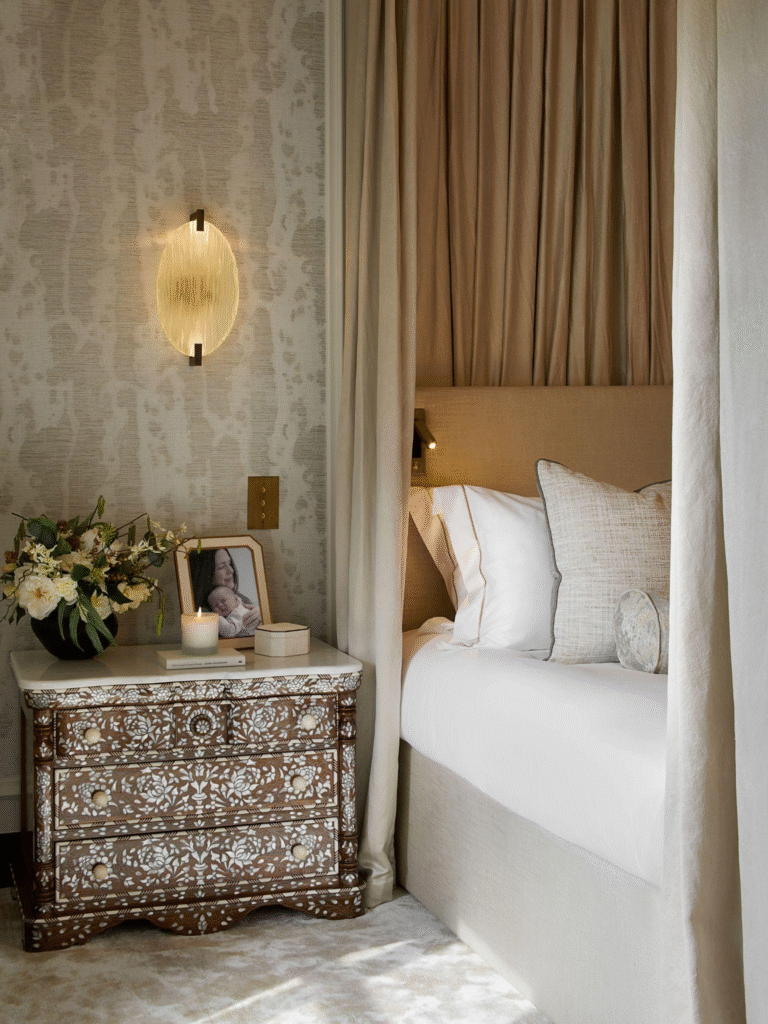
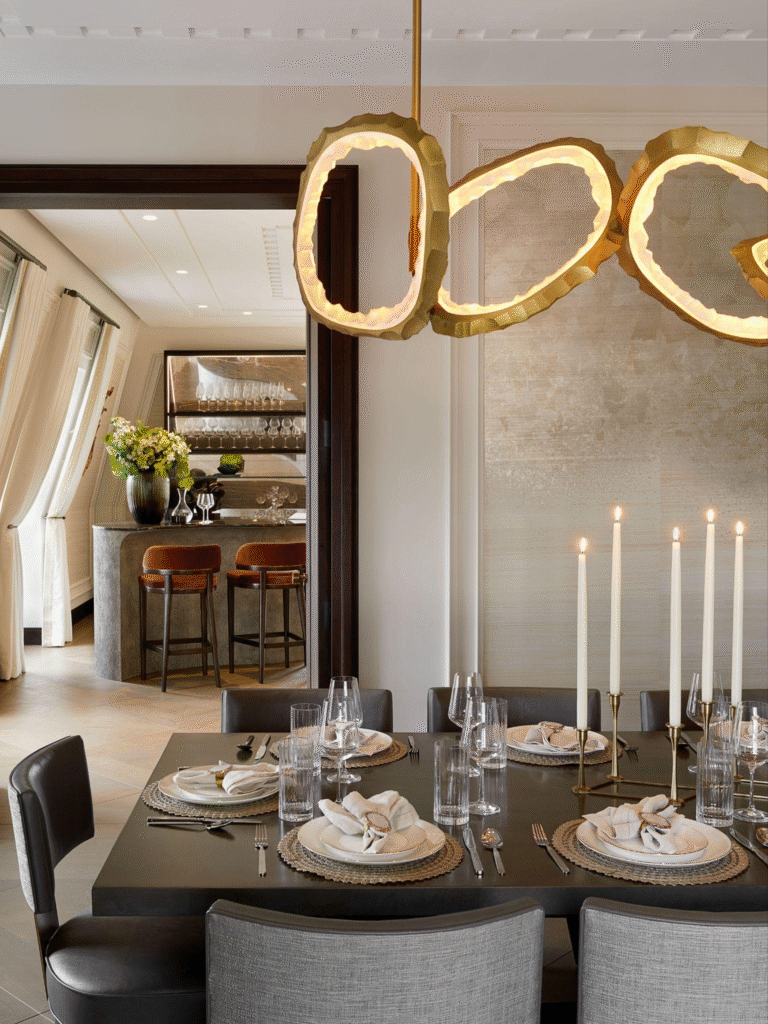
“The UAE has always been a region we’ve felt a deep connection to, with its dynamic energy, cultural richness and global outlook,” says Laura Hammett. “We have numerous local partners and trusted suppliers in the region, so expanding a team and physical presence here feels like a natural evolution of the studio. We’re excited to continue building long-term relationships with clients and collaborators in Dubai and beyond, and to create homes and spaces that truly resonate with the way people live today.”
This announcement follows a period of significant growth and recognition for the practice, including the launch of luxury homeware brand Laura Hammett Living, which recently gained award-winning status at the SBID product design awards. Laura Hammett Living ships to the Middle East and is stocked at luxury design boutique- Dgallerie- in Riyadh, Saudi Arabia, to enable their fast-growing customer-base in the Middle East to experience the collections in person.
The launch of Laura Hammett Studio Dubai reinforces the practice’s position as a leading voice in global luxury design, bringing its signature combination of heritage, craftsmanship and contemporary elegance to the Middle East, alongside an exceptional and highly personal client experience.
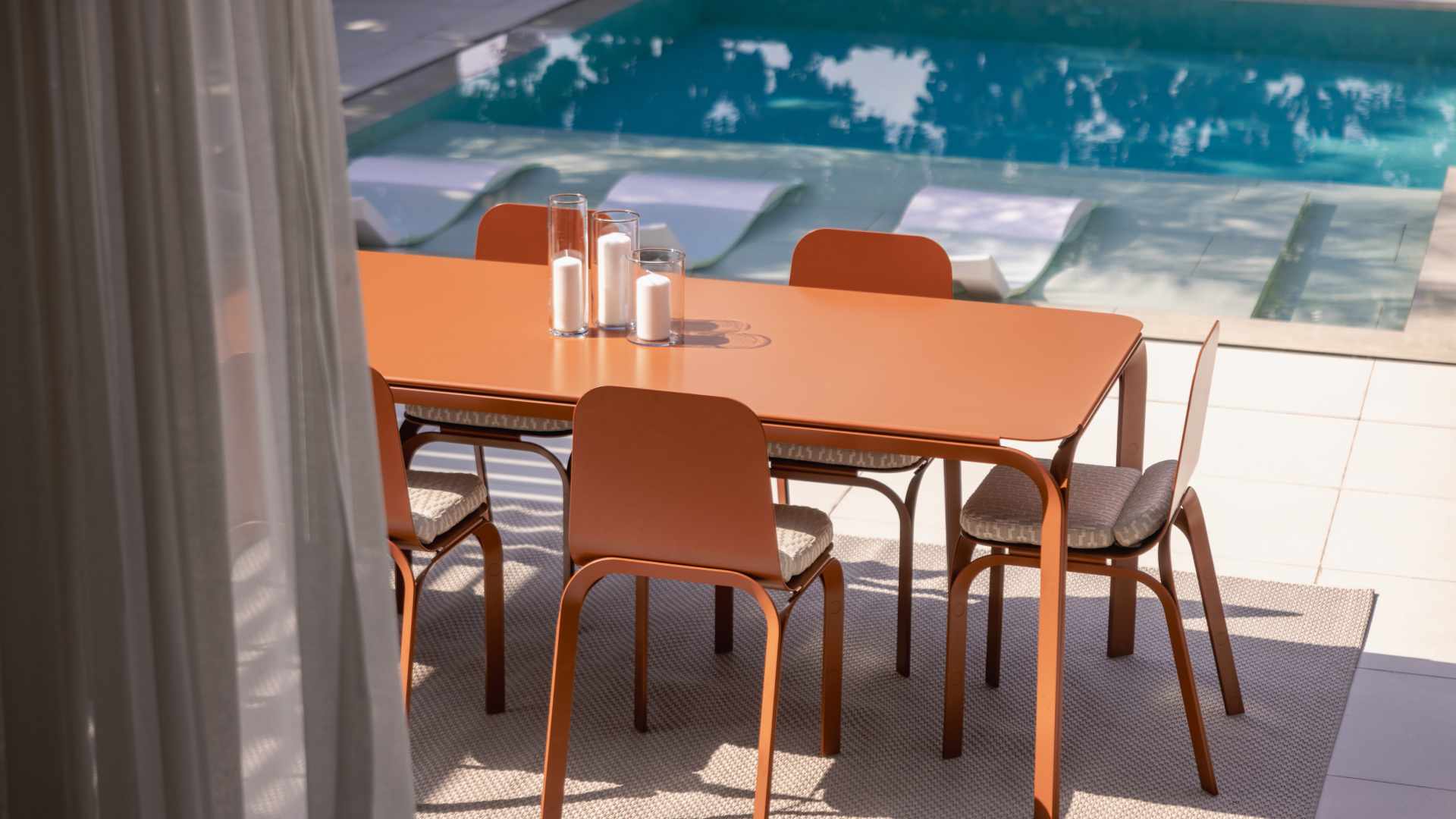
YLA introduces the Audace Outdoor Edition, an evolution of its signature Audace collection developed for exterior spaces.
Rather than creating a separate outdoor collection, YLA has retained the proportions, geometry and visual identity of Audace, adapting the elements that needed to perform differently outside. Outdoor-rated fabrics, revised powder-coated finishes and removable cushions allow the collection to move from interior settings to terraces, gardens, courtyards and poolside environments without changing its underlying design language.
The edition also opens Audace to a broader range of fabric and metal colour combinations, introducing greater flexibility for architects, designers and private clients working across residential and hospitality projects.
“We kept hearing the same question: could Audace live outside? The Outdoor Edition is our answer. It takes the same design language and extends it to terraces, gardens and outdoor spaces without changing what made Audace recognisable in the first place.” — Benoît Rondard, Founder & Managing Director, YLA
From Interior to Exterior
The starting point for the Outdoor Edition was not a new form, but a new context. Audace was originally conceived around the contrast between metal and softer upholstered elements, with open geometries, precise proportions and colour playing an important role in the collection’s identity. As the collection developed, YLA began receiving a recurring question from architects and designers: could the same pieces be used outdoors?
The answer required less of a visual redesign than a technical reconsideration.
The proportions and lines remain unchanged. Instead, YLA focused on the elements affected by exterior conditions: upholstery, surface treatment and the practical relationship between the furniture and its environment.
“We didn’t need to reinvent Audace to take it outside. We kept the geometry and lines exactly as they were. What changed were the elements that needed to perform differently: the fabric is outdoor-rated, and the powder coating has been adapted for exposure to sun and rain. The design remains Audace; the performance around it has evolved.” — Rémi Damilleville, Designer, YLA
Adapted for Outdoor Use
The shift outdoors led YLA to reconsider the material specifications of the collection while maintaining its existing visual character. The upholstery has been selected for exterior environments, with fabrics developed to respond to sunlight, moisture and everyday use. Water-repellent, stain-resistant and mould-resistant properties support use in open-air settings, while colour retention under prolonged sun exposure was an important consideration in the selection process.
The metal finishes have also been adapted for outdoor exposure, with the powder coating reconsidered for conditions including sun, rain and humidity.
For the upholstered pieces, the cushions remain integrated into the visual composition of Audace but can be removed when required for cleaning or storage. The intervention is intentionally discreet: the objective was to adapt the collection technically without giving it the heavier or more visibly functional language often associated with outdoor furniture.
A Broader Palette
Colour has been central to Audace from the beginning, used not as decoration but as part of the relationship between metal, form and surrounding space.
With the Outdoor Edition, that approach becomes more flexible.
A broader selection of outdoor fabrics and powder-coated metal finishes allows combinations to be developed according to the architecture and character of each project. Rather than introducing a single predetermined outdoor palette, YLA has approached colour as an adaptable layer within the collection.
The result allows the same Audace geometry to take on different expressions across a private terrace, a garden, a restaurant courtyard or a hospitality setting, while remaining immediately recognisable as part of the same collection.
Designed and Made in Dubai
The Audace Outdoor Edition is designed and manufactured in Dubai through YLA’s integrated production process, bringing design development, engineering, metal fabrication, powder coating, assembly and quality control into close proximity.
That local context has particular relevance for a collection designed for outdoor use.
In the UAE, exterior furniture is exposed to intense sunlight, high temperatures and humidity for extended periods of the year. These conditions informed the development of the edition and the decisions made around materials and finishes.
“We work with metal, and we live in the UAE — a place where summer tests every material to its limit. When it came time to develop the Outdoor Edition, we didn’t have to imagine what heat, sun and humidity would mean for the furniture. That experience shaped the choices we made.” — Benoît Rondard
Local manufacturing also enables YLA to retain direct oversight of the transition from design to production, while working closely with architects, interior designers and hospitality partners across the region.
One Collection, Different Contexts
The Audace Outdoor Edition does not introduce a new visual language for YLA. Instead, it expands the context in which an existing one can exist.
The same structure, proportions and design principles move between interior and exterior settings, creating continuity across spaces that are increasingly conceived as connected rather than separate.
For YLA, the Outdoor Edition represents an extension of Audace rather than a departure from it: the same collection, reconsidered around the material and environmental demands of life outside.
Home Integrator
ALMAL REAL ESTATE DEVELOPMENT AND SUMOSAN RESTAURANT GROUP MARK STRATEGIC PARTNERSHIP WITH OFFICIAL SIGNING CEREMONY AT THE UNEXPECTED AL MARJAN ISLAND HOTEL & RESIDENCES

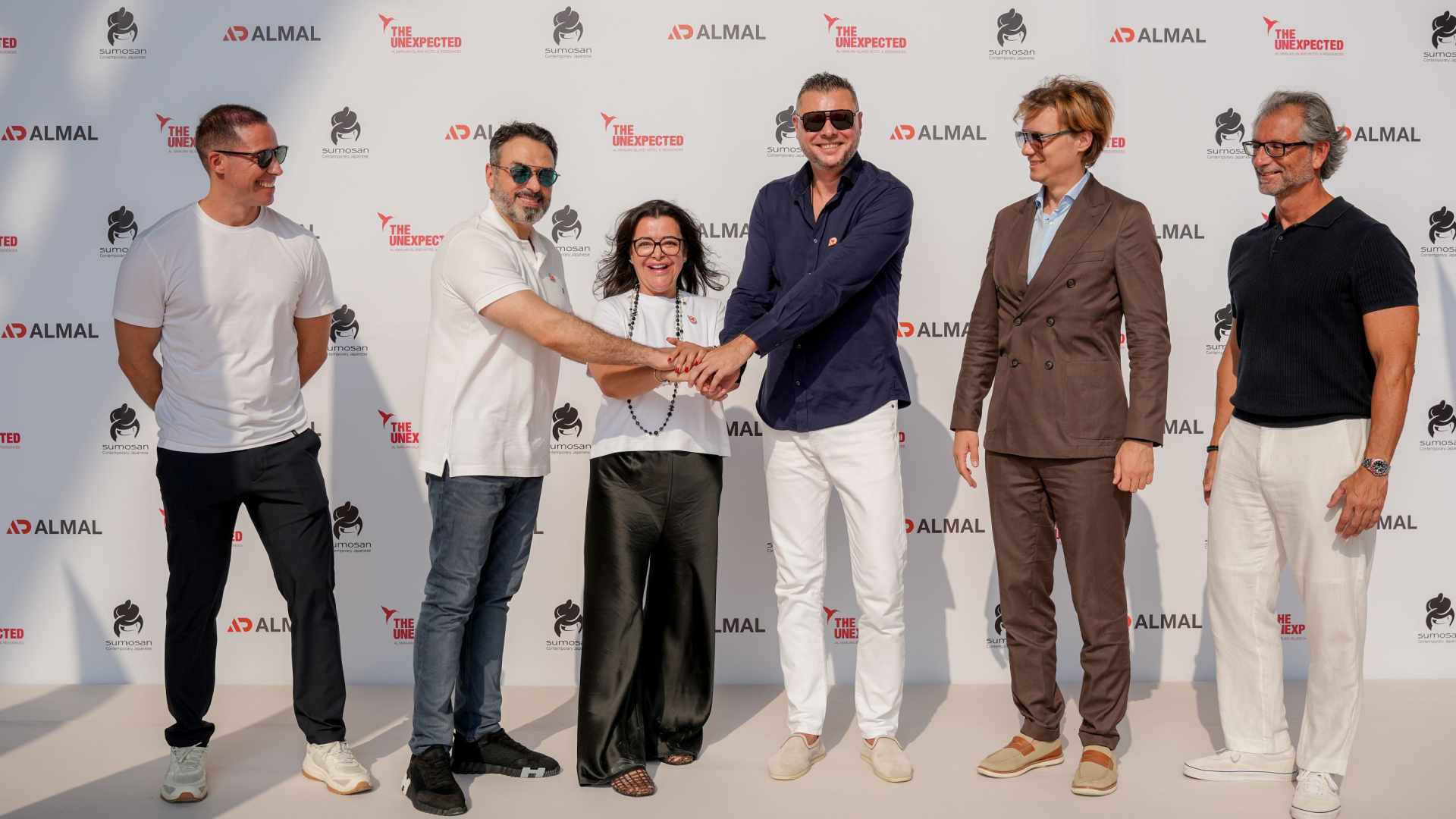
ALMAL Real Estate Development and Sumosan Restaurant Group celebrated their partnership with an official signing ceremony at The Unexpected Al Marjan Island Hotel & Residences, marking a significant milestone in the development’s premium dining and hospitality offering.
Held on 3 November 2026 at the project site on Al Marjan Island, the ceremony was attended by senior leadership from both organisations. The official signing was led by Dmitriy Starovoitov, Founder of ALMAL Real Estate Development, and Janina Wolkow, Founder of Sumosan Restaurant Group, in the presence of Sylvain Eid, Partner at ALMAL; Vladimir Vysotski, CEO of ALMAL Real Estate Development; Hugo Goncalves, COO of Sumosan Restaurant Group; and Manuel Garcia, General Manager of The Unexpected Al Marjan Island Hotel & Residences.
Following the ceremonial signing, the delegation toured the development, including the restaurant areas and mock-up room, reviewing construction progress and the future hospitality experience.
Internationally recognised for its contemporary Japanese cuisine, Sumosan brings more than two decades of culinary expertise and a presence across leading destinations in Europe and the Middle East. Its signature approach combines traditional Japanese techniques with contemporary creativity and refined hospitality.
Dmitriy Starovoitov, Founder of ALMAL Real Estate Development, commented:
“Our vision for The Unexpected Al Marjan Island extends beyond traditional luxury hospitality. Bringing Sumosan to Al Marjan Island is another important step in creating a destination that combines world-class dining, entertainment and exceptional guest experiences.”
Janina Wolkow, Founder of Sumosan Restaurant Group, added:
“We are delighted to bring Sumosan to The Unexpected Al Marjan Island. This collaboration represents an exciting opportunity to introduce our distinctive Japanese dining experience to a new audience in one of the UAE’s emerging hospitality destinations.”
Sylvain Eid, Partner at ALMAL, commented:
“Sumosan is a natural fit for The Unexpected’s entertainment-led concept and aligns with the ambition to create a destination where exceptional dining, lifestyle and entertainment come together, offering guests experiences that go beyond traditional hospitality.”
Developed by ALMAL Real Estate Development and operated by Palladium Hotel Group under The Unexpected Hotels & Residences brand, the five-star property comprises 319 hotel rooms and 103 residential apartments. The Ibiza-inspired destination will feature a combination of hospitality, dining, entertainment, beach club and rooftop experiences.
The ceremony follows the recent completion of the development’s superstructure, with façade, MEP installations and interior fit-out works now progressing across the property.


Qatar Airways Unveils Onboard Signature Music Created in Partnership with Award-Winning Composer Hans Zimmer

Laura Hammett Expands to the Middle East with New Studio in Dubai
RAF ABU DHABI ADDS STARZPLAY AS DISTRIBUTION PARTNER ACROSS MENA



-

 Trending1 year ago
OPPO A6 Pro 5G Review: Reliable Daily Driver
-

 Tech News2 years ago
Denodo Bolsters Executive Team by Hiring Christophe Culine as its Chief Revenue Officer
-
 VAR2 years ago
Microsoft Launches New Surface Copilot+ PCs for Business
-

 Automotive2 years ago
AGMC Launches the RIDDARA RD6 High Performance Fully Electric 4×4 Pickup
-

 VAR11 months ago
Huawei Nova 14 Pro Review: Where Camera Excellence Meets Ecosystem Evolution
-
Tech Interviews3 years ago
Navigating the Cybersecurity Landscape in Hybrid Work Environments
-

 Hospitality2 years ago
Gulfood 2025 30th Edition Kicks Off Today, Setting New Benchmarks in F&B Growth and Innovation
-

 Tech News1 year ago
Nothing Launches flagship Nothing Phone (3) and Headphone (1) in theme with the Iconic Museum of the Future in Dubai