
 Have a question? +971 56 404 0503




Home Feature
HOW ARCHITECTURE IS SHAPING THE UAE’S NEXT GENERATION OF SMART CITIES


By Amir H. Greiss, Founder & CEO, SharpMinds Consulting Engineers
Say “smart city” to most people and they picture an app, a sensor, a dashboard somewhere lighting up with data. What I find far more interesting is what’s happening underneath that layer, buildings and streets increasingly designed to sense their surroundings and respond in real time, rather than simply exist within them. I’ve spent twenty years in this region’s built environment, working alongside engineers and planners where that shift is now simply part of the design conversation, and the thing I keep coming back to is that “smart” isn’t a layer you add on top of a city. It’s a design decision you make from the foundations up. The UAE has been making that decision at national scale, and it’s worth unpacking from an architect’s vantage point.
From static infrastructure to predictive systems
Start with the Dubai Digital Twin Platform, which Dubai Municipality launched earlier this year, a living, constantly-updating model of the city that now includes over 195,000 buildings and 280,000 pieces of infrastructure, drawn from more than 1,500 layers of spatial data. As an architect, what excites me isn’t the map itself, it’s what it lets us do before a single foundation is poured. We can walk a neighbourhood through a flood before it happens, trace an evacuation route through real streets, or spot where a drainage line would fail, all on screen, long before it’s ever tested by an actual storm.
You see the same instinct in traffic management. Dubai’s RTA has been rolling out a new signal system built on predictive analytics and a digital twin of the road network, aiming to get ahead of congestion instead of just reacting to it where the target is up to a 20 percent reduction. Take away the “smart mobility” label and what’s left is queuing theory, sensor calibration, network modelling. The intelligence in these systems didn’t come from nowhere as it’s engineering judgement, just scaled up and running in real time.
Sustainability plays a vital role
None of this makes sense without factoring in the climate we’re building in. The UAE was the first country in the MENA region to commit to Net Zero by 2050, and buildings are central to that target, largely because cooling eats up such a large share of the national electricity load. A recent peer-reviewed study on net-zero building strategies in the UAE puts a number on something engineers on the ground already know, pairing passive design with IoT-based systems — BIM-linked digital twins, predictive maintenance can cut operational energy use by 10 to 30 percent. The same paper notes cooling alone accounts for 40 to 60 percent of building electricity use here, which tells you where the effort has to go first which is envelope design, shading and orientation before you even get to the sensors.
There’s institutional weight behind this too. The Emirates Green Building Council, now twenty years in, runs a Net Zero Centre of Excellence that’s been pushing deep retrofits and circular-economy thinking into the built environment since 2018.
Where it’s headed?
What sets the UAE apart, in my view, is that none of these efforts reads as a showcase for visitors. It’s being written into how the country plans roads, buildings, and utilities for the next thirty years, as policy. For architects, that changes the brief. It’s no longer enough to design a building that looks good and performs efficiently on its own, it has to be conceived as part of a system that senses, adapts, and reports back, which means sitting at the table with engineers from the earliest sketches, not handing them a finished design and asking them to make it work.
Screens don’t make a city smart. Thoughtful design, tested and proven together with the people who build it, does. On that front, the UAE has set a bar the rest of the region will be measuring itself against for some time.
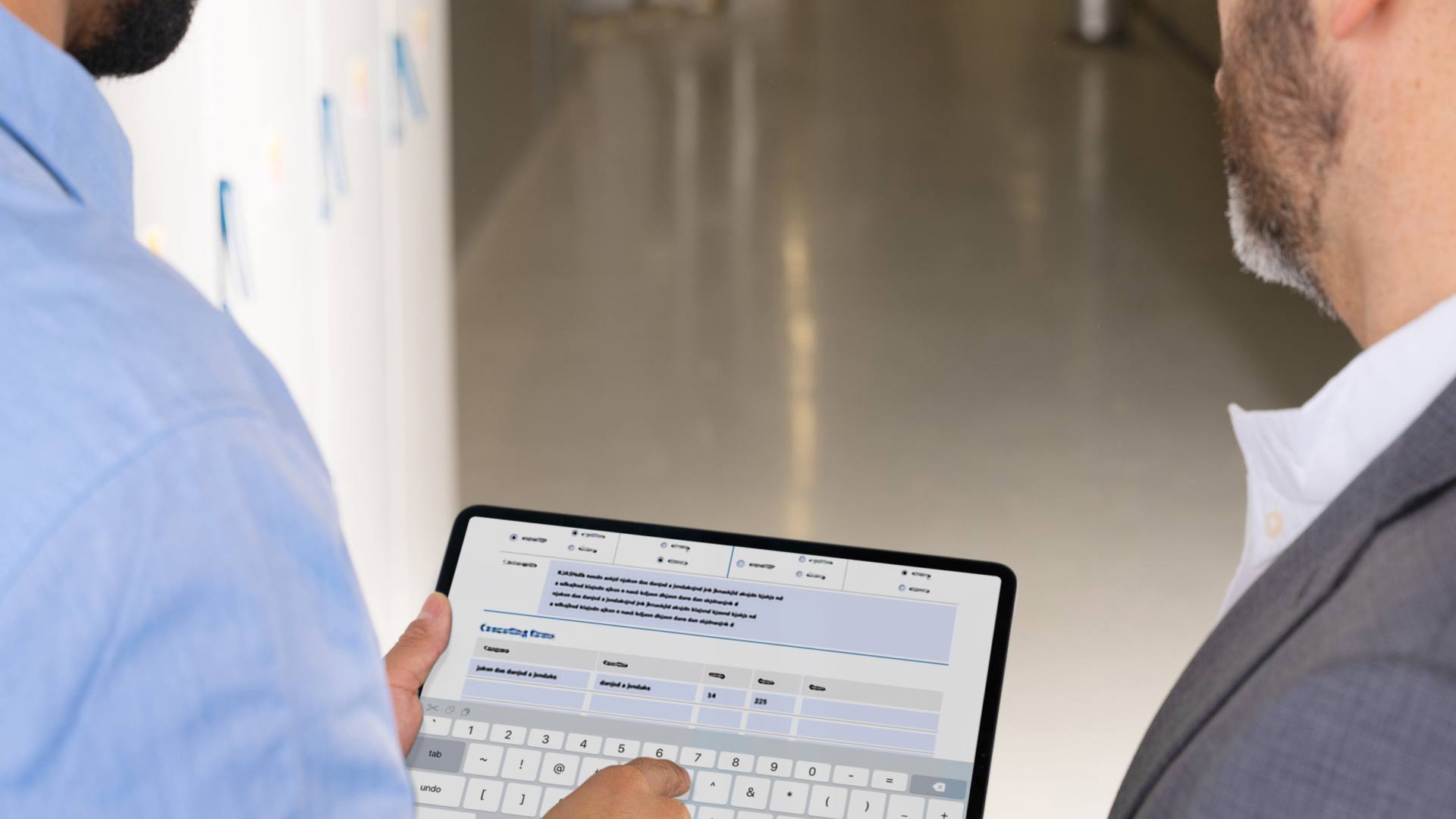
According to a recent skills report, 59% of quantity surveying and construction professionals identified advanced digital tools as the most important skill for the future.
Construction has always relied on practical experience: understanding how projects are delivered, spotting risks early and knowing when something on site is not right. These skills remain essential, but as digital tools become more embedded across the industry, the way construction teams work is changing.
As a digital platform working with construction teams around the world, PlanRadar has identified six skills that are becoming increasingly important on the modern jobsite, helping professionals work more efficiently and adapt as construction becomes more digital.
1. Creating clear digital project records
Good documentation is more than taking a photo or writing a quick note. Site information should clearly show what happened, where it happened, who is responsible and what action is needed. This makes it easier for contractors to respond and for reviewers to confirm that work has been completed correctly.
A 2023 case study found that introducing structured digital quality-control documentation reduced supervisors’ documentation workload by 80–90%. Standardised data entry also improved the accuracy and usability of inspection records. Clear, organised information also provides a stronger foundation for future automation and AI.
2. Coordinating digital workflows
Construction professionals increasingly need to understand how information moves through a project, not just how to use individual tools. An inspection, Request for Information (RFI) or approval should have a clear path, showing who starts it, what information is needed, who reviews it and when it must be escalated.
This matters because delays in these workflows can have a real impact. A PlanRadar study of 1,728 construction professionals found that one in four respondents said delayed approvals typically add more than a month to project timelines. Clear digital workflows help teams keep responsibilities visible, reduce missed actions and move decisions forward faster.
3. Working confidently with digital drawings and BIM
Construction professionals do not need to be BIM specialists, but they should be able to navigate digital drawings, understand revisions and connect site issues to the correct location. This is becoming increasingly important in the UAE as Dubai continues to digitise building processes.
Through its BIM platform, Dubai Municipality allows consultants to upload IFC models and automatically check them against Dubai BIM Standards and selected building regulations.
As these processes become more sophisticated, these skills will become more important on site. Professionals who can confidently use digital models will be better placed to connect design information with actual site conditions.
4. Capturing useful visual evidence
Visual documentation is becoming a more important part of how construction teams track progress, and communicate site conditions. Professionals need to know what should be captured, when it should be recorded and how images can support later decisions.
A UAE case study at Expo City Dubai saw a contractor use 360-degree reality capture across 28 buildings, creating around 180 captures of the project. The visual record helped teams monitor progress, identify issues and improve reporting. Used effectively, visual evidence gives teams a clearer record of site conditions and makes progress easier to review without relying solely on repeated physical inspections.
5. Building practical data literacy
Construction teams generate large amounts of information daily. The skill is knowing how to read that information and identify what actually needs attention.
Professionals should be able to spot recurring quality issues, overdue actions, approval delays and differences in performance across teams or locations. They also need to understand when a number is useful and when it needs more context.
This does not mean every project manager needs to become a data specialist. It means being able to ask the right questions, check the information behind a result and use project data to support better decisions.
6. Using AI with professional judgement
A 2025 RICS survey of more than 2,200 construction professionals found that 46% identified a lack of skilled personnel as one of the main barriers to AI adoption. As AI becomes more common in construction, professionals will therefore need more than basic awareness of the technology.
They should understand where AI can support routine work, how to question its output and when professional verification is required. AI can organise information, identify patterns and summarise records, but decisions involving safety, contracts or technical responsibility still require human judgement.
Digital skills are becoming part of everyday construction, but the pace of technological change means professionals cannot be expected to master every new tool. What the industry needs instead are curious, adaptable people who are willing to keep learning, question how technology is used and apply it in ways that improve project delivery.
Home Feature
Cities are learning to predict problems. The harder question is whether they can act on them.

By Eddie Cheng, Co-Founder and Chief Technology Officer of Origen
Ask whether a city can predict a problem before its residents feel it, and the honest answer in 2026 is yes. Weather models, satellite imagery and dense sensor networks can now tell a municipality which underpass will flood, which junction will lock up and which substation is running hot. Prediction is no longer the scarce capability. The real challenge is turning a prediction into a decision, and a decision into an action that physically changes what happens on the street. A forecast that cannot drive either is simply a more sophisticated way of watching things go wrong.
The pressure to close that gap is not abstract. The United Nations’ World Urbanization Prospects 2025 finds that cities are now home to 45 per cent of humanity, that nearly two-thirds of global population growth through 2050 will occur in urban areas, and that the number of megacities has quadrupled over the past five decades. At that scale, a management model that waits for a complaint before raising a work order is not merely slow; it is arithmetically outmatched. No control room will ever have enough people to respond to a city of ten million, one incident at a time.
Instrumented is not intelligent
Much of the past decade’s smart-city investments went into instrumentation: more sensors, cameras and dashboards. That work was necessary. But a sensor count is a procurement metric, not an intelligence metric. A city with 10,000 sensors and 40 dashboards is well instrumented, yet not intelligent. Intelligence begins when the data from those sensors can be reasoned over as a single picture and converted into an action that has physical impact.
Three transitions, and where most cities stall
In our work with municipalities, we describe the journey as three transitions. Most cities are still working on the first.
From invisible to visible. Most of what a city needs to know about itself already exists, but it is locked in silos: utilities in one system, construction permits in another, and resident records in PDFs and flat databases with no spatial depth. Each department monitors only its own part of the city, whether zoning, utilities or construction, while no one sees the whole picture. Bringing those records together in a single, spatially and temporally aligned three-dimensional model of the city is unglamorous work. It is also where much of the value is created, because a fact only becomes actionable once its location and timing are known.
From reactive to proactive. Once the whole scenario is understood, questions change. Rather than investigating after a storm why a district was underwater, a city can run a flood simulation on a proposed development before the first foundation is poured and change the design rather than the drainage budget.
From decision to action. This is the transition that matters most and is attempted the least. Consider utility corridors, for instance. A pipeline conflict discovered during excavation can delay a project by months. When the same conflict is detected in digital twins, stakeholders are alerted and the design change is pushed back into the engineering systems, it can be resolved before anyone lifts a shovel. The next generation of city command centres should not be judged by how many problems they surface, but by how many they close.
Two tests a beautiful rendering does not pass
This is why we build SpatialWare, our digital-twin operating system for cities, around two questions. First, is the twin computable? Many companies can produce a photorealistic three-dimensional city. The differentiating question is how much analysis can actually be performed using it, from flood hydraulics and infrastructure capacity to cross-domain impact and conflict detection. A twin you can only look at is a map with better lighting.
Second, is the twin alive? A model refreshed once a year is a monument to the city as it was. Keeping a twin current across thousands of square kilometres requires production pipelines that update only what has changed and automate tasks that were once done by hand, including scene reconstruction, segmentation, mesh simplification and texture recovery. Where industry practice has typically automated a fifth to a third of this work, we have pushed that figure beyond 90 per cent, not for elegance, but because a twin that cannot keep pace with the city cannot be trusted to predict it.
The obstacle is institutional before it is technical
Prediction requires cross-departmental data, and the barrier to sharing it is far more often organisational than it is technological. This is why architecture matters as much as algorithms. The AI-powered digital governance framework we are architecting is deliberately federated. It connects existing systems rather than replacing them, synchronises datasets that matter through an AI-enabled orchestration layer, and leaves each department in control of its own data. A city does not need to be rebuilt to become predictive. It needs to be connected in a way that its institutions can work with.
Built at home, because accuracy depends on it
It also needs to be built in the region. A living model of the way a society moves, consumes and behaves is among the most sensitive assets a government can hold. In the Gulf region, where the UAE and Saudi Arabia are investing at national scale in AI strategies and sovereign digital infrastructure, the case for domain-engineered intelligence that is built and governed locally is not protectionism. A generic model trained elsewhere has never seen what a sandstorm can do to a coastal highway or how a city’s evening traffic patterns shift during Ramadan. In this context, sovereignty is not just a matter of control, but a precondition for accuracy.
What will test the loop next
Two shifts will demonstrate whether the sense–understand–decide–act loop holds under pressure. The first is the low-altitude economy: thousands of drones making tens of thousands of trips a day above a city cannot be regulated using a two-dimensional map. A platform that already has a live, three-dimensional picture of the city is the natural place to manage that airspace. The second is agentic AI, which is quietly redefining what a dashboard can be. The next city operations centre will have fewer screens because a copilot that recommends an action and, with human approval, executes it will make most of today’s screens redundant.
The same principle governs the other end of our work. Domia, our AI-native home, learns a household’s rhythm, distinguishes family members by voice and senses presence, posture and even a fall without relying on a single indoor camera. Whether the environment is a villa or an entire emirate, the design goal is the same: a system that anticipates rather than records, and protects without watching.
A new benchmark for public service
For a century, cities have been judged by response time: how quickly a crew arrives or how fast a road reopens. The next benchmark is subtler and more demanding, measured by how many problems residents never experience because a system can see them coming and act before they reach the street. Cities can now predict. The ones that lead will be those that learn to close the full loop.

By Dr Eleni Margioti, Neuropsychology Lead – The Brain & Performance Centre, A DP World Company
Memory lapses and slower recall are often accepted as an inevitable part of ageing, but a growing body of research tells a more encouraging story. Cognitive decline is not a fixed timeline; it is heavily influenced by daily habits, and some of the most effective of those are also the simplest. The brain responds to how we use it, at every age.
The principle behind this is neuroplasticity – the brain’s ability to form new connections and reorganise itself in response to new demands, well into later life. Just as muscles respond to resistance training, the brain responds to being challenged in ways that are unfamiliar or slightly challenging. The key word is “slightly”. Exercises that feel effortless stop offering much benefit once they become routine, which is why variety matters as much as consistency.
Start with working memory
Working memory is the ability to hold information in mind while actively using or manipulating it. We rely on it throughout the day, for example, keeping track of a conversation while formulating a response, holding a PIN in mind long enough to enter it, or mentally reorganising information we have just heard.
Simple daily challenges can exercise this system: repeat a short sequence of numbers backwards, count backwards from 100 in sevens, or hear a short list of items and then recall them in reverse order. As these tasks become easier, gradually increase the difficulty to keep your working memory challenged.
These exercises take only a few minutes and place demands not only on working memory, but also on attention and executive control. The aim is not simply to get better at a particular exercise, but to regularly challenge the brain to hold, manipulate, and work with information.
Make cognitive exercise challenging
Not all cognitive activities challenge the brain in the same way. Sudoku, card games and strategy games can be particularly engaging because each game presents a different problem to solve, requiring attention, planning, working memory and flexible thinking. Playing cards with others can add another layer of challenge through social interaction, decision-making and adapting to another person’s moves.
Puzzles can also provide useful cognitive stimulation, but repeatedly completing the same type of familiar task may become less demanding with practice. The key is variety and progressive challenge: choose activities that remain engaging, change from one attempt to the next, and require you to think, adapt and develop new strategies.
Learn something with no practical use
There is a strong case for taking up a skill purely because it is unfamiliar – a new language, a musical instrument, even learning to draw. These activities activate multiple brain regions at once: memory, coordination, auditory or visual processing, and sustained attention. The learning curve is uncomfortable at first, and that discomfort is largely the point. It is the mental effort of building a new skill, rather than eventual mastery of it, that appears to matter most for neuroplasticity and cognitive reserve.
Do not separate the mind from the body
Cognitive exercises work best alongside physical movement, not instead of it. Activities that combine the two, dancing, tai chi, or even walking while doing simple mental arithmetic, ask the brain to coordinate movement and thought at the same time, which is a more demanding and more effective form of stimulation than either done alone. Aerobic exercise also increases cerebral blood flow and supports the release of neurotrophic factors involved in forming new neural connections.
Make it social
Conversation is one of the most complete cognitive workouts available. It draws on memory, language, attention and emotional interpretation, often within a single sentence. Group activities like a book club, a card game, volunteering, combine social engagement with mental challenge, and social isolation has been consistently linked with an increased risk of future cognitive decline.
Protect the sleep that consolidates it
Mental exercise only pays off if the brain has the opportunity to consolidate what it has practised. Memory consolidation takes place largely during deep sleep, alongside the clearance of metabolic waste products. Maintaining a consistent sleep schedule and good-quality sleep is an important part of cognitive health. Cognitive training provides the challenge; sleep helps the brain consolidate and retain what it has learned.
Consistency over intensity
The most common mistake is treating cognitive exercise as an occasional activity rather than a habit. An hour of puzzles once a week does far less than ten- or fifteen-minutes woven into daily life. Pairing a new mental exercise with an existing routine over morning coffee, during a commute, or before bed, tends to be what makes it stick.
None of these strategies can guarantee the prevention of cognitive decline, and persistent or concerning memory changes should always be discussed with a healthcare professional. However, the brain remains remarkably adaptable throughout life. The most effective approaches do not need to be complicated; they simply encourage the brain to keep doing what it does best: learning, adapting, and responding to new challenges.


Fimple adds five GCC financial institutions in first year, targets doubling regional customer base

New Initiative ‘Longevity Starts From Childhood’ Connects the Early Years With Lifelong Wellbeing

6 Digital Skills Becoming Essential for Construction Professionals



-
News11 years ago
SENDQUICK (TALARIAX) INTRODUCES SQOOPE – THE BREAKTHROUGH IN MOBILE MESSAGING
-

 Trending11 months ago
OPPO A6 Pro 5G Review: Reliable Daily Driver
-

 Tech News2 years ago
Denodo Bolsters Executive Team by Hiring Christophe Culine as its Chief Revenue Officer
-
 VAR1 year ago
Microsoft Launches New Surface Copilot+ PCs for Business
-

 Automotive2 years ago
AGMC Launches the RIDDARA RD6 High Performance Fully Electric 4×4 Pickup
-
Tech Interviews3 years ago
Navigating the Cybersecurity Landscape in Hybrid Work Environments
-
 Tech News2 years ago
Toshiba Announces MG10-D Series of Enterprise HDDs with Capacities up to 10TB
-

 Tech News1 year ago
Nothing Launches flagship Nothing Phone (3) and Headphone (1) in theme with the Iconic Museum of the Future in Dubai