
 Have a question? +971 56 404 0503




Tech Interviews
Philips, AOC Monitors Meet All Your Commercial Display and Gaming Needs

TPV Technology is a multinational electronics manufacturing company. TPV designs and produces a full range of CRT and TFT LCD monitors as well as LCD TVs and it owns brands such as AOC, Envision, and Philips. The Integrator interviews Carol Anne Dias, Regional Sales Director – MEA at TPV Technology.
Speak about the unique products of AOC, Philips for the consumer and business-centric market
At TPV Technology, we offer the full range of AOC & Philips monitors to meet the needs of our consumers at every level. Be it gaming, go green, touch, privacy, or wide screens for professionals and businesses, we have the right specifications.
Philips monitors meet the needs of today’s dynamic and polyvalent professionals with a wide array of innovative solutions designed to maximize productivity, deliver true-to-life visuals, enhance well-being, and safeguard the environment.
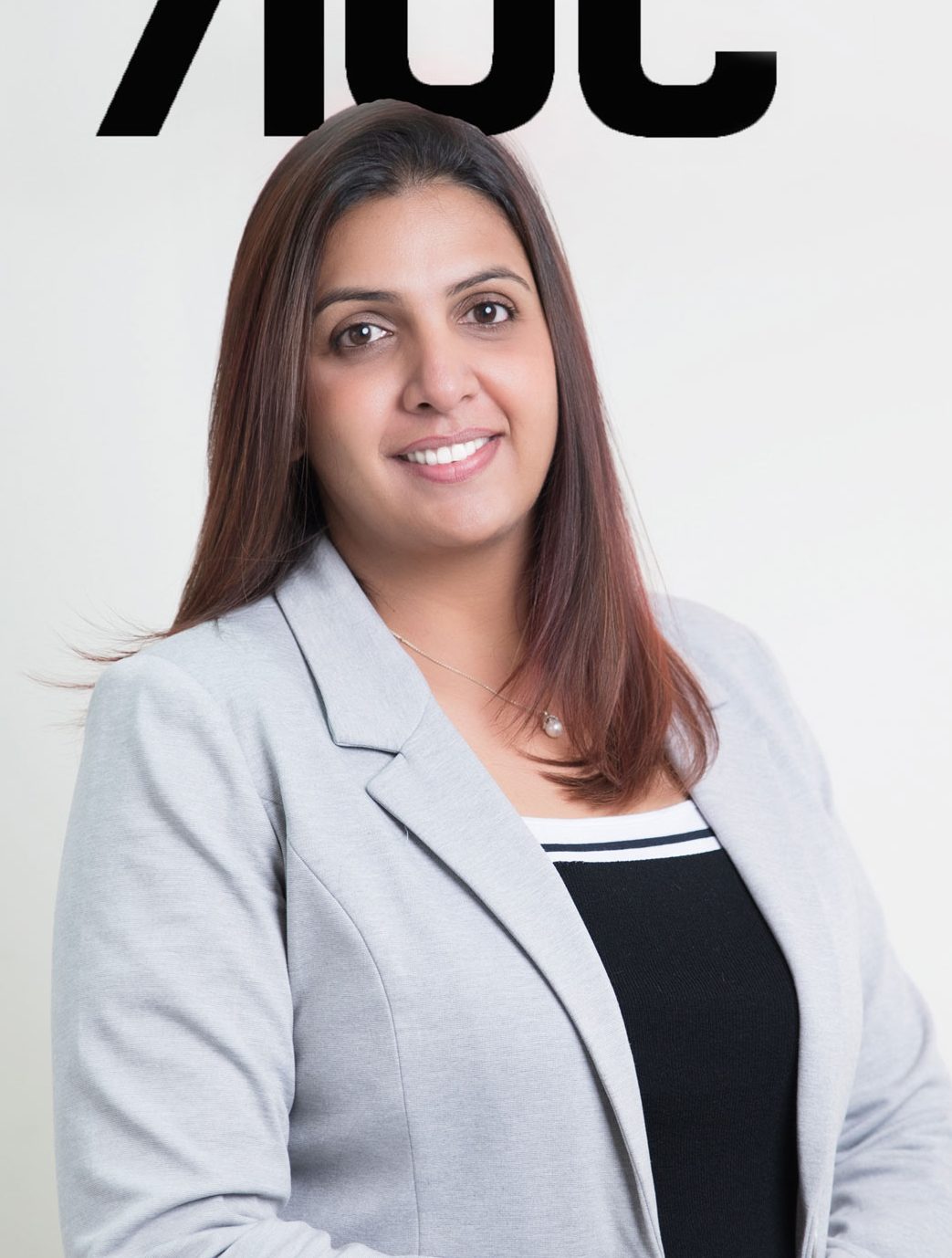
Carol Anne Dias, Regional Sales Director – MEA at TPV Technology
With our Award Winning 49″ curved 499P9H 32:9 SuperWide display is like two full-size high-performance monitors in one. Productivity-enhancing features, such as USB-C and pop-up webcam with Windows Hello, deliver the performance and convenience you expect.
AOC Monitors focus on professional display needs. With full-HD IPS and dynamic design, 24V2Q gives business professionals an enhanced experience. The model has also won Consumer Choice Award for its slim profile.
What sorts of concentration and association TPV-Tech has with SMEs and large enterprises?
We closely work and design tailor-made programs for our SME and channel partners. Segregating categories into B2B, gaming, entry displays, and our PD range so there is a better focus on products. We have a dedicated “sell-through team” handling direct sales in the SME market along with our distribution teams. We cater to smaller resellers with different programs, so as not to leave out our partners from every angle.
Are you planning to present products or solutions at the GITEX Technology Week? If so, which are they?
This year our focus is to launch the Philips gaming range and that’s now available in retail stores. Focusing on detail features, such as the momentum display boasts sound by legendary audio experts Bowers & Wilkins, create a new level console gaming monitor with a 55’’ 4K HDR display with ambiglow. This will be our flagship product (558M1RY) rolling out big at the GITEX Technology Week with our partners.
Tell us about the high-end AOC gaming monitors and their demand
As known AOC gaming bagged the No. 1 position as per IDC in one quarter. From there on, there has been a high demand for AOC gaming monitors especially in the 27’’ and above. 2021 Qtr 2 as per IDC AOC split is almost 28% market share in 27’’ and above. Our flagship model AOC Porsche design PD27 is our unique display created for a perfectionist with QHD 2560×1440 with superior picture quality.
The PD27 has a 27-inch 1000r curvature display that comes with a QHD (2560 x 1440) resolution along with a 240Hz refresh rate, and HDR 400. It offers multiple video inputs ranging from HDMI 2.0 and DisplayPort 1.4 with support for adaptive sync. Users longing for the roar of the flat six-boxer engines in racing games will appreciate the 5W stereo speakers with DTS sound.
A signature feature of the AGON Porsche design gaming monitor is the ambient light situated behind the screen that illuminates for a more immersive experience. A wireless gaming keypad is also included letting you access various settings such as FPS and RGB at a press of a button.
How do you evaluate TPV-Tech’s business prospects for the next five years?
Researchers predict that the global display market will hit a whopping figure of $206.29 billion by 2025. In light of this, we foresee it as below:
- Looking to the future of the workplace many factors will change the way we work. One of the most important when it comes to technology is the display. The visual aspect of our computer setup dictates how we view and engage in our daily tasks. It allows better communication, enables us to visualize our work, and lets us see the results. We have already seen trends such as large display formats, slim borders, borderless, curved, 4k resolutions, touch screens, and so on
- In the next coming years, we will see display screens incorporating trends such as visual/augmented reality (VR/AR) allowing users to view, move around, and interact with 3D displays
- 8K displays will allow larger screens without pixelation
- Transparent, flexible, and foldable – Ideal for meeting and conference rooms
- Eye-tracking: Like mobile phones, displays will have an eye-tracking feature for security
- AI will be incorporated into display screens, which will allow consumers to automatically be informed on suggestions on how to improve time and operate as your personal assistant



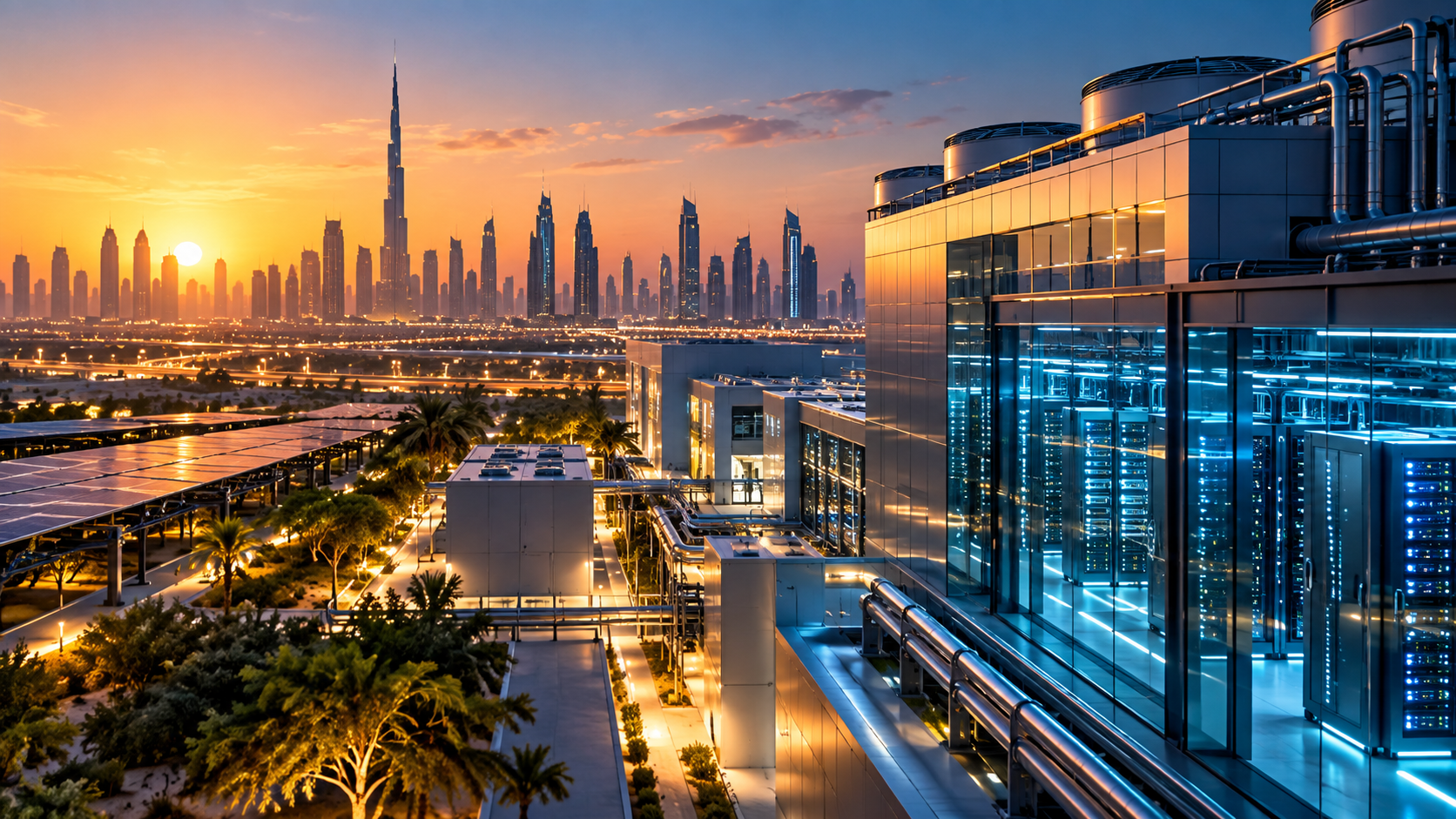
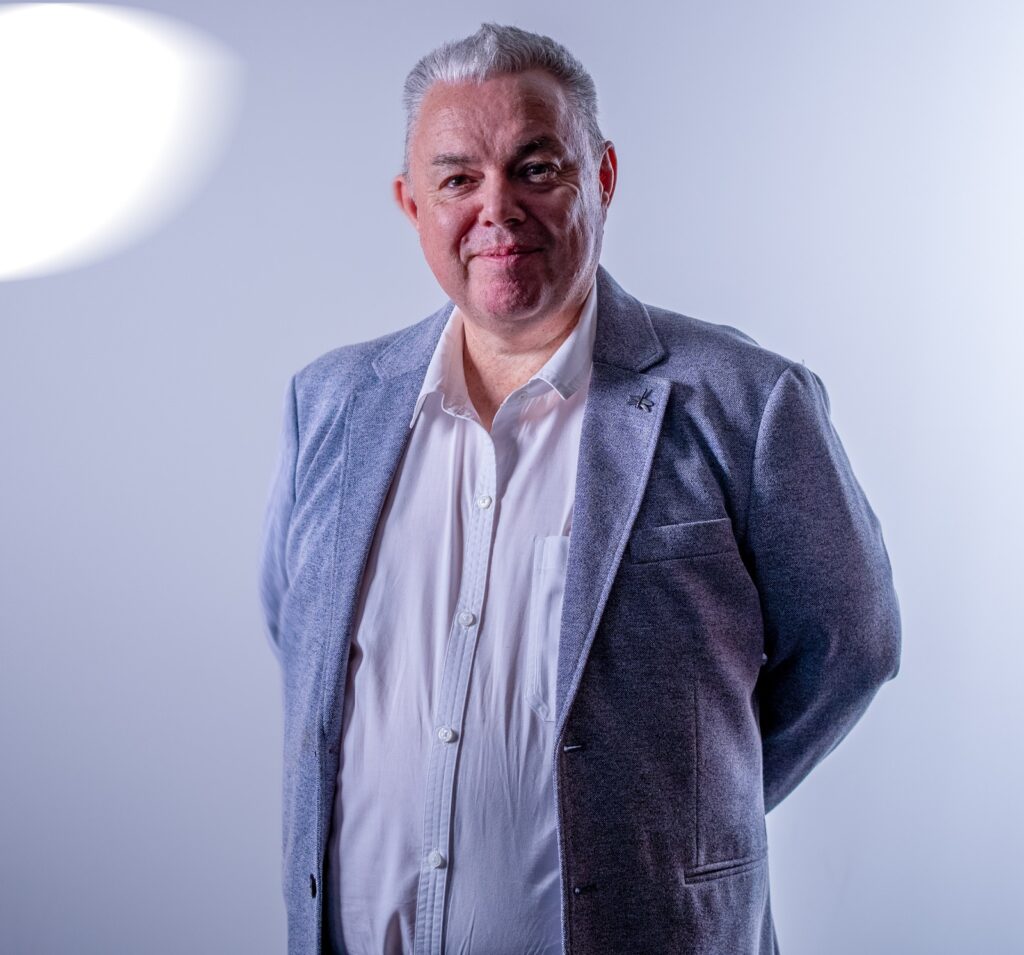
Dave Philp, Chief Value Officer at Bentley Systems, discusses how AI, digital twins, clean energy and integrated infrastructure planning are shaping the next generation of data centres across the UAE and wider Middle East.
The UAE and Saudi Arabia are investing heavily in AI and digital infrastructure. From your perspective, what makes the Middle East such an exciting market for the next generation of data centers?
One of the most substantial transformations we are witnessing is the transition of the UAE to a programmatic mindset in terms of data centre development, which makes it a desirable market for the next generation of data centres. We usually consider countries such as UK in terms of building or developing a singular project, but it is impressive that the UAE has been prioritising data centre corridors and digital infrastructure instead of focusing on individual hyperscale data centres.
While speaking to colleagues across the UAE and the Middle East region, I found it interesting as the UAE is constantly investing in the infrastructure needed to achieve its ambitious AI goal. This further includes larger digital ecosystems, sovereign cloud capabilities, and energy infrastructure. I believe it is not just about creating more data centres; it is also about establishing an infrastructure that can help achieve the ambitious economic vision of the UAE. It is important to understand that establishing a robust digital infrastructure is key to power AI, smart city initiatives and industrial diversification. This strategy is part of a much larger national economic plan. By combining digital aspirations with investments in energy and physical infrastructure, the UAE is successfully laying the groundwork for an AI-powered economy. We can also witness that the UK is making efforts to move towards a future economic model, which can motivate other countries to follow suit.
- Power is a growing challenge for AI data centers. How can the Middle East balance rising AI demand with its clean energy goals?
I believe that the UAE has secured a unique position in this regard as any capital investment in AI infrastructure needs to be strategized according to clean energy goals. As the Minister of Energy and Infrastructure highlighted, AI-enabled optimisation can coordinate data-centre demand with grid capacity, renewable generation, storage and shared cooling infrastructure. It can also identify opportunities to recover and reuse waste heat where local conditions make that technically and commercially viable.
This, in my opinion, will define the UAE’s next generation data centres. Integrated planning, which takes into account how data centres interact with renewable energy, solar opportunities, district cooling, battery storage, and demand management, will be prioritised over isolated engineering decisions. These factors need to considered by the UAE, not just in terms of separate workflows.
As I mentioned, these will be common across the region, but we are also witnessing unique models in the UAE. We are seeing a shift from isolated projects towards phased campuses and data-centre corridors supported by shared power, water, cooling and connectivity infrastructure.
- As AI data centers require more cooling, how can operators build facilities that are both efficient and responsible with water use?
Yes, it is interesting. It is similar to not having a favourite child, like you do not want operators to choose between energy and water, but how to optimise both to create a resilient thermal management system. However, it is my belief that it should start the very beginning of the project, investment level, thinking about it as a water ecosystem. It is not just about water on site, but about the sourcing within it.
Additionally, I believe that there is a lot of innovation within data centres as well. Now, when it comes to water-stressed environments, usage of reclaimed water should be considered. On the other hand for high-density AI workloads, direct-to-chip and other liquid-cooling approaches can remove heat closer to the source. Closed-loop systems recirculate coolant rather than continually consuming it, although the overall water and energy performance still depends on how the facility rejects heat to the external environment. Also, we must understand how it will integrate within the local recycling infrastructure within there as well.
As a result, we can now model data centres, which will reduce pressure on potable supplies and improve operational resilience. Effective energy and water management are beneficial for businesses as well. They can monitor performance and optimise water usage, which benefits both the community and operators.
The most significant factor, in my opinion, is that we can move from reactive to predictive water and cooling management with digital twinning and AI. When connected to trustworthy operational data and engineering models, infrastructure digital twins can help operators move from static reporting towards predictive management, testing changes in workload, climate, water availability and equipment performance before those conditions affect operations.
And that can offer significant potential for resilience as well as sustainable data centres with robust governance. This requires a comprehensive and holistic approach to both energy and water, rather than individual components.
Ultimately, the objective is not simply to minimise water consumption in isolation. It is to optimise the complete thermal system, because some lower-water cooling configurations may use more electricity. The right solution depends on climate, workload density, water stress, grid carbon intensity and resilience requirements.
- As the Middle East invests in smart cities like NEOM, what role will data centers play in enabling these developments?
I believe that smart cities should communicate with each other as they are powered by AI. This, showcases proper planning works exceptionally when we consider master planning and data centre planning from urban systems that will be integrated into it.
Additionally, integrated value chains are necessary for communities within the UAE to move forward with smart cities. Now, when we discuss value chains, we mean the energy, water, cooling, mobility, and data services.
A significant portion of our work is conducted on city or municipality level, where we use digital twins to enable planners understand interdependencies and future scenarios that can optimise assets within the framework of smart cities. This is where Bentley Systems’ approach to infrastructure digital twins Infrastructure can provide planners with a shared environment in which to understand dependencies, test future scenarios and make more confident investment and operational decisions.
We frequently consider the data centre to be something we would prefer to keep hidden. But, in reality it is a strategic enabler of better, more resilient urban growth. If we do it correctly and consider, let us call it a digital built UAE, which is plausible, becoming an engine room for smart cities.
In fact, this achievement has to be celebrated. If we do it correctly, it becomes a positive contributor behind them. Therefore, I think that smart cities require smart infrastructure, and data centres are becoming a part of what we now refer to as civic backbone. It must be present, accountable, and advantageous to the communities it serves. Moreover, it all comes down systems, smart dependencies, and data exchange between various departments. Because city-scale infrastructure spans many owners and systems, the digital-twin environment must be capable of federating trusted information through open standards, interoperable interfaces and appropriate governance.
- Beyond speed to market, what do you think will define the next generation of successful data centers in the Middle East?
Speed to market is still a very significant factor, but it must transcend that. I believe that if I was an investor considering data centres, I would clearly want to increase revenue at an expedited rate, but I would also want to ensure that it is resilient for a substantial time, which obviously includes water and energy.
It can understand it is sustainable, but I also want certainty. There are certain longer-term concerns, such as whether there will be droughts in the future. My opinion is that it must evolve. Compute hardware and thermal requirements will continue to evolve over the life of the facility, often much faster than the supporting civil, power and utility infrastructure.
Additionally, I also believe it must be flexible and adaptable as cooling technology and workloads evolve. Therefore, we need to consider how we may apply digital twinning once again, not just for capital building, but also for operational excellence.
As AI campuses move into operation, investors will increasingly look beyond capital cost and installed megawatts towards the productivity of the infrastructure: how reliably and efficiently it converts energy and compute capacity into useful AI output. Measures such as cost per token and tokens per watt will sit alongside PUE, WUE, carbon intensity and availability, providing a fuller view of operational and commercial performance.
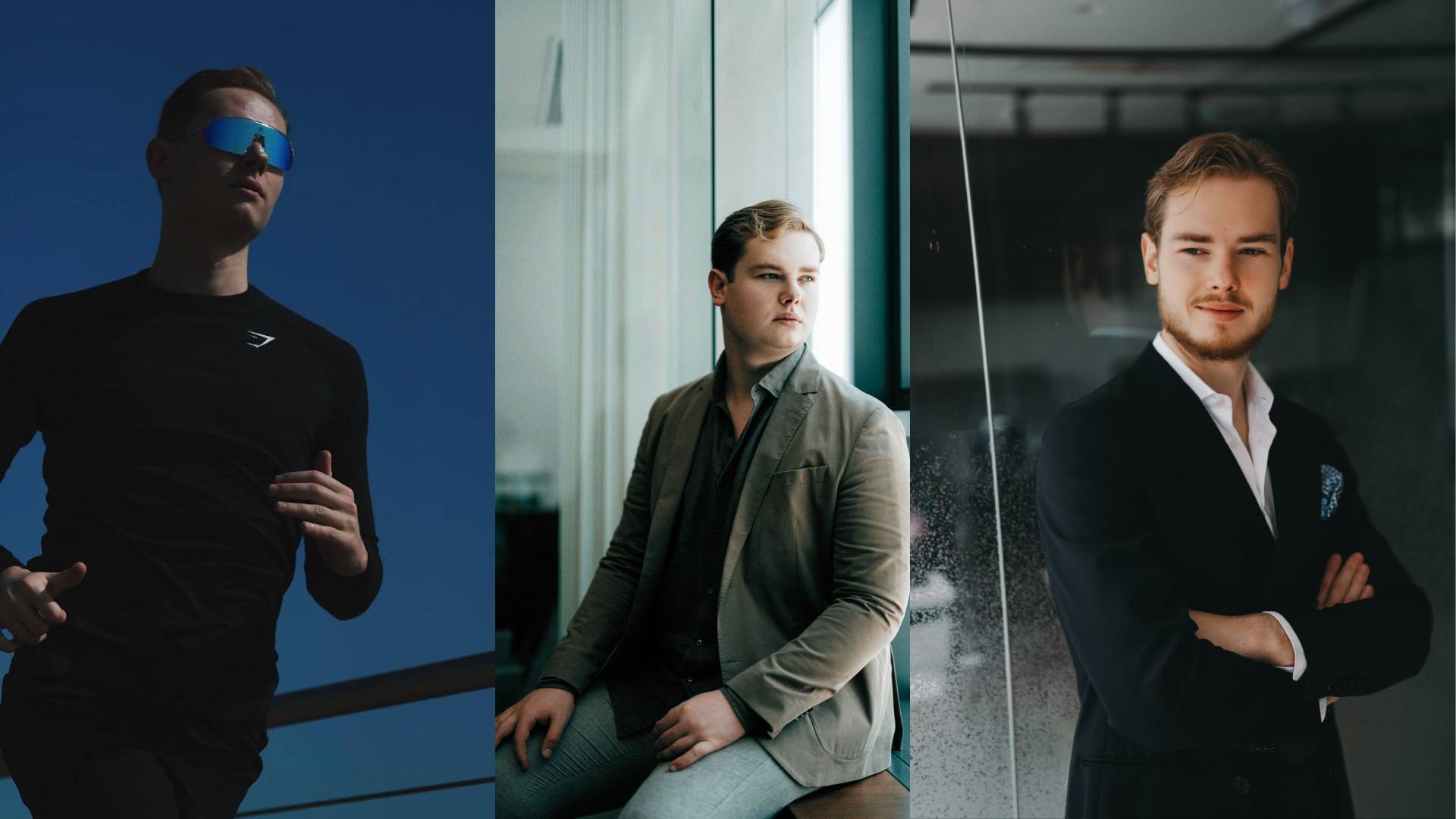
Ilia Sheludiakov’s story begins with a single decision — one that set off a complete transformation, physical, intellectual, and philosophical. He shed over 40 kilograms, trained for and completed marathons, and built businesses from the ground up. But it was in the process of rethinking his relationship with time that he arrived at something bigger: Temporalism, a philosophy built on the belief that time isn’t a pressure to outrun, but a long-term ally to work with.
At its core, Temporalism reframes time as our most valuable resource — one to be used consciously, not spent carelessly. It’s a philosophy rooted in a simple but powerful idea: small, consistent actions, repeated over time, compound into transformations far greater than any burst of intensity could achieve. Whether in health, wealth, or personal growth, Sheludiakov argues that lasting change comes not from perfect decisions made once, but from good decisions made repeatedly, with patience enough to let them compound.
Temporalism speaks to anyone who feels time slipping away too fast, or who senses untapped potential in their own ambitions but struggles to turn intention into consistent action. It’s a call to make peace with time — and to start using it as a partner in building a meaningful life.
Sheludiakov will next present Temporalism at the Sharjah International Book Fair, introducing the philosophy to a wider international audience and connecting with readers from around the world.
What is the core idea behind Temporalism?
Temporalism is about treating time as your most valuable resource and learning to use it consciously. It focuses on making better decisions today with your future self in mind, while building a meaningful life through consistent action.
How does Sheludiakov’s weight loss tie into this philosophy?
My weight loss was one of the experiences that shaped Temporalism. I lost over 40 kilograms, but the biggest lesson wasn’t about weight — it was realizing how much small actions, repeated over time, can completely change your life.
Why does he believe consistency beats intensity?
Intensity can create quick results, but it’s difficult to sustain. Consistency compounds. A small action repeated hundreds of times can ultimately have a much greater impact than a short period of extreme effort.
What role does patience play in building wealth?
Patience is fundamental. In investing and business, I try to think in years rather than weeks. Wealth is rarely created by one perfect decision; it is usually built through good decisions, discipline, and allowing enough time for them to compound.
Who is this book meant for?
It’s for people who feel that time is moving too quickly or that they could be doing more with their lives. Especially those who have ambitions but struggle to turn them into consistent action.
Where will he present the book next?
I will be presenting Temporalism at the Sharjah International Book Fair, where I look forward to introducing the philosophy to a wider international audience and connecting with readers from around the world.
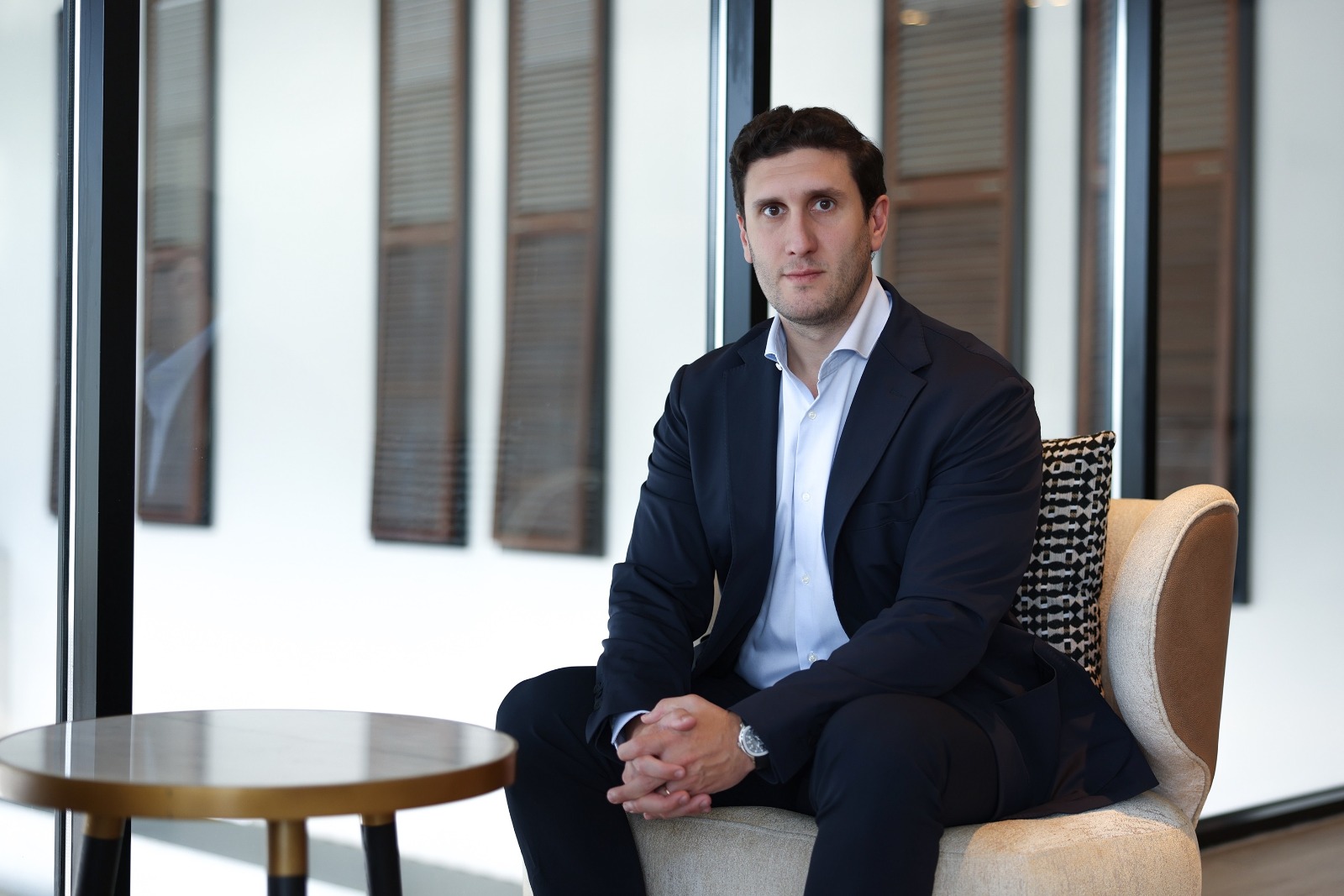
As Saudi Arabia moves AI from experimentation into large-scale deployment, Federico Pienovi, CEO APAC & MENA at Globant, explains why the Kingdom is emerging as a proving ground for agentic AI, AI-native business models and a new generation of connected experiences spanning sports, tourism, financial services and giga-projects.
Saudi Arabia is investing heavily in AI infrastructure and adoption. What is the Kingdom doing differently that could make it a global blueprint for moving AI from experimentation into large-scale business deployment?
What distinguishes Saudi Arabia’s approach is the alignment between national ambition and institutional execution. The Kingdom is embedding AI directly into the infrastructure of its giga-projects, financial institutions, and national sports ecosystems from day one. When you look at projects like Qiddiya, Red Sea Global, Diriyah, and New Murabba, these are greenfield developments where AI-native technology can be architected into the foundation rather than bolted on afterward.
Saudi Arabia is simultaneously transforming multiple sectors, tourism, sports, aviation, entertainment, real estate, and financial services, which creates a unique ecosystem effect. For instance, the world’s first Agent-to-Agent Tourism Corridor, connecting Red Sea Global and AlUla through sovereign AI destination agents, demonstrates how different entities can share AI infrastructure while maintaining data sovereignty. The Kingdom has also created conditions where global technology partners want to establish a deep local presence. Our own experience establishing a regional headquarters in Riyadh as a Center of Excellence for AI, creativity, and digital solutions reflects this pull, serious institutions want serious partners embedded alongside them, working on problems that matter at national scale.
Agentic AI is quickly becoming the next major enterprise conversation. Where are you already seeing organisations move beyond copilots towards AI agents that can independently execute tasks and make operational decisions?
The shift from copilots to autonomous agents is happening fastest where the business case is clearest and the tolerance for transformation is highest. In the Middle East, we’re seeing three sectors lead this transition: tourism and hospitality, financial services, and real estate development.
In tourism, the Agentic Tourism Corridor we’re launching at LEAP represents what we believe is the world’s first live Agent-to-Agent network, sovereign AI destination agents for Red Sea Global and AlUla that can communicate with each other to orchestrate guest journeys across multiple destinations. These are agents that can independently execute booking decisions, coordinate logistics, and personalize experiences based on real-time behavioral data.
Financial services institutions in the region, including banks like FAB, Emirates NBD, and Commercial Bank of Dubai, are deploying agentic AI that goes beyond customer service automation. We’re talking about agents that can independently manage risk assessment workflows, execute compliance checks, detect fraud patterns, and personalize customer journeys without human intervention at each step. Globant Financial Services AI Studio is specifically designed to refactor operations through agentic AI, not just add conversational interfaces.
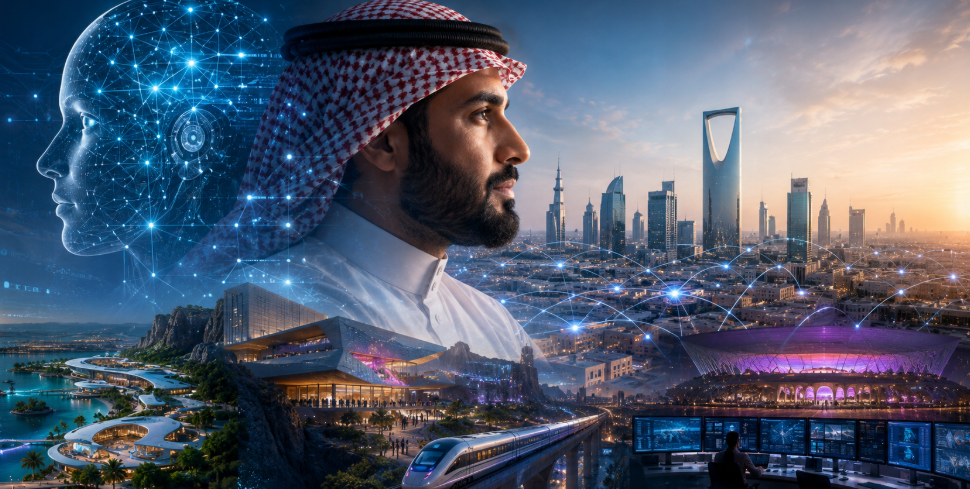
In real estate, our PropTech ecosystem demonstrates the full agentic potential: AI agents handling lead qualification, property discovery through AR/VR, construction progress tracking via digital twins, and automated booking, payments, and service management. For giga-projects like Diriyah and New Murabba, is operational necessity given the scale and timeline ambitions.
The proof that this model works at global scale came in August 2026 when FIFA selected us to build their continuous, year-round fan experience ecosystem using AI Pods. Initial pilots showed a 20% efficiency increase in throughput generation while maintaining or improving quality. FIFA specifically described their move as embracing an AI-native, consumption-based model, a signal that major global institutions are ready to move past experimentation.
Many companies have spent years on digital transformation, yet AI is now forcing them to rethink entire operating models. What separates an organisation that simply adds AI to existing processes from one that genuinely reinvents the business around AI?
The difference lies in whether an organization treats AI as a feature or as an operating system. Adding AI to existing processes means layering chatbots onto customer service, adding predictive analytics to existing dashboards, or automating discrete tasks within unchanged workflows. Reinventing AI means changing the unit of delivery, the commercial model, and the fundamental process of how work gets done, all at once.
Technology services have moved through three eras. Traditional IT services sold labor, hours and full-time equivalents, delivered through projects, scaled by hiring more people. Digital-native services sold expertise and delivery, agile squads, human-built software with automation layered in. What we call AI-native technology services represents a third era, where the resource is people plus AI agents, delivery is agent-orchestrated, and the commercial model shifts from hours to outcomes, capacity, and tokens.
When FIFA engaged us to build their fan experience ecosystem, they didn’t ask for AI features added to their existing platforms. They embraced an AI-native, consumption-based model where they pay for outcomes rather than hours, where AI agents execute while human experts orchestrate, and where all institutional knowledge generated is secured in a proprietary token vault that FIFA owns. That’s reinvention, the entire relationship between client and technology partner has changed. Organizations that genuinely reinvent share several characteristics: they architect for AI from the beginning rather than retrofit, they measure success in business outcomes rather than technology deployment; they’re willing to change commercial relationships, not just internal processes, and critically, they maintain human expertise in an orchestration role rather than simply automating humans out of the equation. Expert supervision remains essential, anyone can prompt an AI tool, but shipping results to production requires governance, quality validation, and domain knowledge that only human experts can provide.
Saudi Arabia is simultaneously transforming sectors such as tourism, sports, aviation and entertainment through major projects. Which of these sectors do you believe could become the strongest showcase for AI-driven experiences, and what might those experiences look like over the next three to five years?
Sports has the strongest potential to become Saudi Arabia’s defining showcase for AI-driven experiences, and the evidence is already emerging. The Kingdom’s sports transformation, through the Saudi Pro League, preparations for the 2034 FIFA World Cup, and purpose-built sports infrastructure within giga-projects, creates a unique convergence of factors: massive capital investment, greenfield venues, a young and digitally native fan base, and explicit ambition to leapfrog existing global benchmarks.
What makes sports particularly powerful as a showcase is that fan experiences are inherently measurable and emotionally resonant. Through Sportian, we’ve built a single operating system that connects fan identity, behavioral data, content, venue operations, and performance intelligence. This platform already powers LALIGA clubs, the Belgian Pro League, and the U.S. Men’s National Soccer Team under Mauricio Pochettino. The Saudi Pro League represents an opportunity to deploy this at scale in venues designed from the ground up for AI integration.
Over the next three to five years, the experience could look like this: a fan’s journey begins before they leave home, with AI agents curating personalized content, managing ticket purchases, and coordinating travel logistics. In-venue, their identity travels seamlessly across every digital touchpoint, concessions, merchandise, interactive experiences, creating a continuous relationship rather than discrete transactions. Real-time performance data informs on-screen content that adapts to what individual fans care about. Post-match, that relationship continues through personalized content and engagement that keeps fans connected year-round, not just on match days.
Globant has established its regional headquarters in Riyadh and worked across several Vision 2030-linked sectors. After three years in the Middle East, what have you learned about the region that has changed Globant’s strategy, and where do you see the biggest opportunity for the company over the next phase of growth?
What we’ve learned has shaped how we operate here and influenced our global thinking. The first lesson was the speed of ambition. The timeline expectations in Saudi Arabia compress what would be multi-year transformation programs elsewhere into months. This has pushed us to evolve our delivery models, the subscription-based This has pushed us to deploy our most advanced delivery models here from the outset. The subscription-based AI Pods approach, where clients can unlock modular teams of AI agents supervised by human experts from day one, reflects where the entire technology services industry is heading globally. The region’s pace and ambition mean that clients here are among the earliest and most demanding adopters of that model, making the Middle East a natural proving ground for AI-native delivery at scale.
The second lesson was the seriousness of partnership expectations. Our client roster in the region, Qiddiya, Red Sea Global, the Saudi Pro League, represents institutions that aren’t looking for vendors. They’re looking for partners willing to stake their own reputation on joint outcomes. Every flagship client represents an institution betting its own transformation on us.
The third lesson was about talent. The Kingdom’s investment in developing local technology talent aligned with our decision to position Riyadh as a Center of Excellence for AI, creativity, and digital solutions. This isn’t a satellite office supporting work done elsewhere, it’s a hub where innovation happens.
Looking ahead, the biggest opportunity lies in the interconnection between sectors. Saudi Arabia isn’t transforming tourism, sports, entertainment, aviation, and finance as separate initiatives, these are interlocking systems that will increasingly need to share data, coordinate experiences, and operate as a unified ecosystem. The technology partner that can operate across all these sectors, understanding both the vertical depth and horizontal connections, will be positioned to support the Kingdom’s next phase of growth.


Datadobi Adds Data Access Governance to StorageMAP, Enabling Enterprises to Answer the Critical Question: “Who Has Access to What?”

Why Debt, Despite All Its Contradictions, Is One of the Most Beautiful Ideas in Finance

Turkish Airlines Finalizes Order for up to 150 Boeing 737 MAX Aircraft



-
News11 years ago
SENDQUICK (TALARIAX) INTRODUCES SQOOPE – THE BREAKTHROUGH IN MOBILE MESSAGING
-

 Trending11 months ago
OPPO A6 Pro 5G Review: Reliable Daily Driver
-

 Tech News2 years ago
Denodo Bolsters Executive Team by Hiring Christophe Culine as its Chief Revenue Officer
-
 VAR1 year ago
Microsoft Launches New Surface Copilot+ PCs for Business
-

 Automotive2 years ago
AGMC Launches the RIDDARA RD6 High Performance Fully Electric 4×4 Pickup
-
Tech Interviews3 years ago
Navigating the Cybersecurity Landscape in Hybrid Work Environments
-
 Tech News2 years ago
Toshiba Announces MG10-D Series of Enterprise HDDs with Capacities up to 10TB
-

 Tech News1 year ago
Nothing Launches flagship Nothing Phone (3) and Headphone (1) in theme with the Iconic Museum of the Future in Dubai