
 Have a question? +971 56 404 0503




Financial Reports
ESET Threat Report: Infostealers using AI & banking malware creating deepfake videos to steal money

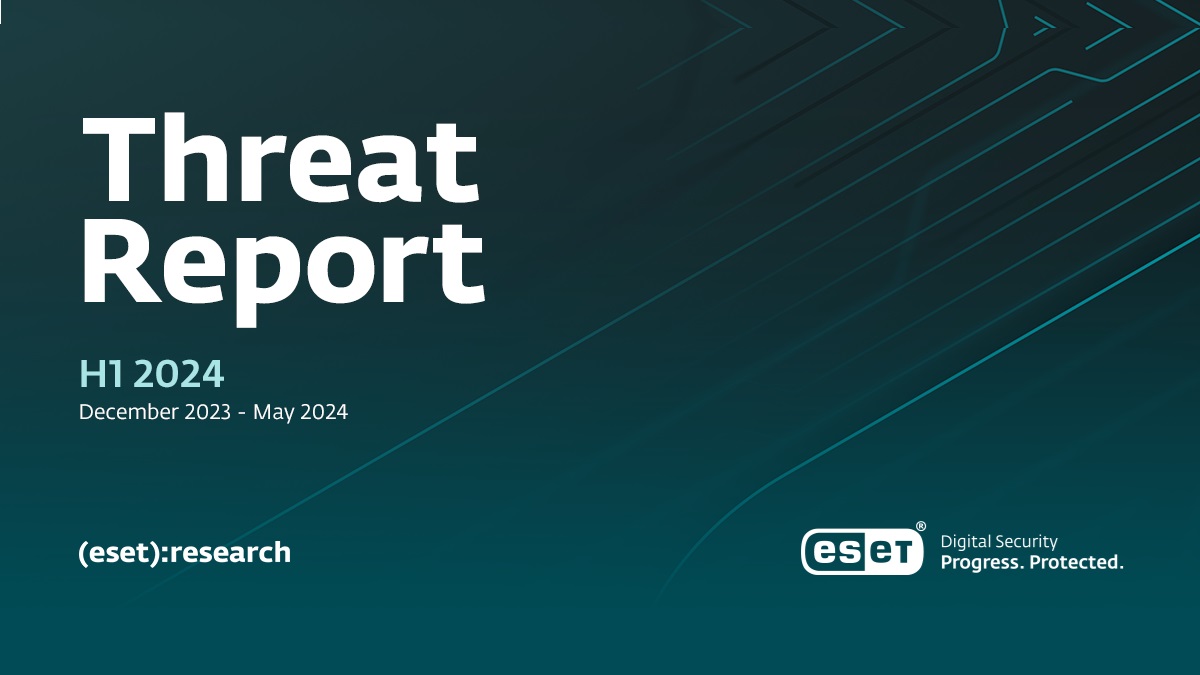
ESET has released its latest Threat Report, which summarizes threat landscape trends seen in ESET telemetry and from the perspective of both ESET threat detection and research experts, from December 2023 through May 2024. These past six months painted a dynamic landscape of Android financial threats, malware going after victims’ mobile banking funds – be they in the form of “traditional” banking malware or, more recently, cryptostealers. Infostealing malware can now be found impersonating generative AI tools, and new mobile malware GoldPickaxe is capable of stealing facial recognition data to create deepfake videos used by the malware’s operators to authenticate fraudulent financial transactions. Video games and cheating tools used in online multiplayer games were recently found to contain infostealer malware such as the RedLine Stealer, which saw several detection spikes in H1 2024 in ESET telemetry.
“GoldPickaxe has both Android and iOS versions and has been targeting victims in Southeast Asia through localized malicious apps. As ESET researchers investigated this malware family, they discovered that an older Android sibling of GoldPickaxe, called GoldDiggerPlus, has also tunneled its way to Latin America and South Africa by actively targeting victims in these regions,” explains Jiří Kropáč, Director of ESET Threat Detection.
In recent months Infostealing malware also began to utilize the impersonation of generative AI tools. In H1 2024, Rilide Stealer was spotted misusing the names of generative AI assistants, such as OpenAI’s Sora and Google’s Gemini, to entice potential victims. In another malicious campaign, the Vidar infostealer was lurking behind a supposed Windows desktop app for AI image generator Midjourney – even though Midjourney’s AI model is only accessible via Discord. Since 2023, ESET Research has increasingly seen cybercriminals abusing the AI theme – a trend that is expected to continue.
Gaming enthusiasts who ventured out of the official gaming ecosystem were attacked by infostealers, as some cracked video games and cheating tools used in online multiplayer games were recently found to contain infostealer malware such as Lumma Stealer and RedLine Stealer. RedLine Stealer saw several detection spikes in H1 2024 in ESET telemetry, caused by campaigns in Spain, Japan, and Germany. Its recent waves were so significant that RedLine Stealer detections in H1 2024 surpassed those from H2 2023 by a third.
Balada Injector, a gang notorious for exploiting WordPress plug-in vulnerabilities, continued to run rampant in the first half of 2024, compromising over 20,000 websites and racking up over 400,000 hits in ESET telemetry for the variants used in the gang’s recent campaign. On the ransomware scene, former leading player LockBit was knocked off its pedestal by Operation Chronos, a global disruption conducted by law enforcement in February 2024. Although ESET telemetry recorded two notable LockBit campaigns in H1 2024, these were found to be the result of non-LockBit gangs using the leaked LockBit builder.
The ESET Threat Report features news about recently released deep-dive investigation into one of the most advanced server-side malware campaigns, which is still growing – Ebury group, with their malware and botnet. Over the years, Ebury has been deployed as a backdoor to compromise almost 400,000 Linux, FreeBSD, and OpenBSD servers; more than 100,000 were still compromised as of late 2023.










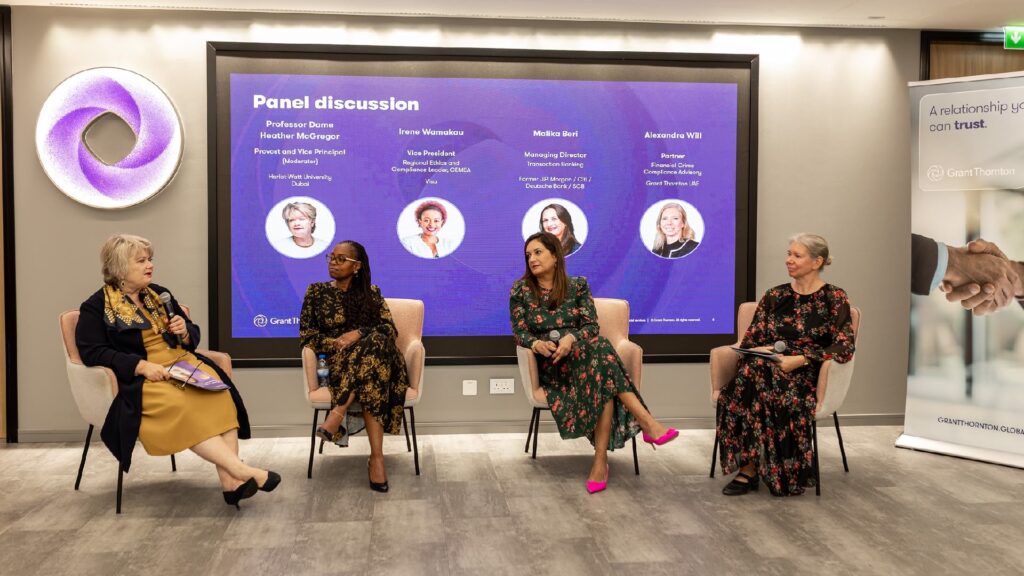
Heriot-Watt University and Grant Thornton today published a detailed report on the representation of women in senior leadership roles across the UAE’s financial services sector. Entitled ‘Discovery Series 2025: Women transforming financial services’, the importance of this report lies in its role as an evidence-based benchmark for gender representation within one of the UAE’s most influential economic sectors. As the second edition of The Discovery Series, this report builds on the momentum of the 2024 report by deepening the analysis, expanding the scope of the data, and reinforcing the critical contributions women are making at board and senior leadership levels.
The report highlights the contributions of senior female leaders across the UAE’s banks, investment firms, insurance and fintech companies, including board directors, Chief Risk Officers, and Heads of Internal Audit. As the UAE continues to build a resilient, diversified economy and reduce its reliance on oil, the financial services sector plays a crucial role in driving non-oil Gross Domestic Product (GDP) and strengthening governance.
In 2024, the UAE’s economy grew by 4% to AED 1.77 trillion, with the non-oil sector accounting for more than three-quarters of the GDP. Among key drivers of this growth is the financial industry, which contributed around 13.2% to the economy. Within the sector, risk and control functions, led by Chief Risk Officers (CRO) and Heads of Internal Audit (HIA), are essential to safeguarding its integrity and enabling sustainable growth. Women’s participation in these key areas not only enhances organisational resilience but also supports the national agenda for a balanced, transparent, and well-regulated financial system. The 2025 Discovery Series: Women transforming financial services report highlights both the representation of women in these pivotal roles and the opportunity to champion and accelerate women’s leadership across risk, audit, and control functions, thereby reinforcing the UAE’s long-term economic transformation.
The report, led by Professor Dame Heather McGregor, Provost and Vice Principal of Heriot-Watt University Dubai, includes research analysing board and leadership data from the 2025 financial year across 73 publicly listed financial sector companies in the UAE. The report captures data on 539 board members across three main stock exchanges in the UAE: Abu Dhabi Securities Exchange (ADX), Dubai Financial Market (DFM), and Nasdaq Dubai.
Key findings from this report are as follows:
- As of 1 September 2025, a total of 539 board members were identified by name and gender.
- Of the 539 listed board positions in the financial services sector, 85 (15.8%) are taken by women. This is higher than the UAE-wide average of 14.8% across all sectors, according to the 2025 GCC
Board Gender Index, highlighting that the financial sector is slightly ahead in advancing women’s representation at the board level.
- Eight (11%) of the 73 companies have no woman on their board, indicating that while progress has been made across the sector, gender representation remains uneven.
- Out of 49 identified companies, only three (around 6%) have a female CRO, highlighting a gap in female representation in leadership roles in the risk function and the need for proactive measures and greater accountability.
- Of the 60 companies where the HIA has been named, six (10%) have a female HIA, underscoring the need to strengthen gender balance within control functions.
Commenting on the release of the 2025 Discovery Series: Women transforming financial services, Hisham Farouk, CEO of Grant Thornton UAE said, “The UAE’s story is one of intentional progress – building a world class, innovation led economy with finance at its core. From capital markets and Islamic finance to a fast maturing fintech ecosystem and robust digital infrastructure, the financial sector is powering diversification, attracting global investment and creating skilled jobs. Yet true leadership is measured not only by growth, but by the prosperity of its people.”
“The Discovery Series is a benchmark designed to help industry, regulators and boards track progress and actively close the leadership representation gap. We are thrilled to partner with Heriot-Watt University Dubai on this report, which highlights both the progress made and the work still ahead to ensure women have equal opportunity to lead,” he added.
Emma Smalls, UAE Head of Business Risk Private Bank at HSBC Middle East, said, “The Discovery Series 2025 highlights both the progress and the opportunities that lie ahead for gender-balanced leadership in the UAE’s financial services sector. While we celebrate the growing representation of women on boards and in senior roles, this report also showcases the need for continued focus on inclusive leadership across the ecosystem. By shining a light on organisations and individuals leading the way, we hope to inspire further action and accelerate the journey toward truly diverse and resilient governance.”
Professor Dame Heather McGregor, Provost and Vice Principal of Heriot-Watt University Dubai, said, “Our intention in publishing the 2025 Discovery Series: Women transforming financial services was to provide a clear, evidence-based picture of gender representation at senior levels in the UAE financial sector. In partnership with Grant Thornton UAE, we aim to shed light on how women are shaping governance, risk, and reform from within, and to identify the organisations setting the benchmark for inclusive leadership. As one of the most progressive sectors in the UAE, the financial industry has a significant responsibility to champion gender equity.”
“The findings aim to bring clarity, transparency and evidence-based visibility to a topic where strong sentiment exists, but accurate data is often lacking. The Chief Risk Officers and Heads of Internal Audit are an essential part of any financial organisation, and this study provides facts to inform action and change”, she added.
2025 Discovery Series: Women transforming financial services, can be accessed here. Through this series, Grant Thornton and Heriot-Watt University hope to examine gender representation at senior levels in the sector, capturing both quantitative data and qualitative narratives, and providing sector-specific insights into how women are shaping governance, risk and reform from within.

Wio Bank PJSC has taken a practical step that many UAE founders have been waiting for. With the new Wio Xero integration, Wio Business customers can connect their accounts to Xero in a few clicks, turn on direct bank feeds, and reconcile transactions automatically. As a result, owners and accountants gain real-time visibility on cash flow, while manual entry and end-of-month chaos finally recede.
Why the Wio Xero integration matters
SMEs run on time and trust. Therefore, every minute spent chasing statements or keying in data is a minute not spent on sales, service, or product. By piping transactions straight from Wio into Xero, teams eliminate repetitive work, reduce errors, and shorten the month-end close. Moreover, automatic invoice matching and smart suggestions help users spot issues early—before they become a cash-flow surprise.
What customers get on day one
Once connected, bank feeds flow directly into Xero several times a day. Consequently, reconciliations move from hours to minutes. Owners can check live balances, compare inflows and outflows, and track payables and receivables without exporting spreadsheets. Meanwhile, accountants gain cleaner audit trails, clearer narratives for management reports, and fewer back-and-forth emails asking for “the latest statement.”
Designed for UAE workflows
Local context matters. Wio Business already streamlines onboarding, payments, and expense management for entrepreneurs. Now, with Xero in the loop, daily finance operations feel cohesive. Card transactions and transfers appear in Xero quickly; rules and bank-reconciliation suggestions accelerate matching; and dashboards surface the metrics that matter. Additionally, because the integration is direct, there’s no third-party connector to maintain, which means fewer points of failure and greater data control.
Leaders’ view: smarter banking, better decisions
Wio’s Chief Commercial Officer, Prateek Vahie, frames the move simply: make business banking smarter, faster, and more efficient so owners can focus on growth. Likewise, Colin Timmis, Regional Director EMEA at Xero, highlights the benefit for UAE businesses that want better visibility with less admin. In practice, both sides are pushing toward the same outcome—time back, clarity up.
Automation that compounds
Automated reconciliation is more than convenience. It compounds into stronger decision-making because the books stay current. With fresher data, founders can approve hires with confidence, negotiate supplier terms, and plan inventory with fewer assumptions. Furthermore, advisors can deliver forward-looking guidance instead of spending billable hours cleaning transactions.
Independence and control
Because the connection is direct, businesses keep ownership of their data pathways. There’s no rekeying, no CSV juggling, and no waiting for middleware to sync. Therefore, finance teams can standardize processes, document controls, and scale with fewer manual touchpoints. That discipline pays off during funding rounds, audits, and rapid growth phases.
Getting started
Setup takes minutes. In Wio Business, navigate to integrations, select Xero, and authorize the secure connection. Then map your accounts, confirm the start date for feeds, and turn on reconciliation rules inside Xero. From there, keep an eye on unmatched items, refine rules weekly, and enjoy the calm that comes with clean, current books.
Ultimately, the Wio Xero integration gives UAE SMEs what they need most: time and visibility. With direct bank feeds, automated reconciliation, and real-time insight in one workflow, teams spend less energy on admin and more on the work that moves the business forward.
Check out our previous post on Whish Money Mastercard Move: seamless Lebanon remittances
Financial
2024 Set to Become Second-Most Prolific Year for Cryptocrime as On-Chain Threats Become Increasingly Diverse and Professionalized

Chainalysis report shows US$40.9 billion was received by illicit addresses in 2024; figure projected to reach US$51 billion as ongoing analysis uncovers further criminal activity
As global cryptocurrency utilisation continues to rise, evidenced most recently in the post-US election bull run, so too does the ever-present shadow of crypto crime. In its annual Crypto Crime report, Chainalysis found that through 2024, illicit addresses received a whopping US$40.9 billion — a figure that the blockchain data leader estimates will rise to US$51 billion, as it continues to refine its analysis.
While this places 2024 on track to be the second most prolific year for cryptocrime, it’s important to recognise that crime remains just a minute share of the larger crypto ecosystem, accounting for just 0.14% of the year’s total on-chain transaction value.
What Chainalysis experts noted as being concerning however, is the ongoing diversification and professionalisation of crypto crime. “An increasing number of illicit actors, including transnational organised crime groups, are exploiting cryptocurrency to conduct a range of traditional criminal activities, such as drug trafficking, gambling, intellectual property theft, money laundering, human and wildlife trafficking, and violent crime. Notably, some criminal networks are turning to cryptocurrency to enable “polycrime” —engaging in multiple forms of criminal activity,” said Eric Jardine, Cybercrimes Research Lead at Chainalysis.
This trend is evidenced in the fact that of the US$40.9 billion received by illicit addresses in 2024, US$10.8 billion can be attributed to “illicit-actor organisations”, a category Chainalysis defines to encompass wallets linked to individuals and services directly involved in cybercrime, including hacking, extortion, trafficking, and scams, as well as those facilitating these crimes by offering infrastructure, tools, and services such as laundering-as-a-service.
Following the introduction of the landmark Payment Token Services Regulation by the Central Bank of the UAE (CBUAE) in July last year, another particularly concerning development for the UAE’s rapidly advancing crypto community is the fact that for a third year in succession, Chainalysis has observed a steady diversification away from BTC, with stablecoins now occupying the majority (63%) of all illicit transaction volume. Stablecoins currently account for the largest share of crypto activity in the UAE (51%), standing significantly higher than both Bitcoin (19%) and Ether (9%), which are typically considered to be the most recognised and popular cryptocurrencies.
“The UAE’s crypto community, including global stakeholders, is closely monitoring and actively engaging with the Central Bank’s stablecoin regime. With the approval of the AE coin, the country’s first regulated, AED pegged stablecoin, consumers will no doubt be excited to leverage the benefits these assets bring. However, the threat of losing their hard-earned investments to crypto criminals has the potential to dampen this enthusiasm. Ecosystem stakeholders, including VASPs, regulatory and supervisory authorities, as well as law enforcement agencies, must collaborate to implement robust safeguards against cryptocrimes, which not only protect the users but also reinforce trust in the UAE’s burgeoning digital asset ecosystem. This would ensure that innovation in the crypto space is matched by resilience against evolving threats,” said Arushi Goel, Policy Lead – Middle East and Africa at Chainalysis.

Terrace Dining, Oktoberfest, and Beach Days Return to InterContinental Abu Dhabi This October

THE STORIES BEHIND THE MATERIALS SHAPING UAE INTERIORS
Form Room welcomes new JVC residents with a complimentary coffee and exclusive discounts



-

 Trending12 months ago
OPPO A6 Pro 5G Review: Reliable Daily Driver
-

 Tech News2 years ago
Denodo Bolsters Executive Team by Hiring Christophe Culine as its Chief Revenue Officer
-
 VAR2 years ago
Microsoft Launches New Surface Copilot+ PCs for Business
-

 Automotive2 years ago
AGMC Launches the RIDDARA RD6 High Performance Fully Electric 4×4 Pickup
-
Tech Interviews3 years ago
Navigating the Cybersecurity Landscape in Hybrid Work Environments
-

 Hospitality2 years ago
Gulfood 2025 30th Edition Kicks Off Today, Setting New Benchmarks in F&B Growth and Innovation
-

 VAR11 months ago
Huawei Nova 14 Pro Review: Where Camera Excellence Meets Ecosystem Evolution
-

 Tech News1 year ago
Nothing Launches flagship Nothing Phone (3) and Headphone (1) in theme with the Iconic Museum of the Future in Dubai