
 Have a question? +971 56 404 0503





Hospitality
GLOBALISATION OF GCC HOSPITALITY BRANDS: OPPORTUNITIES AND CHALLENGES IN EUROPE, AFRICA AND BEYOND


JS Anand, CEO & Founder of LEVA Hotels
The Gulf’s hospitality industry has moved beyond its regional roots. Once focused on local and regional travelers, GCC hotel brands are now eyeing Europe, Africa, and other high-potential markets. Backed by strong domestic growth, economic diversification goals like Saudi Vision 2030, and powerful investment ecosystems, these brands are ready to compete on a global scale. But ambition alone will no longer win markets; only brands willing to ditch one-size-fits-all expansion and rethink how they enter new regions will scale sustainably.
Global Opportunity: Why GCC Brands Are Looking Outward
- Post-Pandemic Growth and Travel Demand: The global travel sector has rebounded strongly since COVID-19, with GCC destinations already seeing tourist arrivals recover and, in some cases, exceed pre-pandemic levels. Dubai, for example, recorded 18.72 million international visitors in 2024; Riyadh and Abu Dhabi are investing heavily in cultural tourism to attract global travelers, and Doha continues to expand its leisure and business offerings ahead of international events. This recovery gives GCC brands both the financial strength and operational capacity to explore overseas markets rather than relying solely on domestic expansion.
- Distinct GCC Strengths: GCC brands are leveraging competitive advantages that set them apart internationally and these are cultural warmth and guest-centric service. Deeply rooted in Arabian hospitality, GCC brands excel at personalized, high-touch service that appeals to discerning travelers. Yet the most promising segment is not ultra-luxury alone, it’s mid-upscale and lifestyle boutique concepts that translate more easily across markets because they are asset-light, design-driven, and margin-resilient. The boutique segment continues to accelerate worldwide, with the category estimated at roughly $25 billion in value in 2023 and forecast to surpass $40 billion within this decade. What’s even more telling is traveler behavior: leisure guests accounted for well over two-thirds of boutique stays last year, reinforcing the global shift toward personalised, immersive, experience-driven hospitality.
- A decisive POV: GCC brands will win abroad not by outspending Western chains, but by out-adapting them; using nimble, culture-sensitive models and mid-scale/lifestyle playbooks rather than defaulting to giant luxury flagships.
Expertise in Experiential Luxury (and Why That’s Not Enough)
Refined ultra-luxury experiences, tailored to individual preferences, are a hallmark of GCC hospitality, creating strong appeal in the European and other mature markets. But luxury alone is a blunt instrument: Europe’s boutique demand and Africa’s emerging middle classes both reward differentiated price-tiers; meaning GCC groups must build mid-market competencies as deliberately as they build flagship projects.
Africa and Europe: The Next Battlegrounds for GCC Hospitality
Destinations such as Egypt, Morocco, Kenya, and Tanzania are seeing growing investment, improved safety, and enhanced infrastructure, creating fertile ground for GCC brands. Europe, from Prague to Athens, presents opportunities for lifestyle and boutique concepts seeking operational and owner buy-in. Investor appetite is rising, with UAE, Saudi, and Qatari capital projected to flow into African hospitality ventures in the coming years.
Understanding Local Realities
Entering new markets requires more than capital; it demands a deep understanding of local dynamics. Regulations, consumer behavior, and design preferences vary widely between Europe and Africa. Success in Europe often hinges on regulatory compliance and strong local partnerships, while in Africa, infrastructure and talent availability are key. The strategic mistake many make is assuming brand halo will substitute for local feasibility; it won’t. Brands that run feasibility studies, secure local operator partners, and send HQ teams in as task forces hit the ground running, accelerating time-to-profit. Leadership that knows the terrain rather than just the boardroom makes the difference.
Balancing Identity with Localization
Global expansion is not about replicating a formula, it’s about evolving without losing the core brand DNA. Boutique hotels that integrate regional storytelling, local art, and culturally resonant experiences while maintaining operational consistency are defining the new frontier. Localization must be approached as product development, not marketing. Menus, F&B partnerships, art, and training are bespoke per market, while scalable technology and operational systems protect margins.
Partnerships, People, and Operational Excellence
Global expansion in hospitality depends on more than vision; it relies on local partnerships that strengthen licensing, supply chains, and recruitment. True scalability comes from investing in people, technology, and sustainability, building systems that can travel well. But there’s a second, less spoken tension: talent gaps. International growth will remain limited unless GCC brands invest in franchise-ready training programs and build strong regional talent pipelines, particularly for middle-management roles that ultimately make or break service consistency. Without repeatable people systems, a great opening year can easily turn into an operational headache by year three.
Looking Ahead: Building Global Stories from GCC Roots
GCC hospitality brands are proving that homegrown excellence can translate onto the global stage. The next decade will not be measured by the number of new properties alone. It will be judged by how effectively these brands export their values: warmth, authenticity, and innovation. Purposeful, precise, and people-centered expansion will define the GCC’s global hospitality story.
Hospitality
Qatar Airways Unveils Onboard Signature Music Created in Partnership with Award-Winning Composer Hans Zimmer


Qatar Airways today unveiled its new onboard signature music, created in partnership with world-renowned composer Hans Zimmer.
Inspired by Qatar and its culture, Qatar Airways’ new onboard music brings a distinctive sound identity to the passenger experience through its collaboration with the iconic composition of Hans Zimmer. The music is also featured on the ‘Burgundy Symphony’ album, a bespoke five-track album that encapsulates the airline’s wider sound identity and signature sound elements.
The collaboration brings together Zimmer’s acclaimed cinematic storytelling and Qatar Airways’ commitment to delivering memorable experiences, creating a recognisable sound that reflects the emotions, moments and memories that define travel.
The launch was celebrated at Hans Zimmer’s highly-anticipated concert in Doha on 6 November, where audiences were given an exclusive first look at the story behind the collaboration through a specially created film on the creative process and inspiration behind Burgundy Symphony, alongside a preview of the music. Qatar Airways passengers can experience the new composition onboard from today.
The Burgundy Symphony album captures the rhythm of travel through five original tracks, each reflecting a different stage of the journey:
Dawn opens the collection with a sense of anticipation and possibility experienced when stepping beyond the daily routine and discovering new horizons.
Dusk reflects the tranquillity of flight as daylight fades and travellers are carried above the clouds beneath a sky illuminated by stars.
The Orchard introduces a restorative pause, inspired by moments of calm and reflection amidst the pace of everyday life. The inspiration for the composition is drawn from the sense of escape offered by the ORCHARD – one of Hamad International Airport’s most distinctive passenger experiences.
Homecoming reflects the quiet gift of returning home and the small but lasting ways travel enriches life. The track encapsulates the adventure continues beyond touchdown, with memories of places and skies keeping moments of wonder alive long after the journey ends.
An Ode to Qatar, concludes the album with a tribute to the nation’s rich heritage and forward-looking vision. The piece brings together a sense of history, culture, and ambition, reflecting a country where tradition and progress exist in harmony.
Following the unveiling, Burgundy Symphony is now available on the Qatar Airways YouTube channel, inviting audiences around the world to experience Hans Zimmer’s original compositions inspired by the journey of travel and the spirit of Qatar Airways.

Coral Beach Resort Sharjah has won the Sustain Sharjah award for Hotel Properties at the Sharjah International Travel and Tourism Forum 2026, organised by the Sharjah Commerce and Tourism Development Authority (SCTDA). This marks the resort’s second consecutive recognition under the initiative.
The accolade acknowledges the property’s progress at Level 2 of the programme’s Explorers journey, structured around four core pillars: Guest, Experience, Local, and Story. Across each pillar, the resort has prioritised measurable, practical measures that engage guests, support the surrounding community, and ensure transparent sustainability reporting.
Central to this achievement are three primary operational initiatives:
- Onsite water bottling plant: Replaces single-use plastics with reusable glass bottles, eliminating approximately 300,672 plastic bottles annually.
- Winnow AI food-waste system: Weighs and monitors kitchen waste in real time, enabling culinary teams to curb excess directly at source.
- Onsite biodigester: Installed in 2026, making the property the first hotel in Sharjah to process organic waste entirely on site.
Commenting on the achievement, Iftikhar Hamdani, Area General Manager of Coral Beach Resort Sharjah, said: “Securing the Sustain Sharjah award for the second consecutive year is an honour for our entire team. Initiatives such as our water bottling plant, AI-driven waste monitoring, and onsite biodigester reflect our daily operational commitment—one shared with our guests, partners, and the local community. We thank the Sharjah Commerce and Tourism Development Authority for this recognition and for their steady leadership in advancing sustainable tourism across the emirate.”
Coral Beach Resort Sharjah is a signatory to the Glasgow Declaration on Climate Action in Tourism and continues to align its operations with broader international climate targets.
Hospitality
Qatar Airways Connects Doha to Caracas, Venezuela, and Bogotá, Colombia with First Flight
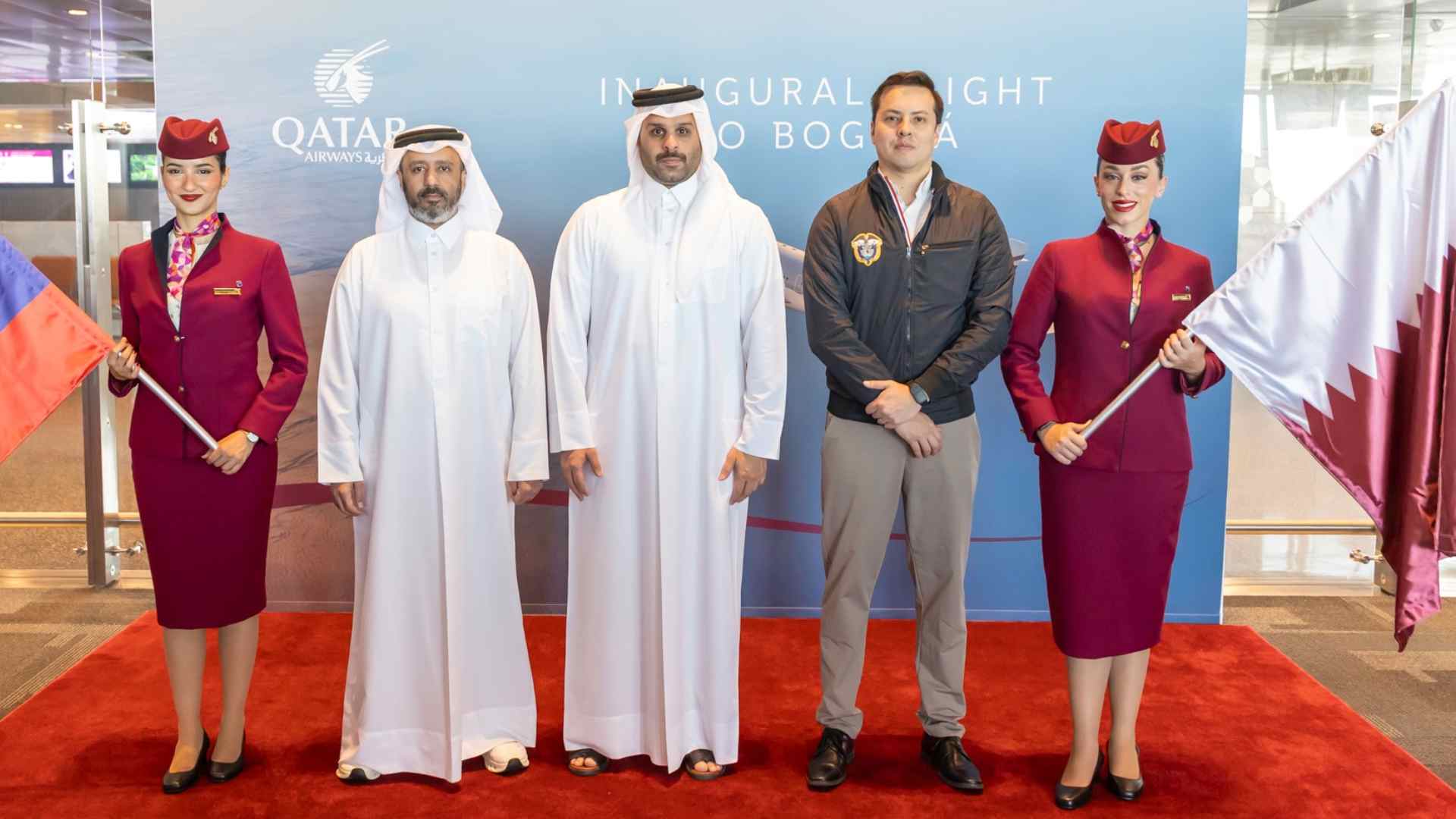
Qatar Airways has inaugurated its new twice-weekly service connecting Doha with Caracas and Bogotá. The service represents a significant milestone for the airline, as Qatar Airways becomes the first Gulf carrier to serve Venezuela, and the first airline to operate nonstop services from the Middle East to both Bogotá and Caracas. The new route underscores the airline’s commitment to strengthening global connectivity for the region and is operated on Boeing 777-200LR aircraft.
Qatar Airways flights to Caracas (CCS) and Bogotá (BOG)
Qatar Airways’ flight schedule has been designed to provide smooth onward connections through Hamad International Airport to key markets including Australia, China, Japan, Lebanon, South Korea, and the United Arab Emirates. This offers passengers greater flexibility and seamless transfer options across Qatar Airways’ global network of over 170 destinations.
Departing every Wednesday and Sunday:
Doha (DOH) to Bogotá (BOG) – Flight QR783: Departure 07:35; Arrival 16:25
Bogotá (BOG) to Caracas (CCS) – Flight QR783: Departure 17:55; Arrival 21:00
Caracas (CCS) to Doha (DOH) – Flight QR783: Departure 23:30; Arrival 20:35
The addition of Caracas and Bogotá marks the 16th and 17th destinations in the Americas served by Qatar Airways. The airline began serving South America in 2010 with its inaugural flight to Brazil’s São Paulo.
The airline has recently expanded its partnership with LATAM to include LATAM Airlines Colombia, offering travellers greater access to the region. Qatar Airways will place its code on LATAM-operated flights between Bogotá and key domestic destinations including Cartagena, Armenia, Barranquilla, Bucaramanga, Cali, Cúcuta, Ibagué, Leticia, Medellín, Montería, Neiva, Pereira, Pasto, Riohacha, San Andrés Island, Santa Marta, and Yopal.
Qatar Airways continues to strengthen global connectivity, serving more than 170 destinations this winter. Bookings can be made at qatarairways.com or through the airline’s mobile app.


Qatar Airways Unveils Onboard Signature Music Created in Partnership with Award-Winning Composer Hans Zimmer

Laura Hammett Expands to the Middle East with New Studio in Dubai
RAF ABU DHABI ADDS STARZPLAY AS DISTRIBUTION PARTNER ACROSS MENA



-

 Trending1 year ago
OPPO A6 Pro 5G Review: Reliable Daily Driver
-

 Tech News2 years ago
Denodo Bolsters Executive Team by Hiring Christophe Culine as its Chief Revenue Officer
-
 VAR2 years ago
Microsoft Launches New Surface Copilot+ PCs for Business
-

 Automotive2 years ago
AGMC Launches the RIDDARA RD6 High Performance Fully Electric 4×4 Pickup
-

 VAR11 months ago
Huawei Nova 14 Pro Review: Where Camera Excellence Meets Ecosystem Evolution
-
Tech Interviews3 years ago
Navigating the Cybersecurity Landscape in Hybrid Work Environments
-

 Hospitality2 years ago
Gulfood 2025 30th Edition Kicks Off Today, Setting New Benchmarks in F&B Growth and Innovation
-

 Tech News1 year ago
Nothing Launches flagship Nothing Phone (3) and Headphone (1) in theme with the Iconic Museum of the Future in Dubai